

When Russian forces crossed into Ukraine on February 24, 2022, the columns moving toward Kyiv carried some of the most recognizable equipment in the Russian arsenal. Tanks, infantry fighting vehicles, artillery, air-defense systems and support vehicles advanced south from Belarus toward the Ukrainian capital. On paper, the force possessed enormous combat power. Within weeks, however, the northern offensive had stalled and Russia eventually abandoned its attempt to seize Kyiv.

The failure is often reduced to images of abandoned armor, empty fuel tanks and the enormous Russian convoy north of the capital. Logistics certainly played a major role, but describing the episode simply as a shortage of trucks or fuel misses the more important point. Russia’s logistics problems did not begin when the first fuel vehicle failed to arrive. They were already embedded in the structure and assumptions of the operation.
A Campaign Designed Around Speed
Military logistics is inseparable from operational planning. A formation expected to fight for several days requires a very different support structure from one expected to conduct sustained operations for several weeks.
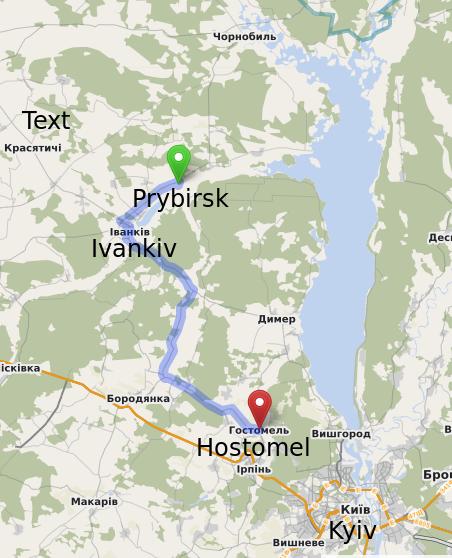
Russia’s opening campaign placed heavy emphasis on speed. Multiple formations advanced simultaneously from Belarus, Russia and occupied Crimea, while the northern axis placed direct pressure on Kyiv. Russian airborne forces also attempted to seize Hostomel Airport northwest of the capital, potentially creating an access point through which additional troops and equipment could be moved close to the city.
Ukraine’s resistance disrupted that timetable. Once a rapid result failed to materialize, Russian forces had to sustain a much larger and longer ground operation than the initial momentum suggested.
That was where the structure of Russian logistics became important. The Russian Ground Forces traditionally relied heavily on rail for moving large quantities of equipment and supplies. Army University Press describes the Russian military as effectively a “railway army,” supported by dedicated railway troops and a logistics system designed to move large volumes through established rail networks. At the tactical level, trucks then carry those supplies from railheads and depots toward the fighting units.
That model can move enormous quantities efficiently when rail infrastructure is available. Deep inside hostile territory, however, the final distance increasingly has to be covered by road.
The Problem Was Not Simply a Lack of Trucks
Russian logistics formations were not small. A Material-Technical Support, or MTO, brigade assigned to support a combined arms army included two truck battalions. According to U.S. Army research on Russian force structure, each truck battalion contained approximately 408 transport vehicles and could reportedly move around 1,870 tons of cargo, including roughly 680 tons of liquid cargo.
Those numbers sound substantial until distance enters the calculation.
A truck that delivers fuel 30 kilometers forward can return, reload and make another trip relatively quickly. If the supply distance expands to 100 or 150 kilometers, the same truck spends much more of its operational day simply moving. Fuel is also consumed transporting fuel. Drivers require rest, vehicles require maintenance and roads must remain open.
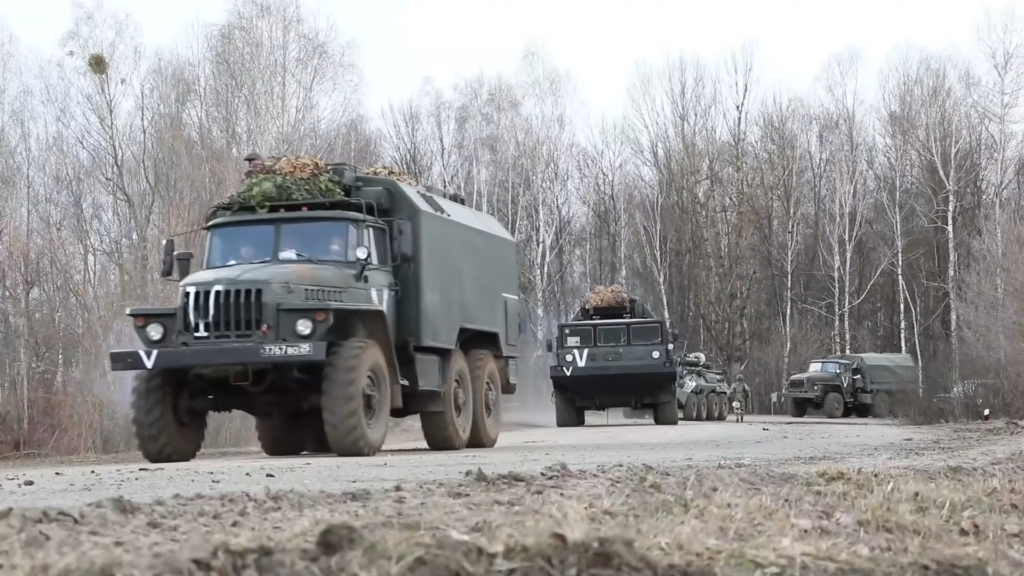
This creates a basic logistics problem sometimes overlooked when equipment numbers are compared. Transport capacity is not measured only by how many tons a truck can carry. It is also determined by how frequently that truck can complete the supply cycle.
The deeper an army advances without moving its railheads and depots forward, the more trucks are required to deliver the same daily quantity of supplies.
Kyiv Turned Roads Into Chokepoints
Russian forces moving toward Kyiv became heavily dependent on a relatively limited road network. Seasonal mud made movement away from established roads difficult for many heavy vehicles, while destroyed bridges and Ukrainian resistance further restricted movement.
Army University Press later described the Russian movement north of Kyiv as a roughly 35-mile traffic jam. It reported that logistics problems, vehicle maintenance, Ukrainian resistance, poor command and control and even outdated maps contributed to the stalled formation. Russian planners had intended to move ten battalions toward Kyiv, but the columns struggled to maintain the operational reach needed to reach and seize the capital.
Road congestion has consequences beyond simply slowing tanks.
A mechanized column contains several different flows moving simultaneously. Fuel tankers and ammunition trucks need to move toward frontline units. Damaged equipment and casualties may need to move in the opposite direction. Engineers have to reach damaged bridges or obstacles. Recovery vehicles must reach disabled tanks and infantry fighting vehicles.
Once a route becomes blocked, each function begins competing for the same physical space.
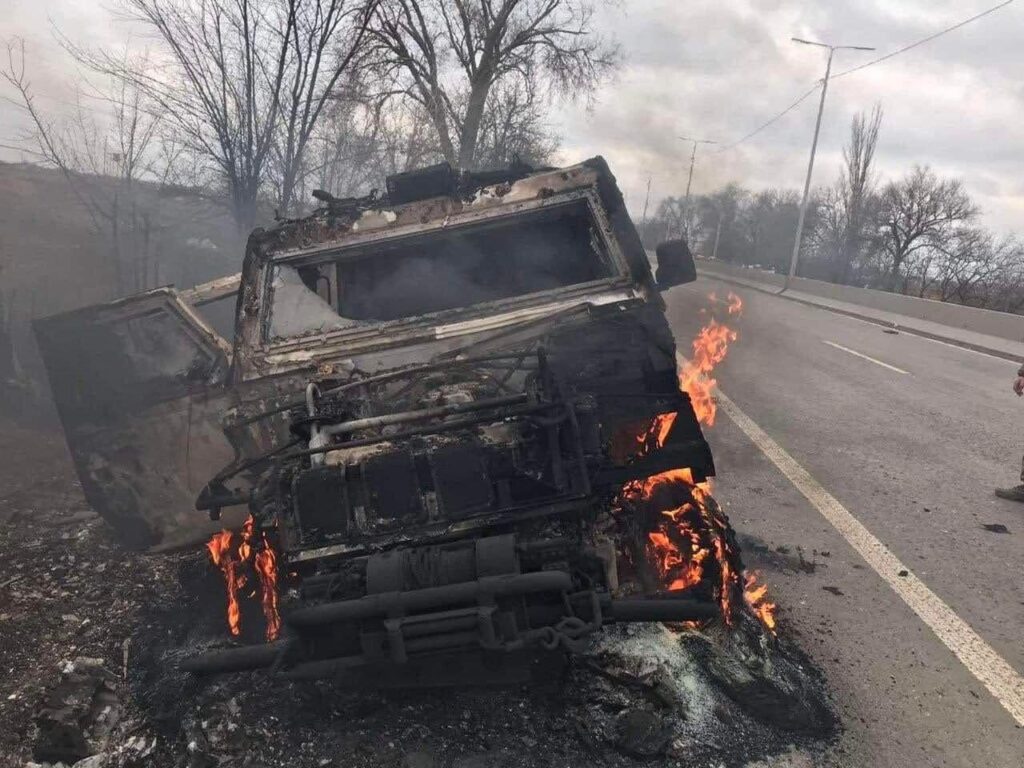
Destroying one bridge therefore does more than delay the vehicle immediately behind it. It can force hundreds of vehicles onto alternative routes, create bottlenecks and increase the distance that support vehicles must travel. U.S. Army analysis of the Kyiv advance noted that Russian columns repeatedly struggled when Ukrainian forces destroyed bridges or created obstacles along routes for which there were few flexible alternatives.
A Tank Requires More Than Fuel
Images of Russian vehicles apparently abandoned after running out of fuel became one of the symbols of the opening phase, but fuel was only one component of sustainment.
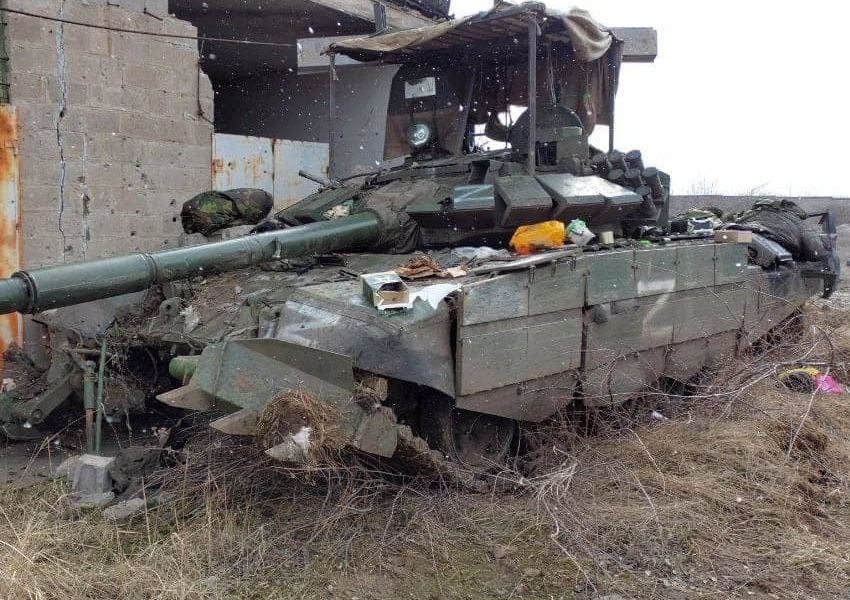
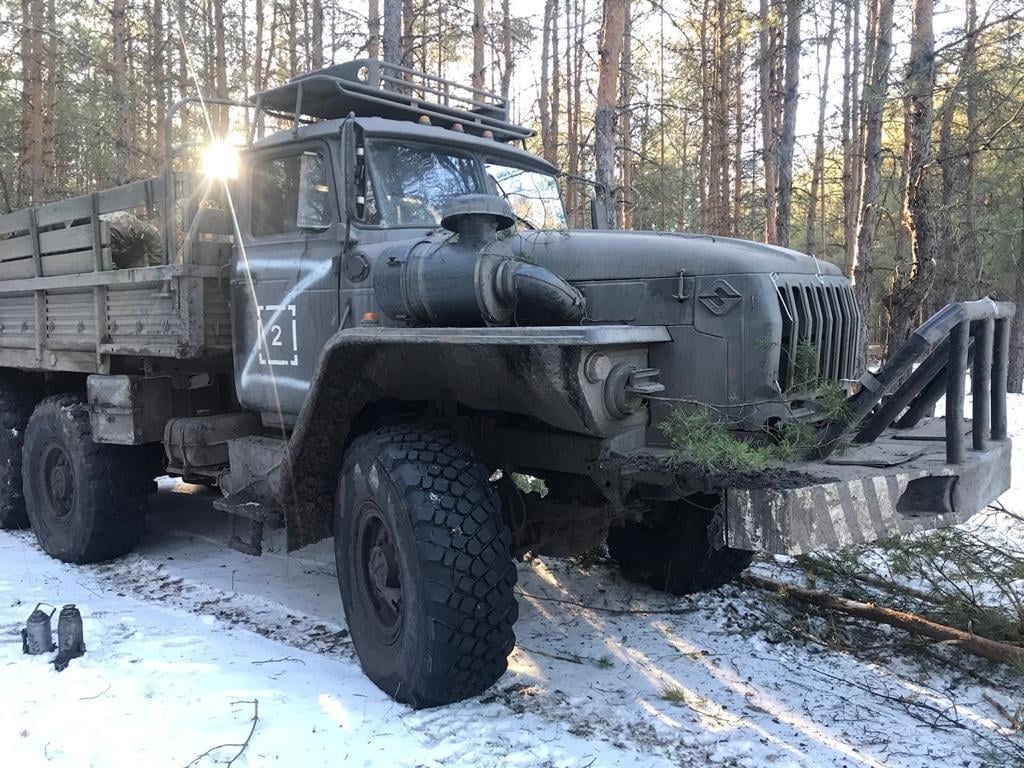
Tracked armored vehicles require constant maintenance. Tracks wear and require adjustment. Engines and transmissions operate under heavy loads. Suspension systems, road wheels and electrical components can fail. Tires on support vehicles are also critical because most of the logistical system moves on wheeled trucks rather than armored platforms.
When a 40-ton tank becomes immobilized, sending a normal truck to recover it is not an option.
Dedicated armored recovery vehicles are required, and these are limited assets. A recovery team may also need mechanics, towing equipment and spare components before the damaged platform can return to service. If recovery capacity falls behind the number of breakdowns, damaged vehicles begin accumulating along the route.
This creates a compounding effect. One disabled vehicle reduces combat strength, but it can also obstruct traffic while consuming additional maintenance and recovery resources.
The technical condition of the support fleet therefore matters just as much as the condition of the tanks at the front.
A formation can possess hundreds of armored vehicles and still lose operational momentum if its fuel tankers, cargo trucks and recovery vehicles cannot maintain the same pace.
Rail Power Has a Limit
Russia’s dependence on rail was not itself a weakness. Railways are one of the most efficient methods available for moving large quantities of ammunition, fuel and heavy equipment across continental distances.
The weakness appears when rail-supported forces outrun their rail infrastructure.
Russian doctrine historically placed supply depots relatively close behind fighting formations. U.S. Army analysis of the Soviet system noted battalion supply points around four kilometers behind the forward area, regimental depots roughly 10 to 15 kilometers behind and divisional depots approximately 25 to 30 kilometers back. Modern organization has changed, but the underlying principle remains relevant. Supplies must eventually move from large rear-area nodes into progressively smaller forward distribution points.
Every interruption in that chain reduces what reaches the combat units.
In the Kyiv campaign, the distance between functioning logistics nodes and advancing formations became increasingly difficult to manage while Ukrainian forces were simultaneously threatening roads and infrastructure. Russian logistics had been designed to support powerful formations, but not indefinitely under every operational condition.
Combat Power Is a Rate, Not a Number
Counting tanks provides a snapshot of military strength. Logistics determines how much of that strength can actually be used tomorrow.
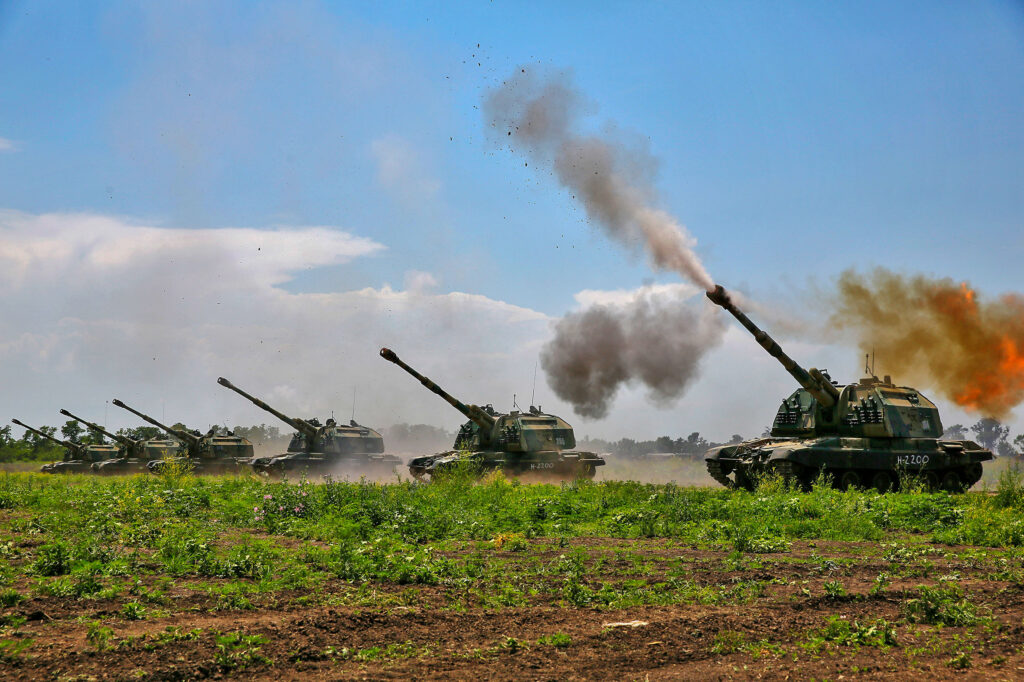
Consider artillery. A battery can begin combat with ammunition already carried by its vehicles, but sustained firing rapidly turns the problem into one of transportation. Ammunition has to move from large depots to intermediate supply points and eventually to the firing unit.
Fuel works in the same way. A tank with a full fuel load is combat capable, but every movement reduces that stored energy. Artillery tractors, air-defense vehicles, engineering equipment, generators and logistics trucks are consuming fuel at the same time. Maintenance adds another clock. A vehicle may still have fuel and ammunition but become unavailable because a mechanical component has failed.
This is why sustainment is better understood as a rate rather than a stockpile. The question is not simply how much ammunition or fuel an army possesses. The important question is how quickly it can continuously move those resources to the units consuming them.
Around Kyiv, Russia still possessed enormous quantities of military equipment and supplies elsewhere. The problem was getting the correct resources to the correct formations at the required tempo.
Logistics Cannot Repair a Bad Operational Assumption
More trucks alone would not have solved every Russian problem. Additional fuel could not eliminate Ukrainian resistance. More recovery vehicles would not correct poor communications. Larger ammunition stocks could not automatically improve coordination between ground forces, aviation and supporting fires.
Those weaknesses interacted with one another.
According to U.S. Army analysis, Russian forces approaching Kyiv lacked adequate food, fuel, maps, communications and preparation time, while vehicles became stuck in mud and columns were unable to adapt quickly when routes were disrupted.
This is what makes Kyiv more useful as a logistics case study than the familiar image of a stranded convoy.
The episode demonstrated how rapidly a technically powerful force can lose operational reach when transportation capacity, maintenance, command and planning begin failing at the same time.
The Failure Started Earlier
The most important logistical failures rarely begin when the first truck stops moving.
They begin when operational plans assume that resistance will collapse quickly. They develop when combat platforms grow faster than the systems required to repair and recover them. They become more serious when exercises fail to test long-distance sustainment under disrupted communications, damaged roads and hostile action.
Eventually, the battlefield exposes those decisions.
Russia entered Ukraine with large numbers of tanks, artillery systems, missiles and armored vehicles. Those assets were real. Yet combat power is not simply the sum of weapons available on the first day of a campaign.
It is the ability to keep those weapons fueled, supplied, repaired and moving on the twentieth day.
The road to Kyiv demonstrated the difference.
Sources:
- U.S. Army, Army University Press, Trust the Process: A Deliberate Approach to Capturing Lessons Learned from the Russia-Ukraine War in U.S. Army Doctrine.
- U.S. Army, Army University Press, Russian Logistics and Forward Urban Defense in the Baltic States.
- U.S. Army, Army University Press, Analysis of Land Army Maintenance Techniques in the War in Ukraine.