

Drill & Defense
Advertisement
  • Defense Industry
    • Industry News
    • Defense Companies
    • Defense Technologies
    • Market Analysis
  • Military Systems
    • Land Systems
    • Air Systems
    • Naval Systems
    • Electronic & Cyber Systems
  • Firearms
    • Pistols
    • Rifles
    • SMGs & Machine Guns
    • Ammunition
    • Optics & Accessories
  • Geopolitics
    • Global Security
    • Defense & Energy Strategy
    • Tech & Innovation Crossover
    • Trade & Export Controls
  • Energy & Security
    • Oil & Gas News
    • Energy Technologies
    • Market Trends & Analysis
  • History
    • Military History
    • Doctrines & Concepts
    • Strategic Turning Points
    • Legacy Systems & Structures
  • Knowledge Base
    • Firearms Basics
    • Defense Know-How
    • Energy Fundamentals
    • Regulations & Frameworks
  • About
  • Contact
  • Login
  • Register
No Result
View All Result
  • Defense Industry
    • Industry News
    • Defense Companies
    • Defense Technologies
    • Market Analysis
  • Military Systems
    • Land Systems
    • Air Systems
    • Naval Systems
    • Electronic & Cyber Systems
  • Firearms
    • Pistols
    • Rifles
    • SMGs & Machine Guns
    • Ammunition
    • Optics & Accessories
  • Geopolitics
    • Global Security
    • Defense & Energy Strategy
    • Tech & Innovation Crossover
    • Trade & Export Controls
  • Energy & Security
    • Oil & Gas News
    • Energy Technologies
    • Market Trends & Analysis
  • History
    • Military History
    • Doctrines & Concepts
    • Strategic Turning Points
    • Legacy Systems & Structures
  • Knowledge Base
    • Firearms Basics
    • Defense Know-How
    • Energy Fundamentals
    • Regulations & Frameworks
  • About
  • Contact
  • Login
  • Register
No Result
View All Result
Drill & Defense
No Result
View All Result
Home Knowledge Base

From Titanium to Tungsten: Critical Minerals in Modern Defense

June 30, 2026
in Knowledge Base, Defense Know-How
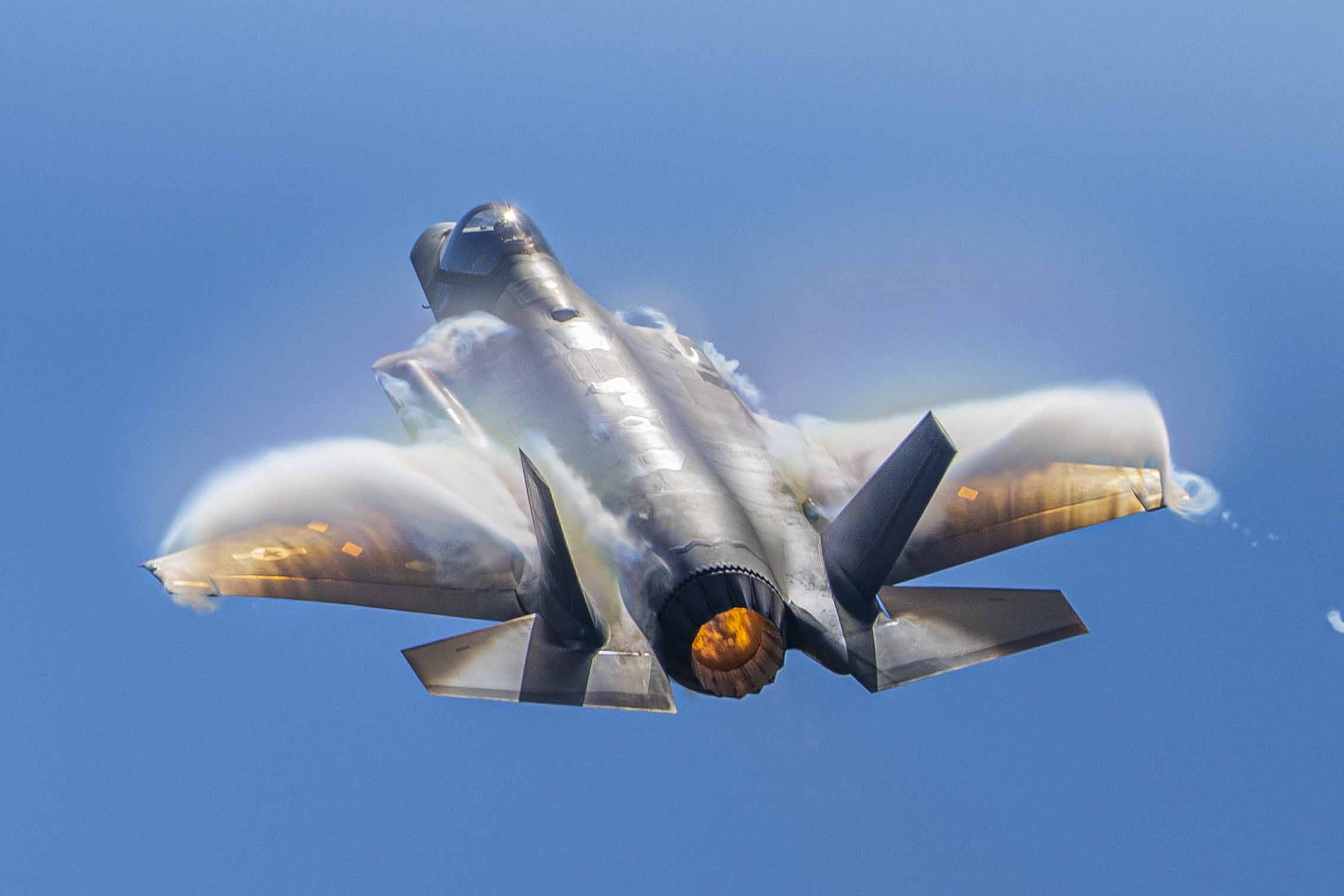
A photo of an F-35 flying during the Wings Over Houston 2023 Airshow

Maj. Kristin Wolfe, F-35A Lightning II Demonstration Team pilot and commander, flies an F-35 assigned to the 421st Fighter Generation Squadron at the Wings Over Houston Airshow, Texas, Oct. 15, 2023. The airshow showcases vintage World War II aircraft alongside modern aviation and has supported a variety of local and national charities during its 39-year history. (U.S. Air Force photo by Staff Sgt. Kaitlyn Ergish)

Share on LinkedInShare on Twitter

Defense platforms are evaluated through range, payload, endurance, radar coverage, survivability, lethality and production capacity. These figures show the finished system. They do not show the material chain that makes the system possible.

Critical minerals enter the discussion at that point. Titanium in aircraft structures, gallium in advanced radar modules, germanium in infrared optics, tungsten in tank ammunition, lithium and graphite in loitering munition batteries. Each material supports a different part of the defense system. None of them explains the full capability alone.

The subject became more visible after NATO published its list of 12 defense critical raw materials in December 2024. The list included aluminium, beryllium, cobalt, gallium, germanium, graphite, lithium, manganese, platinum, rare earth elements, titanium and tungsten. In 2025, the U.S. Geological Survey released a broader critical minerals list with 60 mineral commodities. The number itself matters. Defense supply chains now sit inside a wider industrial competition over refined materials, processing capacity and trusted sources.

Five systems give a clearer view of the issue.


F-35 Lightning II

The F-35 Lightning II is a useful starting point because its material requirements connect directly with aircraft structure and propulsion. Titanium is one of the strongest links. It offers high strength, weight efficiency and corrosion resistance, which makes it valuable for airframe structures in advanced military aircraft.

There is also a direct industrial data point. Alcoa announced a nine year titanium supply contract for Lockheed Martin’s F-35 program, covering airframe structures for all three variants from 2016 to 2024. The estimated value was about 1.1 billion dollars at projected build rates. That figure shows titanium as a major production input, not a background material.
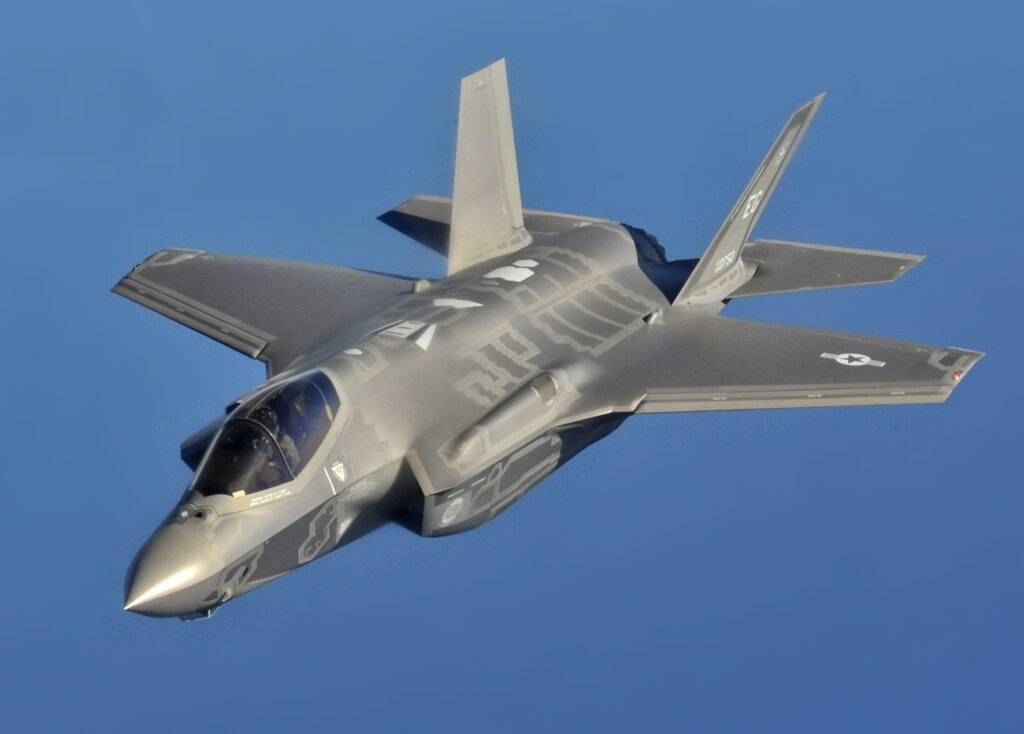
A U.S. Air Force F-35A Lightning II Joint Strike Fighter from the 58th Fighter Squadron, 33rd Fighter Wing, Eglin AFB, Fla. performs an aerial refueling mission with a KC-135 Stratotanker from the 336th Air Refueling Squadron from March ARB, Calif., May 14th, 2013 off the coast of Northwest Florida. The 33rd Fighter Wing is a joint graduate flying and maintenance training wing that trains Air Force, Marine, Navy and international partner operators and maintainers of the F-35 Lightning II.

Cobalt belongs to the engine and high temperature alloy side. Aircraft engines require materials that can hold mechanical integrity under heat, pressure and oxidation. The UK Critical Minerals Intelligence Centre notes that aerospace superalloys are typically nickel, iron or cobalt based, with smaller additions of other metals. For a combat aircraft, these alloy choices affect durability, performance and maintenance demands.

Pure (99.9 %) cobalt chips, electrolytically refined, as well as a high purity (99.8 % = 2N8) 1 cm3 cobalt cube for comparison. Alchemist-hp (talk) (www.pse-mendelejew.de), FAL, via Wikimedia Commons

The F-35 example is not about one metal making the aircraft advanced. It is about two pressure points. Titanium supports the structure. Cobalt supports the high temperature material environment around propulsion.


LTAMDS and GhostEye Radar

Radar systems offer a more direct connection between mineral supply and performance. Raytheon’s LTAMDS, the Lower Tier Air and Missile Defense Sensor, is described by RTX as a 360 degree Active Electronically Scanned Array radar using gallium nitride technology. GhostEye also sits in RTX’s modern radar portfolio, with a focus on mobile surveillance and fire control against threats such as drones, cruise missiles and aircraft.

Gallium matters because gallium nitride supports high power radio frequency performance. In radar design, this can improve power density, efficiency and heat management. RTX’s 2025 APG 82(V)X announcement also states that gallium nitride allows greater range without additional power. That is a useful detail for readers because it connects the mineral to a measurable performance direction.
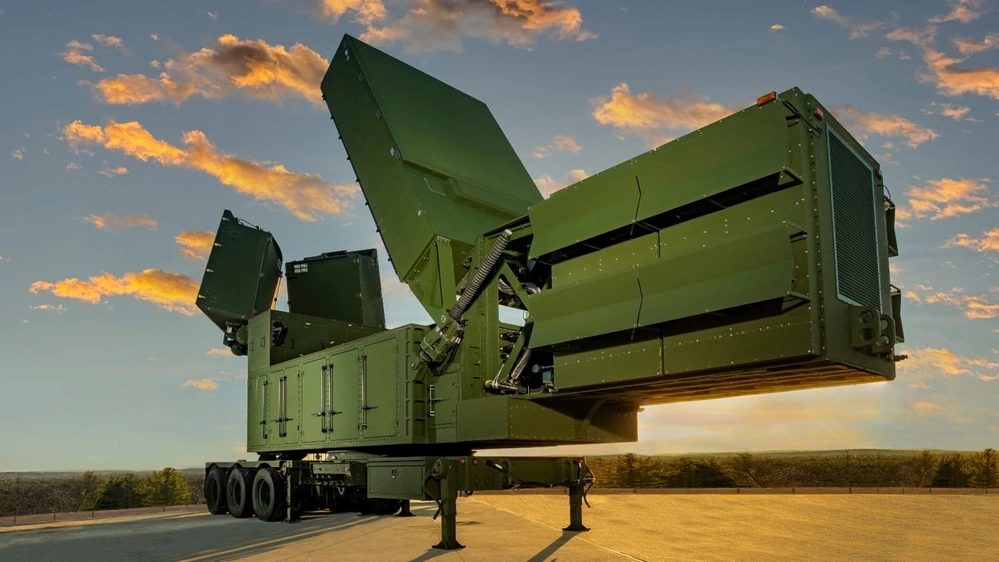
Patriot missile radar – LTAMDS – Lower Tier Air and Missile Defense Sensor.

Germanium should be placed with care. Its stronger role is not the main radar module. It is infrared optics, thermal imaging and electro optical sensing. USGS material on germanium identifies its use in lenses and windows for infrared optical systems due to transparency in part of the infrared spectrum and high refractive index.

For air defense, that distinction matters. Gallium belongs at the center of the radar discussion. Germanium supports the wider sensor environment around detection, identification and tracking.
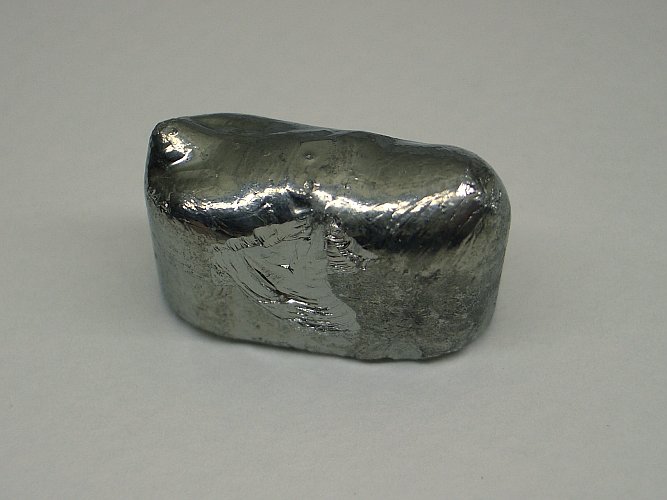
Gallium element. W. Oelen, CC BY-SA 3.0 https://creativecommons.org/licenses/by-sa/3.0.

FGM-148 Javelin

Javelin brings the discussion into a smaller system with a complex material chain. The weapon uses an infrared seeker, signal processing and guidance algorithms. Lockheed Martin’s Javelin product material describes day and night all weather operation through an infrared seeker.

Germanium fits here through infrared optics. It is used in lenses and windows for infrared systems, including military and government thermal imaging markets. For an anti armor missile with an imaging infrared seeker, the ability to detect and track a thermal signature is part of the weapon’s combat value.
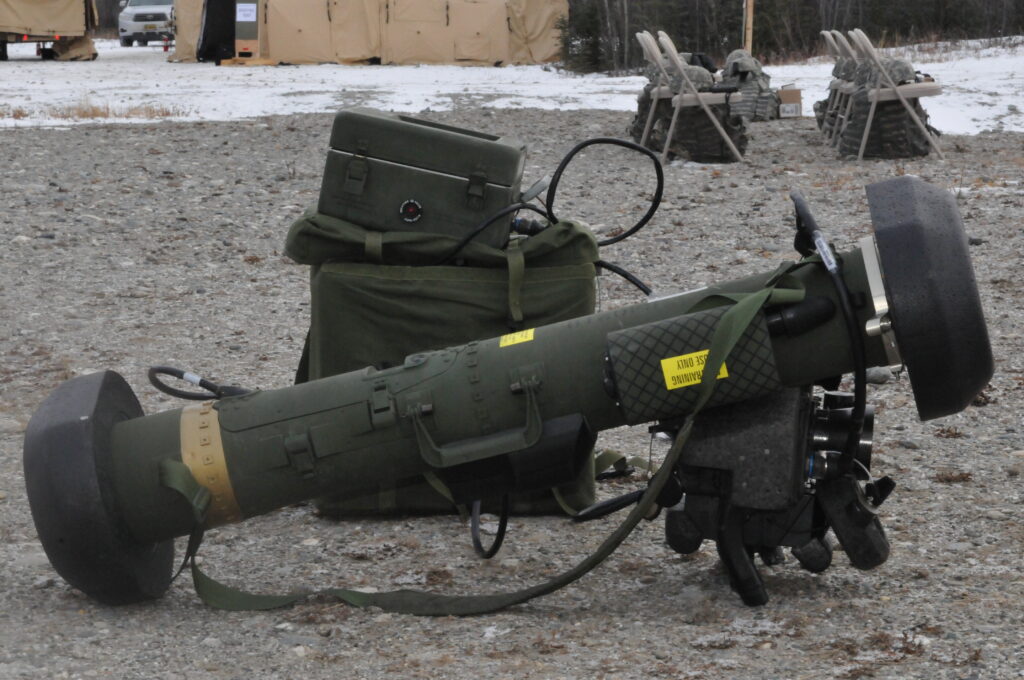
The FGM-148 Javelin Anti-tank Guided Missile. U.S. Army Alaska (USARAK) from Anchorage, Alaska, U.S., CC BY 2.0 https://creativecommons.org/licenses/by/2.0.

Tungsten enters from the wider armor defeat field. USGS identifies tungsten in heavy metal alloys for armaments, heat sinks and high density applications. Its density and hardness also explain its place in penetrator discussions. Javelin itself uses a tandem shaped charge warhead, so tungsten should not be presented as the single material behind the missile’s effect. That would weaken the accuracy of the article.
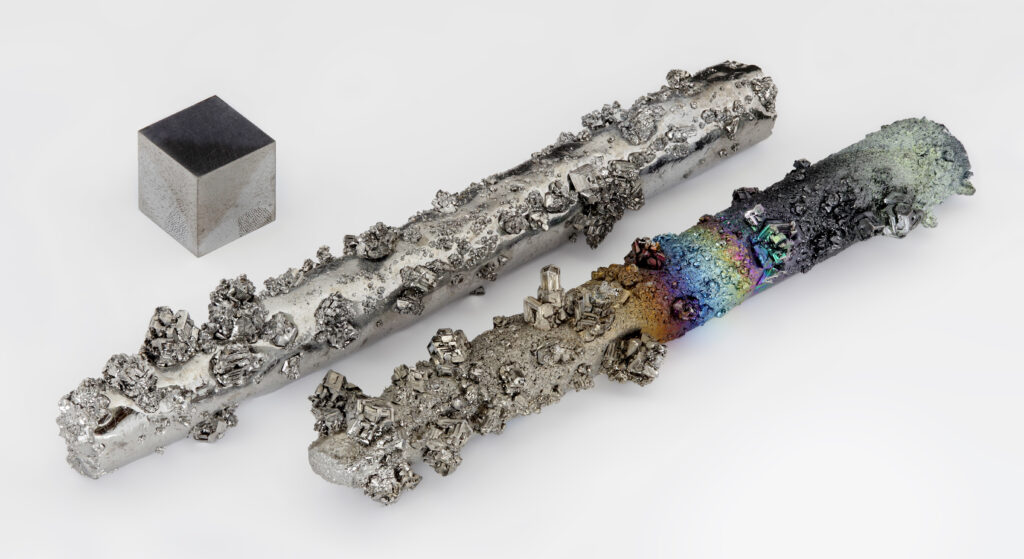
Tungsten rods with evaporated crystals, partially oxidized with colorful tarnish. Purity 99.98 %, as well as a high pure (99.999 % = 5N) 1 cm3 tungsten cube for comparison.

The better explanation is more specific. Javelin shows how portable anti armor systems depend on optics, electronics, guidance and warhead design. Germanium is the cleaner material link for the seeker. Tungsten belongs to the wider armor defeat material environment.


Leopard 2 and Rheinmetall 120 mm Ammunition

The Leopard 2 case is strongest when the focus moves from the tank as a platform to the 120 mm ammunition ecosystem. Rheinmetall’s 120 mm system material states that its kinetic energy ammunition uses a high strength tungsten penetrator. This is one of the clearest system to mineral connections in the article.

Leopard 2A5 main battle tank during a teaching and combat demonstration. ©Bundeswehr/Modes Bundeswehr-Fotos, CC BY 2.0 https://creativecommons.org/licenses/by/2.0.

Tungsten’s value comes from high density, hardness and thermal resistance. In kinetic energy ammunition, the penetrator has to survive extreme stress and maintain performance against advanced armor arrays. Rheinmetall also notes that more than 15 nations use its 120 mm ammunition in Leopard 2 and M1A1 or M1A2 Abrams main battle tanks.

Titanium can be discussed around defense platforms, weight reduction and strength to weight performance, but it should not take the lead in this section. Tungsten is the material that directly connects with the Leopard 2 and Rheinmetall 120 mm firepower ecosystem. This example also shows why mineral analysis should avoid vague claims. “Metals are important for tanks” is too broad. “Rheinmetall 120 mm kinetic energy ammunition uses a high strength tungsten penetrator” is stronger, clearer and easier to defend.
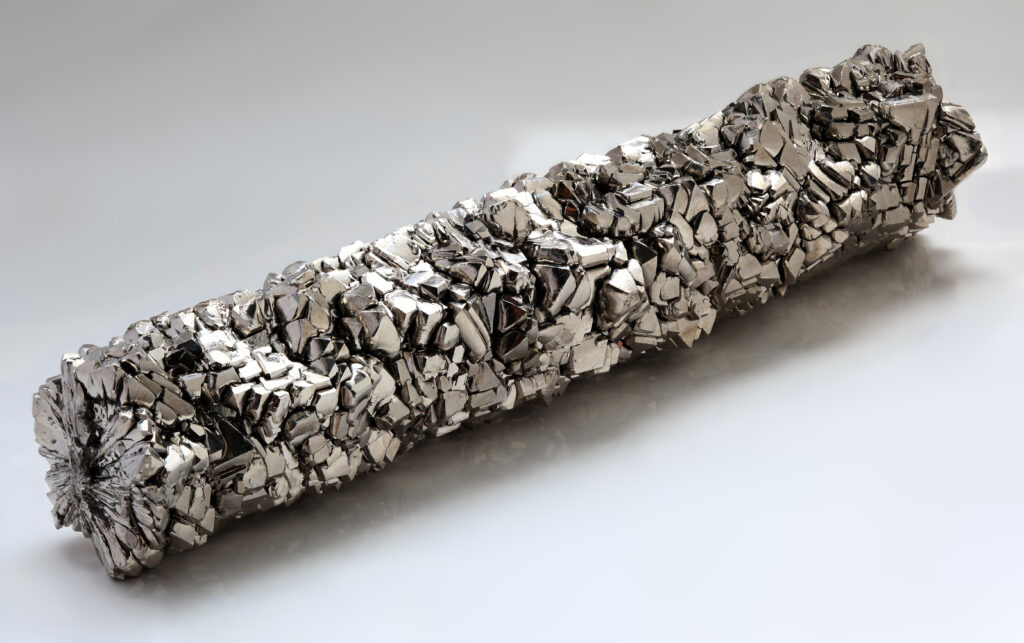
A titanium crystal bar, high purity 99,995 %, made by the iodide process at URALREDMET in the Soviet era. Weight ≈283 g, ≈5.5 ” long, ≈1 ” diameter. Alchemist-hp (pse-mendelejew.de), CC BY-SA 3.0 https://creativecommons.org/licenses/by-sa/3.0.

Switchblade 300 Block 20

Switchblade 300 Block 20 gives a different kind of mineral story. It is a compact loitering munition where size, weight, endurance and battery performance are closely linked.

AeroVironment lists the Switchblade 300 Block 20 with a 30 km range when using the extended range antenna, more than 20 minutes of endurance, a 3.7 lb munition weight and a 7.2 lb all up round. These numbers matter because the system’s tactical value is tied to what can fit inside a small, portable package.

U.S. Marines with 1st Air Naval Gunfire Liaison Company (ANGLICO), I Marine Expeditionary Force Information Group, launch a lethal miniature aerial missile system during an exercise at Marine Corps Base Camp Pendleton, California, Sept. 2, 2020. During the exercise, 1st ANGLICO’s mission was to launch, locate, track, lock and engage a simulated enemy target with an unmanned aerial system.

Lithium is the obvious material in this section because Amprius supplies high energy density lithium ion battery cells for versions of the Switchblade 300 Block 20. The company stated that integration of these lightweight cells was expected to increase flight time by at least 50 percent. For a loitering munition, that is not a minor improvement. More endurance can give more time for search, confirmation and engagement.

Graphite is less visible to readers, but it matters because it is a key anode material in lithium ion batteries. The graphite issue is also a supply chain issue. Research on battery grade graphite has pointed to heavy concentration in global anode material production, with China holding a dominant position.
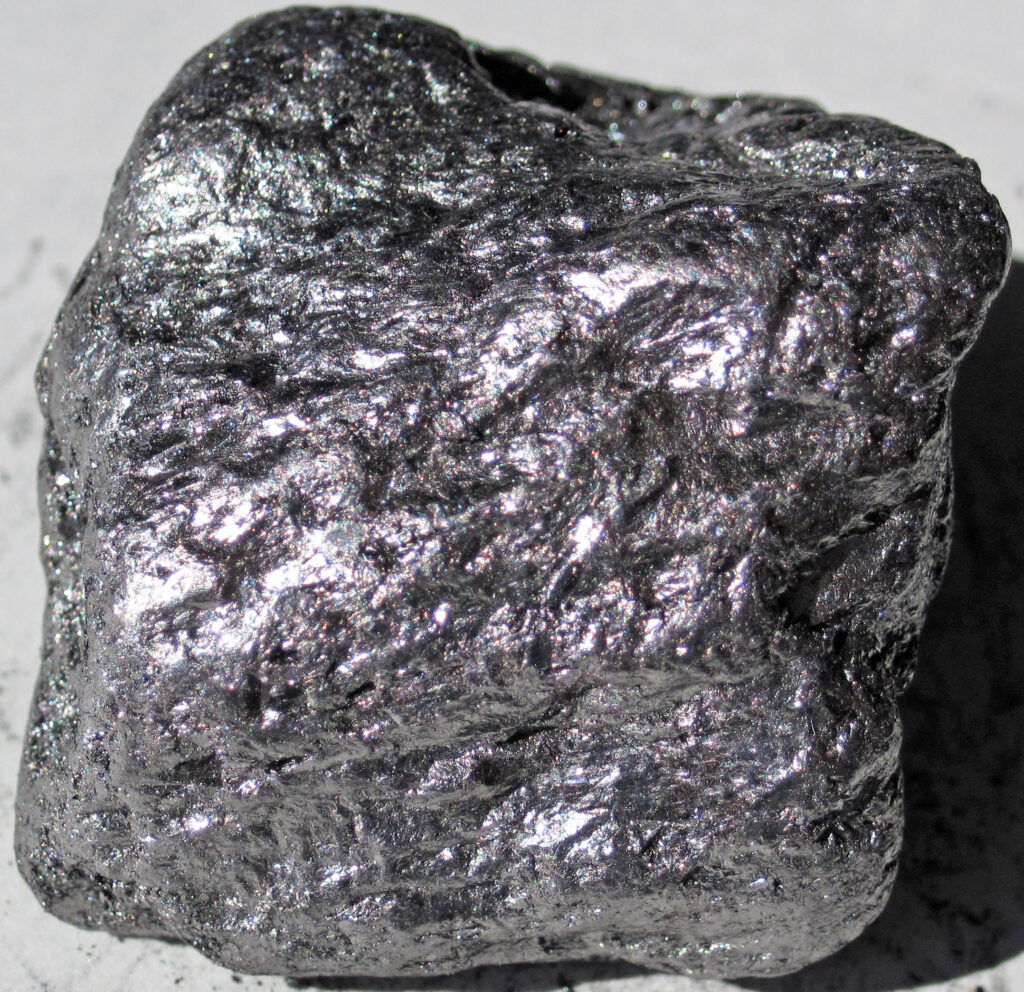
Graphite from Ceylon (Sri Lanka). James St. John, CC BY 2.0 https://creativecommons.org/licenses/by/2.0, via Wikimedia Commons

Switchblade therefore connects tactical endurance with battery chemistry. In small unmanned strike systems, energy storage can shape operational use as much as airframe design.


What this means for defense production

The five examples show different forms of mineral dependence.

Titanium and cobalt connect advanced aircraft with structural strength and high temperature alloys. Gallium connects radar performance with semiconductor material choices. Germanium connects infrared guided systems with optical material supply. Tungsten connects tank ammunition with armor defeat. Lithium and graphite connect loitering munitions with battery supply chains.

The supply chain problem is broader than mining. Refining, processing, qualification, export controls, recycling and stockpiling all matter. NATO’s updated Defense Production Action Plan in 2025 specifically referred to risks around manufacturing capability, supply chain capacity, bottlenecks, key materials and components. NATO also moved toward multinational cooperation on defense critical raw materials, including lithium, titanium and rare earth materials.

The International Energy Agency’s 2025 critical minerals outlook adds another important number. The top three refining nations for key energy minerals increased their average market share from around 82 percent in 2020 to 86 percent in 2024. The IEA also projected that this concentration may only decline to 82 percent by 2035. That matters for defense because battery materials, rare earths, cobalt and graphite do not belong only to civilian clean energy markets. They also sit inside military electronics, drones, sensors and power systems.

The finished platform gets the headline. The material chain decides whether the platform can be built at scale, repaired under pressure and supplied through a long crisis.

A defense system can have strong specifications on paper. The harder question is whether the industrial base behind it can keep feeding those specifications with qualified materials.

Sources:

  • NATO, “NATO releases list of 12 defence-critical raw materials”, 2024.
  • NATO, “Updated Defence Production Action Plan”, 2025.
  • NATO, “NATO Allies step up multinational capability delivery cooperation”, 2025.
  • U.S. Geological Survey, “Interior Department releases final 2025 List of Critical Minerals”, 2025.
  • U.S. Geological Survey, “2025 List of Critical Minerals”, 2025.

Previous Post

YAL-1A Airborne Laser: The 747 That Tried to Kill Missiles With Light

Related Posts

Ukraine War
Knowledge Base

Ukraine’s Ground War: Rifles, Machine Guns, Trenches, and the Soldier Still Holding the Line

June 4, 2026
EU Dual Use
Knowledge Base

EU Dual-Use Regulation: How Civilian Technology Becomes a Matter of Export Control

May 13, 2026
Erik Prince
Knowledge Base

Too Big to Win — Scale, Structure, and the Limits of Military Power

April 23, 2026
Flickr_-_Israel_Defense_Forces_-_3_Islamic_Jihad_Militants_Apprehended_with_Multiple_Weapons
Knowledge Base

The Assassination of Fathi Shqaqi: Precision, Access, and Intelligence Dynamics

April 10, 2026
Japan_Air_Self-Defense_Force_MIM-104_Patriot_launcher
Knowledge Base

The Wassenaar Arrangement: Quiet Rules, Real Consequences

April 9, 2026
Muleskinners_train_Triple_Canopy(2011.09.04(2))
Knowledge Base

International Code of Conduct in Private Security

April 7, 2026
  • Trending
  • Latest
Operation Enduring Freedom

What Exactly Is a Private Military Company (PMC)?

September 6, 2025
MG42-1

MG42 Machine Gun: WWII History, Specifications and Battlefield Impact

April 21, 2026
FN FAL: The Right Arm of the Free World

FN FAL: The Right Arm of the Free World

March 31, 2026
Blackwater PMC

After Blackwater: How PMCs Evolved, Professionalized, and Fragmented

September 13, 2025
A photo of an F-35 flying during the Wings Over Houston 2023 Airshow

From Titanium to Tungsten: Critical Minerals in Modern Defense

June 30, 2026
YAL-1A_Airborne_Laser_unstowed

YAL-1A Airborne Laser: The 747 That Tried to Kill Missiles With Light

June 26, 2026
REFORGER '91

REFORGER and the Technical Problem Behind Military Mobility

June 24, 2026
Oshkosh M1070 HET

Oshkosh M1070 HET: Heavy Mobility Behind Armored Operations

June 22, 2026

Recent Articles

A photo of an F-35 flying during the Wings Over Houston 2023 Airshow

From Titanium to Tungsten: Critical Minerals in Modern Defense

June 30, 2026
YAL-1A_Airborne_Laser_unstowed

YAL-1A Airborne Laser: The 747 That Tried to Kill Missiles With Light

June 26, 2026
REFORGER '91

REFORGER and the Technical Problem Behind Military Mobility

June 24, 2026
Oshkosh M1070 HET

Oshkosh M1070 HET: Heavy Mobility Behind Armored Operations

June 22, 2026
Drill & Defense

Drill & Defense is an independent defense and security platform covering firearms, military technology, geopolitics, energy security, and industry developments. We provide clear, structured, and practical insight for professionals, companies, and readers following the evolving defense landscape worldwide.

Follow Us

Browse by Category

  • Air Systems
  • Defense & Energy Strategy
  • Defense Industry
  • Defense Know-How
  • Defense Technologies
  • Doctrines & Concepts
  • Energy & Security
  • Energy Fundamentals
  • Energy Technologies
  • Firearms
  • Geopolitics
  • Global Security
  • History
  • Industry News
  • Knowledge Base
  • Land Systems
  • Legacy Systems & Structures
  • Market Analysis
  • Market Trends & Analysis
  • Military History
  • Military Systems
  • Naval Systems
  • Oil & Gas News
  • Pistols
  • Regulations & Frameworks
  • Rifles
  • SMGs & Machine Guns
  • Strategic Turning Points
  • Tech & Innovation Crossover

Recent Articles

A photo of an F-35 flying during the Wings Over Houston 2023 Airshow

From Titanium to Tungsten: Critical Minerals in Modern Defense

June 30, 2026
YAL-1A_Airborne_Laser_unstowed

YAL-1A Airborne Laser: The 747 That Tried to Kill Missiles With Light

June 26, 2026

© 2026 Drill & Defense. All rights reserved. Independent insights on firearms, defense, and energy. For business inquiries: info@drillanddefense.com | PRIVACY POLICY | COOKIE POLICY | TERMS AND CONDITIONS

Manage Consent

We use cookies to improve your experience. You can accept or refuse cookies; however, some features may not function properly without your consent.

Functional Always active
The technical storage or access is strictly necessary for the legitimate purpose of enabling the use of a specific service explicitly requested by the subscriber or user, or for the sole purpose of carrying out the transmission of a communication over an electronic communications network.
Preferences
The technical storage or access is necessary for the legitimate purpose of storing preferences that are not requested by the subscriber or user.
Statistics
The technical storage or access that is used exclusively for statistical purposes. The technical storage or access that is used exclusively for anonymous statistical purposes. Without a subpoena, voluntary compliance on the part of your Internet Service Provider, or additional records from a third party, information stored or retrieved for this purpose alone cannot usually be used to identify you.
Marketing
The technical storage or access is required to create user profiles to send advertising, or to track the user on a website or across several websites for similar marketing purposes.
  • Manage options
  • Manage services
  • Manage {vendor_count} vendors
  • Read more about these purposes
View preferences
  • {title}
  • {title}
  • {title}
No Result
View All Result
  • Defense Industry
    • Industry News
    • Defense Companies
    • Defense Technologies
    • Market Analysis
  • Military Systems
    • Land Systems
    • Air Systems
    • Naval Systems
    • Electronic & Cyber Systems
  • Firearms
    • Pistols
    • Rifles
    • SMGs & Machine Guns
    • Ammunition
    • Optics & Accessories
  • Geopolitics
    • Global Security
    • Defense & Energy Strategy
    • Tech & Innovation Crossover
    • Trade & Export Controls
  • Energy & Security
    • Oil & Gas News
    • Energy Technologies
    • Market Trends & Analysis
  • History
    • Military History
    • Doctrines & Concepts
    • Strategic Turning Points
    • Legacy Systems & Structures
  • Knowledge Base
    • Firearms Basics
    • Defense Know-How
    • Energy Fundamentals
    • Regulations & Frameworks
  • About
  • Contact
  • Login
  • Register

© 2026 Drill & Defense. All rights reserved. Independent insights on firearms, defense, and energy. For business inquiries: info@drillanddefense.com | PRIVACY POLICY | COOKIE POLICY | TERMS AND CONDITIONS