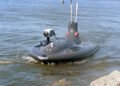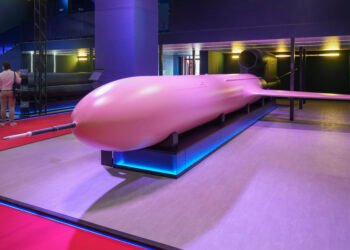


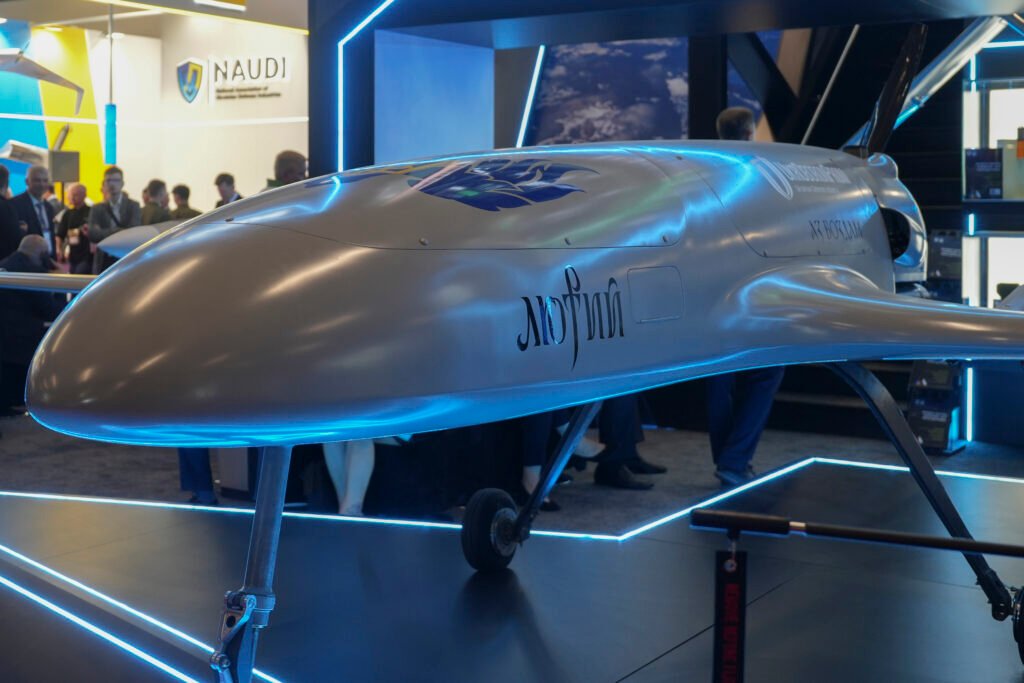
Ukraine’s latest strike against the Moscow region is useful less as another demonstration of range and more as an example of how its long-range strike inventory is becoming more diversified. Ukrainian President Volodymyr Zelensky said the strike package included FP-1, RZ-100, MICH-2000, Palyanytsia, Vendetta, Liutyi, Bars, Sichen, Flamingo and the still poorly understood Pelican.

Several of these systems overlap in range, but that does not make them redundant. Payload, propulsion, speed, guidance, production capacity and likely unit cost all influence how a weapon is used. Two systems may both be capable of reaching Moscow while still being suitable for very different targets.
Similar Range Does Not Mean Similar Capability
FP-1 is reported to have a range of up to 1,600 kilometers and a warhead of up to 120 kilograms. Liutyi is generally credited with a range of around 2,000 kilometers and a lighter payload in the 50 to 75 kilogram class. Sichen is listed at roughly 1,400 kilometers with a payload of up to 40 kilograms, while RZ-100 Morok is usually placed closer to the 800-kilometer range category.
Those figures already show why range alone is not enough to compare them. A lighter payload may be sufficient against exposed equipment, storage areas or vulnerable industrial components. A heavier warhead offers more options against machinery, structures or targets where blast effect matters more.
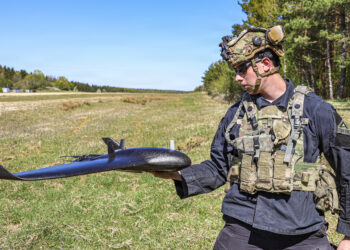
Propulsion also matters. Bars uses a compact turbojet rather than the piston-engine arrangement associated with many long-range one-way attack drones. Ukraine describes it as a mass-produced missile-drone with a range of roughly 700 to 800 kilometers. A jet-powered system can reduce the defender’s reaction time, while a slower platform may be cheaper, easier to produce in larger numbers or better suited to longer endurance profiles.
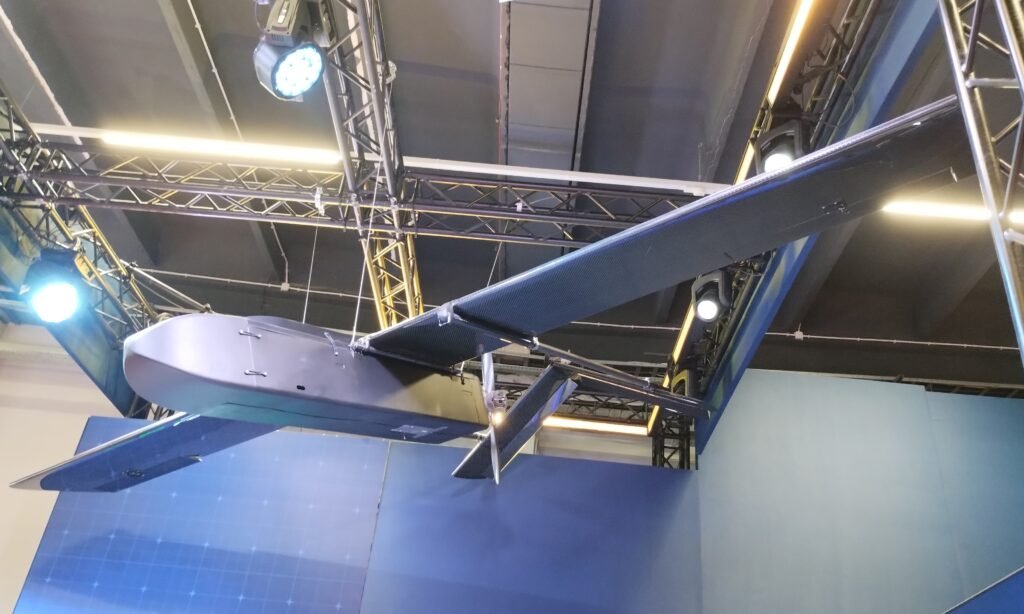
The more useful comparison is therefore not simply which platform flies the farthest, but what combination of payload, speed, cost and production volume it offers.
Flamingo Expands the Payload Range
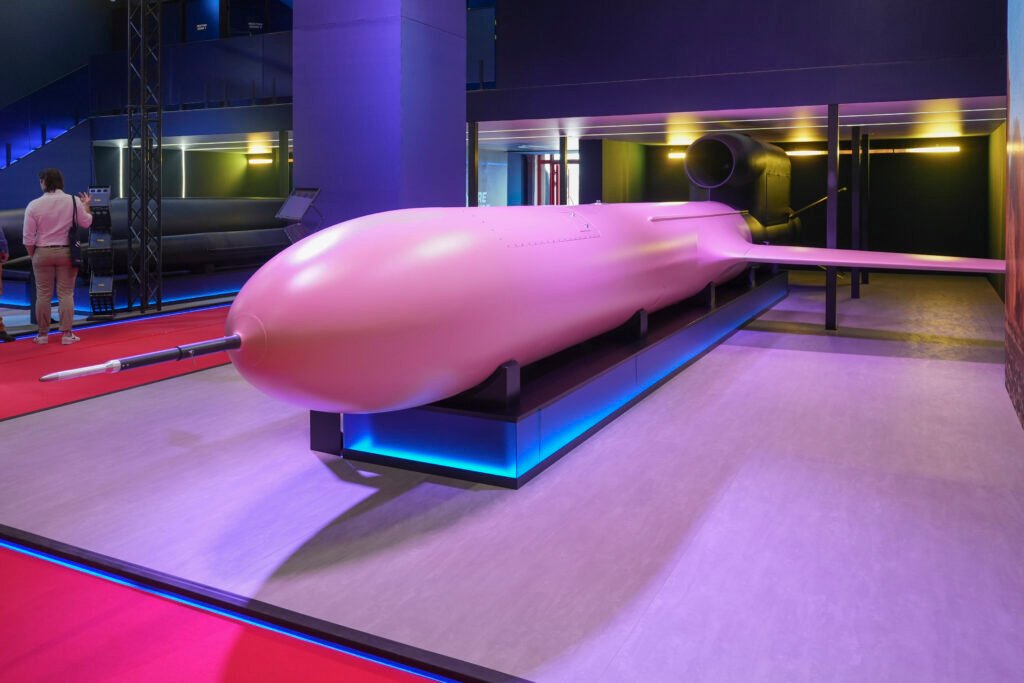
The FP-5 Flamingo sits in a different category from most of Ukraine’s one-way attack drones. Ukraine lists a range of up to 3,000 kilometers and a warhead exceeding one metric ton, with serial production reported to have started in 2025.
That payload changes the type of target the weapon can reasonably be assigned to. A large cruise missile would be excessive against some exposed or lightly protected targets, especially if a smaller drone can produce the required damage at lower cost. Against reinforced infrastructure, large industrial equipment or targets where greater explosive mass is necessary, the calculation changes.
This is why the growing number of Ukrainian long-range systems is technically more interesting than any single range figure. The inventory now covers several different weight and performance classes rather than relying on one standard design.
The Moscow Oil Refinery Is a Useful Case
The Moscow Oil Refinery helps illustrate this point because a refinery is not one uniform target. It is a collection of processing units, storage tanks, pumps, electrical systems, pipelines and control equipment, each with different levels of vulnerability and different repair requirements.
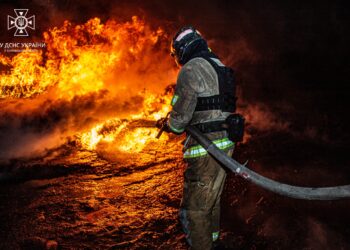
The facility processes roughly 12 million tonnes of oil annually. Ukrainian authorities reported damage to processing equipment during the September strike, while Fire Point said FP-1 drones were used against the refinery and warehouses near Sofyino.

For this type of target, destroying the entire complex is not necessarily required to create an operational effect. Damage to a critical processing unit or supporting system can interrupt part of the facility and force repairs even when the overall site remains standing. That makes weapon-to-target matching important. A 120-kilogram warhead may be enough for one component, while another target could justify a much heavier cruise missile.
Mixed Strike Packages Increase Defensive Complexity
The defensive side is also important. A strike package containing systems with different speeds, radar signatures and flight profiles creates a more complicated engagement picture than a formation built around one standardized platform.
Slow propeller-driven drones may give defenders more reaction time, but they can also be used in greater numbers and force air-defense units to spend time and ammunition on relatively inexpensive targets. Jet-powered missile-drones reduce the engagement window, while cruise missiles may require different detection and interception priorities.
Electronic warfare adds another variable because its effectiveness depends heavily on the navigation and guidance architecture of the incoming weapon. The same countermeasure will not necessarily have the same effect across several different platforms. A mixed package does not automatically defeat modern air defenses, but it can complicate target classification, interceptor allocation and protection of high-priority sites.
The Open-Source Picture Is Still Incomplete
Some of the newer systems remain difficult to assess precisely. Pelican is the clearest example. Ukraine confirmed its participation in the strike package, but reliable specifications remain limited and open-source reporting has produced different descriptions of the system.
The same caution applies to several other platforms. Reported range and payload figures frequently originate from Ukrainian official statements or manufacturers and cannot always be independently verified. That does not make the figures useless, but it means they should be treated as reported specifications rather than definitive performance data.
Even with those limitations, the broader structure is visible. Ukraine is fielding a long-range arsenal that includes propeller-driven one-way attack drones, jet-powered missile-drones and heavy cruise missiles. Several systems overlap in reach, but their payloads, speeds and likely costs differ enough to give planners a wider set of options.
The September strike on the Moscow region is therefore useful as a practical example of how these systems can be combined within the same operation. The more important development is not simply that Ukraine can reach Moscow, but that it can increasingly do so with several different classes of long-range weapons.
Sources:
- Office of the President of Ukraine. “In an Address on Arms Makers’ Day, the President Showcased Over 50 Types of Ukrainian Weapons Developed During the War that Have Already Proven Their Effectiveness.” April 14, 2026.
- Institute for the Study of War. “Russian Offensive Campaign Assessment, September 20, 2026.” September 20, 2026.
- Reuters. “Three Dead in Moscow Region, Drones Hit Oil Refinery in Russian Capital.” September 20, 2026.