
A main battle tank may look like several dozen tons of armor, steel and mechanical engineering, but the modern vehicle hidden beneath that armor tells a different story. Thermal sights, digital fire-control systems, active protection systems, high-performance alloys and advanced ammunition have quietly turned armored vehicles into consumers of strategically important minerals.

That matters because these materials do not come from an evenly distributed global marketplace. Production and processing are often concentrated in a handful of countries. In some cases, control over refining may be even more important than control over the mine itself.
NATO now explicitly identifies several of these materials as defense-critical. For armored warfare, five deserve particular attention.
1. Tungsten: The Metal Behind the Penetrator
Few materials connect mineral security and armored warfare as clearly as tungsten.
Its exceptional density, hardness and heat resistance make tungsten alloys particularly valuable for kinetic-energy penetrators used in armor-piercing ammunition. Tungsten also has applications in specialized high-temperature and wear-resistant components.
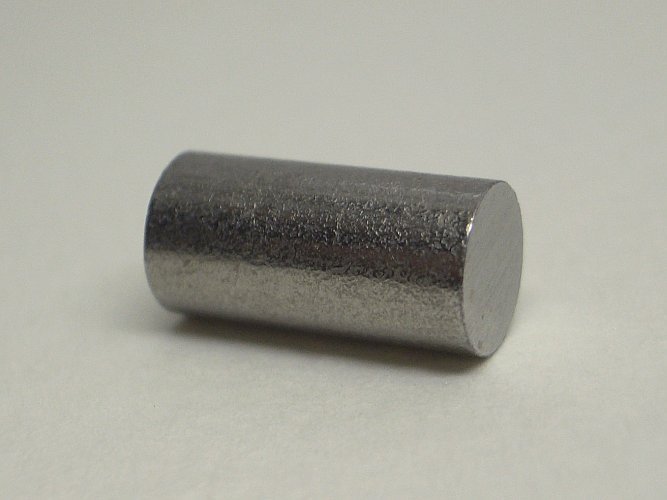
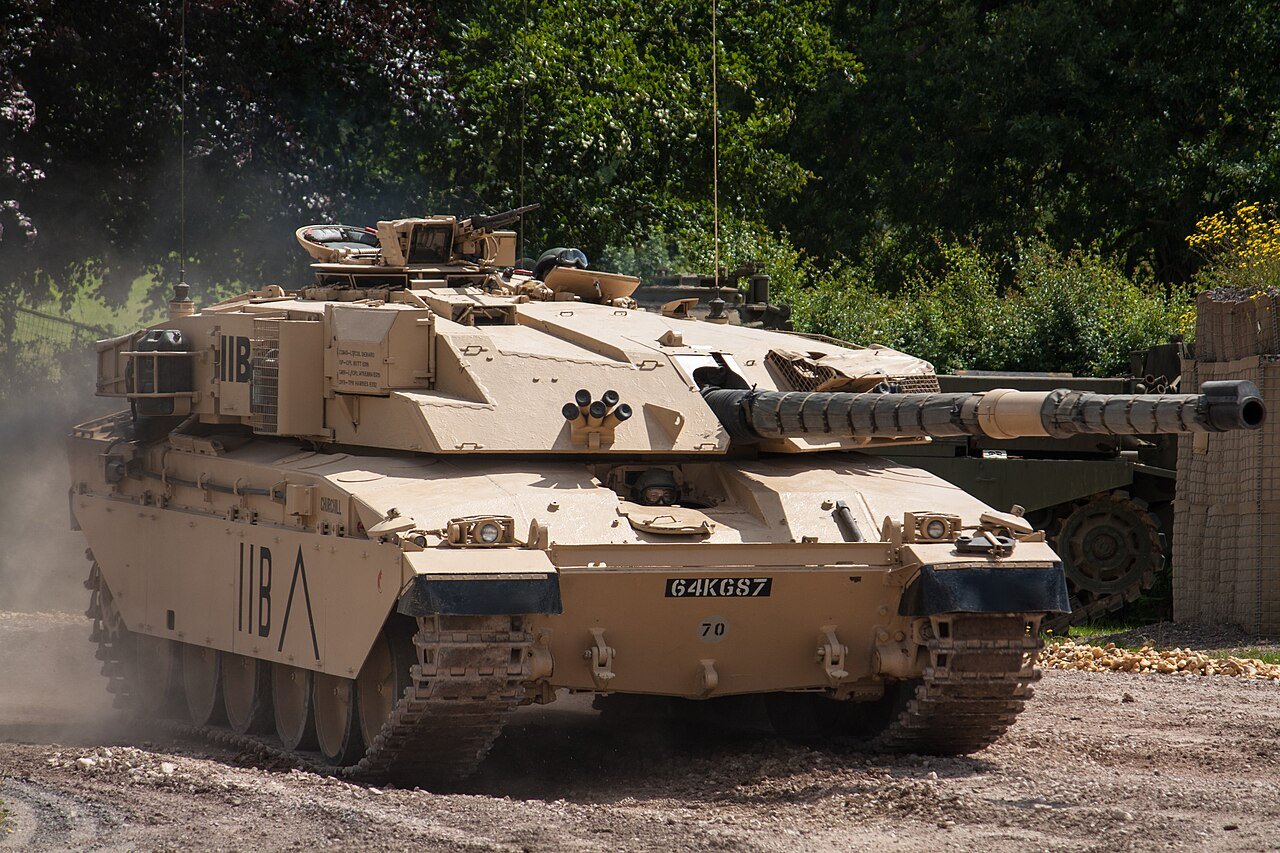
Look at the Leopard 2 ammunition family. Rheinmetall’s DM53, DM63 and newer DM73 kinetic-energy rounds use high-strength tungsten penetrators. The company’s new KE2020Neo ammunition continues the same approach. These rounds are associated with the 120 mm smoothbore weapon family used by Leopard 2 tanks, while the broader gun architecture is also found on the M1 Abrams and is being introduced on the Challenger 3.
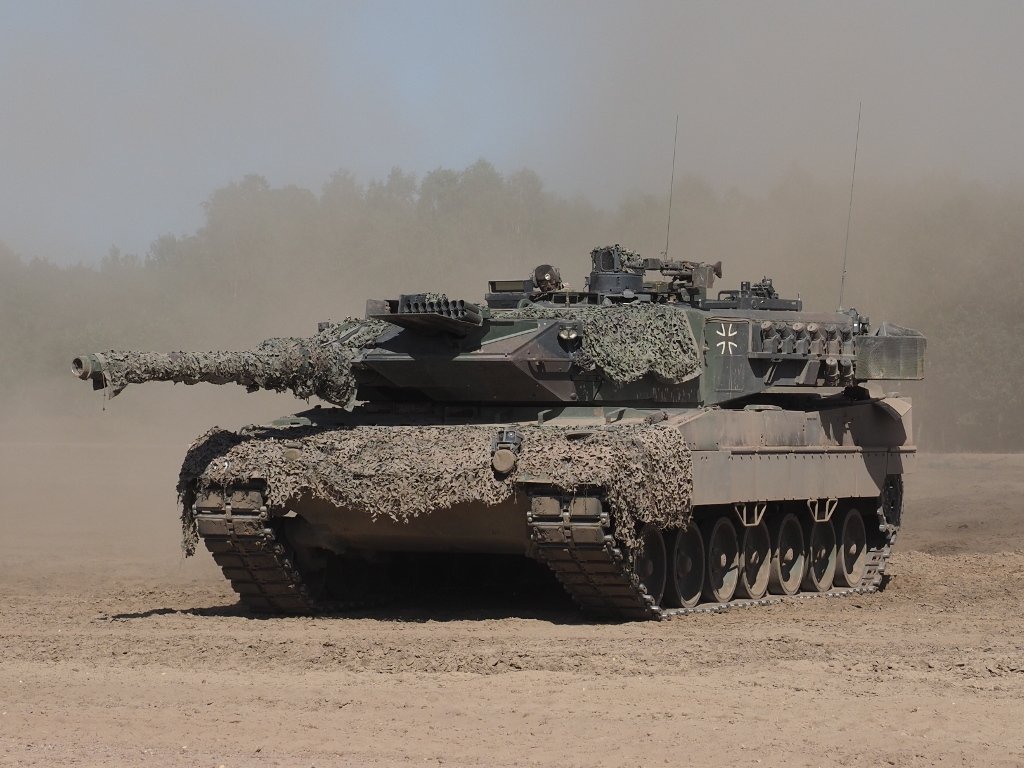
The complication begins underground. China possesses a dominant position in global tungsten production and substantial reserves, creating an obvious concentration risk for countries attempting to expand ammunition production independently. Other deposits and production exist in countries including Vietnam, Russia, Rwanda and several Western states, but building alternative mining and processing capacity is neither immediate nor inexpensive.
This makes tungsten competition more than a mining story. If armies intend to replenish large ammunition stocks after prolonged conventional warfare, securing penetrator materials becomes part of ammunition strategy itself.
2. Germanium: Seeing the Battlefield
A mineral measured in relatively small quantities can influence a vehicle weighing more than 60 tons.
Germanium is particularly important in infrared optics. Modern armored vehicles depend heavily on thermal imaging to identify targets, navigate at night and fight in degraded visibility.
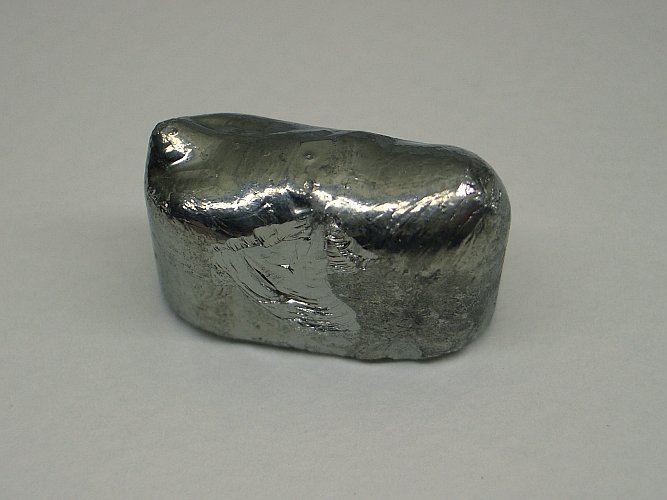
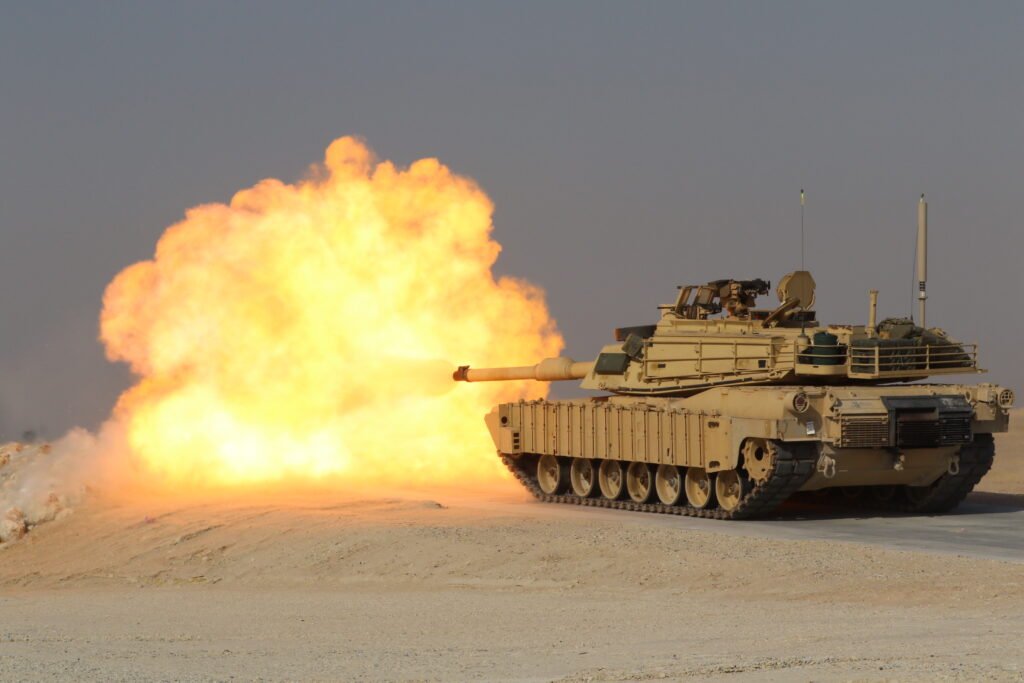
Consider the M1 Abrams. The M1A2 family employs a Commander’s Independent Thermal Viewer, while later improvement programs introduced increasingly capable infrared sights for both commanders and gunners. Leopard 2 is another useful example. Rheinmetall lists thermal imaging systems such as Saphir for use with Leopard 2 and Marder vehicles.
Germanium supply is unusually concentrated. China remains the world’s leading producer, while commercial processing also exists in countries including Belgium, Canada, Germany, Russia and the United States. Supply became an overt geopolitical issue after China introduced export licensing in 2023 and later prohibited germanium exports to the United States.
The consequences are visible in prices as well. USGS data show European germanium metal prices increasing substantially during 2025.
For armored vehicle manufacturers, this exposes an uncomfortable reality: the bottleneck may not be the hull, gun or engine. It could be the material required to manufacture the optics that allow the crew to see.
3. Gallium: When the Tank Becomes a Sensor Platform
Gallium seems more at home in a semiconductor discussion than beside an armored brigade. That distinction is becoming increasingly outdated.
Gallium-based compounds such as gallium arsenide and gallium nitride are used in advanced electronics, radio-frequency applications and optoelectronic systems. As armored vehicles acquire increasingly sophisticated radars, communications equipment and active protection systems, semiconductor supply chains become part of armored vehicle production.
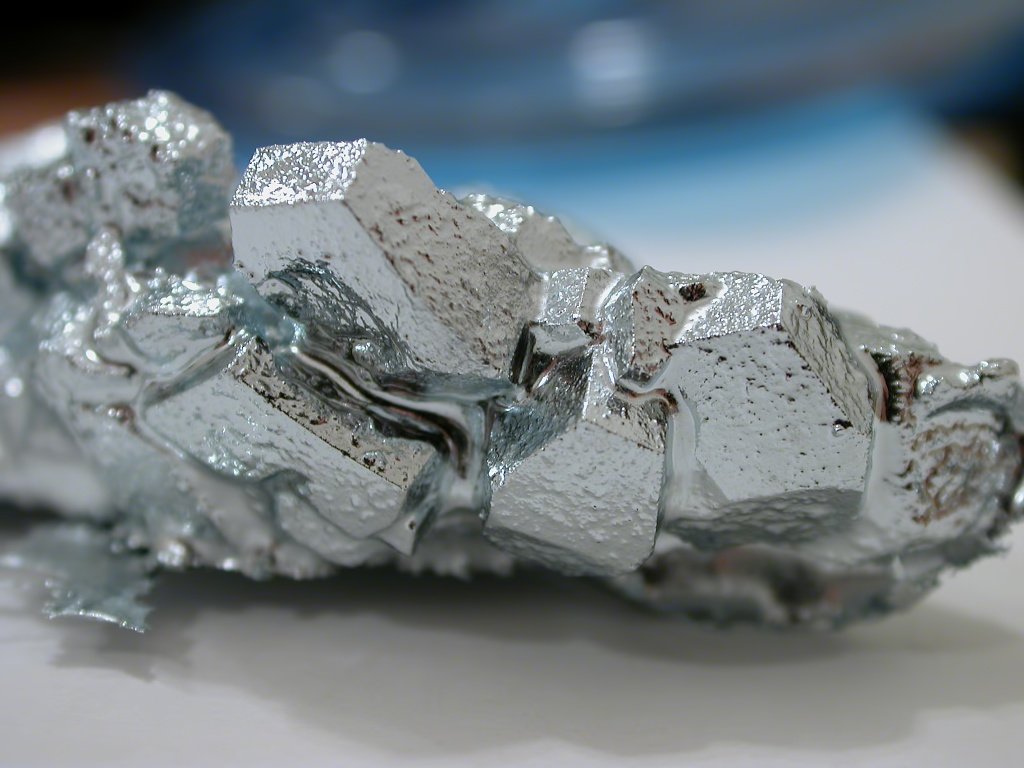
Unlike tungsten ammunition, gallium cannot always be tied neatly to one publicly disclosed component of a particular tank. Manufacturers rarely publish the semiconductor material composition of individual radar and electronic modules. But platforms incorporating modern radar-based active protection, advanced RF communications and digital sensors represent exactly the type of armored architecture in which gallium-based semiconductor supply becomes relevant.
That includes the latest generations of vehicles being built around active protection and networked sensor suites rather than simply thicker armor.
Here the concentration is extraordinary. USGS research found China responsible for as much as 98 percent of global gallium production in the examined period.
China has also imposed controls on gallium exports, making the mineral a prominent example of how industrial policy, technology competition and defense procurement increasingly overlap.
Future competition in armored warfare may therefore involve factories producing radar modules and semiconductor materials almost as much as factories welding armor plate.
4. Rare Earth Elements: Small Components, Large Dependencies
Rare earths are frequently associated with electric vehicles and renewable energy, but modern defense systems depend heavily on them as well.
Elements including neodymium and dysprosium can be used in powerful permanent magnets found in motors, actuators and sophisticated electronic systems.
NATO’s own defense supply-chain assessment explicitly connects neodymium with main battle tanks. That becomes increasingly relevant as vehicles such as newer Abrams variants, Leopard 2 modernization packages and next-generation armored platforms incorporate more electrically operated equipment, sensors, communications hardware and automated subsystems.
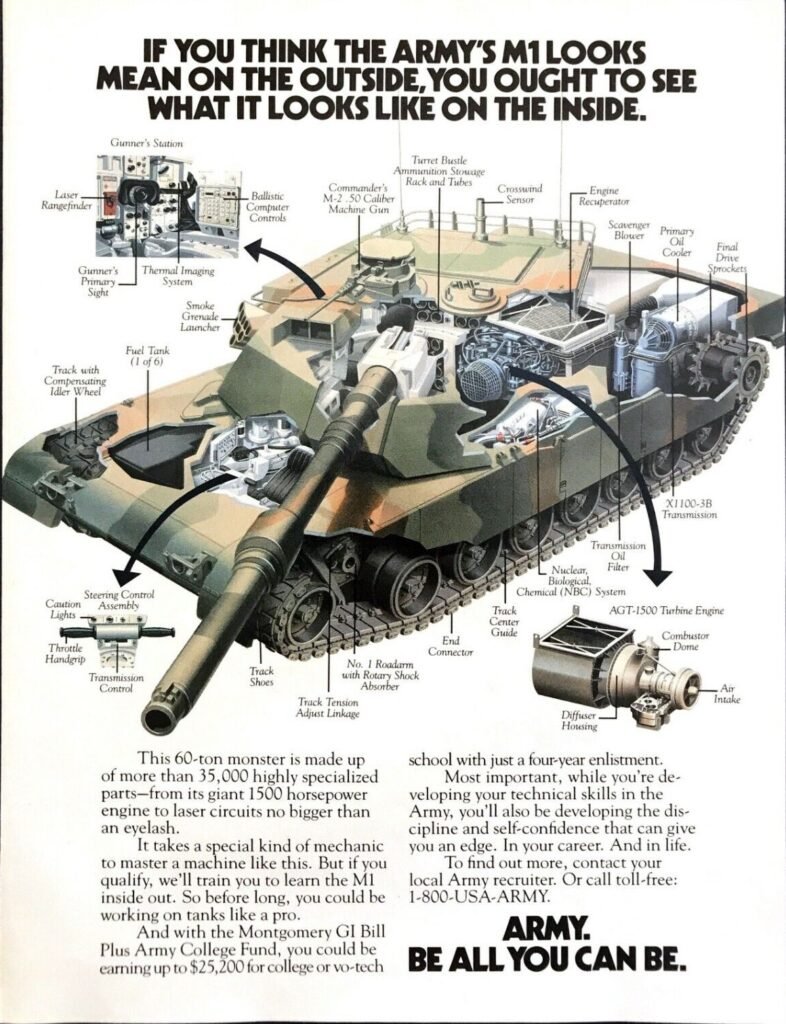
The mineral may represent only a tiny fraction of the tank’s overall mass. Operationally, however, losing access to specialized magnets or electronic components can still hold up an entire subsystem.
Once again, China is central to the story. The strategic issue is not simply where rare-earth ores exist. Mining, separation, refining and magnet production form a much longer industrial chain, and China has developed considerable influence across those stages.
Opening a new mine therefore does not automatically solve dependence. A country can possess ore while still relying on another country to transform it into usable industrial material. That distinction is fundamental to the emerging mineral race.
5. Chromium: Armor Begins With Metallurgy
Chromium feels less exotic, but that should not make it less important.
It contributes to corrosion resistance, hardness and performance in specialized steels and alloys. For armored vehicles built around high-strength materials, metallurgy remains just as important as electronics.
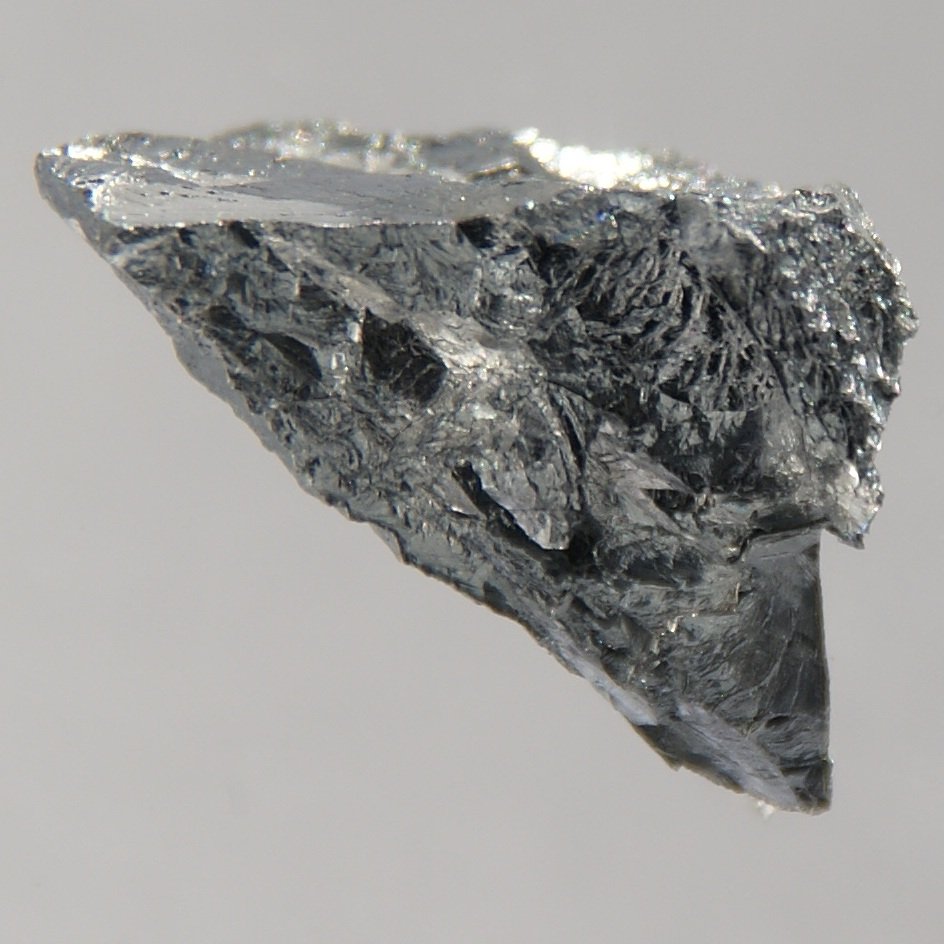
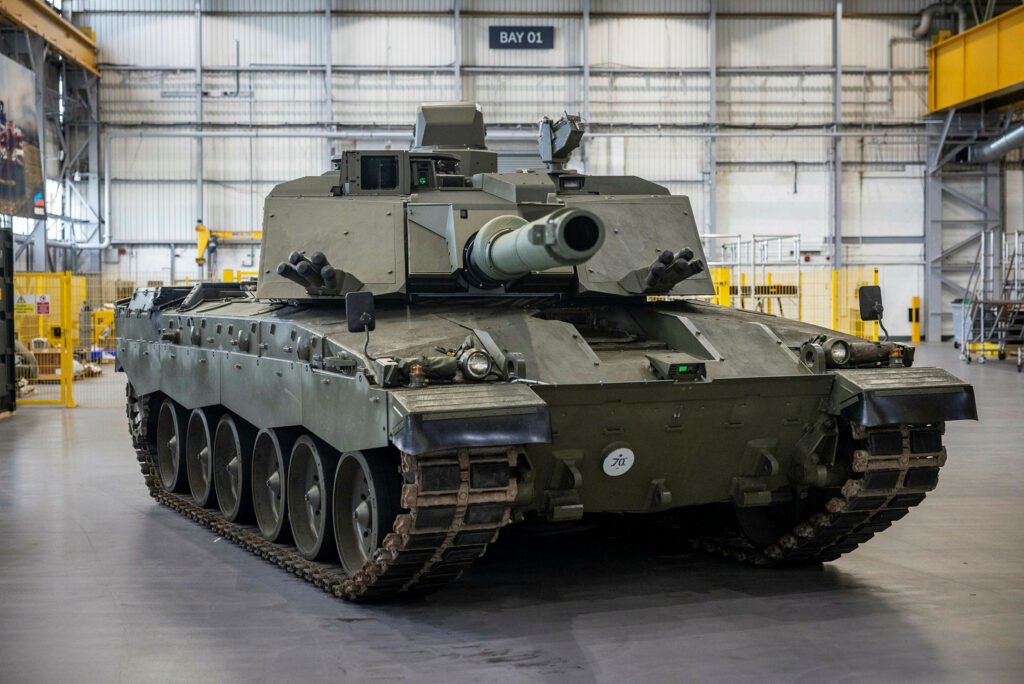
Think of platforms such as Leopard 2, M1 Abrams and Challenger 3. Their exact armor recipes are understandably not public, and it would be misleading to claim a specific chromium percentage for their classified armor packages. What can be said more broadly is that armored vehicle production depends on a large ecosystem of high-strength and specialty steels, engines, transmissions and mechanical components where chromium-bearing alloys have important industrial roles.
South Africa is the heavyweight here. USGS estimates indicate that it accounted for roughly 46 percent of global mined chromium production in 2024, with Kazakhstan another major producer. Kazakhstan has continued developing its chromite industry, including new mining capacity.
The risk is different from germanium or gallium. Chromium supply involves large-volume mining, energy-intensive processing, transportation infrastructure and geographically concentrated production. Disruption does not need to come from an export ban alone. Electricity problems, infrastructure constraints, sanctions, logistics or political instability can all matter.
The New Armored Supply Chain
Tomorrow’s armored competition will not be decided exclusively by who can design the best tank.
A Leopard 2 may require tungsten-based ammunition to exploit its gun effectively. An Abrams depends heavily on sophisticated thermal and digital sighting systems. Future armored platforms will add more sensors, electronics, active protection and electrical components, creating additional dependence on gallium, rare earths and other specialized materials.
A country may therefore possess an excellent vehicle design and still face vulnerabilities stretching from South African chromium mines to Chinese tungsten processing and germanium supply.
That changes how we should look at the global mineral race.
Critical minerals are not merely an energy-transition issue anymore. They sit inside thermal sights, ammunition, electronics, motors, alloys and protection systems. Some of the most strategically important components of a modern armored vehicle begin their journey thousands of kilometers away from the assembly line, often inside a mine few people looking at the finished tank will ever see.
Sources:
- NATO. “NATO Releases List of 12 Defence-Critical Raw Materials.”.
- NATO. “Defence-Critical Supply Chain Security Roadmap: Supply Risk for Critical Raw Materials in Military Applications.”.
- Rheinmetall. “Qualification Samples of New Tank Ammunition for the Bundeswehr and British Army.” Rheinmetall.
- U.S. Geological Survey. Mineral Commodity Summaries 2026. U.S. Department of the Interior.
- Rheinmetall. “Rheinmetall at DEFEA 2025.” Rheinmetall,
- U.S. Army. “The Armored Brigade Combat Team 2014-2024: Improving Abrams Lethality.”.
- U.S. Army. “Abrams Tank Programs Increasing.” U.S. Army.