
Drill & Defense
Advertisement
  • Defense Industry
    • Industry News
    • Defense Companies
    • Defense Technologies
    • Market Analysis
  • Military Systems
    • Land Systems
    • Air Systems
    • Naval Systems
    • Electronic & Cyber Systems
  • Firearms
    • Pistols
    • Rifles
    • SMGs & Machine Guns
    • Ammunition
    • Optics & Accessories
  • Geopolitics
    • Global Security
    • Defense & Energy Strategy
    • Tech & Innovation Crossover
    • Trade & Export Controls
  • Energy & Security
    • Oil & Gas News
    • Energy Technologies
    • Market Trends & Analysis
  • History
    • Military History
    • Doctrines & Concepts
    • Strategic Turning Points
    • Legacy Systems & Structures
  • Knowledge Base
    • Firearms Basics
    • Defense Know-How
    • Energy Fundamentals
    • Regulations & Frameworks
  • About
  • Contact
  • Login
  • Register
No Result
View All Result
  • Defense Industry
    • Industry News
    • Defense Companies
    • Defense Technologies
    • Market Analysis
  • Military Systems
    • Land Systems
    • Air Systems
    • Naval Systems
    • Electronic & Cyber Systems
  • Firearms
    • Pistols
    • Rifles
    • SMGs & Machine Guns
    • Ammunition
    • Optics & Accessories
  • Geopolitics
    • Global Security
    • Defense & Energy Strategy
    • Tech & Innovation Crossover
    • Trade & Export Controls
  • Energy & Security
    • Oil & Gas News
    • Energy Technologies
    • Market Trends & Analysis
  • History
    • Military History
    • Doctrines & Concepts
    • Strategic Turning Points
    • Legacy Systems & Structures
  • Knowledge Base
    • Firearms Basics
    • Defense Know-How
    • Energy Fundamentals
    • Regulations & Frameworks
  • About
  • Contact
  • Login
  • Register
No Result
View All Result
Drill & Defense
No Result
View All Result
Home Military Systems

The Next Problem for Unmanned Boats: How Do You Refuel Them?

September 5, 2026
in Military Systems, Naval Systems
Unmanned Boats

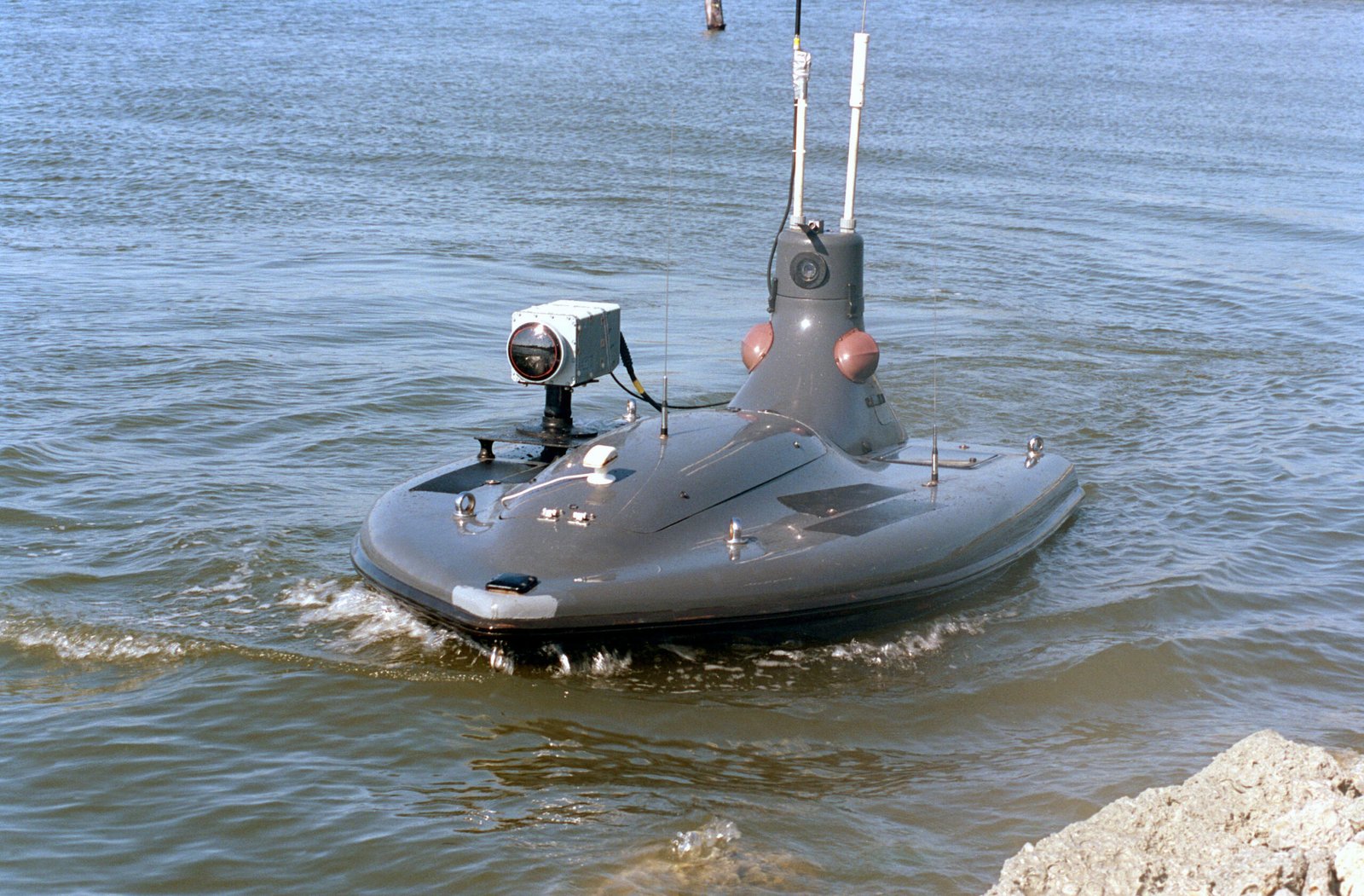
The Navtec, Incorporated Owl MKII Unmanned Surface Vehicle (USV) glides stealthly through the waters of Mile Hammock Bay, New River during a demonstration to highlight it's marine reconnaissance capabilities to the Riverine Insertion Operation Exercise (RIOEX) '98 participants.

Share on LinkedInShare on Twitter

Unmanned surface vessels are usually discussed through autonomy, sensors, weapons and endurance. Remove the crew, and a vessel can potentially stay at sea longer, accept more risk and dedicate more internal space to machinery, fuel or mission systems. Yet every unmanned vessel eventually runs into the same basic problem: it still needs to be sustained.

Fuel is a good place to see that problem clearly. An autonomous vessel may be capable of navigating without sailors, but its engines still consume fuel, machinery still wears down and components still need attention. Removing people from the ship does not remove logistics from naval operations.

A Ship Without Sailors Still Needs Support

DARPA’s No Manning Required Ship, or NOMARS, program was designed around this idea from the beginning. Its demonstrator, USX-1 Defiant, was built without accommodations for a crew during normal operations. It is not simply a conventional ship with the people taken out. The vessel was designed around the assumption that nobody would be living, sleeping or routinely working aboard it.

That gives engineers more freedom. Space normally used for crew facilities can be reassigned, while some systems can be simplified because they no longer need to support people.
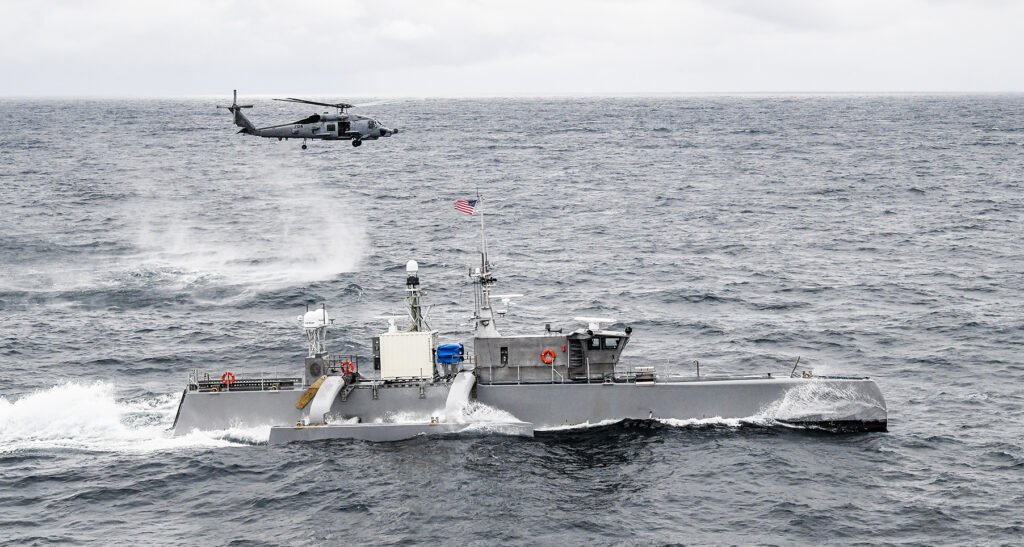
A Seahawk medium displacement unmanned surface vessel and an MH-60R Sea Hawk helicopter from Helicopter Maritime Strike Squadron (HSM) 73 participate in U.S. Pacific Fleet’s Unmanned Systems Integrated Battle Problem (UxS IBP) 21, April 21. UxS IBP 21 integrates manned and unmanned capabilities into challenging operational scenarios to generate warfighting advantages.

But propulsion still sets limits. Defiant is roughly 180 feet long, and vessels of this size cannot remain at sea indefinitely without fuel or maintenance. If every unmanned ship has to return to port whenever its tanks run low, much of the advantage of long-duration autonomous operations begins to disappear.

Refueling Without Anyone on Deck

Conventional underway replenishment depends heavily on people. Sailors manage lines, monitor connections and respond when the vessels move differently in changing sea conditions.

That creates an obvious problem for a ship with nobody aboard.

DARPA demonstrated one possible solution in December 2024 using the experimental USVs Ranger and Mariner. Ranger carried a receiving system representative of what was planned for Defiant, while Mariner carried the refueling equipment. The system transferred and connected the refueling probe without human assistance on the receiving vessel.
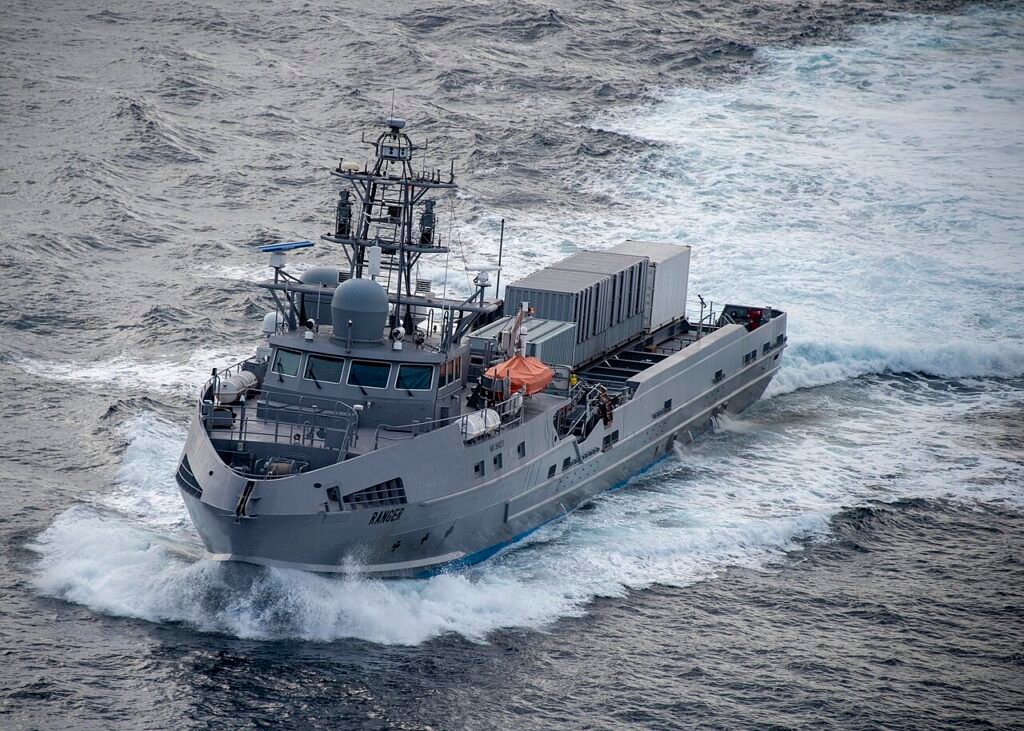
Overlord USV Ranger.

Water was used instead of fuel during the demonstration, but the main challenge was mechanical rather than chemical. The objective was to prove that two moving vessels could establish a transfer connection without requiring sailors on the unmanned platform.

Defiant later demonstrated the same general concept near Port Hueneme in 2025, again with no personnel aboard the receiving vessel.

For USVs, that kind of capability could be far more important than it first appears.

Range Is Not Just About Bigger Fuel Tanks

A vessel that has to travel back to port every time it needs fuel loses time while leaving the area where it is actually needed. Longer-range USVs could simply carry more fuel, but that creates its own compromises.

Fuel takes up volume and adds weight. Increasing tank capacity can affect hull design, payload space and overall cost. At-sea refueling offers another option by shifting part of the endurance problem from the individual platform to the wider support network.

Crewed navies already operate this way. Oilers and replenishment ships allow combat vessels to remain deployed without constantly returning to shore. An unmanned fleet will likely need a similar logistics structure, although the equipment and procedures may look very different.
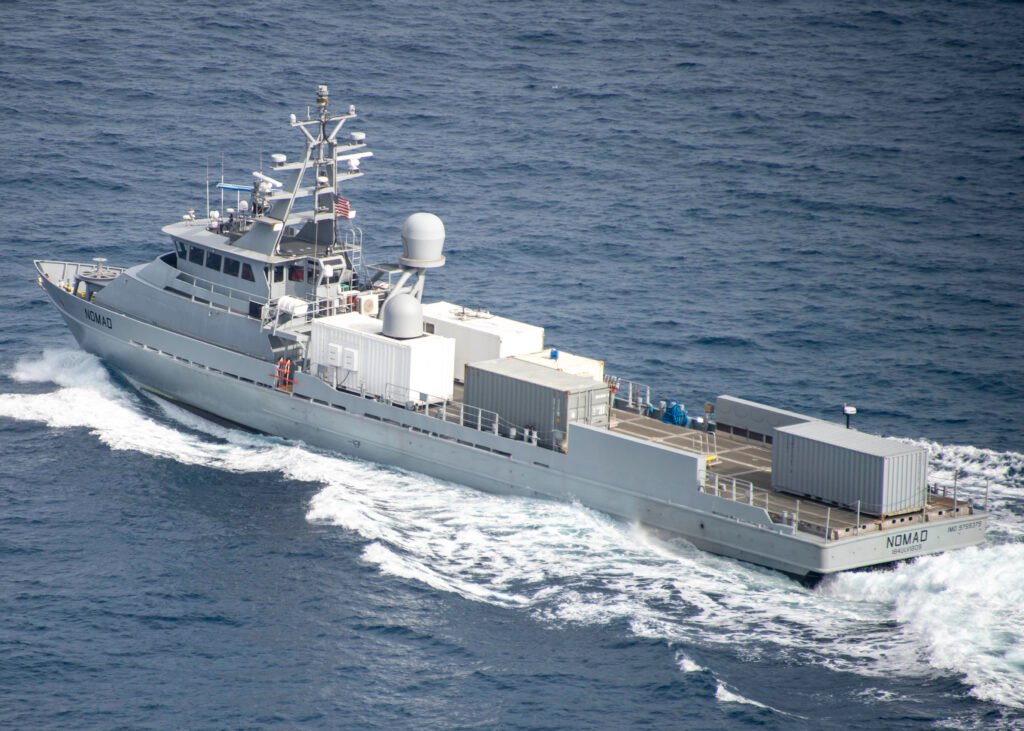
The large unmanned surface vessel Nomad arrives at Pearl Harbor.

The Sea Makes Everything Harder

Connecting two vessels at sea is not the same as connecting a hose at a dock. Wind, waves and vessel movement constantly change the relative position of both platforms.

The U.S. Naval Research Laboratory was already working on robotic fuel transfer for unmanned surface vessels more than a decade ago. Its Rapid Autonomous Fuel Transfer research tested ways to connect and refuel USVs while accounting for movement and simulated sea conditions.
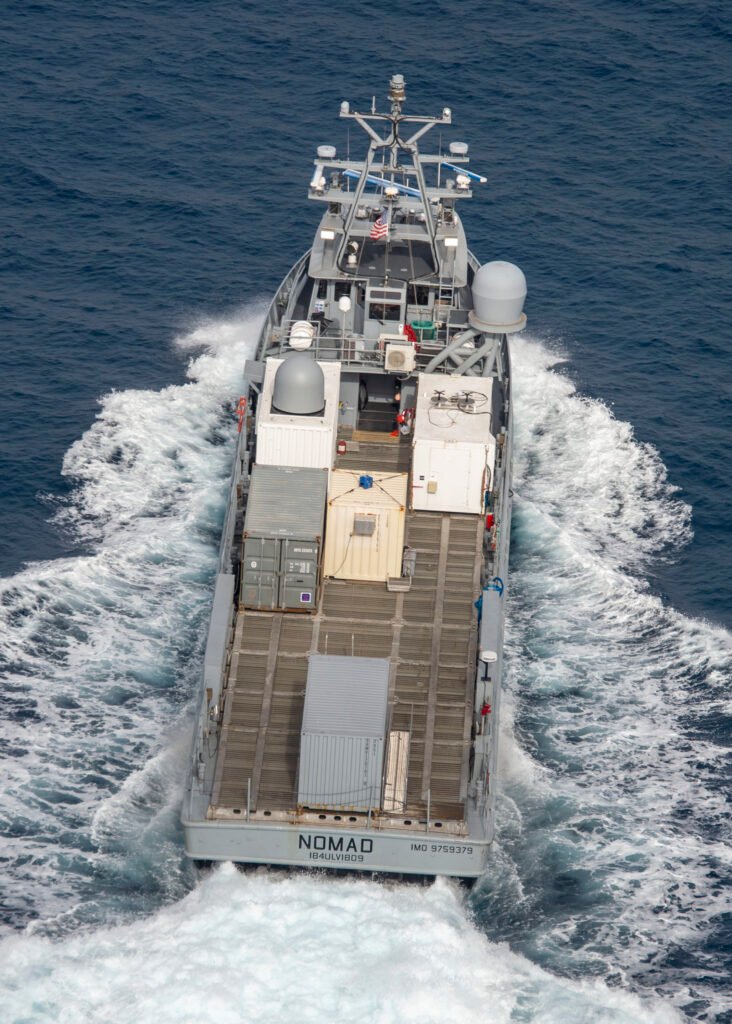
USV Nomad RIMPAC.

The technology has now become more relevant because USVs themselves are becoming larger and more ambitious.

The U.S. Navy is developing a broader range of unmanned surface vessels and selected several companies for Medium Unmanned Surface Vessel demonstrations in 2026. As these vessels move closer to operational use, refueling becomes less of an experimental side project and more of a requirement.

Fuel May Not Be the Hardest Part

Even if autonomous refueling becomes routine, endurance will still depend on more than fuel.

Sensors become dirty. Cooling systems fail. Pumps wear out. Communications equipment develops faults. Saltwater damages exposed systems. Mechanical problems do not disappear simply because nobody is onboard to notice them.

This may become one of the biggest limits on long-duration unmanned naval operations. A crewed ship carries technicians who can inspect equipment, repair faults and improvise when something goes wrong. An unmanned ship has to rely much more heavily on reliability, redundancy and remote diagnosis.

That means true endurance should probably be measured by how long the complete vessel can continue operating before human intervention becomes necessary, not just by how many nautical miles it can travel on a tank of fuel.
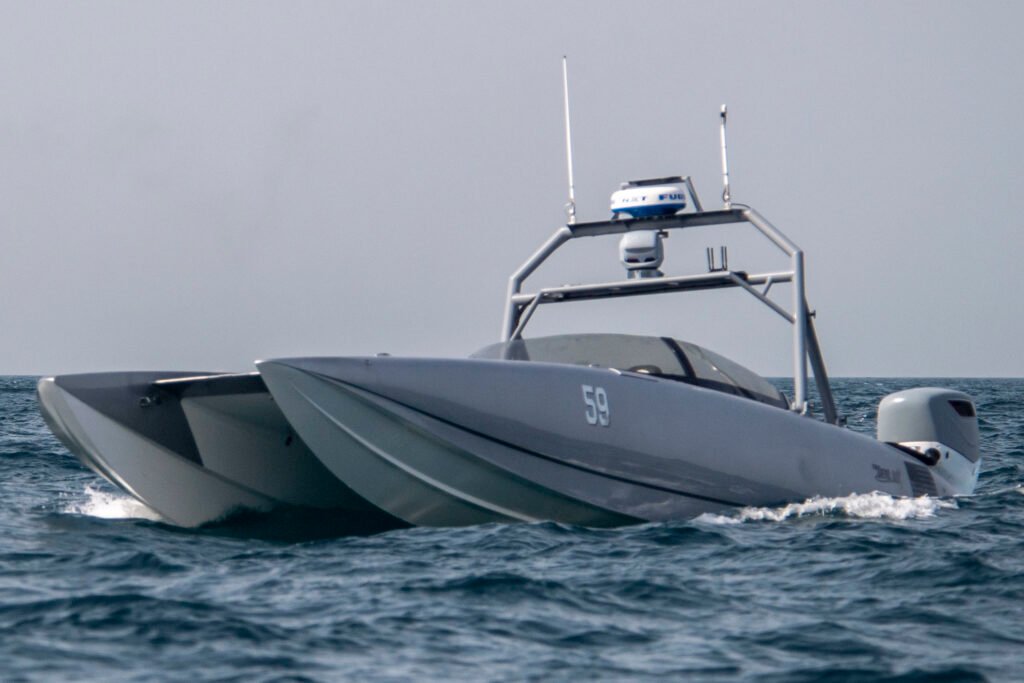
A Devil Ray T-38 unmanned surface vessel, littoral combat ship USS Sioux City (LCS 11), and U.S. Coast Guard cutter USCGC Baranof (WPB 1318) sail in the Arabian Gulf.

The Logistics Network May Become Unmanned Too

Future USV fleets may eventually need more than robotic refueling. They may depend on autonomous or optionally crewed vessels carrying spare parts, replacement payloads and maintenance equipment.

The U.S. Navy has already experimented with digitally crewed vessels performing logistics tasks during RIMPAC 2026, including transporting replacement components and drone-related equipment. That points toward a wider transformation. The autonomous combat vessel may only be one part of the system. Refueling, resupply, recovery and maintenance could gradually become more automated as well.

USVs are often presented as a way to remove sailors from dangerous missions. That part is easy to understand. The more difficult problem is building the support network that allows those vessels to remain useful after the first few days or weeks at sea.

The question is no longer simply whether an unmanned ship can operate without a crew.

It is how much of the fleet around it must change before that becomes practical.

Sources:

  • Defense Advanced Research Projects Agency (DARPA). “Automated Fueling-at-Sea Test Completed for Unmanned Surface Vehicle Program.” December 19, 2024.
  • Defense Advanced Research Projects Agency (DARPA). “No Manning Required Ship (NOMARS).”
  • U.S. Naval Research Laboratory. “NRL Tests Robotic Fueling of Unmanned Surface Vessels.”
  • Defense Advanced Research Projects Agency (DARPA). “NOMARS At-Sea Demo.”
  • U.S. Navy. “U.S. Navy Announces Seven Companies Selected for MUSV Marketplace At-Sea Demonstrations.” May 29, 2026.

Previous Post

Beyond Steel: Five Critical Minerals Behind Modern Armored Warfare

Related Posts

HUMVEE
Military Systems

HUMVEE: The Vehicle That Outlived the Battlefield It Was Built For

August 31, 2026
IDF Caterpillar D9R armored bulldozer
Military Systems

Caterpillar D9: The Armored Bulldozer That Clears the Way

August 5, 2026
M88A2 Hercules Recovery Vehicle
Military Systems

M88A2 HERCULES: Recovering the Machines That Cannot Be Left Behind

July 27, 2026
Hughes_OH-6A_Cayuse
Military Systems

Hughes OH-6 Cayuse: A Small Helicopter Built for Dangerous Work

July 22, 2026
Rockwell_MBB_X31
Military Systems

Rockwell-MBB X-31 and the Problem of Control Beyond the Stall

July 20, 2026
United_States_Air_Force_Lockheed_U-2S_Dragon_Lady_80-1094_Royal_International_Air_Tattoo_2025_01
Military Systems

Lockheed Martin U-2: The Aircraft That Refused to Become Old

July 3, 2026
  • Trending
  • Latest
Heckler_&_Koch_G3_Holzschaft_Display_noBG

HK G3: A Rifle That Stayed Longer Than Expected

April 29, 2026
FN FAL: The Right Arm of the Free World

FN FAL: The Right Arm of the Free World

March 31, 2026
MG42-1

MG42 Machine Gun: WWII History, Specifications and Battlefield Impact

April 21, 2026
Operation Enduring Freedom

What Exactly Is a Private Military Company (PMC)?

September 6, 2025
Unmanned Boats

The Next Problem for Unmanned Boats: How Do You Refuel Them?

September 5, 2026
Challenger_1MBT_Mk_3_(7527916878)

Beyond Steel: Five Critical Minerals Behind Modern Armored Warfare

September 3, 2026
HUMVEE

HUMVEE: The Vehicle That Outlived the Battlefield It Was Built For

August 31, 2026
U.S. military NATO

What Happens to European Security If America Steps Back?

August 28, 2026

Recent Articles

Unmanned Boats

The Next Problem for Unmanned Boats: How Do You Refuel Them?

September 5, 2026
Challenger_1MBT_Mk_3_(7527916878)

Beyond Steel: Five Critical Minerals Behind Modern Armored Warfare

September 3, 2026
HUMVEE

HUMVEE: The Vehicle That Outlived the Battlefield It Was Built For

August 31, 2026
U.S. military NATO

What Happens to European Security If America Steps Back?

August 28, 2026
Drill & Defense

Drill & Defense is an independent defense and security platform covering firearms, military technology, geopolitics, energy security, and industry developments. We provide clear, structured, and practical insight for professionals, companies, and readers following the evolving defense landscape worldwide.

Follow Us

Browse by Category

  • Air Systems
  • Defense & Energy Strategy
  • Defense Industry
  • Defense Know-How
  • Defense Technologies
  • Doctrines & Concepts
  • Energy & Security
  • Energy Fundamentals
  • Energy Technologies
  • Firearms
  • Geopolitics
  • Global Security
  • History
  • Industry News
  • Knowledge Base
  • Land Systems
  • Legacy Systems & Structures
  • Market Analysis
  • Market Trends & Analysis
  • Military History
  • Military Systems
  • Naval Systems
  • Oil & Gas News
  • Pistols
  • Regulations & Frameworks
  • Rifles
  • SMGs & Machine Guns
  • Strategic Turning Points
  • Tech & Innovation Crossover
  • Trade & Export Controls

Recent Articles

Unmanned Boats

The Next Problem for Unmanned Boats: How Do You Refuel Them?

September 5, 2026
Challenger_1MBT_Mk_3_(7527916878)

Beyond Steel: Five Critical Minerals Behind Modern Armored Warfare

September 3, 2026

© 2026 Drill & Defense. All rights reserved. Independent insights on firearms, defense, and energy. For business inquiries: info@drillanddefense.com | PRIVACY POLICY | COOKIE POLICY | TERMS AND CONDITIONS

Manage Consent

We use cookies to improve your experience. You can accept or refuse cookies; however, some features may not function properly without your consent.

Functional Always active
The technical storage or access is strictly necessary for the legitimate purpose of enabling the use of a specific service explicitly requested by the subscriber or user, or for the sole purpose of carrying out the transmission of a communication over an electronic communications network.
Preferences
The technical storage or access is necessary for the legitimate purpose of storing preferences that are not requested by the subscriber or user.
Statistics
The technical storage or access that is used exclusively for statistical purposes. The technical storage or access that is used exclusively for anonymous statistical purposes. Without a subpoena, voluntary compliance on the part of your Internet Service Provider, or additional records from a third party, information stored or retrieved for this purpose alone cannot usually be used to identify you.
Marketing
The technical storage or access is required to create user profiles to send advertising, or to track the user on a website or across several websites for similar marketing purposes.
  • Manage options
  • Manage services
  • Manage {vendor_count} vendors
  • Read more about these purposes
View preferences
  • {title}
  • {title}
  • {title}
No Result
View All Result
  • Defense Industry
    • Industry News
    • Defense Companies
    • Defense Technologies
    • Market Analysis
  • Military Systems
    • Land Systems
    • Air Systems
    • Naval Systems
    • Electronic & Cyber Systems
  • Firearms
    • Pistols
    • Rifles
    • SMGs & Machine Guns
    • Ammunition
    • Optics & Accessories
  • Geopolitics
    • Global Security
    • Defense & Energy Strategy
    • Tech & Innovation Crossover
    • Trade & Export Controls
  • Energy & Security
    • Oil & Gas News
    • Energy Technologies
    • Market Trends & Analysis
  • History
    • Military History
    • Doctrines & Concepts
    • Strategic Turning Points
    • Legacy Systems & Structures
  • Knowledge Base
    • Firearms Basics
    • Defense Know-How
    • Energy Fundamentals
    • Regulations & Frameworks
  • About
  • Contact
  • Login
  • Register

© 2026 Drill & Defense. All rights reserved. Independent insights on firearms, defense, and energy. For business inquiries: info@drillanddefense.com | PRIVACY POLICY | COOKIE POLICY | TERMS AND CONDITIONS