

Hughes OH-6 Cayuse was developed during a period when the United States Army needed a light, fast, and economical helicopter for observation missions. Its compact fuselage and rounded cockpit gave it an unusual appearance, but the aircraft soon proved that size could become a major advantage in low-altitude military operations.

Selected through the Army’s Light Observation Helicopter program, the Hughes Model 369 entered service as the OH-6A Cayuse. Crews later gave it the nickname “Loach,” derived from the abbreviation LOH. Although originally intended to replace older observation helicopters, its role quickly expanded beyond routine reconnaissance.
Powered by an Allison T63 turboshaft engine, the OH-6A combined relatively high speed with excellent maneuverability. A four-bladed main rotor provided responsive handling, while its small dimensions allowed pilots to fly close to trees, roads, riverbanks, and uneven terrain. These features became particularly important during the Vietnam War, where identifying concealed positions from higher altitude was often difficult.
Low-Level Reconnaissance in Vietnam
Vietnam became the conflict most closely associated with the OH-6. Crews used it for visual reconnaissance, target identification, command support, liaison duties, and damage assessment. Many missions were conducted only a short distance above the ground.
Pilots searched for bunkers, trails, disturbed vegetation, smoke, equipment, footprints, or any other sign of enemy activity. Dense jungle made conventional observation difficult, so crews often had to approach suspected positions at extremely low altitude.
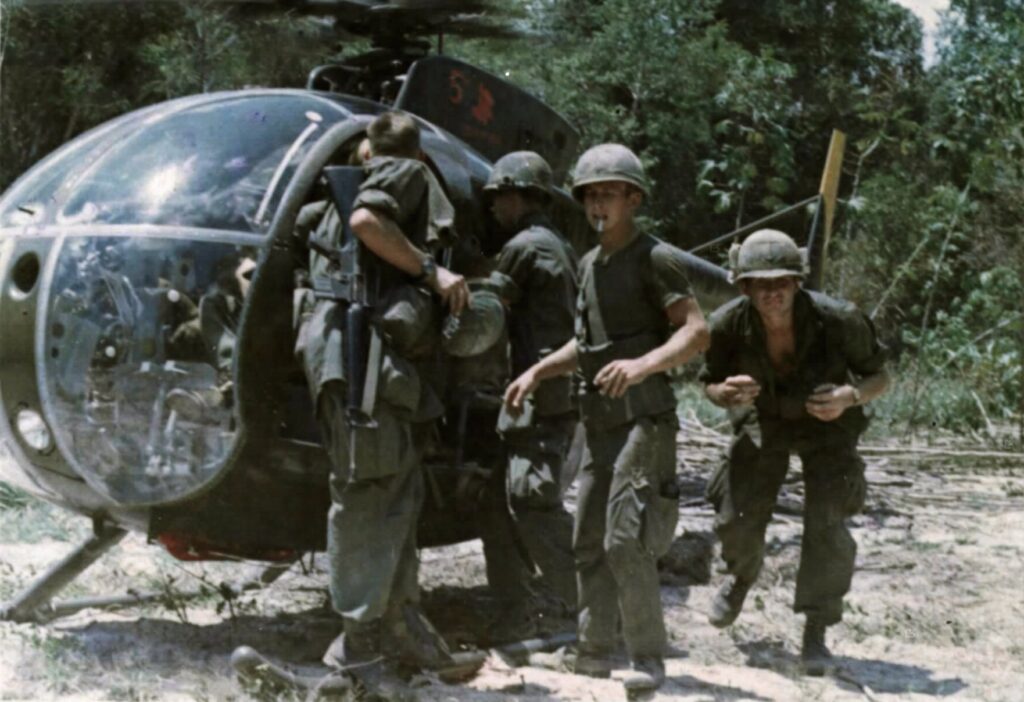
This method exposed the helicopter to small-arms fire, machine guns, and concealed defensive positions. In some operations, enemy fire itself helped reveal a target. Once hostile forces opened fire, the crew could mark the area with smoke and report the position to supporting aircraft. Such missions required more than simply flying over a location and collecting information. Crews had to remain low enough to notice small details while maintaining enough speed and movement to avoid becoming an easy target. Terrain awareness, rapid decision-making, and cooperation between pilot and observer were essential.
Cooperation with the AH-1 Cobra
One of the most recognizable uses of the OH-6 involved its cooperation with the AH-1G Cobra attack helicopter. These formations were commonly known as hunter-killer teams or “Pink Teams.”
Within this arrangement, the OH-6 operated as the low-flying scout. A Cobra remained at a higher altitude and followed the scout into the area. Once the Cayuse detected enemy activity, the attack helicopter could engage the position with rockets, guns, or other available weapons.
This relationship depended on the different strengths of each aircraft. Cobra crews had more firepower, but the OH-6 could move closer to the terrain and investigate restricted areas more effectively. Its smaller profile also made it suitable for following narrow routes and examining positions hidden beneath vegetation.
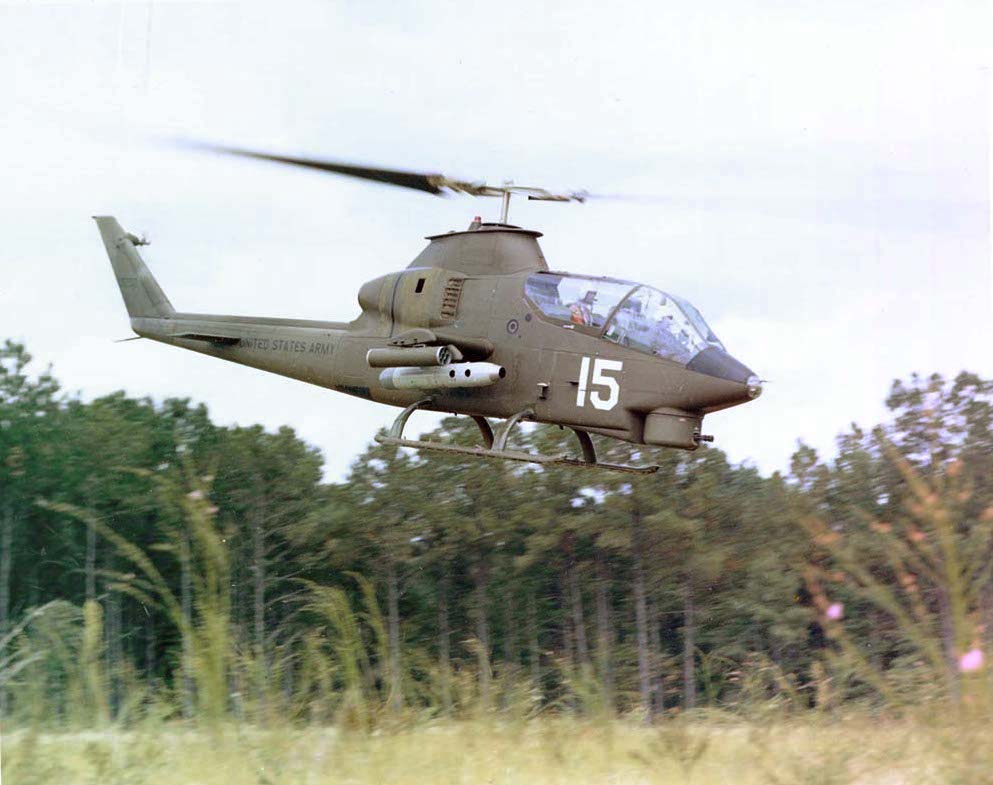
The tactic was effective, but it also placed the scout crew in the most exposed position. They were usually the first to enter the suspected threat area and often the first to receive hostile fire. Success therefore depended on aircraft agility, crew experience, communication, and immediate support from the accompanying gunship.
Weapons and Self-Protection
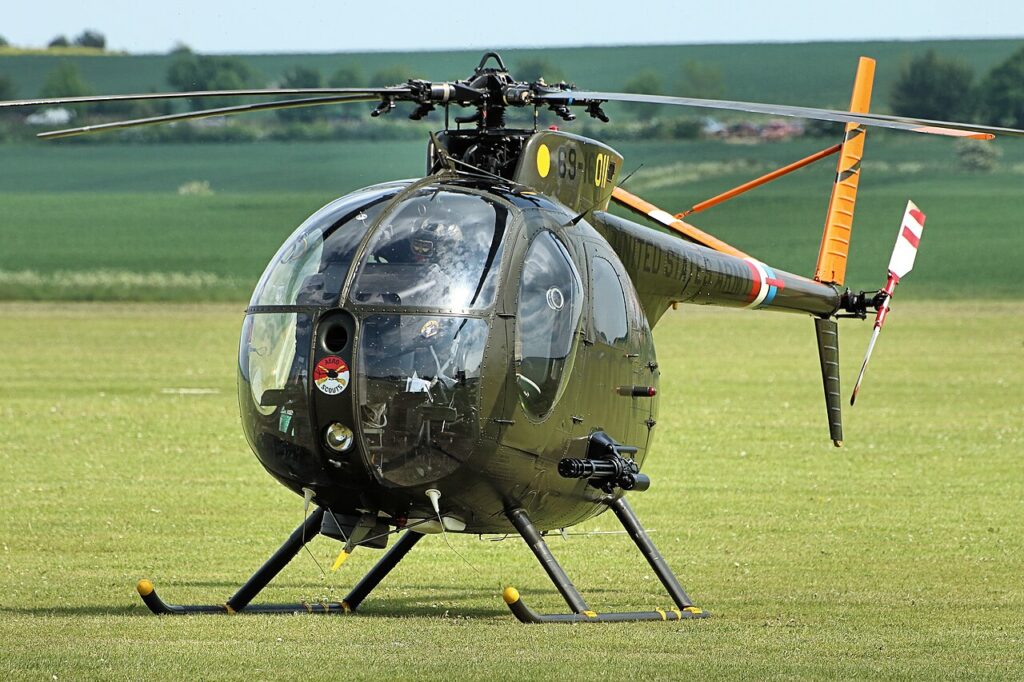
Although designed primarily for observation, the OH-6A could carry several weapon systems. Configurations included the M134 7.62 mm Minigun, 40 mm grenade-launching systems, and door-mounted machine guns. These weapons gave crews the ability to return fire, suppress a position, or support troops on the ground. However, the Cayuse was not intended to replace a dedicated attack helicopter. Its weapons supported its reconnaissance mission rather than becoming its main purpose.
Information remained its most important contribution. Locating an enemy position, identifying a movement route, or guiding another aircraft toward a target could have greater operational value than the limited firepower carried by the helicopter itself.
Survivability at Low Altitude
Operating close to the ground created constant risks, but the OH-6 offered several practical advantages. Its compact profile made it more difficult to observe and track than larger helicopters. Responsive controls allowed pilots to make rapid changes in altitude and direction, while the small airframe could use trees, hills, and other terrain features for concealment.
Confined landing capability was another important advantage. OH-6 crews could operate from small clearings or restricted areas that would be unsuitable for larger rotary-wing aircraft.
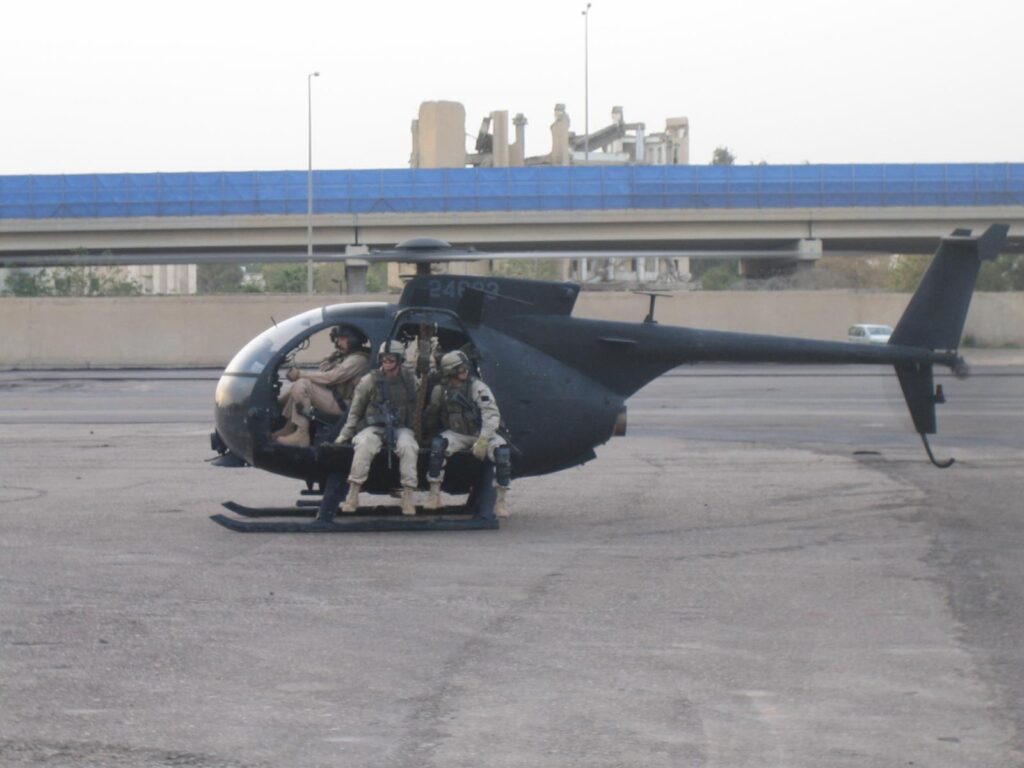
Even so, small size did not make the helicopter safe. Vietnam-era missions resulted in substantial aircraft losses, and many pilots survived multiple shoot-downs. Cayuse crews operated in an environment where rifles and machine guns could be as dangerous as larger air-defense weapons.
Survivability depended on a combination of aircraft construction, tactical movement, maintenance, and pilot skill. Terrain was not simply an obstacle. Experienced crews used it as protection, navigation, and concealment.
From the Cayuse to the Little Bird
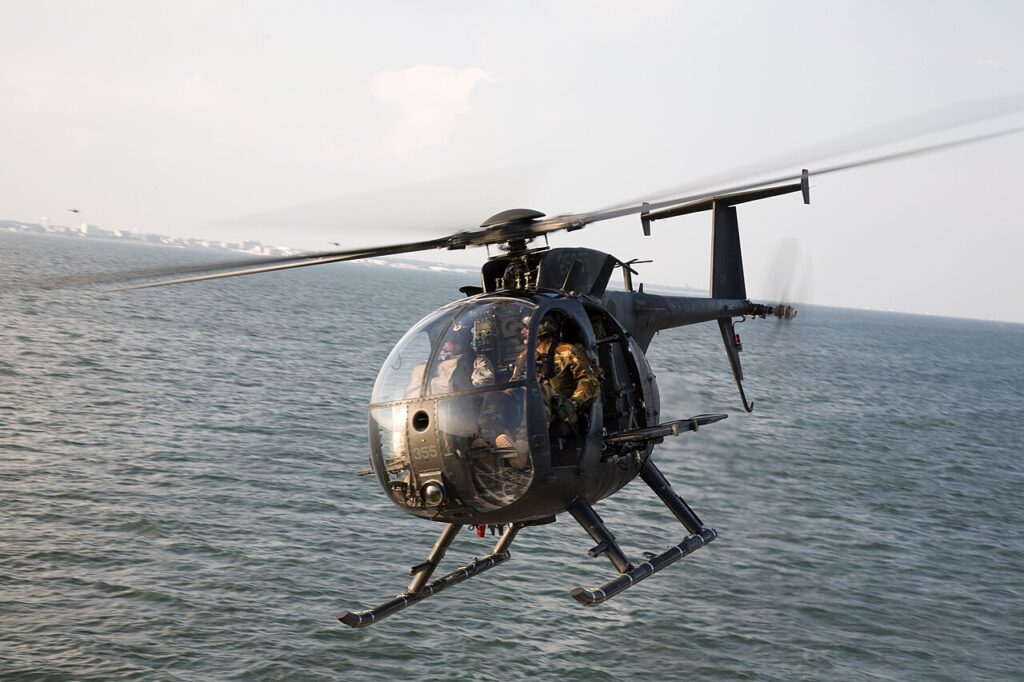
OH-6 development continued beyond Vietnam through the wider Hughes 500 family. Later military derivatives eventually contributed to the AH-6 and MH-6 Little Bird aircraft used by US special operations forces.
Modern versions retained many characteristics of the original design, including compact dimensions, agility, and the ability to operate in restricted urban or rural environments. More powerful engines, updated avionics, improved rotor systems, external personnel platforms, and modern weapons considerably expanded their capabilities.
This long development history demonstrates the strength of the basic Hughes design. An aircraft initially produced for observation duties evolved into a platform capable of supporting reconnaissance, light attack, special operations, transport, training, law enforcement, and civilian work. Adaptability became one of its most important qualities. Rather than remaining connected only to Vietnam, the design continued to respond to new operational requirements for several decades.
A Distinctive Role in Army Aviation
Larger helicopters from the Vietnam era often receive more attention. UH-1 Huey became closely associated with troop transport and medical evacuation, while AH-1 Cobra represented the growing importance of dedicated attack helicopters.
OH-6 Cayuse served a different purpose. It moved ahead of heavier aircraft, located threats, examined routes, marked positions, and provided information to commanders and supporting crews.
Its contribution came from access rather than size. Small dimensions allowed it to enter areas where larger aircraft would have been more visible, less maneuverable, or unable to land. Speed and responsiveness allowed crews to react quickly once a threat appeared.
Hughes OH-6 Cayuse showed that a reconnaissance aircraft does not need heavy armor or a large weapons load to influence combat operations. By allowing other units to understand what was happening close to the ground, it became an important part of the wider aviation team.
Sources:
- US Army Aviation and Missile Command. “Aviation Systems: OH-6A Cayuse Light Observation Helicopter.”
- United States Army Aviation Museum. “History of Army Aviation.”
- The Boeing Company. “Boeing Historical Chronology.”