
Drill & Defense
Advertisement
  • Defense Industry
    • Industry News
    • Defense Companies
    • Defense Technologies
    • Market Analysis
  • Military Systems
    • Land Systems
    • Air Systems
    • Naval Systems
    • Electronic & Cyber Systems
  • Firearms
    • Pistols
    • Rifles
    • SMGs & Machine Guns
    • Ammunition
    • Optics & Accessories
  • Geopolitics
    • Global Security
    • Defense & Energy Strategy
    • Tech & Innovation Crossover
    • Trade & Export Controls
  • Energy & Security
    • Oil & Gas News
    • Energy Technologies
    • Market Trends & Analysis
  • History
    • Military History
    • Doctrines & Concepts
    • Strategic Turning Points
    • Legacy Systems & Structures
  • Knowledge Base
    • Firearms Basics
    • Defense Know-How
    • Energy Fundamentals
    • Regulations & Frameworks
  • About
  • Contact
  • Login
  • Register
No Result
View All Result
  • Defense Industry
    • Industry News
    • Defense Companies
    • Defense Technologies
    • Market Analysis
  • Military Systems
    • Land Systems
    • Air Systems
    • Naval Systems
    • Electronic & Cyber Systems
  • Firearms
    • Pistols
    • Rifles
    • SMGs & Machine Guns
    • Ammunition
    • Optics & Accessories
  • Geopolitics
    • Global Security
    • Defense & Energy Strategy
    • Tech & Innovation Crossover
    • Trade & Export Controls
  • Energy & Security
    • Oil & Gas News
    • Energy Technologies
    • Market Trends & Analysis
  • History
    • Military History
    • Doctrines & Concepts
    • Strategic Turning Points
    • Legacy Systems & Structures
  • Knowledge Base
    • Firearms Basics
    • Defense Know-How
    • Energy Fundamentals
    • Regulations & Frameworks
  • About
  • Contact
  • Login
  • Register
No Result
View All Result
Drill & Defense
No Result
View All Result
Home Military Systems

M88A2 HERCULES: Recovering the Machines That Cannot Be Left Behind

July 27, 2026
in Military Systems, Land Systems
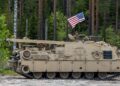
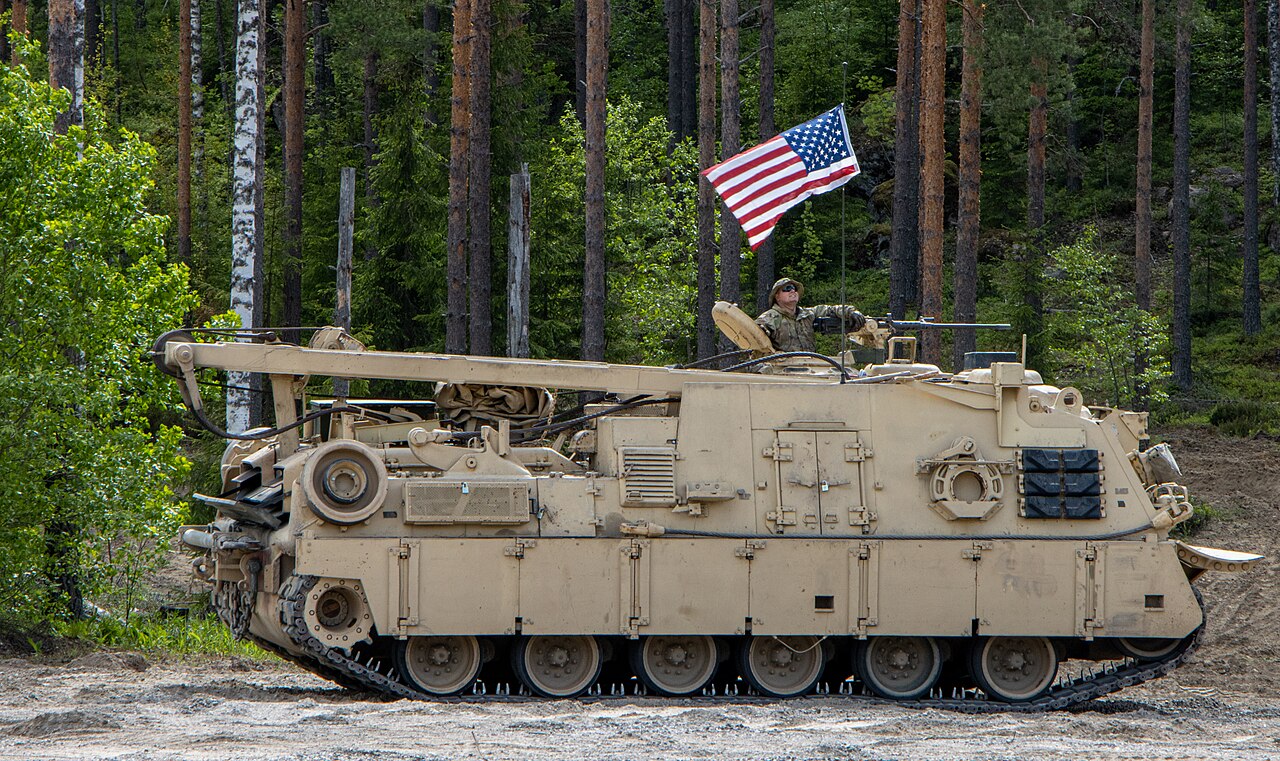
M88A2 Hercules Recovery Vehicle

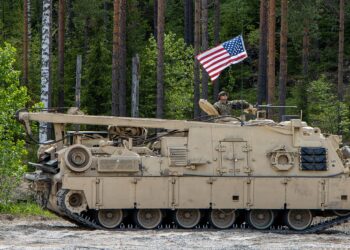
An M88 Recovery vehicle, assigned to 1st Battalion, 8th Cavalry Regiment, flies the American flag to celebrate a decisive victory during Karelian Lock 23 on Pahkajarvi Training Area, June 1, 2023. Exercise Lock is a biannual combined arms exercise which serves as the final stop in the training pipeline for approximately 6,000 members of the Finnish Defense Forces. U.S. Troopers train alongside the Finnish Defense Forces in high-intensity, force-on-force engagements to increase military readiness and promote interoperability among partner nations.

Share on LinkedInShare on Twitter

A main battle tank stops moving in difficult terrain. Its engine may have failed, its track may have broken or the ground beneath it may no longer support its weight. Combat units cannot simply attach a conventional tow cable and continue their mission. A vehicle weighing more than 60 tonnes can resist recovery with almost the same force that once allowed it to cross the battlefield.

What happens next?

In many U.S. armored formations, that responsibility belongs to the M88A2 HERCULES. Developed to recover, tow and support heavy tracked vehicles, it operates in a part of warfare that receives far less attention than firepower or armor protection. Yet a disabled tank left in the field can block movement, expose sensitive systems and reduce the fighting strength of an entire unit.

Recovery is not an administrative task performed after the battle. It can become part of the battle itself.

Why Heavy Armor Needs Heavy Recovery

Modern armored vehicles have gradually become heavier as additional armor, electronic systems, weapons and protection packages have been installed. Every increase in weight creates new demands for transport, maintenance and recovery equipment.

Earlier versions of the M88 family were designed during a period when tanks were lighter. As the Abrams evolved, particularly through the M1A1 and M1A2 variants, the recovery fleet also required greater pulling power, stronger lifting capacity and better protection. The M88A2 emerged from this requirement. Its full name, Heavy Equipment Recovery Combat Utility Lift and Evacuation System, was shortened into the far more practical HERCULES designation.
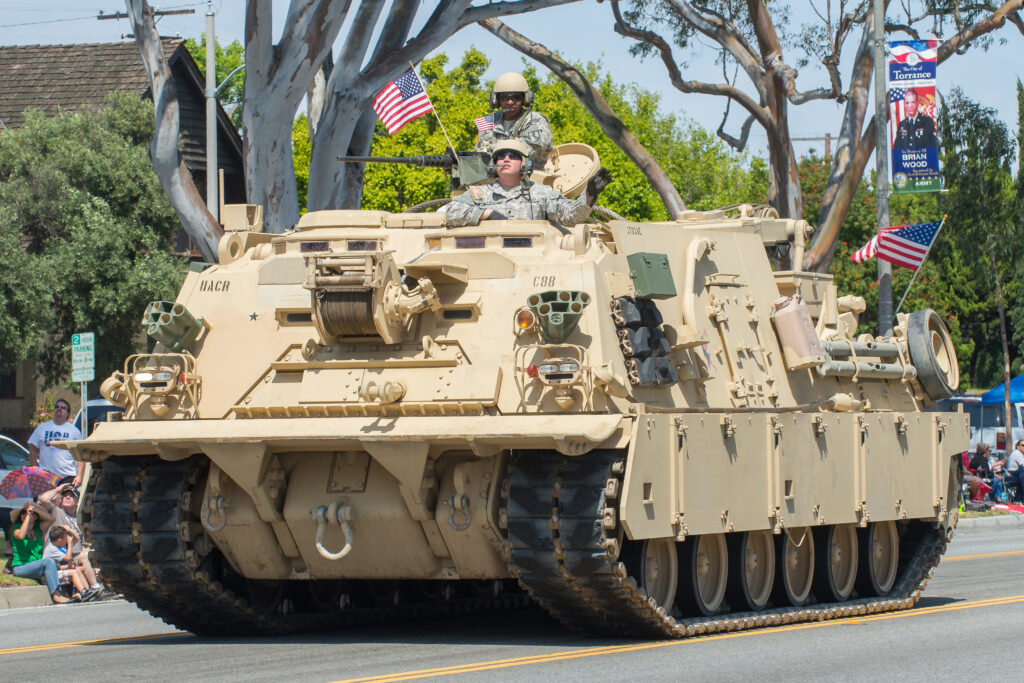
M88A2 Hercules Recovery Vehicle. mark6mauno, CC BY 2.0 https://creativecommons.org/licenses/by/2.0.

Its primary tasks include recovering immobilized armored vehicles, towing damaged platforms and supporting field maintenance. Single-vehicle towing of an Abrams tank was one of the major improvements introduced with the M88A2.

At first glance, towing may appear to be the simplest part of its mission. In practice, pulling a damaged tank across uneven or soft ground involves far more than engine power. Terrain resistance, vehicle angle, cable positioning, traction and the condition of the disabled vehicle all affect the operation.

Would the same recovery method work in deep mud, on a steep slope and inside a damaged urban street? Clearly not. Crew judgment remains just as important as mechanical strength.


More Than an Armored Tow Vehicle

Much of the HERCULES vehicle’s capability is concentrated around its winching and lifting systems.

Its main winch can generate a constant pull of approximately 140,000 pounds, equal to more than 63,000 kilograms of force. Around 280 feet of cable allows crews to position the vehicle at a workable distance from the damaged platform. An auxiliary winch assists with handling and deploying the heavier main cable.

A large A-frame boom gives the vehicle a lifting capacity of approximately 35 tons. This feature allows crews to lift major components, including tank powerpacks, during maintenance operations. Removing an engine and transmission assembly in the field can prevent a repairable vehicle from being transported much farther away.

The front-mounted spade provides another essential function. Lowering it into the ground helps stabilize the M88A2 during heavy winching. Without sufficient anchoring, the recovery vehicle could be pulled toward the immobilized tank rather than extracting it.
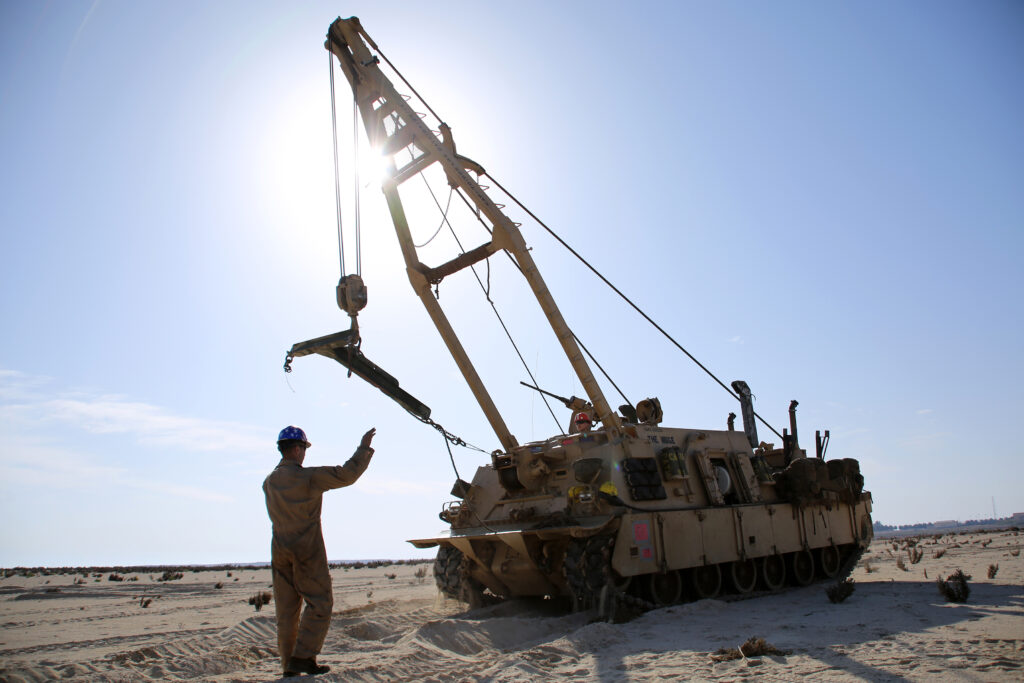
Sergeant Cody Olson, a main battle tank repairer/technician with Combat Logistics Battalion 24, 24th Marine Expeditionary Unit, guides an M88A2 Hercules Armored Recovery Vehicle prior to performing scheduled maintenance on an M1A1 Abrams Main Battle Tank in the United Arab Emirates during Exercise Iron Magic 2015, Feb. 8, 2015. The 24th MEU is conducting theater security cooperation exercises to increase cooperation and interoperability, enhance relationships with existing partners, and promote long-term regional stability within the U.S. 5th Fleet area of operations. The 24th MEU is embarked on the ships of the Iwo Jima Amphibious Ready Group and deployed to maintain regional security in the U.S. 5th Fleet area of operations. (U.S. Marine Corps photo by Sgt. Devin Nichols/Released)

Limited earthmoving work is also possible. Crews may use the spade to clear obstacles, improve the recovery position or prepare the ground around a trapped vehicle. Calling the M88A2 a tow truck therefore understates its role. It operates as a recovery tractor, mobile crane, maintenance support platform and protected engineering vehicle within a single tracked chassis.


Recovery Operations Are Rarely Clean

Images of recovery vehicles often show controlled training environments, prepared routes and stationary equipment. Real operations can be far less predictable.

A tank may be immobilized under enemy observation. A damaged vehicle may be located near mines, damaged infrastructure or exposed terrain. Fire, leaking fuel, unstable ammunition and structural damage can further complicate the situation.
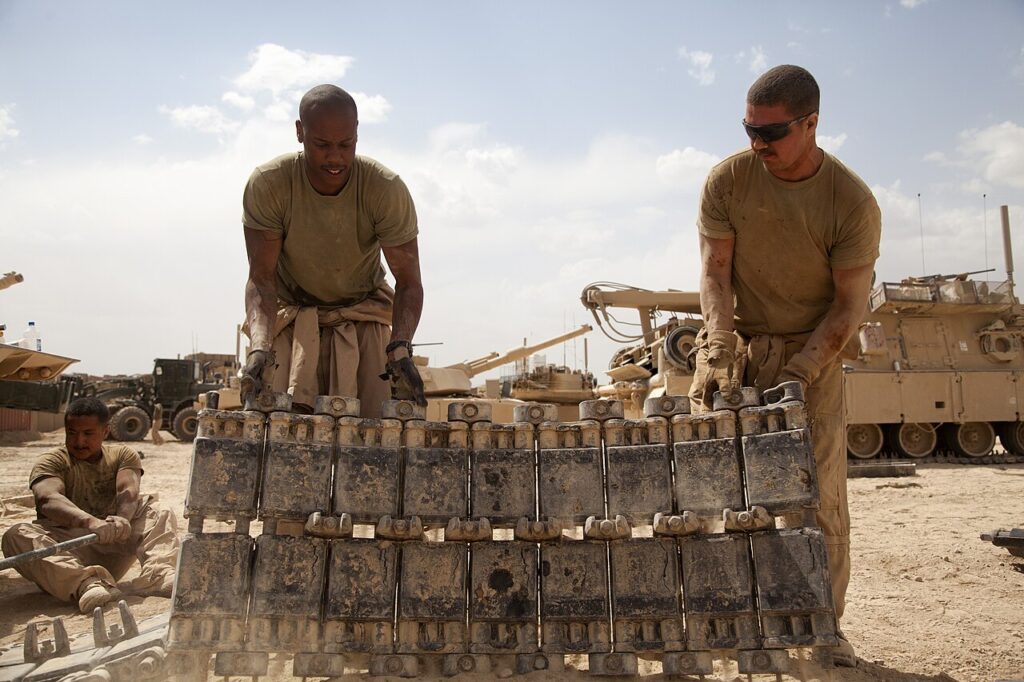
U.S. Marine Corps Cpl. Joshua Carnegie, left, and Cpl. Anthony Andress, both assigned to Delta Company, 1st Tank Battalion, move a piece of tire track while conducting maintenance on an M88A2 Hercules recovery vehicle at Forward Operating Base Shir Ghazay, Helmand province, Afghanistan, May 7, 2013.

Before connecting the recovery system, crews must determine whether the vehicle can be moved safely. Is the track locked? Has the suspension collapsed? Could towing cause additional damage? Is the selected attachment point strong enough for the expected load?

These questions cannot be answered only through technical specifications.

Human activity outside the armored compartment may still be necessary to connect cables, inspect damage and prepare equipment. This creates vulnerability, especially when recovery is conducted close to active fighting. Speed matters, but rushing the process can cause cable failure, vehicle damage or injury. A successful recovery operation depends on coordination between the M88A2 crew, the disabled vehicle’s crew, maintenance personnel and the wider tactical unit protecting the area.
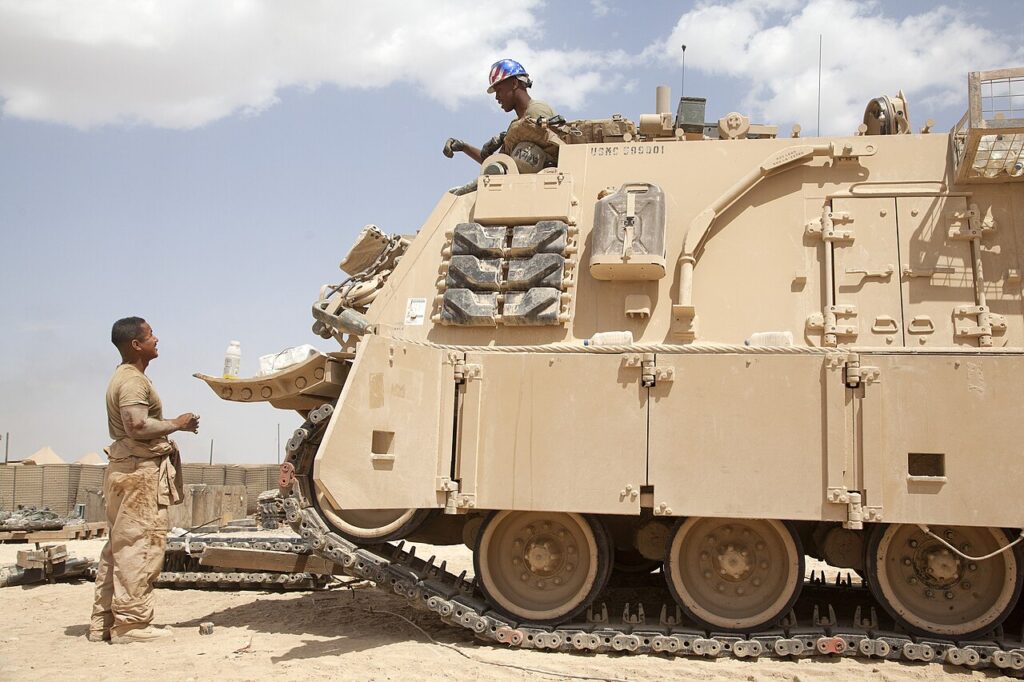
U.S. Marine Corps Cpl. Wilmer Rivas, left, and Cpl. Joshua Carnegie, both assigned to Delta Company, 1st Tank Battalion, conduct maintenance on an M88A2 Hercules recovery vehicle at Forward Operating Base Shir Ghazay, Helmand province, Afghanistan, May 7, 2013.

Protection for a Dangerous Mission

Although it is primarily a support vehicle, the M88A2 is designed to work in environments where protection cannot be ignored.

Armor improvements, ballistic skirts and additional protection help reduce risks from small-arms fire and battlefield fragments. A heavy machine gun provides local defensive capability, while smoke grenade launchers can help obscure the vehicle during movement or recovery operations.

Such systems do not turn the HERCULES into a frontline assault platform. They reflect the conditions in which recovery crews may be expected to work.
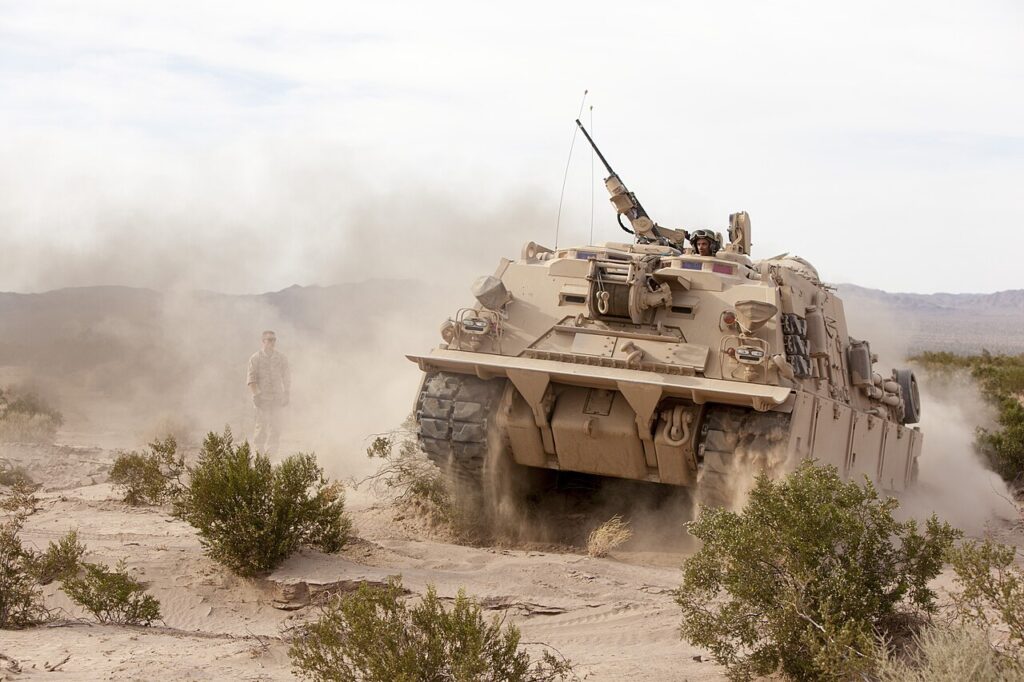
An M88A2 Hercules recovery vehicle maneuvers into position prior to recovering a downed Humvee during Desert Scimitar, May 16, 2014, aboard Marine Corps Air Ground Combat Center Twentynine Palms, California. Desert Scimitar 2014 was a 1st Marine Division exercise held to test and refine its command and control capabilities by acting as the headquarters element for a forward-deployed Marine Expeditionary Force simultaneously offering units the opportunity to hone their conventional war fighting skills. (U.S. Marine Corps photo by Corporal Trent Randolph, 1st Marine Division Combat Camera/Released)

A disabled tank can attract further enemy fire. Destroying the tank completely may deny its repair, while striking the recovery vehicle can remove two important assets at once. Recovery locations may also become predictable points of activity, particularly along narrow roads or restricted terrain.

This creates an unusual tactical problem. Crews must remain close enough to perform complex mechanical work while spending as little time as possible in an exposed position.


What Is Actually Being Recovered?

The obvious answer is a tank, but the real value is broader.

Recovering an armored vehicle preserves the investment already made in its production, transportation, maintenance and crew training. Even when immediate repair is impossible, removing the platform can prevent an opposing force from examining its armor, sensors, communication equipment or internal systems.

A disabled vehicle can also obstruct a road, bridge approach or narrow passage. One immobilized tank in the wrong location may delay every vehicle behind it. Recovery therefore supports mobility at the formation level, not only the individual platform.

There is also a psychological aspect. Crews operate differently when they know that damage does not automatically mean abandonment. Reliable recovery capability reinforces confidence that both personnel and equipment will be retrieved whenever conditions allow.
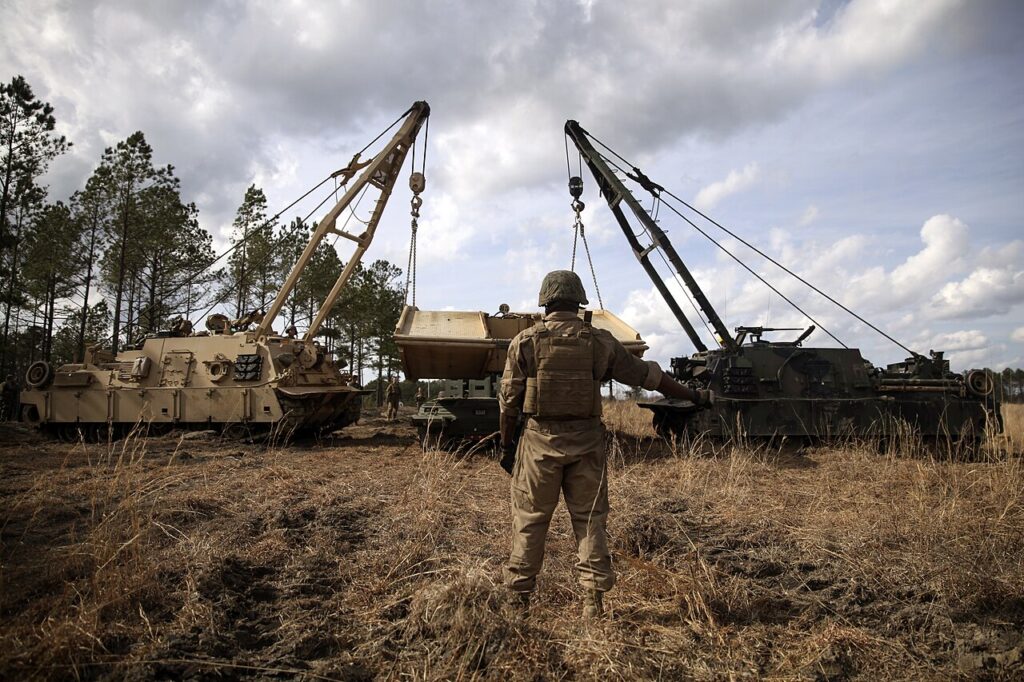
A Marine with 2nd Tank Battalion, 2nd Marine Division guides two M88A2 Heavy Equipment Recovery Combat Utility Lifting Extraction Systems (HERCULES) as they lift an M60A1 Armored Vehicle Launched Bridge (AVLB) onto a flatbed for transportation during a Marine Corps Combat Readiness Evaluation at Fort Pickett, Va., March 25-28, 2015. Marines with the battalion were evaluated in different scenarios during the MCCRE, which included tactical road marches, tanks advancing through a field while engaging potential threats, and shooting at a range designed for platoon gunnery qualification. (U.S. Marine Corps photo taken by Cpl. Alexander Mitchell/released)

How long can an armored formation continue operating if every mechanical failure becomes a permanent loss? Not very long.


The Weight Problem Has Returned

Later Abrams variants have continued to gain weight, creating new challenges for the M88A2. Certain recovery situations involving the heaviest configurations may require two HERCULES vehicles rather than one. This limitation does not mean the M88A2 has become obsolete. Instead, it reveals a recurring pattern in armored warfare. Combat vehicles gain protection and capability, while support systems must eventually be upgraded to match them.

The planned M88A3 modernization is intended to restore greater single-vehicle recovery capability. Proposed improvements include a more powerful drivetrain, upgraded suspension and an additional road wheel. Higher towing and recovery performance will be necessary for supporting the latest Abrams configurations.
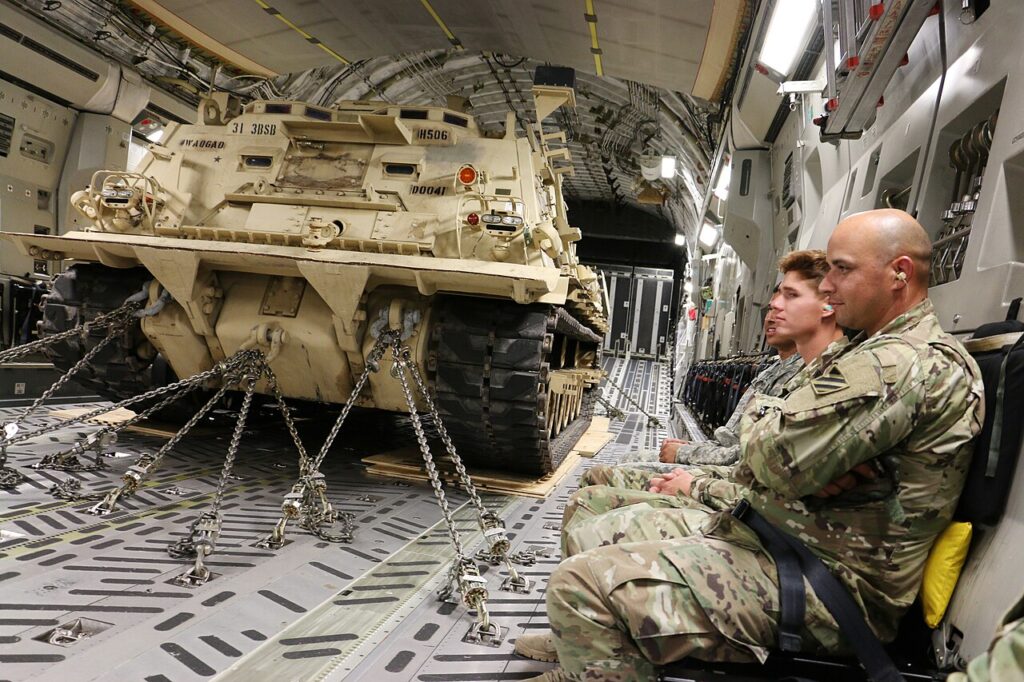
Soldiers of 2nd Infantry Brigade Combat Team, 3rd Infantry Division fly above Hunter Army Airfield, Ga. on a C-17 aircraft next to an M88A2 recovery vehicle Sept. 22, 2016 as part of a readiness rehearsal. Soldiers of Alpha Company, 2nd Battalion, 7th Infantry Regiment, temporarily attached to 2nd IBCT, are scheduled to assume responsibility as the Immediate Ready Company this October and will standby to support the Global Response Force. (U.S. Army photo by Staff Sgt. Candace Mundt/Released)
Unit: 2nd Brigade Combat Team, 3rd Infantry Division Public Affairs

Growth in vehicle weight rarely affects only the tank itself. Bridges, transporters, recovery vehicles, workshops and fuel systems all face additional pressure. A new armor package may improve battlefield survivability, but it can also produce logistical consequences across the entire force.

The M88A2 sits directly inside that balance. Its effectiveness depends not only on how much it can pull, but also on whether it can continue matching the vehicles it was built to support.


A Different Measure of Battlefield Power

Recovery vehicles rarely appear at the center of military discussions. Attention normally moves toward guns, missiles, drones and armor packages. Those systems may determine how a battle begins, but machines such as the M88A2 influence how quickly a unit can recover afterward. A tank formation is not sustained only by the vehicles firing at the enemy. It also depends on the vehicles carrying fuel, transporting ammunition, repairing components and retrieving damaged platforms.

The HERCULES performs one of the most physically demanding tasks within that network. When heavy armor loses mobility, the M88A2 provides the force needed to move it again, remove it from danger or return it to maintenance.

Its importance becomes clearest at the moment something goes wrong. At that point, recovery is no longer a background function. It becomes the difference between a temporary breakdown and a permanent battlefield loss.

Sources:

  • U.S. Army. “Modernized M88 Recovery Vehicle Variant Aims to Eliminate Gaps.”
  • BAE Systems. “M88A2 HERCULES Recovery Vehicle.” Product overview and technical information.
  • U.S. Army. “M88.” Equipment description and operational mission.
  • U.S. Army Worldwide Equipment Guide. “M88A2 Hercules American Armored Recovery Vehicle.”

Previous Post

Hughes OH-6 Cayuse: A Small Helicopter Built for Dangerous Work

Related Posts

Hughes_OH-6A_Cayuse
Military Systems

Hughes OH-6 Cayuse: A Small Helicopter Built for Dangerous Work

July 22, 2026
Rockwell_MBB_X31
Military Systems

Rockwell-MBB X-31 and the Problem of Control Beyond the Stall

July 20, 2026
United_States_Air_Force_Lockheed_U-2S_Dragon_Lady_80-1094_Royal_International_Air_Tattoo_2025_01
Military Systems

Lockheed Martin U-2: The Aircraft That Refused to Become Old

July 3, 2026
YAL-1A_Airborne_Laser_unstowed
Military Systems

YAL-1A Airborne Laser: The 747 That Tried to Kill Missiles With Light

June 26, 2026
Oshkosh M1070 HET
Military Systems

Oshkosh M1070 HET: Heavy Mobility Behind Armored Operations

June 22, 2026
Panzerschnellbrücke LEGUAN auf Leopard 2-Fahrgestell
Military Systems

Panzerschnellbrücke LEGUAN auf Leopard 2-Fahrgestell: The Bridge That Keeps Armoured Forces Moving

June 17, 2026
  • Trending
  • Latest
Operation Enduring Freedom

What Exactly Is a Private Military Company (PMC)?

September 6, 2025
FN FAL: The Right Arm of the Free World

FN FAL: The Right Arm of the Free World

March 31, 2026
MG42-1

MG42 Machine Gun: WWII History, Specifications and Battlefield Impact

April 21, 2026
Beretta 92FS vs Beretta M9: Is There a Real Difference?

Beretta 92FS vs Beretta M9: Is There a Real Difference?

July 19, 2025
M88A2 Hercules Recovery Vehicle

M88A2 HERCULES: Recovering the Machines That Cannot Be Left Behind

July 27, 2026
Hughes_OH-6A_Cayuse

Hughes OH-6 Cayuse: A Small Helicopter Built for Dangerous Work

July 22, 2026
Rockwell_MBB_X31

Rockwell-MBB X-31 and the Problem of Control Beyond the Stall

July 20, 2026
USAFE launches inaugural Combat Ammunition Production exercise

Why Modern Armies Need More Ammunition, Not Only More Advanced Weapons

July 13, 2026

Recent Articles

M88A2 Hercules Recovery Vehicle

M88A2 HERCULES: Recovering the Machines That Cannot Be Left Behind

July 27, 2026
Hughes_OH-6A_Cayuse

Hughes OH-6 Cayuse: A Small Helicopter Built for Dangerous Work

July 22, 2026
Rockwell_MBB_X31

Rockwell-MBB X-31 and the Problem of Control Beyond the Stall

July 20, 2026
USAFE launches inaugural Combat Ammunition Production exercise

Why Modern Armies Need More Ammunition, Not Only More Advanced Weapons

July 13, 2026
Drill & Defense

Drill & Defense is an independent defense and security platform covering firearms, military technology, geopolitics, energy security, and industry developments. We provide clear, structured, and practical insight for professionals, companies, and readers following the evolving defense landscape worldwide.

Follow Us

Browse by Category

  • Air Systems
  • Defense & Energy Strategy
  • Defense Industry
  • Defense Know-How
  • Defense Technologies
  • Doctrines & Concepts
  • Energy & Security
  • Energy Fundamentals
  • Energy Technologies
  • Firearms
  • Geopolitics
  • Global Security
  • History
  • Industry News
  • Knowledge Base
  • Land Systems
  • Legacy Systems & Structures
  • Market Analysis
  • Market Trends & Analysis
  • Military History
  • Military Systems
  • Naval Systems
  • Oil & Gas News
  • Pistols
  • Regulations & Frameworks
  • Rifles
  • SMGs & Machine Guns
  • Strategic Turning Points
  • Tech & Innovation Crossover

Recent Articles

M88A2 Hercules Recovery Vehicle

M88A2 HERCULES: Recovering the Machines That Cannot Be Left Behind

July 27, 2026
Hughes_OH-6A_Cayuse

Hughes OH-6 Cayuse: A Small Helicopter Built for Dangerous Work

July 22, 2026

© 2026 Drill & Defense. All rights reserved. Independent insights on firearms, defense, and energy. For business inquiries: info@drillanddefense.com | PRIVACY POLICY | COOKIE POLICY | TERMS AND CONDITIONS

Manage Consent

We use cookies to improve your experience. You can accept or refuse cookies; however, some features may not function properly without your consent.

Functional Always active
The technical storage or access is strictly necessary for the legitimate purpose of enabling the use of a specific service explicitly requested by the subscriber or user, or for the sole purpose of carrying out the transmission of a communication over an electronic communications network.
Preferences
The technical storage or access is necessary for the legitimate purpose of storing preferences that are not requested by the subscriber or user.
Statistics
The technical storage or access that is used exclusively for statistical purposes. The technical storage or access that is used exclusively for anonymous statistical purposes. Without a subpoena, voluntary compliance on the part of your Internet Service Provider, or additional records from a third party, information stored or retrieved for this purpose alone cannot usually be used to identify you.
Marketing
The technical storage or access is required to create user profiles to send advertising, or to track the user on a website or across several websites for similar marketing purposes.
  • Manage options
  • Manage services
  • Manage {vendor_count} vendors
  • Read more about these purposes
View preferences
  • {title}
  • {title}
  • {title}
No Result
View All Result
  • Defense Industry
    • Industry News
    • Defense Companies
    • Defense Technologies
    • Market Analysis
  • Military Systems
    • Land Systems
    • Air Systems
    • Naval Systems
    • Electronic & Cyber Systems
  • Firearms
    • Pistols
    • Rifles
    • SMGs & Machine Guns
    • Ammunition
    • Optics & Accessories
  • Geopolitics
    • Global Security
    • Defense & Energy Strategy
    • Tech & Innovation Crossover
    • Trade & Export Controls
  • Energy & Security
    • Oil & Gas News
    • Energy Technologies
    • Market Trends & Analysis
  • History
    • Military History
    • Doctrines & Concepts
    • Strategic Turning Points
    • Legacy Systems & Structures
  • Knowledge Base
    • Firearms Basics
    • Defense Know-How
    • Energy Fundamentals
    • Regulations & Frameworks
  • About
  • Contact
  • Login
  • Register

© 2026 Drill & Defense. All rights reserved. Independent insights on firearms, defense, and energy. For business inquiries: info@drillanddefense.com | PRIVACY POLICY | COOKIE POLICY | TERMS AND CONDITIONS