
Drill & Defense
Advertisement
  • Defense Industry
    • Industry News
    • Defense Companies
    • Defense Technologies
    • Market Analysis
  • Military Systems
    • Land Systems
    • Air Systems
    • Naval Systems
    • Electronic & Cyber Systems
  • Firearms
    • Pistols
    • Rifles
    • SMGs & Machine Guns
    • Ammunition
    • Optics & Accessories
  • Geopolitics
    • Global Security
    • Defense & Energy Strategy
    • Tech & Innovation Crossover
    • Trade & Export Controls
  • Energy & Security
    • Oil & Gas News
    • Energy Technologies
    • Market Trends & Analysis
  • History
    • Military History
    • Doctrines & Concepts
    • Strategic Turning Points
    • Legacy Systems & Structures
  • Knowledge Base
    • Firearms Basics
    • Defense Know-How
    • Energy Fundamentals
    • Regulations & Frameworks
  • About
  • Contact
  • Login
  • Register
No Result
View All Result
  • Defense Industry
    • Industry News
    • Defense Companies
    • Defense Technologies
    • Market Analysis
  • Military Systems
    • Land Systems
    • Air Systems
    • Naval Systems
    • Electronic & Cyber Systems
  • Firearms
    • Pistols
    • Rifles
    • SMGs & Machine Guns
    • Ammunition
    • Optics & Accessories
  • Geopolitics
    • Global Security
    • Defense & Energy Strategy
    • Tech & Innovation Crossover
    • Trade & Export Controls
  • Energy & Security
    • Oil & Gas News
    • Energy Technologies
    • Market Trends & Analysis
  • History
    • Military History
    • Doctrines & Concepts
    • Strategic Turning Points
    • Legacy Systems & Structures
  • Knowledge Base
    • Firearms Basics
    • Defense Know-How
    • Energy Fundamentals
    • Regulations & Frameworks
  • About
  • Contact
  • Login
  • Register
No Result
View All Result
Drill & Defense
No Result
View All Result
Home Military Systems

Starlink Restrictions in Ukraine Expose a Growing Military Dependence on Private Technology

October 15, 2026
in Military Systems, Electronic & Cyber Systems
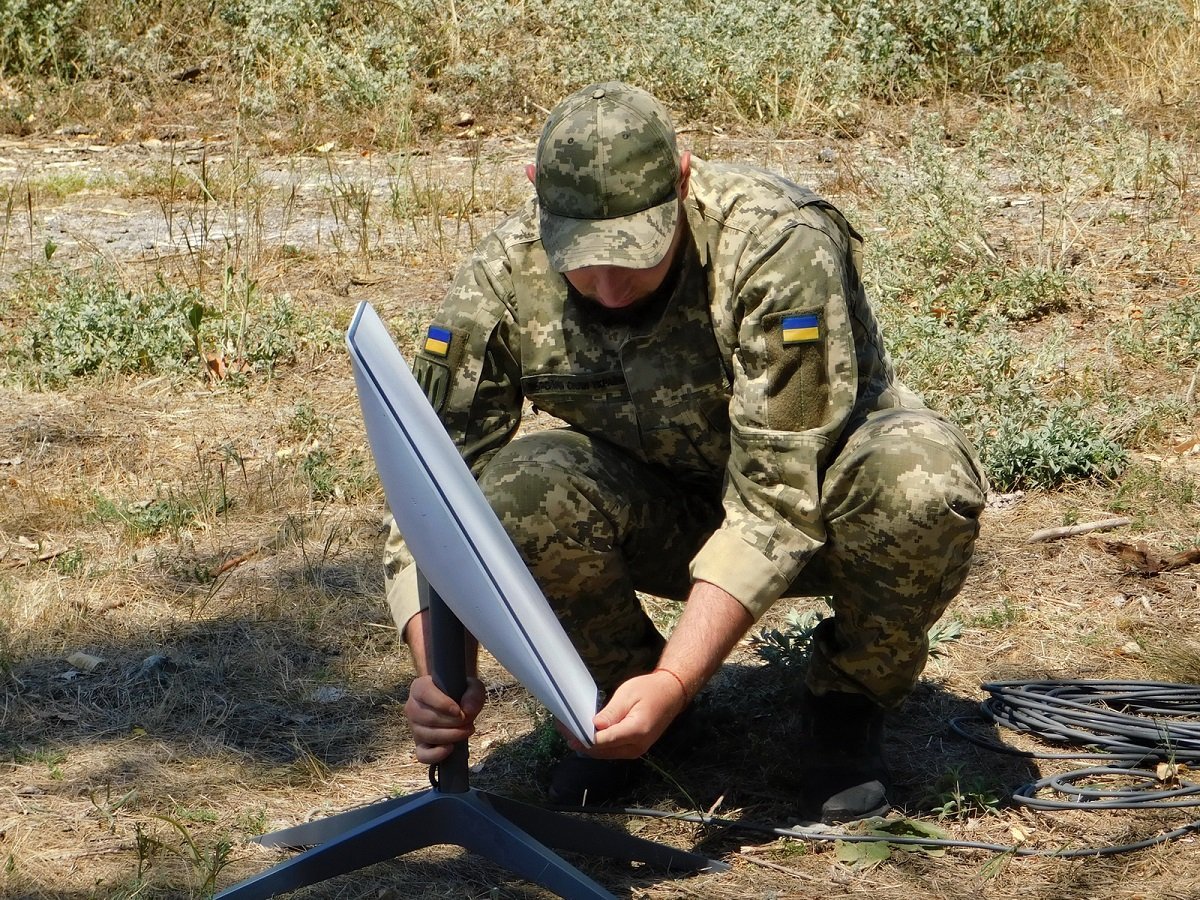
UA_Support_Forces_Starlink_01

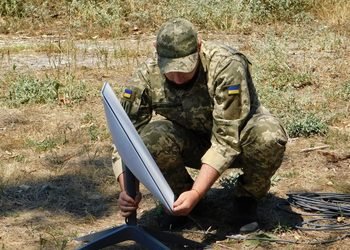
Support Forces of Ukraine soldier installing a Starlink terminal. Mil.gov.ua, CC BY 4.0.

Share on LinkedInShare on Twitter

Satellite communications have become an essential part of modern warfare, but the latest developments in Ukraine have raised an uncomfortable question. What happens when a military relies on infrastructure it does not fully control?

On October 14, 2026, Ukrainian officials reported that new restrictions on SpaceX’s Starlink services had disrupted several military drone operations. The issue was not a complete shutdown of satellite communications. Instead, limitations affecting terminals operating at certain speeds reportedly interrupted connections during missions, forcing some units to suspend operations. While the immediate consequences were felt on the battlefield, the incident raises a broader concern about the growing dependence of armed forces on commercially developed technologies.

When a Speed Limit Becomes an Operational Problem

According to Ukrainian presidential adviser Serhiy Beskrestnov, restrictions affected the military-grade satellite service at speeds exceeding approximately 160 kilometers per hour. Personnel from Ukraine’s 7th Rapid Reaction Corps also reported losing connectivity for periods of 10–20 seconds, sometimes at considerably lower speeds. Several operations were reportedly canceled as a result.

For a civilian internet user, a brief disconnection might be an inconvenience. For a military unit operating an unmanned system, the consequences can be considerably more serious. Modern drones rely on communications for navigation updates, surveillance data, command transmission, and coordination. Losing connectivity does not necessarily mean losing an aircraft, particularly when autonomous functions are available, but interruptions can reduce operational flexibility and complicate time-sensitive decisions. The immediate concern, therefore, extends beyond internet availability to the reliability of communications under combat conditions.

45th Artillery Brigade showing their aid: Mitsubishi L200 by “Come Back Alive”, DJI Matrice 300, Starlink and others. Mil.gov.ua, CC BY 4.0 https://creativecommons.org/licenses/by/4.0.

Starlink and Starshield Are Not Quite the Same

Understanding the controversy requires distinguishing between Starlink and Starshield. Starlink is SpaceX’s commercial satellite broadband network, while Starshield provides specialized services for government and national security customers. Although the systems share technological foundations, their operational arrangements and intended applications differ.

This distinction became particularly relevant following the restrictions. Reports indicated that military-grade services were affected, raising questions about who authorized the limitations and under what circumstances. SpaceX founder Elon Musk subsequently stated that Starshield is controlled by the U.S. government and that decisions concerning military restrictions fall under American authorities.

The precise decision-making process behind the October disruption remains unclear. Speculation about political motives has circulated, particularly amid tensions surrounding Ukrainian strikes against Russian energy infrastructure. However, the timing alone does not establish why the restrictions were introduced, and attributing the decision to a particular political objective without further evidence would be premature.
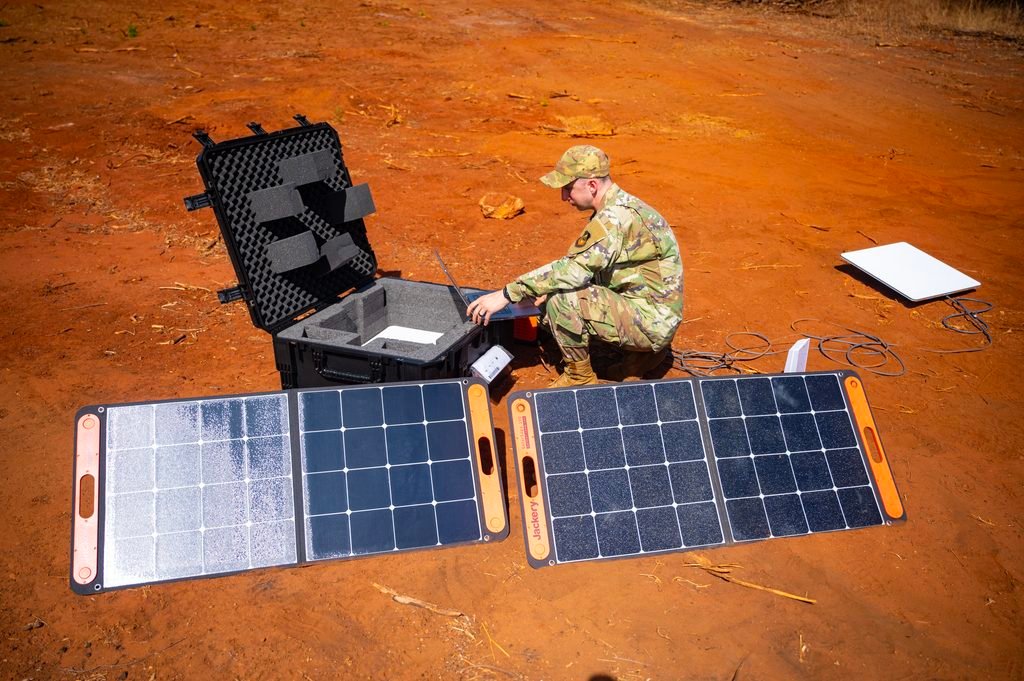
U.S. Air Force Staff Sgt. Antonio Vicere, a member of the 1st Combat Camera Squadron, deploys a Starshield Terminal at Royal Australian Air Force Tindal, Australia, Aug. 4, 2024. Austere locations leverage the 1 CTCS Cyber Systems Technicians ability to enable the rapid transmission of imagery in any environment. (U.S. Air Force photo by Senior Airman Mitchell Corley)

The Advantages That Created the Dependency

There is a reason Ukraine adopted Starlink so extensively. Traditional military communications infrastructure can require substantial investment, specialized equipment, and lengthy deployment procedures. Low-Earth-orbit satellite networks offer an alternative capable of supporting dispersed units across geographically challenging environments. Since Russia’s full-scale invasion in 2022, Starlink has supported Ukrainian communications, logistics, and battlefield coordination, while its relatively compact terminals have made deployment more practical.

Yet these advantages have also created a complicated relationship between commercial infrastructure and military requirements. When an external service becomes embedded in operational planning, changes to network policies or restrictions imposed by providers and responsible government authorities can have immediate consequences. A military organization may have the necessary equipment, trained personnel, and operational plans, but still depend on decisions made elsewhere to maintain connectivity.

A Starlink satellite internet terminal at a Ukrainian resilience center in Ternopil Oblast. Odapresste, CC BY-SA 4.0 https://creativecommons.org/licenses/by-sa/4.0.

Of course, restrictions are not inherently unjustified. Security concerns, unauthorized usage, and the possibility of adversaries exploiting satellite services are legitimate considerations. In February 2026, SpaceX introduced terminal verification requirements in Ukraine in coordination with Ukrainian authorities, partly addressing concerns about Russian forces using Starlink equipment. Preventing hostile access is a reasonable objective, although it also demonstrates how security measures can introduce additional operational requirements for legitimate users.

Who Really Controls the Communications Network?

Military procurement has traditionally involved acquiring equipment that armed forces can operate, maintain, and modify within established contractual boundaries. Satellite connectivity introduces a different relationship. A military may own thousands of terminals without controlling the satellites, network policies, software updates, or service conditions supporting them.

Similar questions are emerging around commercial cloud infrastructure, artificial intelligence services, and privately operated communications networks. Governments increasingly benefit from technological capabilities developed outside traditional defense procurement programs, but this also changes how operational sovereignty should be understood.

Should governments demand greater control when purchasing these capabilities? And how much independence can realistically be expected from a service that depends on privately owned infrastructure?

Building sovereign alternatives offers one possible response, although developing and operating satellite constellations requires substantial capital, technical expertise, and long-term investment. Using multiple providers could reduce dependence on a single company, but compatibility, procurement costs, cybersecurity requirements, and integration with existing military systems would still present considerable challenges.

A Problem Larger Than Ukraine

The latest Starlink controversy illustrates how military communications have evolved beyond traditional equipment procurement. For governments, commercial satellite networks offer capabilities that might otherwise take years to develop independently. For providers, defense contracts create commercial opportunities alongside difficult questions about responsibility, operational authority, and acceptable military applications.

Neither side can entirely ignore the other, and excluding commercial technology from defense operations would mean abandoning capabilities that have already demonstrated considerable practical value. The more realistic approach involves clearly defined contractual arrangements, better coordination between governments and service providers, and contingency plans capable of maintaining essential communications when a particular network becomes unavailable.

Ukraine’s experience also highlights the importance of distinguishing technological access from operational control. Having a functioning satellite terminal does not necessarily guarantee that the service behind it will remain available under every circumstance. That distinction becomes particularly serious when communications are integrated into intelligence gathering, unmanned operations, logistics, and battlefield coordination.

As commercial technology becomes more deeply integrated into military operations, governments will need to reconsider how they evaluate the resilience of critical infrastructure. Performance, coverage, and cost remain important, but questions about authority, continuity, and dependency deserve comparable attention.

Ukraine’s experience leaves other militaries with a question worth examining: Can a communications system truly be considered resilient when its availability depends on decisions made outside the military chain of command?

Sources:

  • Reuters. (October 14, 2026). Ukraine Says SpaceX Limits Starlink Operations, Disrupting Military.
  • Associated Press. (October 14, 2026). Ukrainian Drones Are Forced to Slow Down by Sudden Restrictions on Use of Starlink.
  • Reuters. (October 14, 2026). What Is Starshield, SpaceX’s Military Version of Starlink?
  • SpaceX / Starlink. (February 4, 2026). Update on Starlink Service in Ukraine.
  • Ministry of Defence of Ukraine. (February 5, 2026). How to Complete Starlink Verification: The Ministry of Defence Answers the Most Frequently Asked Questions.
  • U.S. Government, SAM.gov. (2026). Warrior Plans – Starshield Services Contract Notice.

Previous Post

Airbus and Kratos Bring the XQ-58 Valkyrie Into European Airspace

Related Posts

General Atomics MQ-1 Predator
Military Systems

MQ-1 Predator: From ISR Platform to Armed UAV

September 8, 2026
Unmanned Boats
Military Systems

The Next Problem for Unmanned Boats: How Do You Refuel Them?

September 5, 2026
HUMVEE
Military Systems

HUMVEE: The Vehicle That Outlived the Battlefield It Was Built For

August 31, 2026
IDF Caterpillar D9R armored bulldozer
Military Systems

Caterpillar D9: The Armored Bulldozer That Clears the Way

August 5, 2026
M88A2 Hercules Recovery Vehicle
Military Systems

M88A2 HERCULES: Recovering the Machines That Cannot Be Left Behind

July 27, 2026
Hughes_OH-6A_Cayuse
Military Systems

Hughes OH-6 Cayuse: A Small Helicopter Built for Dangerous Work

July 22, 2026
  • Trending
  • Latest
Heckler_&_Koch_G3_Holzschaft_Display_noBG

HK G3: A Rifle That Stayed Longer Than Expected

April 29, 2026
FN FAL: The Right Arm of the Free World

FN FAL: The Right Arm of the Free World

March 31, 2026
MG42-1

MG42 Machine Gun: WWII History, Specifications and Battlefield Impact

April 21, 2026
C-RAM System in Support of Coalition Defense

C-RAM: The Last Seconds of Defense

April 1, 2026
UA_Support_Forces_Starlink_01

Starlink Restrictions in Ukraine Expose a Growing Military Dependence on Private Technology

October 15, 2026
Kratos XQ-58A Valkyrie

Airbus and Kratos Bring the XQ-58 Valkyrie Into European Airspace

October 12, 2026
Falcon Peak 26.2 and the Changing Approach to Drone Defense

Falcon Peak 26.2 and the Changing Approach to Drone Defense

October 10, 2026
The Modern Battlefield: An Expanding Electrical Grid

The Modern Battlefield: An Expanding Electrical Grid

October 6, 2026

Recent Articles

UA_Support_Forces_Starlink_01

Starlink Restrictions in Ukraine Expose a Growing Military Dependence on Private Technology

October 15, 2026
Kratos XQ-58A Valkyrie

Airbus and Kratos Bring the XQ-58 Valkyrie Into European Airspace

October 12, 2026
Falcon Peak 26.2 and the Changing Approach to Drone Defense

Falcon Peak 26.2 and the Changing Approach to Drone Defense

October 10, 2026
The Modern Battlefield: An Expanding Electrical Grid

The Modern Battlefield: An Expanding Electrical Grid

October 6, 2026
Drill & Defense

Drill & Defense is an independent defense and security platform covering firearms, military technology, geopolitics, energy security, and industry developments. We provide clear, structured, and practical insight for professionals, companies, and readers following the evolving defense landscape worldwide.

Follow Us

Browse by Category

  • Air Systems
  • Defense & Energy Strategy
  • Defense Companies
  • Defense Industry
  • Defense Know-How
  • Defense Technologies
  • Doctrines & Concepts
  • Electronic & Cyber Systems
  • Energy & Security
  • Energy Fundamentals
  • Energy Technologies
  • Firearms
  • Geopolitics
  • Global Security
  • History
  • Industry News
  • Knowledge Base
  • Land Systems
  • Legacy Systems & Structures
  • Market Analysis
  • Market Trends & Analysis
  • Military History
  • Military Systems
  • Naval Systems
  • Oil & Gas News
  • Pistols
  • Regulations & Frameworks
  • Rifles
  • SMGs & Machine Guns
  • Strategic Turning Points
  • Tech & Innovation Crossover
  • Trade & Export Controls

Recent Articles

UA_Support_Forces_Starlink_01

Starlink Restrictions in Ukraine Expose a Growing Military Dependence on Private Technology

October 15, 2026
Kratos XQ-58A Valkyrie

Airbus and Kratos Bring the XQ-58 Valkyrie Into European Airspace

October 12, 2026

© 2026 Drill & Defense. All rights reserved. Independent insights on firearms, defense, and energy. For business inquiries: info@drillanddefense.com | PRIVACY POLICY | COOKIE POLICY | TERMS AND CONDITIONS

Manage Consent

We use cookies to improve your experience. You can accept or refuse cookies; however, some features may not function properly without your consent.

Functional Always active
The technical storage or access is strictly necessary for the legitimate purpose of enabling the use of a specific service explicitly requested by the subscriber or user, or for the sole purpose of carrying out the transmission of a communication over an electronic communications network.
Preferences
The technical storage or access is necessary for the legitimate purpose of storing preferences that are not requested by the subscriber or user.
Statistics
The technical storage or access that is used exclusively for statistical purposes. The technical storage or access that is used exclusively for anonymous statistical purposes. Without a subpoena, voluntary compliance on the part of your Internet Service Provider, or additional records from a third party, information stored or retrieved for this purpose alone cannot usually be used to identify you.
Marketing
The technical storage or access is required to create user profiles to send advertising, or to track the user on a website or across several websites for similar marketing purposes.
  • Manage options
  • Manage services
  • Manage {vendor_count} vendors
  • Read more about these purposes
View preferences
  • {title}
  • {title}
  • {title}
No Result
View All Result
  • Defense Industry
    • Industry News
    • Defense Companies
    • Defense Technologies
    • Market Analysis
  • Military Systems
    • Land Systems
    • Air Systems
    • Naval Systems
    • Electronic & Cyber Systems
  • Firearms
    • Pistols
    • Rifles
    • SMGs & Machine Guns
    • Ammunition
    • Optics & Accessories
  • Geopolitics
    • Global Security
    • Defense & Energy Strategy
    • Tech & Innovation Crossover
    • Trade & Export Controls
  • Energy & Security
    • Oil & Gas News
    • Energy Technologies
    • Market Trends & Analysis
  • History
    • Military History
    • Doctrines & Concepts
    • Strategic Turning Points
    • Legacy Systems & Structures
  • Knowledge Base
    • Firearms Basics
    • Defense Know-How
    • Energy Fundamentals
    • Regulations & Frameworks
  • About
  • Contact
  • Login
  • Register

© 2026 Drill & Defense. All rights reserved. Independent insights on firearms, defense, and energy. For business inquiries: info@drillanddefense.com | PRIVACY POLICY | COOKIE POLICY | TERMS AND CONDITIONS