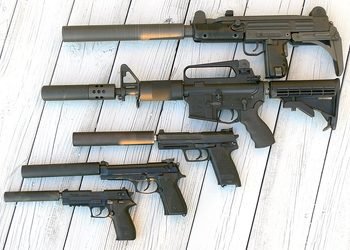

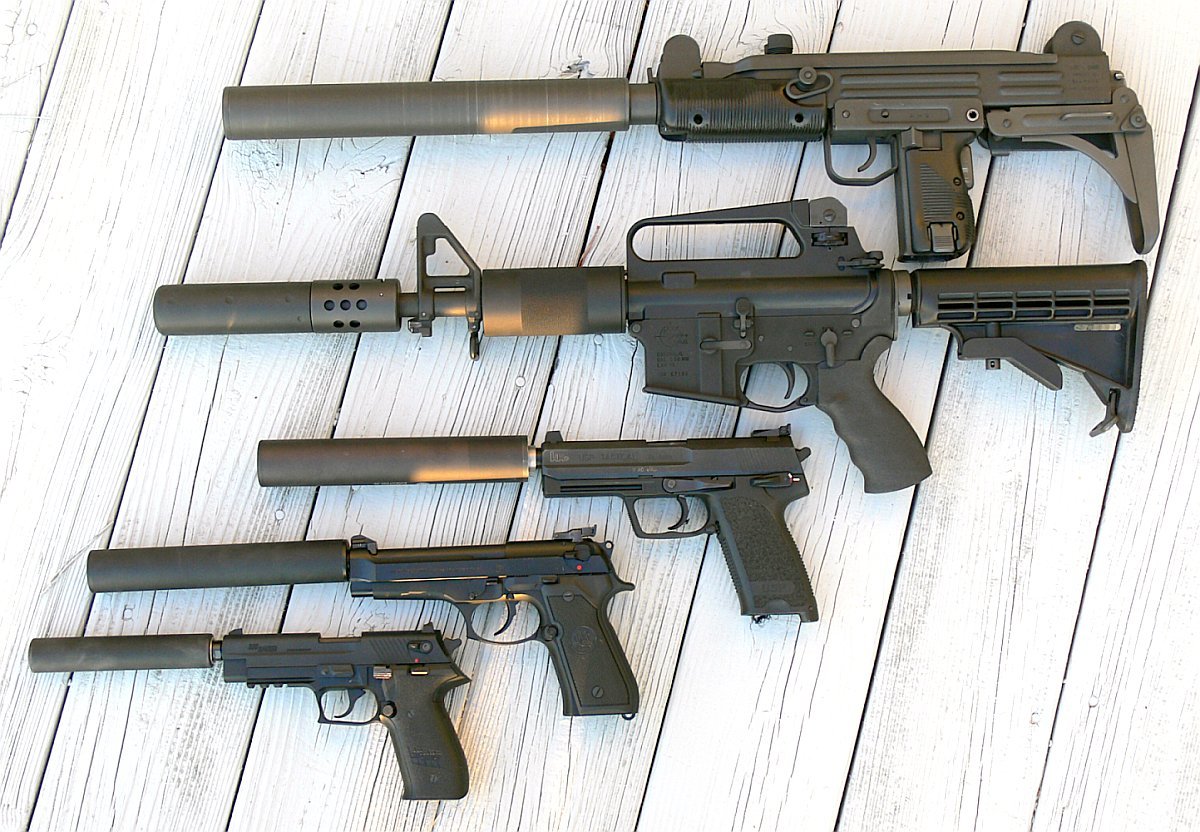
The United States is changing how it regulates firearm suppressors, and the implications could extend well beyond its domestic firearms market. New federal policies are reshaping ownership requirements, while a separate export control reform could make certain American-made suppressors easier to introduce into international markets.

For manufacturers, distributors, and foreign buyers, these developments raise an interesting question: Could a regulatory change in Washington eventually reshape competition across the global suppressor industry?
The answer is not straightforward. Although the reforms reduce certain regulatory barriers, they do not eliminate export licensing, national import restrictions, or the legal uncertainties surrounding suppressor ownership.
A Major Change in the American Market
For decades, suppressors occupied a complicated position under the National Firearms Act (NFA). Buyers generally faced a $200 federal transfer tax, registration requirements, and an approval process administered by the Bureau of Alcohol, Tobacco, Firearms and Explosives (ATF).
The first major change arrived on January 1, 2026, when the federal making and transfer tax for suppressors fell to zero. A second development followed on October 9. After a federal court ruling challenged certain NFA requirements, ATF announced that it would no longer enforce registration and prior approval requirements for suppressors and several other categories of firearms.
That sounds like deregulation, but there is an important distinction.
The court’s injunction directly protects only specified parties, while the broader nationwide policy rests on federal enforcement discretion. ATF has acknowledged that future legal developments could reverse its current approach.

Meanwhile, licensed dealers must still conduct background checks, complete Form 4473, and comply with applicable federal and state laws.
From ITAR to EAR: The Bigger Trade Development
While domestic reforms attracted attention, another regulatory change could have more direct implications for international business.
Beginning November 20, 2026, certain firearm suppressors will move from the International Traffic in Arms Regulations (ITAR) to the Export Administration Regulations (EAR).
Previously, these products were controlled through the U.S. Department of State’s defense export framework. Under the new arrangement, eligible suppressors will fall under the Department of Commerce’s Bureau of Industry and Security (BIS). The distinction matters because EAR offers different licensing procedures and exceptions that may reduce administrative burdens for exporters.
The transfer primarily covers suppressors designed for non-automatic and semi-automatic firearms up to .50 caliber. Suppressors specially designed for certain fully automatic firearms will remain under ITAR.
This is not a complete removal of export controls. Companies must still determine product classifications, licensing requirements, destinations, and end users before conducting international transactions. Nevertheless, the change could make international expansion more practical for manufacturers previously discouraged by complex regulatory procedures.
Could American Manufacturers Gain an Advantage?
Regulatory complexity has a commercial cost. Export compliance requires specialized personnel, documentation, legal assessments, and sometimes considerable administrative investment.
For established manufacturers, these responsibilities may be manageable. Smaller companies, however, can find international expansion difficult when regulatory obligations outweigh expected sales.
Moving eligible suppressors into the EAR framework could change that calculation. American manufacturers may find it easier to approach overseas distributors, develop commercial relationships, and assess markets previously considered too complicated.
But does easier export administration automatically mean more sales?
Not necessarily.
Foreign customers still face their own national regulations, licensing systems, and market conditions. Competitive pricing, product reliability, manufacturing capacity, and distribution networks will remain essential.
European manufacturers could also face stronger competition if additional American suppliers enter markets where suppressors are already commercially established.
At present, however, there is insufficient evidence to claim that the reforms have produced a measurable shift in international market share.
What About NATO Countries and Other Markets?
NATO markets deserve particular attention because export licensing requirements and exceptions can vary according to destination and product classification.
Still, NATO membership does not automatically authorize the export or import of suppressors.
A U.S. exporter must satisfy applicable American requirements, while the overseas importer must comply with domestic law. This distinction is especially important when considering countries with more restrictive civilian firearms legislation.
Another factor is the potential overlap between civilian and professional markets. Some manufacturers serve sporting, law-enforcement, and military customers, but the regulatory treatment of their products may differ considerably. For businesses operating internationally, accurate product classification becomes just as important as identifying potential customers.
A More Competitive Market, but Not an Unregulated One
The American suppressor industry is entering a different regulatory environment, although the commercial consequences remain uncertain.
Reduced domestic barriers could encourage demand and manufacturing investment. Export reforms may eventually improve access to foreign markets and increase competition among established suppliers.
However, regulatory simplification should not be confused with unrestricted international trade. Perhaps the most significant development is the changing regulatory treatment of suppressors themselves. Washington is distinguishing more clearly between products considered appropriate for commercial export controls and those retaining particular military significance.
Whether this translates into meaningful international growth will depend on how manufacturers adapt, how foreign governments regulate imports, and whether the American legal framework remains stable.
For now, the opportunity is real, but its scale remains an open question.
Sources:
- Bureau of Alcohol, Tobacco, Firearms and Explosives (ATF). (October 9, 2026). ATF Issues Guidance on National Firearms Act Transfers for Short-Barreled Rifles, Short-Barreled Shotguns, Suppressors, and Certain Other Firearms.
- Bureau of Alcohol, Tobacco, Firearms and Explosives (ATF). (October 16, 2026). Update to NFA Transfer Guidance.
- U.S. Department of Commerce, Bureau of Industry and Security (BIS). (July 27, 2026). Department of Commerce Streamlines Export Controls for Sound Suppressors.
- U.S. Department of State, Directorate of Defense Trade Controls (DDTC). (July 22, 2026). Removal from the U.S. Munitions List of Silencers, Mufflers, and Sound Suppressors for Non-Automatic and Semi-Automatic Firearms.
- Federal Register. (July 23, 2026). Implementation of EAR Export Controls on Silencers, Mufflers, and Sound Suppressors; and Other Firearms Related Changes. 91 FR 46252.