
Drill & Defense
Advertisement
  • Defense Industry
    • Industry News
    • Defense Companies
    • Defense Technologies
    • Market Analysis
  • Military Systems
    • Land Systems
    • Air Systems
    • Naval Systems
    • Electronic & Cyber Systems
  • Firearms
    • Pistols
    • Rifles
    • SMGs & Machine Guns
    • Ammunition
    • Optics & Accessories
  • Geopolitics
    • Global Security
    • Defense & Energy Strategy
    • Tech & Innovation Crossover
    • Trade & Export Controls
  • Energy & Security
    • Oil & Gas News
    • Energy Technologies
    • Market Trends & Analysis
  • History
    • Military History
    • Doctrines & Concepts
    • Strategic Turning Points
    • Legacy Systems & Structures
  • Knowledge Base
    • Firearms Basics
    • Defense Know-How
    • Energy Fundamentals
    • Regulations & Frameworks
  • About
  • Contact
  • Login
  • Register
No Result
View All Result
  • Defense Industry
    • Industry News
    • Defense Companies
    • Defense Technologies
    • Market Analysis
  • Military Systems
    • Land Systems
    • Air Systems
    • Naval Systems
    • Electronic & Cyber Systems
  • Firearms
    • Pistols
    • Rifles
    • SMGs & Machine Guns
    • Ammunition
    • Optics & Accessories
  • Geopolitics
    • Global Security
    • Defense & Energy Strategy
    • Tech & Innovation Crossover
    • Trade & Export Controls
  • Energy & Security
    • Oil & Gas News
    • Energy Technologies
    • Market Trends & Analysis
  • History
    • Military History
    • Doctrines & Concepts
    • Strategic Turning Points
    • Legacy Systems & Structures
  • Knowledge Base
    • Firearms Basics
    • Defense Know-How
    • Energy Fundamentals
    • Regulations & Frameworks
  • About
  • Contact
  • Login
  • Register
No Result
View All Result
Drill & Defense
No Result
View All Result
Home Military Systems

Sea Shadow (IX-529): When Stealth Quietly Moved Below the Horizon

April 13, 2026
in Military Systems, Naval Systems
US_Navy_Sea_Shadow_stealth_craft-scaled.jpg

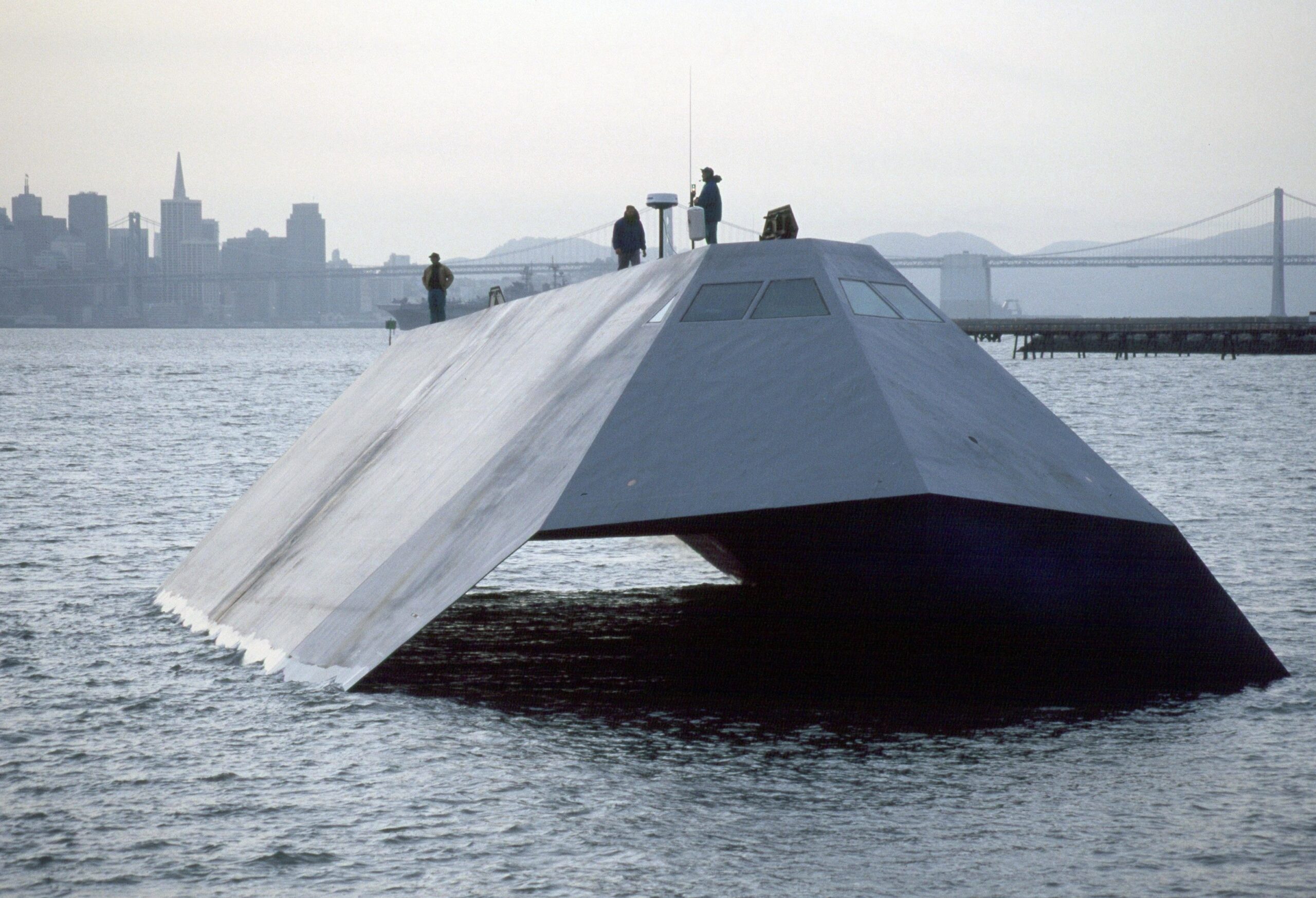
San Francisco, Calif. (Mar. 18, 1999) The U.S. Navy Sea Shadow (IX-529) craft gets underway at dusk to participate in events associated with Fleet Battle Experiment-Echo, sponsored by Commander, Third Fleet and the Maritime Battle Center. Sea Shadow was reactivated this year to support evaluation of future Navy ship designs and technologies, including automation for reduced manning, propulsion concepts, and characteristics of surface ship stealth.

Share on LinkedInShare on Twitter

Some platforms are remembered because they were widely used. Others leave a mark for a different reason entirely. The Sea Shadow (IX-529) belongs to that second category, where influence matters more than deployment. Its presence in naval history is subtle, but once you start looking closer, it becomes difficult to ignore.

Developed in the early 1980s through a collaboration between the U.S. Navy, DARPA, and Lockheed, the vessel remained hidden from public view for years. It was constructed inside a floating barge and tested under conditions designed to minimize exposure. This was not just about secrecy for its own sake. It reflected the experimental nature of the project. At the time, stealth was already shaping the future of airpower, but applying similar ideas to naval platforms required a different kind of thinking, one that had not yet been fully tested in open waters.

What Was Actually Being Tested

The Sea Shadow was never intended to carry weapons or operate as part of a fleet. That alone separates it from most naval projects. It existed to answer specific questions rather than fulfill an operational role.

Those questions were not simple. Could a ship meaningfully reduce its radar signature in a maritime environment where reflections behave differently than in the air? Could stability be improved without increasing size or compromising performance? And perhaps more quietly, could the number of people required to operate a vessel be reduced without affecting reliability? Each of these challenges pointed toward a broader shift in naval design, one where visibility, efficiency, and control were becoming just as important as firepower.
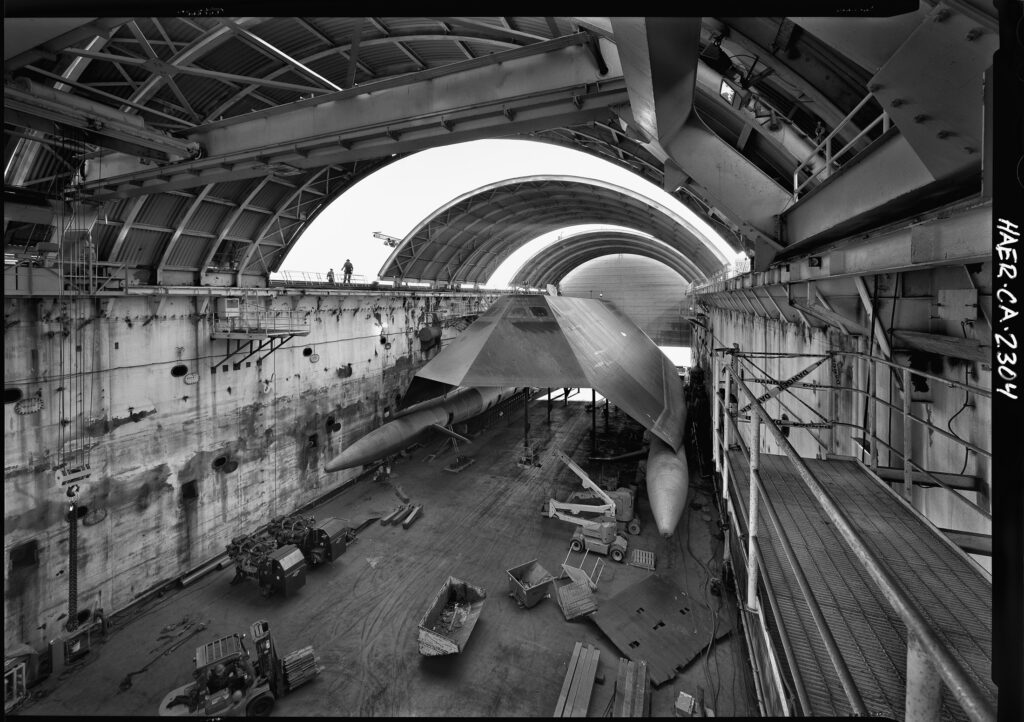
HAER photograph of the Sea Shadow (IX-529), an experimental stealth ship while being scrapped in the Hughes Mining Barge (HMB-1) on Treasure Island, California, November, 2012. Stephen Schafer, CC BY-SA 4.0 https://creativecommons.org/licenses/by-sa/4.0.

Design That Challenges Conventional Ships

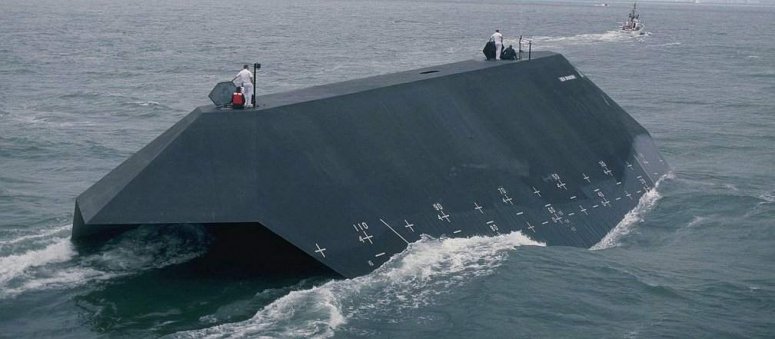
At first glance, the Sea Shadow appears almost unfamiliar, even to those used to unconventional military platforms. Its surfaces are sharply angled, its structure compact, and its overall form lacks the curves typically associated with shipbuilding. This was not an aesthetic decision. Every angle had a purpose, specifically to reduce how radar waves would reflect back to their source.

What makes this more complex is the environment in which it operates. Unlike aircraft, ships must deal with constant exposure to water, corrosion, and the unpredictable behavior of waves. Designing for stealth under these conditions requires compromises. The Sea Shadow did not eliminate detection, but it demonstrated that reducing a vessel’s visibility could be approached in a controlled and measurable way. That alone was enough to validate further exploration in naval stealth design.
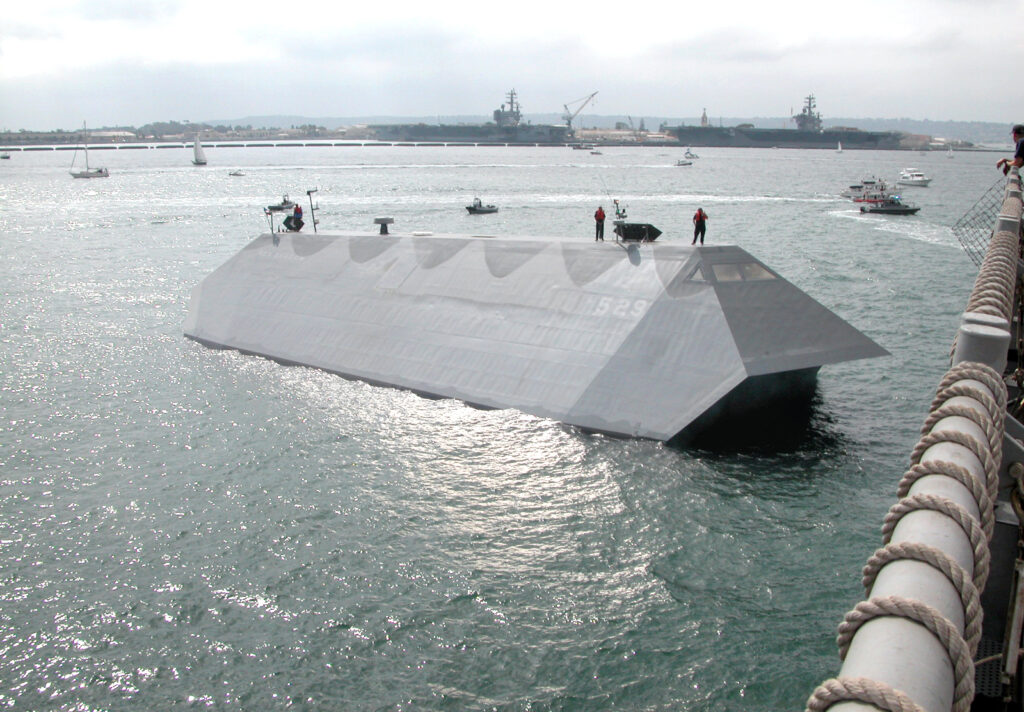
San Diego, Calif. (Oct. 2, 2004) – The Navy test craft, Sea Shadow, prepares to moor alongside the Embarcadero waterfront park in San Diego, Calif., for public tours of the experimental twin-hulled vessel. Sea Shadow is a stealth variety of Naval ship designed to test new technologies for surface ships including ship control, structures, automation for reduced manning, sea keeping and signature control. The ship’s visit coincided with the Fleet Week 2004 celebration in San Diego. Fleet Week San Diego is a three-week tribute to military members and their families who make San Diego and Southern Calif., the largest concentration of Navy and Marine forces in the world.

Beneath the surface, its structure becomes even more interesting. The vessel used a SWATH configuration, with twin submerged hulls connected by narrow supports. This reduced the area interacting with surface waves and allowed the ship to maintain stability even when conditions became less predictable. In practical terms, this meant smoother operation for onboard systems, particularly sensors that rely on consistent positioning. It is a detail that might seem secondary, but in surveillance and tracking scenarios, stability can be as valuable as speed.

Rethinking Crew and Automation

One of the more understated aspects of the Sea Shadow is how few people were required to operate it. In some cases, only a handful of personnel were onboard. That detail, while easy to overlook, hints at something larger.

Reducing crew size is not just about efficiency. It changes how a vessel is designed, how systems are integrated, and how decisions are made during operation. Automation played a central role here, supporting navigation, monitoring, and routine tasks that would normally require dedicated personnel. At the time, this was still an emerging concept. Today, it feels far more familiar, especially as discussions around autonomous vessels and remote operations continue to expand. The Sea Shadow did not solve these challenges completely, but it demonstrated that the direction itself was viable.
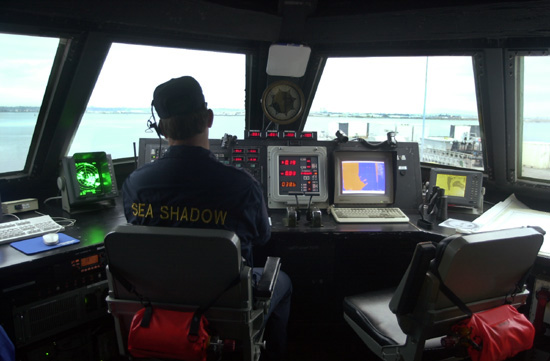
Sea Shadow (IX-529) Wheelhouse (United States Navy). Darrell Griffin, the Lockheed Martin contract manger of Sea Shadow operations for Naval Sea Systems Command, watches a submarine pull into San Diego Bay.

Why It Didn’t Become a Fleet Standard

It is tempting to assume that a project with this level of innovation would naturally evolve into something larger. In reality, the transition from experimental platform to operational system is rarely straightforward.

The Sea Shadow fulfilled its purpose as a demonstrator. It provided data, tested assumptions, and confirmed that certain ideas could work outside of theory. However, turning those ideas into a deployable warship would require additional layers of development. Weapons systems would need to be integrated, costs would need to be justified, and the entire concept would have to align with existing naval doctrine. During the period in which the vessel was tested, strategic priorities were shifting, and not every successful experiment fit into the broader picture. In that context, the Sea Shadow remained what it was always intended to be, a testbed rather than a final product.
Influence That Continued Quietly

Even without entering service, the impact of the Sea Shadow can still be traced in later developments. Certain design principles, particularly those related to stability and reduced observability, began to appear in other naval platforms. Not always in the same form, and not always directly, but the underlying ideas persisted.

Modern warships, especially those designed with low observability in mind, reflect a similar approach. Angled surfaces, careful material choices, and attention to radar signature have become part of the design conversation. The Sea Shadow did not define this shift on its own, but it contributed to it in a way that is easy to miss if you only focus on operational history. Its influence is quieter, embedded in the evolution of design rather than in a specific class of ships.
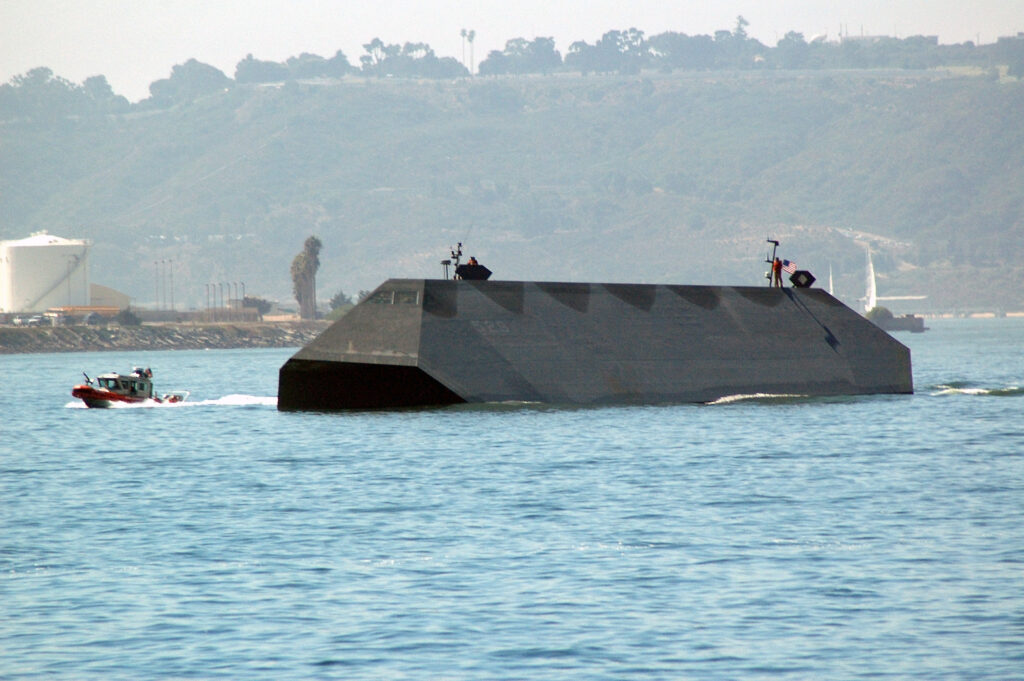
The Navy test craft, Sea Shadow, performs in the “Sea and Air Parade” held as part of Fleet Week San Diego 2005. Sea Shadow was developed under a combined Navy, Lockheed Martin Missiles and Space Company Program. Its purpose is to explore a variety of new technologies for surface ships. These include ship control, structures and automation for reduced manning sea-keeping and signature control. The program was initiated in the mid 1980’s. Fleet Week San Diego is a three-week tribute to Southern California-area military members and their families.

A Quiet End, A Lasting Impact

The vessel itself did not remain in use indefinitely. After years of limited testing and evaluation, it was eventually retired. There were discussions about preserving it, but none led to a permanent solution. In the end, it was dismantled under controlled conditions.

That outcome might seem underwhelming, especially for a platform that once represented such a forward-looking concept. But in many ways, it is consistent with how experimental systems are treated. The physical structure is temporary. The ideas it helps validate are not.

Looking back, the Sea Shadow represents a moment where naval design began to shift its priorities. It shows how innovation often happens outside the spotlight, through projects that are never intended to be widely seen. And it serves as a reminder that not every important development results in a visible product. Some of them remain in the background, shaping what comes next without ever fully stepping into view.

Sources

  • U.S. Navy / DARPA program documentation and historical records
  • Maritime Administration Vessel History Database (MARAD)
  • Lockheed Martin historical archives and Skunk Works development background

Previous Post

The Assassination of Fathi Shqaqi: Precision, Access, and Intelligence Dynamics

Next Post

Brown Bear Project : How Republic of Korea added Russian weapons into its inventory?

Related Posts

United_States_Air_Force_Lockheed_U-2S_Dragon_Lady_80-1094_Royal_International_Air_Tattoo_2025_01
Military Systems

Lockheed Martin U-2: The Aircraft That Refused to Become Old

July 3, 2026
YAL-1A_Airborne_Laser_unstowed
Military Systems

YAL-1A Airborne Laser: The 747 That Tried to Kill Missiles With Light

June 26, 2026
Oshkosh M1070 HET
Military Systems

Oshkosh M1070 HET: Heavy Mobility Behind Armored Operations

June 22, 2026
Panzerschnellbrücke LEGUAN auf Leopard 2-Fahrgestell
Military Systems

Panzerschnellbrücke LEGUAN auf Leopard 2-Fahrgestell: The Bridge That Keeps Armoured Forces Moving

June 17, 2026
Boeing CH-47 Chinook
Military Systems

CH-47 Chinook: Heavy-Lift Aviation With a Practical Reputation

June 11, 2026
USS Dwight D. Eisenhower (CVN-69): The Enduring Weight of a Nuclear Aircraft Carrier
Military Systems

USS Dwight D. Eisenhower (CVN-69): The Enduring Weight of a Nuclear Aircraft Carrier

June 8, 2026
Next Post
T-80U_ROKA_제3기갑여단

Brown Bear Project : How Republic of Korea added Russian weapons into its inventory?

  • Trending
  • Latest
Operation Enduring Freedom

What Exactly Is a Private Military Company (PMC)?

September 6, 2025
MG42-1

MG42 Machine Gun: WWII History, Specifications and Battlefield Impact

April 21, 2026
FN FAL: The Right Arm of the Free World

FN FAL: The Right Arm of the Free World

March 31, 2026
Beretta 92FS vs Beretta M9: Is There a Real Difference?

Beretta 92FS vs Beretta M9: Is There a Real Difference?

July 19, 2025
USAFE launches inaugural Combat Ammunition Production exercise

Why Modern Armies Need More Ammunition, Not Only More Advanced Weapons

July 13, 2026
Official photo of NATO Heads of State and Government - 2026 NATO Summit in Ankara.

NATO’s $50 Billion Defense Push: Production Will Decide What the Announcements Are Really Worth

July 10, 2026
Dragunov SVD

Dragunov SVD: The Logic Behind the Squad Marksman Rifle

July 8, 2026
The Sea-Based X-Band Radar - SBX-1

SBX-1: The Floating Radar Built Around a Very Difficult Question

July 6, 2026

Recent Articles

USAFE launches inaugural Combat Ammunition Production exercise

Why Modern Armies Need More Ammunition, Not Only More Advanced Weapons

July 13, 2026
Official photo of NATO Heads of State and Government - 2026 NATO Summit in Ankara.

NATO’s $50 Billion Defense Push: Production Will Decide What the Announcements Are Really Worth

July 10, 2026
Dragunov SVD

Dragunov SVD: The Logic Behind the Squad Marksman Rifle

July 8, 2026
The Sea-Based X-Band Radar - SBX-1

SBX-1: The Floating Radar Built Around a Very Difficult Question

July 6, 2026
Drill & Defense

Drill & Defense is an independent defense and security platform covering firearms, military technology, geopolitics, energy security, and industry developments. We provide clear, structured, and practical insight for professionals, companies, and readers following the evolving defense landscape worldwide.

Follow Us

Browse by Category

  • Air Systems
  • Defense & Energy Strategy
  • Defense Industry
  • Defense Know-How
  • Defense Technologies
  • Doctrines & Concepts
  • Energy & Security
  • Energy Fundamentals
  • Energy Technologies
  • Firearms
  • Geopolitics
  • Global Security
  • History
  • Industry News
  • Knowledge Base
  • Land Systems
  • Legacy Systems & Structures
  • Market Analysis
  • Market Trends & Analysis
  • Military History
  • Military Systems
  • Naval Systems
  • Oil & Gas News
  • Pistols
  • Regulations & Frameworks
  • Rifles
  • SMGs & Machine Guns
  • Strategic Turning Points
  • Tech & Innovation Crossover

Recent Articles

USAFE launches inaugural Combat Ammunition Production exercise

Why Modern Armies Need More Ammunition, Not Only More Advanced Weapons

July 13, 2026
Official photo of NATO Heads of State and Government - 2026 NATO Summit in Ankara.

NATO’s $50 Billion Defense Push: Production Will Decide What the Announcements Are Really Worth

July 10, 2026

© 2026 Drill & Defense. All rights reserved. Independent insights on firearms, defense, and energy. For business inquiries: info@drillanddefense.com | PRIVACY POLICY | COOKIE POLICY | TERMS AND CONDITIONS

Manage Consent

We use cookies to improve your experience. You can accept or refuse cookies; however, some features may not function properly without your consent.

Functional Always active
The technical storage or access is strictly necessary for the legitimate purpose of enabling the use of a specific service explicitly requested by the subscriber or user, or for the sole purpose of carrying out the transmission of a communication over an electronic communications network.
Preferences
The technical storage or access is necessary for the legitimate purpose of storing preferences that are not requested by the subscriber or user.
Statistics
The technical storage or access that is used exclusively for statistical purposes. The technical storage or access that is used exclusively for anonymous statistical purposes. Without a subpoena, voluntary compliance on the part of your Internet Service Provider, or additional records from a third party, information stored or retrieved for this purpose alone cannot usually be used to identify you.
Marketing
The technical storage or access is required to create user profiles to send advertising, or to track the user on a website or across several websites for similar marketing purposes.
  • Manage options
  • Manage services
  • Manage {vendor_count} vendors
  • Read more about these purposes
View preferences
  • {title}
  • {title}
  • {title}
No Result
View All Result
  • Defense Industry
    • Industry News
    • Defense Companies
    • Defense Technologies
    • Market Analysis
  • Military Systems
    • Land Systems
    • Air Systems
    • Naval Systems
    • Electronic & Cyber Systems
  • Firearms
    • Pistols
    • Rifles
    • SMGs & Machine Guns
    • Ammunition
    • Optics & Accessories
  • Geopolitics
    • Global Security
    • Defense & Energy Strategy
    • Tech & Innovation Crossover
    • Trade & Export Controls
  • Energy & Security
    • Oil & Gas News
    • Energy Technologies
    • Market Trends & Analysis
  • History
    • Military History
    • Doctrines & Concepts
    • Strategic Turning Points
    • Legacy Systems & Structures
  • Knowledge Base
    • Firearms Basics
    • Defense Know-How
    • Energy Fundamentals
    • Regulations & Frameworks
  • About
  • Contact
  • Login
  • Register

© 2026 Drill & Defense. All rights reserved. Independent insights on firearms, defense, and energy. For business inquiries: info@drillanddefense.com | PRIVACY POLICY | COOKIE POLICY | TERMS AND CONDITIONS