
Drill & Defense
Advertisement
  • Defense Industry
    • Industry News
    • Defense Companies
    • Defense Technologies
    • Market Analysis
  • Military Systems
    • Land Systems
    • Air Systems
    • Naval Systems
    • Electronic & Cyber Systems
  • Firearms
    • Pistols
    • Rifles
    • SMGs & Machine Guns
    • Ammunition
    • Optics & Accessories
  • Geopolitics
    • Global Security
    • Defense & Energy Strategy
    • Tech & Innovation Crossover
    • Trade & Export Controls
  • Energy & Security
    • Oil & Gas News
    • Energy Technologies
    • Market Trends & Analysis
  • History
    • Military History
    • Doctrines & Concepts
    • Strategic Turning Points
    • Legacy Systems & Structures
  • Knowledge Base
    • Firearms Basics
    • Defense Know-How
    • Energy Fundamentals
    • Regulations & Frameworks
  • About
  • Contact
  • Login
  • Register
No Result
View All Result
  • Defense Industry
    • Industry News
    • Defense Companies
    • Defense Technologies
    • Market Analysis
  • Military Systems
    • Land Systems
    • Air Systems
    • Naval Systems
    • Electronic & Cyber Systems
  • Firearms
    • Pistols
    • Rifles
    • SMGs & Machine Guns
    • Ammunition
    • Optics & Accessories
  • Geopolitics
    • Global Security
    • Defense & Energy Strategy
    • Tech & Innovation Crossover
    • Trade & Export Controls
  • Energy & Security
    • Oil & Gas News
    • Energy Technologies
    • Market Trends & Analysis
  • History
    • Military History
    • Doctrines & Concepts
    • Strategic Turning Points
    • Legacy Systems & Structures
  • Knowledge Base
    • Firearms Basics
    • Defense Know-How
    • Energy Fundamentals
    • Regulations & Frameworks
  • About
  • Contact
  • Login
  • Register
No Result
View All Result
Drill & Defense
No Result
View All Result
Home Defense Industry

SBX-1: The Floating Radar Built Around a Very Difficult Question

July 6, 2026
in Defense Industry, Defense Technologies
The Sea-Based X-Band Radar - SBX-1

Pearl Harbor, Hawaii (Jan. 9, 2006) - The heavy lift vessel MV Blue Marlin enters Pearl Harbor, Hawaii, with the Sea-based X-band Radar (SBX) aboard after completing a 15,000-mile journey from Corpus Christi, Texas. SBX is a combination of the world's largest phased array X-band radar carried aboard a mobile, ocean-going semi-submersible oil platform. It will provide the nation with highly advanced ballistic missile detection and will be able to discriminate a hostile warhead from decoys and countermeasures. SBX will undergo minor modifications, post-transit maintenance and routine inspections in Pearl Harbor before completing its voyage to its homeport of Adak, Alaska in the Aleutian Islands.

Share on LinkedInShare on Twitter

SBX-1 does not look like a conventional military asset. It is not a destroyer, not a missile battery, not an aircraft, and not a fixed radar site on a mountain or coastline. It looks more like a piece of offshore industrial infrastructure that has been pulled into the world of missile defense.

That impression is not far from the truth. The Sea-Based X-Band Radar is built on a modified semi-submersible oil-drilling platform, but its purpose is far more specialized than its shape first suggests. It was designed to support ballistic missile defense by tracking objects in space and helping separate the real threat from the surrounding clutter.

That last part is the reason SBX-1 deserves attention. Detecting a missile launch is one problem. Understanding what is actually flying through space after the missile has released objects is another. A defender may have to deal with the warhead, booster fragments, debris, and possible countermeasures in the same threat scene. Which object matters? Which one should receive the interceptor’s attention? The system cannot treat that question as a guess.

A Radar Platform That Had to Be Unusual

SBX-1 uses a platform type more commonly associated with offshore drilling because stability matters. A large X-band radar needs a steady base, especially when its job includes precision tracking and discrimination. A normal ship can carry powerful sensors, but it also brings more motion. The semi-submersible structure gives SBX-1 a broad and relatively stable operating platform at sea.

Its scale is part of the story. Boeing described the platform as roughly 240 feet wide and 390 feet long, with the internal infrastructure needed to support the radar, crew, power systems, control rooms, storage areas, and maritime operations. This is not a small sensor package bolted onto a vessel. The platform exists because the radar needed a home large enough and stable enough to support its mission.

That changes the way the system should be understood. SBX-1 is not best viewed as a ship that happens to carry a radar. It is closer to a movable radar site placed on the ocean. The vessel is the support structure. The radar is the reason for everything else.
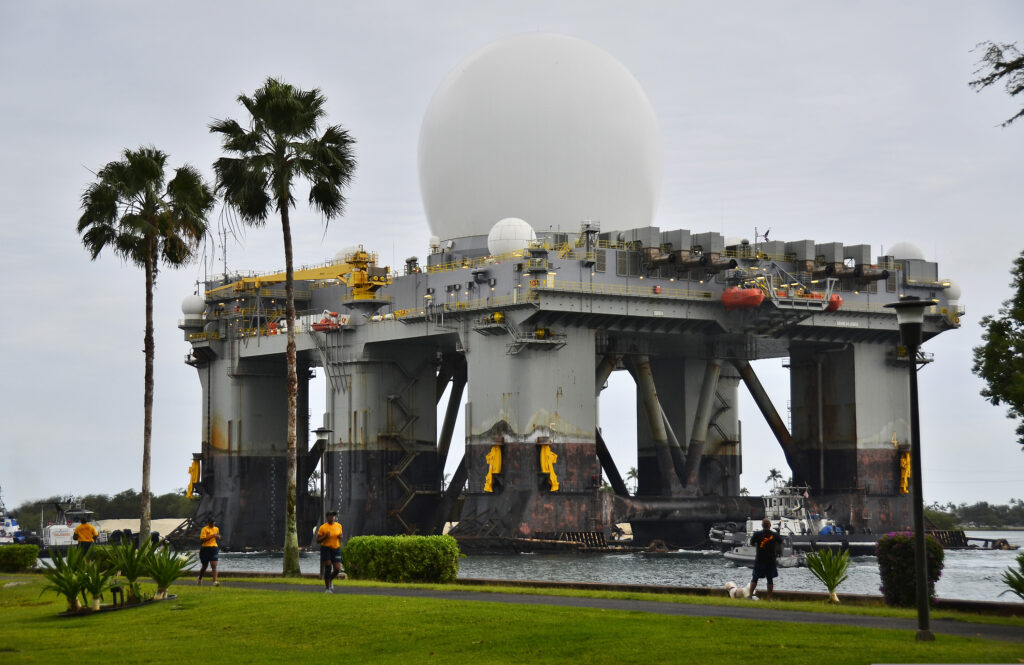
The Sea-based X-Band Radar (SBX) transits the waters of Joint Base Pearl Harbor-Hickam, Hawaii, March 22, 2013. The SBX is a combination of the world’s largest phased-array X-band radar carried aboard a mobile, ocean-going semi-submersible oil platform.

There is an interesting design logic here. When a defense system looks strange, it is sometimes because the mission forced the shape. SBX-1 did not need to look elegant. It needed to put a very powerful sensor in a useful location and keep it stable enough to do high-value tracking work.

Why X-Band Radar Matters in Missile Defense

The X-band part of SBX-1 is not a small technical detail. X-band radar is valued in missile defense because it can provide high-resolution tracking information. In a ballistic missile engagement, that resolution can become central to discrimination.

Discrimination means identifying the lethal object among other objects moving through the same general area. This is a hard problem because the midcourse phase of a ballistic missile’s flight takes place outside the atmosphere. Without atmospheric drag acting in the same way it does at lower altitudes, objects can travel together in a way that complicates the defender’s picture.

A missile defense interceptor needs more than a direction. It needs a refined track and enough confidence that the object being targeted is the correct one. This is where a radar such as SBX-1 becomes valuable. It can contribute detailed sensor data to the wider Ground-Based Midcourse Defense architecture, supporting the process that leads toward an intercept attempt.

The important point is not that SBX-1 destroys anything by itself. It does not. Its value is in the information it provides. In missile defense, information is not secondary. A powerful interceptor with weak targeting data is still a risky answer to a fast-moving problem.
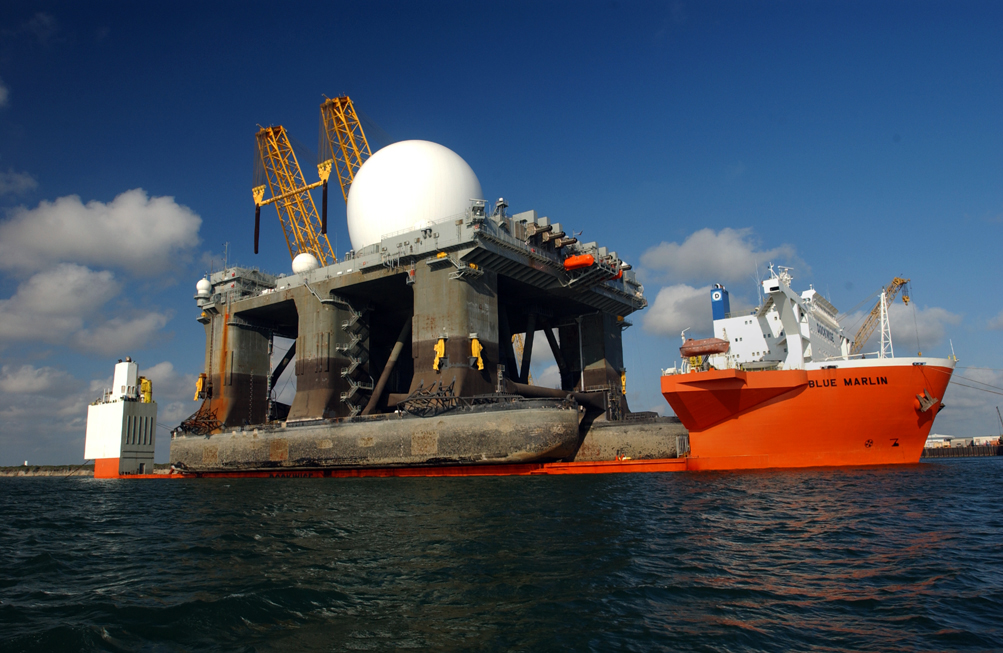
Gulf of Mexico (Nov. 14, 2005) – The Sea Based X-Band Radar (SBX) is slowly loaded onto the heavy lift vessel MV Blue Marlin as the ship semi-submerges in the Gulf of Mexico. SBX will provide missile tracking, discrimination and hit assessment functions to the Ground-based Midcourse Defense element of the Ballistic Missile Defense System. It will support interceptor missiles located in Alaska and California if required to defend against a limited long-range missile attack on the United States. Home-ported in Adak, Alaska, the SBX can move throughout the Pacific Ocean in support of advanced missile defense testing and defensive operations. U.S. Department of Defense photo (RELEASED)

The System Is Powerful, But Not Independent

SBX-1’s strength is also where the discussion becomes more realistic. High-resolution tracking does not automatically mean wide-area coverage. The system can examine a threat scene in detail, but it is not meant to replace the broader sensor network that detects, cues, and tracks across larger areas.

This is where many defense systems are misunderstood. A radar can be impressive and still depend on other assets. A missile can be advanced and still need external guidance. A command system can be sophisticated and still rely on the quality of the data entering it.

SBX-1 fits into that kind of architecture. It receives value from being part of a larger chain that can include satellites, early warning radars, land-based sensors, sea-based sensors, command and control systems, and interceptors. If one part of the chain sees early, another part can refine the picture later. That division of labor is not a weakness. It is how complex defense systems are built.
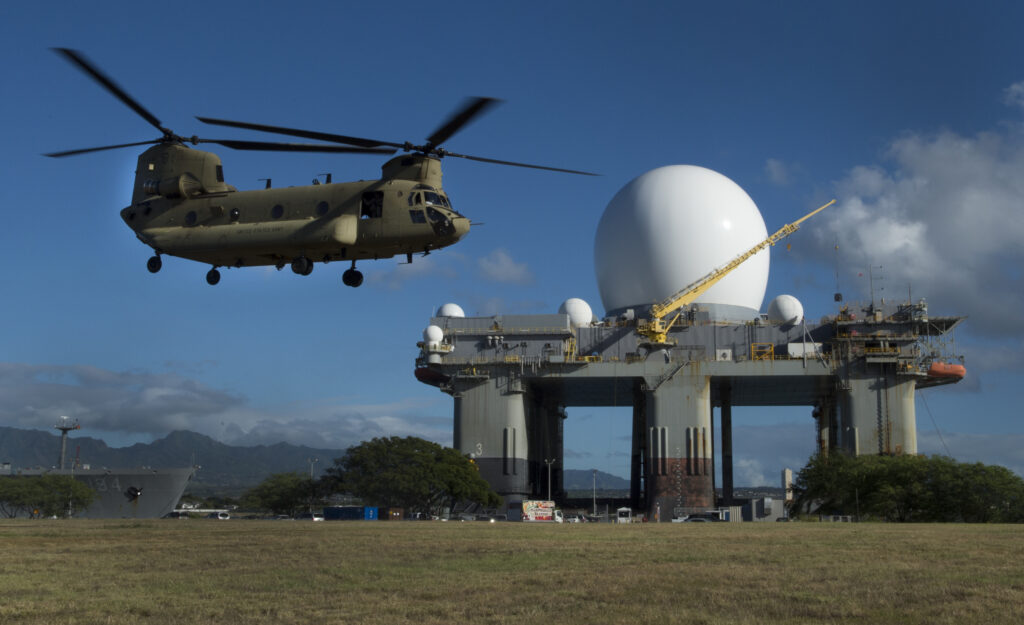
A U.S. Army CH-47 Chinook helicopter takes off from Ford Island during a Humanitarian Assistance/Disaster Relief (HA/DR) response as part of Rim of the Pacific (RIMPAC) Exercise 2014. Twenty-two nations, more than 40 ships and submarines, about 200 aircraft and 25,000 personnel are participating in RIMPAC from June 26 to Aug. 1, in and around the Hawaiian Islands and Southern California. The world’s largest international maritime exercise, RIMPAC provides a unique training opportunity that helps participants foster and sustain the cooperative relationships that are critical to ensuring the safety of sea lanes and security on the world’s oceans. RIMPAC 2014 is the 24th exercise in the series that began in 1971. (U.S. Navy photo by Mass Communication Specialist 1st Class Daniel Gay/Released)

So the better question is not “Can SBX-1 do everything?” It cannot, and it was not built for that. The better question is: what part of the missile defense problem does it handle better than most other platforms?

Its answer is discrimination and high-resolution tracking.

The Floating Advantage, and Its Cost

The sea-based design gives SBX-1 an advantage that fixed radars do not have. It can be moved. In a region like the Pacific, where geography shapes missile defense planning, the ability to reposition a large radar has obvious appeal.

But this kind of mobility should not be confused with tactical speed. SBX-1 is a huge platform. Moving it requires planning, time, operational support, and a reason strong enough to justify the effort. It is not a system that instantly appears wherever it is needed. Its mobility is strategic, not quick reaction.
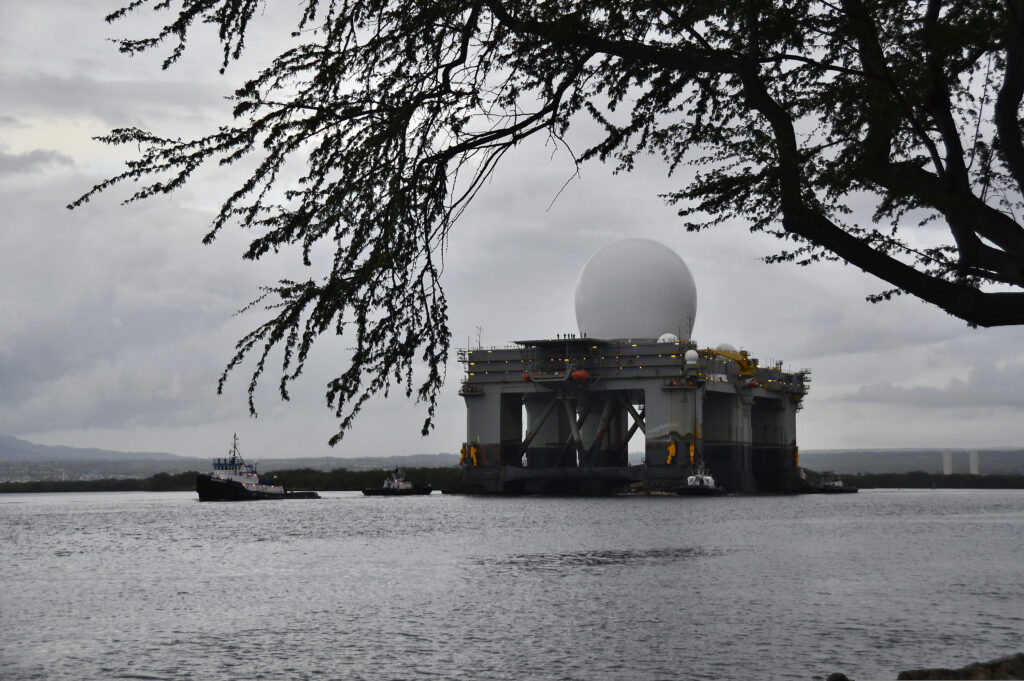
The Sea-based X-Band Radar (SBX) transits the waters of Joint Base Pearl Harbor-Hickam, Hawaii, March 22, 2013. The SBX is a combination of the world’s largest phased-array X-band radar carried aboard a mobile, ocean-going semi-submersible oil platform.

That difference matters. In defense writing, “mobile” can become a lazy word. A truck-mounted launcher is mobile. A naval task group is mobile. A semi-submersible radar platform is also mobile, but not in the same way. SBX-1’s mobility means it can be repositioned into a more useful area over time. It does not mean it behaves like a fast naval combatant.

This tradeoff is part of what makes the system worth studying. SBX-1 gives missile defense planners a movable high-resolution radar, but it also demands logistics, positioning decisions, and advance notice. Its usefulness depends on where it is, what it is cued by, and how it connects with the rest of the architecture.

A Sensor Built for the Hard Part of the Engagement

Ballistic missile defense is sometimes described through the final moment: interceptor meets target, the threat is destroyed or it is not. That is the visible drama of the system. Yet the real work begins much earlier.

A launch must be detected. The missile must be tracked. The predicted path must be calculated. The threat scene must be interpreted. The system must decide which object deserves attention. An interceptor may need updated information after launch. After the engagement, the system also needs to assess what happened.

SBX-1 sits inside that long chain. It is not there for visual drama. It is there because the middle of the engagement is technically unforgiving.

What happens if the defender sees several objects and cannot confidently identify the lethal one? What happens if the interceptor is guided toward a piece of debris or a decoy? What happens if the system launches too late because the picture was not clear enough earlier? These are not abstract questions. They define the practical difficulty of midcourse missile defense.

The Sea-based X-Band Radar (SBX) leaves a pier on Ford Island as it transits the waters of Joint Base Pearl Harbor-Hickam, Hawaii, March 22, 2013. The SBX is a combination of the world’s largest phased-array X-band radar carried aboard a mobile, ocean-going semi-submersible oil platform.

That is why a sensor can be strategically important without ever firing a weapon.

Testing, Data, and Operational Learning

SBX-1 has been linked to Ground-Based Midcourse Defense testing and missile defense data collection. Its role in tests is important because missile defense programs live or die through data. A test is not only about whether an interceptor hits a target. It is also about how the sensors performed, whether the command system interpreted the situation correctly, how well tracking data was passed, and what parts of the sequence need improvement.

This is where a platform like SBX-1 can keep its value even outside a crisis. It helps generate the technical knowledge that shapes future intercept confidence. A successful test produces data. A failed or partial test can also produce data, sometimes painfully useful data.

That is not a glamorous point, but it is a serious one. Defense technology advances through measurement, correction, and repeated testing. The systems that support that process can be just as important as the systems people recognize from launch footage.
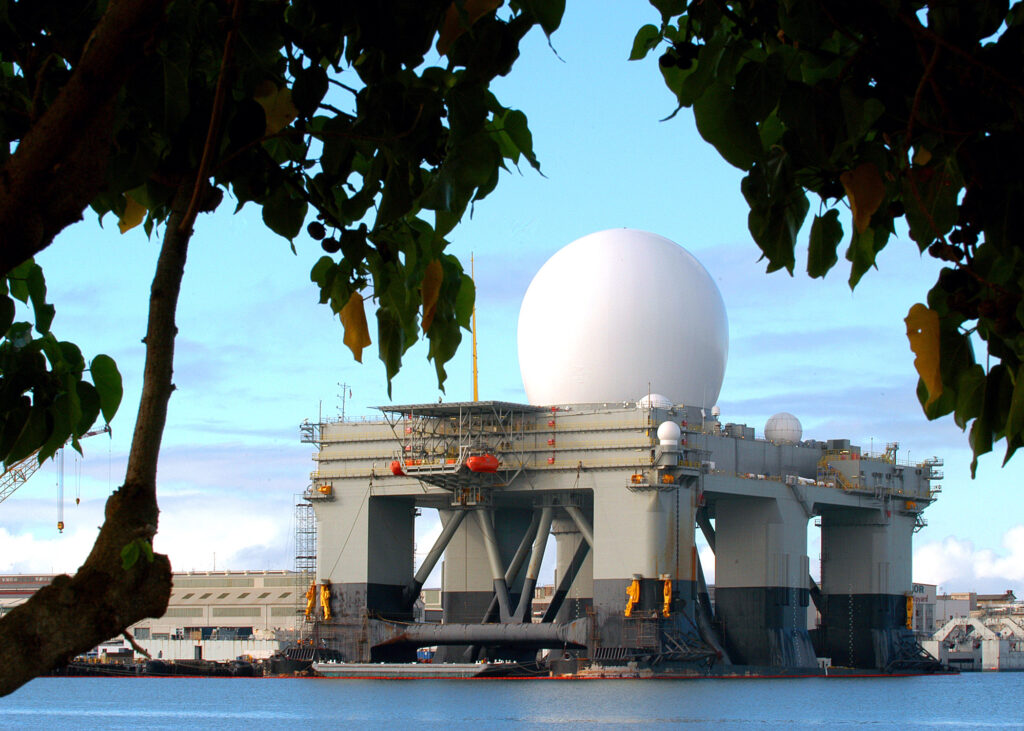
PEARL HARBOR, Hawaii (July 20, 2007) – Sea-Based X-band Radar (SBX) sits docked after returning to Pearl Harbor Naval Station for scheduled maintenance and planned system upgrades. Since departing Pearl Harbor last January, the SBX successfully demonstrated its ability to operate in the harsh winter weather conditions of the Pacific and participated in two tests of the Ballistic Missile Defense System. U.S. Navy photo By Mass Communication Specialist John W. Ciccarelli Jr. (RELEASED)

SBX-1 also shows why sensor platforms are becoming more central in defense conversations. The interceptor gets attention because it is visible at the moment of action. The sensor network determines whether that action is informed.

Why SBX-1 Still Feels Relevant

Newer sensors, upgraded naval radars, space-based tracking concepts, and improved command networks are now shaping the future of missile defense. SBX-1 is not the only answer, and it should not be treated that way. Its limits are real. Its operating concept is specialized. Its mobility is useful but not simple.

Still, it remains one of the clearest examples of how difficult the missile defense problem really is. The system forces us to look beyond the missile launcher and ask what happens before the shot is taken.

A missile defense shield is not one object. It is a chain of sensors, communication systems, decision tools, interceptors, operators, and test data. SBX-1 belongs to the part of that chain where raw detection becomes a more refined picture.

That refined picture is the point. In a midcourse engagement, the defender is not just trying to hit something. It is trying to hit the correct thing.

The strange floating dome starts to make more sense from that angle. SBX-1 is large because the radar is large. It is sea-based because geography matters. It uses X-band because discrimination matters. It is specialized because the problem is specialized.

That is also why it works well as a defense technology case study. It shows the engineering choices behind strategic defense: stability over speed, resolution over broad coverage, networked operation over independence, and data quality over platform glamour.

Missile defense is sometimes discussed as if the main question is whether a country has enough interceptors. SBX-1 pushes the conversation toward a more serious point. Before an interceptor can solve anything, the system has to understand what it is looking at.

Sources:

  • Missile Defense Agency. “The Sea-Based X-Band Radar.”
  • Boeing. “Sea-Based X-Band Radar.”
  • U.S. Navy Military Sealift Command. “Sea-Based X-Band Radar.”
  • U.S. Navy Military Sealift Command. “Special Mission: Sea-Based X-Band Radar.”

Previous Post

Lockheed Martin U-2: The Aircraft That Refused to Become Old

Related Posts

Drone Logistics
Defense Industry

The New Last Mile: Drones and the Future of Battlefield Resupply

May 28, 2026
North_American_X-15A-2_with_external_fuel_tanks_(150806-F-IO108-005)
Defense Industry

North American X-15: The Aircraft That Did Not Become a Fighter, But Changed High-Speed Flight

May 22, 2026
Drone Gun Anti Drone
Defense Industry

Drone Guns: The Rifle-Shaped Tools of the Counter-UAS Era

May 21, 2026
HEL_MD_Beam_Director
Defense Industry

Laser Weapons: The New Layer in Modern Air Defense

May 14, 2026
JGSDF_Railgun_02
Defense Industry

Railgun: Between Engineering Ambition and Operational Reality

April 22, 2026
C-RAM System in Support of Coalition Defense
Defense Industry

C-RAM: The Last Seconds of Defense

April 1, 2026
  • Trending
  • Latest
Operation Enduring Freedom

What Exactly Is a Private Military Company (PMC)?

September 6, 2025
MG42-1

MG42 Machine Gun: WWII History, Specifications and Battlefield Impact

April 21, 2026
FN FAL: The Right Arm of the Free World

FN FAL: The Right Arm of the Free World

March 31, 2026
Blackwater PMC

After Blackwater: How PMCs Evolved, Professionalized, and Fragmented

September 13, 2025
The Sea-Based X-Band Radar - SBX-1

SBX-1: The Floating Radar Built Around a Very Difficult Question

July 6, 2026
United_States_Air_Force_Lockheed_U-2S_Dragon_Lady_80-1094_Royal_International_Air_Tattoo_2025_01

Lockheed Martin U-2: The Aircraft That Refused to Become Old

July 3, 2026
A photo of an F-35 flying during the Wings Over Houston 2023 Airshow

From Titanium to Tungsten: Critical Minerals in Modern Defense

June 30, 2026
YAL-1A_Airborne_Laser_unstowed

YAL-1A Airborne Laser: The 747 That Tried to Kill Missiles With Light

June 26, 2026

Recent Articles

The Sea-Based X-Band Radar - SBX-1

SBX-1: The Floating Radar Built Around a Very Difficult Question

July 6, 2026
United_States_Air_Force_Lockheed_U-2S_Dragon_Lady_80-1094_Royal_International_Air_Tattoo_2025_01

Lockheed Martin U-2: The Aircraft That Refused to Become Old

July 3, 2026
A photo of an F-35 flying during the Wings Over Houston 2023 Airshow

From Titanium to Tungsten: Critical Minerals in Modern Defense

June 30, 2026
YAL-1A_Airborne_Laser_unstowed

YAL-1A Airborne Laser: The 747 That Tried to Kill Missiles With Light

June 26, 2026
Drill & Defense

Drill & Defense is an independent defense and security platform covering firearms, military technology, geopolitics, energy security, and industry developments. We provide clear, structured, and practical insight for professionals, companies, and readers following the evolving defense landscape worldwide.

Follow Us

Browse by Category

  • Air Systems
  • Defense & Energy Strategy
  • Defense Industry
  • Defense Know-How
  • Defense Technologies
  • Doctrines & Concepts
  • Energy & Security
  • Energy Fundamentals
  • Energy Technologies
  • Firearms
  • Geopolitics
  • Global Security
  • History
  • Industry News
  • Knowledge Base
  • Land Systems
  • Legacy Systems & Structures
  • Market Analysis
  • Market Trends & Analysis
  • Military History
  • Military Systems
  • Naval Systems
  • Oil & Gas News
  • Pistols
  • Regulations & Frameworks
  • Rifles
  • SMGs & Machine Guns
  • Strategic Turning Points
  • Tech & Innovation Crossover

Recent Articles

The Sea-Based X-Band Radar - SBX-1

SBX-1: The Floating Radar Built Around a Very Difficult Question

July 6, 2026
United_States_Air_Force_Lockheed_U-2S_Dragon_Lady_80-1094_Royal_International_Air_Tattoo_2025_01

Lockheed Martin U-2: The Aircraft That Refused to Become Old

July 3, 2026

© 2026 Drill & Defense. All rights reserved. Independent insights on firearms, defense, and energy. For business inquiries: info@drillanddefense.com | PRIVACY POLICY | COOKIE POLICY | TERMS AND CONDITIONS

Manage Consent

We use cookies to improve your experience. You can accept or refuse cookies; however, some features may not function properly without your consent.

Functional Always active
The technical storage or access is strictly necessary for the legitimate purpose of enabling the use of a specific service explicitly requested by the subscriber or user, or for the sole purpose of carrying out the transmission of a communication over an electronic communications network.
Preferences
The technical storage or access is necessary for the legitimate purpose of storing preferences that are not requested by the subscriber or user.
Statistics
The technical storage or access that is used exclusively for statistical purposes. The technical storage or access that is used exclusively for anonymous statistical purposes. Without a subpoena, voluntary compliance on the part of your Internet Service Provider, or additional records from a third party, information stored or retrieved for this purpose alone cannot usually be used to identify you.
Marketing
The technical storage or access is required to create user profiles to send advertising, or to track the user on a website or across several websites for similar marketing purposes.
  • Manage options
  • Manage services
  • Manage {vendor_count} vendors
  • Read more about these purposes
View preferences
  • {title}
  • {title}
  • {title}
No Result
View All Result
  • Defense Industry
    • Industry News
    • Defense Companies
    • Defense Technologies
    • Market Analysis
  • Military Systems
    • Land Systems
    • Air Systems
    • Naval Systems
    • Electronic & Cyber Systems
  • Firearms
    • Pistols
    • Rifles
    • SMGs & Machine Guns
    • Ammunition
    • Optics & Accessories
  • Geopolitics
    • Global Security
    • Defense & Energy Strategy
    • Tech & Innovation Crossover
    • Trade & Export Controls
  • Energy & Security
    • Oil & Gas News
    • Energy Technologies
    • Market Trends & Analysis
  • History
    • Military History
    • Doctrines & Concepts
    • Strategic Turning Points
    • Legacy Systems & Structures
  • Knowledge Base
    • Firearms Basics
    • Defense Know-How
    • Energy Fundamentals
    • Regulations & Frameworks
  • About
  • Contact
  • Login
  • Register

© 2026 Drill & Defense. All rights reserved. Independent insights on firearms, defense, and energy. For business inquiries: info@drillanddefense.com | PRIVACY POLICY | COOKIE POLICY | TERMS AND CONDITIONS