

Military logistics has never been just a background function. It is the quiet system that decides whether a unit can keep moving, keep observing, keep communicating and, when necessary, keep fighting. Fuel, ammunition, batteries, water, medical supplies, spare parts and food are not secondary details. They are the real bloodstream of military power.

But the battlefield is changing. Modern forces are more visible from above, roads are easier to monitor, convoys can be tracked, artillery can reach deeper, and small drones have made even routine movement more dangerous. In this environment, the old idea of simply pushing supplies forward by truck, helicopter or large logistics hubs is becoming harder to sustain. This is where unmanned resupply systems enter the conversation.
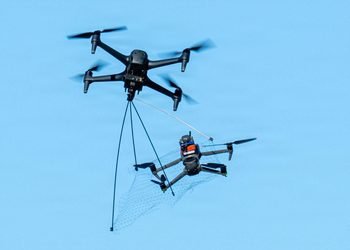
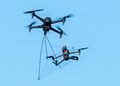
Not every military drone is a loitering munition, ISR platform or strike asset. Some are being developed for a less dramatic but highly practical mission: carrying the right supply package to the right place, without exposing a driver, pilot or entire convoy to unnecessary risk.
The Problem Is Not Distance, It Is Exposure
When people hear “last mile,” they often think of commercial delivery. A package leaves a warehouse and reaches a customer. On the battlefield, the phrase becomes more serious. The last mile may be a ridge occupied by a reconnaissance team, a small island outpost, a temporary firing position, a forward medical point or a dispersed infantry unit that cannot easily be reached by vehicle.
In conventional logistics, the final stage of delivery is often the most dangerous. A large truck convoy can carry much more than a drone, of course. A helicopter can move heavier loads faster. But both create signatures. Both require personnel. Both may need security, route clearance, planning and airspace coordination.
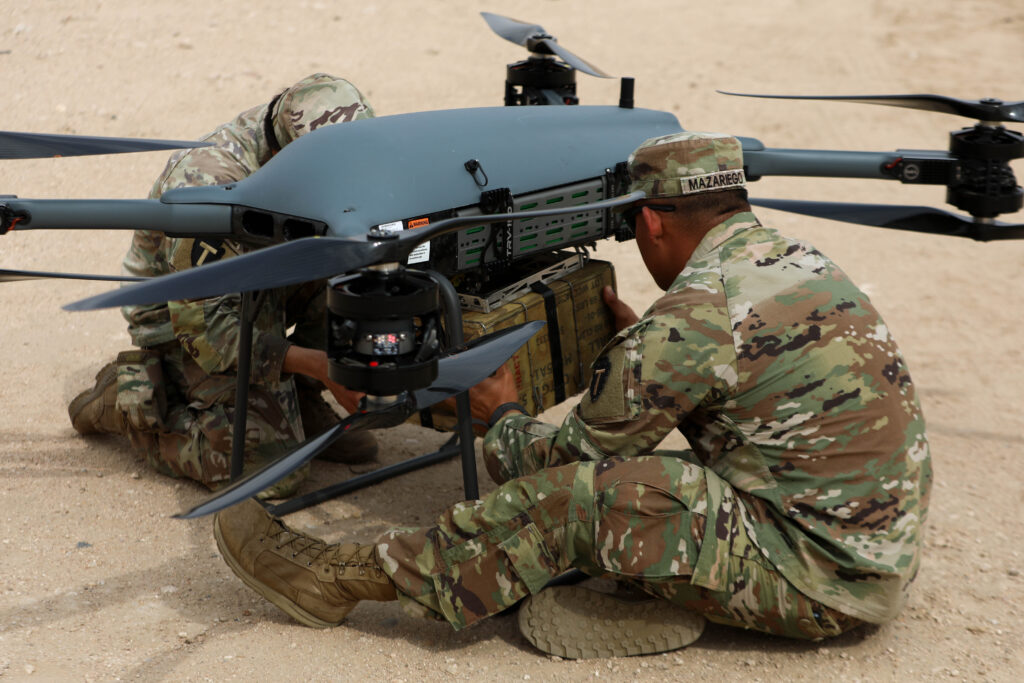
A drone does not remove risk completely, but it changes who carries that risk. If a small unmanned aircraft is lost, the loss is mechanical and financial. If a manned helicopter is hit or a convoy is ambushed, the cost is human, operational and political.
The Current State: Not Science Fiction, Not Yet Universal
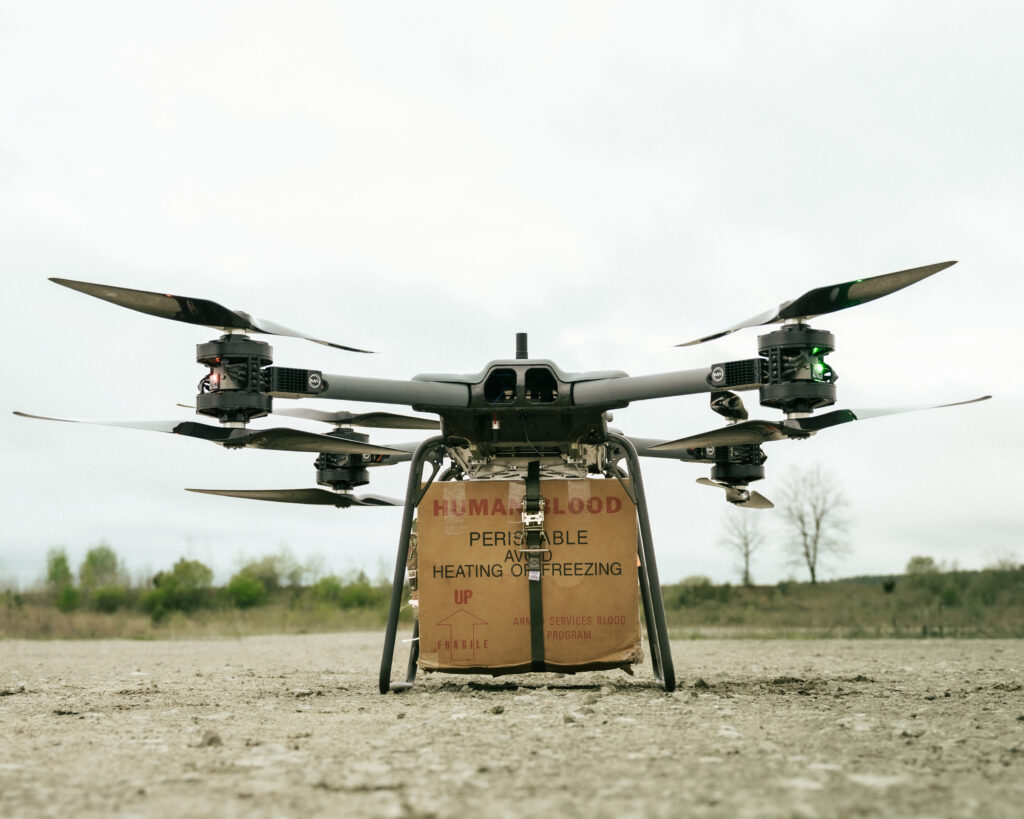
Unmanned resupply is already moving beyond PowerPoint concepts. The U.S. Marine Corps has tested and fielded tactical resupply unmanned aircraft for distributed units. One example is the TRV-150C, a vertical takeoff and landing system associated with the Tactical Resupply Unmanned Aircraft System program. The Marine Corps has described this class of system as capable of carrying up to 150 pounds over a 9-mile range, enough for ammunition, food, medical supplies, batteries and similar urgent loads.
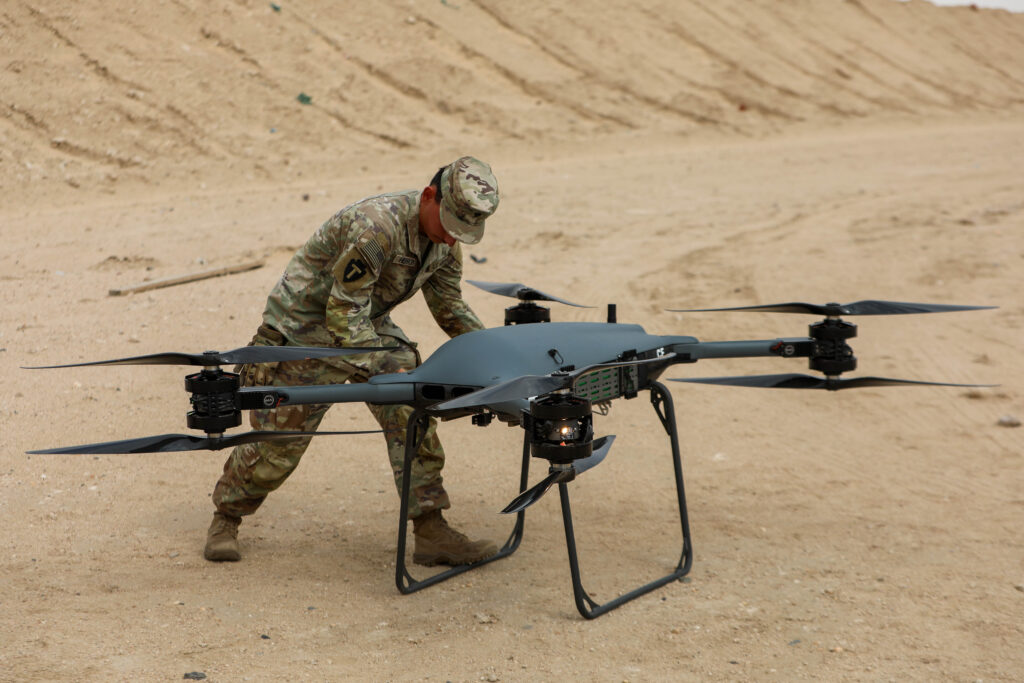
That does not mean the TRV-150C represents the entire future of battlefield logistics. It is better understood as one practical example of a broader trend. Small and medium unmanned systems are being examined because they fit the emerging military requirement: supply smaller units that are operating away from large bases and fixed routes.
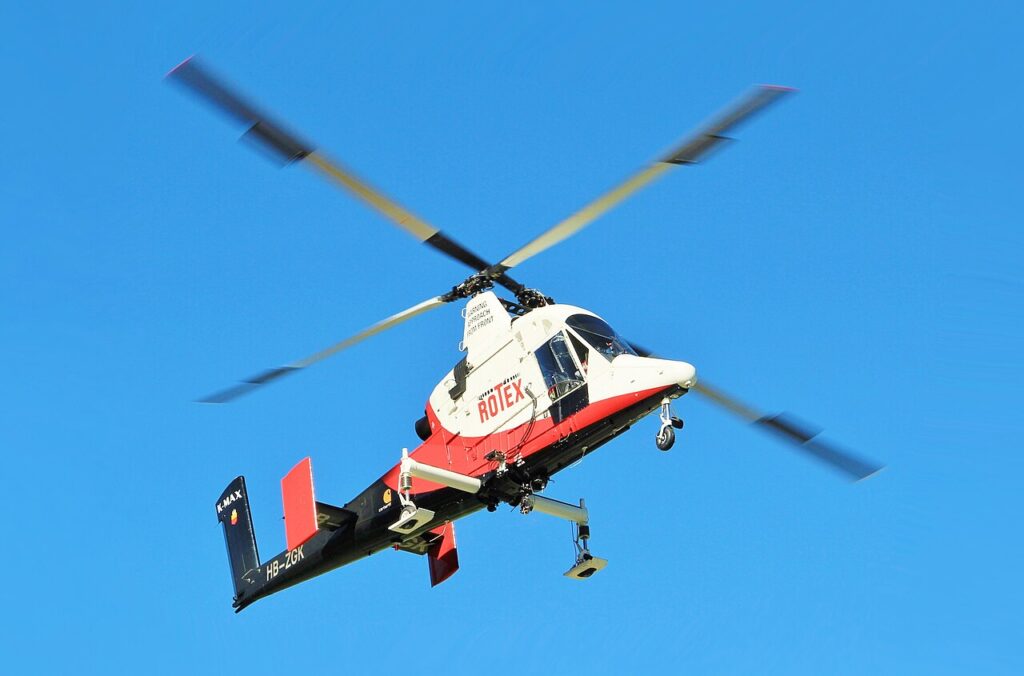
The larger historical example is the unmanned K-MAX cargo helicopter. During its Afghanistan deployment with the U.S. Marine Corps, Lockheed Martin reported that the system moved more than 4.5 million pounds of cargo across thousands of delivery missions. That is important because it shows that unmanned cargo aviation is not just a laboratory idea. It has already been used in a real operational theater.
Between small tactical systems and larger cargo aircraft, a middle category is also emerging. Heavy-lift multicopter systems such as Malloy Aeronautics’ T-series platforms are designed to carry meaningful tactical loads without requiring the infrastructure of traditional aviation. This category is especially relevant for naval and expeditionary forces, where ship-to-shore and ship-to-ship movement of small but urgent cargo can consume expensive aircraft time.
Cost: Cheaper Than What, Exactly?
It is tempting to say that drones are cheaper. Sometimes they are. But that sentence by itself is too simple.
The real question is not whether a drone is cheaper than a truck or helicopter in every situation. The question is whether it is cheaper for a specific delivery, with a specific payload, over a specific distance, under a specific threat condition.
A truck is still more efficient for bulk cargo. A helicopter is still more capable for larger loads, casualty evacuation, troop movement and longer-range flexibility. But using a manned aircraft to deliver a small component, a medical package or a few boxes of urgent supplies may be economically inefficient.
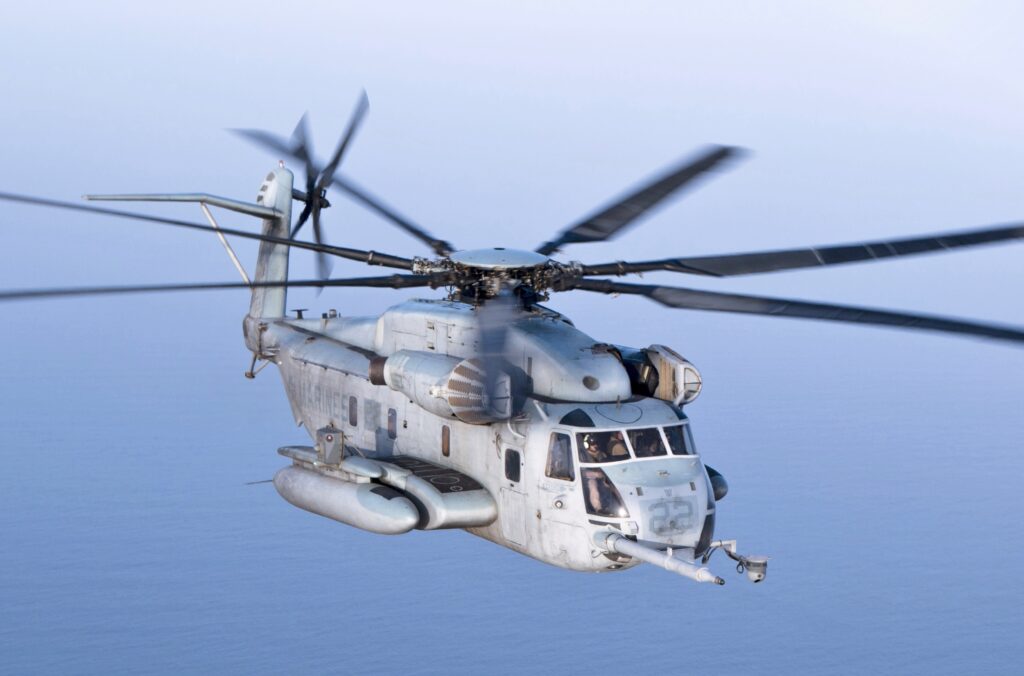
The cost contrast becomes clearer when we look at aviation. A U.S. Naval Institute Proceedings article cited the CH-53E Super Stallion as costing roughly $41 million to purchase and more than $22,000 per flight hour to operate. More recent U.S. Department of Defense fixed-wing and rotary-wing rate data lists high hourly rates for heavy helicopters, while smaller unmanned aircraft are generally in a very different cost category.
That does not mean unmanned systems are free. They require operators, batteries or fuel, spare parts, maintenance teams, software, communications, training and replacement inventory. In contested environments, attrition may become part of the operating model. A cheap drone lost repeatedly may become expensive. An expensive drone that prevents a risky convoy may still be a bargain.
So the cost argument should be framed carefully: unmanned resupply systems may reduce cost and risk in selected last-mile missions, especially when the alternative is a manned aircraft or a protected ground movement for a small load.
What Civilian Drone Delivery Teaches the Military
Civilian medical delivery gives us a useful parallel. Rwanda’s government partnered with Zipline to use autonomous drones for medical deliveries, especially blood products to rural health facilities. The government’s own announcement stated that the system was designed to deliver blood products across the country and do so for less than the cost of comparable motorbike delivery.
This is not a military case, but the logic is relevant. The cargo is small, urgent and high-value. The destination may be difficult to reach quickly by road. The delivery must be reliable. That same logic applies to battlefield resupply when the cargo is blood, batteries, radio components, medical supplies or critical spare parts.
The military version is harder because the environment is hostile. GPS may be jammed. Communications may be degraded. The landing zone may be exposed. Weather and dust may interfere. But the underlying principle remains the same: for low-volume, high-urgency cargo, air delivery by unmanned systems can make sense.
The Future: Distributed Forces Need Distributed Supply
The most important future role of these systems may come from the changing structure of military operations. Forces are trying to disperse because large concentrations are easier to detect and strike. Marines, special operations units and reconnaissance teams may operate from small temporary positions rather than large fixed bases.
But dispersion creates a logistics problem. The more a force spreads out, the harder it becomes to keep supplied. Traditional logistics prefers predictable routes, hubs and schedules. Modern survivability often requires movement, concealment and unpredictability.
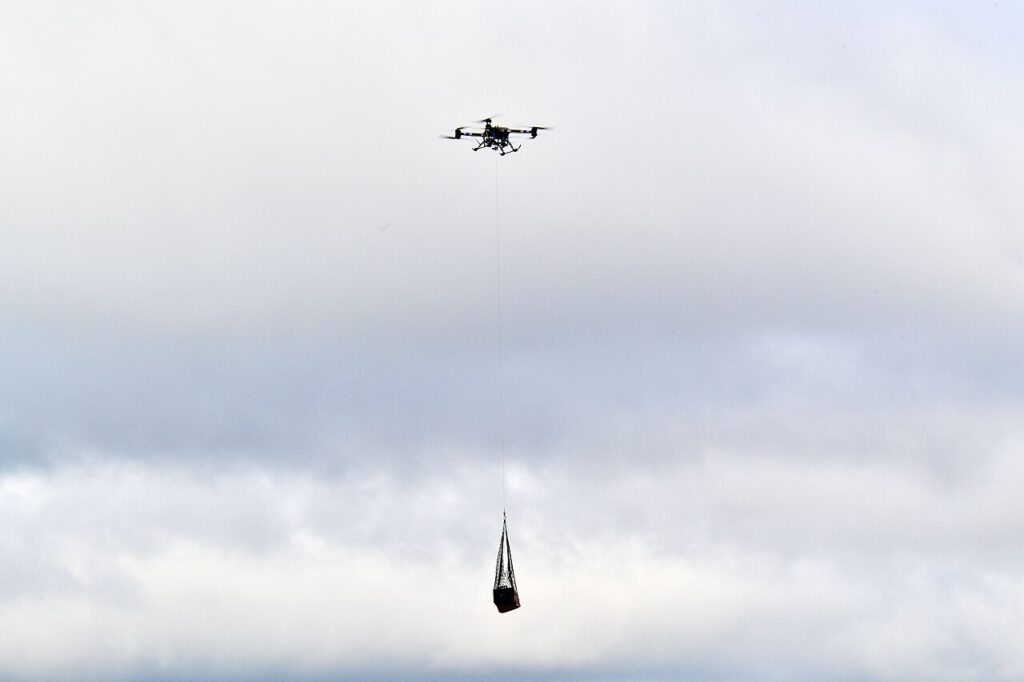
Unmanned resupply could help bridge that gap. A future network might include small drones for urgent items, medium drones for forward distribution, unmanned ground vehicles for the final few hundred meters, and larger aircraft or ships feeding the system from the rear. DARPA’s ANCILLARY program, for example, is aimed at demonstrating vertical takeoff and landing unmanned aircraft that can operate from ship decks and austere land locations without additional infrastructure. That kind of work points toward a future where logistics aircraft do not always need runways, prepared bases or large support teams.
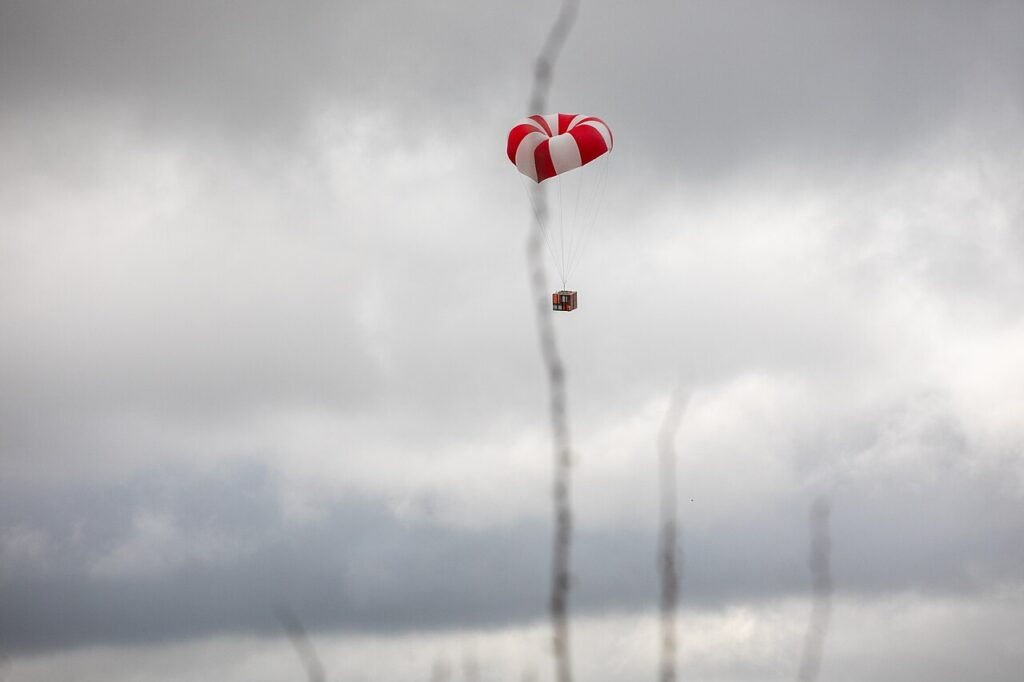
The challenge will not only be aircraft design. It will be integration. Who controls the drone? How is airspace managed? How are supplies packaged? How does the receiving unit confirm delivery? What happens under electronic attack? Can the system operate without constant bandwidth? These questions will decide whether unmanned resupply becomes a routine tool or remains a niche capability.
The Limits Should Not Be Ignored
There is no reason to exaggerate. Drones will not replace trucks. They will not replace helicopters. They will not solve the problem of fuel consumption for armored forces or the enormous ammunition demand of large-scale war.
Payload and range remain hard constraints. Batteries limit endurance. Weather can reduce reliability. Electronic warfare can disrupt navigation and control. Enemy forces may learn to detect and target resupply drones. A drone carrying supplies to a forward unit may also reveal that unit’s location if procedures are careless.
The future of battlefield resupply will therefore be hybrid. Trucks, ships, aircraft, helicopters, unmanned aircraft and ground robots will all have roles. The value of drones is not that they replace the logistics system. Their value is that they add a new layer to it.
For Drill & Defense, the key point is this: the most important military technologies are not always the most spectacular ones. A small unmanned aircraft carrying batteries or blood may not look as powerful as a fighter aircraft or missile system. But if it keeps a dispersed unit connected, supplied and alive, it has already changed the battlefield in a practical way.
Sources:
- U.S. Marine Corps, “Tactical Resupply Unmanned Aircraft System Demonstration,” 2023. Used for TRUAS payload, range and tactical resupply role.
- Naval Air Systems Command, “Tactical Resupply UAS Ready for the Fleet,” 2023. Used for TRV-150C fleet integration and operational context.
- Lockheed Martin, “Unmanned K-MAX Cargo Helicopter Team Returns From Deployment With U.S. Marine Corps in Afghanistan,” 2014. Used for Afghanistan deployment and 4.5 million pounds cargo figure.
- RAND Corporation, “Unmanned Aircraft Systems for Logistics Applications,” 2012. Used for broader military logistics UAS feasibility and cost-effectiveness framing.