
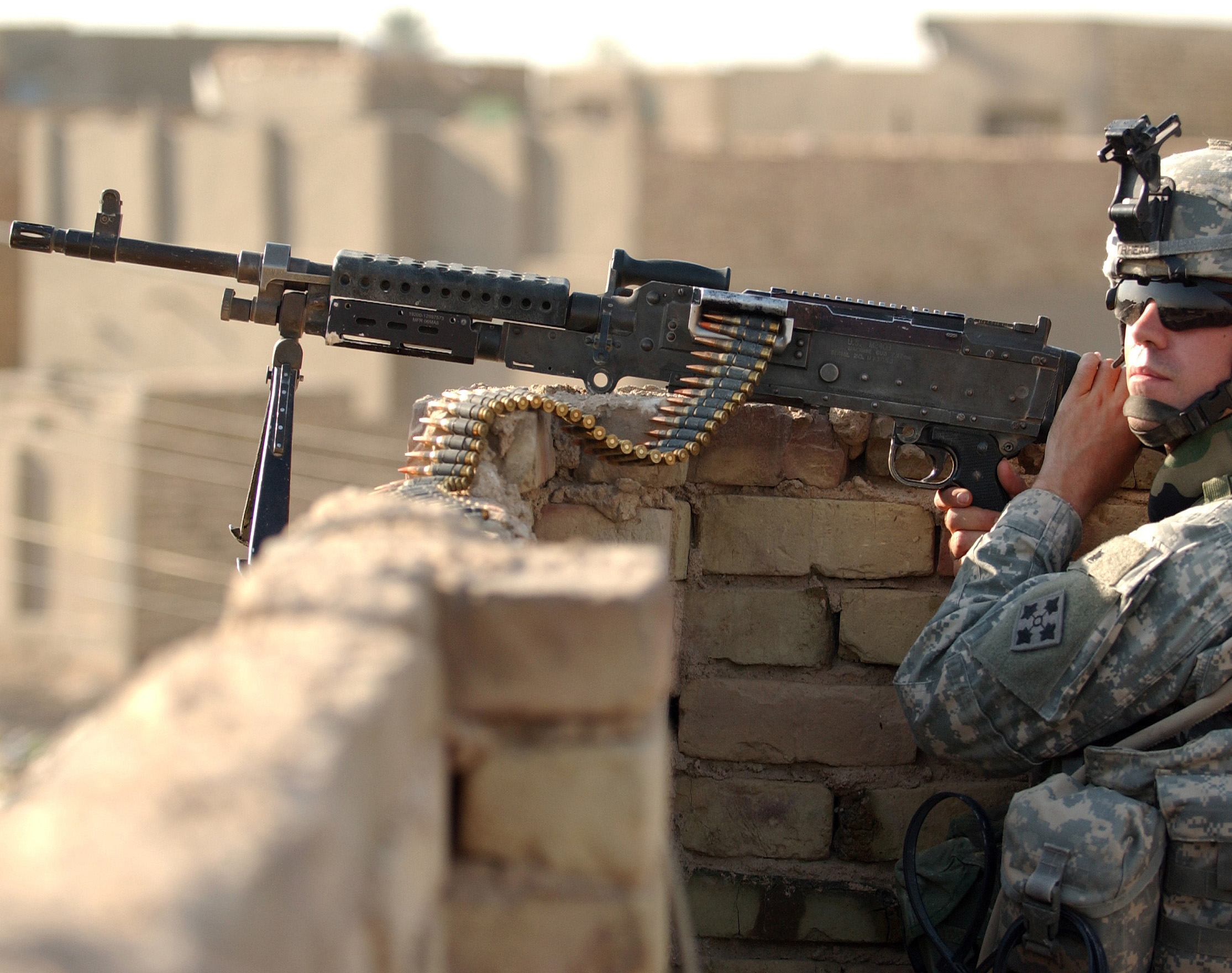
Modern defense discussions often move quickly toward lighter weapons, modular systems, smart optics, remote platforms, unmanned systems, and emerging battlefield technologies. That is understandable. The defense industry is changing fast, and every new capability brings a new debate. Yet some weapon systems remain relevant not because they are new or visually impressive, but because they continue to meet operational needs with consistency.

The M240 is one of those systems.
Rather than looking at it as a single weapon in one fixed form, it is more accurate to see the M240 as a family of 7.62x51mm NATO medium machine guns based on the Belgian FN MAG design. In U.S. service, the M240 family has appeared across infantry units, armored vehicles, helicopters, boats, and other platforms. That wide use raises an important question: why has this platform remained relevant across so many different roles?
From FN MAG to the M240 Family
The story of the M240 begins with the FN MAG, originally designed and manufactured by FN Herstal in Belgium. The FN MAG became one of the most widely recognized general-purpose machine guns in the world, adopted under different names and configurations by many armed forces.
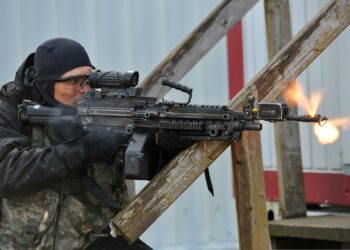
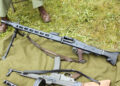
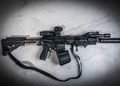
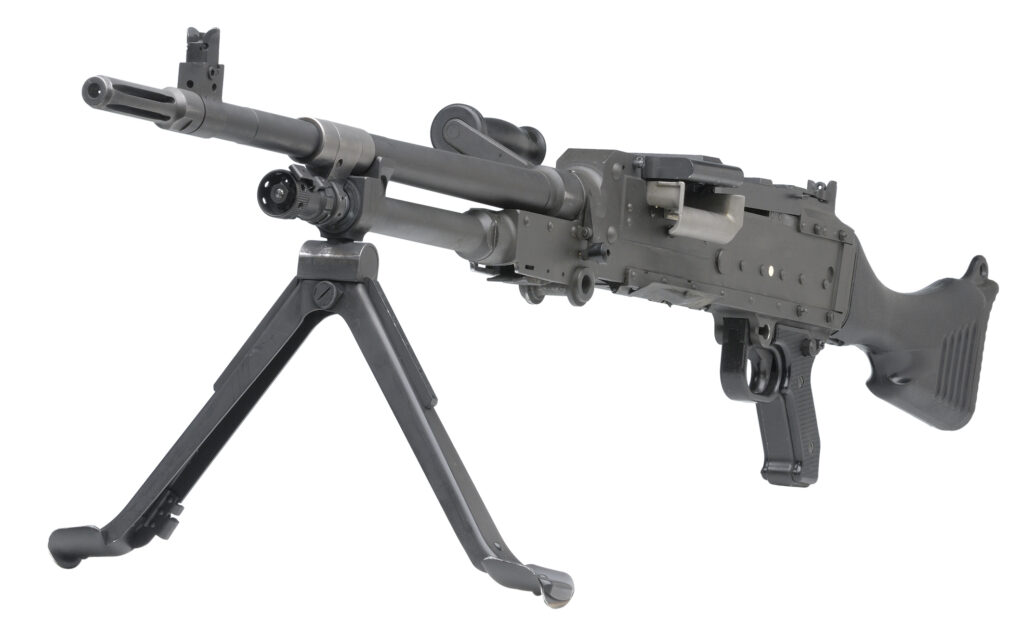
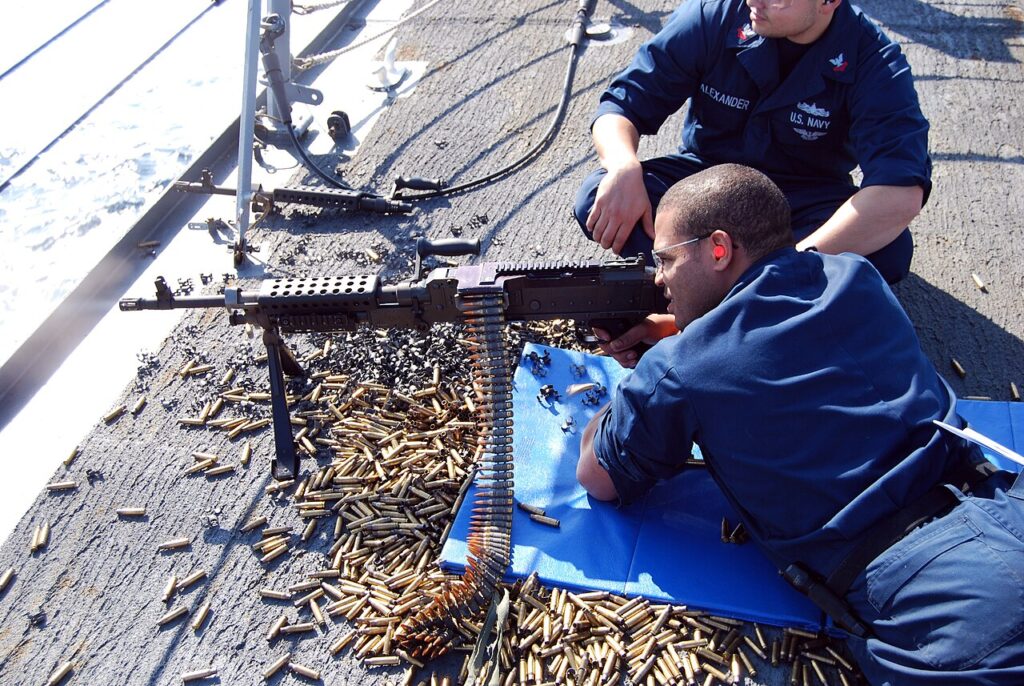
In the U.S. military context, the M240 designation refers to the American service family derived from that design. This is where terminology can sometimes confuse readers. When someone says “M240,” they may be referring to the general U.S. family. When someone says “M240B,” they are usually talking about the infantry-oriented ground version. This distinction matters, especially when images show a specific variant. Using M240 as the broader name is acceptable in a general article about the platform. But if the images show the M240B specifically, identifying it as the M240B variant somewhere in the text or caption makes the article more precise.
A simple caption such as “M240B, the infantry variant of the M240 machine gun family” would be enough. It keeps the language clear without making the article unnecessarily technical.
The Ground Role of the M240B
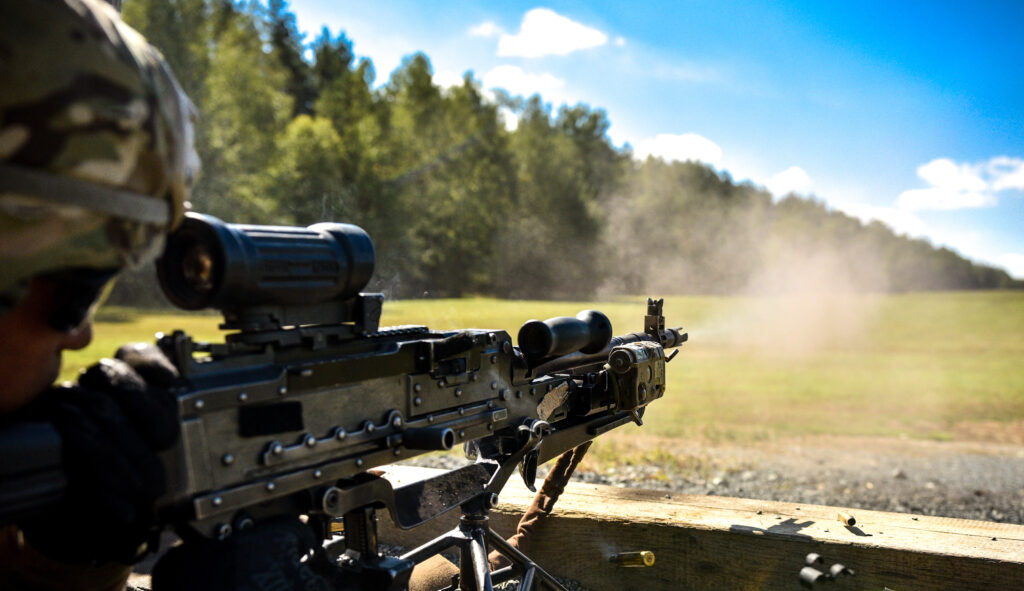
Among the different variants, the M240B is one of the most recognizable. It was adapted for infantry use with features suited for ground employment, including a buttstock, bipod, sights, and rail assemblies depending on configuration. In simple terms, the M240B is the version many readers are likely to picture when they imagine a U.S. infantry medium machine gun.
A medium machine gun does not serve the same role as an individual rifle. It is not mainly about one soldier carrying a personal weapon for close engagements. Its purpose is broader. It gives a unit controlled and sustained fire at distances where individual small arms may not provide enough dominance.
The M240 is a team and unit-level support weapon. It can support movement, strengthen defensive positions, and provide suppressive fire when a unit needs to control space and movement on the battlefield.
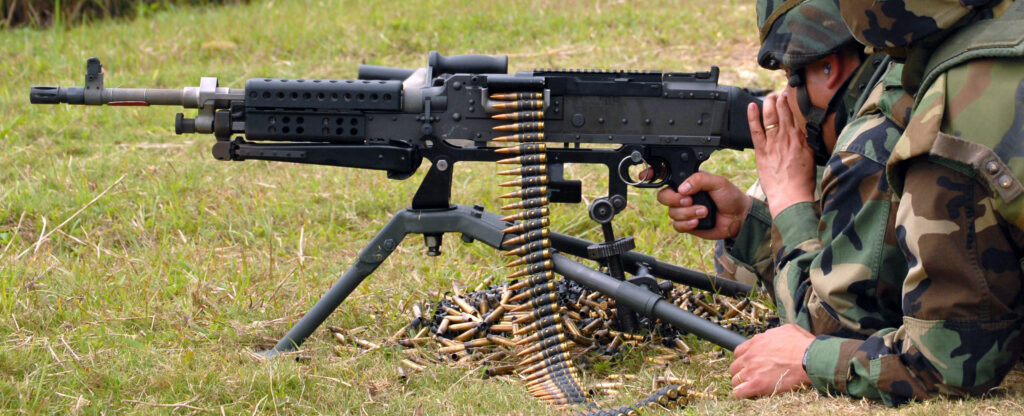
Weight is often part of the conversation, and for good reason. The M240B is not light. Compared with some newer weapon concepts, it can appear heavy and old-fashioned. But should weight alone define the value of a support weapon? In practice, weight has to be considered together with durability, barrel profile, receiver construction, and sustained-fire capability.
A machine gun must survive heat, vibration, rough handling, long firing schedules, and hard field use. The M240’s reputation is closely connected to that kind of endurance.
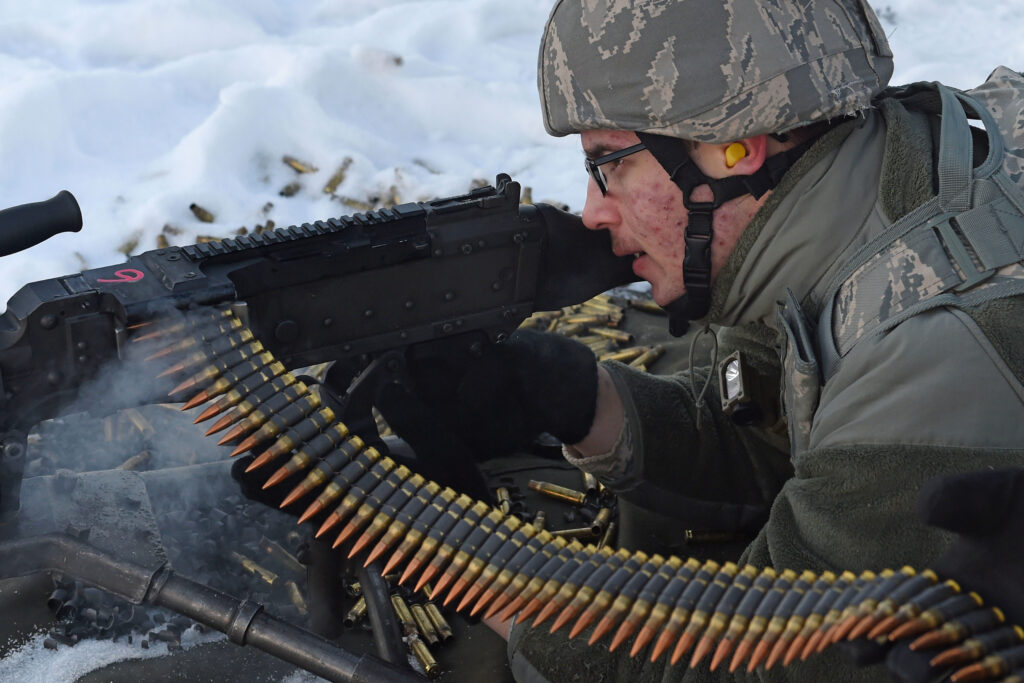
Unit: Joint Base Elmendorf-Richardson Public Affairs
Reliability Over Fashion
There is a reason the M240 family continues to appear in military inventories. It has a reputation for reliability. That word is sometimes overused in firearms writing, but in this case it remains central to understanding the platform.
A medium machine gun is not judged only by how it performs in ideal conditions. It is judged by whether it keeps working in dust, mud, heat, cold, vehicle vibration, and repeated field handling. Soldiers and units need confidence in a support weapon, especially when that weapon is expected to perform under stress. The M240 is belt-fed, gas-operated, air-cooled, and fires from an open bolt. These features are typical for a sustained-fire machine gun. The open-bolt system helps manage heat during automatic fire, while belt feeding allows the weapon to deliver longer strings of fire than magazine-fed systems.
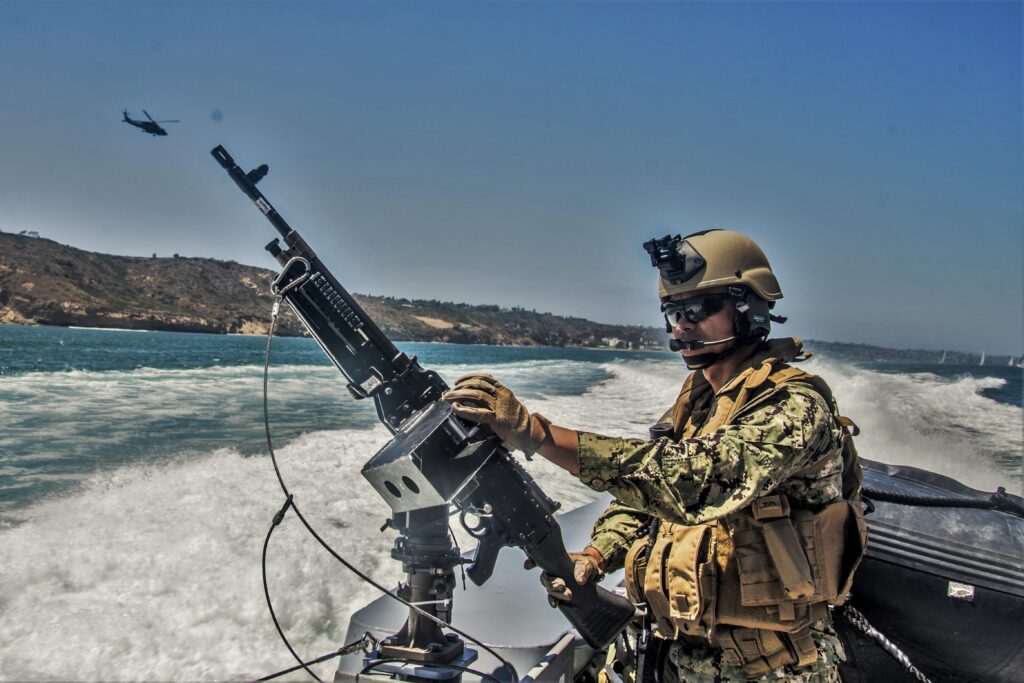
For readers who are not deeply familiar with machine guns, the easiest way to understand the M240 is this: it is designed to provide a unit with dependable 7.62mm firepower over distance, for longer periods, and from multiple mounting options. It can be used from a bipod, tripod, vehicle mount, aircraft mount, or naval platform depending on the variant and mission.
Why 7.62x51mm NATO Still Has a Place
The M240 fires 7.62x51mm NATO ammunition, a cartridge that remains important because it offers greater range and energy than 5.56mm NATO in many support-fire contexts.
This does not mean 7.62mm replaces lighter calibers. It means it fills a different role. A squad automatic weapon in 5.56mm may be lighter and easier to carry, but a 7.62mm medium machine gun gives the unit more reach and stronger suppression potential. That difference matters in open terrain, defensive positions, vehicle-mounted operations, and situations where individual rifles do not provide enough range or volume.
Recent conflicts have also reminded observers that older calibers and older weapon categories do not automatically disappear. Drones, sensors, electronic warfare, precision fires, and unmanned systems are changing the battlefield. Still, infantry units continue to require direct fire support and weapons that can perform under difficult conditions.
The question is not whether a platform is new or old. The more useful question is whether it still provides operational value in the environment where it is used. In the case of the M240, the answer remains closely tied to range, reliability, and sustained fire.
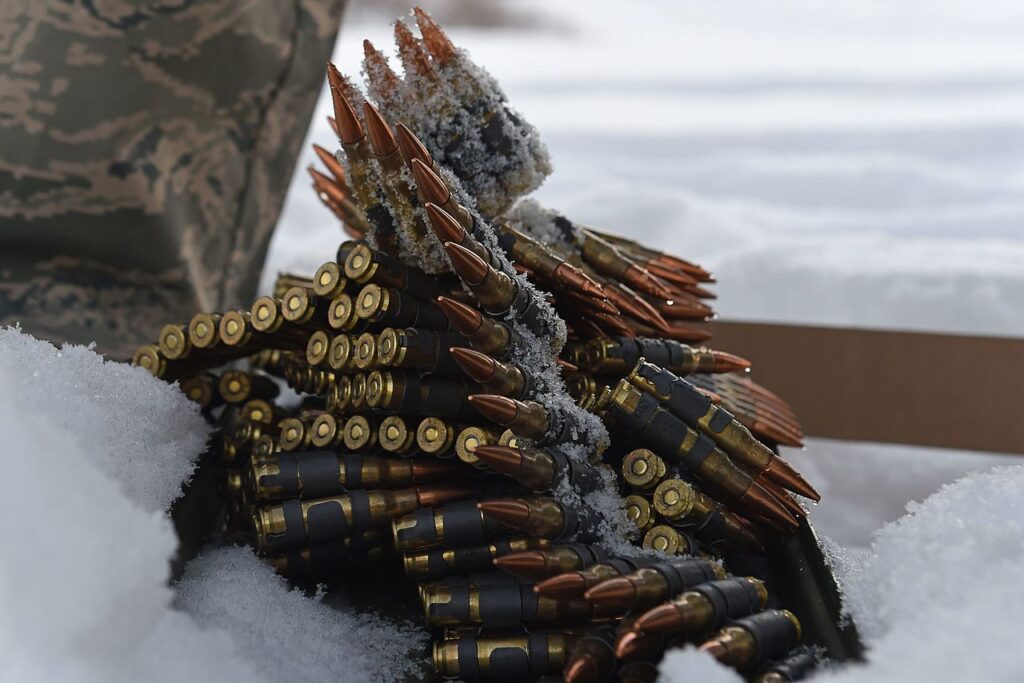
Unit: Joint Base Elmendorf-Richardson Public Affairs
Variants Matter More Than They Seem
The M240 family includes different versions because one configuration cannot serve every platform equally well. Ground forces, armored vehicles, aviation units, and maritime users do not all need the same setup.
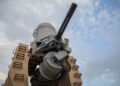
The M240B is associated with infantry ground use. The M240C has been used in armored vehicle applications. The M240H is associated with aviation roles and can be used with helicopters such as the UH-60 and CH-47. The M240L was developed to reduce weight by using titanium and other material changes while retaining the core reliability expected from the platform.
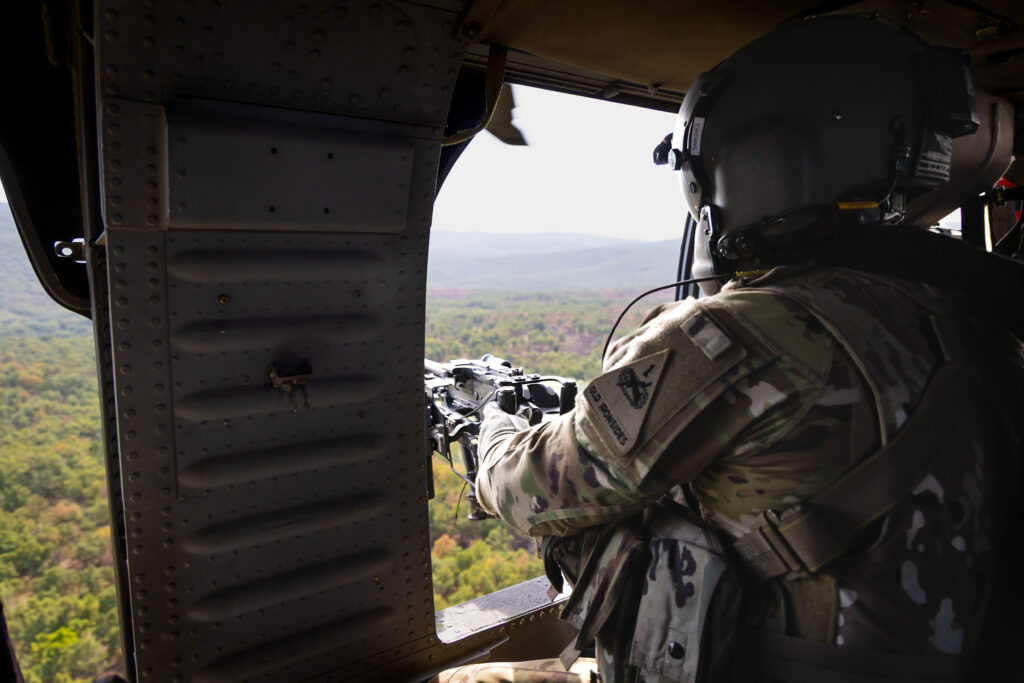
That variation is one reason the M240 name can appear across different military contexts. A reader may see one version mounted on a vehicle, another used by infantry, and another adapted for aviation. They are not all identical, but they belong to the same broader family. This is also why image captions matter. If an article uses M240B images but discusses the M240 family, the distinction should be made clearly. A short note identifying the pictured weapon as the M240B variant avoids confusion and strengthens credibility.
The Real Strength Is Adaptability
Reliability alone does not fully explain the M240’s staying power. Its broader strength is that it can be adapted across roles. A weapon that works only in one narrow use case may be effective, but it may not become a long-term standard across multiple branches and platforms. The M240 became important because it could serve ground troops, vehicles, aircraft, and mounted systems with variant-specific changes. That flexibility matters in large military organizations.
Standardization also has real value. Training, logistics, spare parts, maintenance habits, ammunition supply, and institutional familiarity all become easier when a military can rely on a common family of weapons. In large armed forces, standardization can be a major operational advantage.
This is where the M240 becomes more than a single weapon system. It shows how military equipment can remain relevant over time. A platform does not survive only because of raw specifications. It survives when it fits doctrine, logistics, training, maintenance systems, and operational demand.
Not Perfect, But Proven
A neutral assessment should also recognize limitations. The M240 is heavy compared with newer lightweight machine gun concepts. Its ammunition load adds more weight for the gun team. In dismounted operations, every kilogram matters.
That reality has pushed modernization efforts. Versions such as the M240L show that even proven systems need improvement. A weapon can be reliable and respected while still needing better weight reduction, ergonomics, optics compatibility, and integration with modern accessories.
Still, the M240’s continued use suggests that militaries do not replace a proven support weapon simply because something newer appears. Replacement requires a clear operational advantage, not just a newer design.
What should matter more in this category: maximum modernization, or proven performance across decades of service? In practice, procurement decisions usually have to balance both. Until a new system can offer similar confidence across reliability, range, durability, logistics, and cost, the M240 family remains difficult to dismiss.
Why It Still Deserves Attention
The M240 is not a futuristic weapon, but it remains an important one. It represents a practical approach to military firepower: durable design, NATO-standard ammunition, multiple variants, and long-term institutional trust. For defense industry readers, the lesson is broader than the machine gun itself. Platforms survive when they are useful across environments, compatible with existing structures, and trusted by operators. The M240 family has achieved that balance.
It may not be the lightest or newest system in the conversation, but it remains one of the most recognizable examples of what a general-purpose machine gun is expected to provide.
When an M240B photo is used, it should be understood as one branch of a larger family. That family connects Belgian design heritage, U.S. military adaptation, NATO standardization, and decades of operational use.
The M240 name therefore represents more than a single model. It refers to a long-running support-fire platform that continues to hold a serious place in the medium machine gun category.
Sources:
- U.S. Army CPE Ground, M240B/L/H 7.62mm Medium Machine Gun
- FN Herstal, FN MAG 7.62x51mm General Purpose Machine Gun
- FN America, FN M240B Product Information
- U.S. Marine Corps Training Command, M240B Medium Machine Gun Student Handout