
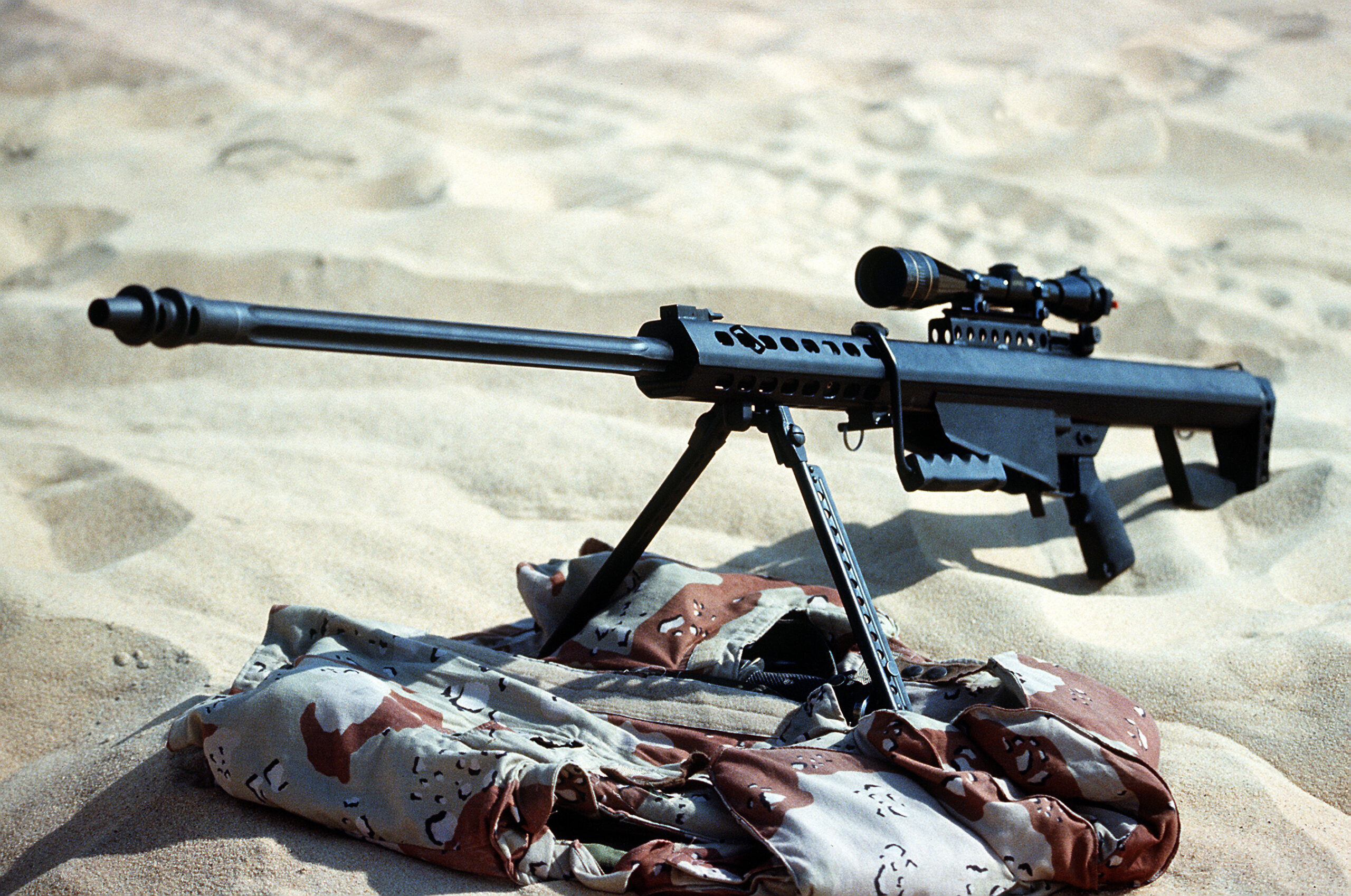
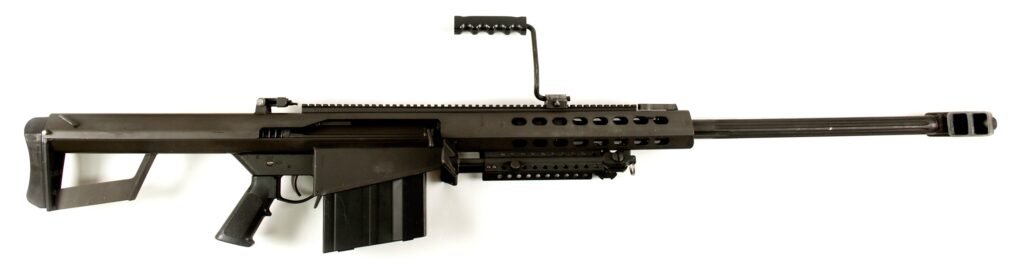
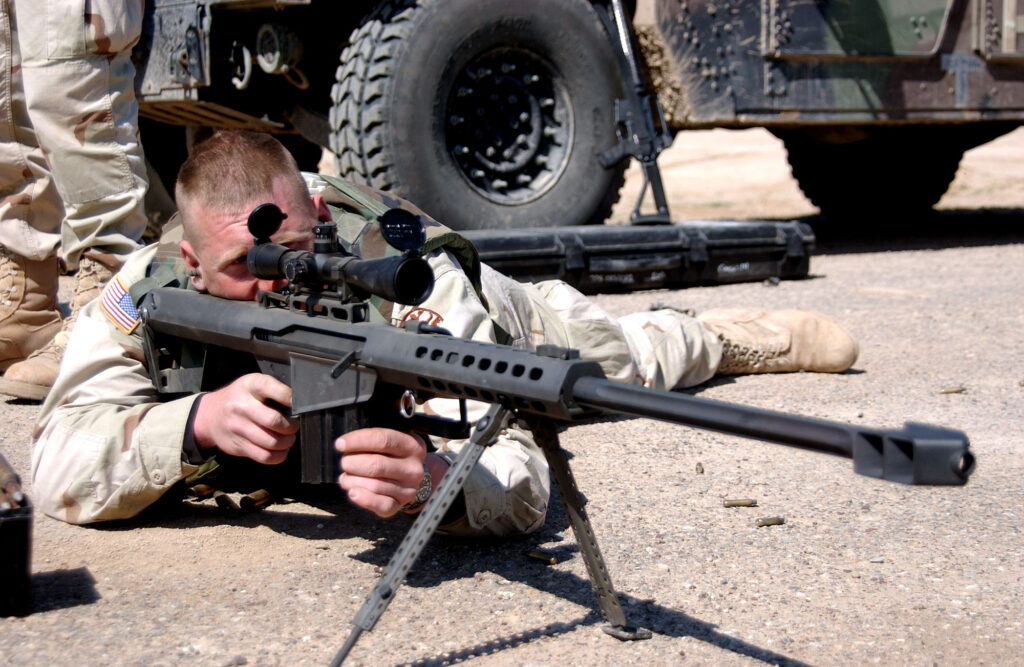
Some firearms become famous through mass adoption. Others become famous because they alter the way a role is understood. The Barrett M82A1 did exactly that. Even readers who are not deeply familiar with firearms usually recognize its outline: long receiver, massive muzzle brake, heavy barrel, large magazine, carry handle, bipod, and a scale that immediately separates it from ordinary rifles.

The broader M82 name is often used as a general reference, but the M82A1 is the model that turned Barrett’s .50 caliber concept into one of the most recognizable anti-materiel rifles in the world. The Model 82A1 is a recoil-operated, semi-automatic rifle available in .50 BMG, with 29-inch and 20-inch barrel configurations, a 10-round magazine, and a long M1913 rail designed to support serious optical systems.
Yet the M82A1 is often misunderstood. It is frequently described in popular culture as a “sniper rifle,” but that label only explains part of the story. The more useful term is anti-materiel rifle. That distinction matters because the M82A1 was not built only around the idea of engaging personnel at long distance. Its real identity is tied to equipment, light vehicles, exposed systems, radar units, parked aircraft, ammunition, explosive hazards, and battlefield objects that may be too distant or too dangerous to approach directly.
In other words, the Barrett M82A1 is not simply a larger rifle. It represents a different way of thinking about what a rifle can be asked to do.
Built Around a Different Kind of Target
Most rifles are judged through familiar questions: How accurate is it? How light is it? How comfortable is it to carry? How quickly can the shooter use it under pressure? These questions still matter with the M82A1, but they do not fully explain the weapon. A .50 BMG semi-automatic rifle lives in a different tactical space from a conventional 7.62 mm or .338-caliber precision rifle.
The .50 BMG cartridge, also known as 12.7×99 mm NATO, was historically associated with heavy machine guns rather than shoulder-fired rifles. Barrett’s achievement was not the invention of the cartridge itself. The achievement was turning that cartridge into a practical shoulder-fired semi-automatic rifle system with military value. The M82A1 became important because it made this level of cartridge power usable from a rifle platform in a way that could be adopted, trained, and understood within military roles.
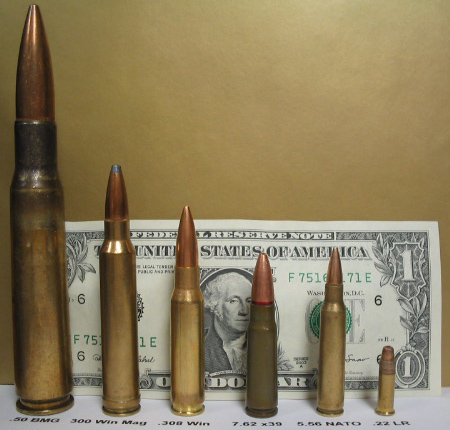
A rifle of this type is not elegant in the traditional sense. It is large, heavy, loud, and visually aggressive. But every one of those qualities is connected to the problem it was built to solve. If the target is a light vehicle, a communications system, an aircraft on the ground, or a hazardous munition that needs to be disrupted from a safer distance, then size and power are not cosmetic features. They are part of the logic of the system.
The reader should not think of the M82A1 as a rifle that accidentally became famous. It became famous because it gave a clear answer to a specific operational gap.
Semi-Automatic Power, Not Just Caliber
A .50 caliber rifle already attracts attention because of the cartridge. But caliber alone does not explain the M82A1’s place in firearms history. The semi-automatic operating system is just as important.
With a bolt-action anti-materiel rifle, the shooter must manually cycle the action after every shot. That can be acceptable in many precision roles, especially where the first shot is the central concern. The M82A1, however, offers faster follow-up shots while keeping the shooter behind the rifle. Against equipment, vehicles, or explosive hazards, that can matter. A target may require more than one hit. Conditions may change quickly. A first shot may damage rather than fully disable. Semi-automatic operation gives the system a more flexible rhythm.
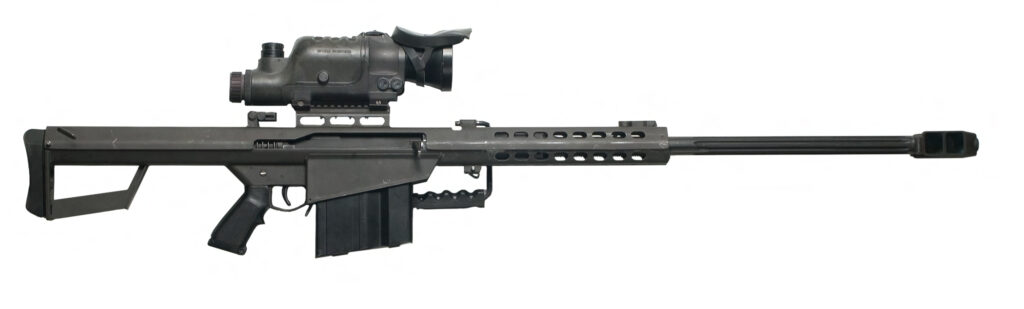
The M82A1 is recoil-operated and semi-automatic. It is commonly associated with the .50 BMG cartridge and fed from a 10-round detachable magazine. Its large muzzle brake, recoil system, and overall mass all contribute to making such a powerful rifle more manageable than its raw cartridge energy might suggest.
Of course, “semi-automatic” should not be confused with “easy.” The M82A1 is still a demanding weapon. Its recoil must be managed, its blast is serious, and its weight requires planning. The 29-inch .50 BMG version is roughly 57 inches in overall length and weighs a little over 32 pounds, while the 20-inch configuration is shorter at roughly 48 inches and weighs around 31 pounds depending on configuration.
That is part of the reason the M82A1 is interesting. It sits between categories. It is portable, but not light. It is a rifle, but it reaches into a target set usually associated with heavier weapons. It can be used by individuals or small teams, but its best use depends on discipline, observation, and preparation rather than cinematic improvisation.
Why the M82A1 Became More Than a Niche Weapon
Some firearms are technically impressive but remain marginal. The Barrett M82A1 did not stay marginal because it arrived at a moment when militaries had real use for this kind of capability. Modern battlefields contain more than soldiers and armored formations. They contain sensors, vehicles, generators, parked aircraft, antenna systems, fuel points, explosive remnants, and exposed infrastructure. A weapon that can affect those targets from long distance has value beyond simple marksmanship.

This is where the anti-materiel concept becomes important. The goal is not always to destroy something spectacularly. Sometimes it is enough to disable, damage, deny, or force a change in behavior. A rifle capable of damaging key components can make exposed equipment harder to use confidently. It can also give smaller units a way to influence targets that would otherwise require heavier support.
The M82A1’s later relationship with the U.S. military’s M107 designation reinforced its reputation, but the M82A1 remains the design people usually associate with the original Barrett “Light Fifty” image. In public understanding, it became the visual and conceptual reference point for the shoulder-fired .50 caliber anti-materiel rifle.
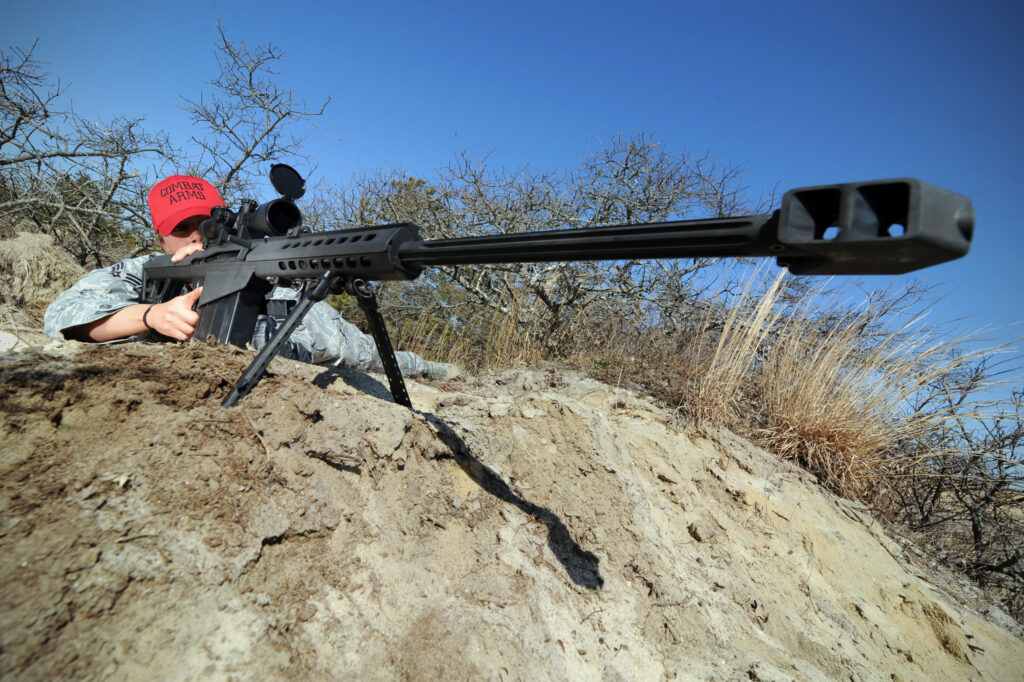
That does not mean it replaced other systems. It did not. Artillery, missiles, machine guns, precision rifles, drones, and air-delivered weapons all occupy their own roles. The M82A1’s value is more specific. It gives a small team a way to apply heavy rifle fire at range against targets that are vulnerable to .50 caliber effects.
The Rifle’s Reputation and Its Reality
The Barrett M82A1 has a strong cultural image. Films, video games, photographs, and online discussions have turned it into a symbol of extreme firepower. That image is not completely false, but it is incomplete. The real M82A1 is less about spectacle and more about utility.
A professional view of the rifle has to separate reputation from function. Yes, the M82A1 is visually dramatic. Yes, it fires a powerful cartridge. Yes, it has become one of the most recognizable firearms in the world. But its real significance lies in how it made .50 BMG firepower practical from a rifle platform.
There is also a psychological dimension. A weapon like the M82A1 changes how exposed materiel is perceived. Equipment that might otherwise be considered safe at distance becomes more vulnerable. Light vehicles, static systems, and certain battlefield objects cannot be treated the same way if a capable anti-materiel rifle team is operating nearby. This does not mean the rifle can solve every tactical problem. It means it creates pressure across a specific range of targets.
For readers who follow defense technology, that is the important lesson. A weapon does not need to dominate every category to be influential. Sometimes its significance comes from creating a new problem for the opposing side.

Practical Strengths and Real Limitations
A neutral assessment also has to address what the M82A1 is not.
It is not a light precision rifle. It is not ideal for every long-range mission. Its size, sound signature, muzzle blast, and logistical demands are serious. In some roles, modern precision rifles in smaller or more specialized calibers may be more suitable. They may be easier to carry, easier to conceal, and more appropriate for personnel-focused precision work.
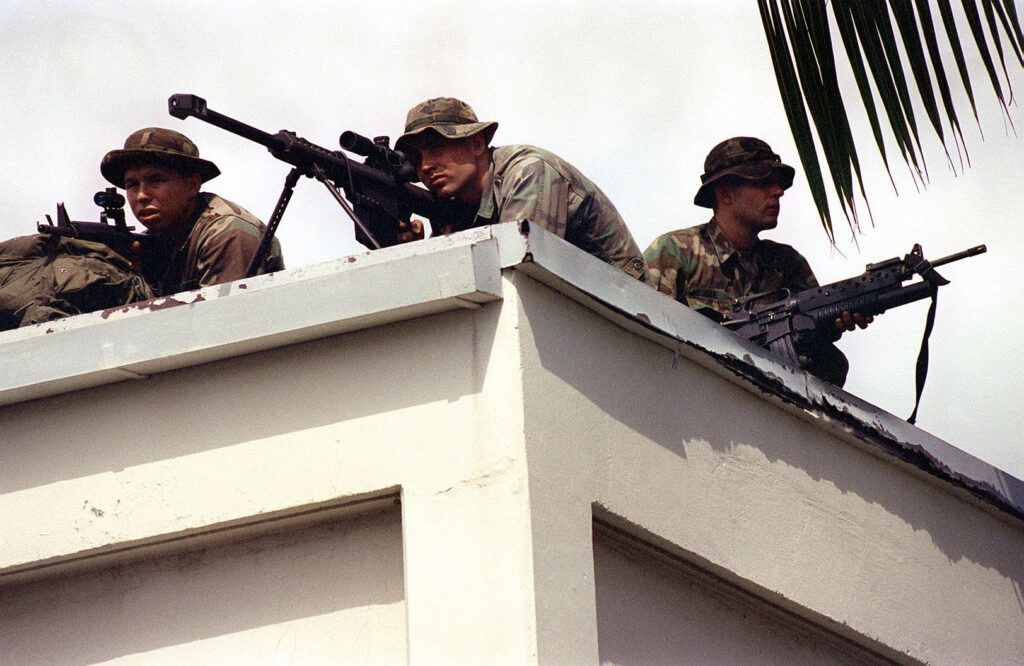
The M82A1 also depends heavily on context. A powerful rifle without proper ammunition, optics, training, and target selection is just a heavy object with a large cartridge. Its effectiveness comes from matching the weapon to the right mission. That point is often lost in popular discussions, where the rifle is treated almost like a universal solution. That specialization, however, is exactly why it matters. The M82A1 does not need to behave like every other rifle. Its purpose is to bring a level of energy and reach that ordinary rifles cannot provide. When used in the right role, that makes it valuable.
A Design That Changed the Conversation
Before the Barrett M82A1 became widely known, the idea of a shoulder-fired semi-automatic .50 caliber rifle was unusual enough to feel almost excessive. After the M82A1, the concept became familiar. That shift is part of its legacy. The rifle changed the conversation around man-portable long-range firepower.
Its influence can be seen not only in military adoption, but also in the broader anti-materiel rifle category that followed. Other manufacturers developed large-caliber rifles with different design philosophies, including bolt-action and semi-automatic systems. Still, the M82A1 remains the reference point many people think of first. That kind of recognition is not accidental. It comes from timing, performance, visibility, and the clarity of the design concept.
From an industry perspective, the M82A1 is also a reminder that innovation does not always mean making something smaller, lighter, or more refined. Sometimes innovation means taking an existing cartridge and building a practical system around it in a way that changes how users think about a mission. That may be the most valuable way to understand the rifle today. The Barrett M82A1 is not important only because it is powerful. It is important because it made a certain kind of power portable, repeatable, and doctrinally useful.
Where the M82 Stands Today
Modern warfare is changing quickly. Drones, loitering munitions, sensors, precision artillery, and networked targeting systems have altered how distance and visibility are understood. In that environment, a rifle like the M82A1 does not exist alone. It is part of a much wider battlefield ecosystem.
Still, the basic need that created the M82A1 has not disappeared. Forces still encounter equipment targets. Explosive hazards still need to be disrupted. Light vehicles and exposed systems still exist. Small units still benefit from tools that allow them to act at distance without immediately relying on heavier support.

Modern relevance, however, depends on integration rather than the rifle alone. Paired with good observation, accurate intelligence, quality optics, disciplined training, and appropriate ammunition, the M82A1 remains a serious tool. Without that context, it can easily become more symbol than solution.
This balance is what makes the rifle worth studying. Iconic status should not distract from the engineering and doctrine behind it. The M82A1 is a heavy rifle built for heavy tasks, and its importance comes from how clearly it occupies that role.
Subtlety was never the point. The Barrett M82A1 redefined its category by proving that a shoulder-fired semi-automatic system could carry .50 BMG power into missions where distance, equipment targets, and standoff capability mattered. Its legacy is not just the sound, the size, or the silhouette. Its legacy is the tactical space it helped create.
Sources
- Barrett Firearms, “Model 82A1.”
- The United States Army, “New Army sniper weapon system contract awarded to Barrett Firearms,” March 31, 2021.
- NRA National Firearms Museum, “Barrett M82A1 Semi-Automatic Sniper Rifle.”