
Drill & Defense
Advertisement
  • Defense Industry
    • Industry News
    • Defense Companies
    • Defense Technologies
    • Market Analysis
  • Military Systems
    • Land Systems
    • Air Systems
    • Naval Systems
    • Electronic & Cyber Systems
  • Firearms
    • Pistols
    • Rifles
    • SMGs & Machine Guns
    • Ammunition
    • Optics & Accessories
  • Geopolitics
    • Global Security
    • Defense & Energy Strategy
    • Tech & Innovation Crossover
    • Trade & Export Controls
  • Energy & Security
    • Oil & Gas News
    • Energy Technologies
    • Market Trends & Analysis
  • History
    • Military History
    • Doctrines & Concepts
    • Strategic Turning Points
    • Legacy Systems & Structures
  • Knowledge Base
    • Firearms Basics
    • Defense Know-How
    • Energy Fundamentals
    • Regulations & Frameworks
  • About
  • Contact
  • Login
  • Register
No Result
View All Result
  • Defense Industry
    • Industry News
    • Defense Companies
    • Defense Technologies
    • Market Analysis
  • Military Systems
    • Land Systems
    • Air Systems
    • Naval Systems
    • Electronic & Cyber Systems
  • Firearms
    • Pistols
    • Rifles
    • SMGs & Machine Guns
    • Ammunition
    • Optics & Accessories
  • Geopolitics
    • Global Security
    • Defense & Energy Strategy
    • Tech & Innovation Crossover
    • Trade & Export Controls
  • Energy & Security
    • Oil & Gas News
    • Energy Technologies
    • Market Trends & Analysis
  • History
    • Military History
    • Doctrines & Concepts
    • Strategic Turning Points
    • Legacy Systems & Structures
  • Knowledge Base
    • Firearms Basics
    • Defense Know-How
    • Energy Fundamentals
    • Regulations & Frameworks
  • About
  • Contact
  • Login
  • Register
No Result
View All Result
Drill & Defense
No Result
View All Result
Home Geopolitics

Libya After Gaddafi: Security Fragmentation, Weapons Proliferation, and Energy Challenges

December 15, 2025
in Geopolitics, Global Security
Libya After Gaddafi: Security Fragmentation, Weapons Proliferation, and Energy Challenges

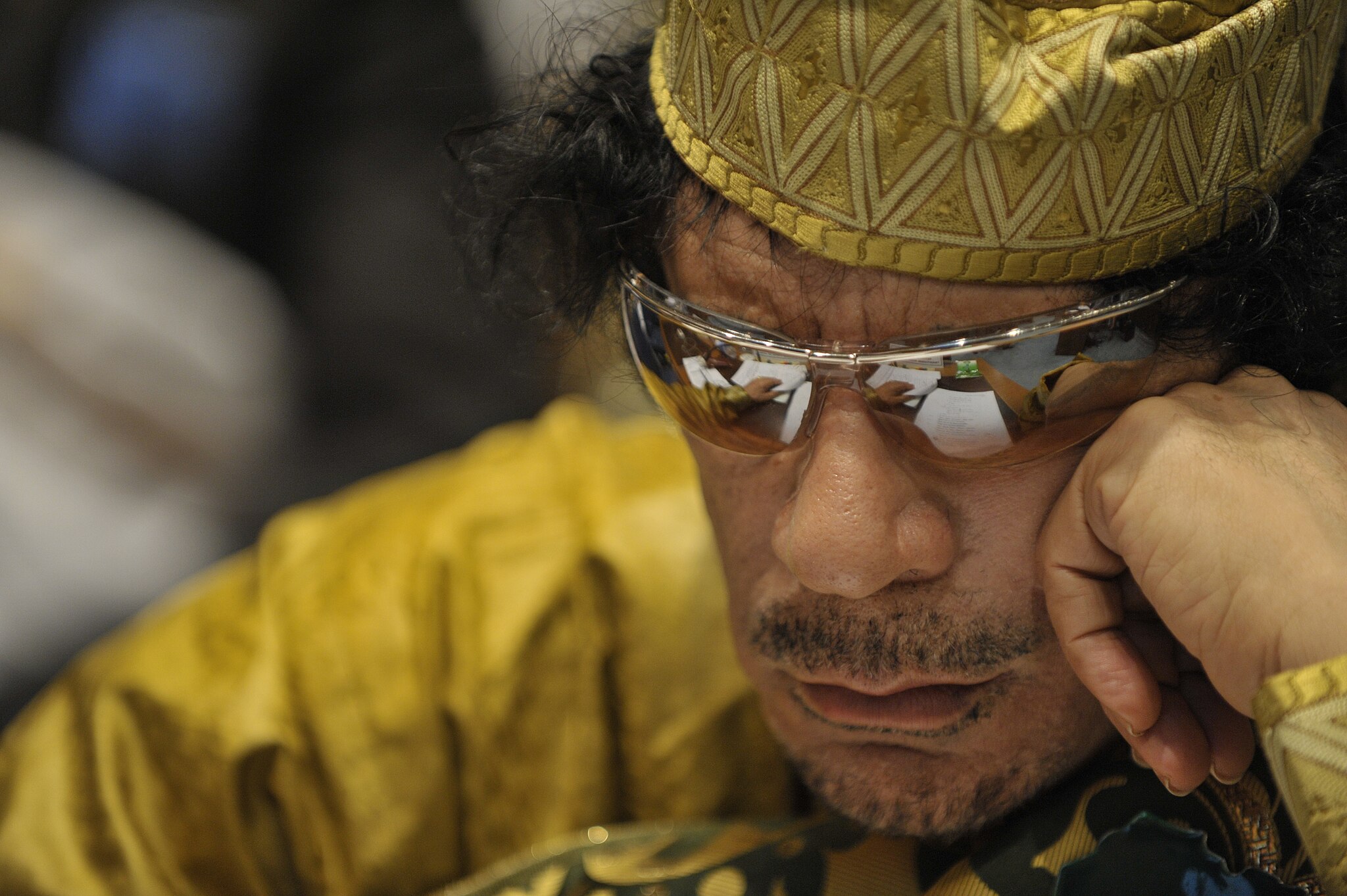
Muammar Qaddafi, the Libyan chief of state, attends the 12th African Union Summit in Addis Ababa, Ethiopia, Feb. 2, 2009. Qaddafi was elected chairman of the organization.

Share on LinkedInShare on Twitter

Since the overthrow of Muammar al-Gaddafi in 2011, Libya has stood as a striking example of how the collapse of a long-standing regime can unsettle the very foundations of statehood. Over a decade on, the legacy of Gaddafi’s rule continues to shape Libya’s security landscape and energy sector in ways that carry implications far beyond its borders. Foreign policy analysts, security scholars, and international energy institutions frequently highlight Libya’s experience as a cautionary case in post-conflict reconstruction and state rebuilding.

The Vacuum Left by Regime Collapse

Gaddafi’s governance model centralized authority in his figure and in a complex network of patronage and ideology. When that model unraveled rapidly in 2011, there was no resilient institutional framework ready to take its place. Security services, police forces, and formal military structures that had operated under the regime’s command effectively dissolved, leaving a vacuum where formal enforcement of law and order once existed. In many areas, the absence of a central state force allowed armed groups and militias to assert control over territory, infrastructure, and borders. This fragmentation of security structures became one of the defining features of post-Gaddafi Libya.

The international community’s efforts to rebuild Libya’s security institutions faced immense obstacles from the outset. Without a unified national force capable of enforcing stability, rival factions and local power holders entrenched themselves, often prioritizing local control over national cohesion. These dynamics have perpetuated cycles of violence and complicated efforts to implement national disarmament and reintegration initiatives.

Clashes between Libyan revolutionary forces and forces loyal to Gaddafi. Fars Media Corporation, CC BY 4.0 https://creativecommons.org/licenses/by/4.0

Weapons Proliferation and Security Risks

One of the most critical consequences of state collapse has been the widespread proliferation of weapons. Large quantities of arms once held within Libya’s formal stockpiles and regime security units found their way into the hands of militias, criminal networks, and loosely affiliated armed groups. The looting of former regime weapons stores in the early conflict period, combined with porous borders and weak customs controls, facilitated the spread of small arms and light weapons across the country and into the greater Sahel region. These developments have fueled localized conflict and contributed to organized crime and instability.

This proliferation not only undermines Libya’s internal security but also has broader regional security implications. Neighboring states and international security organizations have expressed concern over how unregulated weapons flows affect peace and stability in North and West Africa. Moreover, the presence of armed groups across Libya’s territory has made it more challenging for future stabilization and governance efforts to take root.

Near an occupied military post at rebel-held Ras Lanuf, Libya’s largest oil refinery, fighters have left large stockpiles of weaponry such as tank shells and assault rifle and anti-aircraft ammunition sitting exposed to the sun and sand next to eggs, bread and milk. Al Jazeera English, CC BY-SA 2.0 https://creativecommons.org/licenses/by-sa/2.0

Political Fragmentation and Competing Authorities

Following Gaddafi’s removal, Libya never fully reconstituted a functioning central government with uncontested authority over its entire territory. Instead, the country became characterized by multiple competing centers of power, including rival administrations in the east and west, and numerous local militias and armed coalitions. This fragmentation has impeded coherent national policymaking and contributed to a persistent climate of insecurity.

Efforts to unify the country politically have been intermittent and often overshadowed by armed conflict. International actors have supported various mediation processes, but none have succeeded in creating a lasting, inclusive governance framework. Consequently, Libya’s political landscape remains divided, and the presence of multiple armed actors continues to shape how order and authority are exercised at local and regional levels.

At the main checkpoint near the strategic oil town of Brega, men with what appeared to be better equipment and gear than their untrained comrades began to assemble. They wore emblems indicating their position as engineers or paratroopers and said they were defected “special forces” from Benghazi who were awaiting orders. Al Jazeera English, CC BY-SA 2.0 https://creativecommons.org/licenses/by-sa/2.0

Economic Impact and Energy Sector Complexity

Libya’s economy has long been heavily dependent on its hydrocarbon sector, with oil and gas revenues historically accounting for the bulk of state income. Under Gaddafi, the state maintained tight control over energy production and exports. After 2011, political fragmentation quickly translated into economic disruption. Competing authorities and militias have intermittently seized or blockaded key oil export terminals and production facilities, leading to sharp declines in output and significant revenue losses for the state.

More recently, despite ongoing instability, there have been renewed efforts to engage international investment in Libya’s energy sector. Initiatives involving Libya’s National Oil Corporation and major international energy companies signal a desire to restore production capacity and attract foreign capital. These developments illustrate both the potential of Libya’s energy resources and the challenges of managing them within a context of political division and insecurity.

At the same time, illicit practices tied to the energy sector have emerged as a significant economic and governance challenge. Investigative reporting and institutional assessments highlight how fuel smuggling and unauthorized trade have deprived the Libyan state of substantial revenue, further weakening formal institutions and empowering informal networks. The interaction between subsidized fuel, porous borders, and factional control over distribution routes has created lucrative avenues for corruption and illegal commerce.
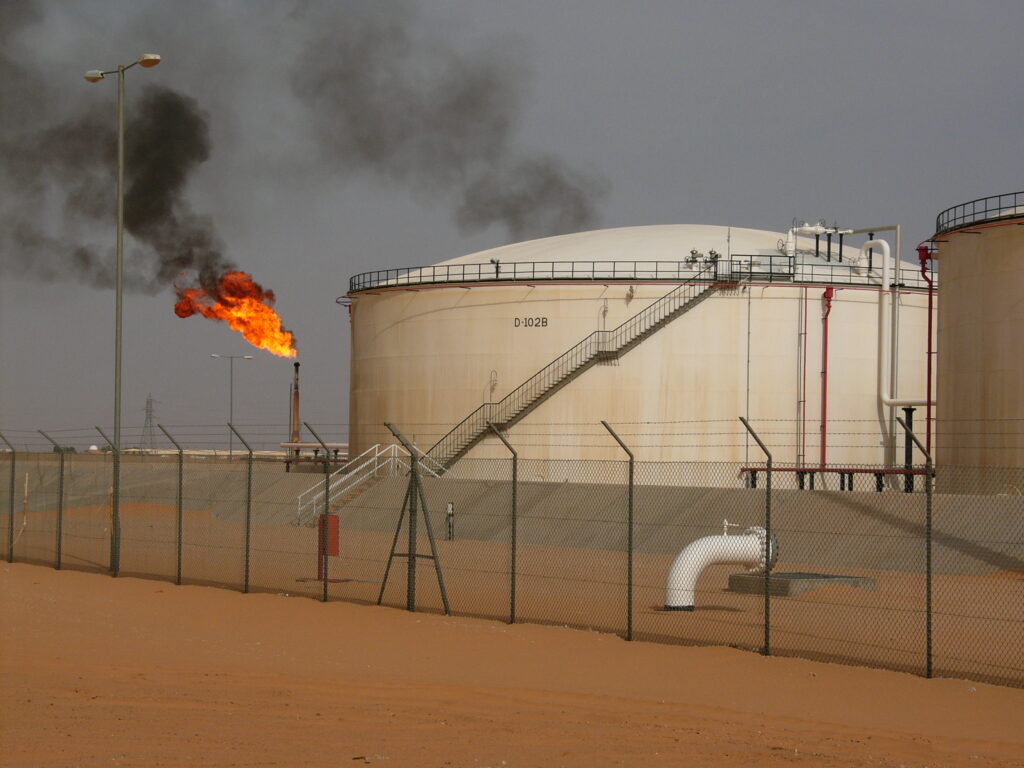
El Sharara oil field, in Libya, operated by Repsol. Javier Blas, CC BY-SA 3.0 http://creativecommons.org/licenses/by-sa/3.0/

The Interplay of Security, Governance, and Economic Recovery

The post-Gaddafi trajectory of Libya underscores the intricate connections between security, governance, and economic stability. Weak and competing security structures have inhibited the establishment of effective state authority, while economic assets such as oil and fuel have become both a prize and a tool in political contests. The persistence of armed groups controlling key infrastructure complicates efforts to unify national governance structures and rebuild formal institutions capable of delivering public services.

International engagement continues in various forms, ranging from political mediation to technical support for security sector reform. However, sustainable progress depends heavily on internal consensus and the willingness of Libya’s diverse stakeholders to prioritize collective stability over factional interests. The absence of centralized authority has left a landscape in which economic incentives and security imperatives frequently pull in different directions, slowing the path toward recovery.

Libya’s experience after Gaddafi offers important lessons for policymakers, regional security planners, and energy sector actors alike. It illustrates how pre-existing institutional weaknesses can be amplified by the abrupt removal of centralized power, and how the interdependence of security and economic systems can either support or undermine national reconstruction. As the country continues to navigate its challenges, the need for coherent and inclusive frameworks for governance and security remains clear.

BOURI FIELD. Abdalrahem Omar Zaed, CC BY-SA 4.0 https://creativecommons.org/licenses/by-sa/4.0.

Sources

  • Mühlberger, W.
    Libya After Qadhafi: Reshaping the Political and Security Landscape.
  • RAND Corporation.
    Libya After Qaddafi: Lessons and Implications for the Future.
  • International Crisis Group.
    The Libyan Crisis: Root Causes and Current Dynamics.
  • United Nations Support Mission in Libya (UNSMIL).
    Security Sector Reform and Armed Group Dynamics in Libya.
  • Small Arms Survey.
    Libya’s Arms Proliferation and Regional Spillover Effects.

Previous Post

The Black Sea’s Evolving Battlespace: Ukraine’s Maritime Operations and Shifting Security Dynamics

Next Post

The New Taiwan Arms Package and China’s “Stop” Message: What Actually Changed

Related Posts

T-80U_ROKA_제3기갑여단
Geopolitics

Brown Bear Project : How Republic of Korea added Russian weapons into its inventory?

April 14, 2026
DESERT STORM
Geopolitics

Iraq: A Preview of the Region’s Future

April 6, 2026
The Architecture of Global Power: Chokepoints, Energy Corridors, and Global Trade
Geopolitics

The Architecture of Global Power: Chokepoints, Energy Corridors, and Global Trade

March 12, 2026
Strategic Deception and Covert Warfare: The Logic Behind the Hezbollah Pager Operation
Geopolitics

Strategic Deception and Covert Warfare: The Logic Behind the Hezbollah Pager Operation

March 10, 2026
The Warfare Doctrine of Eliminations inthe Opening Strikes of Military Conflicts
Geopolitics

The Warfare Doctrine of Eliminations inthe Opening Strikes of Military Conflicts

March 3, 2026
Mexican cartels and the shifting landscape of Mexico’s energy supply chain
Geopolitics

Mexican cartels and the shifting landscape of Mexico’s energy supply chain

February 24, 2026
Next Post
The New Taiwan Arms Package and China’s “Stop” Message: What Actually Changed

The New Taiwan Arms Package and China’s “Stop” Message: What Actually Changed

  • Trending
  • Latest
Operation Enduring Freedom

What Exactly Is a Private Military Company (PMC)?

September 6, 2025
Blackwater PMC

After Blackwater: How PMCs Evolved, Professionalized, and Fragmented

September 13, 2025
MG42-1

MG42 Machine Gun: WWII History, Specifications and Battlefield Impact

April 21, 2026
Blackwater PMC

Inside Iraq’s Security Market: How Private Power Shapes a Fragile State

October 6, 2025
1280px-5-4_ADAR_Supports_Formidable_Shield_25_

SGT Stout: M-SHORAD and Mobile Air Defense

May 16, 2026
HEL_MD_Beam_Director

Laser Weapons: The New Layer in Modern Air Defense

May 14, 2026
EU Dual Use

EU Dual-Use Regulation: How Civilian Technology Becomes a Matter of Export Control

May 13, 2026
Barrett M82 DESERT SHIELD

Barrett M82A1: The Heavy Rifle That Redefined Anti-Materiel Firepower

May 12, 2026

Recent Articles

1280px-5-4_ADAR_Supports_Formidable_Shield_25_

SGT Stout: M-SHORAD and Mobile Air Defense

May 16, 2026
HEL_MD_Beam_Director

Laser Weapons: The New Layer in Modern Air Defense

May 14, 2026
EU Dual Use

EU Dual-Use Regulation: How Civilian Technology Becomes a Matter of Export Control

May 13, 2026
Barrett M82 DESERT SHIELD

Barrett M82A1: The Heavy Rifle That Redefined Anti-Materiel Firepower

May 12, 2026
Drill & Defense

Drill & Defense is an independent defense and security platform covering firearms, military technology, geopolitics, energy security, and industry developments. We provide clear, structured, and practical insight for professionals, companies, and readers following the evolving defense landscape worldwide.

Follow Us

Browse by Category

  • Air Systems
  • Defense & Energy Strategy
  • Defense Industry
  • Defense Know-How
  • Defense Technologies
  • Doctrines & Concepts
  • Energy & Security
  • Energy Fundamentals
  • Energy Technologies
  • Firearms
  • Geopolitics
  • Global Security
  • History
  • Industry News
  • Knowledge Base
  • Land Systems
  • Legacy Systems & Structures
  • Market Analysis
  • Market Trends & Analysis
  • Military History
  • Military Systems
  • Naval Systems
  • Oil & Gas News
  • Pistols
  • Regulations & Frameworks
  • Rifles
  • SMGs & Machine Guns
  • Strategic Turning Points
  • Tech & Innovation Crossover

Recent Articles

1280px-5-4_ADAR_Supports_Formidable_Shield_25_

SGT Stout: M-SHORAD and Mobile Air Defense

May 16, 2026
HEL_MD_Beam_Director

Laser Weapons: The New Layer in Modern Air Defense

May 14, 2026

© 2026 Drill & Defense. All rights reserved. Independent insights on firearms, defense, and energy. For business inquiries: info@drillanddefense.com | PRIVACY POLICY | COOKIE POLICY | TERMS AND CONDITIONS

Manage Consent

We use cookies to improve your experience. You can accept or refuse cookies; however, some features may not function properly without your consent.

Functional Always active
The technical storage or access is strictly necessary for the legitimate purpose of enabling the use of a specific service explicitly requested by the subscriber or user, or for the sole purpose of carrying out the transmission of a communication over an electronic communications network.
Preferences
The technical storage or access is necessary for the legitimate purpose of storing preferences that are not requested by the subscriber or user.
Statistics
The technical storage or access that is used exclusively for statistical purposes. The technical storage or access that is used exclusively for anonymous statistical purposes. Without a subpoena, voluntary compliance on the part of your Internet Service Provider, or additional records from a third party, information stored or retrieved for this purpose alone cannot usually be used to identify you.
Marketing
The technical storage or access is required to create user profiles to send advertising, or to track the user on a website or across several websites for similar marketing purposes.
  • Manage options
  • Manage services
  • Manage {vendor_count} vendors
  • Read more about these purposes
View preferences
  • {title}
  • {title}
  • {title}
No Result
View All Result
  • Defense Industry
    • Industry News
    • Defense Companies
    • Defense Technologies
    • Market Analysis
  • Military Systems
    • Land Systems
    • Air Systems
    • Naval Systems
    • Electronic & Cyber Systems
  • Firearms
    • Pistols
    • Rifles
    • SMGs & Machine Guns
    • Ammunition
    • Optics & Accessories
  • Geopolitics
    • Global Security
    • Defense & Energy Strategy
    • Tech & Innovation Crossover
    • Trade & Export Controls
  • Energy & Security
    • Oil & Gas News
    • Energy Technologies
    • Market Trends & Analysis
  • History
    • Military History
    • Doctrines & Concepts
    • Strategic Turning Points
    • Legacy Systems & Structures
  • Knowledge Base
    • Firearms Basics
    • Defense Know-How
    • Energy Fundamentals
    • Regulations & Frameworks
  • About
  • Contact
  • Login
  • Register

© 2026 Drill & Defense. All rights reserved. Independent insights on firearms, defense, and energy. For business inquiries: info@drillanddefense.com | PRIVACY POLICY | COOKIE POLICY | TERMS AND CONDITIONS