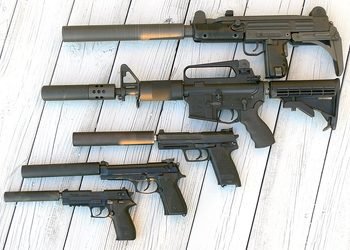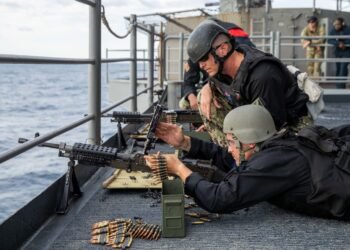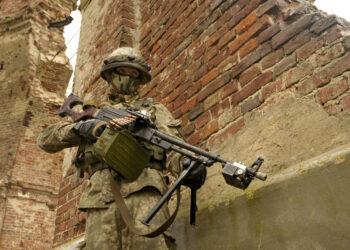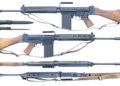

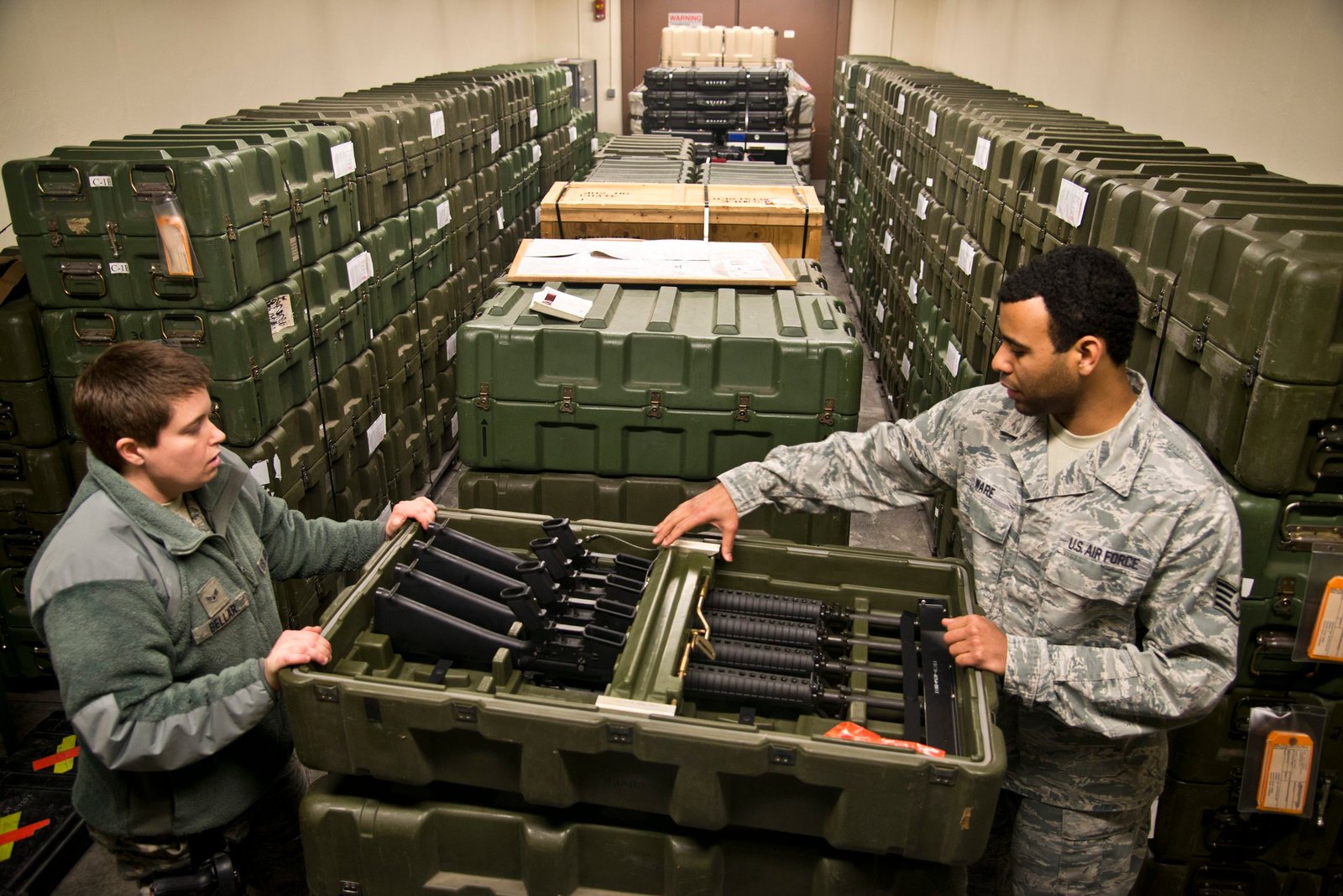
Small arms are often treated as relatively straightforward military purchases. A government selects a rifle, negotiates with the manufacturer, signs an agreement, and eventually receives the weapons. Compared with acquiring fighter aircraft or advanced missile systems, purchasing infantry weapons involves fewer technical complications and generally requires less long-term support from the original manufacturer. However, the international trade in firearms has its own restrictions, and some of them remain relevant long after the weapons have been delivered.

Take an ordinary military procurement involving 20,000 foreign-made assault rifles. Once the transaction is completed, the purchasing government owns those rifles and can equip its armed forces with them. But ownership does not necessarily provide unrestricted authority to sell them abroad, donate them to another military, or transfer them to an organization that was not included in the original agreement.
This is where small arms procurement becomes a geopolitical issue. The rifles themselves may be relatively simple, but the agreements governing their international movement can influence military cooperation, foreign policy, and even a country’s ability to respond to regional security developments.
A Rifle Can Be Owned Without Being Freely Transferred
International firearms transactions frequently involve an End-User Certificate (EUC), which identifies the intended recipient and, depending on the arrangement, includes commitments concerning the equipment’s future use and transfer. Export licenses may also specify an authorized destination, end-user, and end-use. Such requirements are not unique to firearms, but they are especially relevant to small arms because these weapons can remain in service for decades and are comparatively easy to move between different users.
For example, rifles originally purchased for a country’s armed forces might become surplus equipment following a modernization program. The government could decide to donate them to a regional partner rather than place them in storage or destroy them. If the original export authorization requires consent for third-party transfers, that decision cannot necessarily be implemented without involving the exporting government.
The United States maintains such controls over defense articles supplied through its Foreign Military Sales (FMS) program. Under the relevant agreements, recipients generally need prior written American approval before transferring covered equipment to another party, changing its authorized end-use, or disposing of it in ways not previously approved. This process is known as a Third-Party Transfer (TPT). Similar restrictions can apply to military firearms acquired through Direct Commercial Sales (DCS), although the governing authorization and procedures may differ.
There is an important technical distinction here. A reexport generally concerns sending a controlled item from one foreign country to another, while a retransfer can involve changing the end-user or end-use within the same country. Under ITAR, both can require authorization.
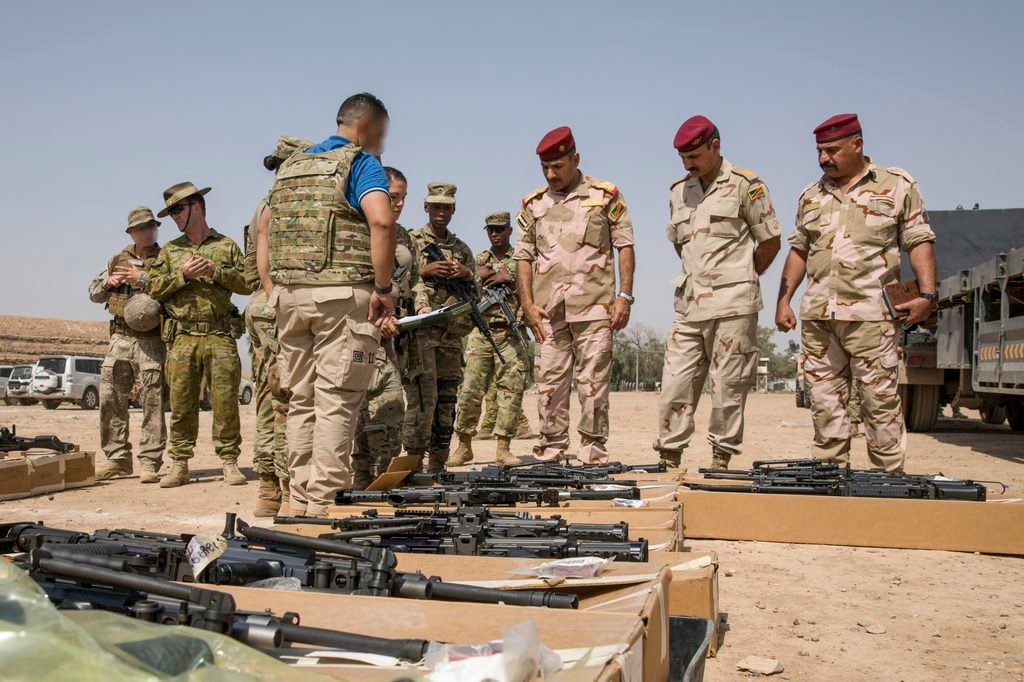
These restrictions are not the same as operational control. A military equipped with American-made rifles does not normally need permission from Washington to fire them during training or combat. The issue concerns the legal conditions attached to the transaction, rather than a supplier’s ability to control the weapon remotely.
Germany’s Controls Do Not End at the Delivery Point
Germany offers another interesting example, particularly because its approach involves checking where certain exported weapons actually end up.
Under Germany’s post-shipment verification system, introduced in 2015, qualifying government recipients of small arms and light weapons agree to possible inspections after delivery. German authorities can verify whether the firearms remain with the declared end-user and whether the recipient is respecting the commitments made during the export process.
According to Germany’s official 2024 arms export report, inspections were conducted with government recipients in Tunisia, Kuwait, Argentina, Kosovo, Sri Lanka, Qatar, and South Korea. The inspections involved small arms and light weapons and were carried out as part of Germany’s established end-use monitoring policy.
What makes this particularly relevant is the distinction between ownership and accountability. Germany does not retain ownership of the firearms after a completed sale. However, the importing government may still have obligations concerning their location and authorized recipient. If significant violations are discovered, German policy generally allows restrictions on further relevant arms exports to the recipient until the issue is resolved.
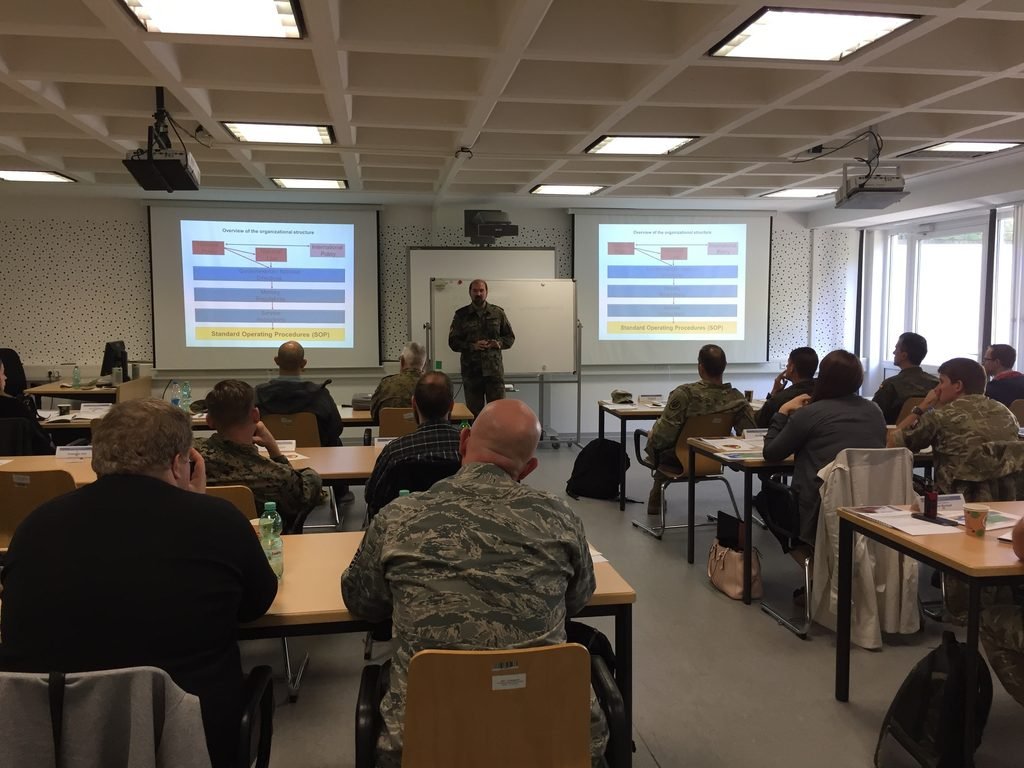
Such monitoring has a clear security purpose. A legally exported rifle can pass through several hands during its service life, especially if a country’s security institutions are reorganized or its political situation deteriorates. Tracking the final destination helps reduce the risk of diversion into unauthorized arms markets.
At the same time, post-shipment monitoring adds another consideration for countries seeking flexibility over their military inventories. A firearm that has already been purchased may remain subject to commitments made years earlier, even when the government’s defense priorities have changed.
The Technical Side of American Export Controls
American firearms export regulations are more complicated than simply labeling every US-made weapon as ITAR-controlled.
In March 2020, the United States transferred jurisdiction over most nonautomatic and semiautomatic firearms from the Department of State to the Department of Commerce. Fully automatic firearms generally remained under the State Department’s United States Munitions List (USML), while many semiautomatic rifles and pistols became subject to the Export Administration Regulations (EAR).
The difference matters because the two systems use different classifications, licensing procedures, and rules for subsequent transfers.
In April 2024, the Bureau of Industry and Security (BIS) introduced additional Export Control Classification Numbers (ECCNs), including 0A506 for certain semiautomatic rifles and 0A507 for certain semiautomatic pistols. Separate classifications were also established for semiautomatic shotguns and specified firearm components. These changes gave regulators more detailed information about the types of firearms being exported and introduced additional licensing restrictions.
A semiautomatic rifle classified under ECCN 0A506, for example, is not necessarily subject to the same rules as a fully automatic military rifle controlled through the USML. Determining whether a subsequent international transfer requires authorization involves examining the firearm’s classification, destination, end-user, applicable license conditions, and possible exceptions.
Government-to-government sales introduce another layer. Equipment transferred through FMS remains subject to the agreements and statutory requirements governing that program, even where the same type of item might otherwise fall under Commerce Department jurisdiction.
Monitoring arrangements also differ. The United States operates the Golden Sentry program for government-to-government defense transfers, while the State Department’s Blue Lantern program supports oversight of ITAR-controlled direct commercial exports. These systems are designed to verify compliance with authorized end-use and transfer conditions.
For a foreign government purchasing American firearms, understanding which regulatory framework applies can be as important as understanding the commercial contract. Two rifles from the same manufacturer may be subject to different export requirements because of their technical classification or the method through which they were acquired.
How Small Arms Become Part of Foreign Policy
The connection between weapons and foreign policy is usually discussed through expensive military platforms. Fighter aircraft depend on specialized maintenance, software, and replacement components, while advanced missile systems often require significant technical support. Conventional small arms are different. A rifle can remain operational for decades with relatively basic maintenance, and widely used ammunition standards such as 5.56×45mm NATO and 7.62×51mm NATO can provide additional supply options.
Still, ammunition compatibility does not remove export controls, and the ability to obtain replacement parts does not necessarily provide permission to transfer the complete weapon to another country.
Consider a government seeking to provide military assistance to a partner facing an armed conflict. Its warehouses contain thousands of foreign-manufactured rifles, but those weapons were acquired under agreements restricting their transfer. Before shipping them, officials may need to identify the original procurement arrangements, determine which weapons are covered, and obtain the necessary authorization.
This can become a diplomatic matter when the original exporter and the importing country disagree over the proposed recipient. The exporting government may be concerned about regional stability, embargoes, human rights, or the possibility of weapons reaching unauthorized armed groups. The importing country may see the same transfer as a legitimate contribution to a partner’s defense.
Both governments can have reasonable security concerns without sharing identical strategic priorities.
Nor should every refusal or delay be interpreted as political pressure. Export licensing decisions involve legal obligations, risk assessments, and administrative procedures. Nevertheless, these requirements can provide exporting states with influence over certain future transfers, particularly where the importer has few alternative sources of military equipment.
That influence becomes more significant when small arms are considered alongside ammunition contracts, spare parts supply, and longer-term defense cooperation.
Would Manufacturing Rifles Domestically Solve the Problem?
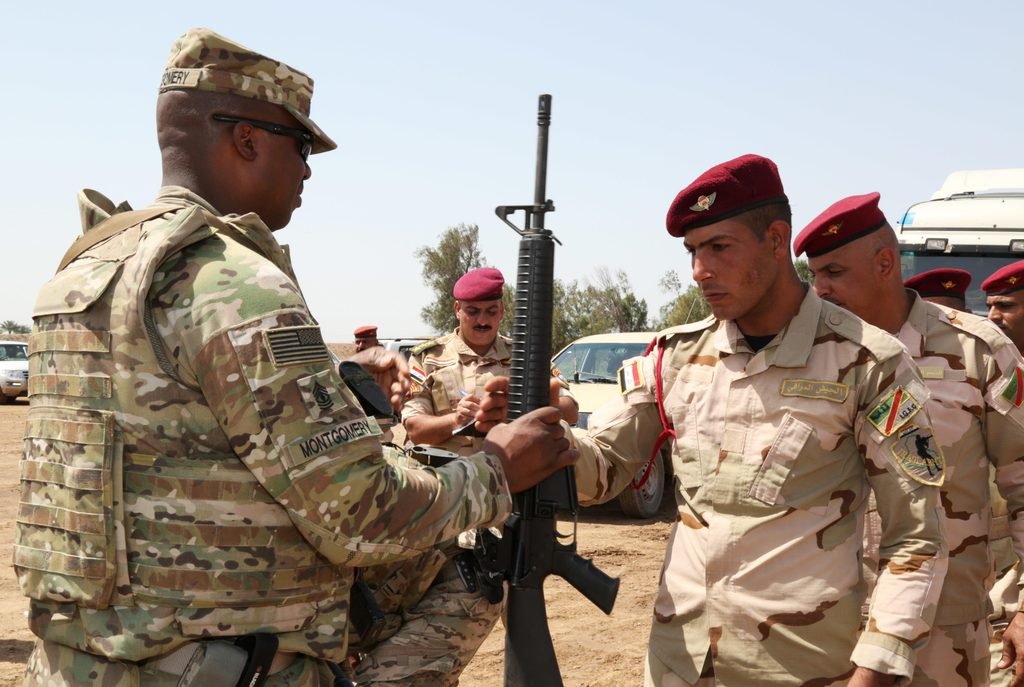
Countries interested in reducing foreign dependence often turn toward domestic firearms manufacturing. Producing service rifles locally can improve supply security, reduce delivery times, and provide greater control over maintenance and replacement components. However, not every domestic production arrangement offers the same level of independence.
A government might establish an assembly facility using imported components, manufacture a foreign-designed rifle under license, or develop its own weapon with domestically controlled technical documentation. These arrangements can look similar from the outside, but their contractual and regulatory differences are substantial.
Licensed production is particularly important in this discussion. A country may manufacture thousands of rifles within its own borders while remaining subject to restrictions concerning technical data, intellectual property, production quantities, or exports to third countries. Depending on the original agreement, the manufacturer might need additional authorization before transferring certain technology or selling licensed weapons to another customer.
Germany’s small arms export principles illustrate this issue. They generally restrict the approval of technology and component exports that would establish new small arms production lines in specified third countries. Such measures demonstrate that export control can concern manufacturing capability itself, not merely finished rifles.
Independent design offers more room for decision-making, but it comes with costs. Developing a reliable service rifle requires engineering, testing, production equipment, quality control, and an industrial supply chain capable of supporting large orders. Foreign components or production technologies may also introduce their own restrictions.
For countries with limited procurement budgets, buying an established foreign design can therefore remain a practical choice. Greater autonomy is valuable, but it has to be considered alongside cost, production capacity, and the actual requirements of the armed forces.
The Decision Continues After Procurement
Foreign-made small arms do not become unusable simply because relations between two governments deteriorate. Unlike certain advanced military platforms, conventional rifles generally do not require continuous access to proprietary software or external digital infrastructure to remain operational. This gives importing countries a meaningful degree of practical control once the weapons have been delivered.
The more complicated questions concern what happens afterward. Can the government transfer surplus rifles to another country? Can a domestic manufacturer export a licensed design? Will new components and ammunition remain available if political relations change? And what obligations will still apply when the weapons are eventually withdrawn from service?
These issues rarely dominate public discussions about infantry weapons, where attention tends to focus on caliber, accuracy, reliability, ergonomics, and cost. All of those factors matter, but they describe only part of a procurement decision.
Small arms export controls serve legitimate purposes, particularly in preventing diversion and maintaining accountability for internationally transferred weapons. They can also limit the choices available to importing governments when their security priorities differ from those of their suppliers. The extent of that limitation depends on the weapon, its origin, the purchasing arrangement, and the relevant laws.
Buying a rifle gives a country ownership of the weapon. How freely that country can transfer it, manufacture additional copies, or support another government’s armed forces is a separate question, and one that can remain politically relevant long after the purchase has been completed.
Sources:
- U.S. Defense Security Cooperation Agency (DSCA). Security Assistance Management Manual, Chapter 8: End-Use Monitoring.
- U.S. Department of State, Directorate of Defense Trade Controls (DDTC). Defense Export Controls and Compliance System: Export Licensing Guidance.
- U.S. Bureau of Industry and Security (BIS). (2024). Revision of Firearms License Requirements. Federal Register, 89 FR 34680.
- U.S. Bureau of Industry and Security (BIS). Interactive Commerce Control List: Firearms and Related Items.
- German Federal Ministry for Economic Affairs and Energy. (2025). Report of the Federal Government on Its Policy on Exports of Conventional Military Equipment in 2024.
- German Federal Ministry for Economic Affairs and Energy. For a Strategically Oriented Policy on the Export of Military Equipment.
- German Federal Ministry for Economic Affairs and Energy. FAQs on Exports of Military Equipment: End-Use Controls and Post-Shipment Verification.
- U.S. Defense Security Cooperation Agency (DSCA). Third Party Transfer (TPT): Official Definition and Requirements.
- U.S. Defense Security Cooperation Agency (DSCA). Golden Sentry End-Use Monitoring Program.