
For most of modern military history, battlefield logistics could be understood through a handful of familiar commodities: ammunition, fuel, food, water and spare parts. Count the rounds, estimate fuel consumption, calculate the distance to the next supply point, and commanders could form a reasonably clear picture of how long a force might continue operating.

That picture is becoming less complete. A modern formation may still have fuel in its vehicles and ammunition in its magazines, yet begin losing capability because batteries are depleted, generators cannot meet demand or electrical power cannot be moved efficiently to where it is needed.
Radios, satellite terminals, drones, electronic warfare equipment, thermal optics, computers and counter-UAS systems have quietly created another logistics chain alongside the traditional ones. Electricity is no longer simply what keeps a command post lit. It increasingly determines whether a unit can communicate, observe, process information, interfere with enemy systems and, in some cases, employ its weapons.
The question is therefore changing. It is no longer enough to ask how much fuel or ammunition a formation has left. Commanders may increasingly need to understand how many hours of electrical combat capability remain as well.
Ukraine Has Made the Problem Difficult to Ignore
The war in Ukraine offers perhaps the clearest contemporary example of this shift. Small unmanned aircraft have become deeply integrated into reconnaissance, artillery correction, targeting and strike operations, but every FPV aircraft or reconnaissance quadcopter brings batteries, chargers and supporting electronics with it.
The drone itself may be relatively cheap. Sustaining an entire drone ecosystem is not.
A 2026 U.S. Army analysis of tactical energy requirements in Ukraine estimated that a single drone team can rotate through roughly 10 to 12 battery charges per day, consuming around 2–3 kWh of electricity. A company-level command post operating radios, laptops and secure data links may require 2–3 kW of continuous power. Satellite terminals, thermal sights and other electronics add further demand. None of these figures is especially dramatic on its own, but once the requirement is multiplied across several drone teams, command posts, EW elements and observation systems, the cumulative load becomes much more significant.
There is also a logistical detail that is easy to miss. Rechargeable batteries do not eliminate resupply; they change its form. Batteries have to be recovered, charged, moved back forward and managed in rotation. Power therefore has to continue reaching the front even when no fuel tanker or ammunition truck is visible. It may arrive through generators, vehicles, portable storage systems, civilian infrastructure or tactical microgrids, but it still has to arrive somehow.

That makes electricity a flow, not simply a piece of equipment.
Electronic Warfare Turns Power Into Protection
Ukraine also shows why electrical availability can become a survivability issue.
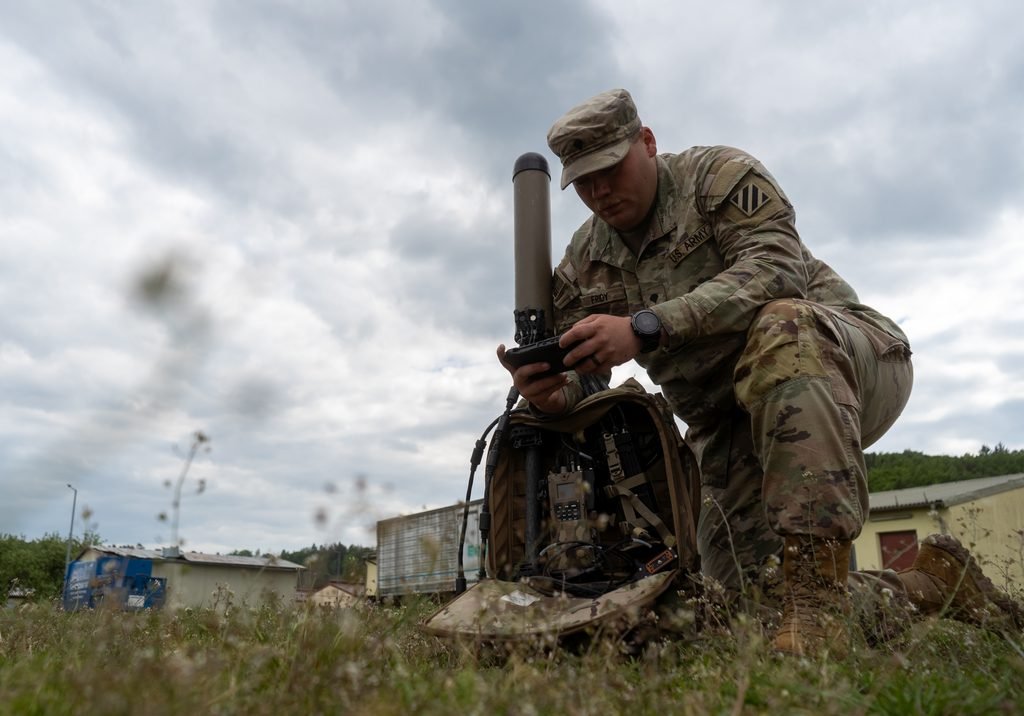
Electronic warfare systems are now closely connected to the drone fight. Detection equipment searches for radio-frequency activity while jammers attempt to interfere with navigation, communications and command links. Some of these systems can operate for long periods and may have to cover the same sector continuously.
The U.S. Army study cited earlier estimates that portable jamming equipment may consume several hundred watts, while larger vehicle-mounted systems can require several kilowatts of continuous generation. If an EW system goes offline, the result is not simply the loss of another electronic device. The unit may suddenly become more exposed to hostile drones or lose awareness of activity in the electromagnetic spectrum.
Yet generating more power is not automatically a clean solution. Engines produce heat and noise, generators consume fuel, and cables, batteries and distribution equipment expand the physical footprint of a position. A commander trying to reduce signatures may therefore face a contradiction: the systems used to protect a unit electronically can require supporting infrastructure that makes the same position easier to detect.
During the U.S. Army’s JPMRC 26-01 exercise, one battalion tactical operations center reportedly used a generator capable of producing more than 15 kW while its average electrical demand was closer to 2 kW. That excess capacity still came with fuel consumption, maintenance and signature. Military energy efficiency, in this context, is no longer just an economic question.
Afghanistan Had Already Exposed the Fuel-Electricity Link
The battlefield power problem did not begin with drones.
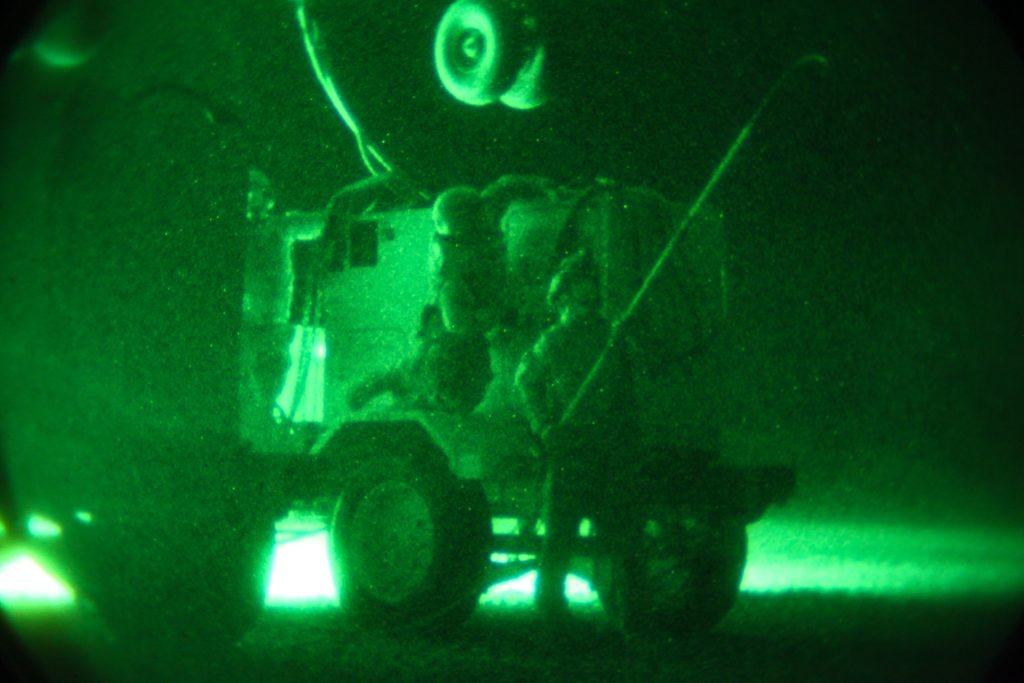
Afghanistan showed an earlier version of the same challenge, although the connection between electricity and logistics was expressed more clearly through fuel. Forward operating bases required power for communications, command systems, medical facilities, environmental control and daily operations. Much of that electricity had to be produced locally using diesel generators.
As bases expanded, electrical demand rose. Generator fleets expanded with them.
This created a chain that was simple in theory and expensive in practice: more electrical consumption meant more generator runtime, more generator runtime meant more fuel, and more fuel meant more convoys. Those convoys required vehicles, drivers, escorts and planning, while supply routes themselves could become targets.
When the U.S. Army began deploying Advanced Medium Mobile Power Systems to Afghanistan in 2012, the newer generators were expected to reduce fuel consumption by as much as 21 percent. The Army explicitly connected improved generator efficiency with fewer fuel deliveries and reduced exposure of logistics convoys.
That experience still matters. A kilowatt saved at a forward location can affect much more than a fuel bill. It can reduce transport requirements, maintenance demand and the number of personnel tied to sustaining a position.
Counter-Drone Warfare Creates Its Own Energy Burden
Counter-UAS defense adds another layer.
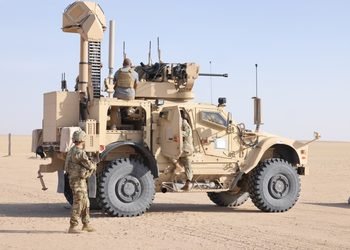
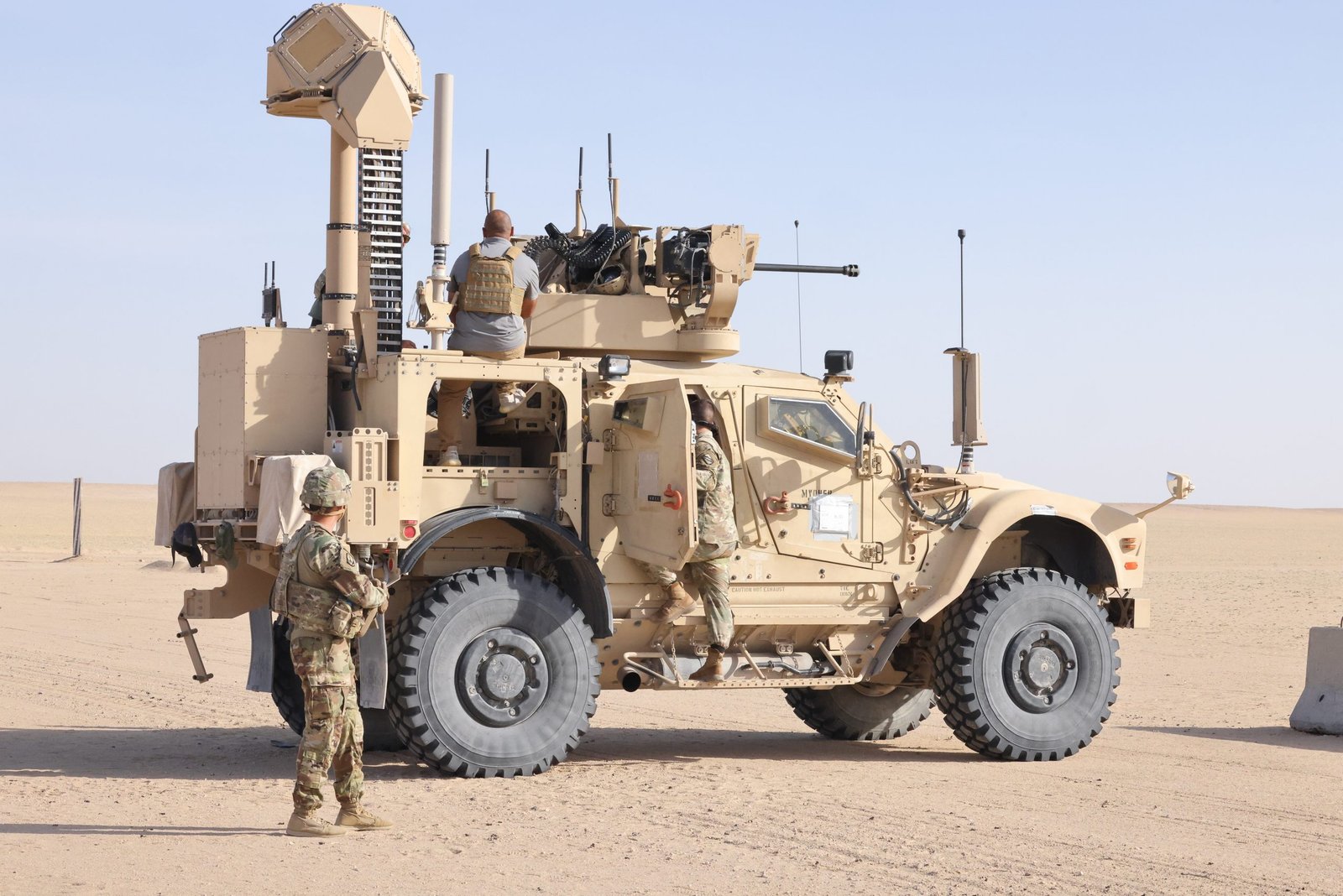
A modern counter-drone architecture can combine radar, RF detection, electro-optical sensors, jammers, command software, communications equipment and kinetic interceptors. Some systems are vehicle-mounted, others are portable, and many are designed to operate as part of a larger network rather than as stand-alone weapons.
Most discussion around C-UAS naturally focuses on the visible end of the engagement: whether a drone is detected, jammed or destroyed. But the infrastructure behind that engagement can remain active long before any interceptor is fired.
If several sensors have to remain online continuously, tracks must be shared between systems, and electronic effectors need to be ready at short notice, electrical endurance becomes part of air-defense endurance. A battery or generator failure can therefore reduce the effectiveness of the entire protective layer even if the weapons themselves remain available.
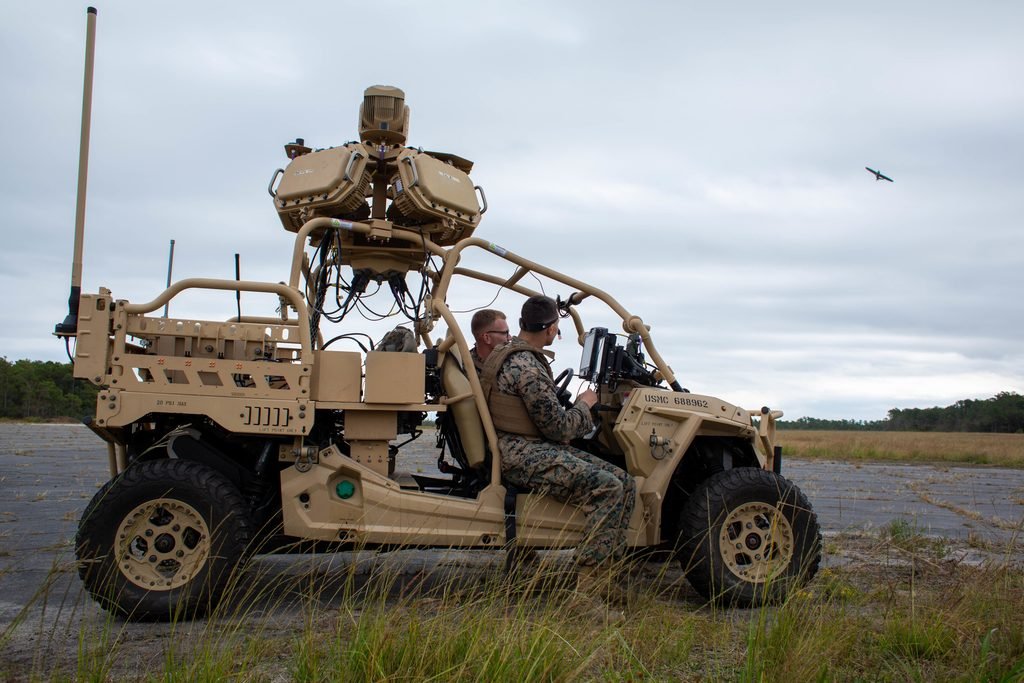
The more distributed the counter-UAS architecture becomes, the more complicated its power problem may become as well.
When Electricity Starts to Resemble Ammunition
Directed-energy weapons push this relationship further.
The U.S. Army has experimented with the DE M-SHORAD concept, integrating a 50-kW-class laser onto the Stryker platform for defense against unmanned aircraft and other airborne threats. The attraction is clear: instead of relying entirely on a finite magazine of interceptors, a directed-energy weapon can potentially conduct repeated engagements while sufficient power and thermal-management capacity are available.
That last condition is doing a lot of work.
High-energy lasers are not perfectly efficient. The U.S. Government Accountability Office has reported that some directed-energy systems convert only around 25–40 percent of the energy they consume into laser output, while much of the remaining energy becomes heat that has to be removed by cooling systems.
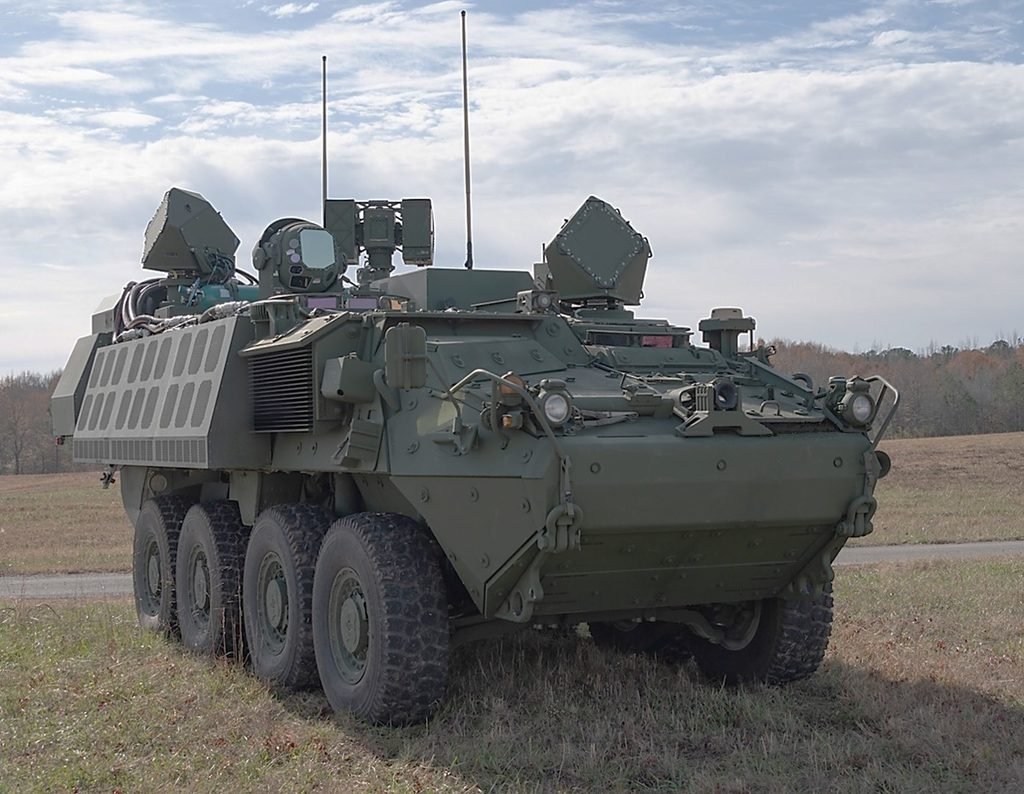
The logistics problem therefore does not disappear. It changes form.
A future air-defense unit may need fewer physical rounds for certain engagements but more electrical generation, storage and cooling capacity. In that sense, electricity begins to take on some of the operational characteristics normally associated with ammunition. The number of potential engagements may increasingly depend not only on what is loaded into a launcher, but also on how much usable energy can be produced and sustained.
The Microgrid Moves Closer to the Front
This is one reason tactical microgrids are receiving more attention.
Traditional field power frequently depends on separate generators operating independently, sometimes at loads far below their efficient range. A microgrid allows generation, storage and distribution to be connected and managed according to actual demand.
NATO has tested combinations of diesel generators, hybrid systems, photovoltaic panels and intelligent power management during logistics exercises. During Capable Logistician 2019, NATO reported significant fuel reductions in some experimental configurations compared with continuously operating diesel generators.
The U.S. Department of Defense has explored a different approach as well: turning tactical vehicles themselves into elements of a distributed power network. One demonstration involved vehicles capable of producing 100 kW each and sharing that electricity across a mobile microgrid intended to support high-demand systems, including future directed-energy and missile-defense capabilities.
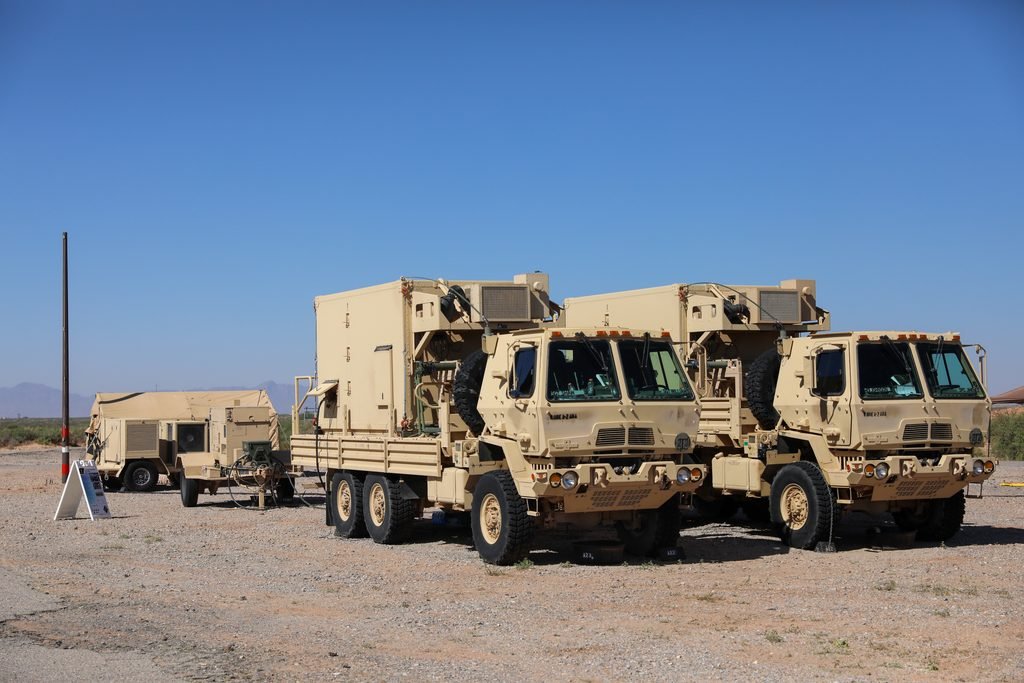
The interesting part is not simply the fuel savings. Distributed power changes how a unit can organize itself.
If several platforms can generate, store and exchange electricity, a formation may be less dependent on a single generator site. It can shift power where demand rises, maintain critical systems after losing one source and potentially avoid running oversized generators continuously.
For dispersed units, that has obvious operational value.
Power Is Becoming Part of the Logistics Map
Fuel will remain essential and ammunition will remain central to combat power. What is changing is the number of military capabilities that now sit on top of an electrical layer.
Drones turn battery power into reconnaissance or strike capability. Electronic warfare systems convert electrical power into influence over the electromagnetic spectrum. Counter-UAS networks depend on electricity to maintain persistent surveillance and defensive readiness, while directed-energy systems make the relationship between power and engagement even more direct.
There is also an uncomfortable trade-off buried inside all of this. Advanced electronic systems are frequently introduced because they promise greater precision, awareness or efficiency, yet every new capability brings another support requirement with it. More sensors mean more power management. More unmanned systems mean more charging. More digital command tools mean greater dependence on generators, batteries and distribution infrastructure.
The battlefield may therefore become technologically lighter in some respects while becoming electrically heavier.
This does not mean future armies will suddenly replace fuel convoys with battery trucks or abandon diesel generation. That would be too simple. What appears more likely is a battlefield where fuel logistics and electrical logistics increasingly overlap, and where commanders cannot think about one without considering the other.
A formation can possess excellent drones, secure communications, sophisticated electronic warfare systems and advanced sensors on paper. If it cannot keep those systems powered under combat conditions, the advantage may disappear surprisingly quickly.
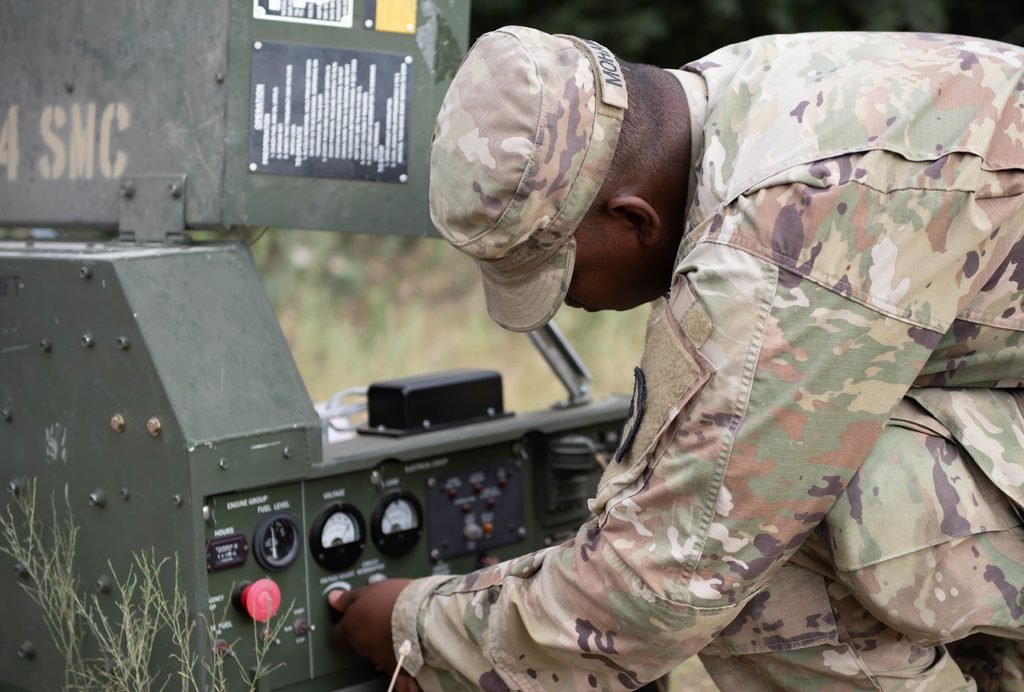
That is why electricity is moving away from the background of military engineering and closer to the center of operational planning.
The more digital the battlefield becomes, the more important it becomes to ask not only what a unit can do, but how long it can keep doing it before the power runs out.
Sources:
- U.S. Army — Powering the Front: Tactical Energy Delivery and Management in the Ukraine War, March 25, 2026.
- U.S. Army — Watts Next for Sustainment? — Treating Electrical Energy as a Combat Requirement in LSCO, July 15, 2026.
- U.S. Army — Army to Deliver Fuel-Efficient Generators to Afghanistan, June 13, 2012.
- NATO — NATO Tests Smart Energy Technologies at Exercise in Poland, June 13, 2019.
- U.S. Government Accountability Office — Army Modernization: Air and Missile Defense Efforts Would Benefit from Applying Leading Practices, 2025.