
When military ammunition shortages are discussed today, attention tends to move quickly toward artillery shells, air-defense interceptors and long-range missiles. It makes sense. These weapons are expensive, their production lines are difficult to expand, and recent conflicts have shown how quickly supposedly large stockpiles can become uncomfortable numbers on a spreadsheet.

Small arms appear to belong to a different category. A 5.56 mm cartridge is not a Patriot interceptor. An M4 is not a missile battery. Rifle ammunition has been produced at industrial scale for generations, and the individual cartridge is relatively cheap.
So where is the industrial problem?
It starts when we stop looking at one cartridge and start looking at hundreds of millions of them.
A Rifle Is the Easy Part
Modern military rifles are sophisticated products, but producing the rifle itself is only the beginning of its service life. Every weapon introduced into a military creates a continuing demand for training ammunition, qualification ammunition, operational stocks and war reserves. Machine guns multiply that requirement considerably, while many weapons remain in service for decades and continue consuming ammunition throughout that period.
The United States provides a useful example. Lake City Army Ammunition Plant in Missouri is the central government-owned facility for U.S. military small-caliber ammunition production. Its capabilities include 5.56 mm, 6.8 mm, 7.62 mm and .50 caliber ammunition, along with links, primers, projectiles and associated testing. Joint Munitions Command lists Lake City with a contracted non-surge production capacity of approximately 1.6 billion rounds per year.

The physical scale behind that number is worth considering. Lake City occupies roughly 3,900 acres and contains hundreds of buildings, ammunition storage areas, warehouses and two test-firing ranges. One of those ranges extends to about 2,400 yards, supporting ammunition testing up to 20 mm. The plant also operates the North American Regional Test Center, one of only two NATO small-caliber ammunition and weapon test centers of its kind identified by the Army.
One billion rounds sounds enormous, and it is. Yet industrial capacity cannot be understood simply by looking at the highest number attached to a factory.
What happens when demand rises sharply? How much spare capacity actually exists? Which machines are already committed to another caliber? Where are the primers coming from? Can propellant production rise at the same speed? Can additional output still meet military acceptance standards?
Questions like these matter more than simply asking how many rifles can be purchased.
Billions of Cartridges Still Need an Industrial Base
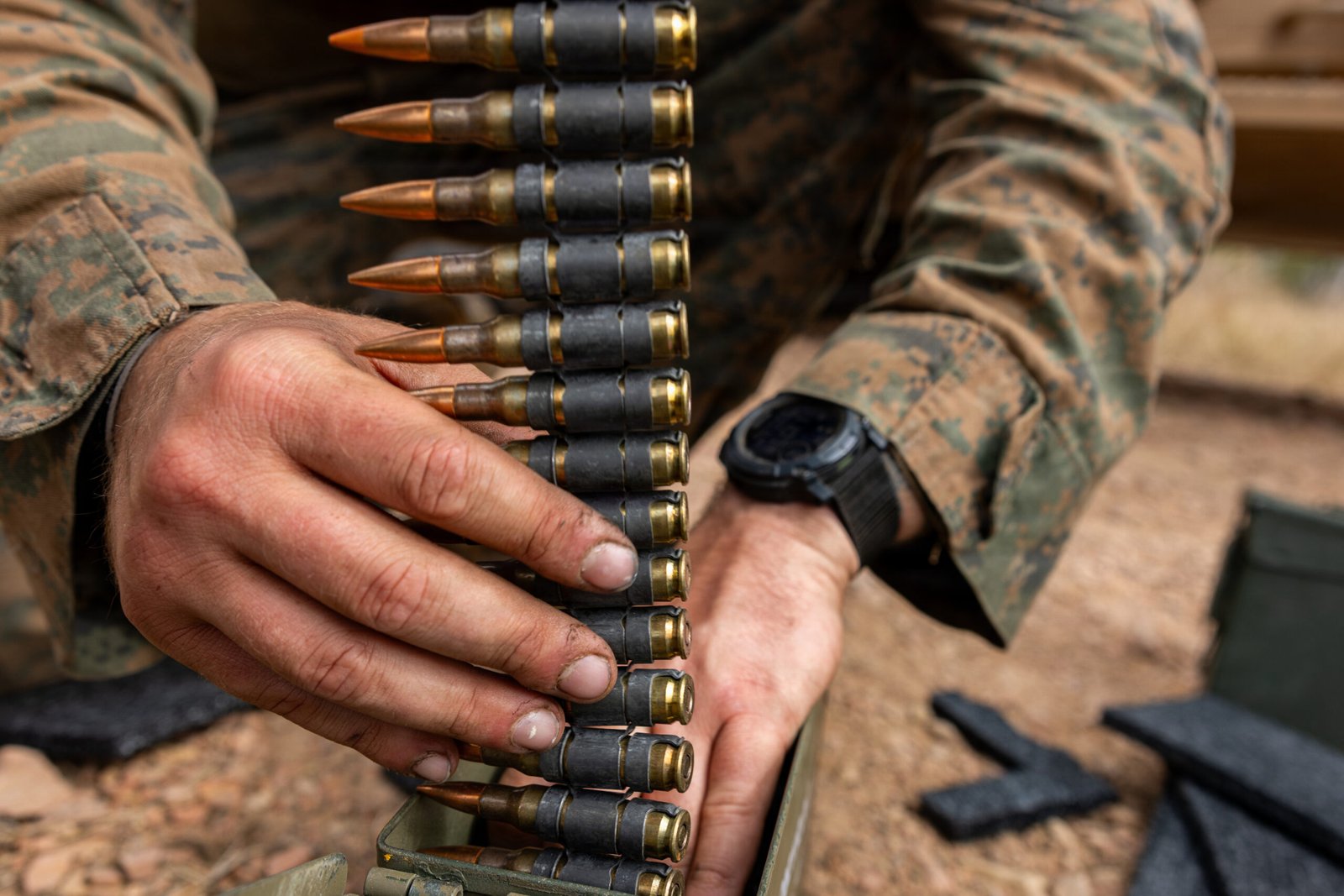
A finished cartridge looks simple because much of the industrial complexity is hidden inside it. Cases must be formed, projectiles manufactured, primers and propellants supplied, and the components then loaded, assembled, inspected, tested and packaged before the ammunition becomes an accepted military product.
Volume changes the equation as well. A manufacturer capable of developing an excellent cartridge is not automatically capable of producing hundreds of millions of identical cartridges while maintaining dimensional consistency, pressure requirements, reliability and quality-control standards.
Past U.S. experience makes the distinction clearer. During an earlier surge in military demand, the Department of Defense sought additional commercial manufacturers to supplement Lake City. A 2005 Government Accountability Office review found that seven of nine respondents for one 5.56 mm requirement could not satisfy all of the required specifications. For a separate .50 caliber solicitation, none of the ten respondents initially met every specification.
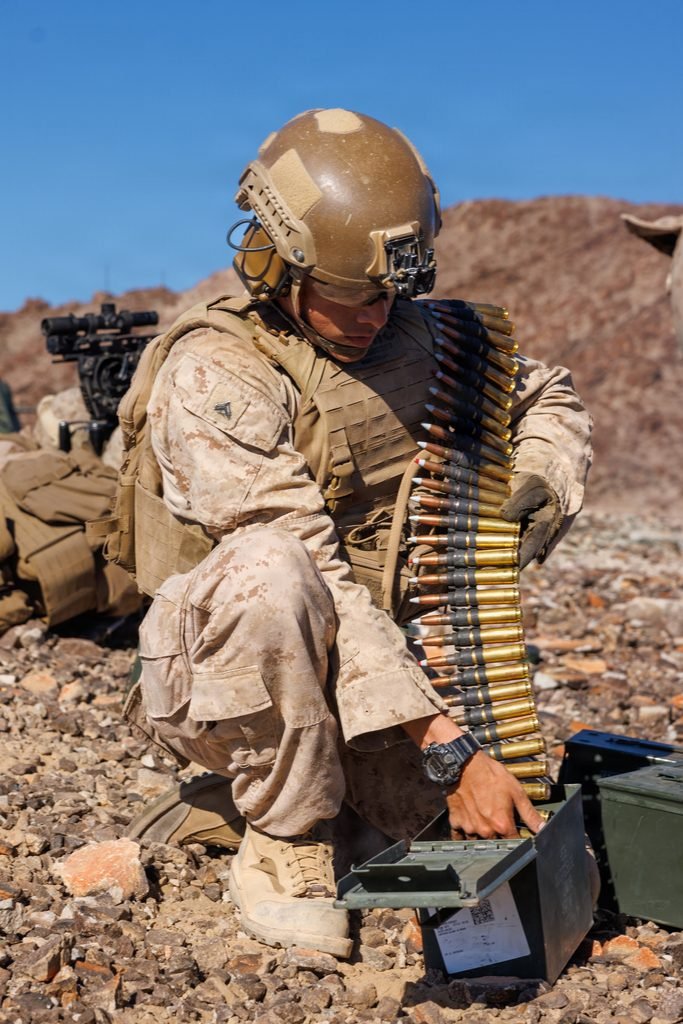
The problem was not that these companies had never seen rifle ammunition before. Meeting a military requirement at volume, with the required materials, manufacturing processes and acceptance standards, was another matter.
Technical capability and industrial capability should therefore be treated separately. The question is not merely whether a certain type of ammunition can be manufactured. A more useful question is whether it can be manufactured consistently, at wartime scale, for years.
Those are two different challenges.
The U.S. Army has encountered similar issues when evaluating smaller ammunition suppliers. Moving from prototype work into sustained high-volume manufacturing can require different machinery, supplier relationships, quality-control systems and investment levels. Making ammunition and industrializing ammunition are not the same thing.
Lake City Has Already Seen What Surge Demand Looks Like
Historical experience shows what a major increase in small-caliber demand can require.
At the beginning of the 2000s, Lake City’s contracted maximum production capacity stood at roughly 800 million rounds annually. Following the surge in requirements after September 11 and the beginning of operations in Afghanistan and Iraq, the Army invested in expanding that capacity. Lake City moved toward approximately 1.2 billion rounds annually by 2004, followed by further modernization aimed at 1.5 billion and eventually 1.6 billion rounds.
Even that expansion did not eliminate every shortfall.
The FY2004 U.S. requirement reached approximately 1.6 billion rounds, exceeding what Lake City could supply at the time. The Department of Defense subsequently bought almost 313 million rounds of 5.56 mm, 7.62 mm and .50 caliber ammunition from commercial producers to cover part of the gap. According to GAO, those purchases cost roughly $10 million more than producing a comparable quantity at Lake City would have cost.
The numbers show something that theoretical production capacity can obscure. Demand can move faster than an industrial base can expand.
The increase did not come simply from running the existing plant harder. Between FY2001 and FY2005, the Department of Defense spent approximately $93.3 million upgrading Lake City, Milan and Radford Army ammunition plants. At Lake City, work included small-caliber production-line upgrades and replacement of die sets used in ammunition component manufacturing.
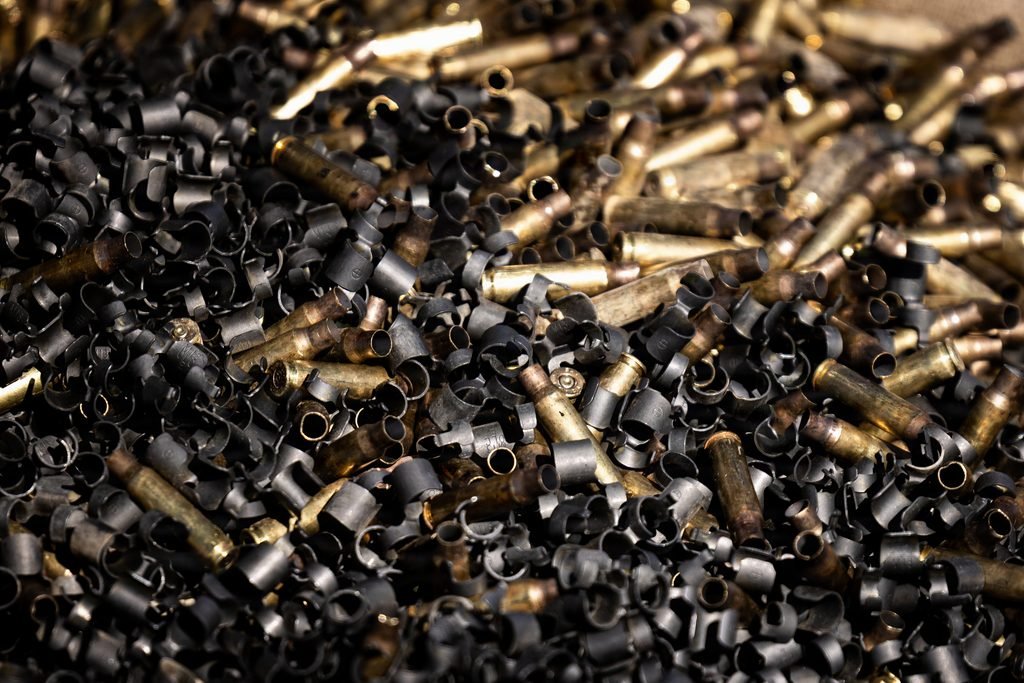
Ammunition production is sometimes treated as something that can be expanded almost immediately because the individual product is relatively inexpensive. That assumption overlooks the difference between unit cost and industrial capacity. A cartridge may cost very little compared with a missile, but the production system behind hundreds of millions of cartridges does not.
Peacetime planning adds another difficulty. Surge capacity can appear inefficient when demand is low. Machines, skilled workers, testing facilities and excess production capability cost money even when they are not being used at maximum output.
Governments therefore face a familiar defense-industrial question: how much unused capacity should be maintained for a conflict that may never happen?
Too much capacity is expensive during peace. Too little becomes expensive during a crisis.
The 6.8 mm Transition Shows What Changing a Cartridge Really Means
The U.S. Army’s adoption of 6.8×51 mm ammunition for the M7 rifle and M250 automatic rifle under the Next Generation Squad Weapon program offers one of the clearest current examples.
From a procurement perspective, the program introduces new individual and automatic weapons. From an industrial perspective, it also introduces an ammunition family that does not yet benefit from the extensive production ecosystem already supporting 5.56×45 mm and 7.62×51 mm ammunition.
The technical change is also more substantial than simply increasing projectile diameter. The Army’s XM1186 general-purpose and XM1188 reduced-range ammunition use a hybrid metal cartridge case consisting of a brass body and steel head. According to the Army, the design reduces cartridge weight by more than 20 percent compared with an equivalent conventional brass case.
Such changes have obvious implications for the production process. Case manufacturing, forming operations, materials and quality assurance all have to support a different cartridge architecture while reaching the volumes required for military service.
The scale of the wider NGSW transition is already becoming visible. The Department of Defense’s FY2026 program documentation included procurement and fielding plans for 16,154 M7 rifles, 2,636 M250 automatic rifles and 19,524 M157 fire-control systems during the fiscal year. Ammunition production has to grow alongside that equipment rather than after it.
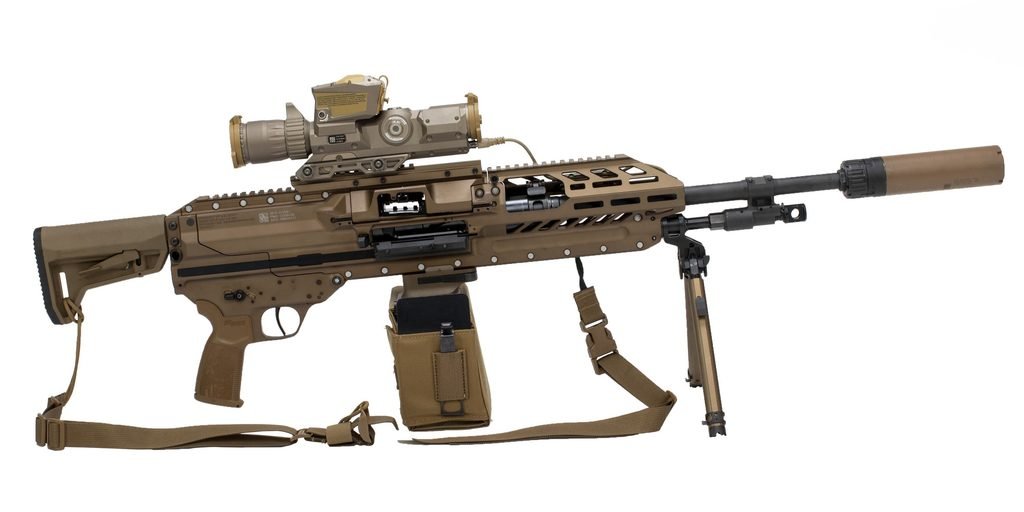
Established ammunition types benefit from decades of accumulated infrastructure, suppliers, machinery and inventory. Under normal conditions, units request ammunition and receive it without needing to think about the industrial network behind the process.
A new caliber begins without much of that inherited capacity.
The Army’s FY2026 ammunition budget documentation states that the National Technology and Industrial Base did not already possess a high-capacity 6.8 mm ammunition manufacturing facility and identifies Lake City as the location for the enduring production capability.
Replacing tooling on an existing line is therefore not enough.
A new production facility is being built.
The 6.8 mm Cartridge Manufacturing Facility covers more than 400,000 square feet. Construction began in February 2025, and the building reached its dry-in milestone in July 2026. By that stage, construction had involved nearly 50 local businesses and more than 700,000 labor hours. Installation of advanced production equipment is scheduled to begin in 2028.
The Army’s budget documentation also shows the financial scale behind the effort. The project received $100 million in FY2024 Ukraine Security Supplemental Appropriations supporting development of the new production capability.
At the same time, the Army cannot wait for the permanent facility to become operational. An interim production line using both new and repurposed equipment was established at Lake City. As of March 2026, operating contractor Olin Winchester was already producing and delivering 6.8 mm ammunition from that capability, while Lake City was also supplying projectiles to SIG Sauer to support additional cartridge production.
Commercial production, interim government production and eventually a dedicated high-volume government facility are all part of the transition.
For a new cartridge, that is a much larger industrial commitment than the weapon announcement alone might suggest.
Old Calibers Do Not Disappear When New Ones Arrive
The arrival of 6.8 mm does not eliminate demand for 5.56 mm or 7.62 mm ammunition. M4 carbines, M249s, M240s and other systems remain distributed across the force. Existing inventories still need to be maintained, training continues, allies operate established NATO calibers, and legacy weapons may remain in service for many years.
New production therefore has to be added without weakening the capacity still required for older systems.
The Army has explicitly framed the Lake City 6.8 mm project around that concern. Its FY2026 budget documentation says the new capability is intended to meet the Army’s annual 6.8 mm production requirement without affecting existing legacy small-caliber production capacity under a surge scenario.
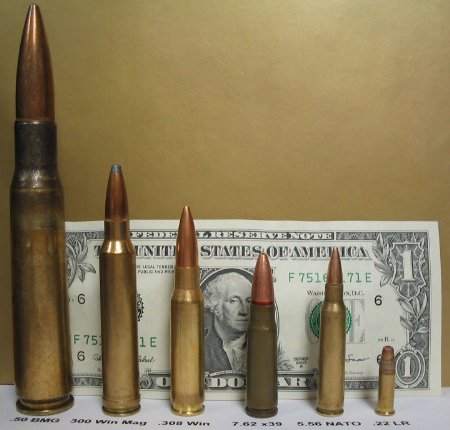
Common rifle cartridges, from the largest .50 BMG to the smallest .22 LR.
That is a significant requirement when 5.56 mm, 7.62 mm and .50 caliber ammunition continue to support large inventories of existing weapons.
Imagine introducing a new caliber only to discover that producing enough of it requires sacrificing output for the weapons still making up most of the force.
A successful ammunition transition requires overlap. Existing lines continue operating while new capacity is developed, tested and scaled.
Overlap is rarely cheap.
The Cartridge Is a Supply Chain, Not a Single Product
The production floor is only one part of the equation.
Small-caliber ammunition depends on a wider industrial base that includes energetic materials, propellants, primers, metals, specialized machinery, maintenance capability, testing infrastructure and a workforce familiar with high-volume production.
Even Lake City itself demonstrates how many processes sit behind the finished cartridge. Alongside complete ammunition, the plant has capabilities for percussion and electric primer production, links manufacturing, pyrotechnic and tracer mixes, machining, fabrication and ammunition lot-acceptance testing.
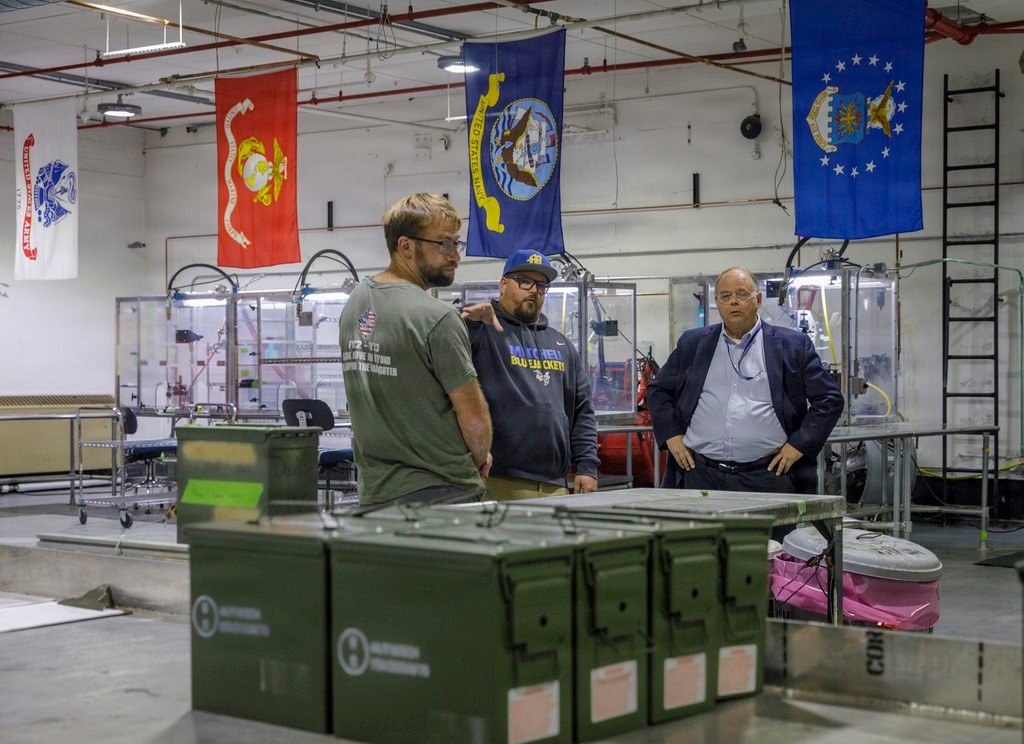
Testing continues after ammunition enters stockpiles as well. Lake City’s North American Regional Test Center supports the Army’s Stockpile Reliability Program, including evaluation of ammunition that has been in storage for five years or longer. Production volume alone is therefore not enough; ammunition must remain safe and reliable after years of storage.
The wider U.S. ammunition system adds another layer. Lake City specializes in small-caliber ammunition, while facilities such as Radford Army Ammunition Plant support propellant and energetic-material requirements across the broader munitions base.
A production line cannot compensate indefinitely for shortages further upstream.
Assembly capacity may be available while final output remains constrained by primers, energetic materials, suitable metals or specialized equipment. The nominal capacity of the ammunition plant therefore tells only part of the story.
A better measure of resilience is whether the entire chain can expand together.
Factories matter, but so do chemical plants, component suppliers, machine tools, maintenance personnel and skilled operators who cannot necessarily be created after a crisis has already begun.
Standardization Helps, but It Does Not Solve Everything
NATO-standard calibers provide an obvious advantage. A broad international production base exists for rounds such as 5.56×45 mm and 7.62×51 mm, and multiple manufacturers produce ammunition for military, law-enforcement and commercial customers.
Diversity reduces dependence on a single source, but standardization does not eliminate industrial risk.
Military ammunition can still require specific projectile designs, pressure characteristics, packaging, traceability, testing and acceptance procedures. A factory producing commercial ammunition is not automatically able to shift overnight into high-volume military supply.
The earlier U.S. surge provides a useful numerical example here as well. When domestic capacity could not immediately satisfy requirements, the Army acquired 79 million rounds of 5.56 mm and 41 million rounds of 7.62 mm from the United Kingdom, while additional urgent procurement was sourced elsewhere. In FY2005 alone, Joint Munitions Command records indicate that 215 million rounds were acquired through urgent-buy measures.
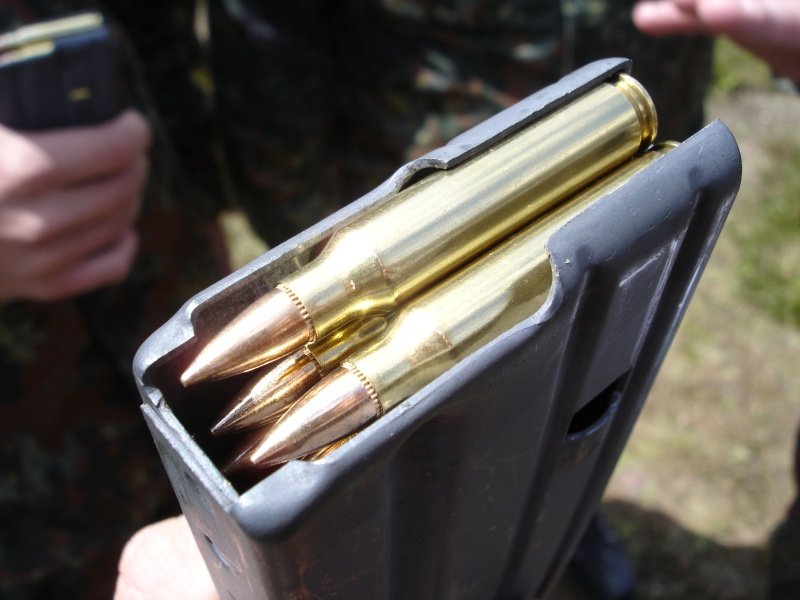
International production can therefore provide valuable depth, but accessing that depth still requires compatible ammunition, qualified suppliers and available capacity.
Competing demand is another consideration. During periods of international tension, several countries may try to rebuild or expand ammunition stocks at the same time. Manufacturers can then face orders from military customers, domestic security organizations and commercial markets simultaneously.
The issue becomes less about whether production exists at all and more about how quickly capacity can be prioritized, expanded and sustained.
That is a very different question.
Training Consumption Is Part of the Equation
Combat expenditure receives most of the attention, but training consumption matters as well.
A military does not preserve readiness by storing ammunition indefinitely and avoiding its use. Soldiers have to train, qualify and requalify. New recruits require instruction, while units preparing for deployment consume ammunition before they reach an operational theater.
The 6.8 mm program itself illustrates why training creates additional ammunition requirements beyond the main combat cartridge. The Army’s FY2026 weapons documentation lists a family that extends beyond the M1186 general-purpose round to include special-purpose, reduced-range, tracer, marking, blank and drill-dummy ammunition.
A caliber is therefore not necessarily one cartridge.
Once adopted across a military organization, it can become a family of ammunition designed for different operational and training requirements. Each configuration brings its own production, qualification, inventory and logistics considerations.
Small arms also create a particularly large aggregate requirement because the number of individual users is so high. Each soldier may fire relatively modest quantities compared with the consumption rates associated with larger weapon systems, but the total becomes substantial when multiplied across an entire force.
The industrial requirement is therefore not limited to replacing ammunition expended in combat. Operational stocks must be maintained while the training cycle continues.
Without that training flow, the weapons themselves lose much of their practical value.
Cheap Ammunition Can Create Expensive Readiness Problems
Small arms will probably never attract the same industrial anxiety as sophisticated missile systems, and they should not. The technologies, costs and production timelines are fundamentally different.
Yet rifle ammunition should not be treated as strategically trivial simply because individual cartridges are inexpensive and widely manufactured.
Scale changes the equation.
For a soldier, ammunition is measured in magazines. For a military, it is measured in stockpiles, training requirements and reserve levels. For an industrial base, it is measured in production lines, raw materials, qualified workers, machinery, testing capacity and the ability to move from peacetime consumption to something much larger without weakening another part of the supply chain.
When a new rifle is announced, attention naturally goes to the weapon itself: weight, accuracy, barrel length, optic, recoil and terminal performance. Those questions matter, but another one should follow very quickly.
How are you going to feed it?
A military can purchase a rifle relatively quickly. Building the industrial system capable of supplying hundreds of thousands of those rifles for decades is a much longer project.
Sources:
- U.S. Army, More Exciting Than Watching Concrete Dry: Lake City’s New 6.8mm Facility Reaches Dry-In Milestone, August 31, 2026.
- U.S. Army, Delivering Tomorrow’s Small Caliber Ammunition Lethality Today, 2026.
- Department of the Army, FY2026 Procurement of Ammunition — Small Caliber Modernization, 6.8mm Ammunition Production Facility.
- U.S. Army Joint Munitions Command, Lake City Army Ammunition Plant — Installation Handbook and Capabilities.