
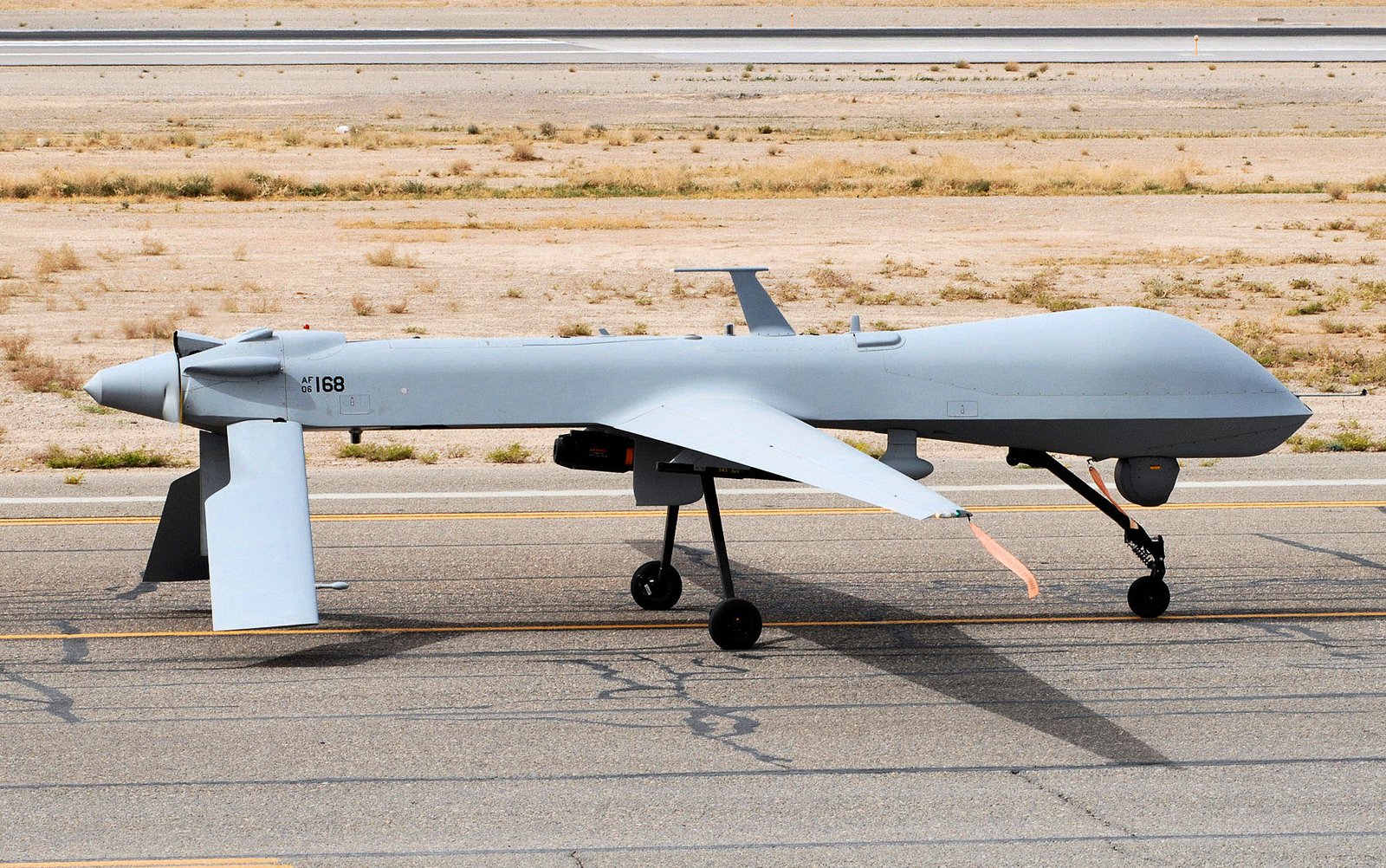
General Atomics MQ-1 Predator began as an intelligence, surveillance and reconnaissance platform, but its role expanded significantly during its service life. Over time, it became one of the best-known examples of how unmanned aircraft could combine long-endurance observation with limited precision-strike capability.

Its history also includes several designations that are easy to mix up. RQ-1A, RQ-1B, RQ-1K, RQ-1L, MQ-1A, MQ-1B and MQ-1L all appear in official or historical references, although they do not always describe completely separate aircraft variants.
From GNAT to the RQ-1
Predator developed from earlier General Atomics unmanned aircraft work, including the GNAT family associated with engineer Abraham Karem. First flight took place in 1994, followed by operational deployments during the mid-1990s.
Early Predator systems carried the RQ-1 designation. In the U.S. military designation system, “R” referred to reconnaissance and “Q” identified an unmanned aircraft.
A distinction is needed between the designation of the complete system and the designation of an individual air vehicle. RQ-1A referred to the early pre-production Predator system, which included several aircraft, a Ground Control Station and associated communications equipment. Individual air vehicles within that configuration were known as RQ-1K.
Production systems were later designated RQ-1B, while individual production aircraft carried the RQ-1L designation.
Because of that structure, RQ-1B and RQ-1L should not be treated as if they were simply two successive aircraft models. One designation could refer to the overall system, while another referred to the aircraft itself.
The Move Toward an Armed Role
Predator was initially focused on ISR. Its electro-optical and infrared sensors allowed operators to observe locations for extended periods, monitor movement and transmit imagery to personnel outside the immediate operating area.
Weapon integration changed the mission profile.
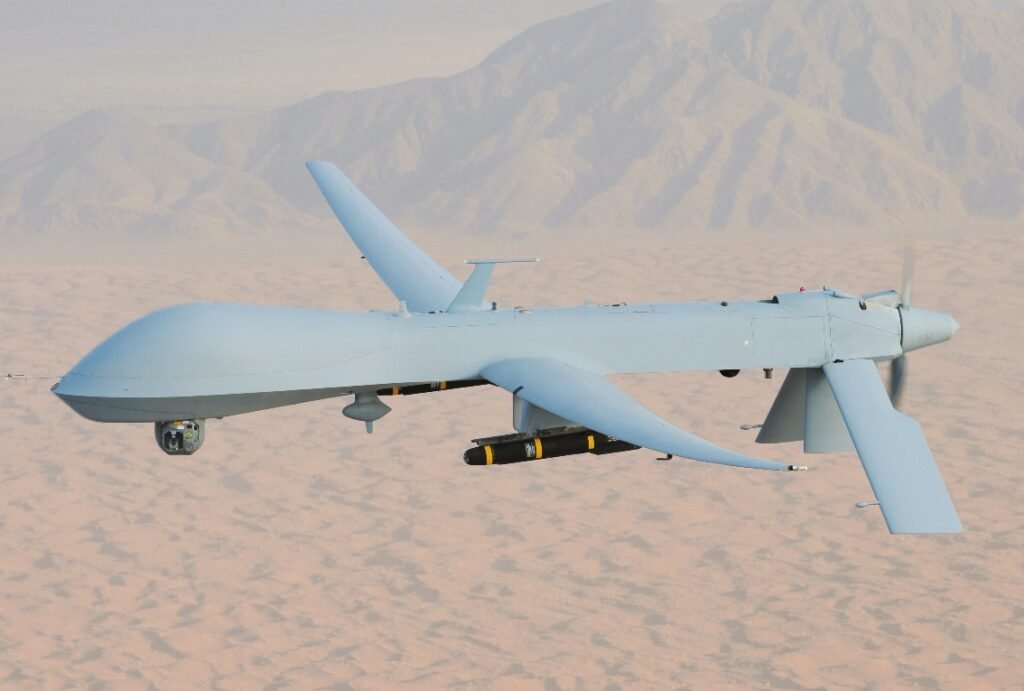
AGM-114 Hellfire missiles were tested and later carried operationally, giving Predator a limited strike capability in addition to surveillance. In 2002, the aircraft’s designation changed from RQ-1 to MQ-1, with “M” indicating a multi-mission role.
Aircraft previously referred to as RQ-1L were subsequently identified as MQ-1L Predator A in the armed configuration. A preserved MQ-1L at the Smithsonian National Air and Space Museum is linked to the early period of armed Predator operations.
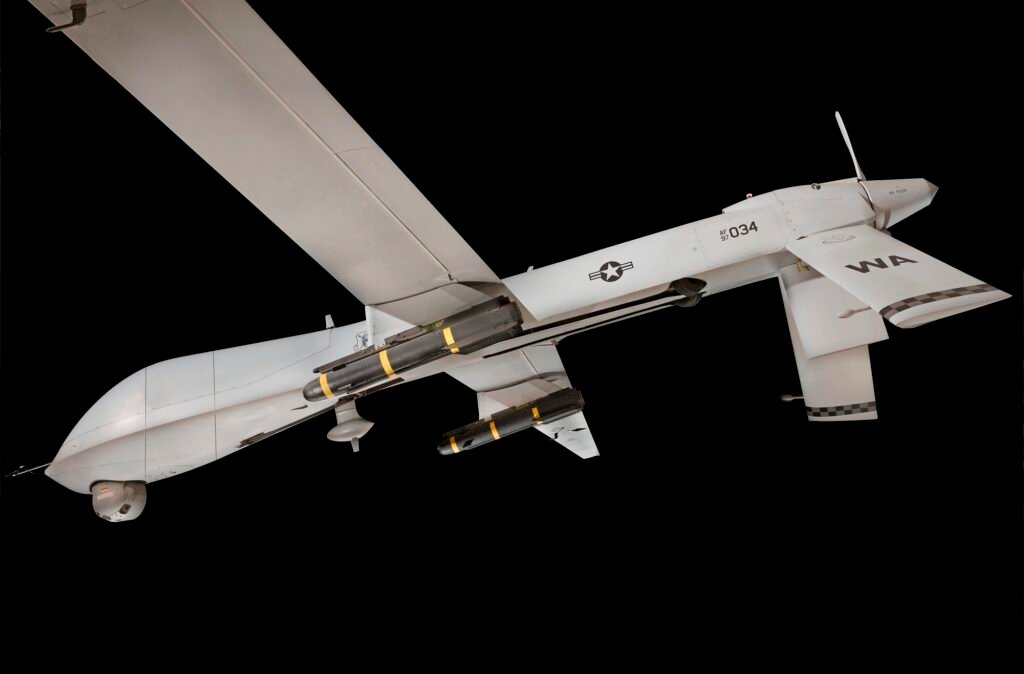
Its weapons load remained small. Predator normally carried two Hellfire missiles, so it was never intended to replace a conventional strike aircraft. Its advantage was different: surveillance and engagement could take place from the same platform without always requiring another aircraft to be brought into the mission.
MQ-1A and MQ-1B
Earlier armed Predator systems were associated with the MQ-1A designation. MQ-1B later became the more familiar operational version used extensively by the U.S. Air Force.
MQ-1B combined long-endurance ISR with the ability to employ AGM-114 Hellfire missiles. Avionics, communications and mission systems were improved during its service life, but the aircraft remained relatively light and slow.
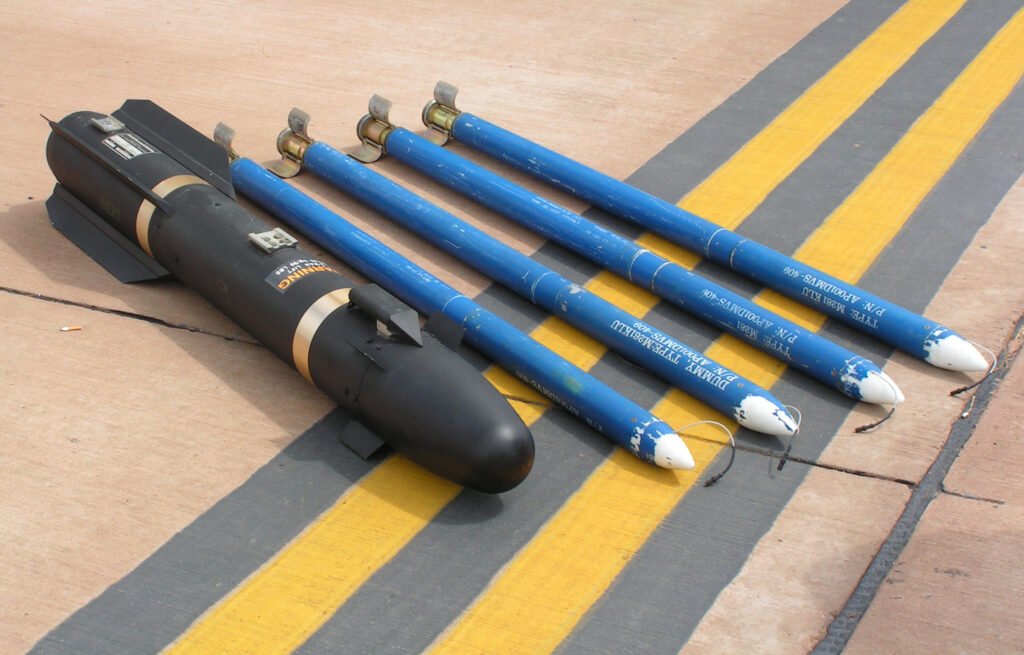
According to U.S. Air Force figures, maximum speed was around 135 mph. Payload was approximately 450 pounds, and power came from a Rotax 914 engine producing about 115 horsepower.
Such performance was suitable for the missions Predator was normally asked to perform. Long-duration surveillance mattered more than high speed. Remaining over a road, compound, border area or suspected route for hours could provide information that a faster aircraft passing through the area could not.
At the same time, those characteristics limited where Predator could operate effectively. Low speed, limited survivability and the absence of meaningful self-defense made it far more suitable for permissive or semi-permissive environments than for airspace protected by modern fighters and integrated surface-to-air missile systems.
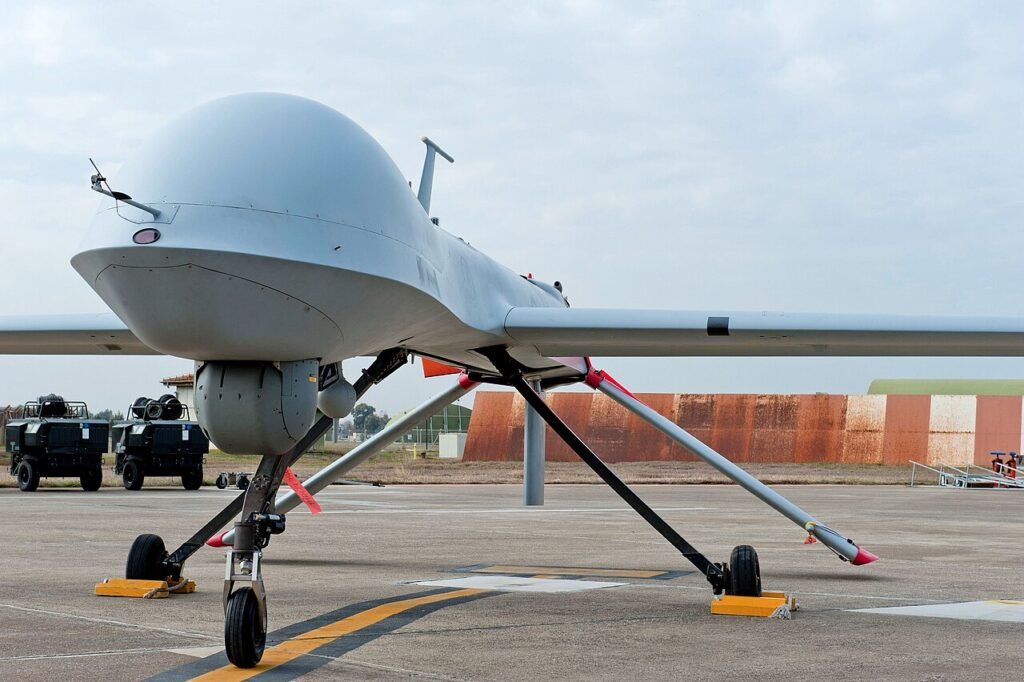
How Predator Was Actually Operated
MQ-1 was not operated by a crew sitting close to the aircraft throughout the entire mission.
Pilots and sensor operators worked from Ground Control Stations, while satellite communications allowed aircraft to be controlled from long distances. Launch and recovery could be handled by personnel deployed closer to the operating area, with mission control transferred to another crew after takeoff.
That operating model became one of the more important parts of the Predator program.
Unmanned did not mean independent. Missions still depended on pilots, sensor operators, intelligence personnel, communications infrastructure and technical support. Removing the cockpit changed where people worked, rather than removing them from the process.
Reliable communications were therefore essential. Satellite links and data connections became part of the aircraft’s operational capability, and any disruption to those systems could affect the mission.
Limits of the MQ-1
Predator is often discussed mainly in terms of its impact, but its limitations were significant.
Payload capacity restricted both weapons and sensor options. Speed was low, and the aircraft was not designed for operations against advanced air defenses. Its reliance on remote communications also created vulnerabilities that were less relevant to traditional manned aircraft.
As UAV missions expanded, those weaknesses became harder to ignore.
Operators increasingly wanted greater altitude, longer range, more powerful sensors and a much larger weapons load. MQ-1 could be upgraded, but there was only so much that could be added to an aircraft of its size and original design.
From Predator to Reaper
General Atomics developed a larger aircraft under the Predator B program, which later became the MQ-9 Reaper.
MQ-9 retained the basic idea of long-endurance ISR combined with strike capability, but offered much greater payload, higher speed, improved altitude performance and a broader range of weapons.
Predator production ended in 2011. The U.S. Air Force formally retired the MQ-1 in March 2018, by which point MQ-9 had already taken over much of its operational role.
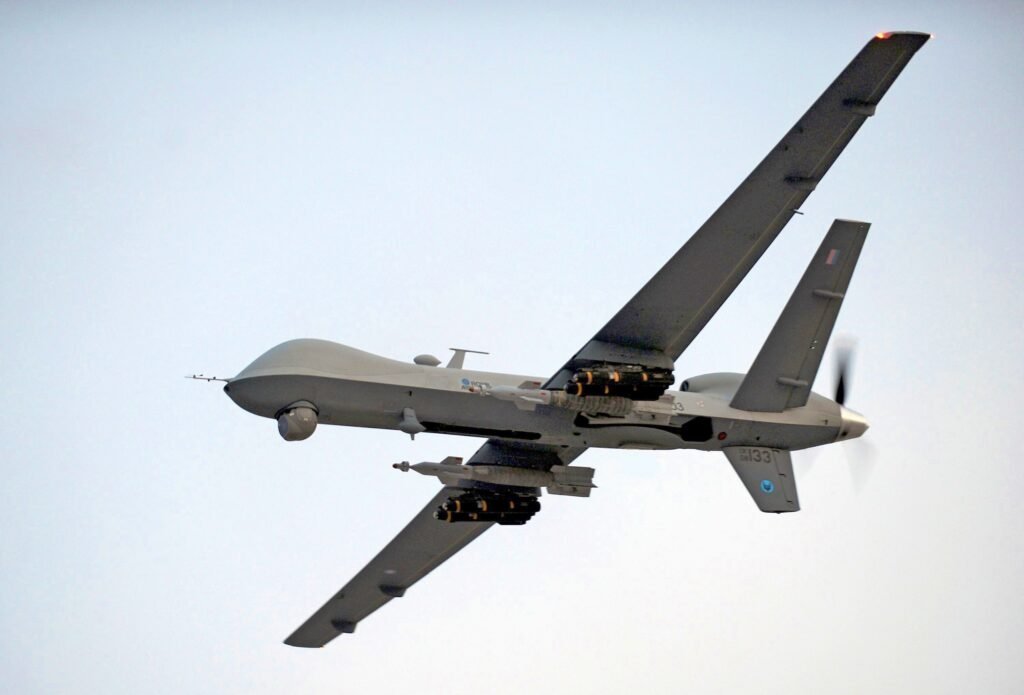
Looking at both aircraft together shows how quickly unmanned aviation requirements changed. MQ-1 began primarily as a surveillance platform and later gained weapons. MQ-9 was designed from the beginning around a much broader multi-role requirement.
Why MQ-1 Still Matters
Many capabilities associated with Predator are now common across modern military UAVs: persistent ISR, remote mission control, satellite connectivity and the ability to combine surveillance with precision engagement.
MQ-1 was not especially advanced by current standards, and many of its weaknesses would be serious problems in a modern contested environment. Even so, its operational history helped establish a model that later aircraft developed further.
For that reason, Predator is better understood as a transitional aircraft rather than simply an early combat drone. It connected the older idea of reconnaissance UAVs with the newer concept of remotely operated armed aircraft that could remain over an area for long periods and take part directly in the targeting process.
Sources:
- U.S. Air Force, MQ-1B Predator Fact Sheet.
- Smithsonian National Air and Space Museum, General Atomics MQ-1L Predator A.
- Smithsonian National Air and Space Museum, material on the development and operational history of the Predator.
- General Atomics Aeronautical Systems, historical material on Predator A.
- National Museum of the United States Air Force, material on the RQ-1 and MQ-1 Predator.