
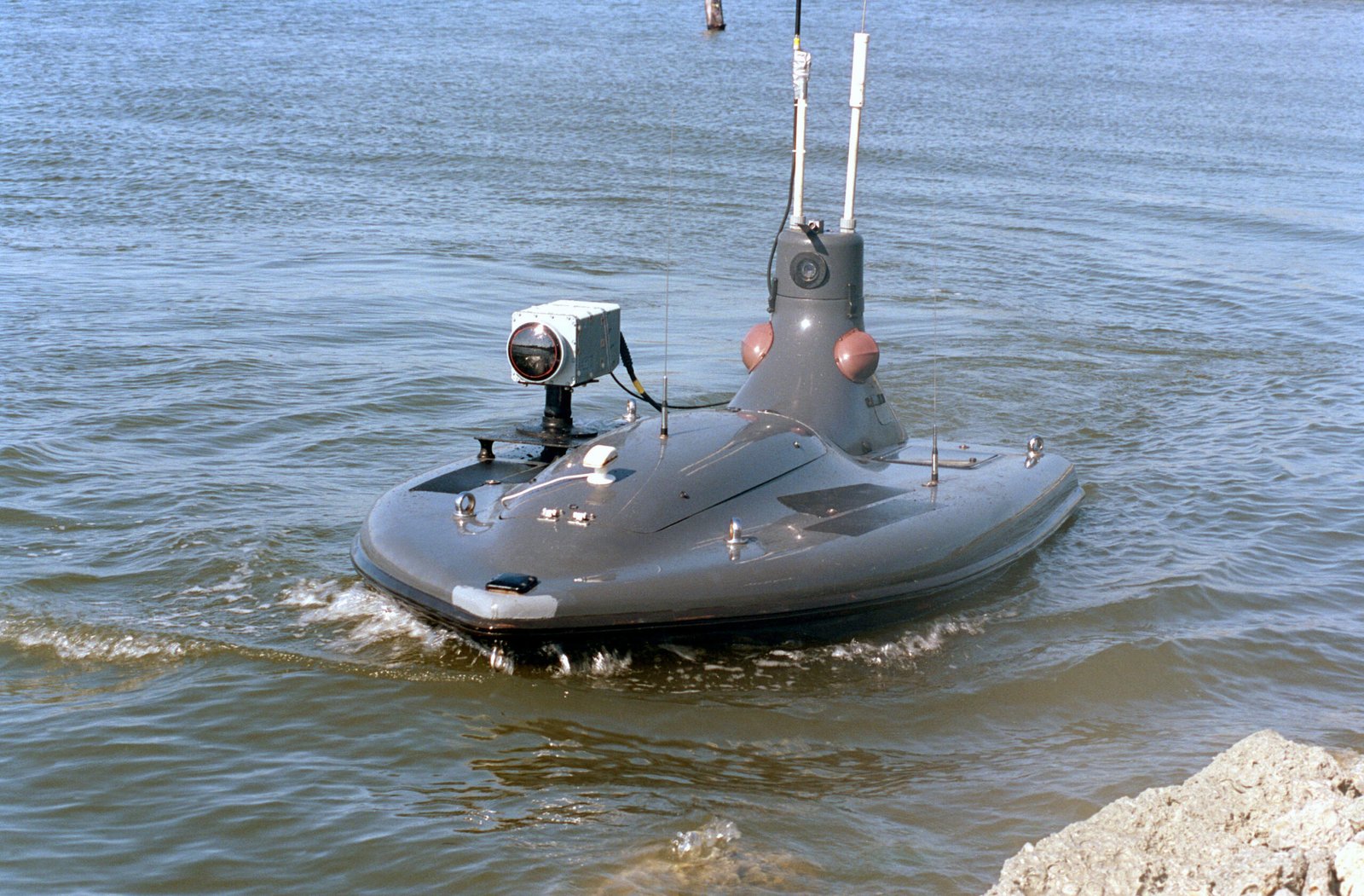
Unmanned surface vessels are usually discussed through autonomy, sensors, weapons and endurance. Remove the crew, and a vessel can potentially stay at sea longer, accept more risk and dedicate more internal space to machinery, fuel or mission systems. Yet every unmanned vessel eventually runs into the same basic problem: it still needs to be sustained.

Fuel is a good place to see that problem clearly. An autonomous vessel may be capable of navigating without sailors, but its engines still consume fuel, machinery still wears down and components still need attention. Removing people from the ship does not remove logistics from naval operations.
A Ship Without Sailors Still Needs Support
DARPA’s No Manning Required Ship, or NOMARS, program was designed around this idea from the beginning. Its demonstrator, USX-1 Defiant, was built without accommodations for a crew during normal operations. It is not simply a conventional ship with the people taken out. The vessel was designed around the assumption that nobody would be living, sleeping or routinely working aboard it.
That gives engineers more freedom. Space normally used for crew facilities can be reassigned, while some systems can be simplified because they no longer need to support people.
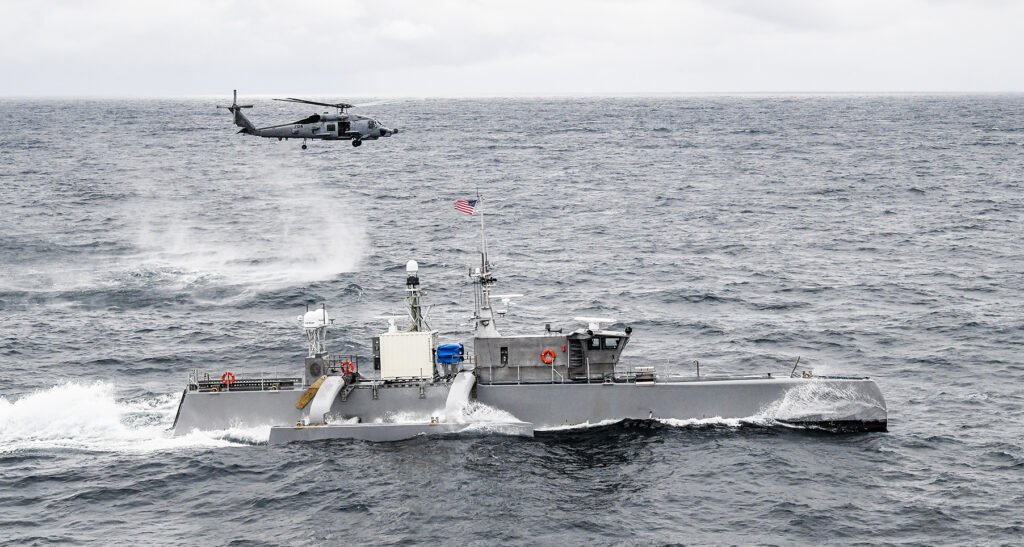
But propulsion still sets limits. Defiant is roughly 180 feet long, and vessels of this size cannot remain at sea indefinitely without fuel or maintenance. If every unmanned ship has to return to port whenever its tanks run low, much of the advantage of long-duration autonomous operations begins to disappear.
Refueling Without Anyone on Deck
Conventional underway replenishment depends heavily on people. Sailors manage lines, monitor connections and respond when the vessels move differently in changing sea conditions.
That creates an obvious problem for a ship with nobody aboard.
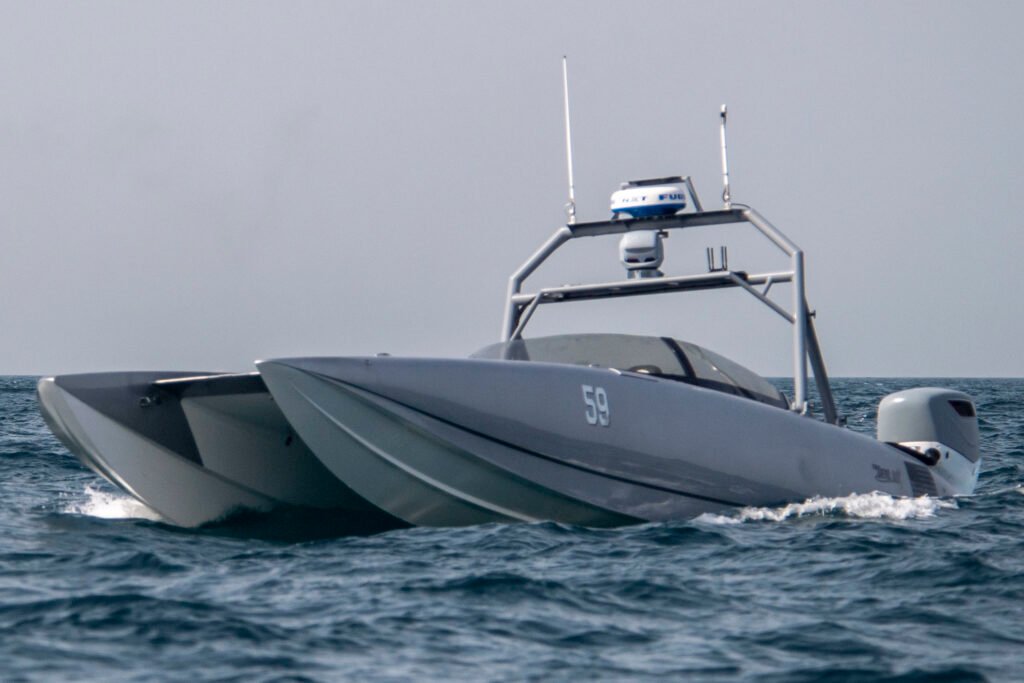
DARPA demonstrated one possible solution in December 2024 using the experimental USVs Ranger and Mariner. Ranger carried a receiving system representative of what was planned for Defiant, while Mariner carried the refueling equipment. The system transferred and connected the refueling probe without human assistance on the receiving vessel.
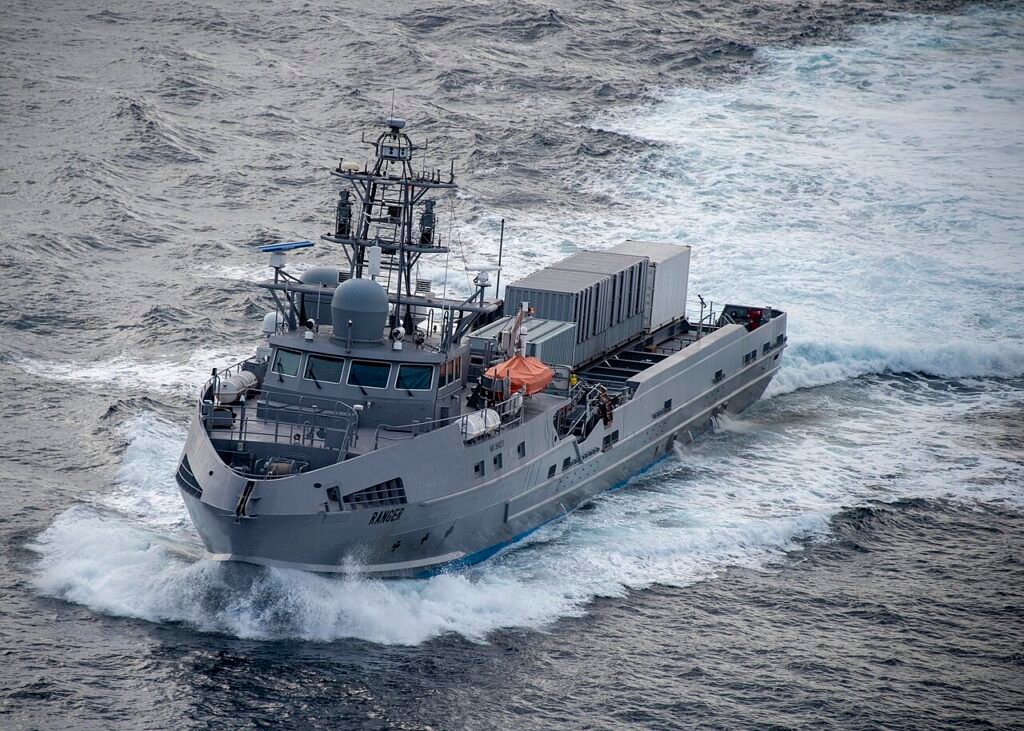
Water was used instead of fuel during the demonstration, but the main challenge was mechanical rather than chemical. The objective was to prove that two moving vessels could establish a transfer connection without requiring sailors on the unmanned platform.
Defiant later demonstrated the same general concept near Port Hueneme in 2025, again with no personnel aboard the receiving vessel.
For USVs, that kind of capability could be far more important than it first appears.
Range Is Not Just About Bigger Fuel Tanks
A vessel that has to travel back to port every time it needs fuel loses time while leaving the area where it is actually needed. Longer-range USVs could simply carry more fuel, but that creates its own compromises.
Fuel takes up volume and adds weight. Increasing tank capacity can affect hull design, payload space and overall cost. At-sea refueling offers another option by shifting part of the endurance problem from the individual platform to the wider support network.
Crewed navies already operate this way. Oilers and replenishment ships allow combat vessels to remain deployed without constantly returning to shore. An unmanned fleet will likely need a similar logistics structure, although the equipment and procedures may look very different.
The Sea Makes Everything Harder
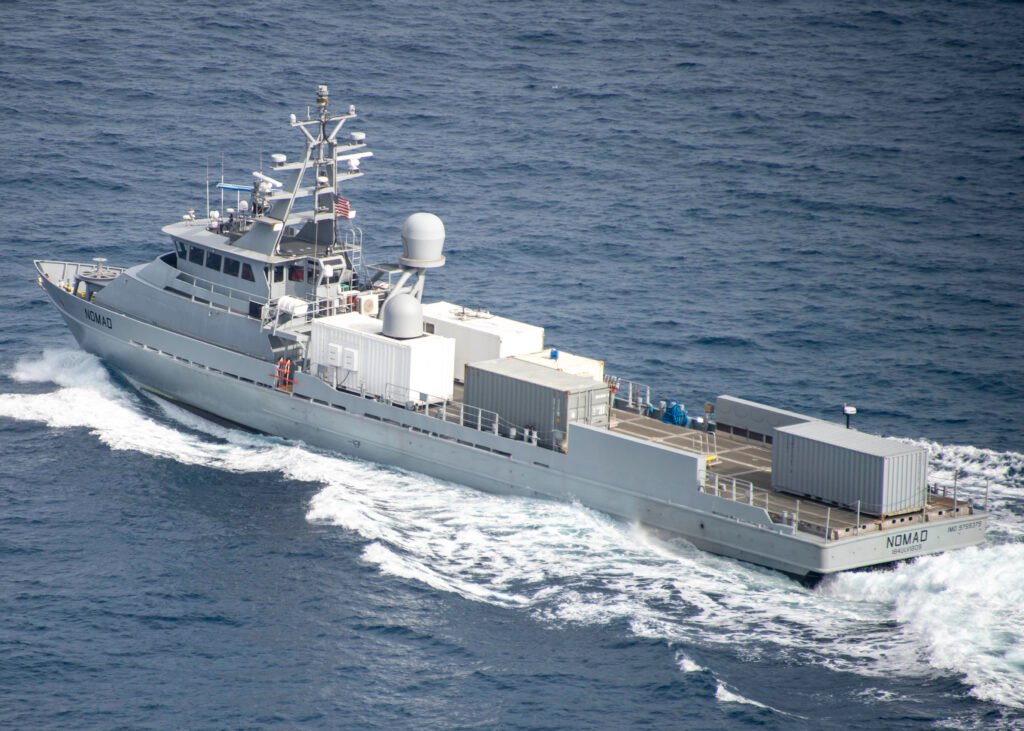
Connecting two vessels at sea is not the same as connecting a hose at a dock. Wind, waves and vessel movement constantly change the relative position of both platforms.
The U.S. Naval Research Laboratory was already working on robotic fuel transfer for unmanned surface vessels more than a decade ago. Its Rapid Autonomous Fuel Transfer research tested ways to connect and refuel USVs while accounting for movement and simulated sea conditions.
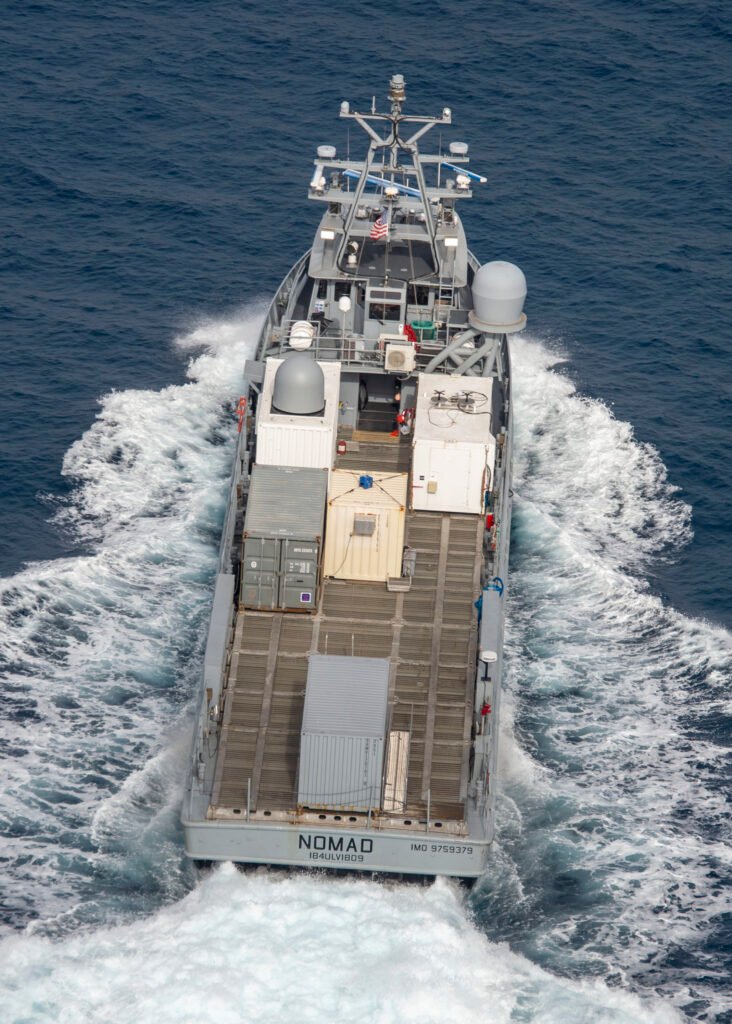
The technology has now become more relevant because USVs themselves are becoming larger and more ambitious.
The U.S. Navy is developing a broader range of unmanned surface vessels and selected several companies for Medium Unmanned Surface Vessel demonstrations in 2026. As these vessels move closer to operational use, refueling becomes less of an experimental side project and more of a requirement.
Fuel May Not Be the Hardest Part
Even if autonomous refueling becomes routine, endurance will still depend on more than fuel.
Sensors become dirty. Cooling systems fail. Pumps wear out. Communications equipment develops faults. Saltwater damages exposed systems. Mechanical problems do not disappear simply because nobody is onboard to notice them.
This may become one of the biggest limits on long-duration unmanned naval operations. A crewed ship carries technicians who can inspect equipment, repair faults and improvise when something goes wrong. An unmanned ship has to rely much more heavily on reliability, redundancy and remote diagnosis.
That means true endurance should probably be measured by how long the complete vessel can continue operating before human intervention becomes necessary, not just by how many nautical miles it can travel on a tank of fuel.
The Logistics Network May Become Unmanned Too
Future USV fleets may eventually need more than robotic refueling. They may depend on autonomous or optionally crewed vessels carrying spare parts, replacement payloads and maintenance equipment.
The U.S. Navy has already experimented with digitally crewed vessels performing logistics tasks during RIMPAC 2026, including transporting replacement components and drone-related equipment. That points toward a wider transformation. The autonomous combat vessel may only be one part of the system. Refueling, resupply, recovery and maintenance could gradually become more automated as well.
USVs are often presented as a way to remove sailors from dangerous missions. That part is easy to understand. The more difficult problem is building the support network that allows those vessels to remain useful after the first few days or weeks at sea.
The question is no longer simply whether an unmanned ship can operate without a crew.
It is how much of the fleet around it must change before that becomes practical.
Sources:
- Defense Advanced Research Projects Agency (DARPA). “Automated Fueling-at-Sea Test Completed for Unmanned Surface Vehicle Program.” December 19, 2024.
- Defense Advanced Research Projects Agency (DARPA). “No Manning Required Ship (NOMARS).”
- U.S. Naval Research Laboratory. “NRL Tests Robotic Fueling of Unmanned Surface Vessels.”
- Defense Advanced Research Projects Agency (DARPA). “NOMARS At-Sea Demo.”
- U.S. Navy. “U.S. Navy Announces Seven Companies Selected for MUSV Marketplace At-Sea Demonstrations.” May 29, 2026.