
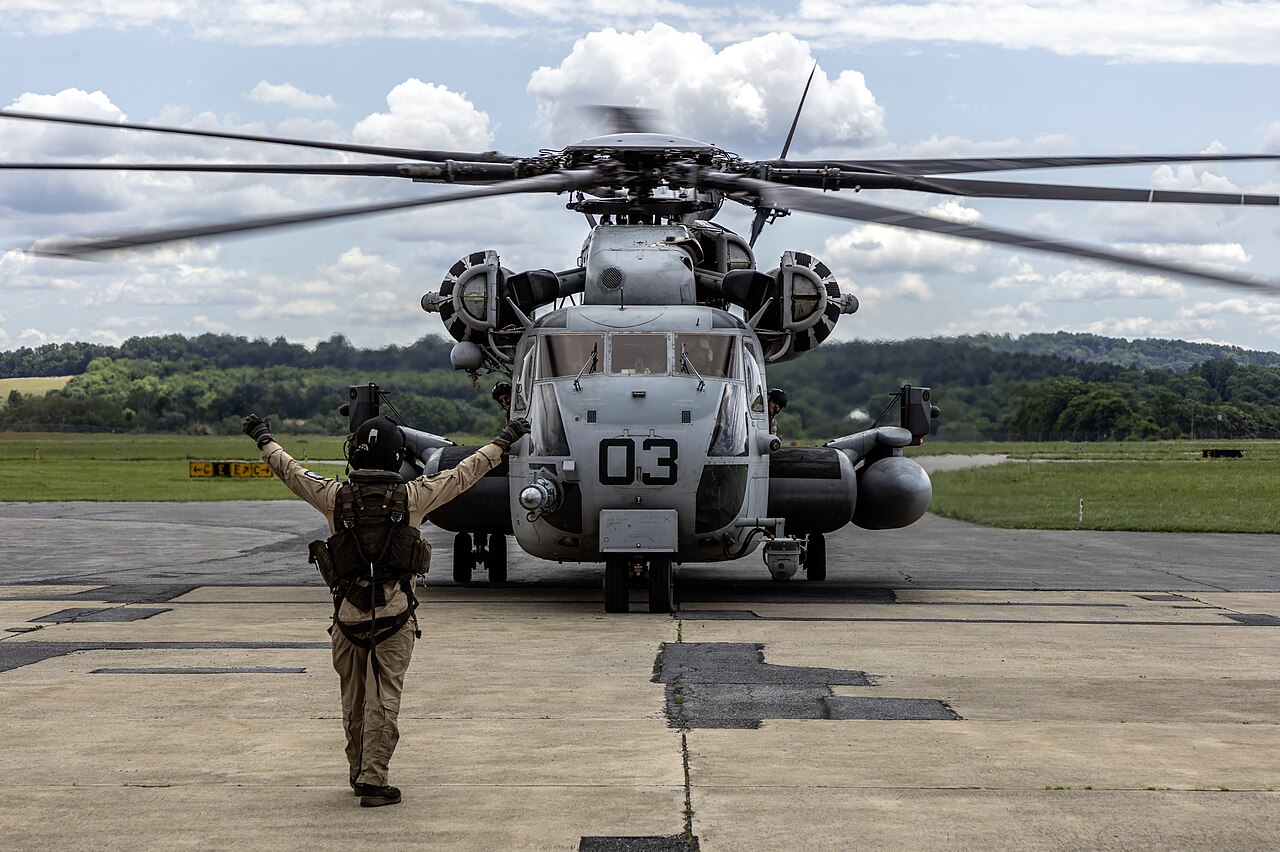
Some military aircraft are remembered because they look fast. Others because they carry weapons that immediately attract attention. The CH-53E Super Stallion is not that kind of machine. It is large, loud, heavy and almost industrial in character. Its value is not built around elegance, but around the ability to move things that a fighting force cannot afford to leave behind.

That makes the CH-53E more interesting than a simple technical profile would suggest. Describing it only as a “heavy-lift helicopter” is accurate, but incomplete. The Super Stallion belongs to the less glamorous side of military power: logistics, sustainment, mobility and the hard physical problem of moving people and equipment across distance.
This is where its real importance begins. A military force may have trained personnel, advanced weapons and strong doctrine, but none of that matters for long if fuel, ammunition, vehicles, spare parts and recovery equipment cannot move with it. The CH-53E exists in that practical space between ambition and reality.
Built for the Burden of Movement
The CH-53E Super Stallion was developed as part of the wider CH-53 family and became one of the most important heavy-lift helicopters used by the U.S. Marine Corps. Its three-engine configuration, large rotor system and ability to carry heavy internal and external loads gave it a role that smaller helicopters could not realistically fill.
It is tempting to focus immediately on numbers: payload, range, speed, dimensions. Those details matter, of course. But the more useful question is different: what does this aircraft allow a commander to do that would otherwise be slower, riskier or impossible?
In practice, the answer is movement. Not movement in the abstract sense, but the movement of real weight. Cargo pallets. Artillery components. Vehicles. Maintenance equipment. Marines with their gear. Supplies that cannot wait for ideal road conditions or a convenient port.
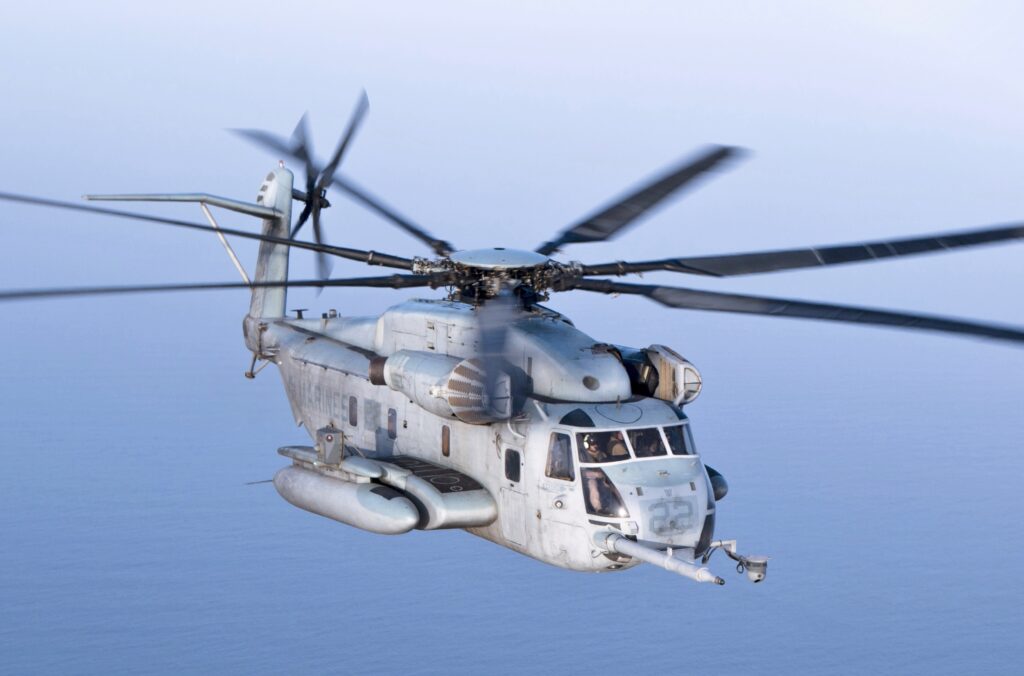
A smaller helicopter can support a unit. A heavy-lift helicopter can reshape the tempo around that unit.
This is why the CH-53E should not be seen merely as a transport aircraft. It is part of the physical machinery that lets an expeditionary force keep functioning after it has left the comfort of established infrastructure.
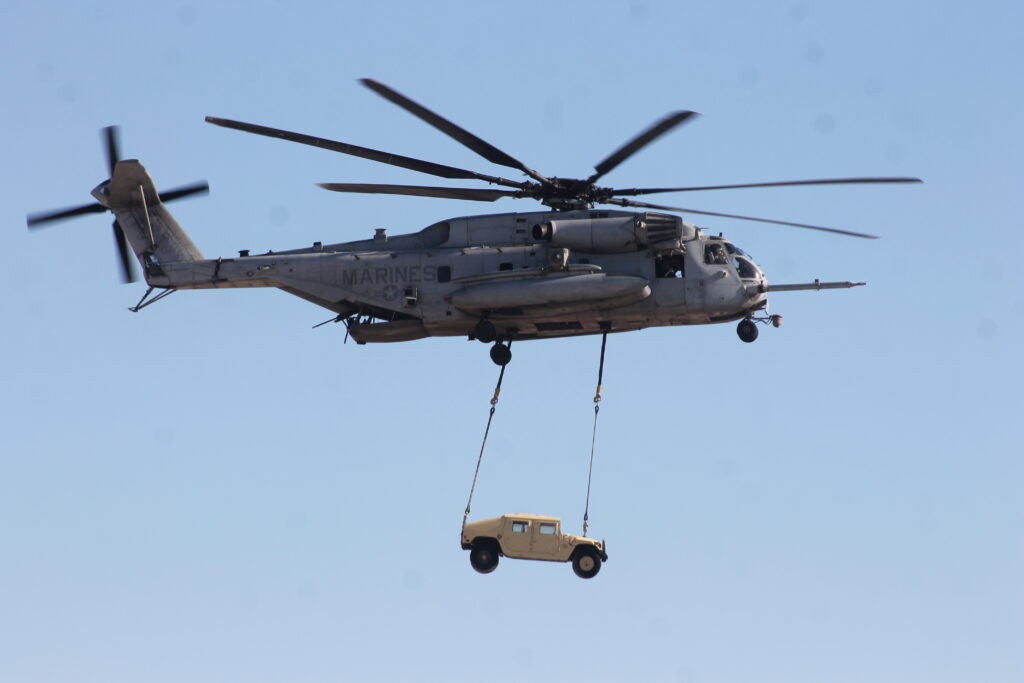
Why Heavy Lift Still Matters
Modern defense discussions often move quickly toward drones, precision missiles, air defense, electronic warfare and long-range strike. These are all important subjects. Still, there is a danger in treating logistics as background noise.
The battlefield does not run on concepts alone. It consumes fuel, metal, batteries, water, food, medical supplies, replacement parts and time. Every movement has a cost. Every dispersed unit creates a sustainment problem. Every plan eventually has to answer the same uncomfortable question: how will the force keep moving once the initial push is over?
The CH-53E is one answer to that question.
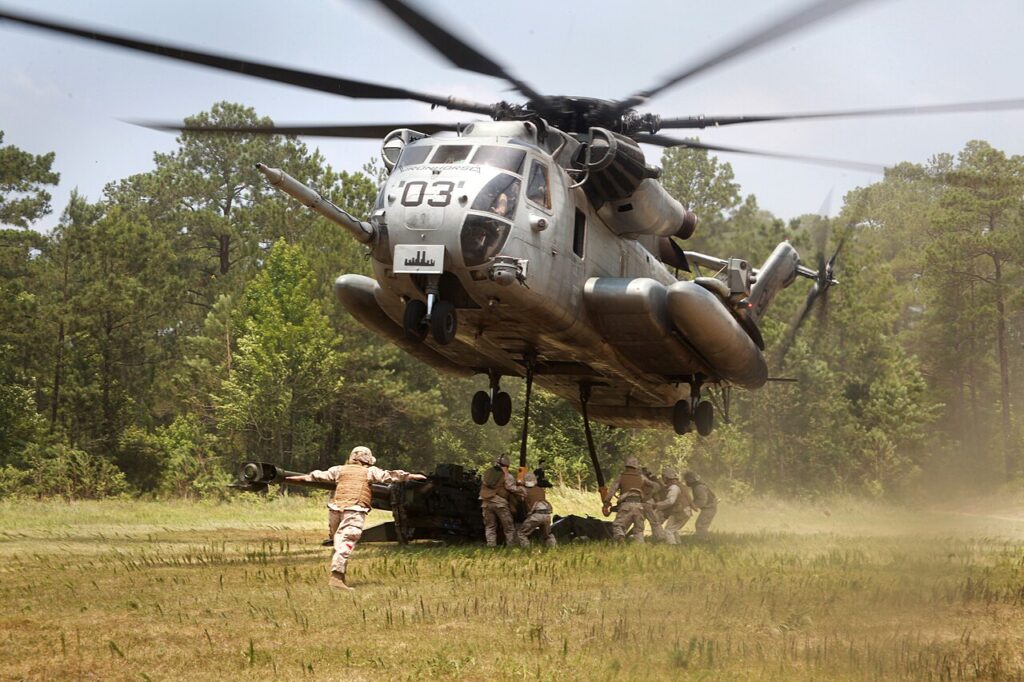
A CH-53E Super Stallion with Marine Heavy Helicopter Squadron 461 hovers over a M777 155 mm Howitzer while Marines from 3rd Battalion, 10th Marine Regiment, Lima Battery, attach it to the aircraft in support of Exercise Mailed Fist at a range outside of Marine Corps Base Camp Lejeune, N.C., June 21. Exercise Mailed Fist is a large-scale exercise conducted by 2nd Marine Aircraft Wing.
Not the only answer, and not a perfect one, but a major one. It provides the Marine Corps with the ability to move heavy loads vertically, bypassing some of the limits imposed by roads, ports, terrain and distance. In a contested environment, that can matter enormously. Ground convoys may be exposed. Roads may be damaged. Landing areas may be limited. A heavy-lift helicopter gives planners another option.
There is also a psychological element here. A force that knows it can be resupplied, reinforced or repositioned has more freedom to act. Mobility is not just about movement on a map. It shapes confidence, planning and tempo.
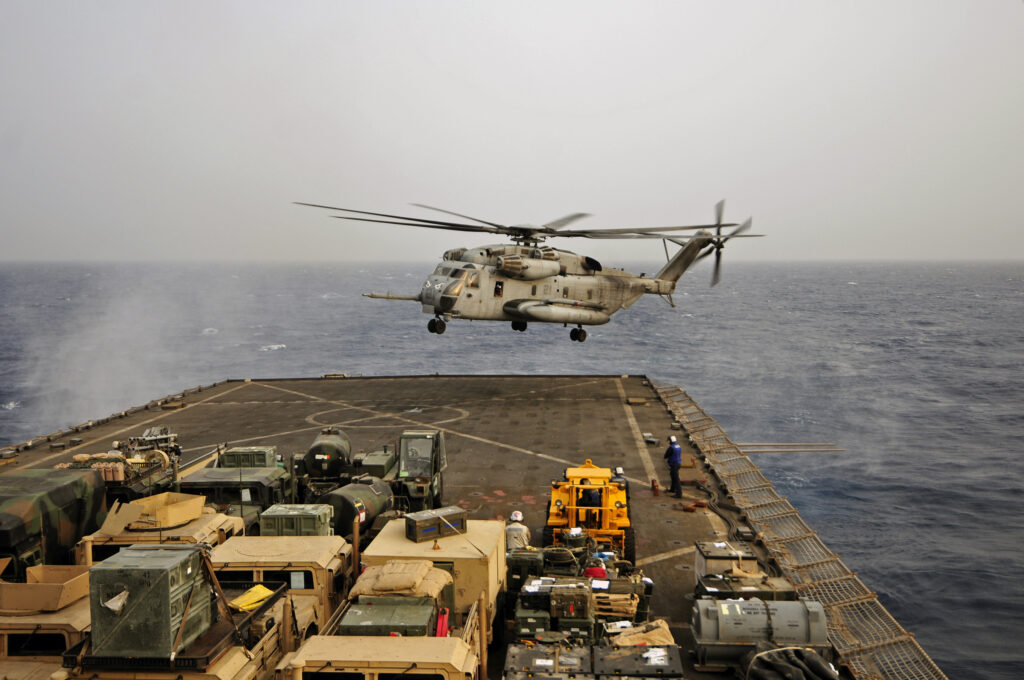
Ship-to-Shore Mobility and the Marine Corps Logic
The CH-53E becomes especially important when we look at the Marine Corps from its own operational logic. Marines are not simply another land force. Their identity is tied to expeditionary operations, amphibious movement and the ability to operate from the sea toward land.
At first, that sounds straightforward until we imagine the actual problem. A ship may be offshore. The force may need to move inland. Along the coastline, a clean port may not be available. Roads may be limited, damaged or vulnerable. In some cases, the landing area may not be where the main operational need exists.
What happens then?
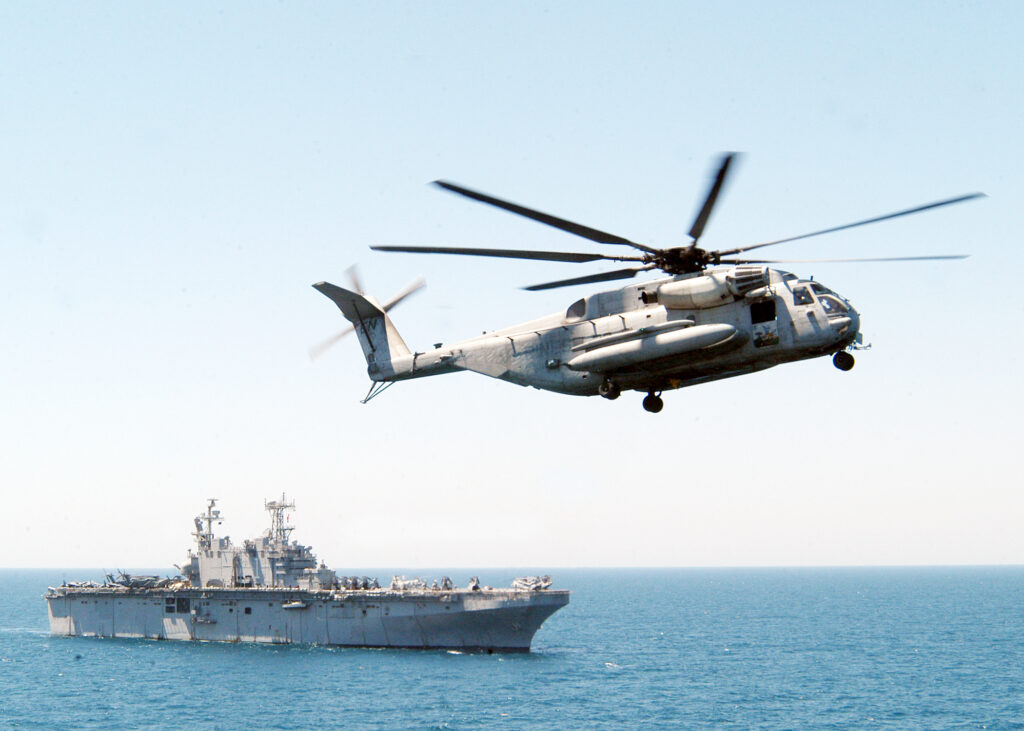
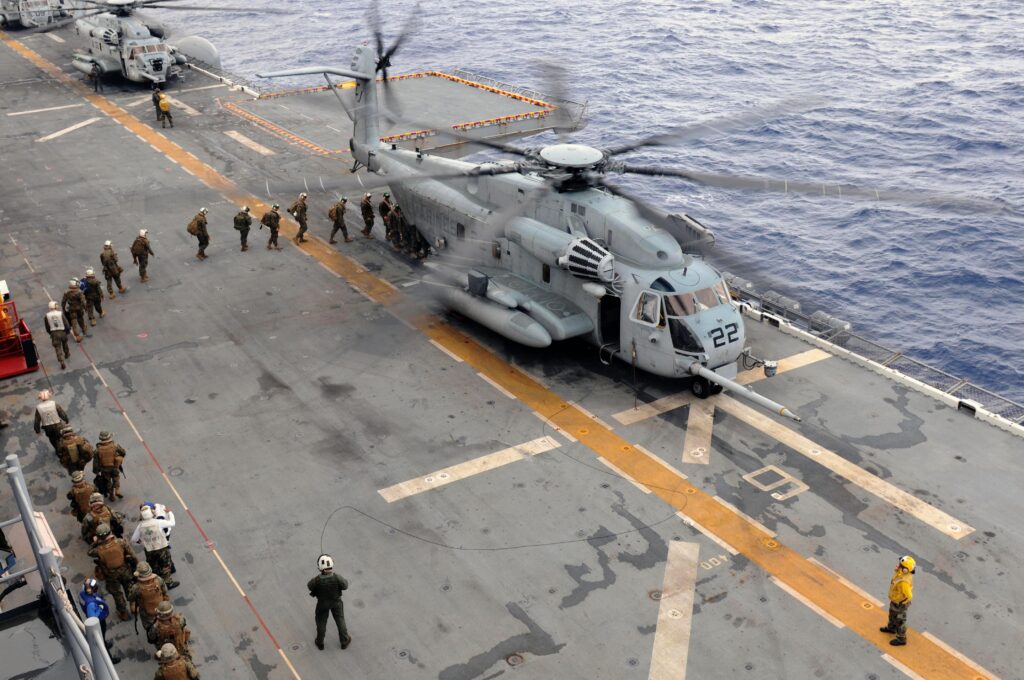
Here, ship-to-shore mobility becomes more than a phrase. The CH-53E helps turn a sea-based force into a usable landward force. It can move personnel and equipment from amphibious ships to landing zones, forward positions or areas beyond the immediate coastline. Such movement reduces dependence on a single beach, a single route or a single piece of infrastructure.
Speed matters, but the deeper value is flexibility. A force that can move heavy loads over obstacles has more choices than a force tied too tightly to roads and ports.
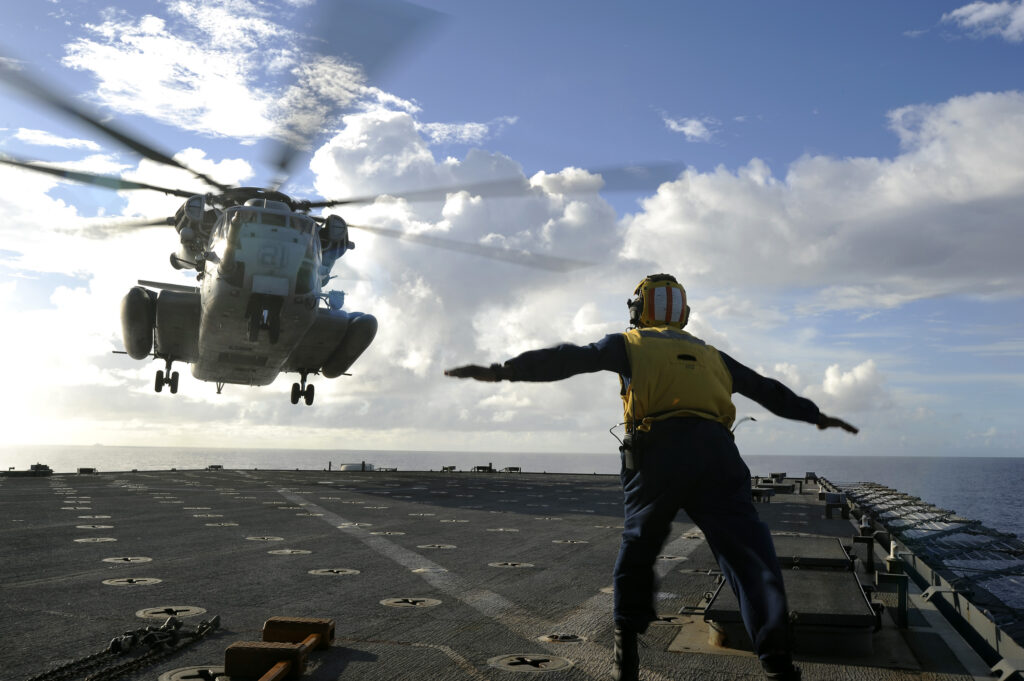
Amphibious warfare is often imagined through the dramatic moment of landing. Yet the more difficult story usually begins after that moment. Once troops are ashore, they have to be sustained. Equipment has to arrive. Ammunition has to keep flowing. Damaged systems may need recovery. Command and communications must remain functional.
The CH-53E supports that less visible but decisive phase.
A Flying Logistics Asset, Not Just a Big Helicopter
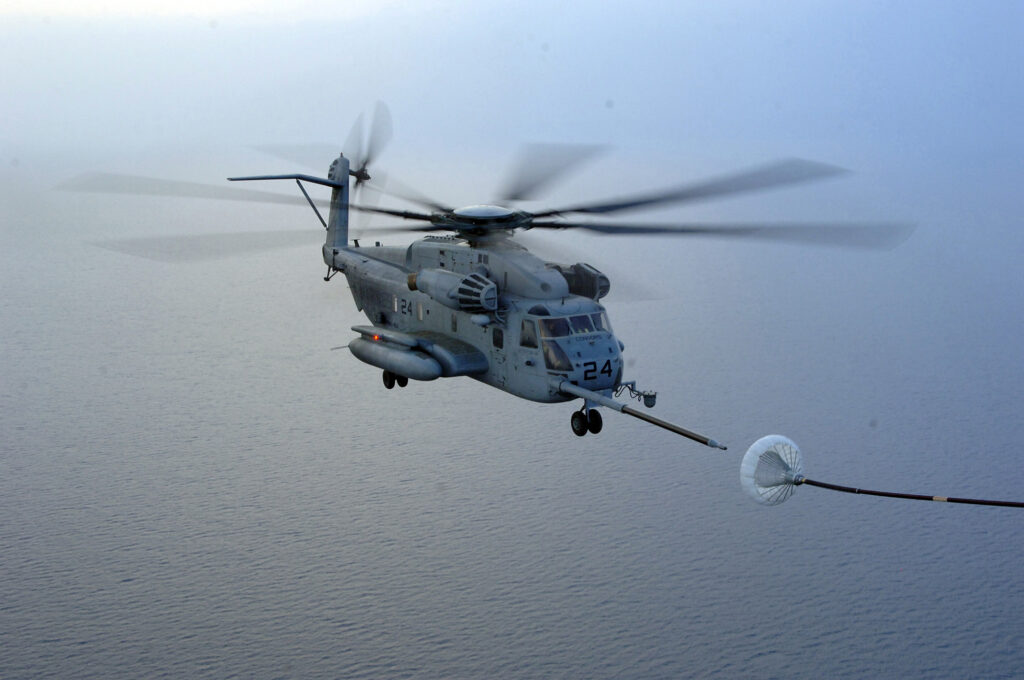
There is a useful way to think about the Super Stallion: it is aviation, but it behaves like infrastructure.
A road, a bridge or a port gives a force access. In the air, the CH-53E creates a temporary version of that access. It does not replace infrastructure permanently, but it can reduce immediate dependence on fixed routes, ports or prepared facilities. During expeditionary operations, that kind of flexibility can be extremely valuable.
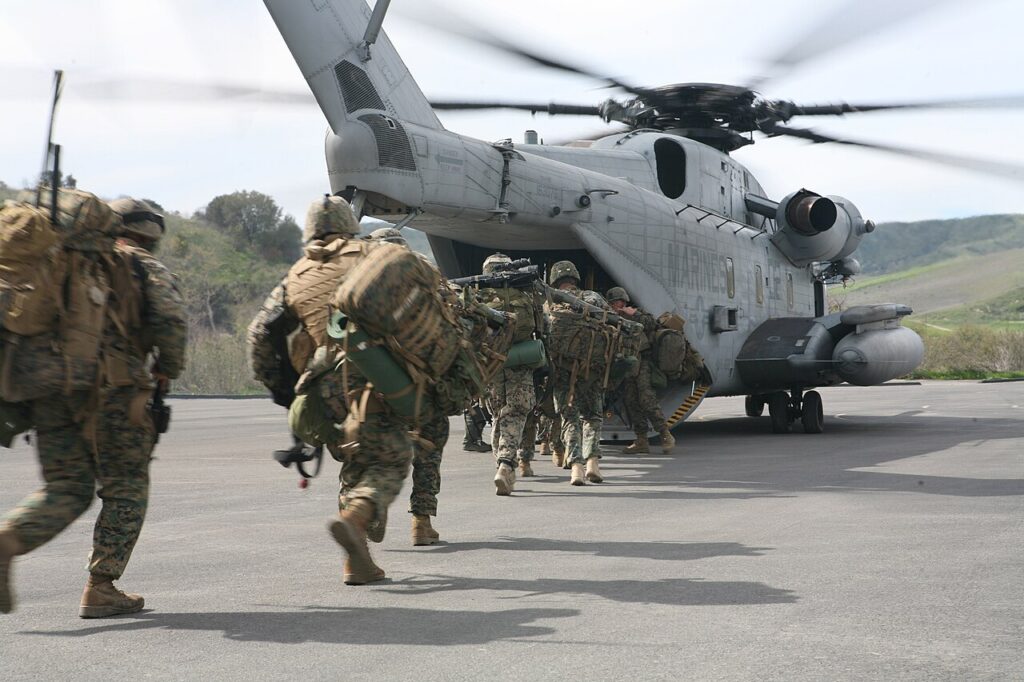
Its role also extends beyond conventional combat imagery. Heavy-lift helicopters are relevant in crisis response, evacuation, disaster relief and emergency logistics. Difficult terrain or damaged infrastructure can quickly turn access into the main problem, and in those moments the ability to lift heavy loads into isolated areas matters outside pure battlefield scenarios as well.
None of this makes the CH-53E a humanitarian aircraft by nature. It remains a military platform. Still, military heavy lift often becomes useful in situations where speed, access and payload capacity are urgent.
The same machine that can move military equipment can also help move relief supplies, engineering tools or evacuation support when required. That dual relevance is part of why heavy-lift aviation remains a serious capability area, not just a niche category.
The Problem of Age
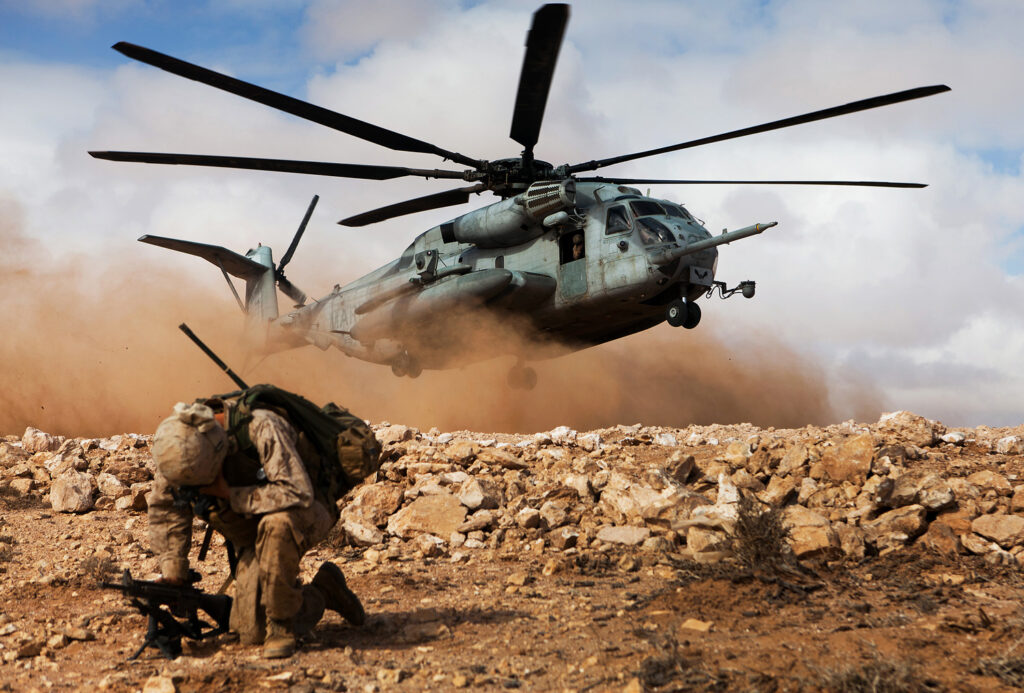
The CH-53E has served for decades. That long service life says something positive about the aircraft, but it also creates pressure.
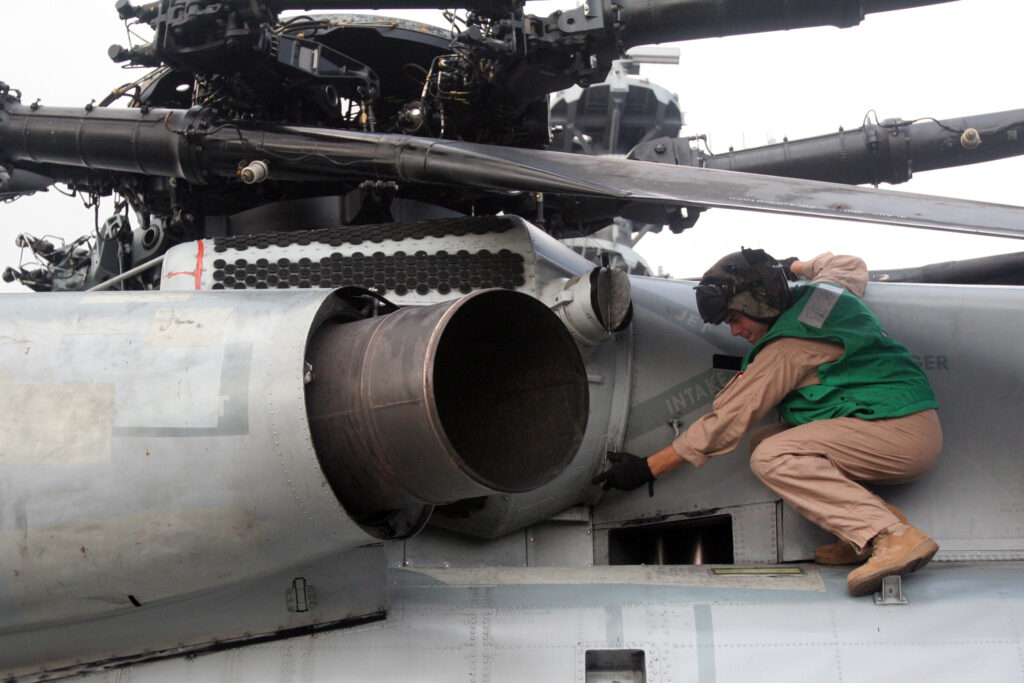
Older platforms do not become irrelevant overnight. Many remain useful because the mission they perform remains necessary. The problem is that age changes the cost of keeping that usefulness alive. Maintenance becomes more demanding. Parts availability matters more. Structural fatigue, corrosion, wiring, engines, avionics and inspection cycles all become part of the operational picture.
This is not a criticism of the Super Stallion. It is simply how military equipment ages.
A platform can be respected and still be difficult to sustain. It can be powerful and still require heavy maintenance. It can remain operationally important while also creating readiness challenges for the force that depends on it.
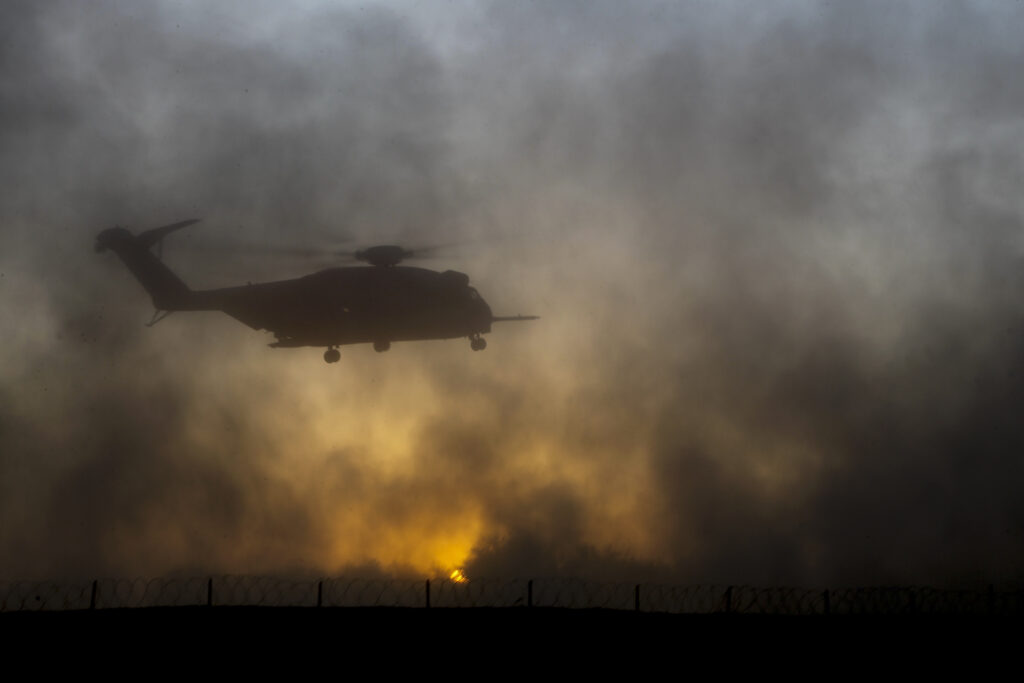
That tension is central to the CH-53E story. The aircraft is valuable because heavy lift is valuable. At the same time, the burden of sustaining an aging heavy-lift fleet cannot be ignored.
In defense analysis, this is often where the real story sits. Not in the headline number, not in the dramatic photograph, but in the relationship between capability and lifecycle cost. How many aircraft are available? How many are undergoing maintenance? How difficult is the parts pipeline? How many flight hours are required to keep crews proficient? How does a service balance today’s operational need with tomorrow’s replacement program?
Those questions may sound less exciting than rotor diameter or payload figures, but they are closer to the reality of military aviation.
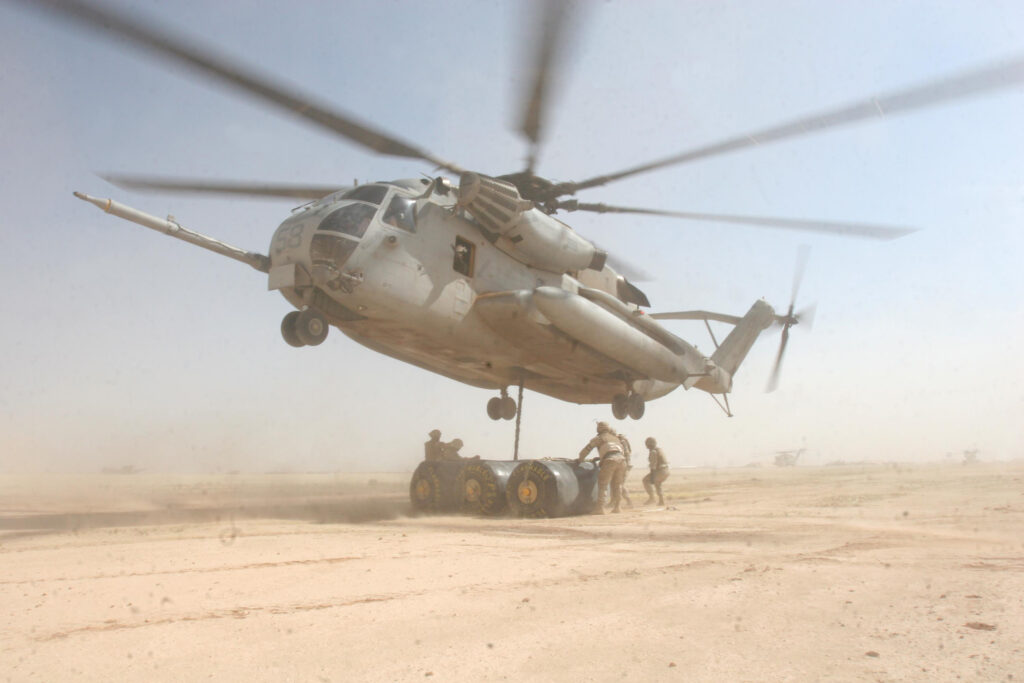
A CH-53E Super Stallion helicopter with Marine Heavy Helicopter Squadron 465 hovers over a fuel bladder while Marines with Combat Logistics Battalion 2, Helicopter Support Team, prepare to attach them April 10, 2007, for an external lift from Al Asad Air Base, Iraq, to re-supply Regimental Combat Team-2 at Camp Timber Wolf. (U.S. Marine Corps photo by Cpl. Sheila M. Brooks) (Released)
The CH-53K Transition
The CH-53K King Stallion is intended to replace the CH-53E, but this transition should not be read as a simple retirement story. It is better understood as confirmation that the mission itself remains essential.
If heavy vertical lift were becoming irrelevant, the replacement would not matter so much. The opposite is happening. The Marine Corps still needs to move large payloads in difficult environments, from ships, across distance and into areas where infrastructure may be limited. The CH-53K exists because that requirement has not disappeared.
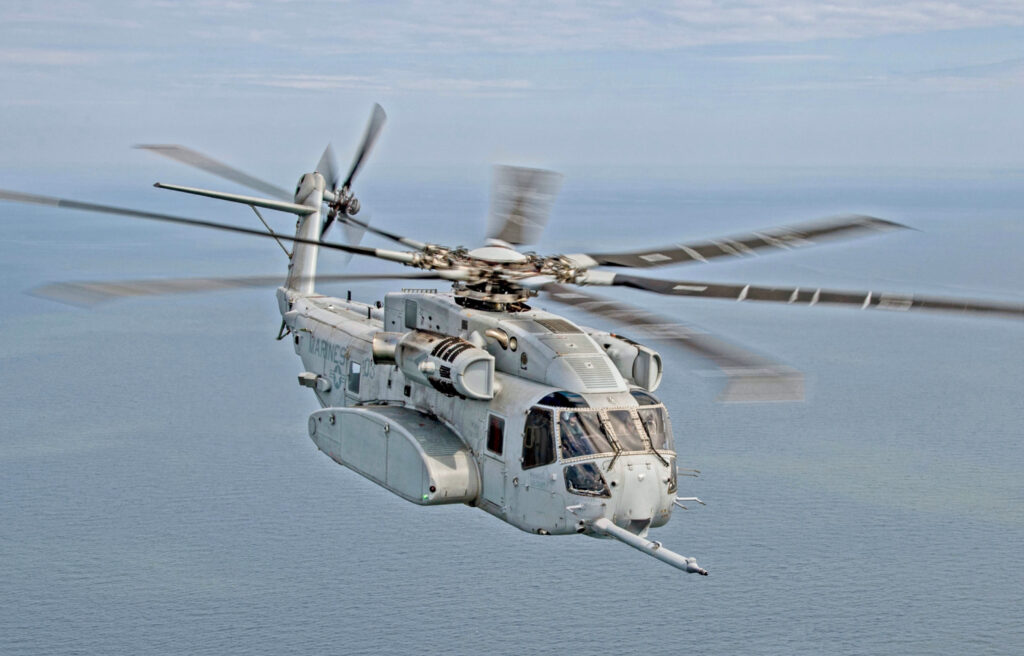
New aircraft programs are often discussed through performance improvements, and that is understandable. The CH-53K brings modern systems, greater lift potential and a design intended for future operational needs. But the broader lesson is about continuity. The aircraft changes. The need remains.
This matters even more in an era of distributed operations. If forces are expected to spread out, operate from temporary positions and avoid presenting large fixed targets, logistics becomes more complicated. Smaller footprints do not remove the need for supply. They often make supply harder.
A dispersed force still needs heavy items moved. It still needs recovery options. It still needs ammunition, fuel, communications gear and engineering support. Heavy-lift aviation may become less visible in public debate, but it remains central to making these concepts practical.
Risk, Weight and Military Aviation
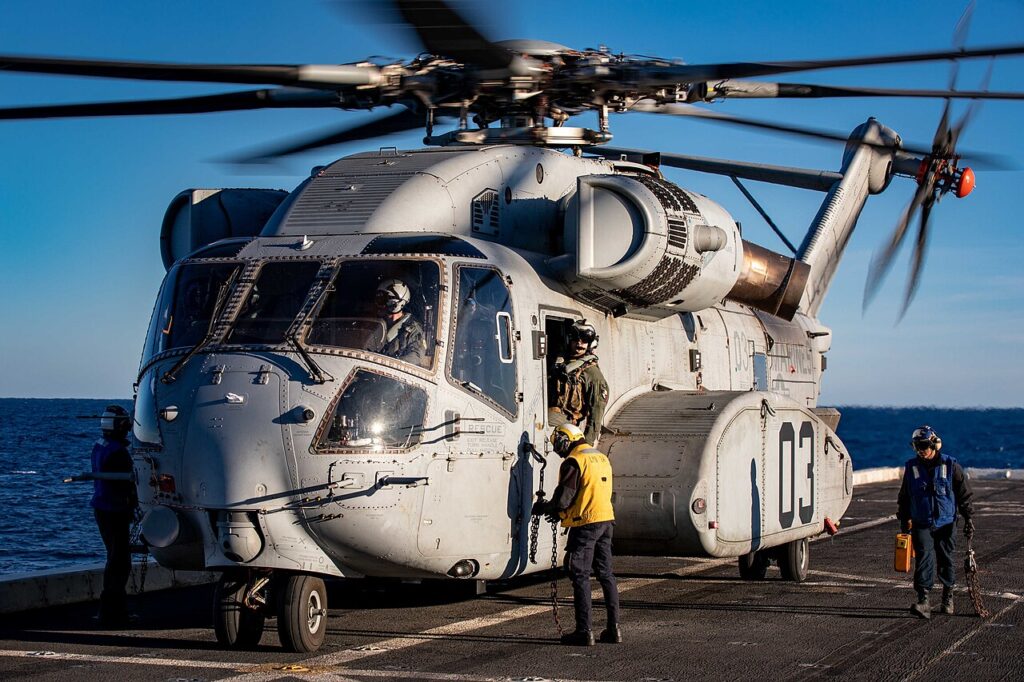
Large military helicopters operate in difficult conditions by design. They fly heavy. They may operate at night, from ships, into austere landing zones or through poor weather. They may carry external loads that affect handling. Their missions are often urgent, and their operating environments are rarely ideal.
That reality deserves a careful tone.
Accidents involving aircraft like the CH-53E should not be used for sensational storytelling. They should remind us that heavy-lift aviation carries real operational risk. The combination of weight, weather, terrain, mechanical complexity and mission pressure is unforgiving.
At the same time, risk is not the same as recklessness. Military aviation manages risk through training, maintenance, procedures, investigation and modernization. Every serious platform has a safety culture built around hard lessons. Heavy-lift helicopters are no exception.
The CH-53E’s record has to be viewed within that broader environment. Its mission is demanding. Its age adds complexity. Its importance keeps it in use. Those three facts exist together.
What the Super Stallion Tells Us About Military Power
The CH-53E Super Stallion is not the kind of aircraft that explains military power through firepower alone. It explains something more basic and sometimes more important: the ability to keep moving.
A force that cannot move heavy equipment becomes predictable. A force that cannot resupply itself becomes fragile. A force that depends too heavily on fixed infrastructure may lose flexibility when conditions change. Heavy-lift aviation helps reduce those limits.
This is why the Super Stallion still deserves attention. It is not only a machine from an older generation of Marine Corps aviation. It is a reminder that logistics has its own form of combat relevance. The aircraft may not dominate public imagination in the same way as fighters, bombers or attack helicopters, but it supports the conditions under which those more visible systems can matter.
The CH-53E’s real story is not simply that it can lift heavy loads. The deeper point is that it gives an expeditionary force options. It helps Marines move from ships to shore, from shore to inland positions and from fixed planning assumptions toward a more flexible operational rhythm.
That is why the transition to the CH-53K is so important. It does not erase the Super Stallion’s legacy. It shows that the heavy-lift mission remains too important to leave behind.
Sources:
- United States Navy, “CH-53E Super Stallion.”
- NAVAIR, “CH-53E Super Stallion.”
- NAVAIR, “CH-53E Heavy Lift Helicopter Reaches One Million Flight Hours.”
- Fleet Readiness Center Southwest, “FRCSW Keeps H-53 Super Stallions Ready for Flight.”