
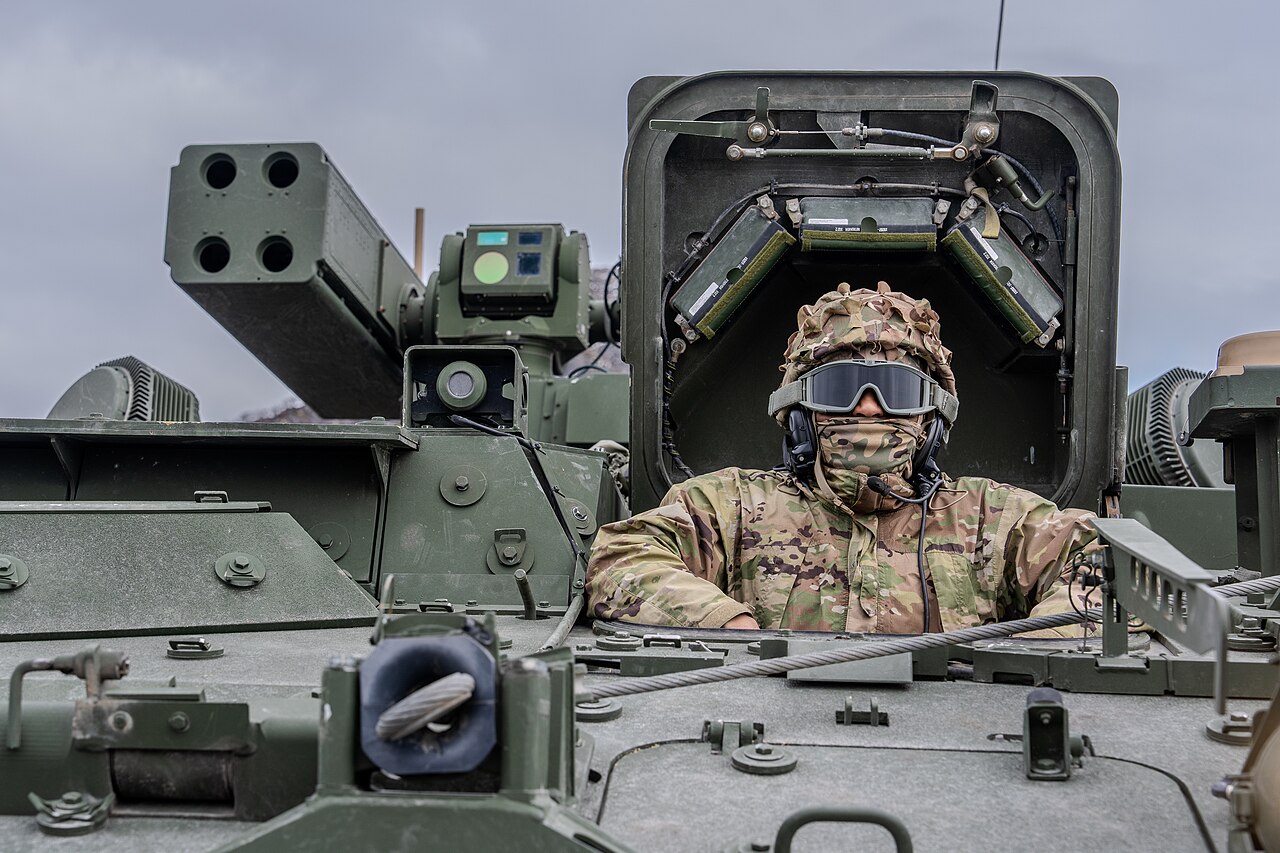
Modern air defense is moving back toward a problem that many Western armies had allowed to fade into the background: how to protect maneuver forces from threats flying low, fast and close to the ground. Strategic missile defense, fighter aircraft, long-range radars and medium-range air defense systems all remain essential. Yet none of them fully solve the problem faced by units that are moving, repositioning and operating near the forward edge of a fight.

SGT Stout sits exactly inside that gap.
Known earlier as M-SHORAD, or Maneuver Short-Range Air Defense, SGT Stout is a U.S. Army mobile air defense system built on the Stryker armored vehicle platform. Its purpose is not to replace Patriot, Aegis, NASAMS or other higher-level systems. Its purpose is more specific: to move with tactical units and provide protection against low-altitude aerial threats such as unmanned aircraft, helicopters and fixed-wing aircraft.
Why SGT Stout Matters
Air defense is often imagined as something large, static and strategic. Many people think first of long-range missile batteries, naval interceptors or radar networks protecting cities, bases and national airspace. Those systems are essential, but they are not always close enough to protect moving ground units from every low-altitude threat.
Brigade combat teams do not stay still. Artillery units move. Logistics convoys move. Forward command posts relocate. Reconnaissance elements push into exposed areas. Every movement can create a temporary air defense gap, especially against drones, loitering munitions and low-flying aircraft.
SGT Stout was built for that reality. It brings short-range air defense closer to the maneuver force. The platform combines mobility, armor, sensors and weapons in one system, allowing air defenders to move with the units they are supposed to protect.
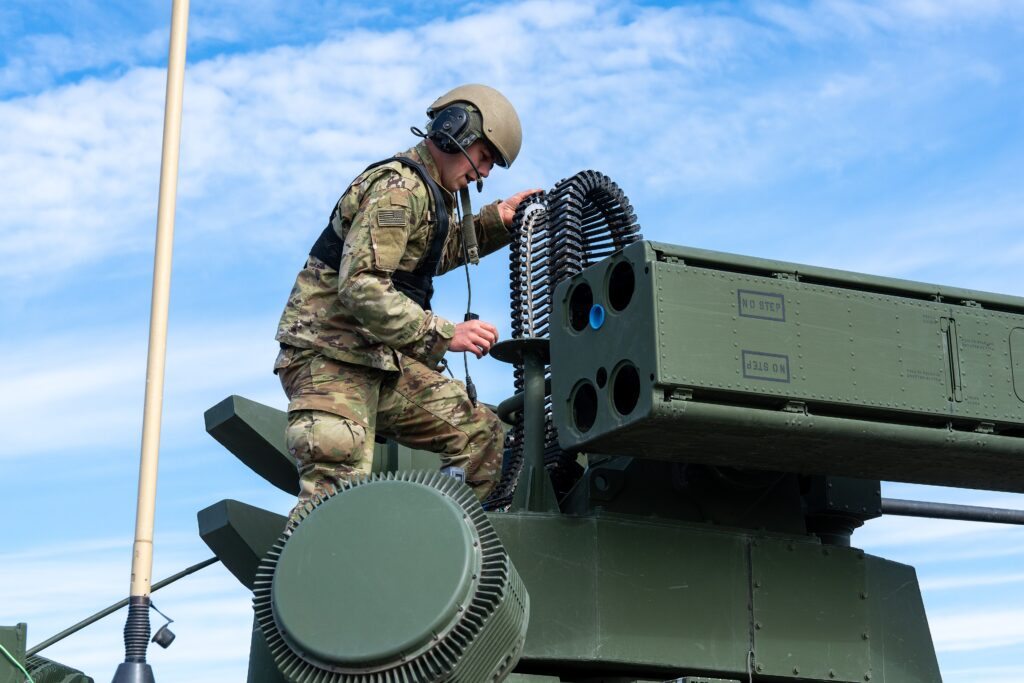
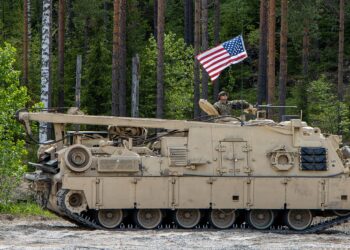
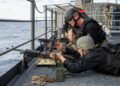
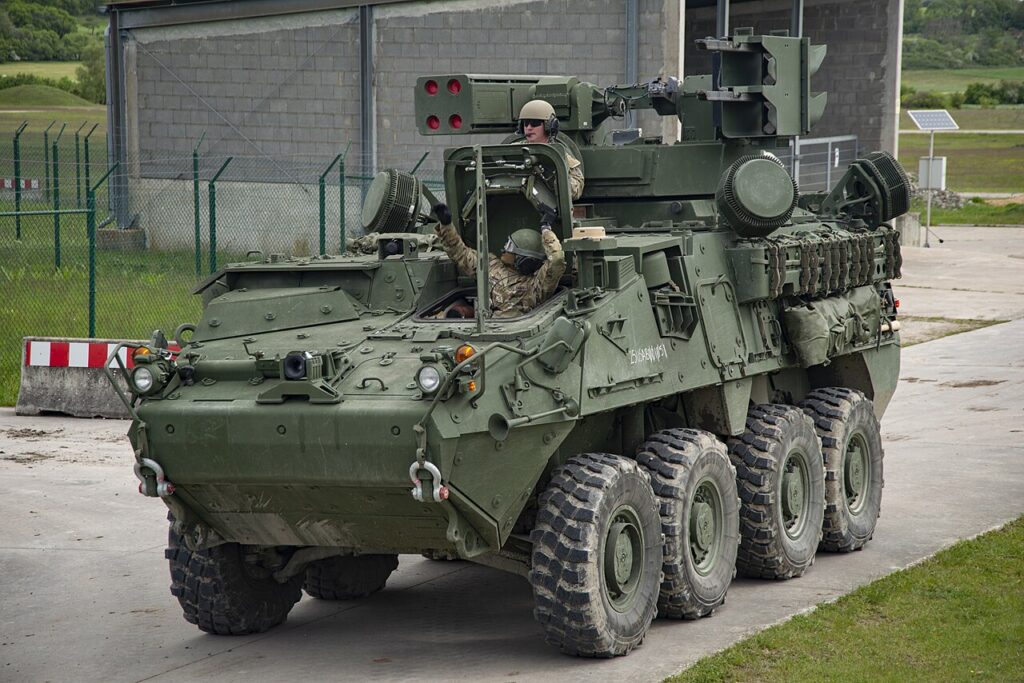
Formidable Shield 25 is a U.S. Sixth Fleet-led, multinational exercise focused on integrated air and missile defense. The live-fire training brings together naval, air and ground forces from 10 NATO allies and partners. The 5th Battalion, 4th Air Defense Artillery Regiment is supporting the exercise with short-range air defense capabilities. (U.S. Army photo by Capt. Alexander Watkins)
From M-SHORAD to SGT Stout
Formerly known as M-SHORAD, the vehicle was later named SGT Stout after Sgt. Mitchell W. Stout, a Vietnam War Medal of Honor recipient and an Army air defense artillery soldier. The name matters because it connects the system to the identity of the air defense branch, not merely to a procurement category.
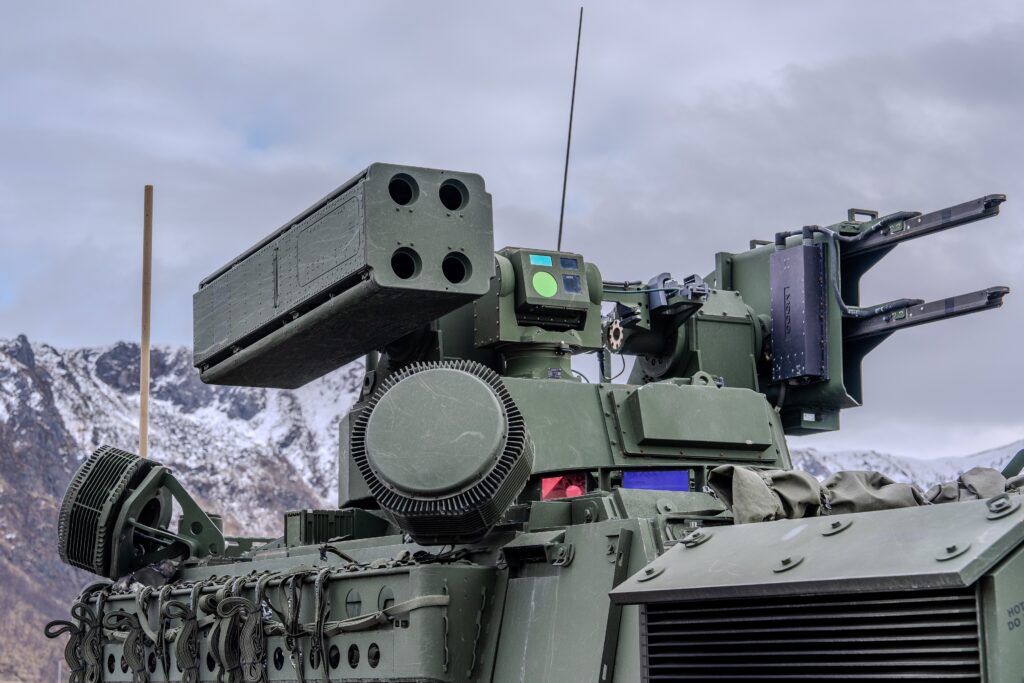
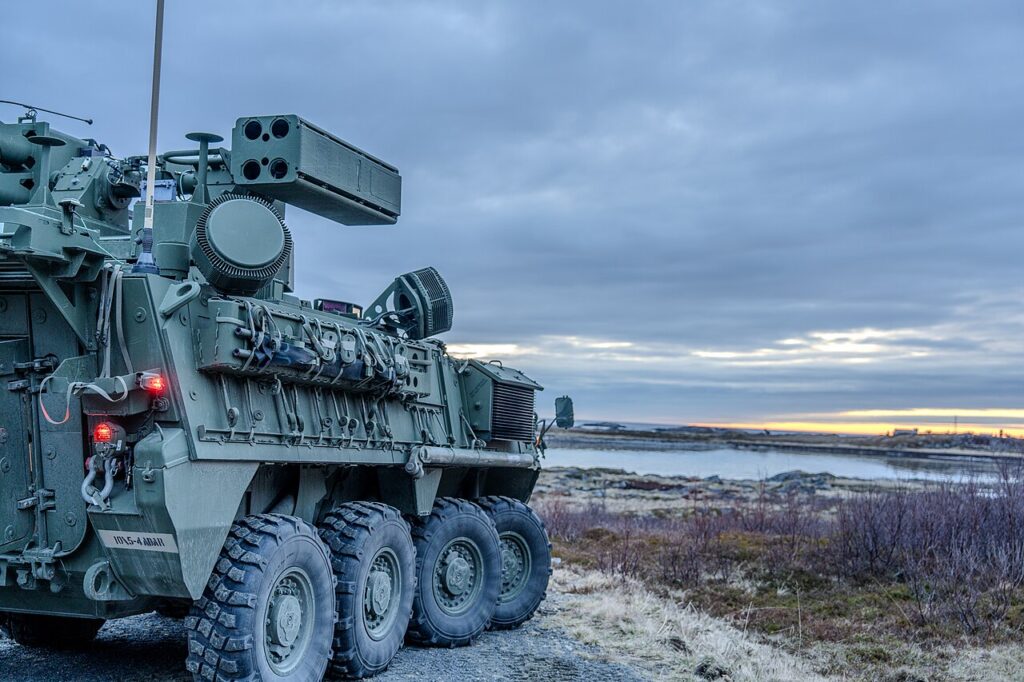
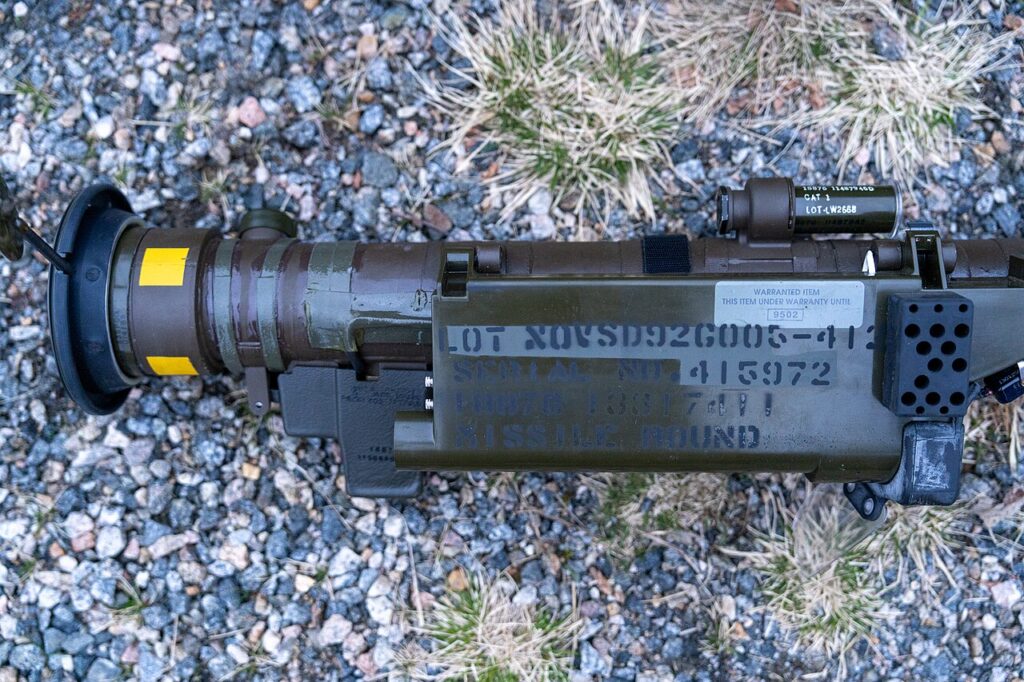
Operationally, SGT Stout is associated with a Stryker-based configuration that includes Stinger missiles, a 30 mm cannon, onboard radar and sensor systems. Leonardo DRS describes the M-SHORAD Mission Equipment Package as a capability that allows warfighters to detect, identify, track and defeat air threats while maneuvering with tactical units.
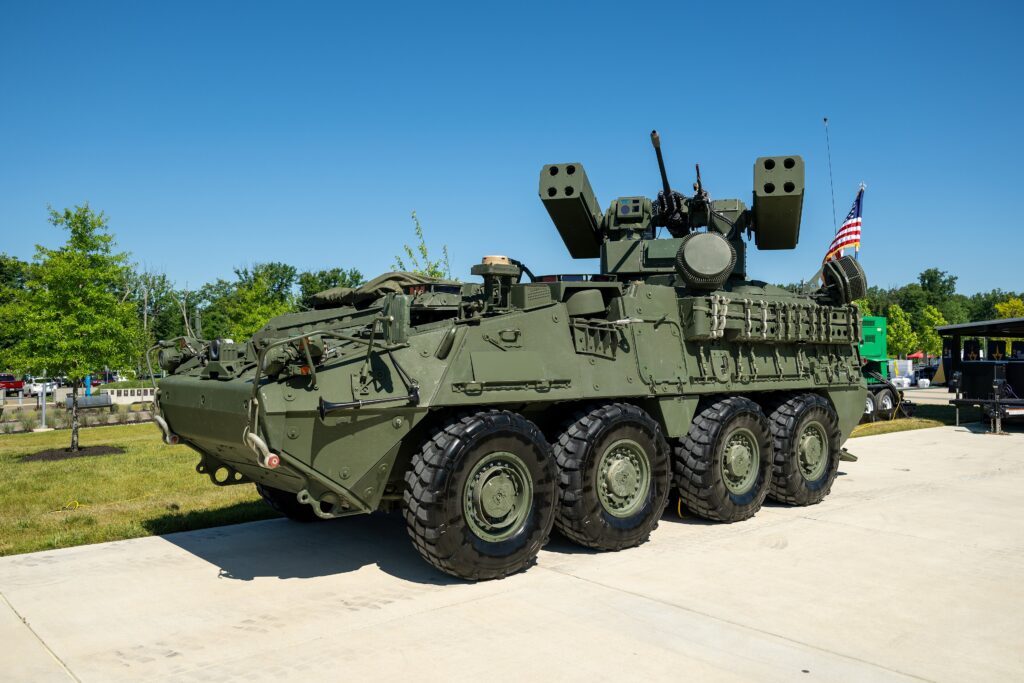
That wording is worth paying attention to. The central idea is not just “shooting down drones.” It is detection, identification, tracking and engagement while moving with the force. Modern air defense is no longer only about the weapon fired at the end. It is about the full chain that makes the shot possible.
The Low-Altitude Threat Has Changed
Recent conflicts have pushed short-range air defense back into the center of military discussion. Small unmanned aircraft can observe units, guide artillery fire and expose positions. Larger drones can carry weapons. Loitering munitions can search, wait and strike at a chosen moment. Cruise missile-type threats may use low-altitude flight profiles to complicate detection. Helicopters still matter when terrain, timing and surprise are used effectively.
No single system can answer all of these threats efficiently.
High-end interceptors may be necessary against advanced missile threats, but they can be economically inefficient against cheap drones. Guns may be useful against some close-range threats, but they cannot cover every scenario. Electronic warfare can help, but its effectiveness depends on the target, environment and technical conditions. Medium-range systems provide another layer, but they do not remove the need for protection closer to maneuver forces.
SGT Stout reflects the return of that lower layer. It is not glamorous in the same way as a strategic missile defense system, but its role may be tested more frequently in the kind of battlefield now emerging.
What SGT Stout Adds to Layered Air Defense
Layered air defense is not about one perfect weapon. It is about using different systems for different parts of the threat spectrum.
Patriot and Aegis-type systems sit in higher and wider layers. NASAMS and similar systems provide medium-range ground-based air defense. Systems such as SGT Stout sit closer to ground formations and focus on short-range, low-altitude threats. Each layer has limits, and each layer becomes more valuable when it is connected to the others.
A vehicle like SGT Stout therefore should not be judged only by its weapons. Its value depends on where it fits inside the wider network. Can it receive useful information from other sensors? Can it share data upward? Can it coordinate with other air defense assets? Can it act quickly enough when a drone or low-flying aircraft appears with little warning?
Those questions define the modern SHORAD problem.
The Formidable Shield Context
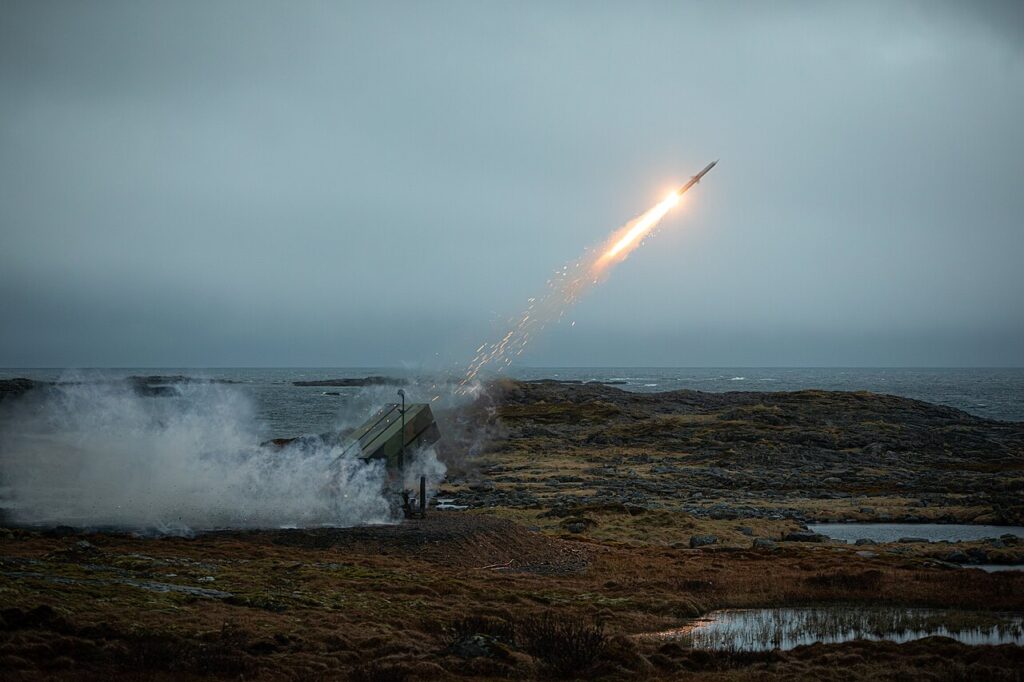
Although SGT Stout should be discussed as a system in its own right, its appearance during Formidable Shield 25 provided a useful example of how mobile short-range air defense fits into a broader NATO environment. During Formidable Shield in Norway, U.S. Army soldiers from the 5th Battalion, 4th Air Defense Artillery Regiment used SGT Stout in live-fire activity against target drones simulating low-altitude threats. The U.S. Army described the event as the first NATO live fire involving SGT Stout and Stinger missiles.
That exercise was not only about SGT Stout. It also included a wider integrated air and missile defense environment involving naval, air and land elements. Systems and platforms connected to the broader exercise context included NASAMS, NOMADS, HIMARS, F-35, P-8, radars and naval air defense assets.
Placed in that setting, SGT Stout represented the lower tactical layer of a much larger defensive architecture. NASAMS and NOMADS showed other ground-based air defense concepts. Naval systems contributed sea-based sensing and engagement capability. Aircraft expanded the operational picture. Command-and-control structures attempted to connect these pieces into one usable framework.
Why Mobility Is the Core Issue
Ground forces need air defense that can keep up with them. Static protection is useful for fixed bases, ports, airfields and command sites, but maneuver warfare creates a different demand.
A brigade moving through contested terrain cannot always wait for a fixed air defense umbrella to be built around it. Units need protection during movement, while dispersed, while repositioning and while operating under pressure. That is where mobile short-range air defense becomes more than an equipment category. It becomes a condition for survivability. SGT Stout answers part of this requirement by placing air defense capability on an armored vehicle platform already associated with mobility. The Stryker base gives it the ability to move with formations, while the mission equipment package gives it tools to respond to aerial threats.
Mobility, however, does not remove complexity. Crews still need training, identification discipline, reliable communications and integration with the wider air defense picture. A mobile system that cannot coordinate properly may create as many problems as it solves.
A Useful Signal for Future Ground Warfare
SGT Stout points toward a broader lesson: armies are relearning that the lower airspace is a battlefield of its own. For years, many Western forces operated under conditions where air superiority was either assumed or quickly achieved. That assumption reduced the urgency around short-range air defense. Drone warfare, loitering munitions and cruise missile threats have weakened that assumption.
Future ground forces will need protection that is layered, mobile and distributed. Long-range systems will remain essential, but they cannot be everywhere. Medium-range systems will remain important, but they cannot answer every close threat. Short-range mobile systems such as SGT Stout help fill the space between strategic protection and immediate tactical exposure.
A balanced view is necessary. SGT Stout is not a complete answer to the drone age. It is not a magic shield. It is one layer among many. Its importance comes from the gap it addresses: the need to protect moving ground forces against low-altitude threats in a battlefield where the sky close to the ground is no longer empty.
Sources:
- U.S. Army, “First to fire: Air defenders conduct first NATO live fire with SGT STOUT in Norway.”
- Leonardo DRS, “Maneuver Short Range Air Defense.”
- Leonardo DRS, “SGT STOUT Maneuver-Short Range Air Defense Data Sheet.”
- Kongsberg Defence & Aerospace, “KONGSBERG capabilities tested in NATO live-fire exercise.”