

There are moments in aerospace history where engineers move beyond improving existing systems and begin questioning the assumptions behind them. The HL-10 belongs to that category. At first glance, it does not resemble a conventional aircraft. There are no extended wings, no familiar aerodynamic layout that signals stability in the traditional sense. Instead, what stands out is a compact, almost unconventional structure that seems closer to an experimental object than a flight vehicle. Yet that shape was not accidental. It was built around a central question that defined an entire era of research: could a vehicle return from space and land safely without relying on wings?

A Program Built on Uncertainty
The HL-10 was part of NASA’s broader Lifting Body Program, a research effort focused on understanding atmospheric reentry and controlled descent. This was not about building a finished spacecraft, but about solving a problem that had not yet been fully understood. Reentry vehicles faced extreme thermal and aerodynamic challenges, and while ballistic capsules could survive descent, they lacked control and precision in landing.
Within this framework, the HL-10 was developed by Northrop Corporation under NASA’s guidance. It was one of several experimental designs, each testing different configurations of shape-driven lift. What made the HL-10 stand out was not just its geometry, but the level of refinement it eventually achieved compared to earlier, less stable prototypes.
When the Body Becomes the Wing
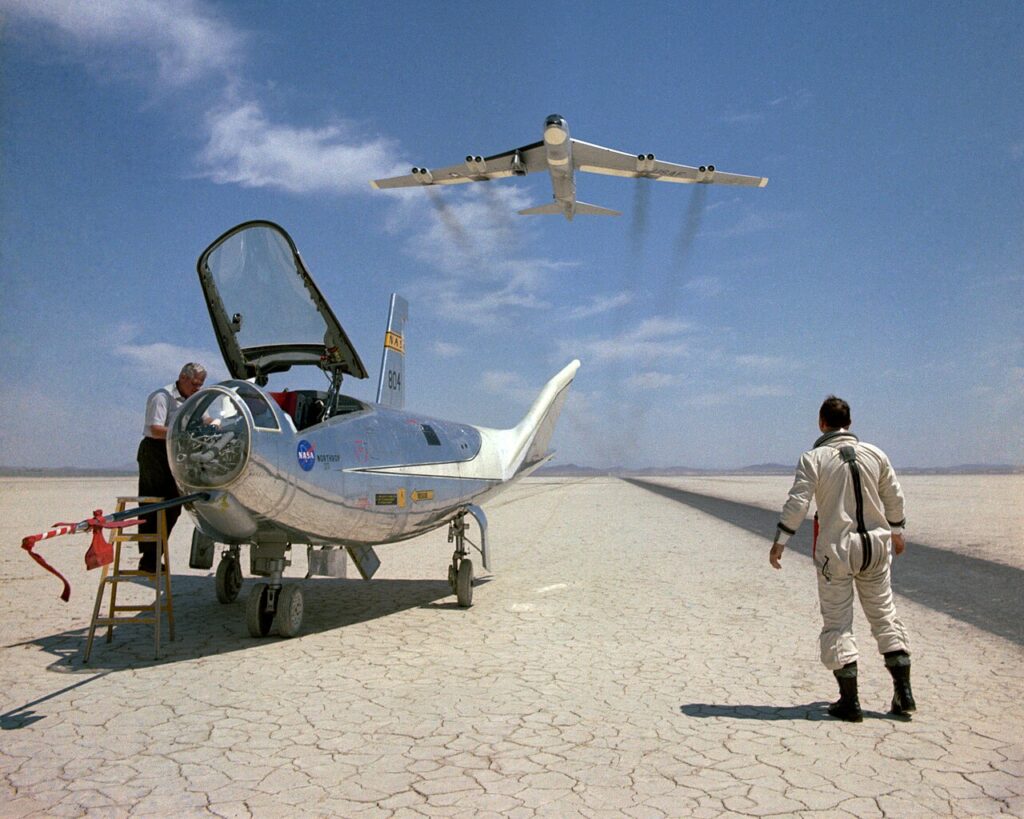
The defining feature of the HL-10 lies in how it generates lift. Instead of relying on wings as separate aerodynamic surfaces, the entire body contributes to lift generation. This approach changes the way forces are distributed across the vehicle, especially during high-speed descent.
At hypersonic and transonic speeds, this can offer advantages, particularly in terms of structural efficiency and thermal exposure. However, it also introduces new challenges that are not immediately obvious. As the vehicle transitions into lower speeds and denser atmospheric layers, stability becomes more difficult to manage.
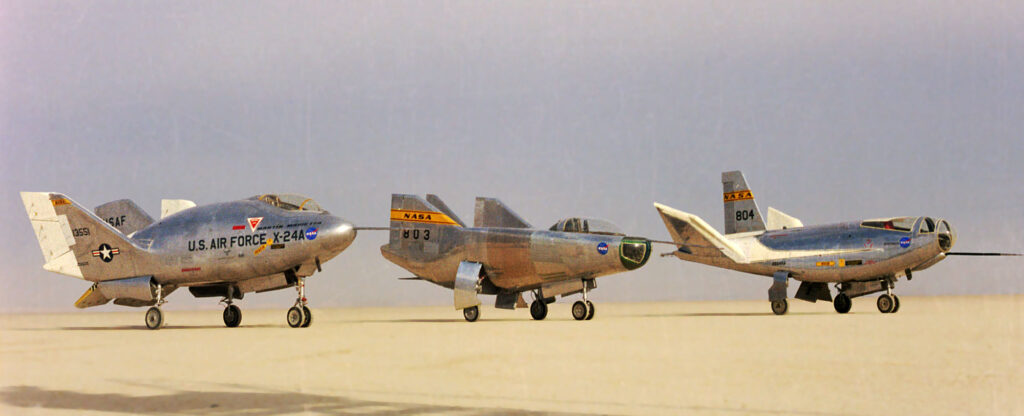
Traditional aircraft benefit from well-understood aerodynamic behaviors, while a lifting body must operate across multiple flight regimes using a single geometry. This creates a constant need for balance between control, drag, and lift, particularly during the final phases of descent where precision becomes critical.
Early Flights and Real-World Behavior
The HL-10’s early flight tests highlight the gap between theory and practice. Rather than beginning with powered missions, the vehicle was released from a B-52 carrier aircraft for glide testing. This allowed engineers to isolate aerodynamic behavior without introducing propulsion variables.
Even in this controlled setup, the first flights revealed instability issues, particularly related to airflow around the fins and control surfaces. These were not catastrophic failures, but they were significant enough to require adjustments. Small changes in fin configuration and structural details improved stability over time.
This iterative process is typical in experimental aerospace development. Early flights are rarely about success in a conventional sense. They are about identifying limits, understanding behavior, and gradually refining a system that initially exists closer to theory than to reliability.
Performance and Control in Balance
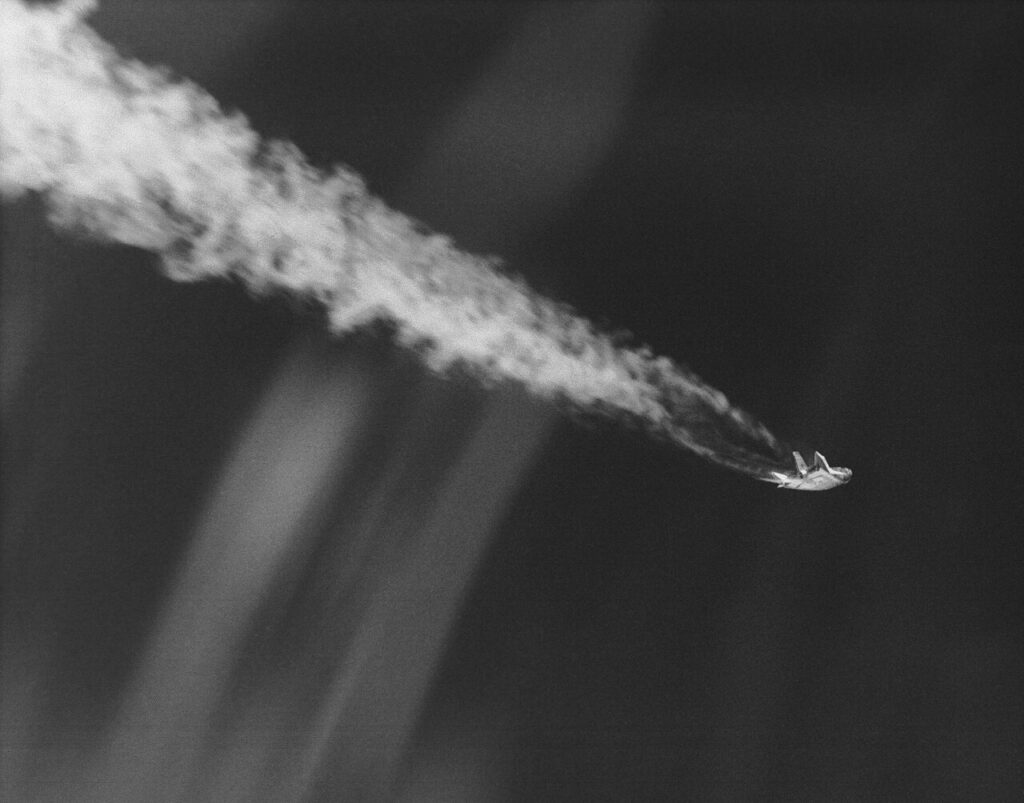
As testing progressed, the HL-10 began to demonstrate more consistent behavior. It eventually reached speeds close to Mach 1.86 and altitudes exceeding 90,000 feet, placing it among the higher-performing vehicles within the lifting body program.
More importantly, it developed a reputation for improved handling characteristics compared to earlier designs. This balance between performance and control is where the HL-10 becomes particularly relevant. Experimental vehicles often achieve high performance metrics but remain difficult to operate.
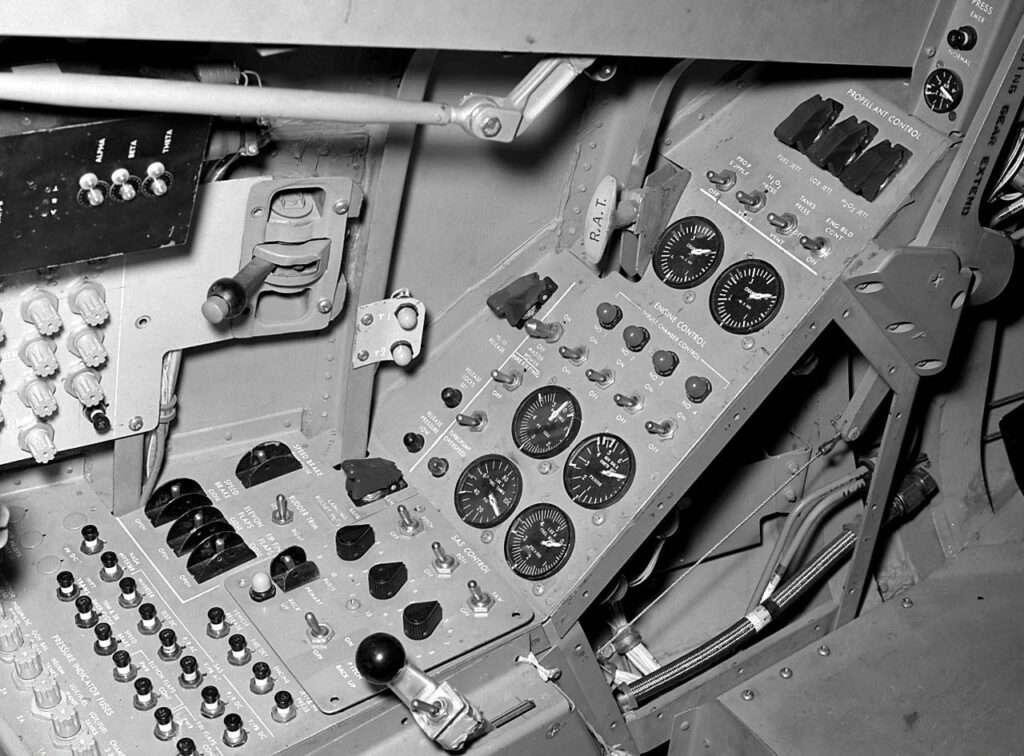
The HL-10, by contrast, provided usable flight data across a range of conditions, making it more than just a high-speed test platform. It became a reliable source of information on how lifting body designs could function in real scenarios.
Influence Beyond Its Own Program
It would be misleading to evaluate the HL-10 solely based on whether it led directly to a production system. Its impact is more indirect but still significant. During the early design phases of the Space Shuttle, lifting body configurations were seriously considered.
Although the final Shuttle design adopted a delta-wing approach due to structural and volumetric requirements, the data generated from lifting body programs played a role in shaping the understanding of reentry dynamics. The HL-10 contributed to this knowledge base by providing insight into energy management during descent.
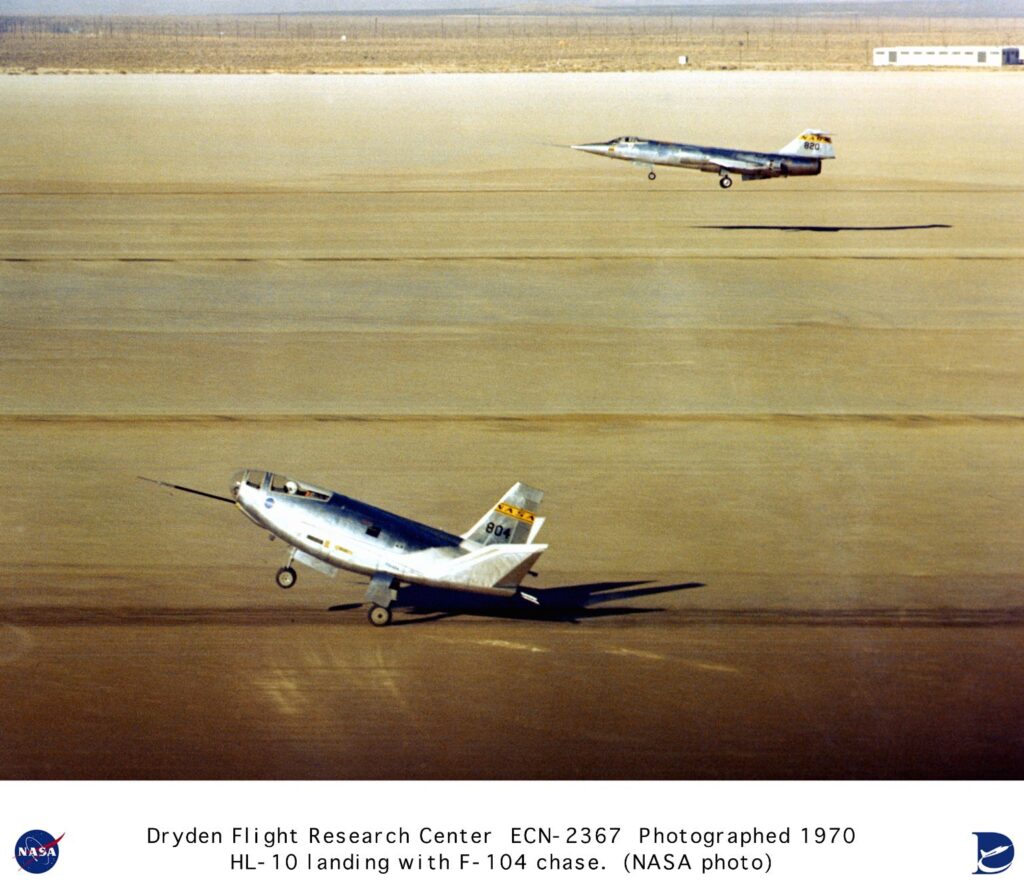
It also helped refine how pilots could manage control across different flight regimes, particularly during the transition from high-speed descent to runway landing. These contributions are not always visible, but they are embedded in later systems.
A Concept That Never Fully Disappeared
Looking at current developments in aerospace, it becomes clear that the ideas explored in the 1960s have not been abandoned. Concepts related to reusable vehicles, controlled reentry, and alternative aerodynamic configurations continue to appear in both government and private sector projects.
While modern designs differ in materials, propulsion systems, and mission profiles, the underlying principles show clear continuity. The HL-10 fits into this continuity as an early reference point, representing a phase where unconventional ideas were tested under real conditions.
Understanding Its Real Value
The HL-10 was never intended to be a final product, and evaluating it through that lens misses its purpose. Its role was to reduce uncertainty, to provide measurable data where previously there had only been assumptions.
In aerospace, this type of contribution is often less visible but no less important. Programs like this create the conditions that allow later systems to succeed. What the HL-10 demonstrates is a structured approach to innovation, one that prioritizes testing, iteration, and disciplined experimentation over immediate results.
Sources
- NASA – HL-10 Lifting Body Program archives
- NASA Armstrong Flight Research Center technical summaries