
Drill & Defense
Advertisement
  • Defense Industry
    • Industry News
    • Defense Companies
    • Defense Technologies
    • Market Analysis
  • Military Systems
    • Land Systems
    • Air Systems
    • Naval Systems
    • Electronic & Cyber Systems
  • Firearms
    • Pistols
    • Rifles
    • SMGs & Machine Guns
    • Ammunition
    • Optics & Accessories
  • Geopolitics
    • Global Security
    • Defense & Energy Strategy
    • Tech & Innovation Crossover
    • Trade & Export Controls
  • Energy & Security
    • Oil & Gas News
    • Energy Technologies
    • Market Trends & Analysis
  • History
    • Military History
    • Doctrines & Concepts
    • Strategic Turning Points
    • Legacy Systems & Structures
  • Knowledge Base
    • Firearms Basics
    • Defense Know-How
    • Energy Fundamentals
    • Regulations & Frameworks
  • About
  • Contact
  • Login
  • Register
No Result
View All Result
  • Defense Industry
    • Industry News
    • Defense Companies
    • Defense Technologies
    • Market Analysis
  • Military Systems
    • Land Systems
    • Air Systems
    • Naval Systems
    • Electronic & Cyber Systems
  • Firearms
    • Pistols
    • Rifles
    • SMGs & Machine Guns
    • Ammunition
    • Optics & Accessories
  • Geopolitics
    • Global Security
    • Defense & Energy Strategy
    • Tech & Innovation Crossover
    • Trade & Export Controls
  • Energy & Security
    • Oil & Gas News
    • Energy Technologies
    • Market Trends & Analysis
  • History
    • Military History
    • Doctrines & Concepts
    • Strategic Turning Points
    • Legacy Systems & Structures
  • Knowledge Base
    • Firearms Basics
    • Defense Know-How
    • Energy Fundamentals
    • Regulations & Frameworks
  • About
  • Contact
  • Login
  • Register
No Result
View All Result
Drill & Defense
No Result
View All Result
Home Military Systems

What Mattered in Defense Today: JLTVs to Canada and an ISREW Boost for Australia

August 11, 2025
in Military Systems, Land Systems
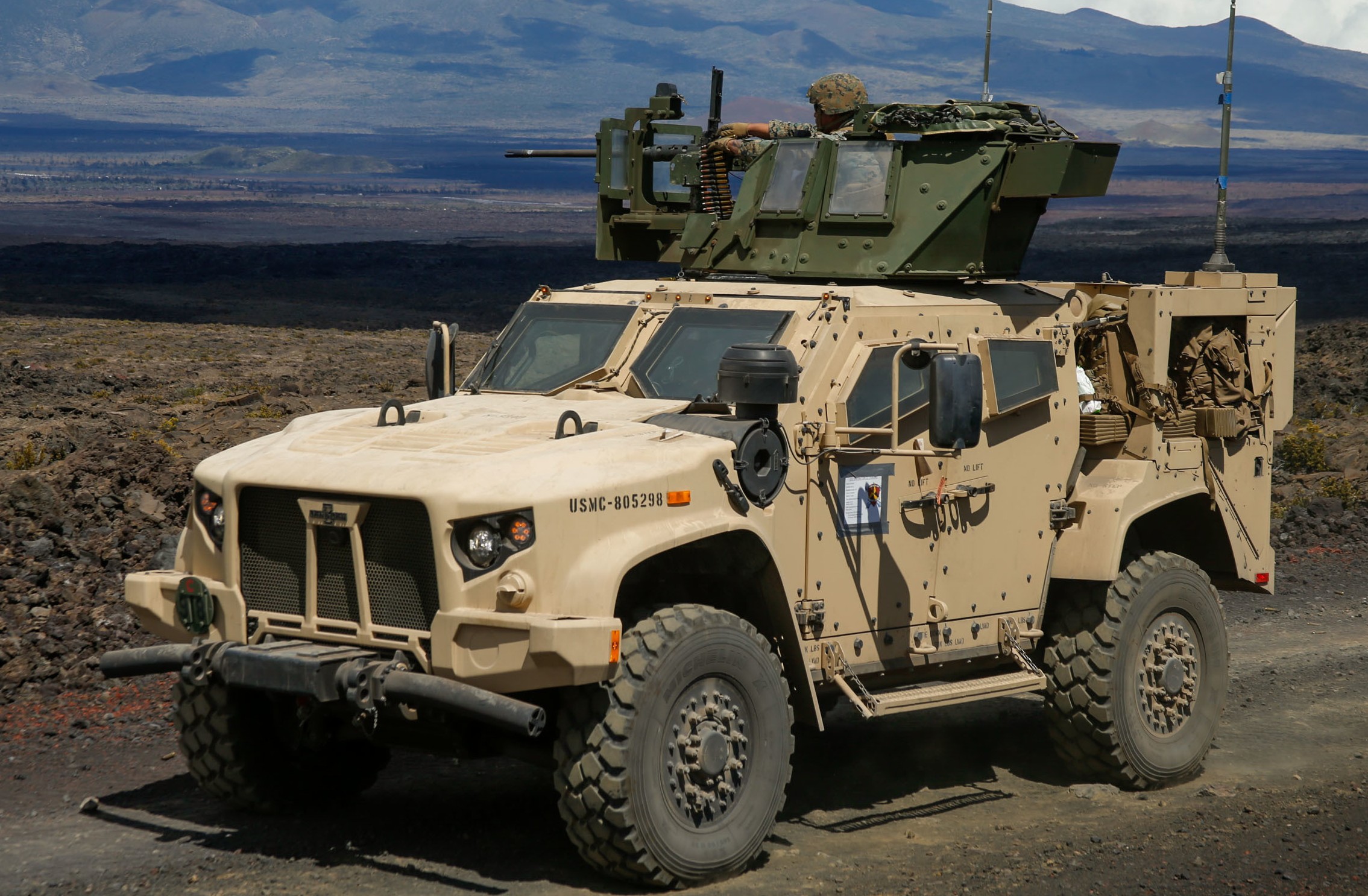
M1278_JLTV_Heavy_Guns_Carrier_(JLTV-HGC)

Staff Sgt. Olivia G. Knapp, Public domain, via Wikimedia Commons

Share on LinkedInShare on Twitter

Defense headlines can feel like noise. So let’s focus on two developments that actually move the needle: a U.S. green light for Joint Light Tactical Vehicles (JLTVs) to Canada, and a U.S.-approved upgrade to Australia’s intelligence, surveillance, reconnaissance, and electronic warfare (ISREW) fleet. Different programs, same theme—trusted partners doubling down on mobility, sensing, and survivability. If you follow procurement cycles, force design, or the evolving edge of land and air integration, this is your kind of day.

Canada’s JLTV Path: Mobility First, Survivability Always

Canada has long balanced expeditionary tasks with domestic missions that range from Arctic operations to disaster response. The JLTV package fits neatly into that reality. It’s not just a “new truck.” It’s a survivable mobility platform engineered to carry people and payloads through small-unit fights in contested environments, where artillery fragments and improvised threats are not theoretical. You care about the blend: mine-blast protection, up-armorable kits, and the ability to host radios, jammers, and remote weapon stations without breaking the suspension or power budget.

Why it matters now: land forces are relearning old lessons at scale. Mobility without protection has proved costly; protection without mobility has proved inflexible. JLTVs ride that line. For Canada, a measured buy—rather than a massive fleet overhaul—suggests targeted backfilling and capability refresh, not a wholesale rewrite of doctrine. Expect these vehicles to support high-readiness units first, align with existing LAV-centric formations, and slot into multinational exercises where interoperability is as important as armor thickness.

A quick practical lens for you: the value isn’t only tactical. It’s also sustainment and training. Canada benefits from a broad allied user base, predictable spares, and a mature upgrade pipeline. In a world of long lead times, that predictability is a feature.

US Army, Public domain, via Wikimedia Commons

Australia’s ISREW Upgrade: The Sensing Layer Is the Strategy

If JLTVs are the muscle and bone, ISREW is the nervous system. Australia has been investing steadily in sensors, processing, and electronic effects, and today’s approval points to the same trajectory: better collection, faster fusion, and more resilient electronic warfare across the kill chain. You’ll hear a lot of jargon around ISREW, so let’s keep it simple. This is about three things:

  1. Finding what matters (emitters, radios, radars, moving targets).
  2. Understanding it quickly (signals characterization, targeting quality, confidence levels).
  3. Acting with options (from non-kinetic disruption to precise kinetic effects).

Australia’s geography makes this more than a “nice to have.” Long ranges, wide maritime spaces, and a dense electromagnetic environment demand aircraft that can soak up signals, classify them, and push usable intel to shooters and commanders without delay. Upgrades typically include new sensors, mission systems, processing power, and hardened comms—all the plumbing that turns raw data into decisions. The payoff is immediate: better maritime domain awareness, better air defense cues, and tighter teaming with U.S. and Japanese assets in the region.

If you’re evaluating this as an industry watcher, look for two signals in the months ahead: integration milestones with existing command-and-control architectures, and how quickly Australia fields crews trained to exploit the new kit at tempo. Technology is the entry ticket; trained crews turn it into outcomes.

A Shared Thread: Interoperability Over Showmanship

It’s tempting to frame both moves as shopping decisions. They’re not. They’re interoperability choices. Canada’s JLTVs are part of a common allied vocabulary for protected mobility. Australia’s ISREW step is part of a common allied vocabulary for sensing and electromagnetic maneuver. If you’ve worked multinational exercises, you know how much easier life is when platforms speak the same language—physically (connectors, rails), digitally (data formats, crypto), and operationally (common TTPs).

That’s where these approvals earn their keep. They reduce the friction cost of coalition operations. They make joint planning faster. They shorten the time from “we think we see it” to “we’re doing something about it”—together.

What This Signals to Industry and Programs of Record

For primes and their supply chains, there are three takeaways you should not miss.

First, survivable mobility isn’t cyclical—it’s structural. Demand for protected, modular, C4ISR-ready vehicles will persist. The war-watchers know why: artillery lethality, loitering munitions, and pervasive sensors have rewritten risk calculations for light forces. If you deliver weight-sensitive protection, reliable power distribution, and open architectures that accept new radios or effectors, you’re aligned with the next decade.

Second, the sensing layer is where margins live. ISREW programs rarely grab headlines, but they drive sticky integration work: software drops, payload swaps, certification, and upgrades. Vendors who design for rapid payload evolution—while keeping integration effort reasonable—will win sustainment dollars that outlast initial buys.

Third, speed and credibility beat clever marketing. Both Canada and Australia prize delivery schedules, supportability, and proven interoperability over press-release hyperbole. If your solution takes an extra six months to certify with allied data standards, you’re not competitive, no matter how dazzling the brochure.

How This Plays on the Battlefield

Put yourself in the loop. A Canadian light infantry company, cross-attached with engineers and signals, needs to move under threat of indirect fire and drone observation. JLTVs with the right kits can change the commander’s options: faster tailgate drills, better protection on approach routes, power and space for counter-UAS equipment, and a chassis that can handle the weight without shedding components in the first 500 kilometers. That is not romantic. It’s the difference between getting to the fight in fighting shape—or not.

Now shift to the air picture. An Australian ISREW aircraft is on station, quietly cataloging emissions. A new radar lights up at an unexpected frequency hop. The mission system flags it, cross-references known libraries, and pushes a near-real-time track and characterization to allied shooters. There’s no movie moment. Just faster, cleaner decisions. And in a fight where windows of opportunity are measured in minutes, that’s decisive.

What to Watch Next

You don’t need rumor-mill commentary. You need signposts.

For Canada: watch contracting milestones, variant mix (General Purpose vs. Close Combat Weapons Carrier, etc.), and the pace of fielding to high-readiness units. If timelines hold and training pipelines scale smoothly, you’ll know the program is healthy.

For Australia: watch integration flight tests, software baselines, and the speed of data-link interoperability with U.S. and regional partners. If you see rapid incorporation into major exercises, the upgrade is delivering operational value, not just technical promise.

For both: keep an eye on sustainment models. Availability rates and mean time between failures will tell you whether these capabilities show up ready on day three of an exercise—or sit in a hangar while maintenance hunts parts.

A Quick Word on Risk

No program is without trade-offs. JLTVs face the eternal tension between protection and weight, especially as users add comms, counter-UAS, and remote weapon stations. The best mitigation is strict configuration control and weight budgeting from day one. ISREW upgrades face a different risk: software complexity and integration churn. The mitigation there is disciplined spiral development and early operator involvement in test events, so crews train on what they’ll actually fly.

Neither risk is exotic. Both are manageable with boring, rigorous program management—the kind that keeps capability where it belongs: available, interoperable, and relevant.

Sources

  • U.S. Army Program Executive Office (PEO) Combat Support & Combat Service Support – JLTV program materials (background and interoperability notes), accessed August 2025.
  • Australian Department of Defence – public statements and program updates on airborne ISR/EW initiatives, accessed August 2025.


 

Previous Post

Iraq–Turkey Oil Flows: What a Restart Would Mean for Energy Markets and Regional Security

Next Post

Colt 1911: Why This Century-Old Pistol Still Turns Heads

Related Posts

1280px-5-4_ADAR_Supports_Formidable_Shield_25_
Military Systems

SGT Stout: M-SHORAD and Mobile Air Defense

May 16, 2026
X-48B_aircraft
Military Systems

X-48B: The Small Experimental Aircraft Behind a Much Bigger Aviation Question

May 6, 2026
Bell Boeing V-22 Osprey
Military Systems

Bell Boeing V-22 Osprey: Between Innovation and Controversy

May 4, 2026
Operation Enduring Freedom M60A1
Military Systems

M60 AVLB Specifications and Combat Role: Bridging Capability in Armored Warfare

April 30, 2026
379th ECES EOD controlled detonation
Military Systems

IED Warfare and the Systems Built to Survive It

April 28, 2026
SR-71B_trainer_on_1000th_flight_1983
Military Systems

SR-71A Blackbird: Speed as Strategy, Not Just Performance

April 20, 2026
Next Post
Pistol_used_by__Squeaky__Fromme

Colt 1911: Why This Century-Old Pistol Still Turns Heads

  • Trending
  • Latest
Operation Enduring Freedom

What Exactly Is a Private Military Company (PMC)?

September 6, 2025
Blackwater PMC

After Blackwater: How PMCs Evolved, Professionalized, and Fragmented

September 13, 2025
MG42-1

MG42 Machine Gun: WWII History, Specifications and Battlefield Impact

April 21, 2026
Blackwater PMC

Inside Iraq’s Security Market: How Private Power Shapes a Fragile State

October 6, 2025
General Orde Wingate_Chindit_leaders_Burma_1944_IWM_MH_7873

Orde Wingate: The Difficult Legacy of an Irregular Commander

May 18, 2026
1280px-5-4_ADAR_Supports_Formidable_Shield_25_

SGT Stout: M-SHORAD and Mobile Air Defense

May 16, 2026
HEL_MD_Beam_Director

Laser Weapons: The New Layer in Modern Air Defense

May 14, 2026
EU Dual Use

EU Dual-Use Regulation: How Civilian Technology Becomes a Matter of Export Control

May 13, 2026

Recent Articles

General Orde Wingate_Chindit_leaders_Burma_1944_IWM_MH_7873

Orde Wingate: The Difficult Legacy of an Irregular Commander

May 18, 2026
1280px-5-4_ADAR_Supports_Formidable_Shield_25_

SGT Stout: M-SHORAD and Mobile Air Defense

May 16, 2026
HEL_MD_Beam_Director

Laser Weapons: The New Layer in Modern Air Defense

May 14, 2026
EU Dual Use

EU Dual-Use Regulation: How Civilian Technology Becomes a Matter of Export Control

May 13, 2026
Drill & Defense

Drill & Defense is an independent defense and security platform covering firearms, military technology, geopolitics, energy security, and industry developments. We provide clear, structured, and practical insight for professionals, companies, and readers following the evolving defense landscape worldwide.

Follow Us

Browse by Category

  • Air Systems
  • Defense & Energy Strategy
  • Defense Industry
  • Defense Know-How
  • Defense Technologies
  • Doctrines & Concepts
  • Energy & Security
  • Energy Fundamentals
  • Energy Technologies
  • Firearms
  • Geopolitics
  • Global Security
  • History
  • Industry News
  • Knowledge Base
  • Land Systems
  • Legacy Systems & Structures
  • Market Analysis
  • Market Trends & Analysis
  • Military History
  • Military Systems
  • Naval Systems
  • Oil & Gas News
  • Pistols
  • Regulations & Frameworks
  • Rifles
  • SMGs & Machine Guns
  • Strategic Turning Points
  • Tech & Innovation Crossover

Recent Articles

General Orde Wingate_Chindit_leaders_Burma_1944_IWM_MH_7873

Orde Wingate: The Difficult Legacy of an Irregular Commander

May 18, 2026
1280px-5-4_ADAR_Supports_Formidable_Shield_25_

SGT Stout: M-SHORAD and Mobile Air Defense

May 16, 2026

© 2026 Drill & Defense. All rights reserved. Independent insights on firearms, defense, and energy. For business inquiries: info@drillanddefense.com | PRIVACY POLICY | COOKIE POLICY | TERMS AND CONDITIONS

Manage Consent

We use cookies to improve your experience. You can accept or refuse cookies; however, some features may not function properly without your consent.

Functional Always active
The technical storage or access is strictly necessary for the legitimate purpose of enabling the use of a specific service explicitly requested by the subscriber or user, or for the sole purpose of carrying out the transmission of a communication over an electronic communications network.
Preferences
The technical storage or access is necessary for the legitimate purpose of storing preferences that are not requested by the subscriber or user.
Statistics
The technical storage or access that is used exclusively for statistical purposes. The technical storage or access that is used exclusively for anonymous statistical purposes. Without a subpoena, voluntary compliance on the part of your Internet Service Provider, or additional records from a third party, information stored or retrieved for this purpose alone cannot usually be used to identify you.
Marketing
The technical storage or access is required to create user profiles to send advertising, or to track the user on a website or across several websites for similar marketing purposes.
  • Manage options
  • Manage services
  • Manage {vendor_count} vendors
  • Read more about these purposes
View preferences
  • {title}
  • {title}
  • {title}
No Result
View All Result
  • Defense Industry
    • Industry News
    • Defense Companies
    • Defense Technologies
    • Market Analysis
  • Military Systems
    • Land Systems
    • Air Systems
    • Naval Systems
    • Electronic & Cyber Systems
  • Firearms
    • Pistols
    • Rifles
    • SMGs & Machine Guns
    • Ammunition
    • Optics & Accessories
  • Geopolitics
    • Global Security
    • Defense & Energy Strategy
    • Tech & Innovation Crossover
    • Trade & Export Controls
  • Energy & Security
    • Oil & Gas News
    • Energy Technologies
    • Market Trends & Analysis
  • History
    • Military History
    • Doctrines & Concepts
    • Strategic Turning Points
    • Legacy Systems & Structures
  • Knowledge Base
    • Firearms Basics
    • Defense Know-How
    • Energy Fundamentals
    • Regulations & Frameworks
  • About
  • Contact
  • Login
  • Register

© 2026 Drill & Defense. All rights reserved. Independent insights on firearms, defense, and energy. For business inquiries: info@drillanddefense.com | PRIVACY POLICY | COOKIE POLICY | TERMS AND CONDITIONS