
Drill & Defense
Advertisement
  • Defense Industry
    • Industry News
    • Defense Companies
    • Defense Technologies
    • Market Analysis
  • Military Systems
    • Land Systems
    • Air Systems
    • Naval Systems
    • Electronic & Cyber Systems
  • Firearms
    • Pistols
    • Rifles
    • SMGs & Machine Guns
    • Ammunition
    • Optics & Accessories
  • Geopolitics
    • Global Security
    • Defense & Energy Strategy
    • Tech & Innovation Crossover
    • Trade & Export Controls
  • Energy & Security
    • Oil & Gas News
    • Energy Technologies
    • Market Trends & Analysis
  • History
    • Military History
    • Doctrines & Concepts
    • Strategic Turning Points
    • Legacy Systems & Structures
  • Knowledge Base
    • Firearms Basics
    • Defense Know-How
    • Energy Fundamentals
    • Regulations & Frameworks
  • About
  • Contact
  • Login
  • Register
No Result
View All Result
  • Defense Industry
    • Industry News
    • Defense Companies
    • Defense Technologies
    • Market Analysis
  • Military Systems
    • Land Systems
    • Air Systems
    • Naval Systems
    • Electronic & Cyber Systems
  • Firearms
    • Pistols
    • Rifles
    • SMGs & Machine Guns
    • Ammunition
    • Optics & Accessories
  • Geopolitics
    • Global Security
    • Defense & Energy Strategy
    • Tech & Innovation Crossover
    • Trade & Export Controls
  • Energy & Security
    • Oil & Gas News
    • Energy Technologies
    • Market Trends & Analysis
  • History
    • Military History
    • Doctrines & Concepts
    • Strategic Turning Points
    • Legacy Systems & Structures
  • Knowledge Base
    • Firearms Basics
    • Defense Know-How
    • Energy Fundamentals
    • Regulations & Frameworks
  • About
  • Contact
  • Login
  • Register
No Result
View All Result
Drill & Defense
No Result
View All Result
Home History

The Battle of Mogadishu: A Strategic Review of Operation Gothic Serpent

February 26, 2026
in History, Strategic Turning Points
The Battle of Mogadishu: A Strategic Review of Operation Gothic Serpent

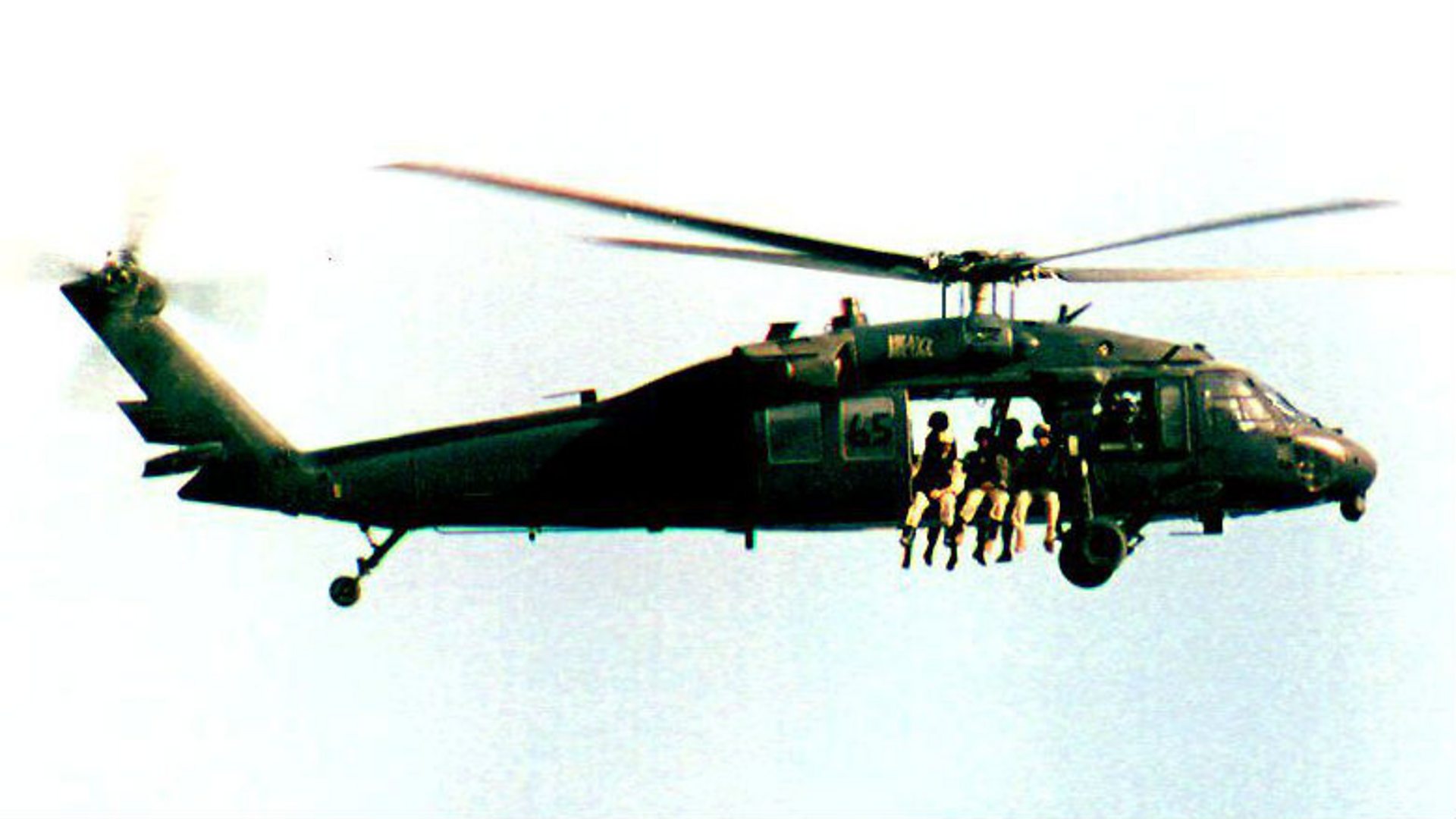
Battle Of Mogadishu. Kayyyiiiiiii, CC BY-SA 4.0

Share on LinkedInShare on Twitter

In early October 1993, U S and United Nations forces engaged in what would become one of the most intensely examined urban combat operations of the late twentieth century. While popular culture often refers to this engagement simply as Black Hawk Down, in military terms it was part of a broader mission known as Operation Gothic Serpent, a tactical effort to capture high value militia leaders in Mogadishu, Somalia.

This post offers a structured but narrative oriented review of the events, underlying assumptions, operational dynamics, and the broader implications that emerged for international military engagements. It synthesizes authoritative non Turkish sources and doctrinal analyses, presenting a balanced view for readers interested in modern conflict studies without falling into sensationalism.

Context and Strategic Objectives

By 1993, Somalia had become a focal point of international concern. A protracted civil war had created humanitarian crises, prompting a United Nations humanitarian mission. U S forces entered alongside UN peacekeepers with the aim of stabilizing the situation. As militia attacks on UN personnel increased, U S planners shifted focus to degrading the capacity of Somali warlord Mohamed Farrah Aidid’s forces. The core objective of Operation Gothic Serpent was simple in concept: capture two of Aidid’s key lieutenants during a targeted overnight raid.

At the outset, the mission was intended to last no more than an hour. Planners expected that elite U S Army Rangers and Delta Force operators could penetrate the compound, secure the targets, and withdraw before insurgent elements could mount organized resistance. Such confidence reflected broader assumptions about technological advantage, speed, and urban operational control.
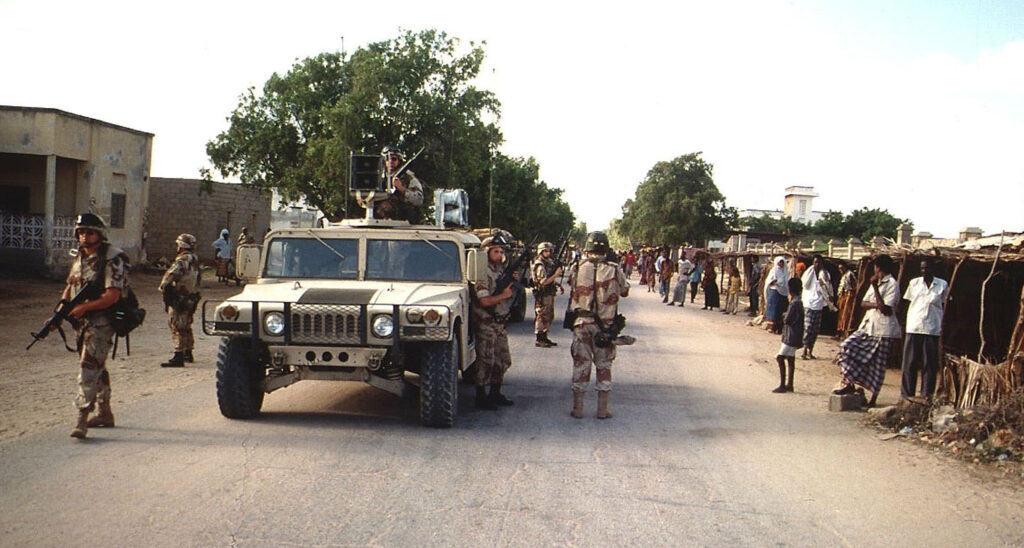
US Army soldiers coming down a street in Kismayo, Somalia. The US Army uses a M998 High-Mobility Multipurpose Wheeled Vehicle (HMMWV) to broadcast messages to the Somali locals that line the street on both sides. This mission is in direct support of Operation Restore Hope.

The Mission Unfolds

On the afternoon of October 3, Task Force Ranger initiated the raid with an aerial insertion into Mogadishu’s congested urban terrain. Initial actions went according to plan: forces reached the target and detained the specified individuals. However, as ground convoys prepared to extract the team, conditions on the streets around the compound deteriorated rapidly. Civilians and armed militia forces converged, complicating movement and terrain control.

The pivotal moment occurred when two UH 60 Black Hawk helicopters were struck by rocket propelled grenades fired from the ground. The first helicopter, callsign Super Six One, was hit and crashed in hostile territory. Shortly afterwards, Super Six Four suffered a similar fate, forcing surviving crew and operators to defend the crash sites under intense pressure.

Escalation and Combat Dynamics

Once the helicopters were downed, the nature of the operation shifted dramatically. What had been a targeted capture mission transformed into a prolonged defensive engagement. Units that had planned for rapid extraction found themselves isolated in an urban environment where militia fighters held greater familiarity with streets and alleyways. Efforts to regroup and extricate the force required continuous, close quarters fighting. The battle extended well into the night and into the morning of October 4.
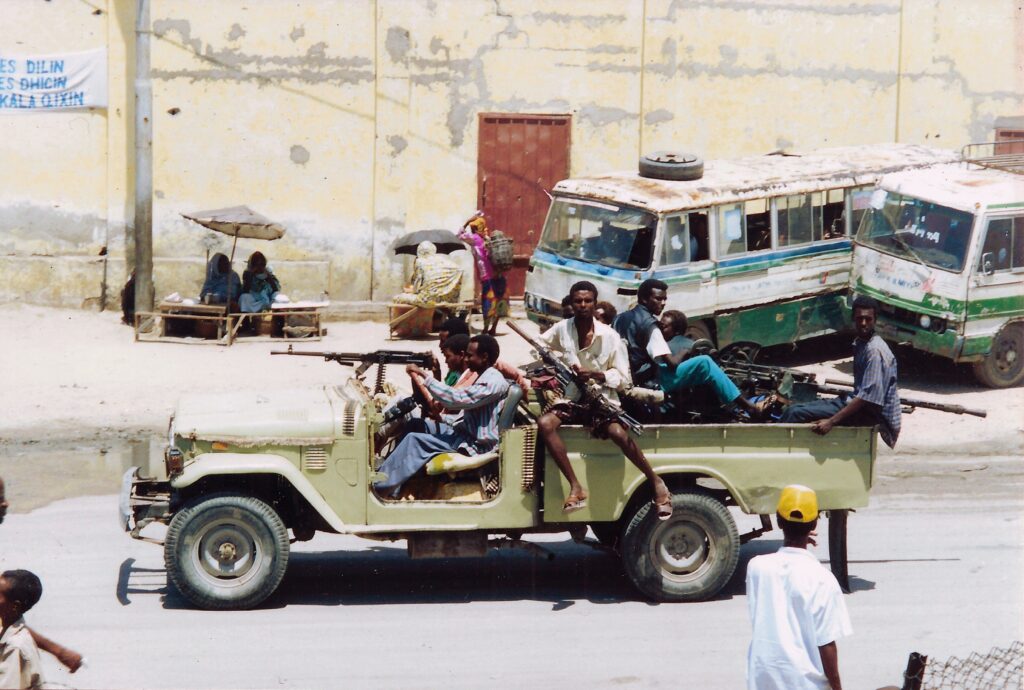
CT Snow from Hsinchu, Taiwan, CC BY 2.0 https://creativecommons.org/licenses/by/2.0

Rescue attempts were made by convoys of U S, Pakistani, and Malaysian troops under the UN flag, but progress was slow and costly. Urban blockages and persistent fire made organized movement difficult. Over an estimated 15 hour period, soldiers fought to secure crash sites, evacuate the wounded, and reach extraction points. Ultimately, survivors were rescued, but at significant cost.

Costs and Immediate Outcomes

Casualty figures highlight the intensity of the engagement. Eighteen American soldiers were killed and more than seventy wounded, marking the deadliest single combat event for U S forces since the Vietnam War. Estimates of Somali casualties vary widely, ranging from several hundred to well over a thousand when counting militia fighters and civilians.
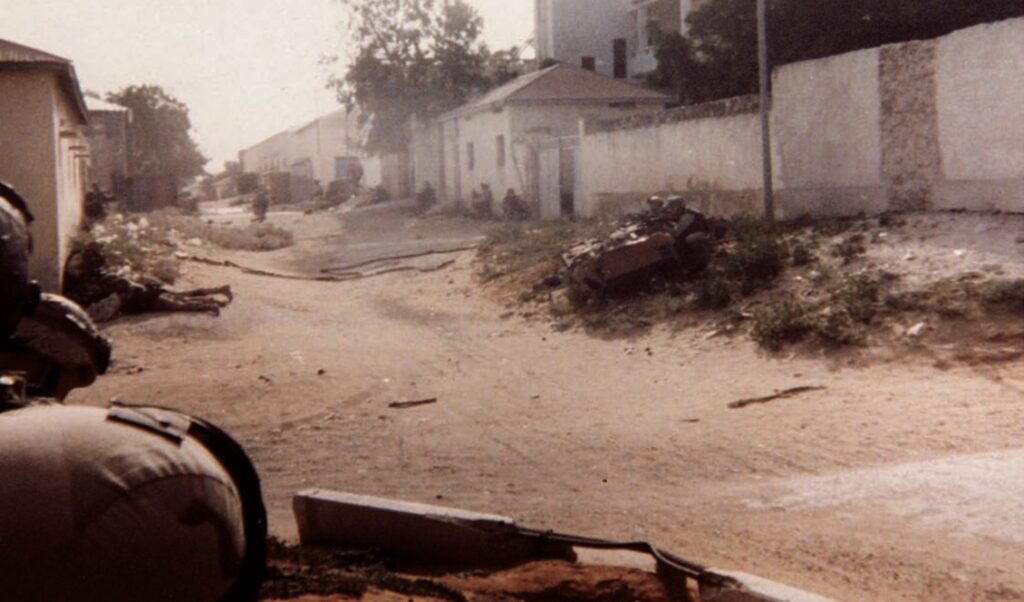
Members of Task Force Ranger under fire in Somalia.

Beyond human cost, the battle had psychological and political ramifications. Footage showing the bodies of U S soldiers dragged through Mogadishu’s streets sparked global media coverage and intensified debate on foreign intervention policies. Within months, UN leadership reassessed its role, leading to the withdrawal of international forces from Somalia by early 1995.

Operational and Strategic Lessons

In the years since, military analysts have evaluated the Battle of Mogadishu from multiple perspectives. Some critiques focus on planning and intelligence shortcomings: assumptions about enemy capabilities, over reliance on technology, and underestimation of urban resistance all contributed to the mission’s escalation. Subsequent doctrinal studies have emphasized the importance of urban warfare preparedness, clearer command control structures, and a nuanced understanding of local sociopolitical dynamics.

The operation also sparked debate about the relevance of conventional military power in complex environments where non state actors use irregular tactics. In urban settings characterized by dense populations and limited maneuver space, conventional superiority does not necessarily translate into tactical advantage. The Mogadishu engagement became a case study in the limits of force projection without comprehensive situational awareness and adaptive tactics.
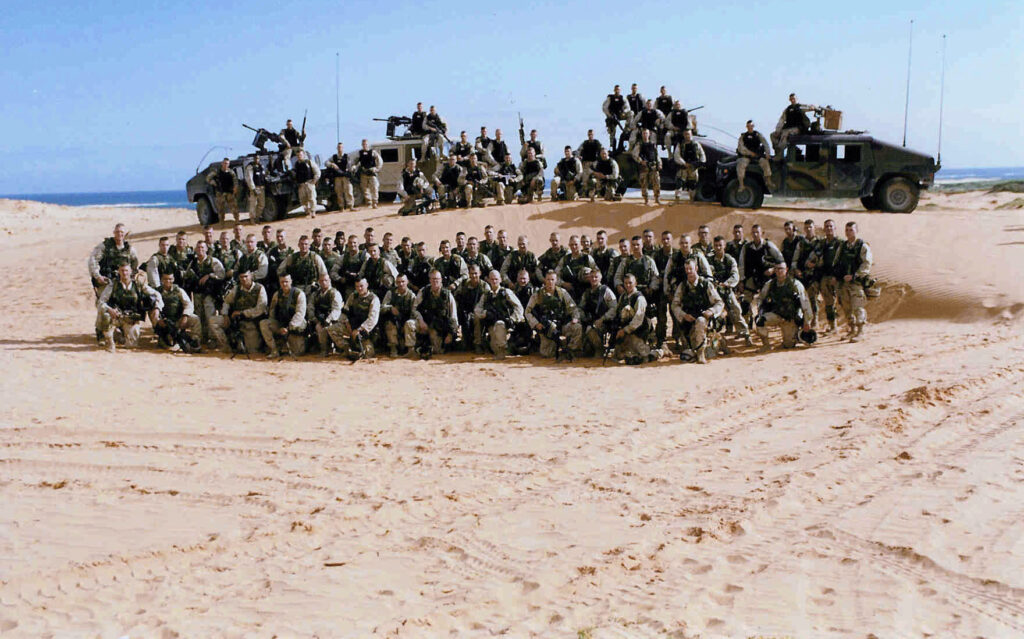
Bravo Company, 3rd Battalion of the 75th Ranger Regiment in Somalia, 1993.

Strategically, the engagement influenced U S foreign policy approaches to peacekeeping and intervention. The reluctance to commit large numbers of troops in similar missions, a phenomenon sometimes referred to as the Somalia Syndrome, can be traced in part to the political impact of this battle and its portrayal in international media.

Reflections on Urban Conflict and International Practice

From an institutional viewpoint, the Battle of Mogadishu underscores the challenges inherent in multinational operations, especially where humanitarian goals intersect with tactical military imperatives. The necessity to adapt doctrine, training, and interagency coordination remains clear. Urban warfare, with its complex interplay of civilian presence and irregular forces, demands flexible rules of engagement, real time intelligence, and an appreciation for cultural and social dynamics.

In the broader narrative of post Cold War military engagements, Mogadishu is often cited alongside conflicts in the Balkans and the Middle East as a formative moment shaping how Western militaries approach peace support operations. It illustrates that tactical excellence alone is insufficient without comprehensive strategic planning that accounts for political, social, and operational realities.

Sources

Biddle, Stephen. Nonstate Warfare: The Military Methods of Guerillas, Warlords, and Militias. Princeton University Press.
Neville, Leigh. Day of the Rangers. Osprey Publishing.
Britannica, Battle of Mogadishu, Description and Facts.

Previous Post

The Uzi: Inside the Story of Israel’s Legendary SMG

Next Post

The Warfare Doctrine of Eliminations inthe Opening Strikes of Military Conflicts

Related Posts

D-Day
History

D-Day Beyond the Beaches: Logistics, Energy and Security Lessons

June 6, 2026
Battle of Hürtgen Forest: When Terrain Became the Enemy
History

Battle of Hürtgen Forest: When Terrain Became the Enemy

May 20, 2026
General Orde Wingate_Chindit_leaders_Burma_1944_IWM_MH_7873
History

Orde Wingate: The Difficult Legacy of an Irregular Commander

May 18, 2026
Vietnam War
History

Vietnam War and the Limits of Conventional Power

May 11, 2026
Delta-Force
History

Delta Force: Beyond the Myth and Into Modern Special Operations

May 8, 2026
British, French and Italian wounded soldiers in a group
History

Britain’s Recruitment System in the First World War: Numbers, Pressure, and the Architecture of Persuasion

May 1, 2026
Next Post
The Warfare Doctrine of Eliminations inthe Opening Strikes of Military Conflicts

The Warfare Doctrine of Eliminations inthe Opening Strikes of Military Conflicts

  • Trending
  • Latest
Operation Enduring Freedom

What Exactly Is a Private Military Company (PMC)?

September 6, 2025
Blackwater PMC

After Blackwater: How PMCs Evolved, Professionalized, and Fragmented

September 13, 2025
MG42-1

MG42 Machine Gun: WWII History, Specifications and Battlefield Impact

April 21, 2026
Beretta 92FS vs Beretta M9: Is There a Real Difference?

Beretta 92FS vs Beretta M9: Is There a Real Difference?

July 19, 2025
D-Day

D-Day Beyond the Beaches: Logistics, Energy and Security Lessons

June 6, 2026
Ukraine War

Ukraine’s Ground War: Rifles, Machine Guns, Trenches, and the Soldier Still Holding the Line

June 4, 2026
IWI Tavor X95

IWI Tavor X95: A Bullpup Rifle Shaped by Urban Combat Logic

June 2, 2026
Demining_Vehicles_in_Ukraine

Demining Vehicles in Ukraine: Heavy Machines for a War That Stays Underground

June 1, 2026

Recent Articles

D-Day

D-Day Beyond the Beaches: Logistics, Energy and Security Lessons

June 6, 2026
Ukraine War

Ukraine’s Ground War: Rifles, Machine Guns, Trenches, and the Soldier Still Holding the Line

June 4, 2026
IWI Tavor X95

IWI Tavor X95: A Bullpup Rifle Shaped by Urban Combat Logic

June 2, 2026
Demining_Vehicles_in_Ukraine

Demining Vehicles in Ukraine: Heavy Machines for a War That Stays Underground

June 1, 2026
Drill & Defense

Drill & Defense is an independent defense and security platform covering firearms, military technology, geopolitics, energy security, and industry developments. We provide clear, structured, and practical insight for professionals, companies, and readers following the evolving defense landscape worldwide.

Follow Us

Browse by Category

  • Air Systems
  • Defense & Energy Strategy
  • Defense Industry
  • Defense Know-How
  • Defense Technologies
  • Doctrines & Concepts
  • Energy & Security
  • Energy Fundamentals
  • Energy Technologies
  • Firearms
  • Geopolitics
  • Global Security
  • History
  • Industry News
  • Knowledge Base
  • Land Systems
  • Legacy Systems & Structures
  • Market Analysis
  • Market Trends & Analysis
  • Military History
  • Military Systems
  • Naval Systems
  • Oil & Gas News
  • Pistols
  • Regulations & Frameworks
  • Rifles
  • SMGs & Machine Guns
  • Strategic Turning Points
  • Tech & Innovation Crossover

Recent Articles

D-Day

D-Day Beyond the Beaches: Logistics, Energy and Security Lessons

June 6, 2026
Ukraine War

Ukraine’s Ground War: Rifles, Machine Guns, Trenches, and the Soldier Still Holding the Line

June 4, 2026

© 2026 Drill & Defense. All rights reserved. Independent insights on firearms, defense, and energy. For business inquiries: info@drillanddefense.com | PRIVACY POLICY | COOKIE POLICY | TERMS AND CONDITIONS

Manage Consent

We use cookies to improve your experience. You can accept or refuse cookies; however, some features may not function properly without your consent.

Functional Always active
The technical storage or access is strictly necessary for the legitimate purpose of enabling the use of a specific service explicitly requested by the subscriber or user, or for the sole purpose of carrying out the transmission of a communication over an electronic communications network.
Preferences
The technical storage or access is necessary for the legitimate purpose of storing preferences that are not requested by the subscriber or user.
Statistics
The technical storage or access that is used exclusively for statistical purposes. The technical storage or access that is used exclusively for anonymous statistical purposes. Without a subpoena, voluntary compliance on the part of your Internet Service Provider, or additional records from a third party, information stored or retrieved for this purpose alone cannot usually be used to identify you.
Marketing
The technical storage or access is required to create user profiles to send advertising, or to track the user on a website or across several websites for similar marketing purposes.
  • Manage options
  • Manage services
  • Manage {vendor_count} vendors
  • Read more about these purposes
View preferences
  • {title}
  • {title}
  • {title}
No Result
View All Result
  • Defense Industry
    • Industry News
    • Defense Companies
    • Defense Technologies
    • Market Analysis
  • Military Systems
    • Land Systems
    • Air Systems
    • Naval Systems
    • Electronic & Cyber Systems
  • Firearms
    • Pistols
    • Rifles
    • SMGs & Machine Guns
    • Ammunition
    • Optics & Accessories
  • Geopolitics
    • Global Security
    • Defense & Energy Strategy
    • Tech & Innovation Crossover
    • Trade & Export Controls
  • Energy & Security
    • Oil & Gas News
    • Energy Technologies
    • Market Trends & Analysis
  • History
    • Military History
    • Doctrines & Concepts
    • Strategic Turning Points
    • Legacy Systems & Structures
  • Knowledge Base
    • Firearms Basics
    • Defense Know-How
    • Energy Fundamentals
    • Regulations & Frameworks
  • About
  • Contact
  • Login
  • Register

© 2026 Drill & Defense. All rights reserved. Independent insights on firearms, defense, and energy. For business inquiries: info@drillanddefense.com | PRIVACY POLICY | COOKIE POLICY | TERMS AND CONDITIONS