
Drill & Defense
Advertisement
  • Defense Industry
    • Industry News
    • Defense Companies
    • Defense Technologies
    • Market Analysis
  • Military Systems
    • Land Systems
    • Air Systems
    • Naval Systems
    • Electronic & Cyber Systems
  • Firearms
    • Pistols
    • Rifles
    • SMGs & Machine Guns
    • Ammunition
    • Optics & Accessories
  • Geopolitics
    • Global Security
    • Defense & Energy Strategy
    • Tech & Innovation Crossover
    • Trade & Export Controls
  • Energy & Security
    • Oil & Gas News
    • Energy Technologies
    • Market Trends & Analysis
  • History
    • Military History
    • Doctrines & Concepts
    • Strategic Turning Points
    • Legacy Systems & Structures
  • Knowledge Base
    • Firearms Basics
    • Defense Know-How
    • Energy Fundamentals
    • Regulations & Frameworks
  • About
  • Contact
  • Login
  • Register
No Result
View All Result
Drill & Defense
No Result
View All Result
Home Geopolitics

Climate Change, Critical Minerals and the New Geography of Security

November 22, 2026
in Geopolitics, Defense & Energy Strategy
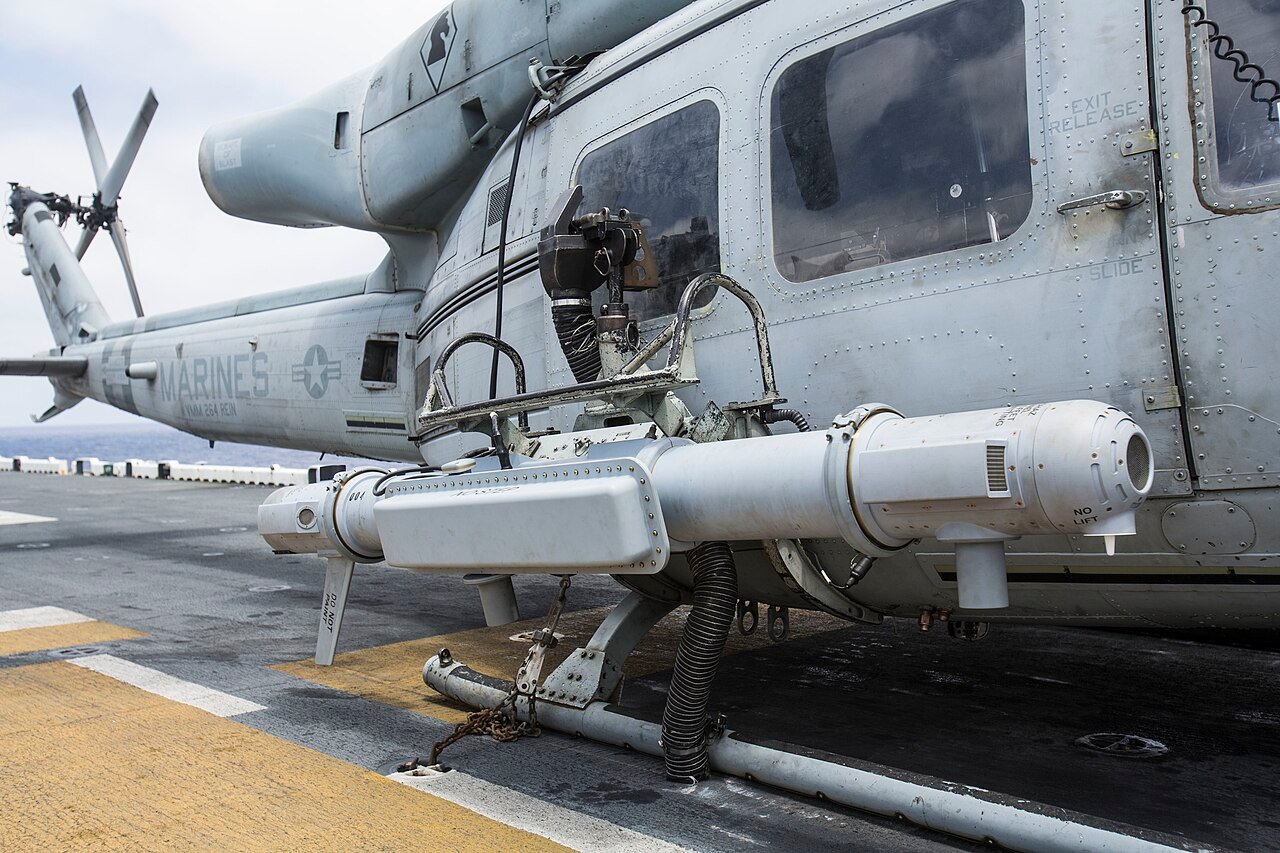
COP31 UH-1Y with the ALQ-231 Intrepid Tiger Pod

A U.S. Marine Corps UH-1Y Venom helicopter equipped with the ALQ-231 Intrepid Tiger electronic warfare pod. The image illustrates the role of advanced military electronics in modern defense systems and their connection to critical mineral supply chains. Materials used in specialized electronic components highlight why access to critical minerals is becoming an important consideration for defense manufacturing and national security. Lance Cpl. Koby I. Saunders / U.S. Marine Corps / Public Domain.

Share on LinkedInShare on Twitter

Climate change is usually discussed in terms of rising temperatures, carbon emissions, and renewable energy. Yet behind the transition to cleaner technologies lies another issue that receives considerably less public attention: the growing strategic importance of critical minerals. Copper, lithium, nickel, cobalt, graphite, and rare earth elements are becoming increasingly important to modern economies. Their applications extend beyond renewable energy and electric vehicles to telecommunications, aerospace, electronics, and certain defense technologies.

As COP31 places climate policy under international scrutiny, an important question deserves attention: Could efforts to reduce dependence on fossil fuels create new forms of geopolitical dependence?

A Different Kind of Resource Competition

For much of the twentieth century, oil and natural gas occupied a central position in discussions about energy security. Access to these resources influenced diplomatic relations, trade agreements, and military planning. Critical minerals introduce a different set of concerns. Unlike oil, which must be continuously supplied to generate energy, minerals are generally incorporated into equipment and infrastructure. They can also be recovered through recycling. Nevertheless, building these systems requires reliable access to materials, processing facilities, and manufacturing capacity.

According to the International Energy Agency’s 2026 outlook, mineral refining remains geographically concentrated. China accounts for more than 90% of global refining supply for several materials, including gallium, graphite, manganese, and certain rare earth categories.
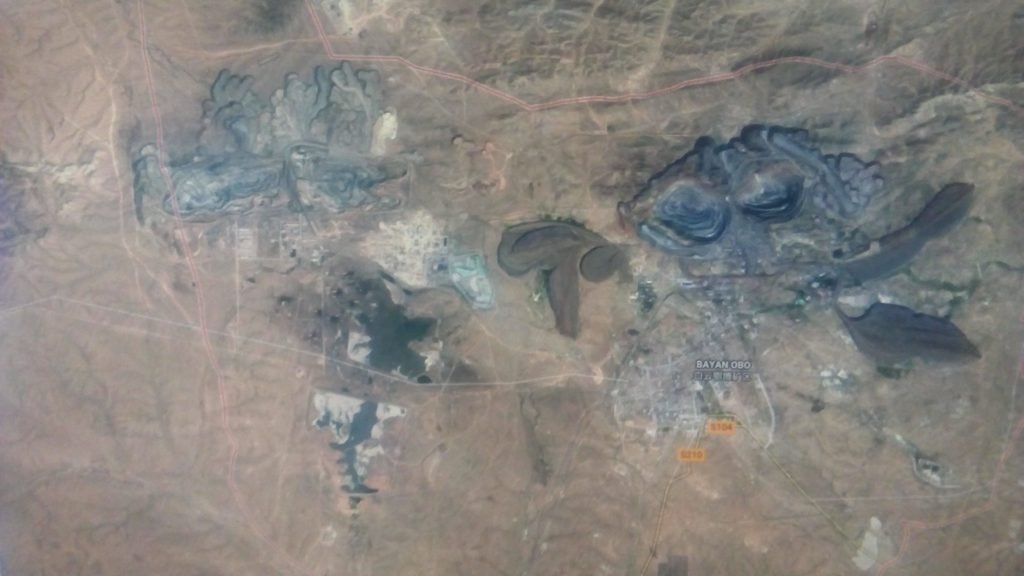
Bayan Obo. Squishyhippie, CC BY-SA 4.0.

This concentration does not automatically imply political confrontation. However, it creates vulnerabilities when industrial supply chains depend heavily on a limited number of countries. A disruption in refining capacity can affect manufacturers thousands of miles away, regardless of where the original minerals were extracted.

Mining Is Only Part of the Equation

A country may possess substantial mineral reserves without controlling the industries that transform those resources into commercially usable materials. Consider the Democratic Republic of the Congo, a major cobalt producer, or Indonesia, which has expanded its position in nickel production. Their importance is undeniable, but extraction represents only one stage of a much larger industrial process. Refining, specialized equipment, technical expertise, and downstream manufacturing can be equally important.

This distinction matters because mineral security is not necessarily achieved by opening additional mines. A government seeking greater independence may discover that developing domestic processing capacity requires years of investment, specialized infrastructure, and access to technologies already concentrated elsewhere. The geography of mineral deposits and the geography of industrial power are not always the same.

Staff Sgt. Branagan Glennen, 31st Maintenance Squadron metals technician craftsman, cuts a piece of metal using a mill at Aviano Air Base, Italy, July 6, 2022. The mill is often used to fabricate aircraft parts and locally manufacture tools for different squadrons on Aviano. (U.S. Air Force photo by Senior Airman Noah Sudolcan)

Where Defense Enters the Discussion

The relationship between critical minerals and national security extends beyond energy infrastructure. Gallium and germanium have applications in advanced electronics and semiconductor technologies. Rare earth elements are used in certain permanent magnets, while tungsten and titanium remain important to several industrial and aerospace applications.

These materials are not exclusively military resources. In fact, commercial industries often account for much larger portions of demand. Nevertheless, their availability can influence defense manufacturing, maintenance, and technological development. What happens when civilian industries and defense manufacturers depend on the same limited processing capacity?
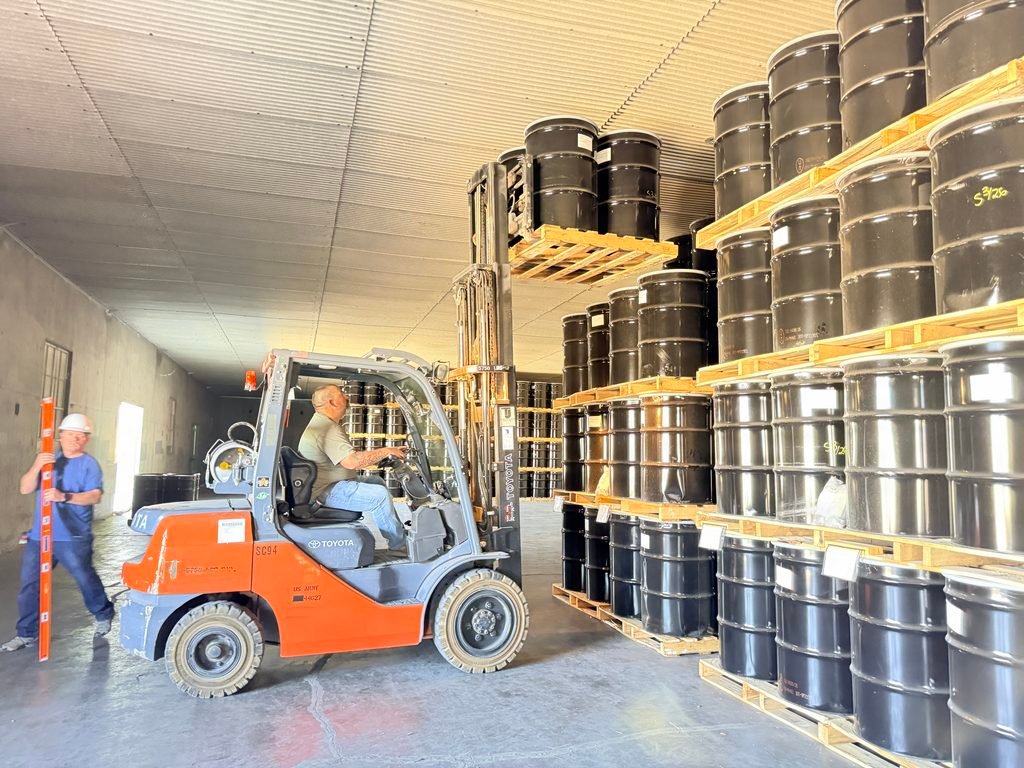
A Defense Logistics Agency Strategic Materials team member spots a colleague who receives and stores electrolytic manganese metal at Hawthorne Army Depot, Nevada, ensuring the material is properly stacked to maximize available warehouse space. (Photo by Nutan Chada, DLA Public Affairs)

Competition does not necessarily produce shortages, but export restrictions, trade disputes, or prolonged disruptions can complicate procurement decisions. For defense planners, the concern is therefore not simply whether a material exists. It is whether suppliers can deliver the required quality and quantities under difficult political or economic conditions.

Can Countries Diversify Their Supply Chains?

Governments are already responding. The European Union’s Critical Raw Materials Act establishes 2030 benchmarks for domestic extraction, processing, recycling, and reduced dependence on individual external suppliers. However, diversification presents difficult trade-offs. New mining and refining projects face environmental assessments, infrastructure costs, financing challenges, and local opposition. These factors are particularly relevant when governments simultaneously seek to reduce environmental damage.

Recycling can reduce pressure on primary supply, but it cannot immediately replace newly mined materials, especially while demand continues expanding.

There is also a distinction between reducing excessive dependence and attempting complete self-sufficiency. The latter may be economically unrealistic for many countries. Even governments with substantial financial resources may struggle to develop every stage of a mineral supply chain domestically, making international partnerships essential.

U.S. Army Vehicles offloaded from the cargo vessel ARC ENDURANCE at the port of Kavala, Greece, Apr. 29, 2025, in support of the DEFENDER 25. Dynamic Employment of Forces to Europe for NATO Deterrence and Enhanced Readiness, also known as DEFENDER, is the largest annual U.S. Army security cooperation and exercise in Europe. DEFENDER 25 includes nearly 12,000 U.S. and 13,000 Allied and partner service members from 29 other nations, including Greece. DEFENDER 25 marks the first-time deployment of U.S. Army forces through the Port of Kavala, Greece, to include reception, staging, and onward movement (RSOM) throughout Czechia. DEFENDER 25 is the deployment of U.S. forces into a series of exercises designed to demonstrate the ability of the U.S. Army to respond and sustain operations of continental-based divisions, enablers, and joint forces and rehearse the integration of U.S. troops with NATO allies and partners for large scale combat operations from the High North to Mediterranean and Black Sea regions. (U.S. Army photo by Davide Dalla Massara)

The Security Question Behind the Energy Transition

Climate policy and national security are increasingly connected, but their objectives should not be treated as identical. Reducing emissions, protecting ecosystems, maintaining affordable energy, and securing industrial supply chains involve different priorities. Progress in one area does not guarantee progress in another. The International Renewable Energy Agency has similarly highlighted how geographically concentrated mineral supply chains can create geopolitical vulnerabilities.

COP31 provides an opportunity to consider these relationships beyond conventional environmental discussions. The more relevant question may no longer be which countries possess critical minerals, but which countries can reliably extract, process, manufacture, and trade them without creating excessive strategic dependencies. That is where the changing geography of energy security becomes a broader question of economic resilience, industrial capability, and national security.


Sources:

  • International Energy Agency (IEA). (2026). Global Critical Minerals Outlook 2026.
  • International Renewable Energy Agency (IRENA). (2023). Geopolitics of the Energy Transition: Critical Materials.
  • International Renewable Energy Agency (IRENA). (2024). Geopolitics of the Energy Transformation: Energy Security.
  • European Union. (2024). Regulation (EU) 2024/1252 — Critical Raw Materials Act.
  • U.S. Geological Survey (USGS). (2026). Mineral Commodity Summaries 2026.

Previous Post

Can a Country Truly Own the Small Arms It Buys?

Related Posts

Somalia Pirates
Geopolitics

The Return of Somali Piracy: A New Threat to Global Shipping?

November 10, 2026
Yemen-Houthi-Weapons
Geopolitics

How Did the Houthis Build Such a Powerful Military Arsenal?

October 24, 2026
The Modern Battlefield: An Expanding Electrical Grid
Geopolitics

The Modern Battlefield: An Expanding Electrical Grid

October 6, 2026
233rd QM CO establish Fuel System Supply Point (FSSP) at QLLEX
Geopolitics

Expeditionary Fuel Systems: Keeping Military Operations Moving Beyond Permanent Bases

September 25, 2026
Ukrainian_FP-5_Flamingo_long-range_cruise_missile_by_Fire_Point_at_MSPO_2026_in_Kielce
Geopolitics

What the Moscow Strike Reveals About Ukraine’s Expanding Long-Range Arsenal

September 21, 2026
Challenger_1MBT_Mk_3_(7527916878)
Geopolitics

Beyond Steel: Five Critical Minerals Behind Modern Armored Warfare

September 3, 2026
  • Trending
  • Latest
Heckler_&_Koch_G3_Holzschaft_Display_noBG

HK G3: A Rifle That Stayed Longer Than Expected

April 29, 2026
FN FAL: The Right Arm of the Free World

FN FAL: The Right Arm of the Free World

March 31, 2026
MG42-1

MG42 Machine Gun: WWII History, Specifications and Battlefield Impact

April 21, 2026
C-RAM System in Support of Coalition Defense

C-RAM: The Last Seconds of Defense

April 1, 2026
COP31 UH-1Y with the ALQ-231 Intrepid Tiger Pod

Climate Change, Critical Minerals and the New Geography of Security

November 22, 2026
Small Arms Manufacturing

Can a Country Truly Own the Small Arms It Buys?

November 17, 2026
IWI NEGEV NG7

IWI NEGEV NG7: A 7.62 mm Machine Gun Built Around a Difficult Compromise

November 13, 2026
Somalia Pirates

The Return of Somali Piracy: A New Threat to Global Shipping?

November 10, 2026

Recent Articles

COP31 UH-1Y with the ALQ-231 Intrepid Tiger Pod

Climate Change, Critical Minerals and the New Geography of Security

November 22, 2026
Small Arms Manufacturing

Can a Country Truly Own the Small Arms It Buys?

November 17, 2026
IWI NEGEV NG7

IWI NEGEV NG7: A 7.62 mm Machine Gun Built Around a Difficult Compromise

November 13, 2026
Somalia Pirates

The Return of Somali Piracy: A New Threat to Global Shipping?

November 10, 2026
Drill & Defense

Drill & Defense is an independent defense and security platform covering firearms, military technology, geopolitics, energy security, and industry developments. We provide clear, structured, and practical insight for professionals, companies, and readers following the evolving defense landscape worldwide.

Follow Us

Browse by Category

  • Air Systems
  • Defense & Energy Strategy
  • Defense Companies
  • Defense Industry
  • Defense Know-How
  • Defense Technologies
  • Doctrines & Concepts
  • Electronic & Cyber Systems
  • Energy & Security
  • Energy Fundamentals
  • Energy Technologies
  • Firearms
  • Geopolitics
  • Global Security
  • History
  • Industry News
  • Knowledge Base
  • Land Systems
  • Legacy Systems & Structures
  • Market Analysis
  • Market Trends & Analysis
  • Military History
  • Military Systems
  • Naval Systems
  • Oil & Gas News
  • Pistols
  • Regulations & Frameworks
  • Rifles
  • SMGs & Machine Guns
  • Strategic Turning Points
  • Tech & Innovation Crossover
  • Trade & Export Controls

Recent Articles

COP31 UH-1Y with the ALQ-231 Intrepid Tiger Pod

Climate Change, Critical Minerals and the New Geography of Security

November 22, 2026
Small Arms Manufacturing

Can a Country Truly Own the Small Arms It Buys?

November 17, 2026

© 2026 Drill & Defense. All rights reserved. Independent insights on firearms, defense, and energy. For business inquiries: info@drillanddefense.com | PRIVACY POLICY | COOKIE POLICY | TERMS AND CONDITIONS

Manage Consent

We use cookies to improve your experience. You can accept or refuse cookies; however, some features may not function properly without your consent.

Functional Always active
The technical storage or access is strictly necessary for the legitimate purpose of enabling the use of a specific service explicitly requested by the subscriber or user, or for the sole purpose of carrying out the transmission of a communication over an electronic communications network.
Preferences
The technical storage or access is necessary for the legitimate purpose of storing preferences that are not requested by the subscriber or user.
Statistics
The technical storage or access that is used exclusively for statistical purposes. The technical storage or access that is used exclusively for anonymous statistical purposes. Without a subpoena, voluntary compliance on the part of your Internet Service Provider, or additional records from a third party, information stored or retrieved for this purpose alone cannot usually be used to identify you.
Marketing
The technical storage or access is required to create user profiles to send advertising, or to track the user on a website or across several websites for similar marketing purposes.
  • Manage options
  • Manage services
  • Manage {vendor_count} vendors
  • Read more about these purposes
View preferences
  • {title}
  • {title}
  • {title}
No Result
View All Result
  • Defense Industry
    • Industry News
    • Defense Companies
    • Defense Technologies
    • Market Analysis
  • Military Systems
    • Land Systems
    • Air Systems
    • Naval Systems
    • Electronic & Cyber Systems
  • Firearms
    • Pistols
    • Rifles
    • SMGs & Machine Guns
    • Ammunition
    • Optics & Accessories
  • Geopolitics
    • Global Security
    • Defense & Energy Strategy
    • Tech & Innovation Crossover
    • Trade & Export Controls
  • Energy & Security
    • Oil & Gas News
    • Energy Technologies
    • Market Trends & Analysis
  • History
    • Military History
    • Doctrines & Concepts
    • Strategic Turning Points
    • Legacy Systems & Structures
  • Knowledge Base
    • Firearms Basics
    • Defense Know-How
    • Energy Fundamentals
    • Regulations & Frameworks
  • About
  • Contact
  • Login
  • Register

© 2026 Drill & Defense. All rights reserved. Independent insights on firearms, defense, and energy. For business inquiries: info@drillanddefense.com | PRIVACY POLICY | COOKIE POLICY | TERMS AND CONDITIONS