
Drill & Defense
Advertisement
  • Defense Industry
    • Industry News
    • Defense Companies
    • Defense Technologies
    • Market Analysis
  • Military Systems
    • Land Systems
    • Air Systems
    • Naval Systems
    • Electronic & Cyber Systems
  • Firearms
    • Pistols
    • Rifles
    • SMGs & Machine Guns
    • Ammunition
    • Optics & Accessories
  • Geopolitics
    • Global Security
    • Defense & Energy Strategy
    • Tech & Innovation Crossover
    • Trade & Export Controls
  • Energy & Security
    • Oil & Gas News
    • Energy Technologies
    • Market Trends & Analysis
  • History
    • Military History
    • Doctrines & Concepts
    • Strategic Turning Points
    • Legacy Systems & Structures
  • Knowledge Base
    • Firearms Basics
    • Defense Know-How
    • Energy Fundamentals
    • Regulations & Frameworks
  • About
  • Contact
  • Login
  • Register
No Result
View All Result
Drill & Defense
No Result
View All Result
Home Military Systems

The AS532 Cougar Crash in Türkiye: A Closer Look at the Helicopter and Its Operational Life

November 25, 2026
in Military Systems, Air Systems
AS532-Cougar-Crash

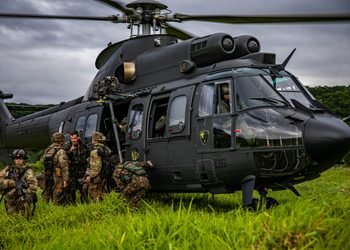
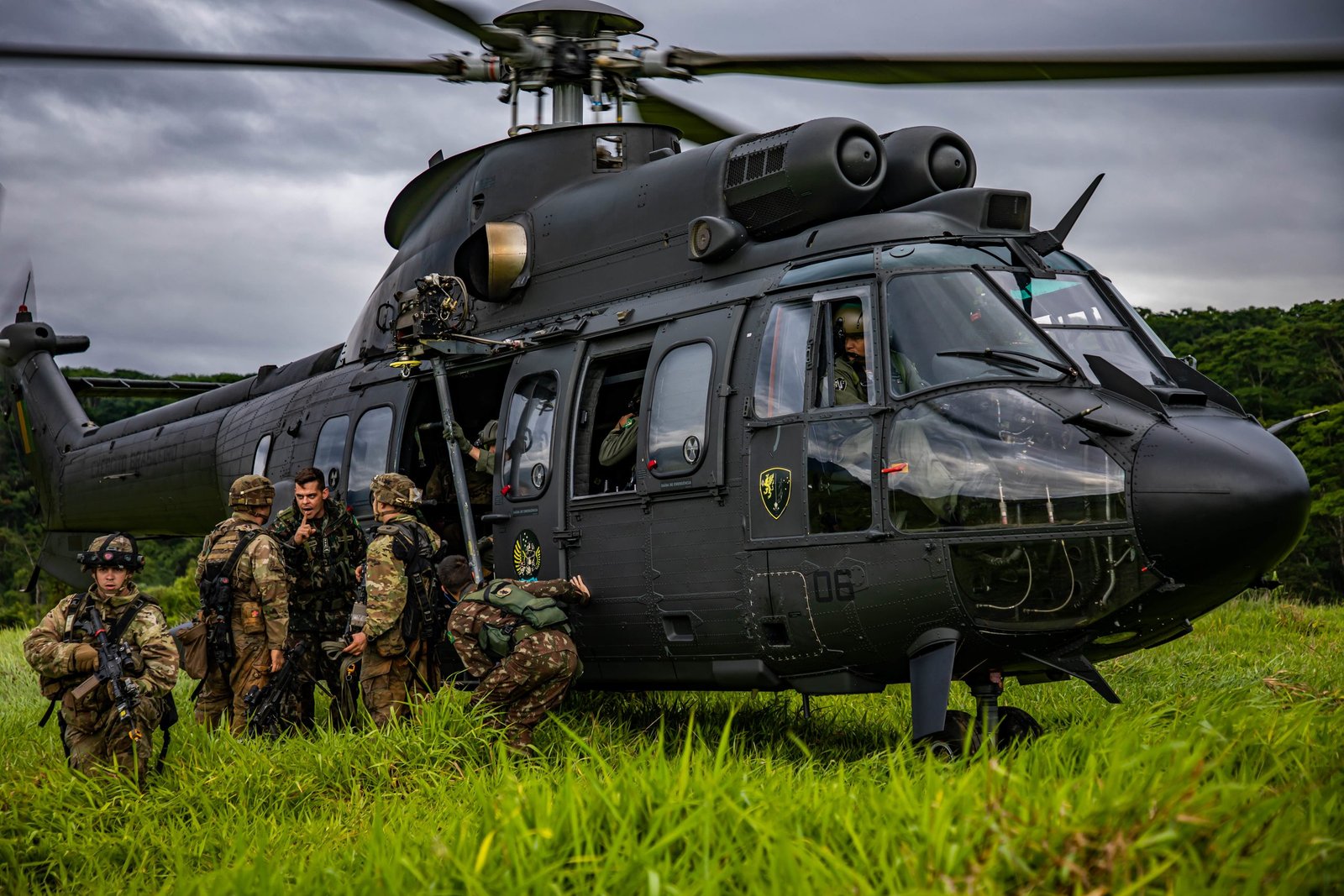
U.S. and Brazilian Army soldiers conduct a simulated medical evacuation alongside an AS532 Cougar during Exercise Southern Vanguard 22 in Resende, Brazil, December 8, 2021. (U.S. Army photo by Pfc. Joshua Taeckens)

Share on LinkedInShare on Twitter

The recent crash of a Turkish Air Force AS532 Cougar helicopter in Eskişehir, Türkiye, claimed the lives of five military personnel. While the cause of the accident remains under investigation, the incident has brought renewed attention to a helicopter that has served the Turkish Armed Forces for decades.

But what exactly is the AS532 Cougar, how has it evolved over the years, and what has kept it in military service for so long? Let’s take a closer look at the helicopter, its engineering, operational history, and the challenges of maintaining military rotary-wing platforms over an extended service life.

From the Puma to the AS532 Cougar

The origins of the Cougar can be traced back to the French Aérospatiale SA330 Puma, developed during the 1960s to meet military requirements for tactical transportation and battlefield mobility. The subsequent AS332 Super Puma introduced improvements in engine performance, transmission capacity, payload, and operational range. The AS532 designation was later adopted for military derivatives of the Super Puma family.

The Cougar retained a conventional helicopter configuration, incorporating two turboshaft engines, a four-bladed main rotor, a tail rotor, and retractable landing gear. Depending on the variant, aircraft are powered by different versions of the Makila engine family, with configurations adapted to specific military requirements. Its relatively large cabin and medium-lift capacity allow the platform to perform personnel transportation, logistical support, medical evacuation, and search and rescue missions without requiring fundamentally different airframes for each role.
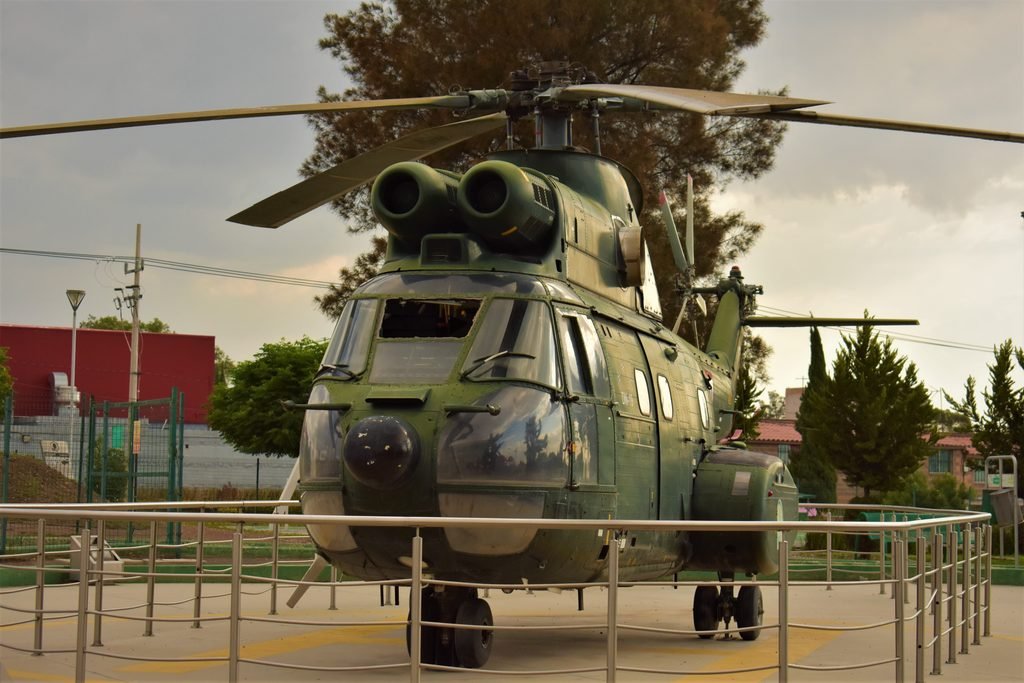
The Aérospatiale SA-330J Puma (Mexican Air Force 1051) is a medium-sized utility helicopter, featuring two engines and a four-blade main rotor. Armando Olivo Martín del Campo, CC BY-SA 4.0.

One of the practical advantages of this design is its operational flexibility. A military helicopter does not necessarily need to be the fastest or most technologically advanced aircraft in its category to remain relevant. Cabin capacity, maintenance accessibility, spare parts availability, and compatibility with existing infrastructure can be equally important considerations for military operators.

The Cougar’s Place in Türkiye’s Military Aviation

According to Airbus, Türkiye is the world’s largest Cougar operator, with a reported fleet of 45 helicopters serving across the Turkish Land Forces and the Air Force. These aircraft have been used for general-purpose transportation and search and rescue operations, making the Cougar an established component of the country’s rotary-wing capabilities.

Türkiye’s geographical conditions make military helicopter operations particularly important. Mountainous terrain, significant differences in elevation, and varying seasonal weather conditions create operational requirements that cannot always be met by conventional ground transportation. Helicopters capable of carrying personnel and equipment while operating independently of established runways provide considerable flexibility in such environments.

However, maintaining a fleet of this size involves considerably more than keeping aircraft engines operational. Transmission assemblies, rotor components, hydraulic systems, structural elements, and avionics all require dedicated maintenance infrastructure. The availability of qualified technicians, replacement components, and technical support directly influences how effectively these aircraft can remain in service.
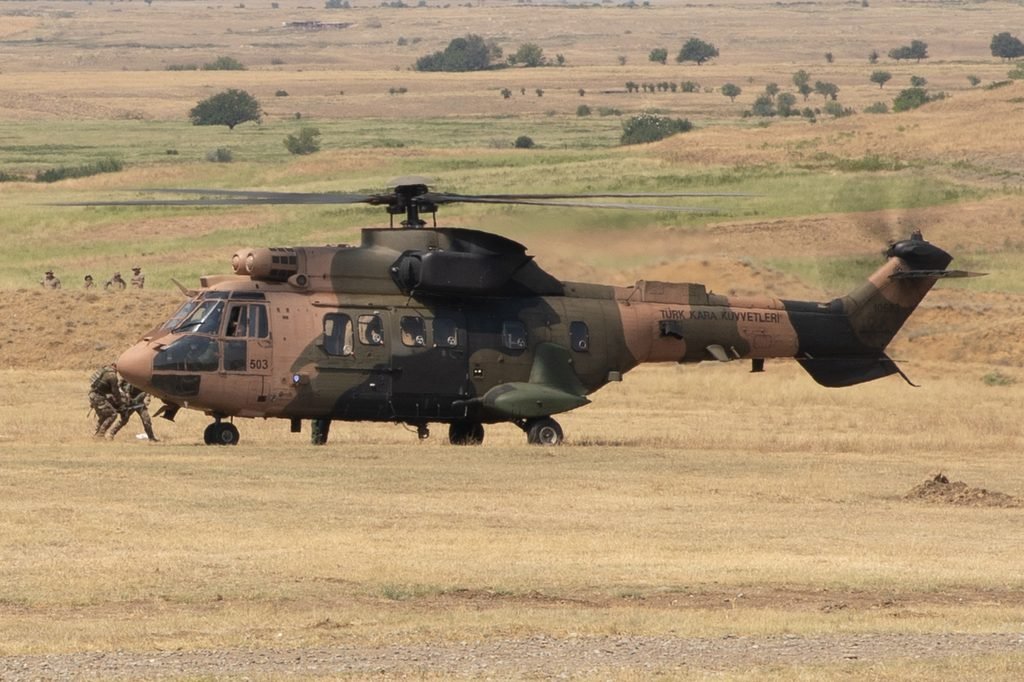
A Turkish AS532 Cougar helicopter recieves a simulated casualty at Vaziani Training Area, Vaziani, Georgia, Aug. 3, 2025. Agile Spirit 25 underscores the U.S. commitment to security and stability in the Black Sea region and highlights the importance of strong alliances and partnerships in addressing shared security challenges. (U.S. Army National Guard photo by Sgt. Thomas Norris)

Two Engines, One Complex Mechanical Architecture

The twin-engine configuration of the AS532 Cougar provides an important degree of propulsion redundancy. Under appropriate flight conditions, the loss of one engine does not necessarily result in the immediate loss of powered flight. However, engine redundancy should not be confused with complete mechanical redundancy throughout the aircraft.

Unlike fixed-wing aircraft, helicopters depend on a complex mechanical architecture to transfer engine power to their rotor systems. The main transmission combines and distributes power, while the rotor assembly generates lift and the tail rotor provides directional control and counteracts torque. These systems operate under continuous mechanical loads, vibration, and changing aerodynamic forces.

This is where helicopter engineering becomes particularly interesting. A relatively small component within a larger assembly can have a significant influence on overall aircraft performance. Bearings, lubrication systems, gears, shafts, and structural connections may receive little attention outside technical aviation circles, yet their condition is fundamental to the safe operation of the aircraft.
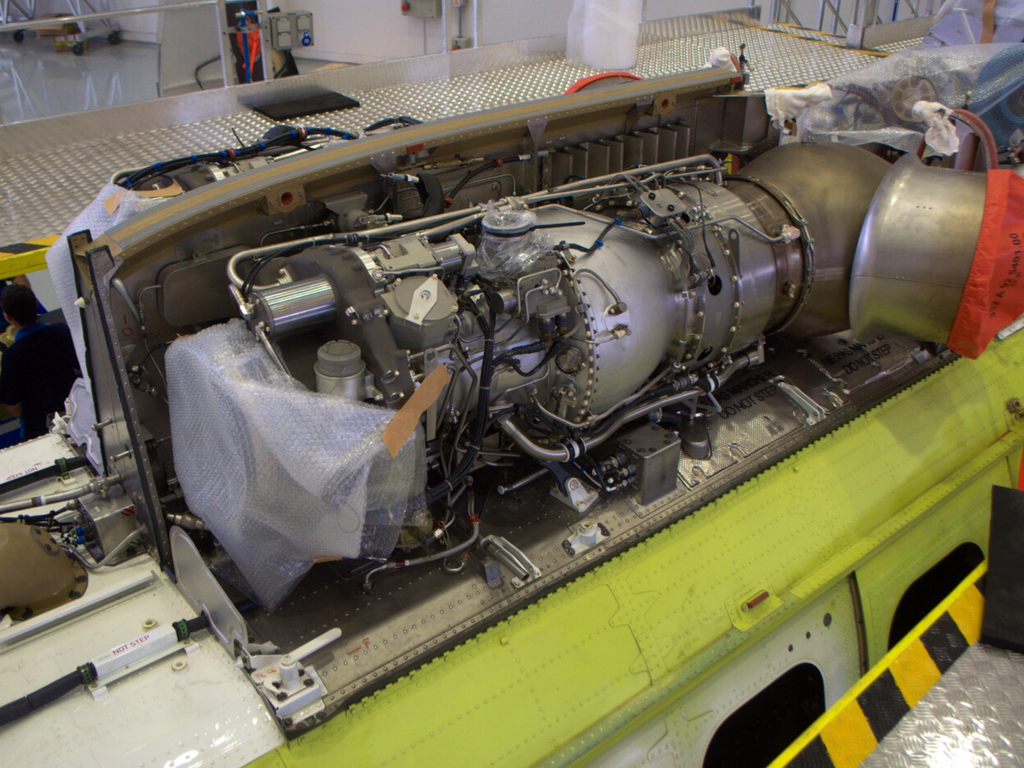
Maintenance workshop equipped to inspect Makila 1A1 and 1A2 turboshaft engines used in Cougar and Jaguar helicopters. goncalvesmb, CC BY-SA 3.0.

None of these characteristics establishes a connection with the Eskişehir accident. The precise sequence of events leading to the crash remains unknown, and attributing it to a particular mechanical system would be premature.

How Old Is Too Old for a Military Helicopter?

Military aircraft frequently remain operational for 30, 40, or even more years. The age of the original design, however, does not necessarily reflect the condition of an individual aircraft. Components are replaced, engines are overhauled, structural inspections are conducted, and electronic systems are periodically upgraded throughout an aircraft’s operational life.

A useful example comes from the Netherlands, where the Ministry of Defense and Airbus Helicopters have pursued a life-extension program for the country’s fleet of 12 AS532 U2 Cougar helicopters. Such modernization programs demonstrate that investment in existing platforms remains a viable approach even as newer helicopters enter the procurement pipeline.

The more relevant question, therefore, is not simply how old an aircraft is, but how its operational life has been managed. Flight hours, structural fatigue, maintenance documentation, component replacement intervals, and the availability of manufacturer support provide a more meaningful assessment than the year of manufacture alone.

For military operators, replacing an entire helicopter fleet also involves considerable expenditure beyond the initial acquisition cost. Pilot conversion training, maintenance equipment, technical documentation, spare parts inventories, and infrastructure adaptations must all be considered. Extending the service life of an existing platform can consequently make operational and financial sense, provided that airworthiness requirements continue to be satisfied.
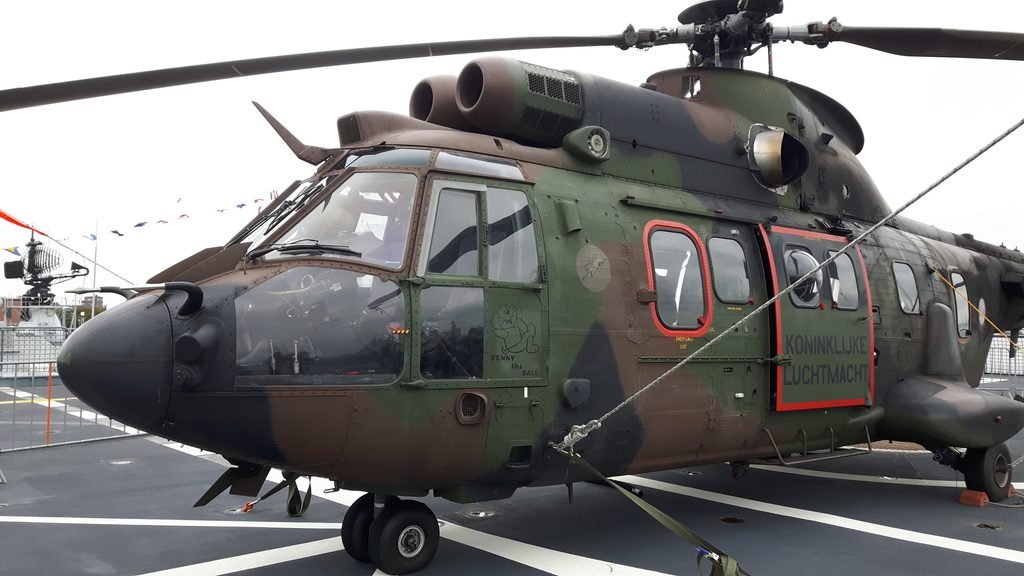
This is a picture of a Eurocopter Cougar AS 532U2 of the Royal Netherlands Air Force. It was held on display on the HNLMS Karel Doorman (A833) at the 2017 edition of the Navy Days in Den Helder. LP98, CC BY-SA 4.0.

Flight Safety and Operational Readiness

Training flights are an essential part of military aviation, but they should not be regarded as inherently low-risk operations. Military helicopter crews must maintain proficiency across different environmental conditions, flight profiles, navigation requirements, and emergency procedures. Regular training allows personnel to develop and retain the skills required for operational missions, including situations where aircraft performance or environmental conditions may impose additional limitations.

At the same time, operational readiness should not be measured exclusively by aircraft availability or accumulated flight hours. The ability to identify developing mechanical problems, maintain accurate technical records, and respond to safety findings is equally important. An effective maintenance system must balance the demand for operational aircraft with the technical requirements necessary to keep them airworthy.

The Eskişehir investigation will need to establish the aircraft’s condition before the accident, examine available flight information, assess relevant maintenance records, and consider environmental and human factors. Whether the findings will have implications beyond the individual aircraft cannot yet be determined.
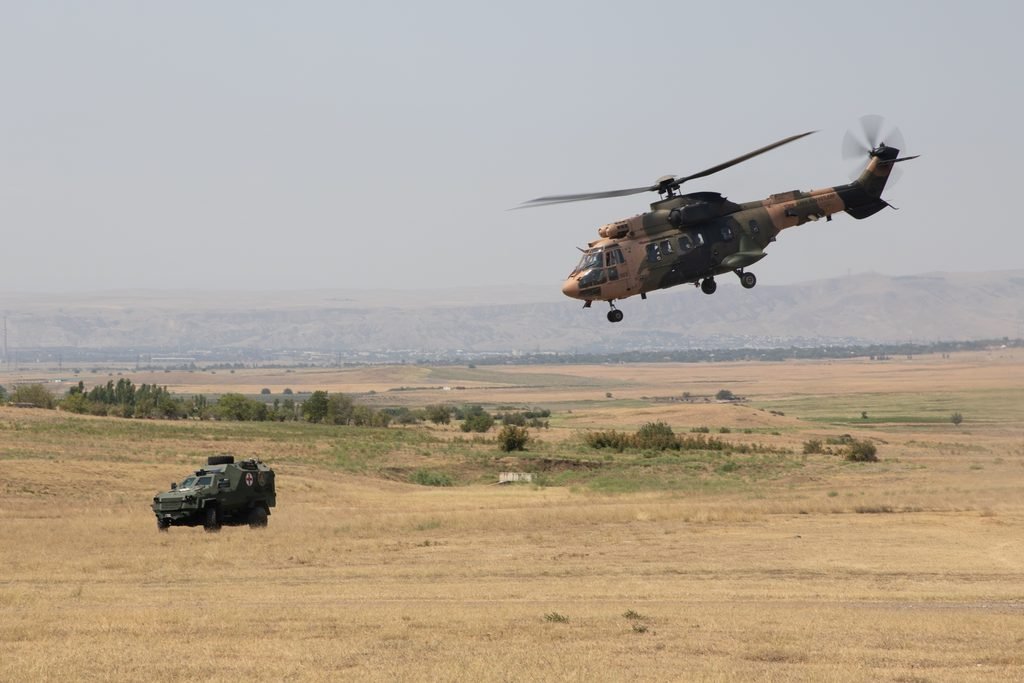
A Turkish AS532 Cougar helicopter takes off with a simulated casualty at Vaziani Training Area, Vaziani, Georgia, Aug. 3, 2025. Agile Spirit 25 underscores the U.S. commitment to security and stability in the Black Sea region and highlights the importance of strong alliances and partnerships in addressing shared security challenges. (U.S. Army National Guard photo by Sgt. Thomas Norris)

The Importance of Maintaining Military Aviation Capabilities

The AS532 Cougar remains a useful example of a military helicopter developed around practical operational requirements rather than continuous technological reinvention. Its extended service history demonstrates why established platforms can retain their value even as newer aircraft offer improved avionics, propulsion systems, and mission capabilities.

Nevertheless, sustaining such platforms requires continued investment. Aircraft modernization attracts considerable public attention, but maintenance infrastructure, technical personnel, component traceability, and long-term logistical support are just as fundamental to military aviation capabilities. Purchasing a helicopter is only the beginning of a commitment that may continue for several decades, often extending across multiple generations of pilots, technicians, and engineers.

For Türkiye, the Cougar represents decades of experience in rotary-wing operations. The loss of an aircraft in Eskişehir should be evaluated through a comprehensive technical investigation rather than assumptions based on platform age or design history.

Sources:

  • Associated Press — Turkish military helicopter crashes during training flight, killing five crew members (November 24, 2026).
  • Reuters — Five Turkish soldiers killed in helicopter crash, ministry says (November 24, 2026).
  • Airbus — Airbus in Türkiye.
  • Airbus Helicopters — Life Extension Programme for RNLAF Cougar AS532 U2 Fleet.
  • Netherlands Ministry of Defence — Cougar Transport Helicopter.
  • Federal Aviation Administration (FAA) — Helicopter Flying Handbook.
  • National Transportation Safety Board (NTSB) — Aviation Accident Investigation Process and Go Team.

Previous Post

Climate Change, Critical Minerals and the New Geography of Security

Related Posts

Ripsaw M5
Military Systems

RIPSAW M5: Rethinking the Role of Armored Vehicles Without Crews

October 26, 2026
UA_Support_Forces_Starlink_01
Military Systems

Starlink Restrictions in Ukraine Expose a Growing Military Dependence on Private Technology

October 15, 2026
General Atomics MQ-1 Predator
Military Systems

MQ-1 Predator: From ISR Platform to Armed UAV

September 8, 2026
Unmanned Boats
Military Systems

The Next Problem for Unmanned Boats: How Do You Refuel Them?

September 5, 2026
HUMVEE
Military Systems

HUMVEE: The Vehicle That Outlived the Battlefield It Was Built For

August 31, 2026
IDF Caterpillar D9R armored bulldozer
Military Systems

Caterpillar D9: The Armored Bulldozer That Clears the Way

August 5, 2026
  • Trending
  • Latest
Heckler_&_Koch_G3_Holzschaft_Display_noBG

HK G3: A Rifle That Stayed Longer Than Expected

April 29, 2026
FN FAL: The Right Arm of the Free World

FN FAL: The Right Arm of the Free World

March 31, 2026
MG42-1

MG42 Machine Gun: WWII History, Specifications and Battlefield Impact

April 21, 2026
C-RAM System in Support of Coalition Defense

C-RAM: The Last Seconds of Defense

April 1, 2026
AS532-Cougar-Crash

The AS532 Cougar Crash in Türkiye: A Closer Look at the Helicopter and Its Operational Life

November 25, 2026
COP31 UH-1Y with the ALQ-231 Intrepid Tiger Pod

Climate Change, Critical Minerals and the New Geography of Security

November 22, 2026
Small Arms Manufacturing

Can a Country Truly Own the Small Arms It Buys?

November 17, 2026
IWI NEGEV NG7

IWI NEGEV NG7: A 7.62 mm Machine Gun Built Around a Difficult Compromise

November 13, 2026

Recent Articles

AS532-Cougar-Crash

The AS532 Cougar Crash in Türkiye: A Closer Look at the Helicopter and Its Operational Life

November 25, 2026
COP31 UH-1Y with the ALQ-231 Intrepid Tiger Pod

Climate Change, Critical Minerals and the New Geography of Security

November 22, 2026
Small Arms Manufacturing

Can a Country Truly Own the Small Arms It Buys?

November 17, 2026
IWI NEGEV NG7

IWI NEGEV NG7: A 7.62 mm Machine Gun Built Around a Difficult Compromise

November 13, 2026
Drill & Defense

Drill & Defense is an independent defense and security platform covering firearms, military technology, geopolitics, energy security, and industry developments. We provide clear, structured, and practical insight for professionals, companies, and readers following the evolving defense landscape worldwide.

Follow Us

Browse by Category

  • Air Systems
  • Defense & Energy Strategy
  • Defense Companies
  • Defense Industry
  • Defense Know-How
  • Defense Technologies
  • Doctrines & Concepts
  • Electronic & Cyber Systems
  • Energy & Security
  • Energy Fundamentals
  • Energy Technologies
  • Firearms
  • Geopolitics
  • Global Security
  • History
  • Industry News
  • Knowledge Base
  • Land Systems
  • Legacy Systems & Structures
  • Market Analysis
  • Market Trends & Analysis
  • Military History
  • Military Systems
  • Naval Systems
  • Oil & Gas News
  • Pistols
  • Regulations & Frameworks
  • Rifles
  • SMGs & Machine Guns
  • Strategic Turning Points
  • Tech & Innovation Crossover
  • Trade & Export Controls

Recent Articles

AS532-Cougar-Crash

The AS532 Cougar Crash in Türkiye: A Closer Look at the Helicopter and Its Operational Life

November 25, 2026
COP31 UH-1Y with the ALQ-231 Intrepid Tiger Pod

Climate Change, Critical Minerals and the New Geography of Security

November 22, 2026

© 2026 Drill & Defense. All rights reserved. Independent insights on firearms, defense, and energy. For business inquiries: info@drillanddefense.com | PRIVACY POLICY | COOKIE POLICY | TERMS AND CONDITIONS

Manage Consent

We use cookies to improve your experience. You can accept or refuse cookies; however, some features may not function properly without your consent.

Functional Always active
The technical storage or access is strictly necessary for the legitimate purpose of enabling the use of a specific service explicitly requested by the subscriber or user, or for the sole purpose of carrying out the transmission of a communication over an electronic communications network.
Preferences
The technical storage or access is necessary for the legitimate purpose of storing preferences that are not requested by the subscriber or user.
Statistics
The technical storage or access that is used exclusively for statistical purposes. The technical storage or access that is used exclusively for anonymous statistical purposes. Without a subpoena, voluntary compliance on the part of your Internet Service Provider, or additional records from a third party, information stored or retrieved for this purpose alone cannot usually be used to identify you.
Marketing
The technical storage or access is required to create user profiles to send advertising, or to track the user on a website or across several websites for similar marketing purposes.
  • Manage options
  • Manage services
  • Manage {vendor_count} vendors
  • Read more about these purposes
View preferences
  • {title}
  • {title}
  • {title}
No Result
View All Result
  • Defense Industry
    • Industry News
    • Defense Companies
    • Defense Technologies
    • Market Analysis
  • Military Systems
    • Land Systems
    • Air Systems
    • Naval Systems
    • Electronic & Cyber Systems
  • Firearms
    • Pistols
    • Rifles
    • SMGs & Machine Guns
    • Ammunition
    • Optics & Accessories
  • Geopolitics
    • Global Security
    • Defense & Energy Strategy
    • Tech & Innovation Crossover
    • Trade & Export Controls
  • Energy & Security
    • Oil & Gas News
    • Energy Technologies
    • Market Trends & Analysis
  • History
    • Military History
    • Doctrines & Concepts
    • Strategic Turning Points
    • Legacy Systems & Structures
  • Knowledge Base
    • Firearms Basics
    • Defense Know-How
    • Energy Fundamentals
    • Regulations & Frameworks
  • About
  • Contact
  • Login
  • Register

© 2026 Drill & Defense. All rights reserved. Independent insights on firearms, defense, and energy. For business inquiries: info@drillanddefense.com | PRIVACY POLICY | COOKIE POLICY | TERMS AND CONDITIONS