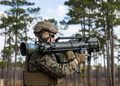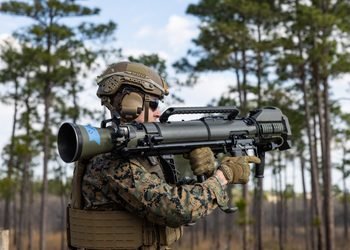

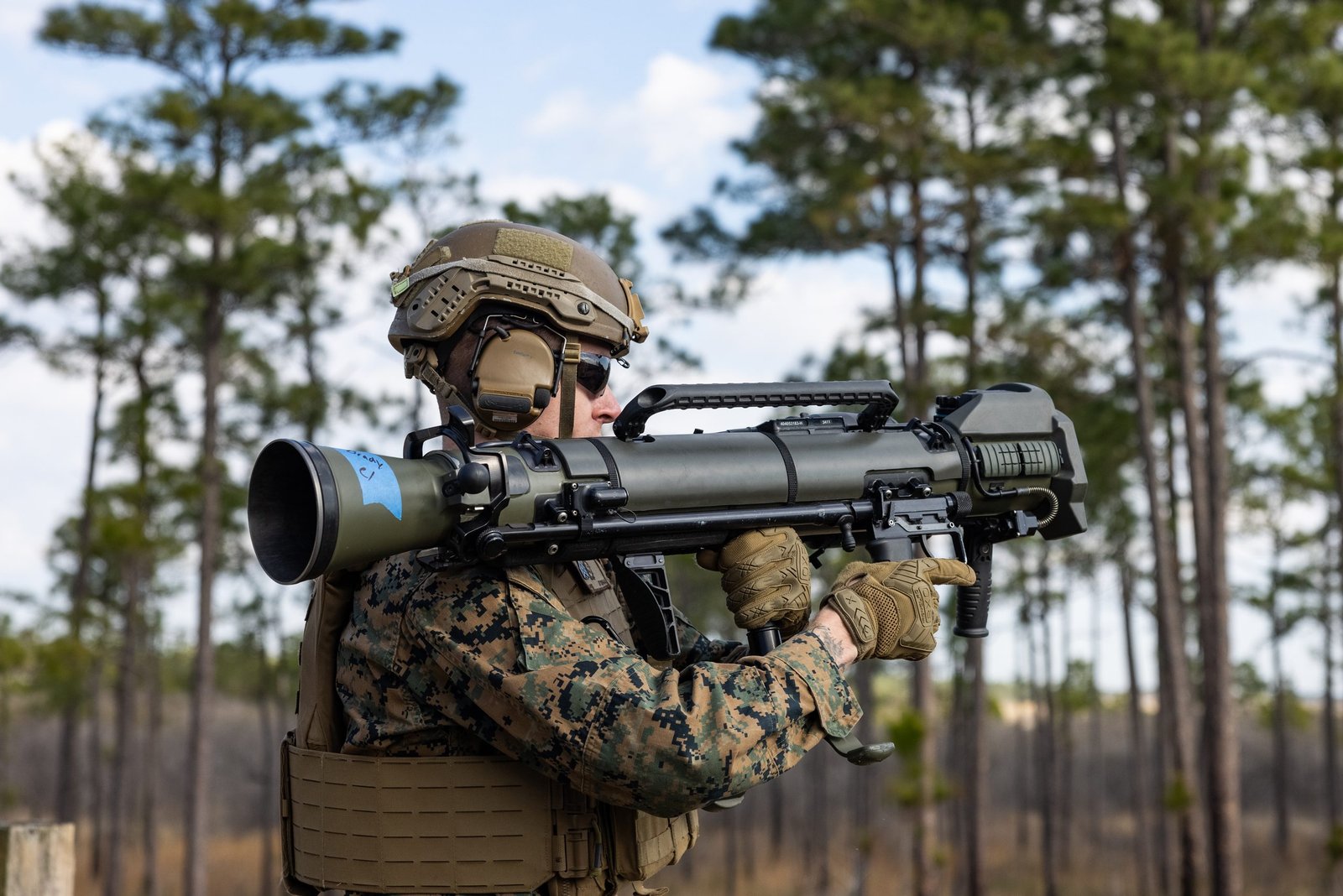
The M3E1 Multi-Role Anti-Armor Anti-Personnel Weapon System (MAAWS) raises an interesting question about modern infantry warfare. With guided missiles, loitering munitions, and increasingly sophisticated battlefield sensors available, why does the U.S. military continue investing in a recoilless rifle whose origins stretch back nearly eight decades?

Part of the answer lies in what infantry units actually encounter. Not every target requires an expensive guided missile, and not every engagement involves a heavily armored vehicle. Buildings, field fortifications, exposed personnel, and lightly protected vehicles present different challenges. Developed by Sweden’s Saab, the M3E1 belongs to the Carl-Gustaf family, offering a reusable 84mm weapon capable of firing several ammunition types.
Its appeal comes from flexibility rather than any single performance figure.
An Older Weapon With a Different Purpose
The original Carl-Gustaf entered service in 1948, but the current system incorporates substantial changes in materials, ergonomics, and fire control.
American special operations forces adopted the M3 during the 1990s, with conventional Army formations subsequently expanding their use of the weapon. The M3E1, also fielded under the M3A1 designation, represents the fourth-generation Carl-Gustaf M4 configuration.
Weighing approximately 6.7 kg (14.8 pounds) without its sighting system, the M3E1 is roughly 28% lighter than the previous M3. Its overall length is approximately 950 mm, compared with around 1,065 mm for its predecessor.
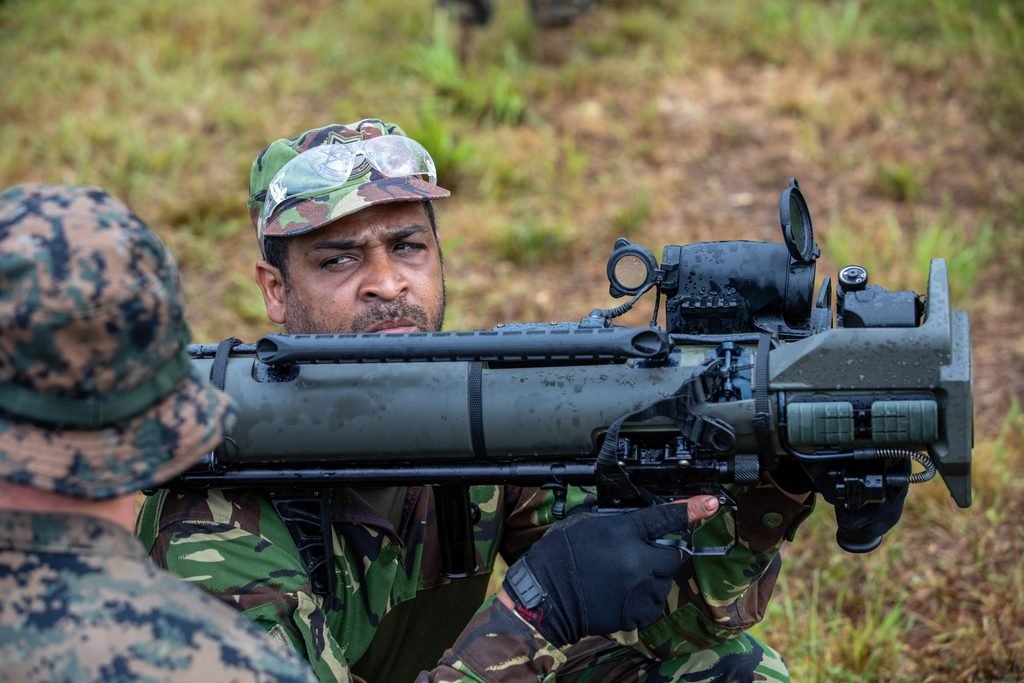
These improvements involve more than convenience. The carbon-fiber construction, titanium liner, adjustable shoulder rest, and integrated shot counter address durability, handling, and maintenance requirements.
Weight matters when infantry personnel already carry body armor, ammunition, communications equipment, and other essential supplies. A lighter launcher makes an additional support weapon more manageable, although the ammunition still adds considerably to the load.
More Than an Anti-Armor Weapon
Calling the M3E1 an anti-tank weapon alone overlooks much of its intended role.
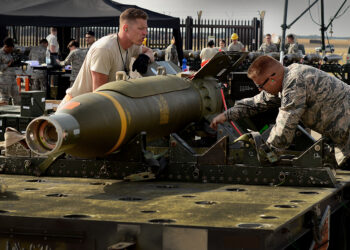
Its ammunition family includes high-explosive anti-tank, dual-purpose, anti-structure, smoke, illumination, and airburst rounds. The U.S. Army identifies a maximum effective range of approximately 1,300 meters for the M3A1 against certain targets, although practical engagement distances vary considerably by ammunition.
Consider the distinction between a lightly armored vehicle and a reinforced position. Both may require something more capable than an ordinary infantry rifle, but their vulnerabilities are different.
The HEAT 751 provides dedicated anti-armor capability, while the HEDP 502 addresses lighter protection and structural targets. The HE 448 introduces programmable airburst functionality, extending the system’s usefulness against personnel in exposed or partially concealed positions.
Saab’s newer HEAT 758 takes anti-armor development further. Introduced in 2026, its tandem-charge design is intended to counter explosive reactive armor, with the manufacturer claiming penetration of up to 700 mm of armor by its main charge.
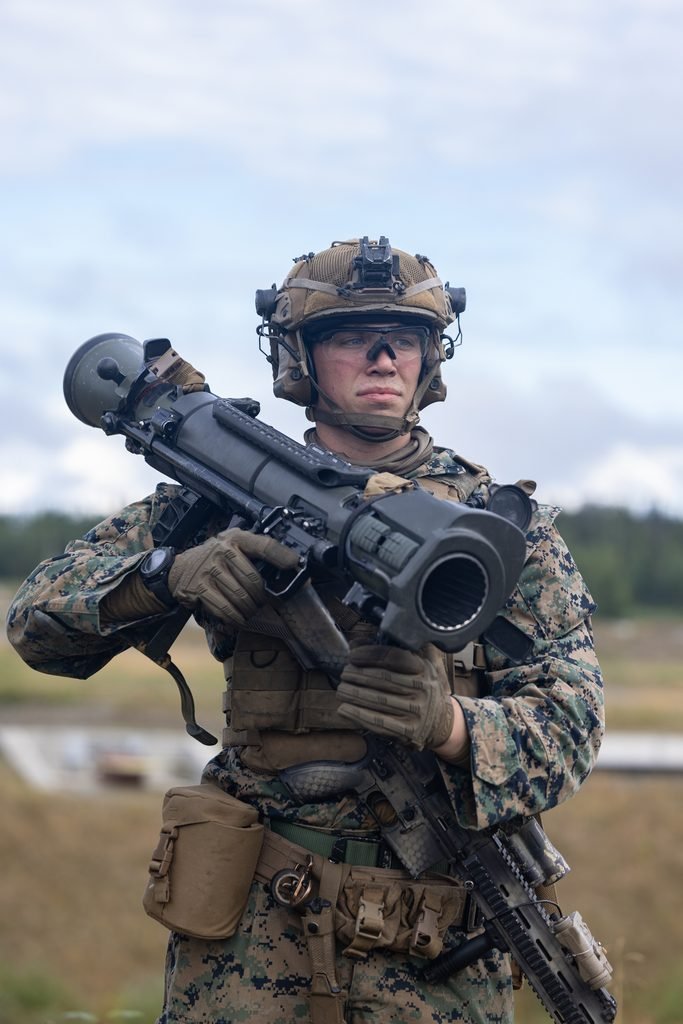
However, manufacturer specifications should not be confused with guaranteed battlefield performance. Target protection, ammunition availability, and engagement conditions remain decisive, and the introduction of a new round does not establish its adoption by every MAAWS operator.
Fire Control Changes the Equation
Perhaps the more significant improvement is found above the launcher rather than inside it.
The U.S. configuration incorporates an electronic fire-control system weighing approximately 1.9 kg (4.2 pounds), bringing the combined launcher and sight weight to around 8.6 kg (19 pounds).
Laser ranging and ballistic calculations assist engagements against stationary and moving targets. Compatible Carl-Gustaf configurations can also use Saab’s FCD 558, which supports communication with Firebolt-enabled ammunition.
Still, electronic assistance does not transform an unguided projectile into a guided missile. Operator proficiency, environmental conditions, and accurate target identification remain important.
The Reusable Advantage Comes With Responsibilities
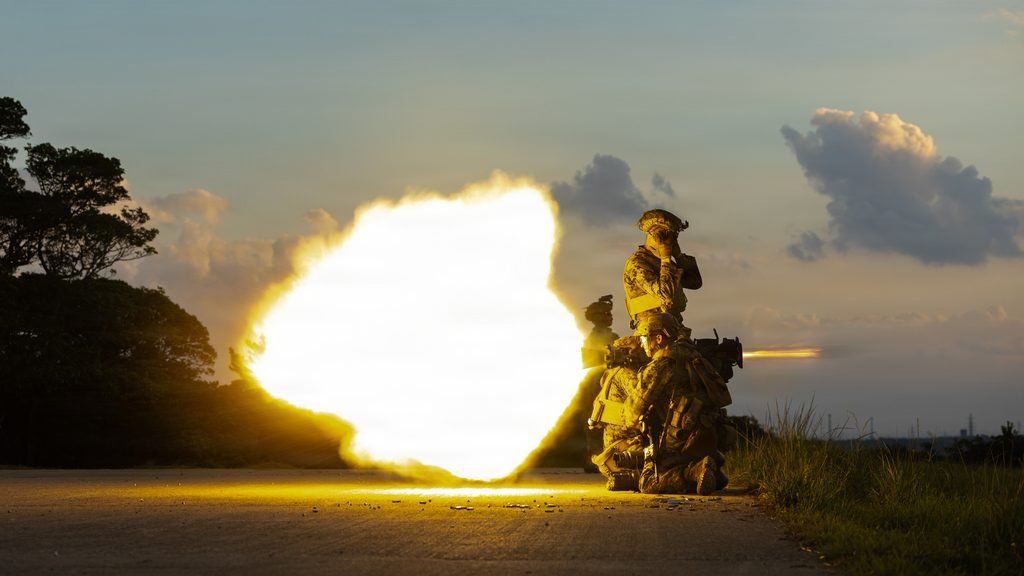
Unlike the disposable AT4, the M3E1 can be reloaded and fired repeatedly.
That distinction creates logistical advantages, particularly when several ammunition types are available. Instead of consuming an entire launcher with each shot, a unit retains the weapon and carries additional rounds.
But how much flexibility does that provide in practice?
The MAAWS normally operates with a two-person team, dividing responsibility between the gunner and assistant. Ammunition weight, backblast restrictions, maintenance requirements, and training all influence its practical employment.
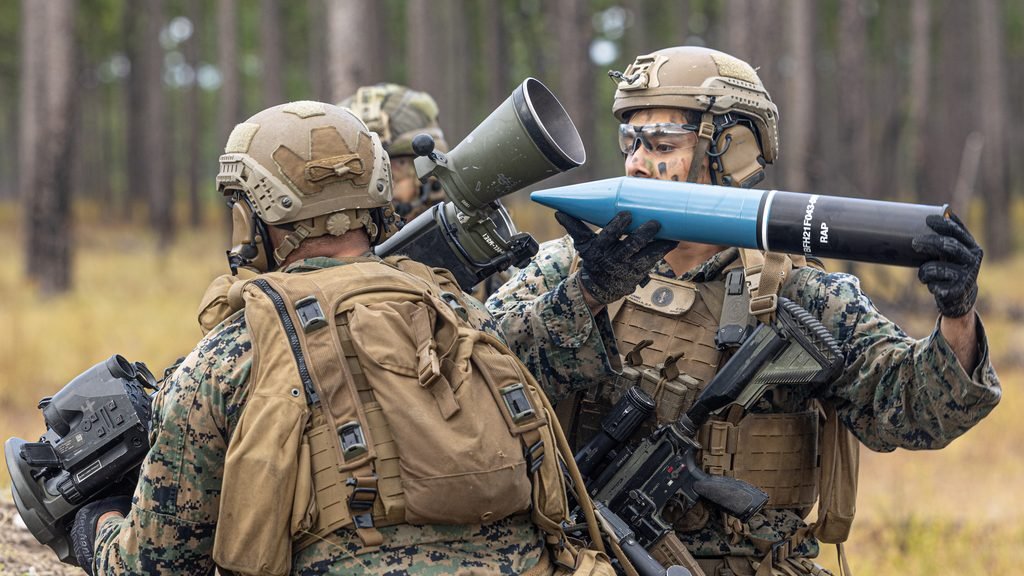
Reusability offers clear benefits, but it does not eliminate operational limitations.
Where the M3E1 Stands Today
The MAAWS remains part of the U.S. military’s infantry support capabilities, with the Carl-Gustaf family serving across multiple American military branches.
Development is continuing beyond the launcher itself. The introduction of HEAT 758 in 2026 illustrates how ammunition technology can extend the capabilities of an established weapon without requiring an entirely new platform.
The broader question concerns specialization. Should infantry forces rely increasingly on dedicated weapons, or preserve systems capable of addressing several battlefield problems?
The M3E1 demonstrates why both approaches can coexist. Guided missiles provide capabilities an unguided recoilless rifle cannot replicate, while the Carl-Gustaf offers reusable, ammunition-dependent flexibility.
Its continued relevance reflects something more practical than technological novelty: a mature weapon system can remain useful when its ammunition, fire control, and design evolve alongside operational requirements.
Sources:
- 1. U.S. Army Combat Capabilities Development Command. Lightweight M3A1 Multi-Role Anti-Armor Anti-Personnel Weapon System (MAAWS).
- 2. U.S. Army Acquisition Support Center. Weapon Systems Handbook 2020–2021, M3E1 MAAWS.
- 3. Saab. (2026). Ground Combat Systems Handbook.
- 4. Saab. (May 7, 2026). Saab Launches New Carl-Gustaf Anti-Tank Round.
- 5. Saab. Carl-Gustaf Recoilless Multi-Purpose Weapon System.
- 6. U.S. Army Operational Environment Data Integration Network (ODIN). (2025). Carl Gustaf M4 (M3-E1) Swedish 84mm Man-Portable Anti-Tank Recoilless Rifle.