
Drill & Defense
Advertisement
  • Defense Industry
    • Industry News
    • Defense Companies
    • Defense Technologies
    • Market Analysis
  • Military Systems
    • Land Systems
    • Air Systems
    • Naval Systems
    • Electronic & Cyber Systems
  • Firearms
    • Pistols
    • Rifles
    • SMGs & Machine Guns
    • Ammunition
    • Optics & Accessories
  • Geopolitics
    • Global Security
    • Defense & Energy Strategy
    • Tech & Innovation Crossover
    • Trade & Export Controls
  • Energy & Security
    • Oil & Gas News
    • Energy Technologies
    • Market Trends & Analysis
  • History
    • Military History
    • Doctrines & Concepts
    • Strategic Turning Points
    • Legacy Systems & Structures
  • Knowledge Base
    • Firearms Basics
    • Defense Know-How
    • Energy Fundamentals
    • Regulations & Frameworks
  • About
  • Contact
  • Login
  • Register
No Result
View All Result
  • Defense Industry
    • Industry News
    • Defense Companies
    • Defense Technologies
    • Market Analysis
  • Military Systems
    • Land Systems
    • Air Systems
    • Naval Systems
    • Electronic & Cyber Systems
  • Firearms
    • Pistols
    • Rifles
    • SMGs & Machine Guns
    • Ammunition
    • Optics & Accessories
  • Geopolitics
    • Global Security
    • Defense & Energy Strategy
    • Tech & Innovation Crossover
    • Trade & Export Controls
  • Energy & Security
    • Oil & Gas News
    • Energy Technologies
    • Market Trends & Analysis
  • History
    • Military History
    • Doctrines & Concepts
    • Strategic Turning Points
    • Legacy Systems & Structures
  • Knowledge Base
    • Firearms Basics
    • Defense Know-How
    • Energy Fundamentals
    • Regulations & Frameworks
  • About
  • Contact
  • Login
  • Register
No Result
View All Result
Drill & Defense
No Result
View All Result
Home Geopolitics

What Happens to European Security If America Steps Back?

August 28, 2026
in Geopolitics, Global Security
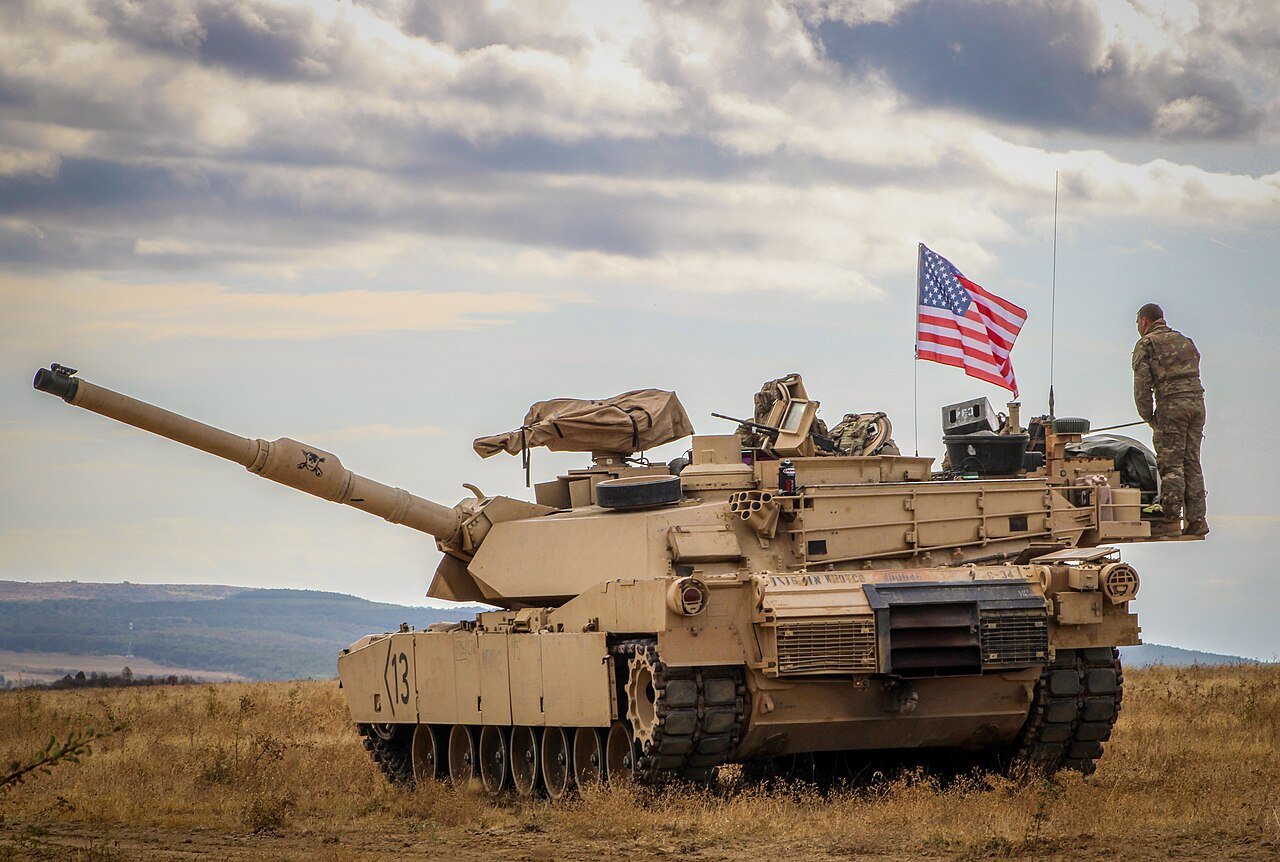
U.S. military NATO

An M1A2 Abrams crew member from 1-16 Infantry, 1st Armored Brigade Combat Team, 1st Infantry Division prepares his tank for Table III gunnery at Novo Selo Training Area, Bulgaria Sept. 27, 2025. The training focused on developing individual crews’ target engagement skills and maneuverability. Abrams live-fire exercises increase the lethality of crews on collective tables while generating warfighting readiness and combat credible forces along NATO’s eastern flank

Share on LinkedInShare on Twitter

For decades, U.S. military power has been one of the main foundations of European security. Governments have changed, defense budgets have risen and fallen, and arguments over burden sharing have returned repeatedly. One assumption, however, has remained largely intact: if Europe faces a major military crisis, Washington will remain deeply involved.

Today, that assumption looks less certain.

The Pentagon is reviewing the deployment of roughly 80,000 American military personnel stationed across Europe. Several options are expected to be considered by U.S. defense leadership later this year. No large-scale withdrawal has been confirmed, but the discussion itself matters because Washington increasingly expects European allies to carry a greater share of the continent’s conventional defense burden.

Rather than focusing only on how many American troops might leave, a more important question emerges: can European states replace some of the military functions currently provided by the United States?

American Presence Means More Than Troop Numbers

Discussions about U.S. forces in Europe often focus on numbers. Ten thousand troops withdrawn, several thousand relocated, or a brigade moved from one country to another can easily dominate headlines.

However, the American role inside NATO goes far beyond the number of personnel physically stationed on the continent.

The United States contributes heavily to intelligence, surveillance, logistics, strategic airlift, aerial refueling, missile defense, command-and-control systems and long-range strike capabilities. It also provides the most important part of NATO’s nuclear deterrence.

Some of these capabilities can be expanded by European allies. Others would be much more difficult and expensive to replace.
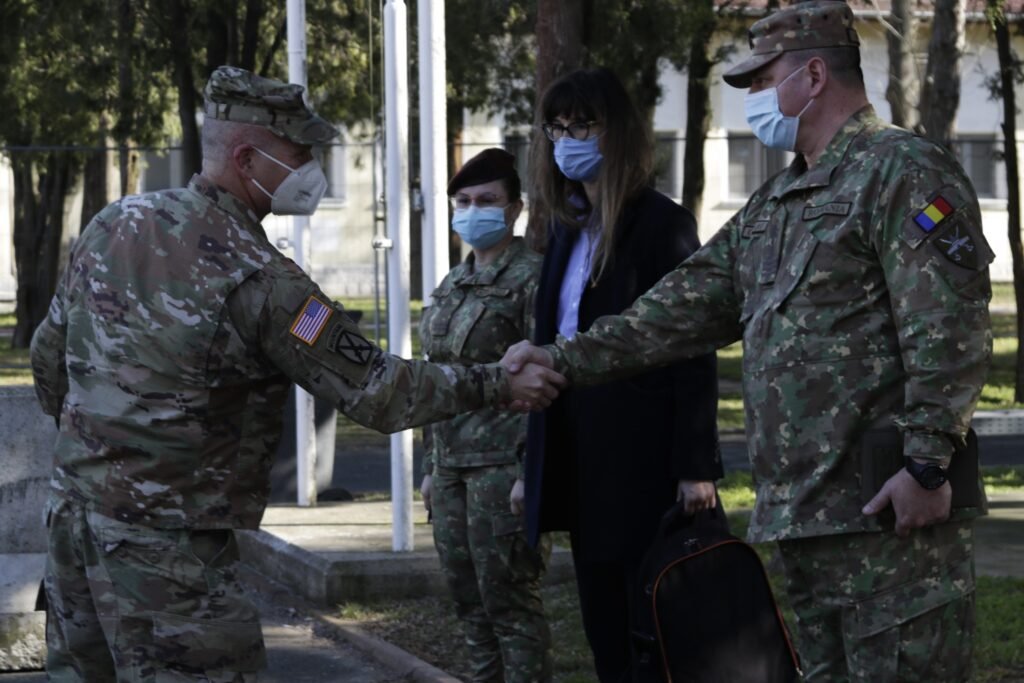
U.S. Army Gen. Christopher G. Cavoli, U.S. Army Europe and Africa commander greets Romanian Service members during a visit to Mihail Kogălniceanu Air Base, Romania, February 16, 2022. A forward presence in Europe with U.S. and Romanian troops working side by side, builds interoperability, trust, and strengthens our shared commitment to NATO. (U.S. Army photo by Adam M. Manternach)

This is why even a limited reduction in American military presence could have wider consequences than the troop numbers suggest. A smaller U.S. footprint would place greater pressure on European governments to decide which capabilities they can realistically provide themselves and where they would still depend heavily on Washington.

France Has Long Expected This Debate

France is probably the European country most prepared politically for a discussion about greater European defense autonomy.

Paris has promoted the idea of strategic autonomy for years, arguing that Europe should be able to defend its interests without depending entirely on the United States. That position has often caused disagreement inside NATO, particularly among eastern members that see American involvement as essential to deterrence against Russia.

France nevertheless brings several important advantages to the debate. It has nuclear weapons, an independent defense industry, expeditionary military experience and a political system that is relatively comfortable with using military power abroad.

The problem is that French capacity alone cannot replace the American role.

A more autonomous European defense structure would require cooperation from Germany, Poland, the United Kingdom, Italy, Turkey and other major NATO members. It would also require European governments to agree on priorities, threat perceptions and military commitments, which has historically been difficult.

France may provide political momentum, but European defense cannot be built around French ambition alone.
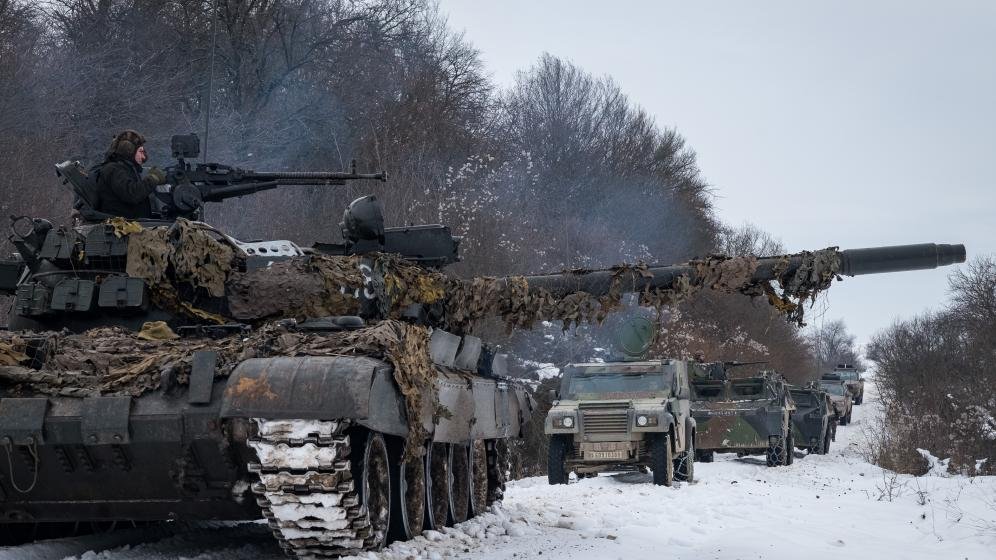
Portuguese and Romanian soldiers from the Pandur Mechanized Company and the 814th tank battalion respectively took part in Exercise EAGLE BLACK with French soldiers from the Collective Defense Battle Group (CDBG) on the military camp from Cincu in Romania. État-major des armées, Licence Ouverte.

Germany Has Money, Industry and a Leadership Problem

Germany is another central actor.

Berlin has significantly increased defense spending and continues to invest in ammunition, air defense, modernization and personnel. Germany also has one of Europe’s strongest industrial bases, which gives it an important role in any long-term effort to expand European military production.

Still, spending more money is not the same as becoming Europe’s military leader.
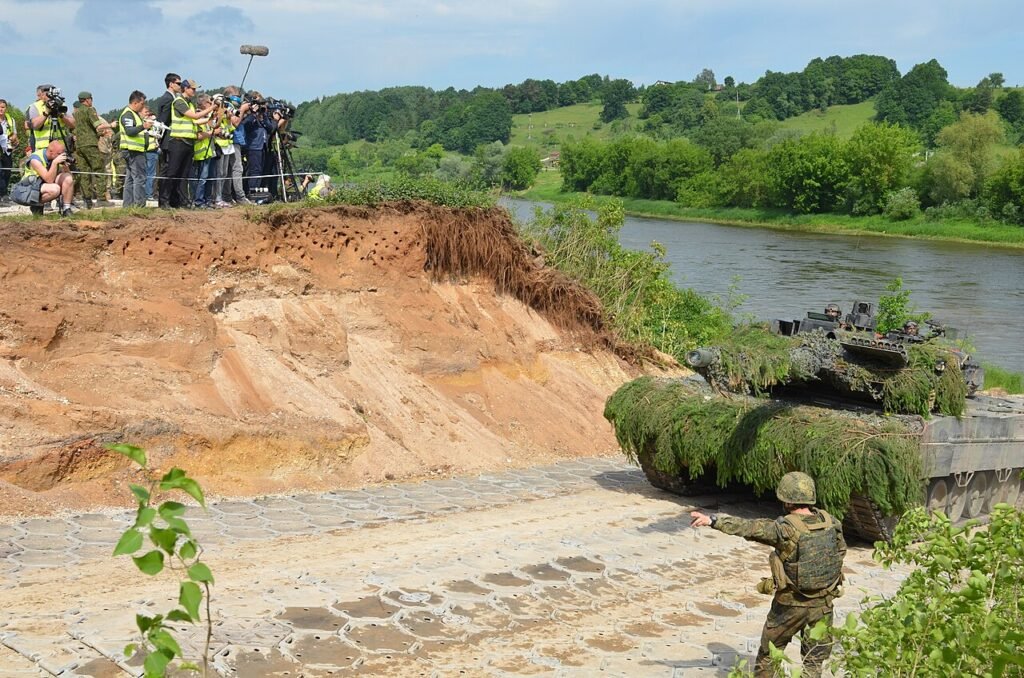
A German Army Soldier directs military vehicles onto land during one of the largest combined exercises in Lithuania, the Suwalki Gap River Crossing, as media observe the event, June 20. The river crossing is a part of Exercise Iron Wolf, a component of Saber Strike 17, conducted by NATO’s Enhanced Forward Presence Battle Groups Poland and Lithuania. The Battle Groups conducted operations and tested their ability to mobilize quickly across the river, overcoming terrain.

For many years, Germany was comfortable being Europe’s economic center while taking a more limited role in military affairs. That approach has changed since Russia’s invasion of Ukraine, but political caution has not disappeared completely. Germany now faces a larger strategic responsibility. If the United States reduces its role in Europe, Berlin will be expected not only to spend more but also to take greater responsibility for military planning, force readiness and long-term deterrence.

That transition could be more difficult than increasing the defense budget itself.

Poland Is Becoming More Important

Poland’s position is very different from that of France or Germany.

Warsaw sees Russian military power as a direct national security concern, not simply as a broader European problem. Poland has therefore invested heavily in its armed forces and has consistently supported a strong American military presence on NATO’s eastern flank.

At the same time, Poland’s own military expansion is changing the balance inside Europe.

Its growing land forces, large procurement programs and close relationship with the United States mean that Poland could become one of the most important military actors in a NATO that relies more heavily on European members. This could also shift the political center of European defense further east.
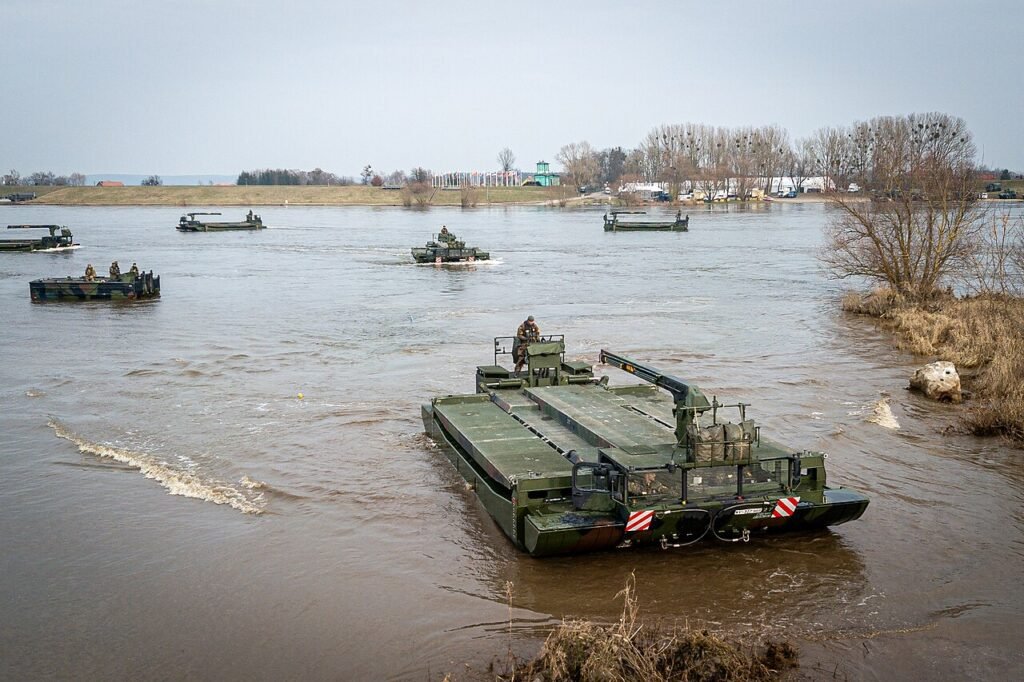
A M3 rig truck of the British-German amphibious engineer battalion arrives to shore and takes land, in Poland.

For years, the main discussions about European security were dominated by Paris, Berlin and London. Poland now has the potential to become much more influential, especially on issues related to Russia, land warfare, reinforcement and eastern-flank defense.

The Baltic States Would Face the Greatest Pressure

For Estonia, Latvia and Lithuania, any reduction in American involvement would be especially sensitive.

The Baltic states depend heavily on NATO’s ability to convince Russia that any attack would immediately involve the entire Alliance. Their geographic position leaves them with limited strategic depth and places them close to Russian territory.

NATO has strengthened the region considerably since 2022 through multinational forces, air policing, reinforcement planning and greater readiness. Even so, the Baltic states would probably be among the countries most concerned about a smaller American presence. Their security depends not only on forces already stationed in the region but also on the ability of NATO to reinforce them quickly during a crisis.

A stronger European role could help address this concern, but only if European forces have enough air defense, ammunition, logistics and transport capacity to move rapidly.
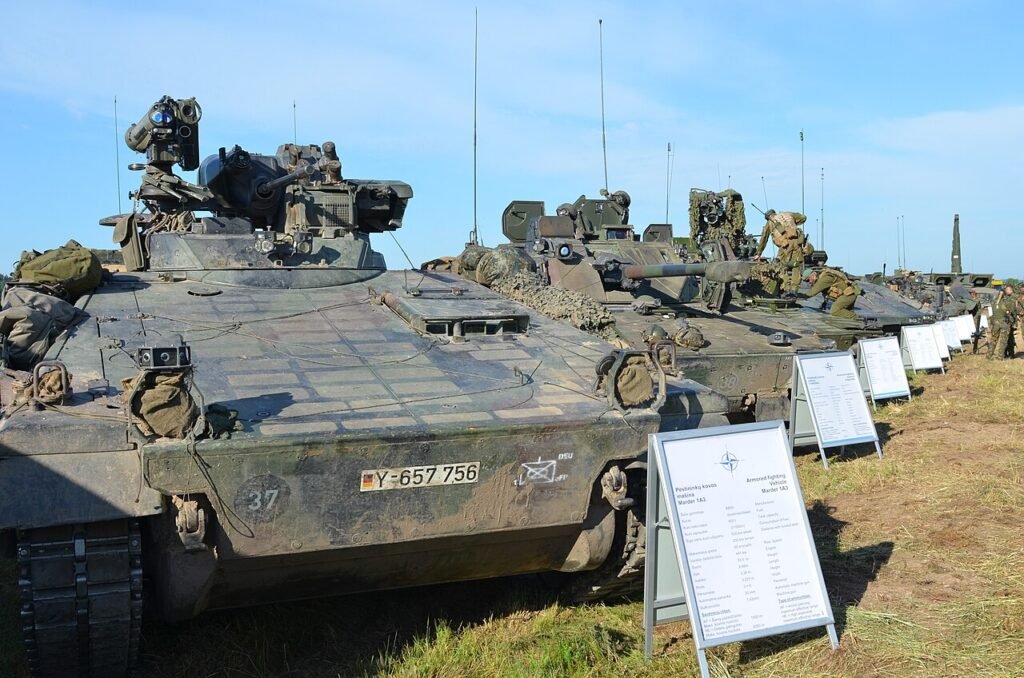
Prior to one of the largest combined exercises in Lithuania, the Suwalki Gap River Crossing, a display along the road showcases military vehicles from NATO’s Enhanced Forward Presence Battle Groups, during Exercise Iron Wolf, a component of Saber Strike 17, near Rukla, Lithuania, June 20. Battle Groups Poland and Lithuania conducted operations to test their ability to mobilize quickly across the river, overcoming terrain.

This remains one of the main weaknesses in Europe’s current defense structure.

Turkey Could Gain Strategic Weight

A smaller American footprint could also increase the importance of Turkey inside NATO.

Turkey sits at the intersection of several strategically important regions, including the Black Sea, the Balkans, the Caucasus, the Eastern Mediterranean and the Middle East. It also controls access between the Mediterranean and the Black Sea through the Turkish Straits under the Montreux Convention.

These geographic advantages already make Turkey an important NATO member, but they could become even more relevant if European allies are expected to take greater responsibility for regional security. Turkey also maintains one of NATO’s largest armed forces and has developed a significant domestic defense industry.

However, greater strategic importance would not automatically mean greater political influence.

Turkey and several European NATO members have disagreed on regional conflicts, foreign policy and alliance priorities in the past. A more European NATO would therefore have to manage these differences while making greater use of Turkish military capabilities and geography.
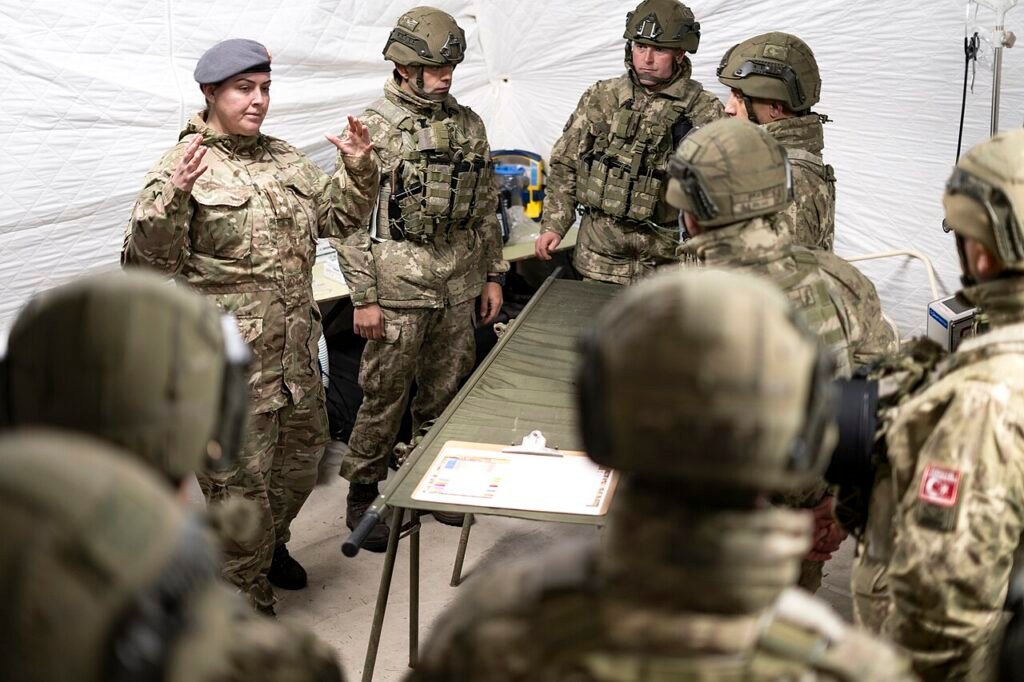
British and Turkish Soldiers train on the role two enhanced medical center (light) improving current wartime medical care capabilities during Exercise Steadfast Defender 24 in Poland, Feb. 28, 2024. The light version of the role 2 medicl center is an exercise tested medical capability concept that provides UK and NATO forces a more mobile tactical medical asset for trauma care within their area of operation. (U.S. Army photo by Sgt. 1st Class Kyle Larsen).

Europe Is Spending More, but Capability Takes Time

European defense spending is rising quickly.

NATO members have committed to higher levels of defense investment, while the European Union is also trying to improve military mobility, ammunition production, air defense, drone capabilities and industrial capacity.

These are important steps, but money does not immediately create military readiness.
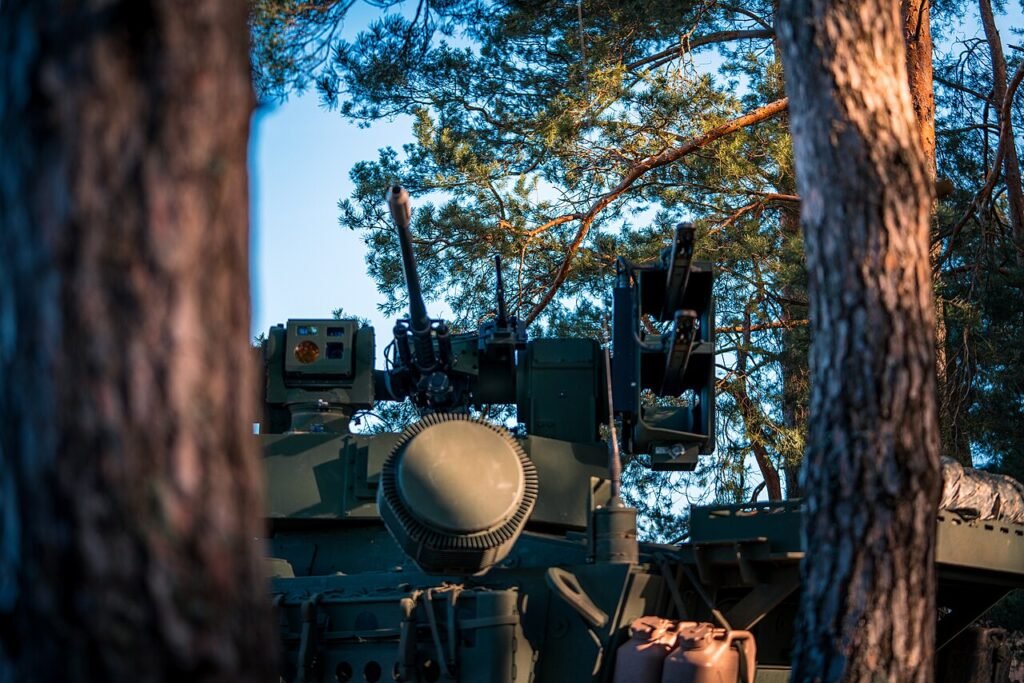
A prototype Maneuver Short Range Air Defense Stryker assigned to 5-4 Air Defense Artillery Battalion, positions at the edge of the wood line during Exercise Saber Strike 22 at BPTA, Poland on February 24, 2022. The M-SHORAD fills a critical capability for the Army and provides Air Defense for the Maneuver Force. U.S. Army photo by Maj. Robert Fellingham).

New production lines take years to build. Soldiers need to be recruited and trained. Ammunition stockpiles take time to replenish. Air defense systems require both launchers and large numbers of interceptors. Military mobility depends on railways, ports, bridges and logistics networks that must function during a crisis.

This creates one of the biggest risks in the current transition. Political expectations can change quickly, while military capacity develops much more slowly.

A Smaller American Role Could Strengthen NATO, but It Could Also Expose Divisions

There is a reasonable argument that greater European responsibility could ultimately make NATO stronger.

If European states become capable of providing more conventional deterrence, the United States could focus additional resources on other regions while still remaining the Alliance’s most powerful member. Such an arrangement could create a more balanced NATO. There is another possibility, however.

Western European countries may focus on strategic autonomy while eastern members continue to prioritize American protection. National procurement programs could compete with multinational projects. Countries could spend more on defense without agreeing on where military resources should be concentrated.

A smaller American role would therefore not automatically create a stronger or more unified Europe. It could also reveal how differently NATO members understand security.

For decades, U.S. military power helped reduce the importance of those differences. If Washington begins to step back, European governments will have to answer questions they have often been able to postpone.

Who leads European defense? Who provides the largest land forces? Who replaces American logistics and intelligence support? How should nuclear deterrence evolve? And how should NATO balance the eastern flank, the Arctic, the Mediterranean and the Black Sea at the same time?

The future of European security will depend less on whether the United States withdraws a certain number of troops and more on whether Europe can build the military capacity, political coordination and industrial base needed to carry a larger share of its own defense.

Sources:

  • NATO. “The Ankara Summit Declaration.” July 8, 2026.
  • NATO. “Deterrence and Defence.” Updated June 25, 2026.
  • Federal Government of Germany. “Federal Budget 2026: Investments for the Future.”
  • NATO. “Strengthening NATO’s Eastern Flank.” Updated June 17, 2026.
  • European Commission. “Defence Readiness Roadmap 2030.”
  • NATO. “European Allies to Take on New Leadership Roles in NATO’s Command Structure.” February 6, 2026.

Previous Post

Into the Blast Radius: Why EOD Robots Go First

Related Posts

Drone
Trade & Export Controls

The U.S. Drone Supply Chain Is Becoming a National Security Issue

August 14, 2026
REFORGER '91
Geopolitics

REFORGER and the Technical Problem Behind Military Mobility

June 24, 2026
U.S. Army Soldiers Conduct Operations in the Middle East - Patriot-Missile-Systems
Geopolitics

Patriot Systems: The Geopolitics of Air Defense in an Era of Missile Threats

June 19, 2026
The War Before the War: How Geopolitical Pressure Reaches Daily Life
Geopolitics

The War Before the War: How Geopolitical Pressure Reaches Daily Life

June 10, 2026
Iraqi-U.S. Joint Patrol Works to Deter Oil Looting
Geopolitics

The Quiet Military Layer Behind Energy Production

May 27, 2026
U.S. Navy SEALs, Chilean Navy SF, SOF Conduct VBSS Training
Geopolitics

VBSS: Visit, Board, Search and Seizure in Maritime Security

May 26, 2026
  • Trending
  • Latest
Heckler_&_Koch_G3_Holzschaft_Display_noBG

HK G3: A Rifle That Stayed Longer Than Expected

April 29, 2026
FN FAL: The Right Arm of the Free World

FN FAL: The Right Arm of the Free World

March 31, 2026
MG42-1

MG42 Machine Gun: WWII History, Specifications and Battlefield Impact

April 21, 2026
Operation Enduring Freedom

What Exactly Is a Private Military Company (PMC)?

September 6, 2025
U.S. military NATO

What Happens to European Security If America Steps Back?

August 28, 2026
Why EOD Robots Go First

Into the Blast Radius: Why EOD Robots Go First

August 24, 2026
The movement of a Russian column of tanks, infantry fighting vehicles and other vehicles during the war in Ukraine. Mil.ru, CC BY 4.0 .

Why Military Logistics Fails Before the Shooting Starts: Russia’s Road to Kyiv

August 17, 2026
Drone

The U.S. Drone Supply Chain Is Becoming a National Security Issue

August 14, 2026

Recent Articles

U.S. military NATO

What Happens to European Security If America Steps Back?

August 28, 2026
Why EOD Robots Go First

Into the Blast Radius: Why EOD Robots Go First

August 24, 2026
The movement of a Russian column of tanks, infantry fighting vehicles and other vehicles during the war in Ukraine. Mil.ru, CC BY 4.0 .

Why Military Logistics Fails Before the Shooting Starts: Russia’s Road to Kyiv

August 17, 2026
Drone

The U.S. Drone Supply Chain Is Becoming a National Security Issue

August 14, 2026
Drill & Defense

Drill & Defense is an independent defense and security platform covering firearms, military technology, geopolitics, energy security, and industry developments. We provide clear, structured, and practical insight for professionals, companies, and readers following the evolving defense landscape worldwide.

Follow Us

Browse by Category

  • Air Systems
  • Defense & Energy Strategy
  • Defense Industry
  • Defense Know-How
  • Defense Technologies
  • Doctrines & Concepts
  • Energy & Security
  • Energy Fundamentals
  • Energy Technologies
  • Firearms
  • Geopolitics
  • Global Security
  • History
  • Industry News
  • Knowledge Base
  • Land Systems
  • Legacy Systems & Structures
  • Market Analysis
  • Market Trends & Analysis
  • Military History
  • Military Systems
  • Naval Systems
  • Oil & Gas News
  • Pistols
  • Regulations & Frameworks
  • Rifles
  • SMGs & Machine Guns
  • Strategic Turning Points
  • Tech & Innovation Crossover
  • Trade & Export Controls

Recent Articles

U.S. military NATO

What Happens to European Security If America Steps Back?

August 28, 2026
Why EOD Robots Go First

Into the Blast Radius: Why EOD Robots Go First

August 24, 2026

© 2026 Drill & Defense. All rights reserved. Independent insights on firearms, defense, and energy. For business inquiries: info@drillanddefense.com | PRIVACY POLICY | COOKIE POLICY | TERMS AND CONDITIONS

Manage Consent

We use cookies to improve your experience. You can accept or refuse cookies; however, some features may not function properly without your consent.

Functional Always active
The technical storage or access is strictly necessary for the legitimate purpose of enabling the use of a specific service explicitly requested by the subscriber or user, or for the sole purpose of carrying out the transmission of a communication over an electronic communications network.
Preferences
The technical storage or access is necessary for the legitimate purpose of storing preferences that are not requested by the subscriber or user.
Statistics
The technical storage or access that is used exclusively for statistical purposes. The technical storage or access that is used exclusively for anonymous statistical purposes. Without a subpoena, voluntary compliance on the part of your Internet Service Provider, or additional records from a third party, information stored or retrieved for this purpose alone cannot usually be used to identify you.
Marketing
The technical storage or access is required to create user profiles to send advertising, or to track the user on a website or across several websites for similar marketing purposes.
  • Manage options
  • Manage services
  • Manage {vendor_count} vendors
  • Read more about these purposes
View preferences
  • {title}
  • {title}
  • {title}
No Result
View All Result
  • Defense Industry
    • Industry News
    • Defense Companies
    • Defense Technologies
    • Market Analysis
  • Military Systems
    • Land Systems
    • Air Systems
    • Naval Systems
    • Electronic & Cyber Systems
  • Firearms
    • Pistols
    • Rifles
    • SMGs & Machine Guns
    • Ammunition
    • Optics & Accessories
  • Geopolitics
    • Global Security
    • Defense & Energy Strategy
    • Tech & Innovation Crossover
    • Trade & Export Controls
  • Energy & Security
    • Oil & Gas News
    • Energy Technologies
    • Market Trends & Analysis
  • History
    • Military History
    • Doctrines & Concepts
    • Strategic Turning Points
    • Legacy Systems & Structures
  • Knowledge Base
    • Firearms Basics
    • Defense Know-How
    • Energy Fundamentals
    • Regulations & Frameworks
  • About
  • Contact
  • Login
  • Register

© 2026 Drill & Defense. All rights reserved. Independent insights on firearms, defense, and energy. For business inquiries: info@drillanddefense.com | PRIVACY POLICY | COOKIE POLICY | TERMS AND CONDITIONS