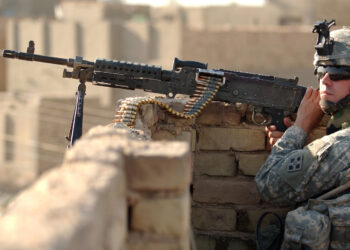

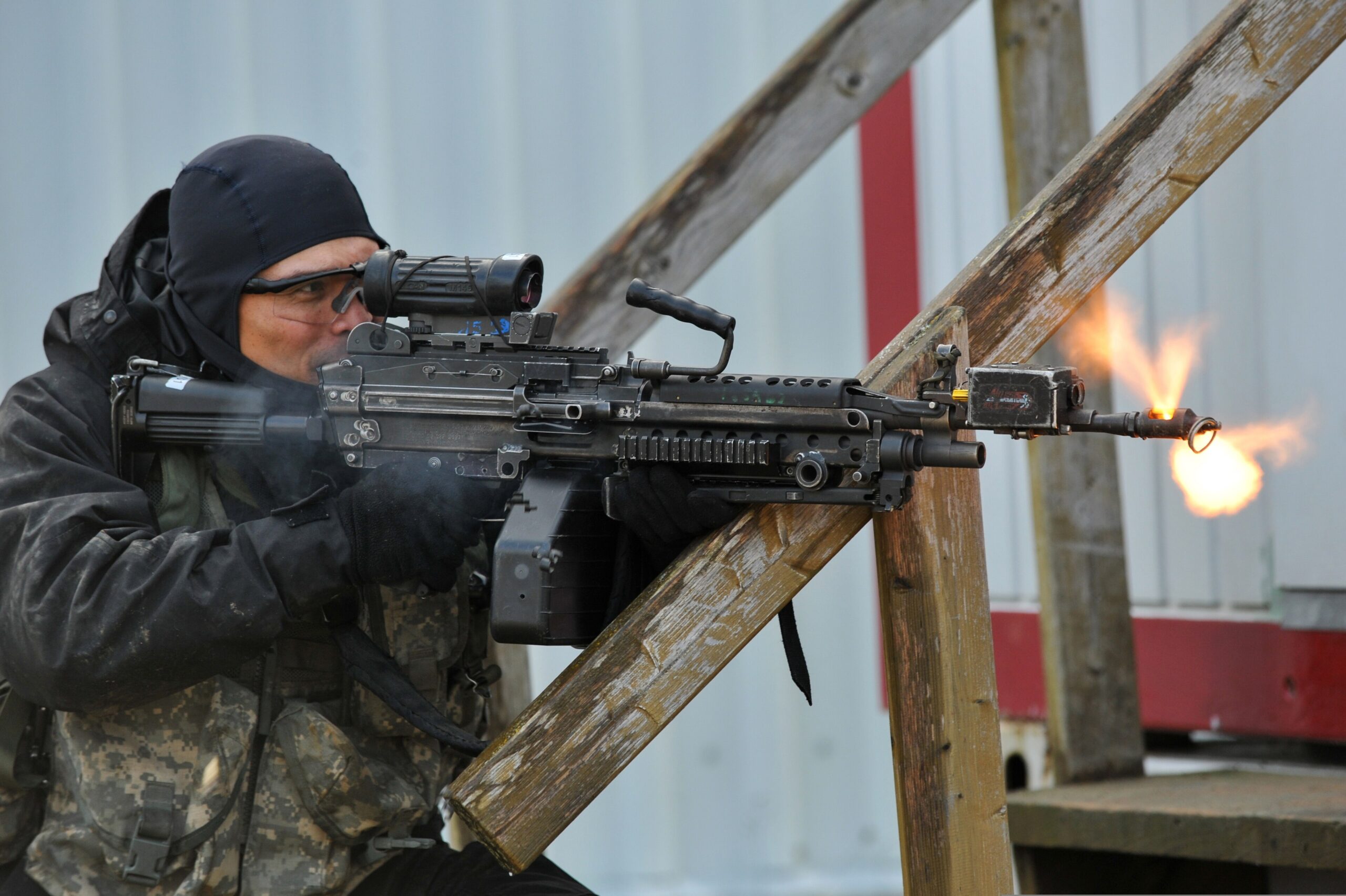
The M249 does not enter a firefight quietly. It announces itself through sustained fire, a stream of linked ammunition and the immediate attention it attracts from everyone who understands what a machine gun can do.

Yet its importance has never depended entirely on how many rounds it can fire. The weapon exists to influence enemy behavior. When an opposing force is forced to remain behind cover, break contact or redirect its attention toward the automatic rifleman, the M249 is already affecting the fight. Hits matter, but control of movement matters as well.
That responsibility comes with a less glamorous reality. The soldier carrying the M249 also carries the weapon’s additional ammunition, spare barrel, cleaning equipment and often several accessories. Firepower at squad level is not free. It is paid for in weight, maintenance and reduced mobility.
A Belgian Design Given an American Role
The M249 developed from the FN Minimi, a Belgian light machine gun designed around the 5.56×45mm NATO cartridge. The United States adopted the system during the 1980s to address a persistent problem within the infantry squad.
Standard rifles could provide automatic fire, but they were not designed to maintain it for extended periods. General-purpose machine guns could deliver considerably more firepower, but their weight and ammunition requirements made them less suitable for individual fire teams. The M249 occupied the space between those categories.
It offered belt-fed operation, a quick-change barrel and a rate of fire associated with a machine gun while remaining portable enough to accompany riflemen during dismounted movement. This combination gave each fire team an organic source of sustained automatic fire without requiring a separate medium machine-gun crew.
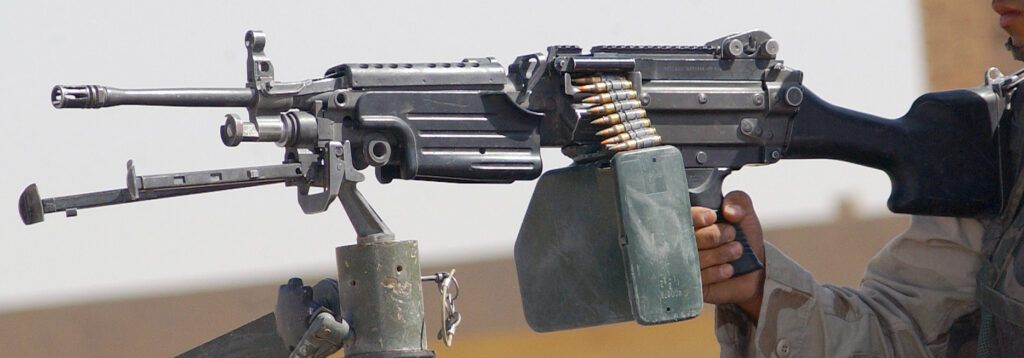
The result was not simply a lighter machine gun. It was a weapon connected directly to the structure of the squad.
Why Belt Feed Still Matters
A thirty-round magazine and a belt containing one or two hundred rounds may fire the same cartridge, but they do not create the same tactical effect.
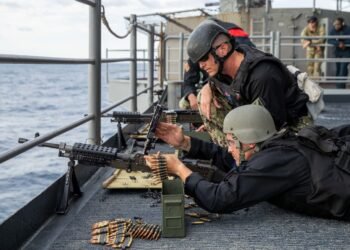
A belt-fed weapon allows the gunner to maintain longer bursts and reduce the number of interruptions caused by reloading. This is particularly valuable when covering movement, responding to an ambush or preventing an opposing force from repositioning. The ammunition supply can also be extended by linking additional belts, although doing so creates its own handling challenges.
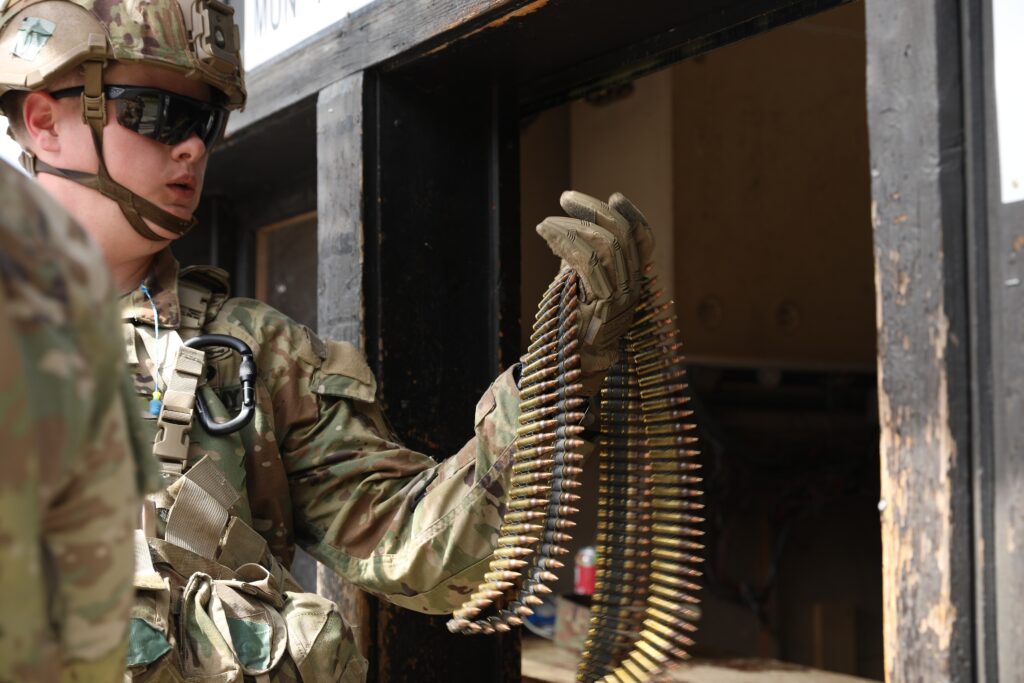
The M249 can accept compatible rifle magazines as an emergency feeding option. On paper, this appears to offer useful logistical flexibility. In practice, magazine feeding has generally been treated as a secondary capability rather than the weapon’s normal operating method. A rifle magazine cannot provide the same volume of sustained fire as linked ammunition, and feeding reliability may vary under demanding conditions. The belt is therefore not just another way to load the weapon. It defines much of what the M249 is expected to accomplish.
Built Around Heat and Repetition
Automatic fire creates heat quickly. If that heat is not controlled, accuracy declines, parts experience greater stress and ammunition may become vulnerable to unintended ignition inside a hot chamber.
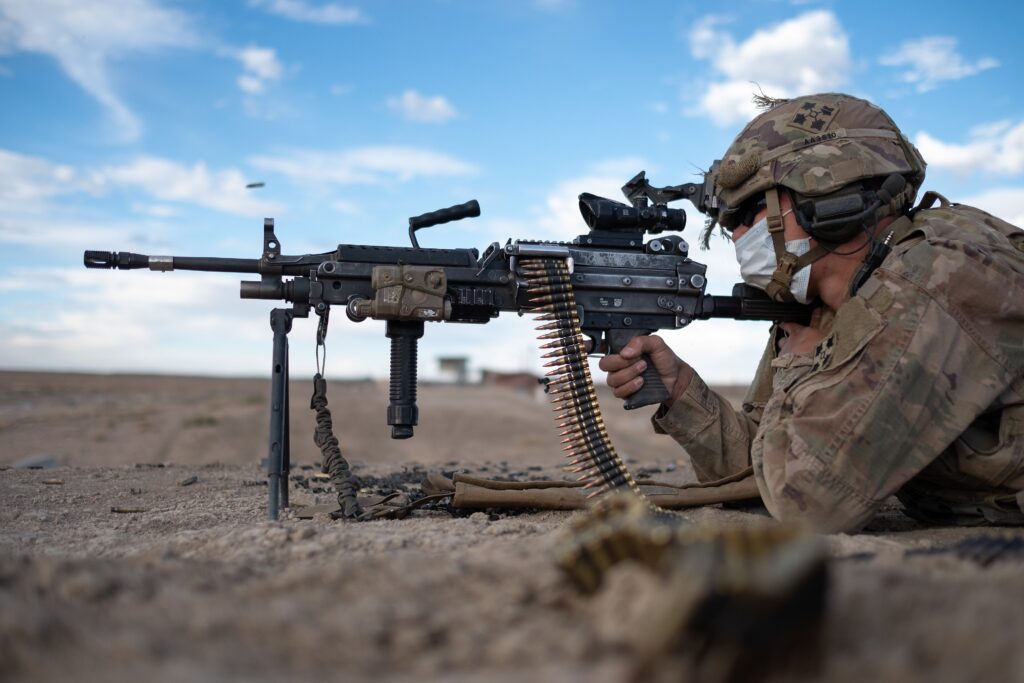
The M249 addresses this problem through an open-bolt operating system and a removable barrel. Firing from an open bolt allows air to circulate through the chamber between bursts. When the barrel becomes excessively hot, the gunner can replace it with a spare and continue firing. This arrangement gives the M249 a level of endurance that ordinary service rifles cannot reasonably match. It does not make the weapon immune to overheating, however. Barrel changes, burst discipline and ammunition management remain essential.
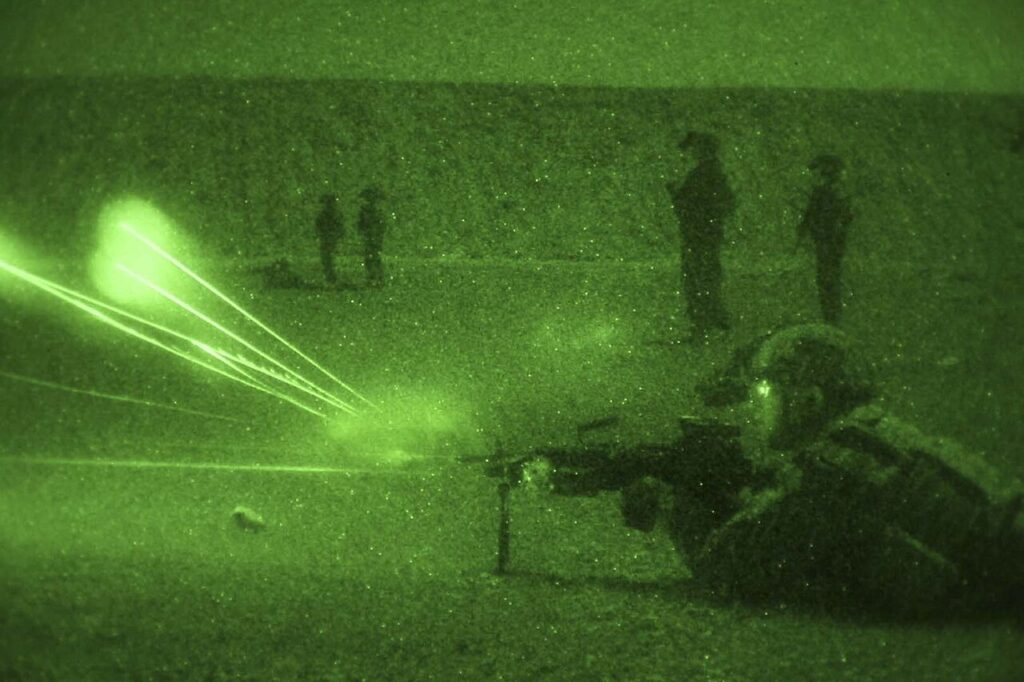
A poorly trained gunner can consume hundreds of rounds while producing little meaningful suppression. A disciplined gunner can use shorter, controlled bursts to shape the same engagement while preserving ammunition and limiting heat. The weapon provides capacity, but training determines whether that capacity becomes an advantage or a liability.
The Weight Behind the Trigger
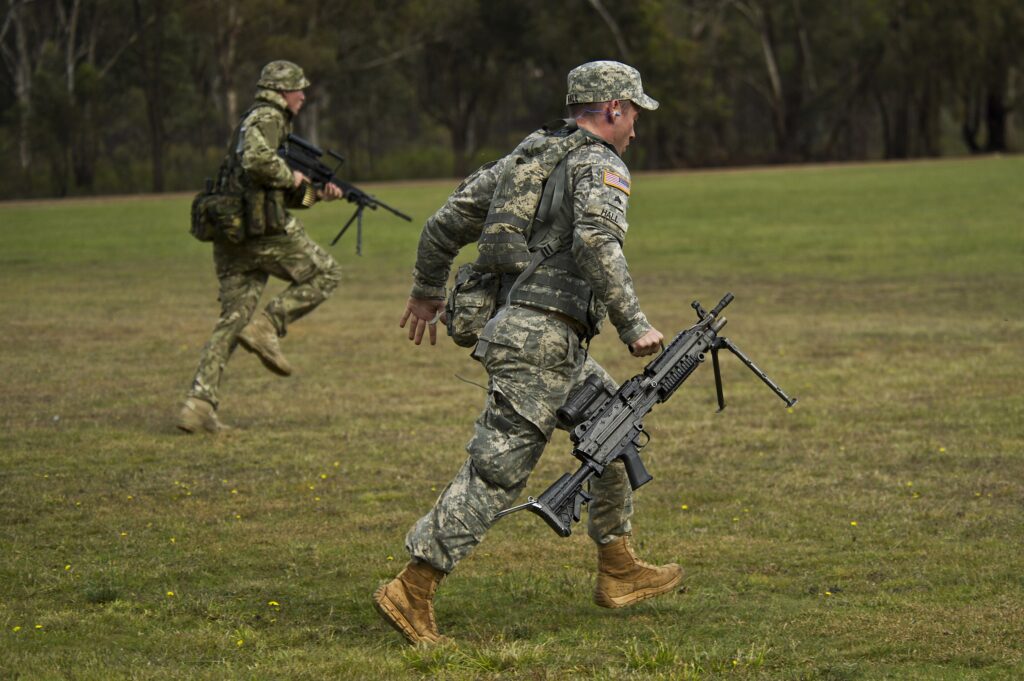
Official specifications place the standard M249 at approximately 18 pounds before ammunition and many common accessories are added. A loaded ammunition container, optical sight, laser, spare barrel and additional linked belts can push the complete fighting load much higher.
Consider what this means during a long movement over broken terrain. The automatic rifleman must keep pace with soldiers carrying lighter weapons while retaining enough energy to operate the squad’s primary source of automatic fire when contact begins.
Weight also changes how the weapon behaves in confined spaces. The full-length M249 offers stability from supported firing positions, but it can become awkward inside vehicles, buildings and narrow passageways. Short-barrel configurations and collapsible stocks improve handling, although shorter systems may introduce compromises involving muzzle blast, velocity and controllability. The question is not whether the M249 is heavy. It clearly is when compared with a rifle. The more useful question is whether the suppression it provides justifies the weight under a particular mission profile.
For many conventional infantry formations, the answer remained yes for decades.
Reliability Is More Than the Weapon
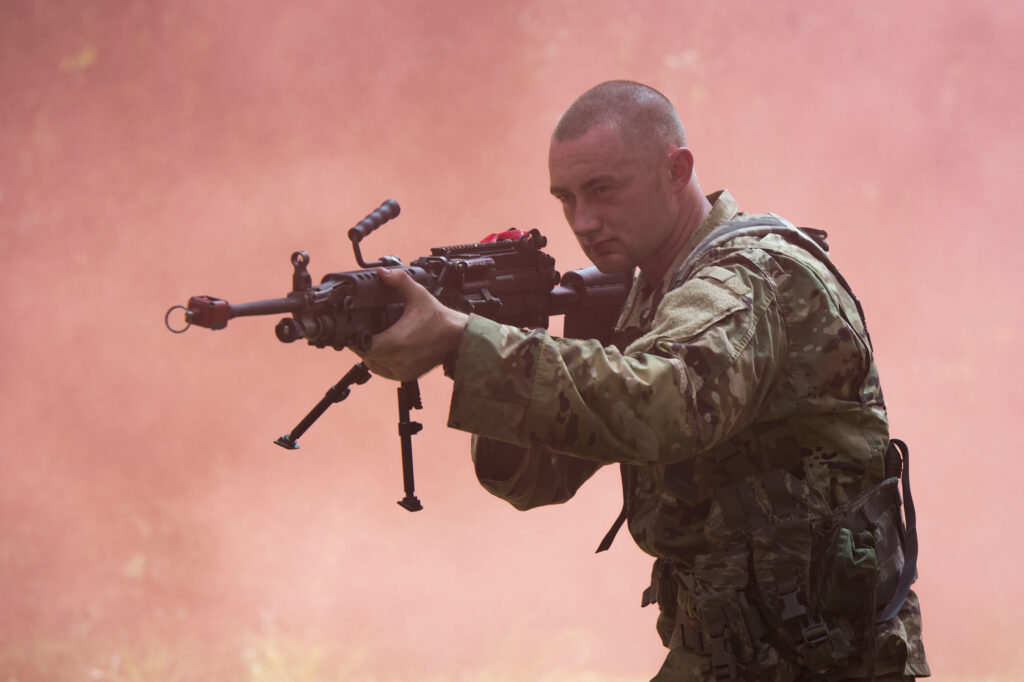
The M249 has received both strong praise and sharp criticism from its users. Some soldiers trusted it as the weapon that could dominate an engagement. Others encountered worn components, feeding problems or systems that had remained in service for many years. Both experiences can be genuine.
A machine gun is especially sensitive to maintenance standards, ammunition condition, belt alignment and component wear. The performance of a recently serviced weapon cannot be compared fairly with that of an older system that has passed through multiple units, deployments and training cycles.
The ammunition belt must feed correctly. The gas system must remain serviceable. The barrel must be inspected, and the gunner must understand immediate and remedial actions. Even the way the ammunition container is attached can affect how smoothly the belt enters the feed tray.
This does not mean every malfunction can be blamed on the operator. It means reliability should be examined as a complete system involving the weapon, its age, its ammunition, maintenance support and user training.
The M27 Debate Changed the Definition of Suppression
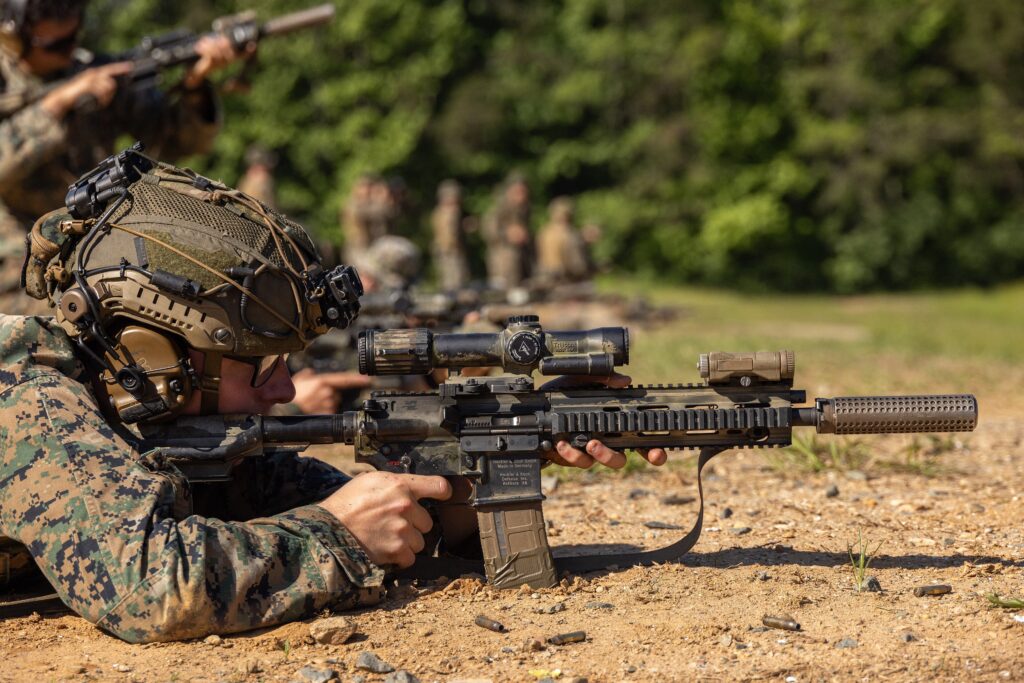
The United States Marine Corps began replacing many of its M249s at squad level with the M27 Infantry Automatic Rifle. The decision represented more than a change in equipment. It challenged the assumption that effective suppression required a belt-fed weapon.
The M27 is lighter, more compact and capable of accurate semiautomatic fire. Its supporters argued that suppression could be achieved through precise, observable fire rather than a larger volume of rounds. Its rifle-like appearance also made the automatic rifleman less visually distinct from other members of the squad.
The trade-off is equally clear. A magazine-fed rifle cannot reproduce the M249’s continuous belt-fed output. Reloading occurs more frequently, barrels cannot be exchanged as quickly, and prolonged automatic fire places different demands on the system.
Which approach is better?
The answer depends on what the squad is expected to do. A highly mobile force operating across short engagement distances may value precision and reduced weight. A unit defending a position or covering movement across exposed terrain may place greater value on sustained fire.
The M249 and M27 debate is therefore not merely about two weapons. It reflects two different interpretations of how suppression should be generated.
M250 Is Replacing It, but Not Everywhere at Once
The U.S. Army selected the M250 Automatic Rifle and its 6.8mm ammunition as the next-generation replacement for the M249 within close-combat formations. The new system is intended to provide greater effective range, improved performance against modern protective equipment and integration with advanced fire-control technology.
Replacement does not mean the M249 will disappear immediately.
Large military inventories rarely change in a single movement. Weapons remain in reserve formations, support units, training organizations and storage long after newer systems enter frontline service. Ammunition availability, maintenance infrastructure, unit priorities and procurement schedules all influence the pace of transition.
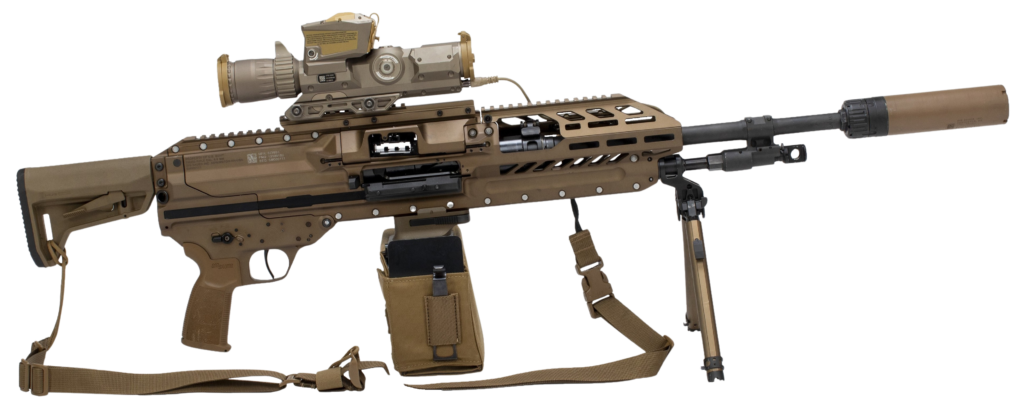
The 5.56mm M249 may also remain attractive to users who value its established supply chain, relatively light ammunition and compatibility with existing NATO stocks. The M250 brings greater ballistic performance, but its ammunition and complete combat load create new considerations of their own.
The M249 is entering a transitional stage rather than reaching a clean endpoint.
More Than a High Rate of Fire
The M249’s strongest feature is not its cyclic rate. It is the ability to give a small infantry element an independent base of fire that can move with the squad.
Its weaknesses are equally inseparable from that role. The weapon is heavy, ammunition disappears rapidly, and effective employment demands considerably more judgment than simply holding the trigger. It rewards teams that understand positioning, communication and fire control. It punishes those that treat suppression as uncontrolled ammunition expenditure.
After more than four decades of American service, the M249 is being overtaken by changing ammunition requirements, improved optics and a renewed focus on fighting opponents equipped with modern body armor. Even so, its operational logic remains relevant.
Every infantry squad needs a way to restrict enemy movement while its own members maneuver. Whether that effect comes from a belt-fed M249, a precision-oriented automatic rifle or a new 6.8mm system, the underlying requirement has not disappeared.
The equipment is changing. The burden of controlling the fight still belongs to the soldier behind the automatic weapon.
Sources:
- U.S. Army, M249 5.56mm Squad Automatic Weapon (SAW)
- U.S. Army Infantry Doctrine Supplement, Machine Gun Specifications and Tactical Employment
- U.S. Army, Army Awards Next Generation Squad Weapon Contract
- U.S. Army, Army Moving Forward with Next Generation Squad Weapon Program
- Marine Corps Systems Command, Marines to Receive More M27s
- U.S. Marine Corps, Supporting the Future Fight: Modernizing Infantry Capabilities