
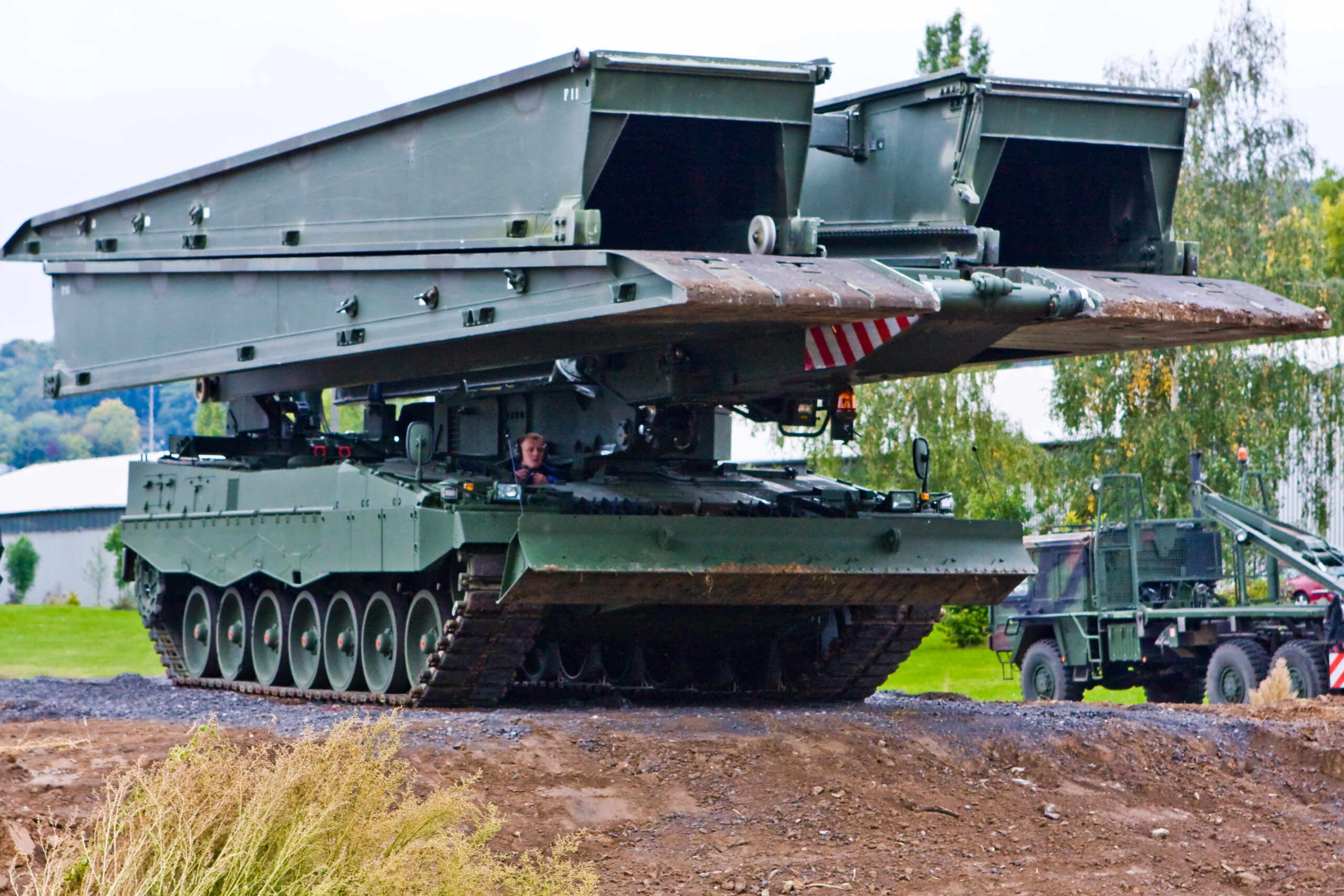
In modern land warfare, mobility is not only about speed. A main battle tank can have a powerful engine, advanced suspension, heavy armour, and excellent firepower, but all of that becomes less useful when a river, anti-tank ditch, destroyed bridge, cratered road, or steep obstacle blocks the route. This is where combat engineering becomes decisive. The Panzerschnellbrücke LEGUAN auf Leopard 2-Fahrgestell is one of those systems that may not look as dramatic as a tank firing its main gun, but it can decide whether an armoured formation keeps moving or stops at the worst possible moment.

The name itself explains the system quite well. Panzerschnellbrücke means armoured rapid bridge. LEGUAN is the bridge system. Auf Leopard 2-Fahrgestell means it is mounted on a Leopard 2 chassis. So this is not simply a bridge carried by a truck. It is a battlefield bridge layer built to move with heavy armoured units and support them under demanding conditions.
Why a Bridge Layer Matters on the Battlefield
A battlefield is rarely a clean highway. Even before direct enemy action, terrain can slow down armoured forces. Rivers, canals, ravines, damaged bridges, anti-tank ditches, and broken roads can all create natural or artificial choke points. In a high-intensity conflict, these obstacles become even more important because they can be deliberately prepared, mined, watched by artillery, or targeted by drones.
For armoured forces, stopping is dangerous. A halted column is easier to observe, easier to target, and harder to reorganize. That is why military mobility is not only about engine power or road speed. It is also about the ability to overcome obstacles quickly and continue the mission without losing momentum.
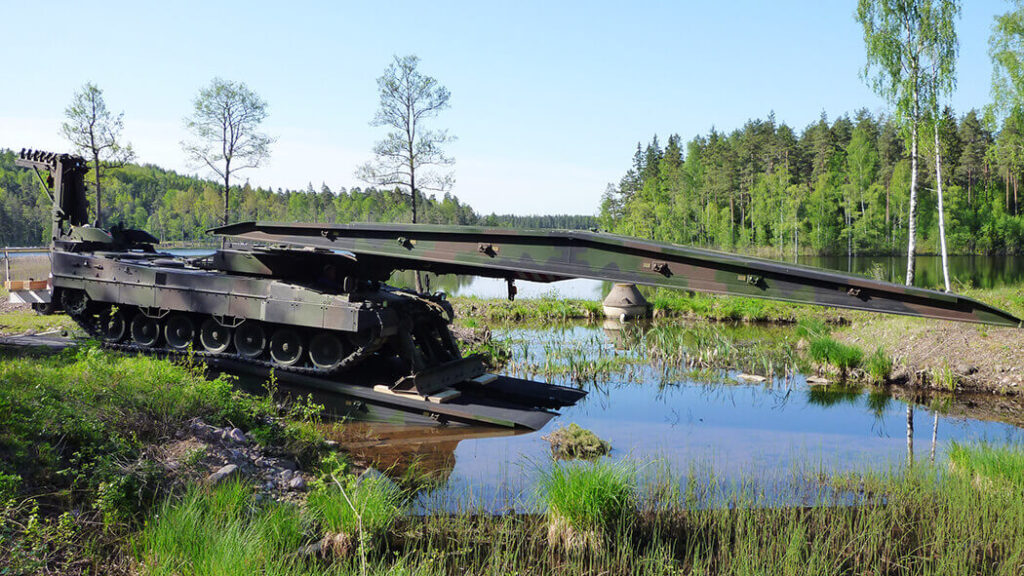
The LEGUAN answers this exact problem. Its job is simple in concept but complex in execution: arrive with the combat force, place a bridge across an obstacle, allow heavy vehicles to cross, then retrieve the bridge if needed and continue the mission. In practice, that means engineering troops can create a crossing point without waiting for slow, large-scale construction equipment.
The Leopard 2 Chassis Advantage
Mounting the LEGUAN on a Leopard 2 chassis makes sense from both a tactical and logistical perspective. The Leopard 2 is a heavy tracked platform designed for armoured manoeuvre. By using the same basic mobility class as the tanks it supports, the bridge layer can travel with armoured formations instead of lagging behind on softer or broken terrain.
From an operational perspective, this matters. A bridge layer that cannot keep up with the vehicles it is supposed to support creates a bottleneck before the obstacle is even reached. The LEGUAN on Leopard 2 chassis reduces that problem by offering mobility comparable to the Leopard 2 main battle tank family. For armies already operating Leopard 2 vehicles, this also creates advantages in training, maintenance, spare parts, recovery, and support infrastructure.
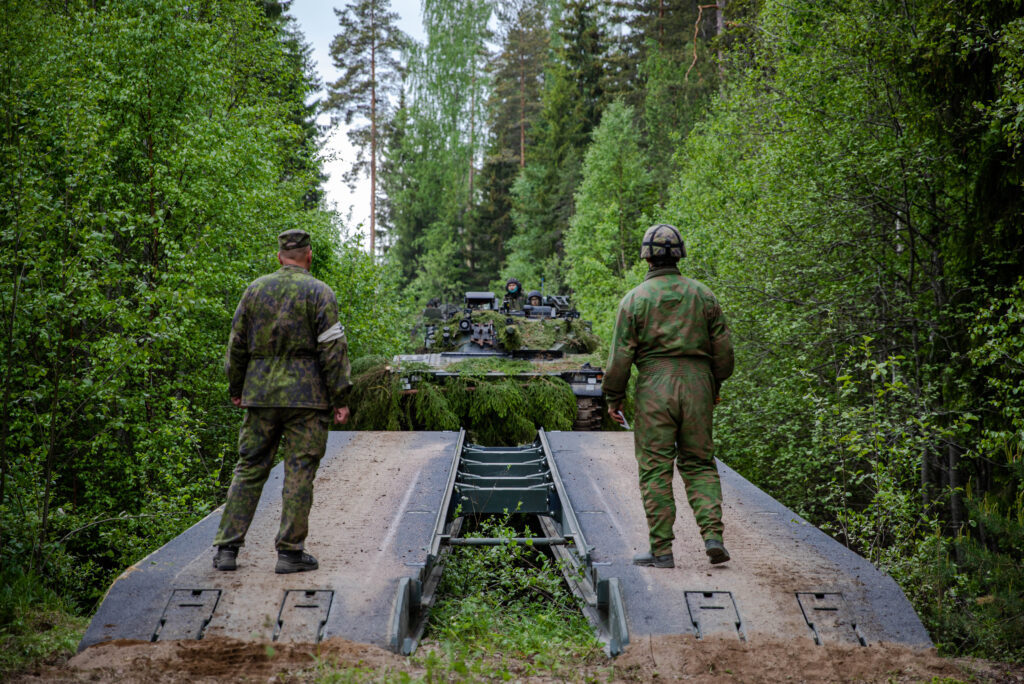
Protection is another important factor. Combat engineers often work in exposed and dangerous environments. They are asked to solve practical problems while everyone else is trying to move, fight, or survive. A tracked armoured bridge layer gives the crew a protected platform from which the bridge can be deployed and retrieved. That does not make the vehicle invulnerable, of course, but it is very different from sending unprotected equipment forward near a contested crossing point.
Bridge Options and Load Capacity
The LEGUAN system is modular and can work with different bridge configurations. According to KNDS, the system can use 14-metre and 26-metre bridges. The 14-metre bridge weighs around 5.5 tonnes, while the 26-metre bridge weighs around 11 tonnes. These bridges are designed for MLC 80 load capacity requirements, which means they are intended to support very heavy military vehicles.
This becomes especially relevant as modern armoured vehicles continue to increase in weight. Main battle tanks, recovery vehicles, infantry fighting vehicles with add-on armour, artillery systems, and heavy support vehicles all place serious demands on bridging equipment. A bridge that cannot support the heaviest vehicles in the formation becomes a tactical limitation. The LEGUAN is designed specifically for the heavy end of the battlefield.
The Bundeswehr states that the bridge has a load capacity of more than 70 tonnes and can be used by all Bundeswehr combat vehicles. That is important because the German Army operates heavy platforms such as Leopard 2 variants, PzH 2000 self-propelled howitzers, and other armoured systems. A bridge layer in that environment must be more than just mobile. It must be strong enough to keep the whole combined arms package moving.
How the System Is Used
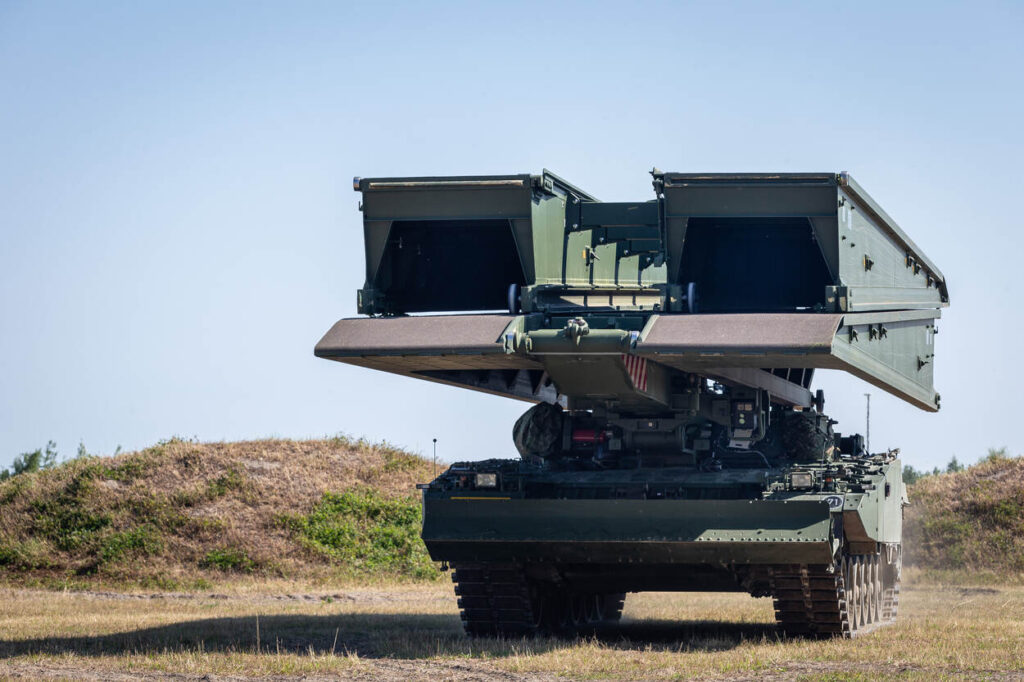
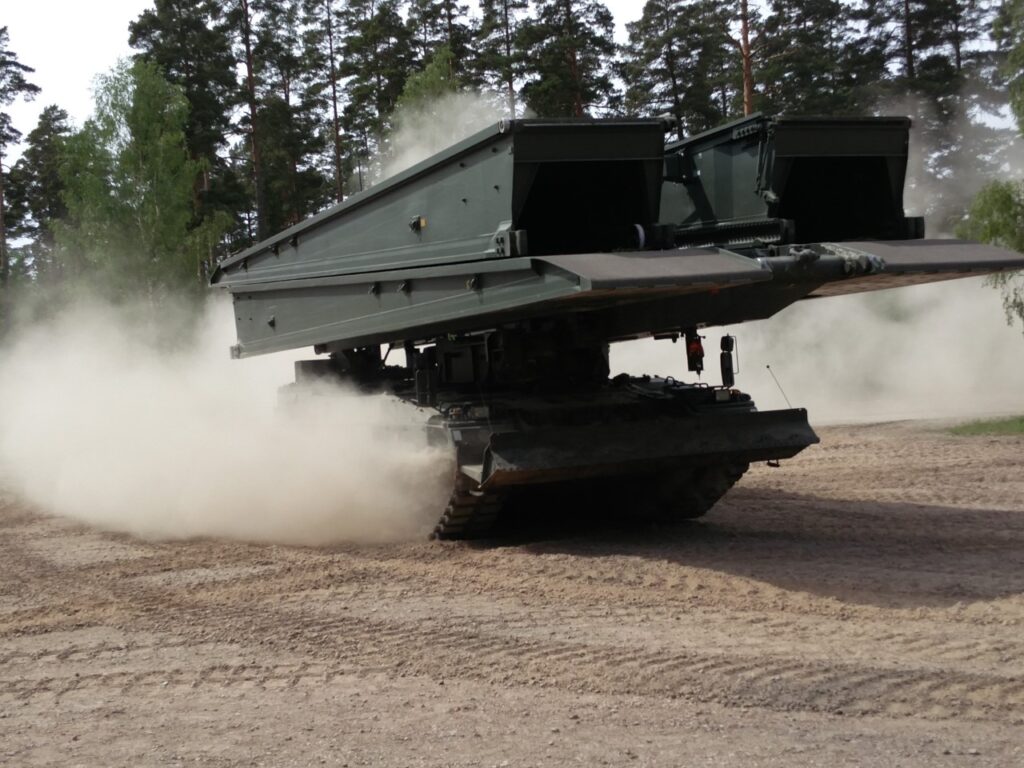
The LEGUAN is designed to deploy bridges quickly from the vehicle. One of its operational advantages is that the bridge can be deployed and retrieved from the protected cabin. This reduces crew exposure and supports operations in difficult conditions, including day and night use.
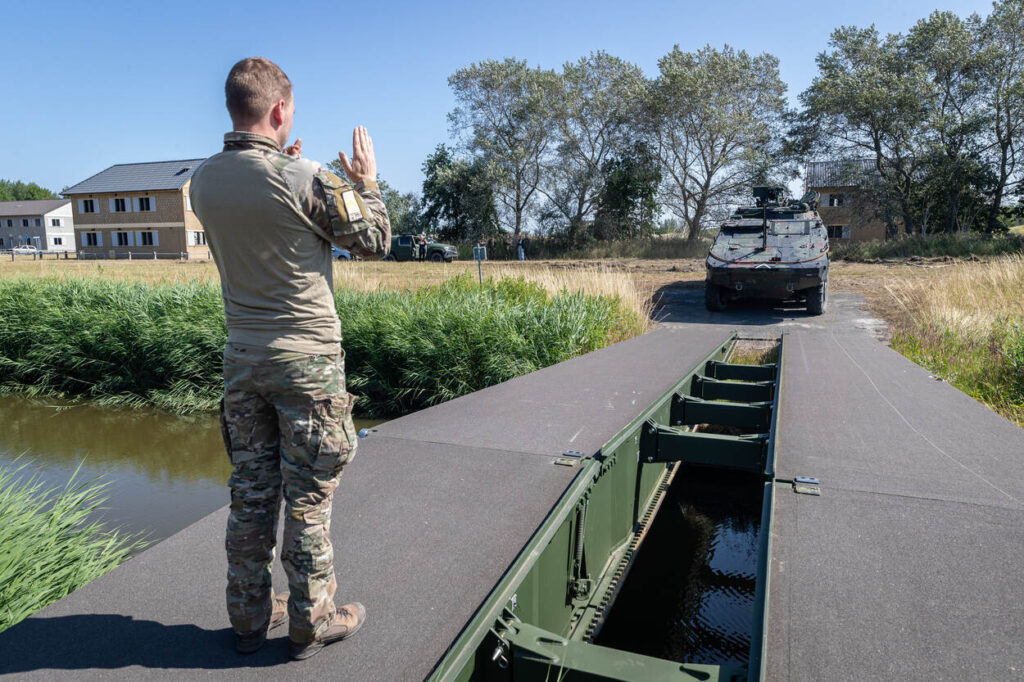
Its tactical value becomes apparent in obstacle-crossing scenarios. The vehicle approaches an obstacle, positions itself, launches the bridge, and allows other vehicles to cross. Depending on the mission, the bridge may remain in place for following forces or be recovered later. This creates flexibility. A unit can create a temporary crossing without permanently building a bridge and without relying on civilian infrastructure that may already be destroyed or under observation.
The system’s low-profile launching method is also worth noting. Traditional scissor-type bridge layers raise the bridge high during deployment, which can create a larger visual signature. Systems that launch more horizontally can reduce the visible silhouette during the bridging process. On a modern battlefield filled with drones, sensors, and long-range fires, signature management is not a small issue.
Replacing Older Systems
In German service, the LEGUAN is intended to gradually replace the older Biber bridge layer. The Biber itself was an important system, but it was based on the Leopard 1 chassis and designed for an earlier generation of armoured vehicles. As tanks and support vehicles became heavier, the need for a more capable bridge layer became obvious.
This has been a consistent issue in military engineering. Support systems must evolve with frontline combat vehicles. When tanks gain more armour, more weight, and more protection, bridging equipment must follow. Otherwise, mobility becomes uneven: the tank may be modern, but the bridge system becomes the weak point.
The LEGUAN reflects that shift. It is not merely a new vehicle for engineers. It is part of a broader modernization of armoured mobility.
More Than a German System
Although the German name often makes people think of the Bundeswehr first, LEGUAN is not only a German story. KNDS presents it as a system used internationally and adaptable to different platforms. The bridge system has been associated with tracked and wheeled carriers, including Leopard-based vehicles and other platforms. That flexibility helps explain why it has attracted interest from multiple armed forces.
For countries operating Leopard 2 tanks, the Leopard 2-based LEGUAN is especially logical. It provides commonality with the tank fleet and supports heavy manoeuvre units. In recent procurement announcements, KNDS has also emphasized the LEGUAN LEOPARD 2’s mobility and logistics commonality with the Leopard 2 main battle tank.
This matters because military procurement is not only about buying a vehicle. It is about sustaining it for decades. A bridge layer must be transportable, maintainable, trainable, and compatible with existing doctrine. The LEGUAN’s success comes partly from the fact that it fits into existing armoured force structures rather than requiring a completely separate ecosystem.
Operational Significance
The LEGUAN is a good reminder that engineering assets are often underappreciated in public discussions of military power. People usually focus on tanks, missiles, drones, air defence, or aircraft. Those systems are important, but without mobility support, even the strongest armoured force can be slowed down by geography.
A destroyed bridge can stop a tank battalion. A narrow crossing can create a target-rich traffic jam. A river line can turn into an operational barrier. In that context, a vehicle like the LEGUAN is not just support equipment. It is a combat enabler.
There is also a broader lesson for modern defence planning. Mobility, logistics, and engineering are not secondary topics. They are part of combat power. The side that moves faster, crosses obstacles faster, repairs routes faster, and keeps formations supplied has a major advantage. The LEGUAN exists for exactly that reason.
Why It Matters
The Panzerschnellbrücke LEGUAN auf Leopard 2-Fahrgestell may not have the public image of a main battle tank, but it belongs in the same conversation about modern armoured warfare. It gives heavy forces the ability to cross obstacles quickly, supports battlefield tempo, and reduces dependence on fixed infrastructure.
Its strength is not only in the bridge itself. It is in the combination of a heavy-load bridge system, protected crew operation, Leopard 2 mobility, and integration into armoured formations. In a world where battlefields are increasingly observed, targeted, and disrupted, the ability to keep moving may be one of the most valuable forms of protection.
While main battle tanks usually receive more public attention, systems such as the LEGUAN often determine whether those forces can continue their movement across difficult terrain.
Sources:
- KNDS, “LEGUAN”
- Bundeswehr, “Der Brückenlegepanzer Leguan”
- Bundeswehr, “EFP: Die vermutlich schnellste Brücke der Welt”
- KNDS, “KNDS to Equip Lithuania with LEGUAN Bridge Layers”
- Janes, “KMW details new Boxer Leguan bridging module”