
A road can be reopened on a map long before it is safe to drive. A village can be liberated long before its gardens, wells, barns, and field edges are usable again. In Ukraine, that difference matters. Mines and unexploded ordnance do not respect the moment when soldiers move away. They remain in soil, grass, tree lines, farm tracks, industrial yards, riverbanks, and damaged settlements.

For that reason, demining vehicles deserve more attention than they usually receive. They are not glamorous battlefield systems. They do not create the same public reaction as drones, air defense, artillery, or armored vehicles. But without them, recovery stays theoretical. A school cannot safely reopen if the surrounding area is contaminated. A farmer cannot simply “return to production” if a tractor may hit an anti-vehicle mine. A power repair crew cannot restore infrastructure if access roads are unsafe.
Ukraine’s problem is not small. UNMAS describes the country as facing the world’s most extensive explosive ordnance contamination challenge, with national estimates suggesting that roughly 25 percent of Ukrainian territory, more than 139,000 square kilometers, is suspected of contamination. That number is difficult to visualize, so let’s make it simpler: it is larger than many countries. And unlike a destroyed building, contaminated land may look normal from a distance.
Why Demining Vehicles Matter Now
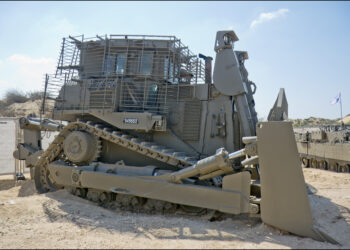
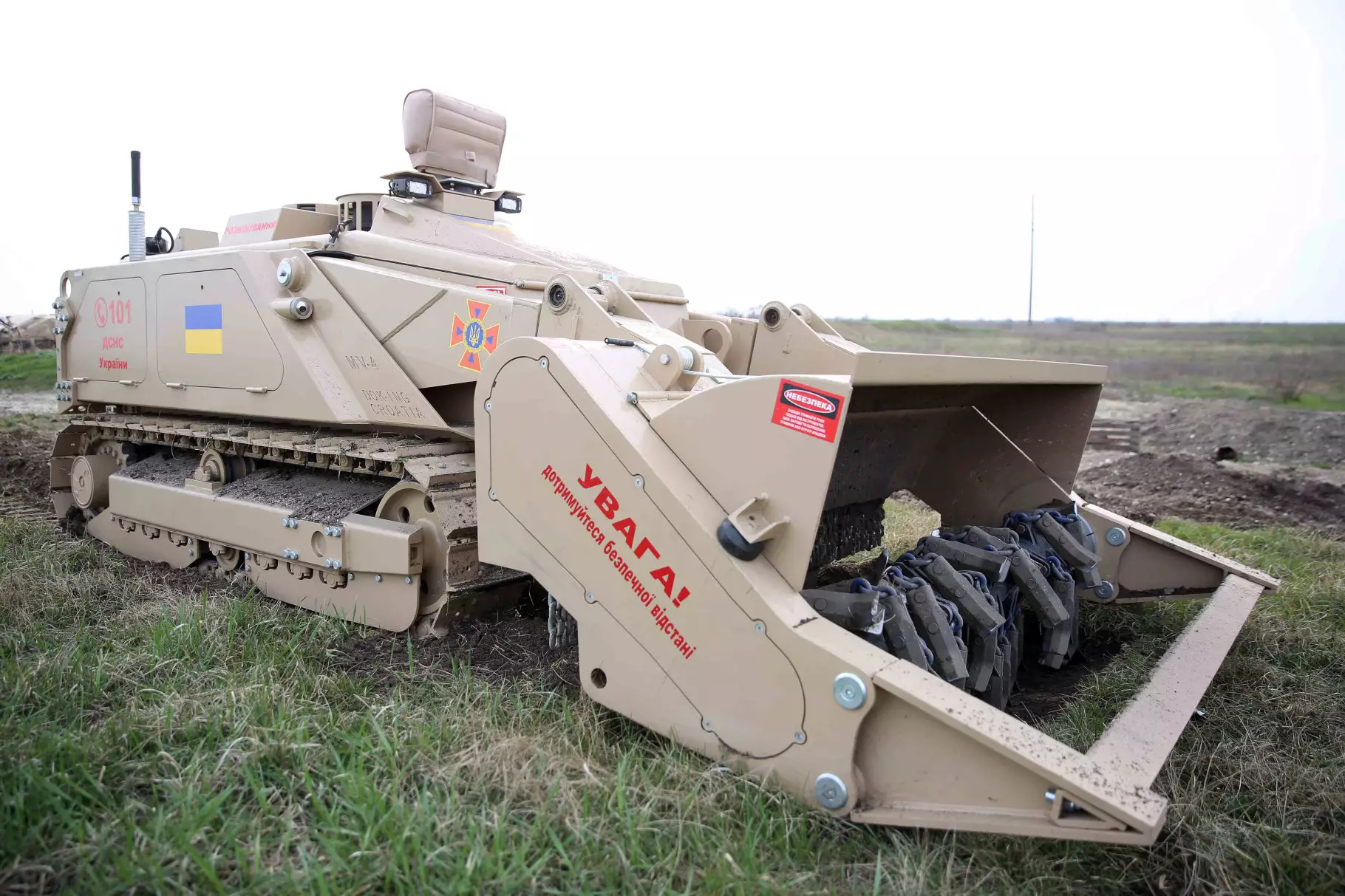
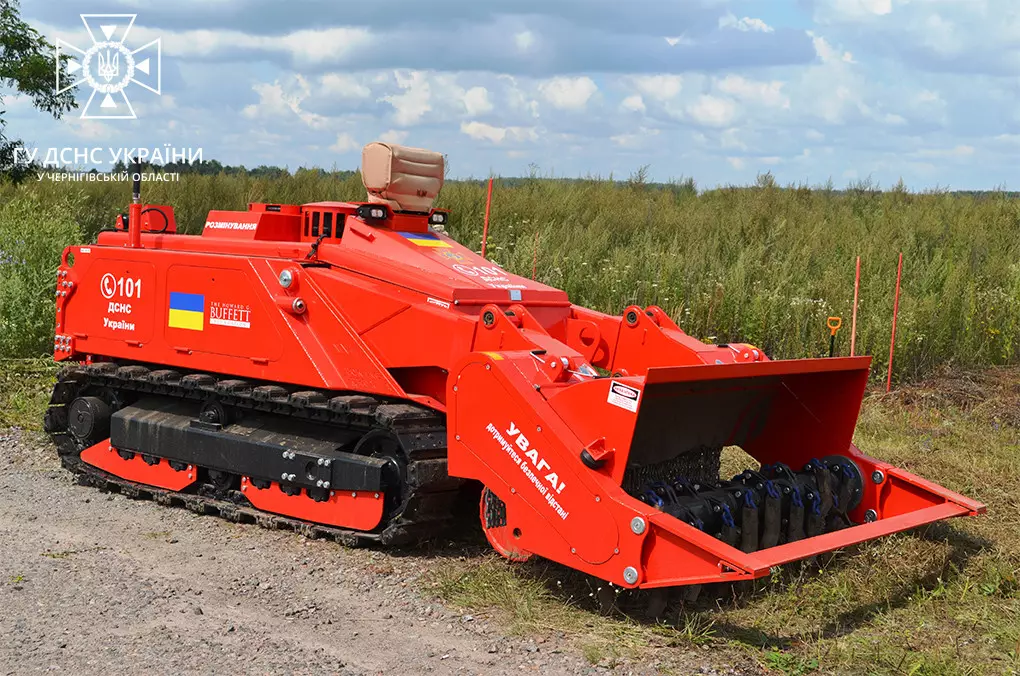
The first mistake is to think of demining vehicles as simple “mine destroyers.” They are better understood as risk-reduction platforms. They allow teams to enter dangerous areas without putting a human body first in line. Depending on the machine, they may use flails, tillers, rollers, excavator-style arms, armored cabins, cameras, or remote-control systems to disturb soil, expose threats, trigger mines, or prepare ground for follow-up inspection.
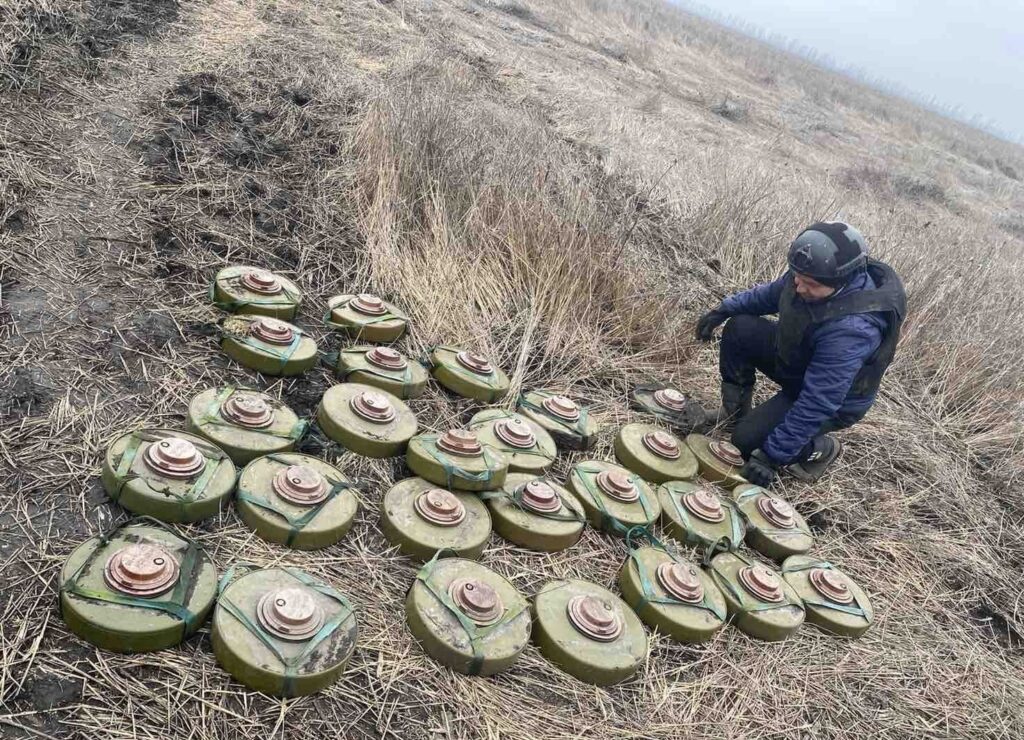
A machine may clear vegetation, process soil, and reduce immediate danger, but humanitarian demining requires verification. The end goal is not just to push through an obstacle. The end goal is to return land to civilian use with confidence. That is a different standard from military breaching, where the priority may be opening a temporary lane under pressure.
In Ukraine, both needs exist. Military engineers need ways to cross mine belts and defensive obstacles. Civilian mine action teams need a slower, documented process for roads, farmland, villages, and infrastructure. Demining vehicles sit between these two worlds. They are technical tools, but they are also part of a national recovery system.
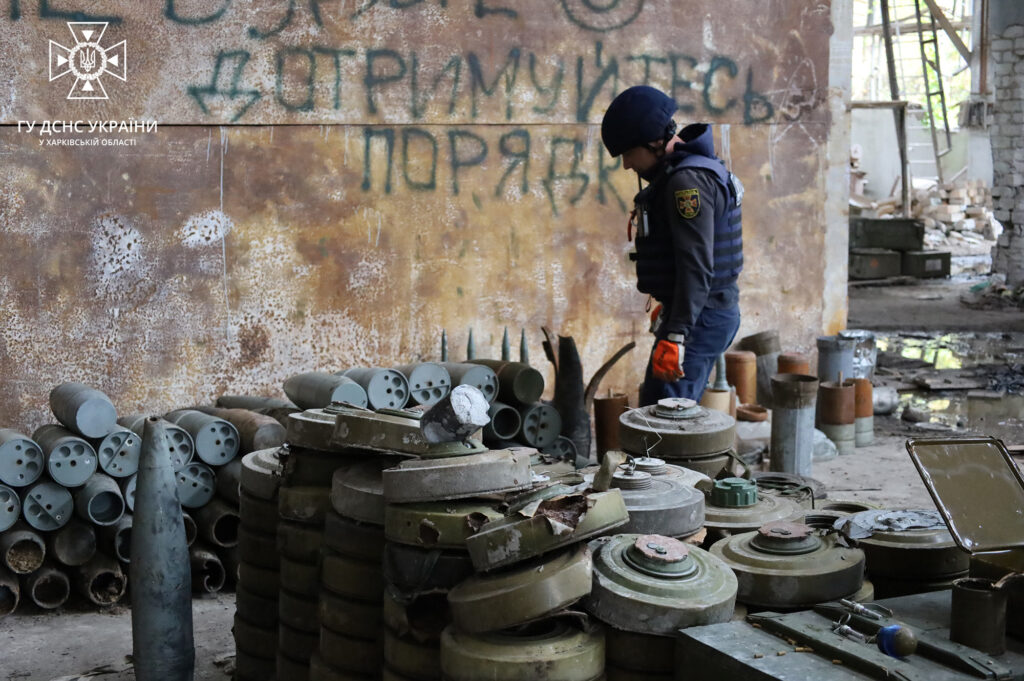
Farmland Is One of the Central Fronts
If we talk about Ukraine without talking about agriculture, we miss a major part of the story. Mines in farmland are not just a local safety issue. They affect income, food production, export capacity, and rural stability. A contaminated field does not only threaten the farmer who owns it. It can delay planting, reduce harvests, complicate insurance, slow logistics, and increase costs across the agricultural chain.
CSIS has highlighted farmland contamination as a persistent problem for Ukraine’s farmers, government, allies, and the wider mine action community. The issue is not only how many mines exist. It is also where they are, whether the land is accessible, how much survey work has been completed, whether operators are available, and whether clearance can be prioritized in a way that brings real economic benefit.
Here is the practical question: if a machine can help return one high-value agricultural area to safe use faster, how much economic pressure does it remove from a region? That is why demining vehicles are not merely humanitarian equipment. They are recovery equipment.
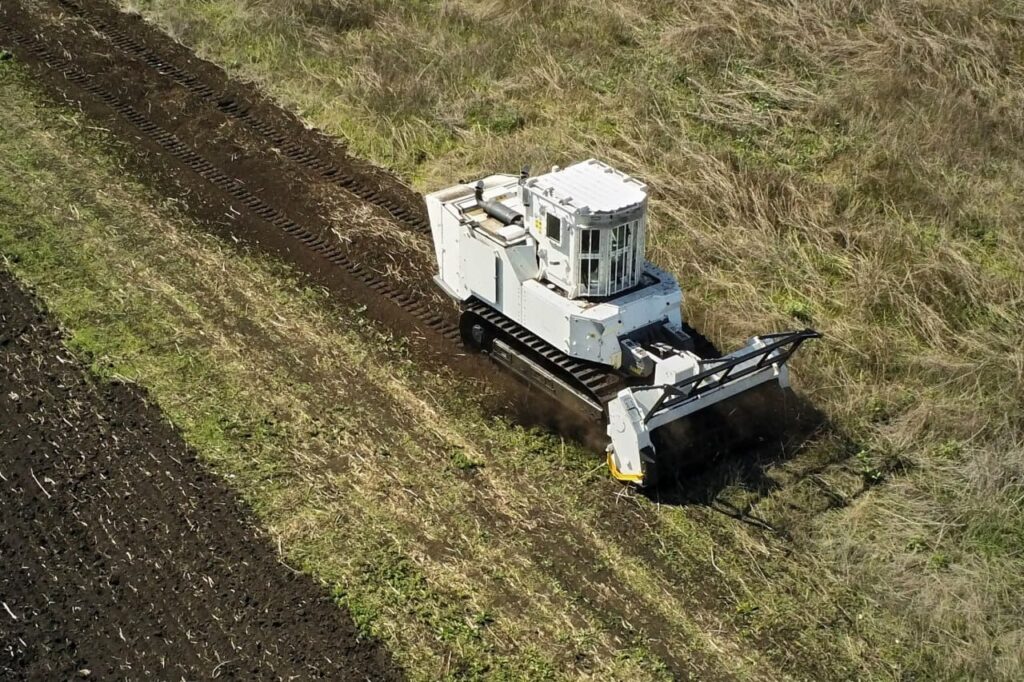
The Machine Is Useful Only If the System Around It Works
Buying a demining vehicle is the visible part. Keeping it operational is harder.
Ukraine needs trained operators, mechanics, spare parts, transport vehicles, maintenance facilities, fuel, mapping systems, safety procedures, and coordination between agencies. A remote-controlled machine is not very useful if it breaks down and waits months for parts. A high-end platform loses value if there are not enough trained teams to deploy it. A clearance project slows down if survey data is poor or priorities are unclear.
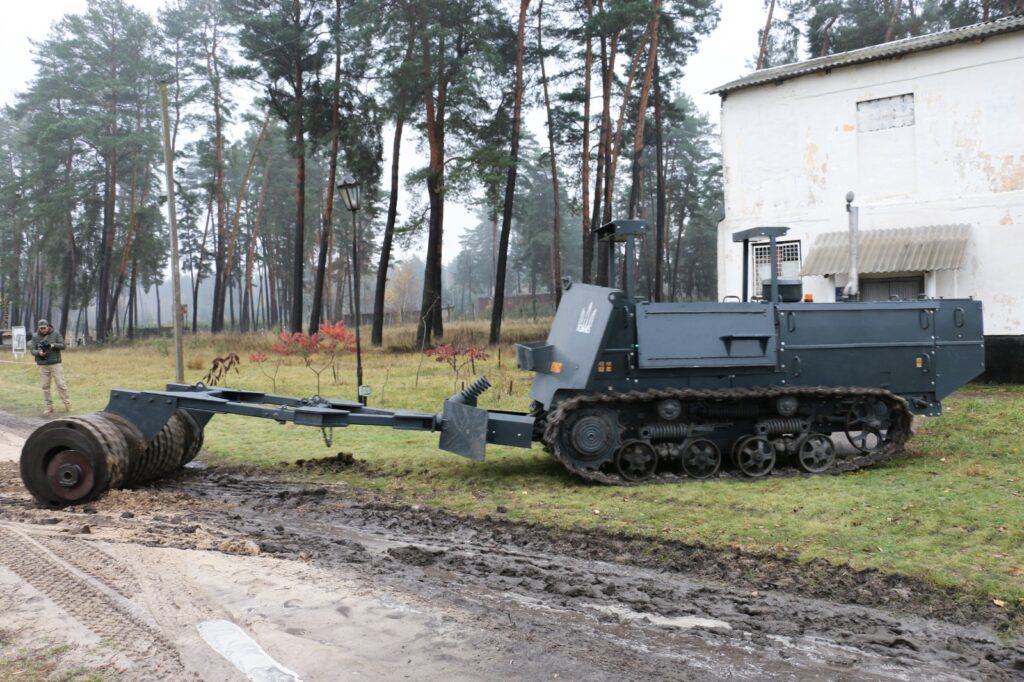
This is why localization matters. In recent years, companies and international partners have placed more emphasis on local production, service, training, and repair capacity in Ukraine. DOK-ING, for example, has been associated with localization efforts related to humanitarian demining equipment in Ukraine. That is not a minor business detail. In a long war and a long recovery, maintenance can be as important as the original machine.
For Ukraine, the best demining vehicle is not automatically the most advanced one on paper. It is the one that can be used, repaired, supported, transported, and integrated into Ukrainian procedures at scale.
Remote-Controlled Platforms Change the Risk Equation
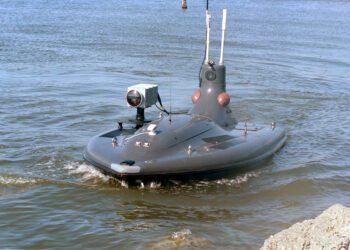
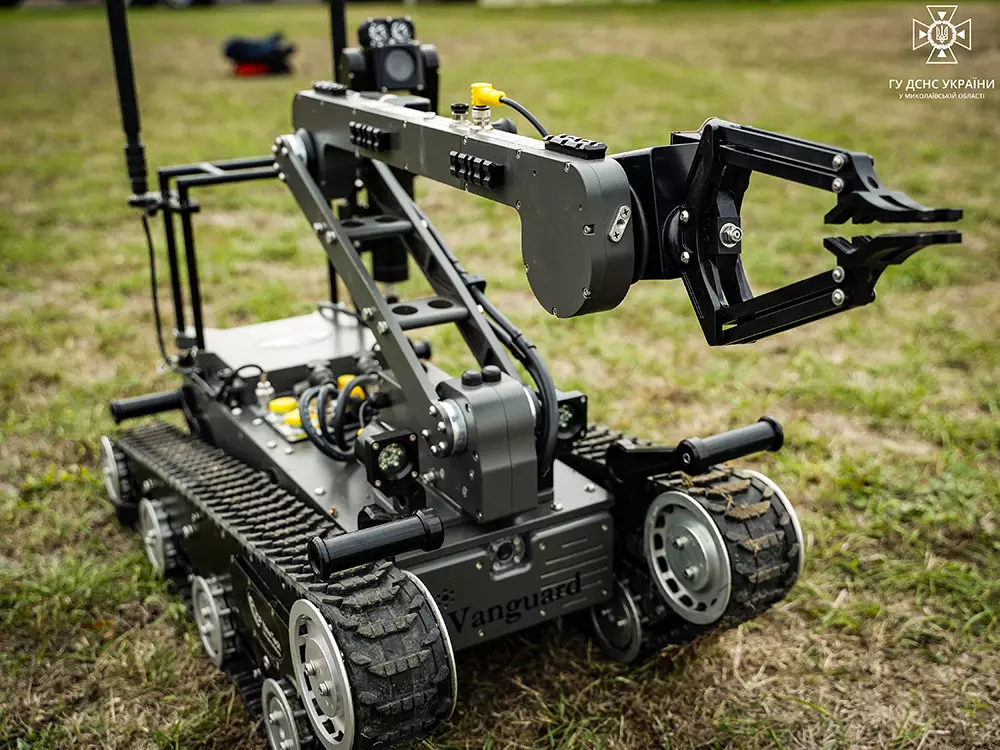
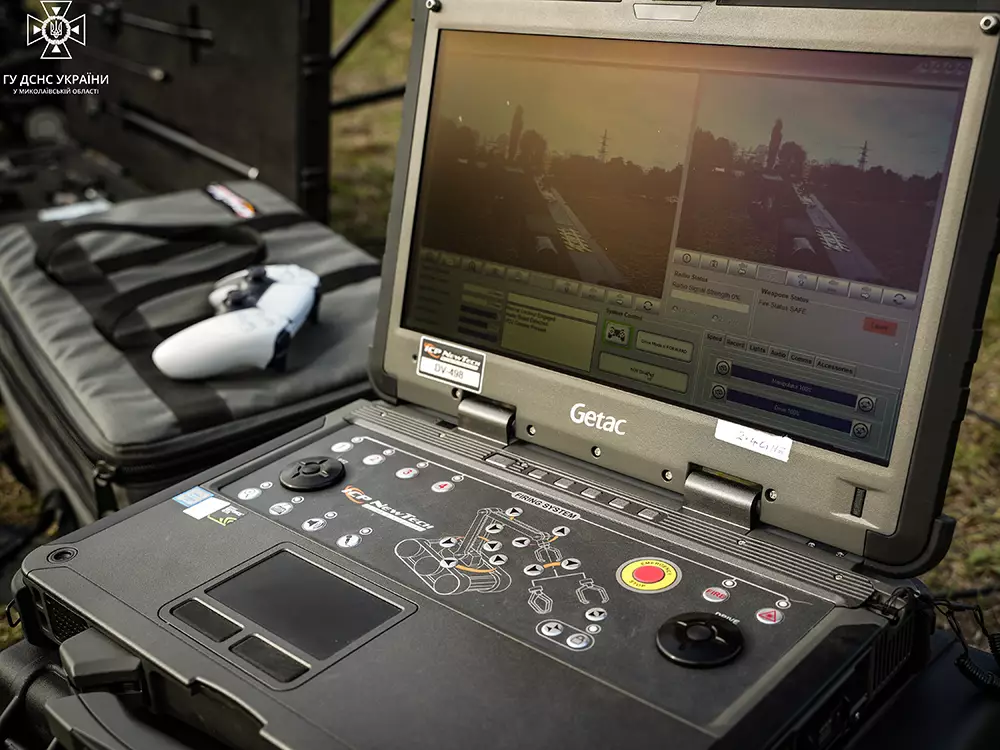
Remote operation is one of the key advantages of modern demining vehicles. The operator can remain away from the immediate blast zone while controlling the machine through cameras and command systems. This does not remove danger completely, but it changes who is exposed and how often.
Systems from manufacturers such as DOK-ING and Global Clearance Solutions show why remote platforms have become so relevant. Larger machines can deal with tougher terrain and heavier threats, while smaller robotic systems may be useful in more confined or complex environments. No single machine fits every field, road, forest, or settlement.
Terrain matters. Soil type matters. Vegetation matters. Weather matters. A flat agricultural field is not the same as a destroyed village edge filled with debris, metal fragments, collapsed structures, and mixed explosive remnants. That is why Ukraine’s demining future will probably involve a layered approach: large mechanical systems, smaller robots, drones, dogs, manual teams, and digital mapping all working together.
The Data Problem Behind the Metal Problem
There is another side of demining that receives less attention: information. Where are the suspected hazardous areas? Which roads are highest priority? Which farmland can be returned fastest? Which areas are too risky for mechanical clearance without additional survey? Which explosive threats are most common in a specific district?
UNDP has pointed to drones, robots, satellite imagery, and artificial intelligence as tools that can help identify where mines may be present and also where they are absent. The second part is just as valuable as the first. If land can be confidently released because it is not contaminated, then teams do not waste time clearing areas unnecessarily.
In Ukraine, the scale is too large for old methods alone. Mechanical demining vehicles can process ground, but data helps decide where those vehicles should go first. Poor prioritization wastes machine hours. Good prioritization turns limited equipment into measurable recovery.
International Support Is Necessary, But It Must Be Practical
UNDP handed over six remotely operated demining machines and spare parts to Ukraine’s State Emergency Service in July 2025, funded by Croatia, France, the Netherlands, and Sweden. That kind of support is valuable because it includes not only machines but also the supporting package needed to keep them working. The World Bank, European Commission, United Nations, and Ukrainian government estimated in 2026 that Ukraine’s total recovery and reconstruction needs had reached almost 588 billion dollars over the next decade. Demining is only one part of that massive picture, but it connects to almost every other part. Housing, agriculture, roads, energy, water, and industry all depend on safe access.
So when we talk about demining vehicles, we are really talking about the machinery of return. Return to fields. Return to roads. Return to repair work. Return to investment. Return to normal movement.
What Comes After the Machines?
The presence of demining vehicles in Ukraine should not be judged only by the number of machines delivered or displayed. The more important question is how effectively they can be absorbed into a wider clearance system. Mechanical platforms require trained operators, maintenance capacity, spare parts, verified survey data, transport support, and clear task prioritization. Without those elements, even capable machines can become underused assets.
There is also a practical limit to what these vehicles can do. They can reduce risk, accelerate certain types of clearance, and prepare contaminated ground for further inspection, but they do not remove the need for manual teams, explosive ordnance specialists, mapping, and post-clearance verification. In that sense, their value depends less on the machine alone and more on the structure built around it.
Ukraine’s demining experience will likely become a reference point for future mine action planning. Not because every method used there will be universally applicable, but because the scale of contamination forces difficult lessons about cost, speed, technology, terrain, coordination, and long-term land recovery. The challenge is not only to clear dangerous areas, but to do so in a way that is measurable, repeatable, and realistic over many years.
Sources
- United Nations Mine Action Service, “Ukraine.”
- United Nations Development Programme, “Six new demining machines to boost Ukraine’s mine clearance efforts,” 17 July 2025.
- United Nations Sustainable Development Group, “Clearing the Path for the Future: Mine Action Efforts in Ukraine,” 14 April 2026.
- United Nations Development Programme, “Land: Bearer of Memory installation, dedicated to humanitarian demining, opens in Kyiv,” 15 January 2026.
- United Nations Development Programme, “Reclaiming hope.”