
Orde Wingate is one of those military figures who becomes less simple the more closely he is examined. At first glance, he looks like an early model of the unconventional commander: intense, mobile, impatient with bureaucracy, and drawn to operations that depended on surprise, local forces, and psychological pressure rather than mass alone.

Yet his career also raises questions that cannot be pushed aside. How much risk can a commander demand from exhausted men? When does military innovation become personal obsession? How far can irregular warfare go before it becomes politically uncontrollable?
These are not abstract questions. Wingate’s career moved through Sudan, Palestine, Ethiopia, and Burma, each with its own political pressures, local actors, and operational problems. His story sits in the hard space between empire, intelligence, ideology, small unit warfare, and battlefield necessity.
A Soldier Who Did Not Sit Comfortably Inside the System
Orde Charles Wingate was born in 1903 in Naini Tal, British India, and later entered the British Army through the Royal Artillery. His early military path looked conventional on paper, but his temperament did not fit easily inside the British Army’s institutional culture.
Wingate was intelligent, forceful, and capable of inspiring loyalty. He was also difficult. Accounts of him often mention his eccentric habits, religious intensity, harsh manner, and open contempt for officers he considered passive or unimaginative. These details are more than colorful biography. They help explain why his methods were so closely tied to his personality.
He pushed hard because he believed hesitation was often more dangerous than action. In some environments, that belief gave him momentum. In others, it created serious problems.
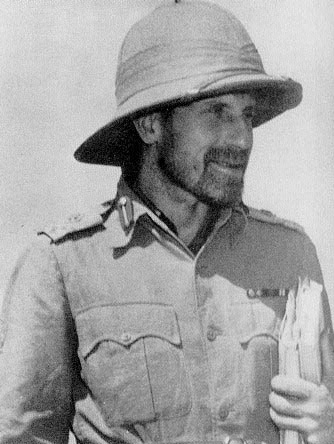
This is where his career becomes interesting for a defense reader. Armies need people who can think beyond standard procedure, especially when standard procedure is not working. But innovation inside war also needs proportion. Wingate had imagination in abundance. Whether he always had proportion is a harder question.
Palestine and the Special Night Squads
Wingate’s reputation began to take shape in Mandatory Palestine during the Arab Revolt of 1936 to 1939. In 1938, he helped organize the Special Night Squads, which combined British soldiers with Jewish police and Haganah personnel. These units conducted night operations against Arab insurgents, especially around vulnerable infrastructure such as pipelines.
Militarily, Wingate was experimenting with ideas that would appear again later in his career: aggressive patrolling, night movement, local intelligence, small unit initiative, and the belief that a weaker force could create an effect larger than its size through surprise and tempo.
He did not want troops sitting in fixed positions, waiting for attacks. He wanted them moving, ambushing, and forcing the enemy to react.
But Palestine also shows why Wingate cannot be discussed only as a tactical innovator. He was openly sympathetic to Zionism, and this shaped his relationships and decisions. His work with Jewish forces later became part of his legacy in Israeli military memory. At the same time, his role took place inside a conflict involving British imperial authority, Arab resistance, Jewish political aspirations, and increasingly hard communal divisions.
This is one of the most important parts of the Wingate story. Irregular warfare does not happen in empty terrain. It happens among communities, loyalties, grievances, and political projects. A night raid may look like a tactical action on a map, but to the people living in that space, it can become part of a much larger historical memory.
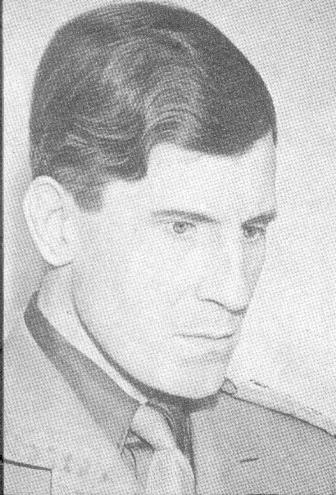
Ethiopia and the Gideon Force
During the Second World War, Wingate was sent to East Africa, where he created and commanded the Gideon Force against Italian forces in Ethiopia. This campaign is sometimes overshadowed by the Chindits in Burma, but it deserves serious attention because it may show Wingate’s method in one of its more effective forms.
The Gideon Force was small compared with the enemy forces it aimed to pressure. It worked alongside Ethiopian patriots and supported the return of Emperor Haile Selassie. Wingate used mobility, local support, deception, and psychological pressure to make a limited force appear more dangerous than its numbers suggested.
In this environment, his instincts suited the campaign. The aim was not simply to destroy enemy formations in a conventional battle. It was to weaken Italian control, encourage resistance, and help restore political authority.
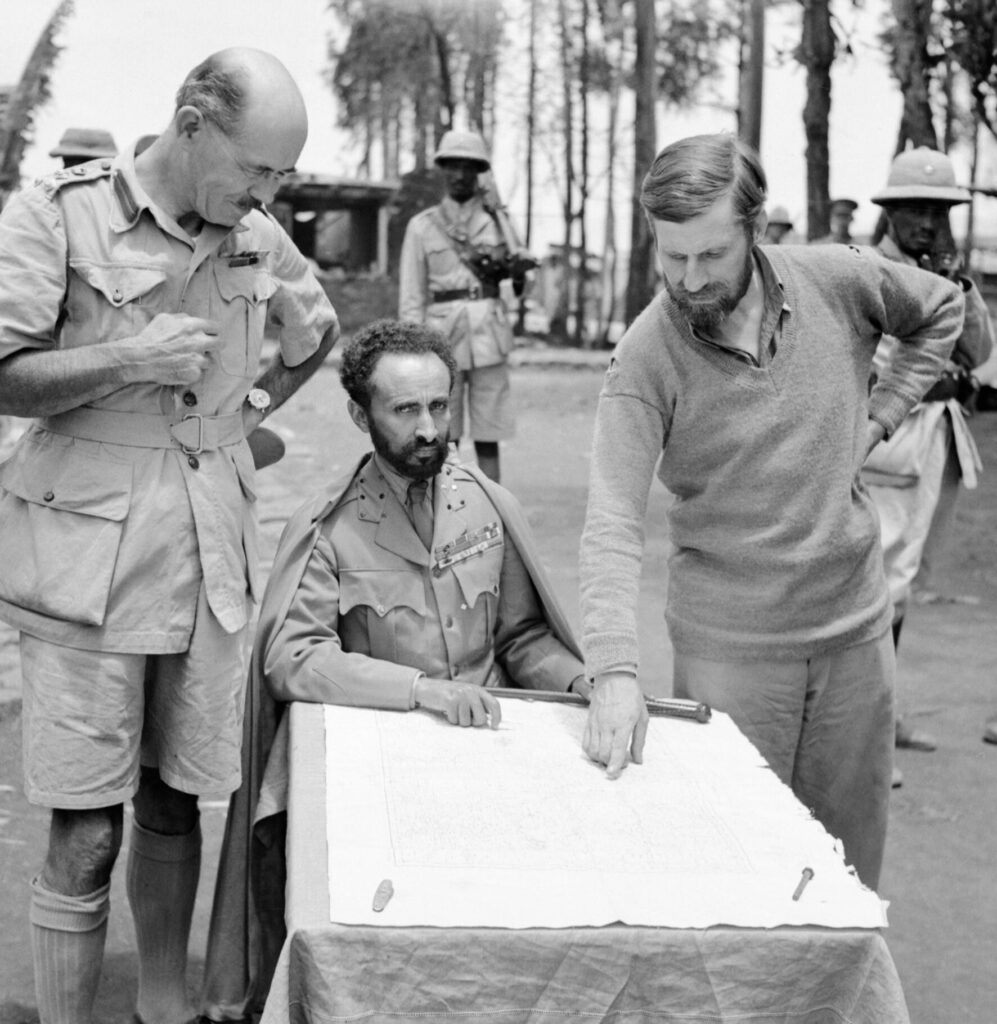
This is where Wingate’s strength becomes easier to see. He understood that morale and perception could matter as much as raw numbers. He also understood that local forces were not just auxiliaries to be placed beside regular troops. They could be central to the campaign if their political motivation and knowledge of the terrain were properly used.
Still, the lesson should be handled carefully. Small forces can achieve large effects only when conditions allow it. Local support, enemy weakness, terrain, timing, and political legitimacy all matter. Wingate’s success in Ethiopia was not magic. It was the result of a particular environment where his approach made operational sense.
Burma and the Chindits
Wingate’s best known work came in Burma, where he led the Chindits, long range penetration forces operating behind Japanese lines.
Their mission was ambitious: move deep into enemy held territory, disrupt communications, sabotage roads and railways, support resistance, and create pressure behind the Japanese front. This was not conventional jungle warfare in the ordinary sense. It was an attempt to make the enemy’s rear area unstable.
Operation Longcloth in 1943 showed both the promise and the cost of that idea. The Chindits crossed into Burma and demonstrated that Allied troops could operate behind Japanese lines in jungle conditions. But the same operation also exposed severe difficulties. Supply, disease, exhaustion, evacuation, and casualties all became major problems.
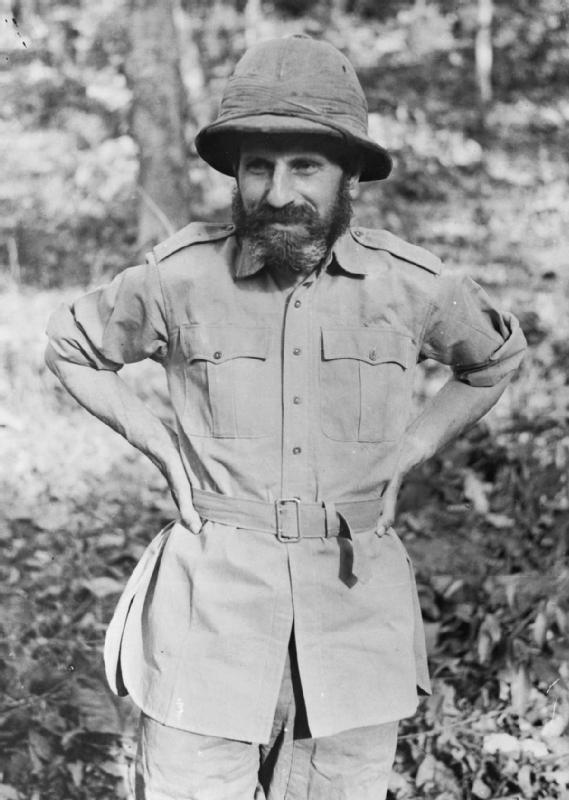
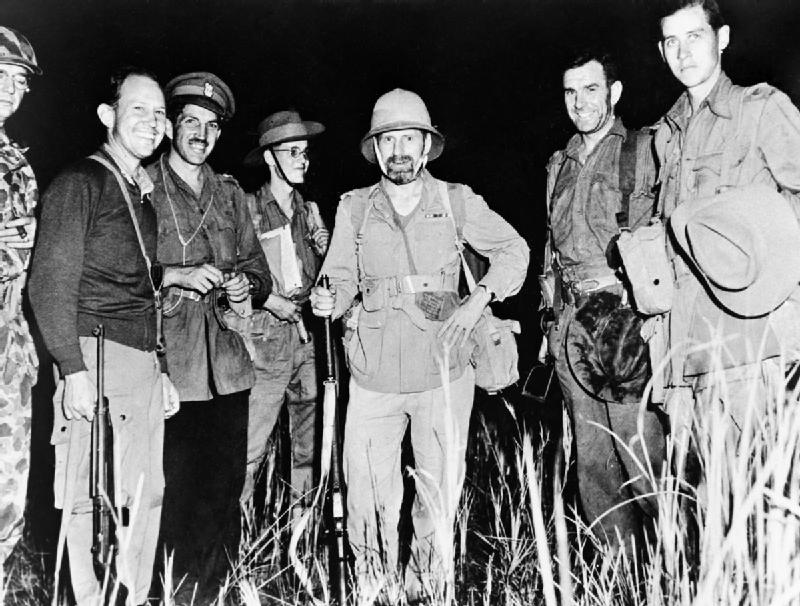
Brigadier Orde Wingate in India after returning from operations in Japanese-occupied Burma with his Chindits unit in 1943.
Operation Thursday in 1944 was larger and more developed. It used air transport and air supply on a more ambitious scale, placing forces deep inside Burma and sustaining them by air. In terms of military development, this was significant. It pointed toward later ideas about air mobility, special operations, and deep operations.
Yet the Chindit record remains debated because military innovation must still be measured against cost. The Chindits showed courage and endurance, and their operations affected Japanese planning. At the same time, the physical strain on the men was extreme, and the strategic value of the operations has been questioned by historians.
Wingate’s concept was bold. But boldness, by itself, does not answer whether the result was worth the price.
The Problem of Wingate’s Reputation
Wingate is difficult because the legend around him is so strong. He had the ingredients of a mythic commander: eccentric habits, strong beliefs, personal courage, conflict with authority, unusual methods, and a dramatic wartime career.
For some, he became a prophet of special operations. For others, he became an example of the danger created when charisma and unconventional thinking are not sufficiently restrained.
Neither view is enough on its own.
Wingate helped develop methods that remain relevant to discussions of irregular warfare, deep penetration, local partnership, and air supported operations. He also showed how easily irregular warfare can become tied to political commitment, personal intensity, and high human cost.
That is the value of studying him today. He does not offer a clean model to copy. He offers a complicated case to examine. His career reminds us that military innovation is rarely tidy. New methods often appear in desperate situations, under imperfect commanders, with uncertain results.
Wingate was not a safe figure, but he was not an empty myth either.
The End of Wingate’s Campaign
Orde Wingate died on 24 March 1944, when a U.S. Army Air Forces B-25 Mitchell aircraft carrying him crashed in the hills of Manipur, near the India Burma front. He was forty-one years old.
His death fixed his image at the height of his fame, before the full debate over his methods could be settled by later command experience. After his death, the Chindits and Wingate’s wider record continued to attract admiration, criticism, and reassessment.
That is probably appropriate. A figure like Wingate should not be reduced to praise or dismissal. He belongs in the more difficult category of military history: the commander whose ideas mattered, whose courage was real, whose flaws were serious, and whose legacy still forces readers to think carefully about the relationship between innovation, politics, and human cost.

Sources
- Encyclopaedia Britannica, “Orde Charles Wingate.”
- National Army Museum, “The History of the Chindits.”
- Second World War Experience Centre, “Major General Orde Wingate 1903 to 1944.”