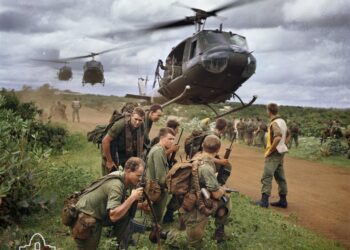


In 1914, Britain entered the First World War with a structural disadvantage that is often overlooked. Unlike most European powers, it did not have a mass conscription system ready to feed a continental war. The British Army before the war was relatively small, designed for imperial commitments rather than large-scale industrial conflict. At the outbreak of war, the British Expeditionary Force (BEF) that crossed to France consisted of roughly 120,000 men. It was highly professional, but far too small for what was coming.

This is where the recruitment system becomes critical. Britain needed to transform itself, in a matter of months, from a professional army into a mass force numbering in the millions. And initially, it tried to do this without conscription.
Expansion by Voluntary Enlistment
The scale of early recruitment is often cited, but rarely placed into context. Between August and the end of 1914, approximately 1 million men volunteered for the British Army. In September 1914 alone, over 400,000 men enlisted. These are not small numbers. For a country without compulsory service, this represented one of the fastest voluntary military expansions in modern history.
Lord Kitchener, appointed Secretary of State for War, set ambitious targets early. He initially called for 100,000 volunteers, then quickly expanded that to several new “armies,” each consisting of multiple divisions. What became known as Kitchener’s New Armies eventually grew into dozens of divisions. By mid-1915, Britain had raised well over 2 million men through voluntary enlistment.
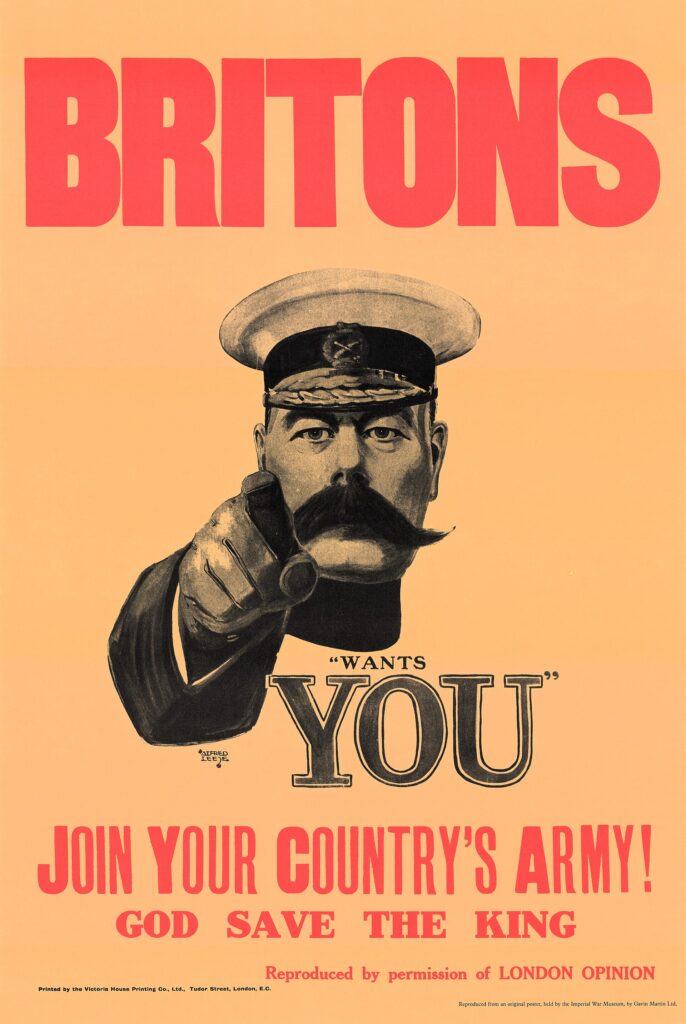
However, these numbers need to be read carefully. Recruitment was not evenly distributed over time. The first months of the war saw a surge, driven by uncertainty, patriotic momentum, and public pressure. By late 1915, monthly enlistment figures had dropped significantly, in some cases falling below 100,000 per month and continuing to decline.
The system worked quickly, but it did not sustain itself at the same rate.
The Structure Behind Recruitment
It would be a mistake to think of British recruitment as a loose or spontaneous process. It was organized, layered, and supported by a network of institutions.
Recruitment offices were established across the country, often supported by local committees. These committees coordinated public meetings, organized speaking events, and worked with local leaders to encourage enlistment. Industrial employers sometimes cooperated by allowing time off or supporting recruitment campaigns, although this varied depending on the sector and the need for skilled labor.
One of the more structured approaches was the “Pals battalion” system, introduced in 1914. These units allowed men to enlist together with friends, colleagues, or people from the same town. Entire groups from workplaces or communities joined as a single unit. From a recruitment standpoint, this was effective because it reduced hesitation. Men were not joining alone. They were joining with their social group.
By 1915, dozens of Pals battalions had been formed across Britain. While this increased recruitment in the short term, it had long-term consequences. When these units suffered heavy losses, entire communities felt the impact simultaneously.
Messaging and Psychological Framing
Recruitment messaging in Britain was not built on a single idea. It combined several layers of psychological framing.
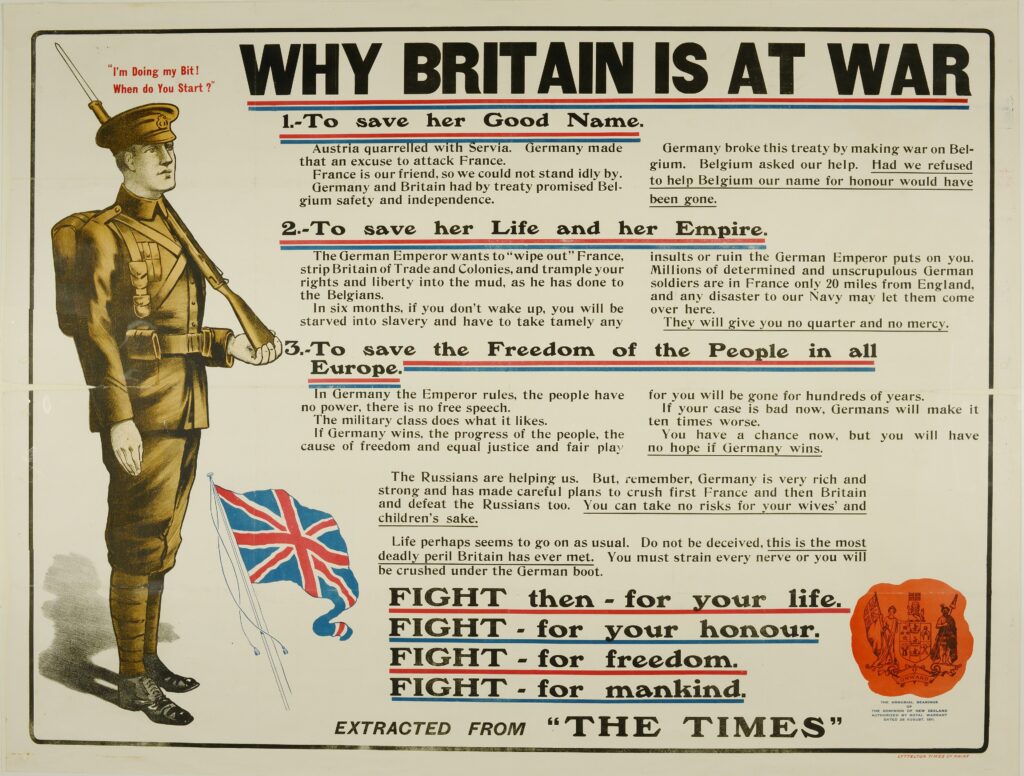
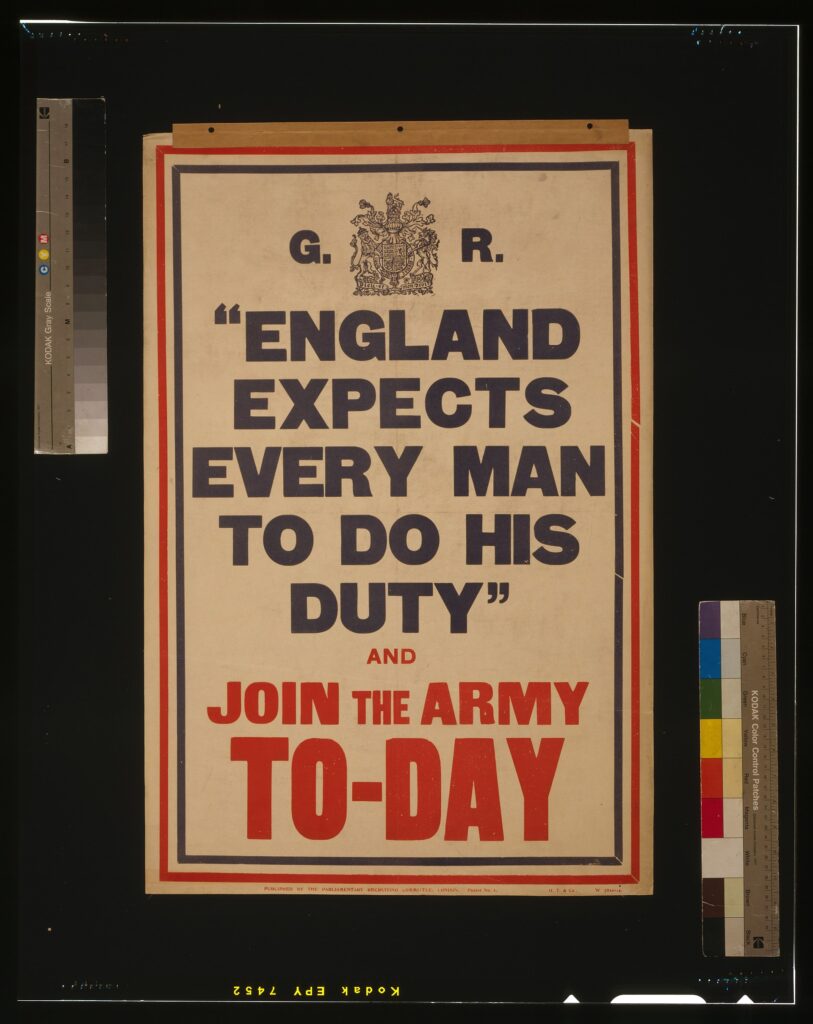
At one level, there was the national argument. Britain was at war, and participation was framed as a duty. At another level, there was the moral argument, often linked to the defense of smaller nations such as Belgium. Reports of German actions, whether fully accurate or not, were widely circulated and used to justify the war effort.
But the most effective layer was personal framing. Messaging often moved from “the nation needs soldiers” to “you are needed.” This shift made the decision individual rather than abstract.
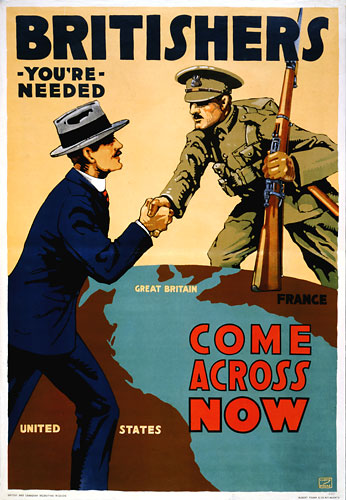
From a technical perspective, this approach aligns with what would now be described as direct engagement messaging. It reduces the psychological distance between the message and the individual. Instead of addressing a crowd, it isolates the viewer or reader and places responsibility directly on them.
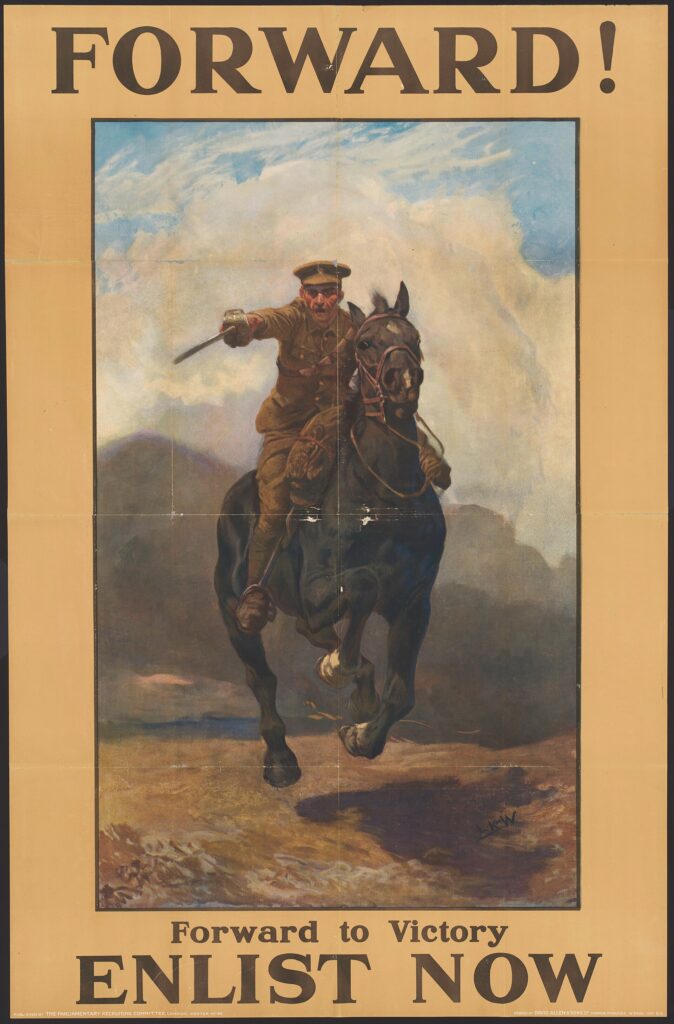
This was reinforced through repetition. Newspapers, speeches, community meetings, and visual materials repeated similar themes. The consistency of the message across different channels increased its impact. Recruitment was not dependent on a single communication tool. It functioned as a coordinated information environment.
Social Pressure as a Recruitment Tool
While the system was officially voluntary, it operated within a strong framework of social expectation. This is where the distinction between legal obligation and social obligation becomes important.
The white feather movement is one example that illustrates this dynamic. Men who were not in uniform could be publicly marked as cowards. Although not an official government policy in the strict administrative sense, it reflected a broader social environment that encouraged participation through shame as much as through patriotism.
There were also indirect pressures. Families expected sons to enlist. Employers and colleagues created informal expectations. In some communities, not joining became increasingly difficult to justify. Over time, the question shifted from “why should I go” to “why am I not going.”
From a structural standpoint, this reduced the need for formal enforcement in the early stages. Social mechanisms performed part of the work that legislation would later take over.
The Decline of Voluntary Recruitment
Despite its early success, the voluntary system began to weaken by late 1915. Several factors contributed to this shift.
First, casualty figures became widely known. Battles such as Loos in 1915 demonstrated the scale of losses that modern warfare could produce. Second, the idea of a short war had disappeared. Enlistment now meant long-term commitment to a conflict with no clear end. Third, many of the most willing volunteers had already joined in the initial wave.
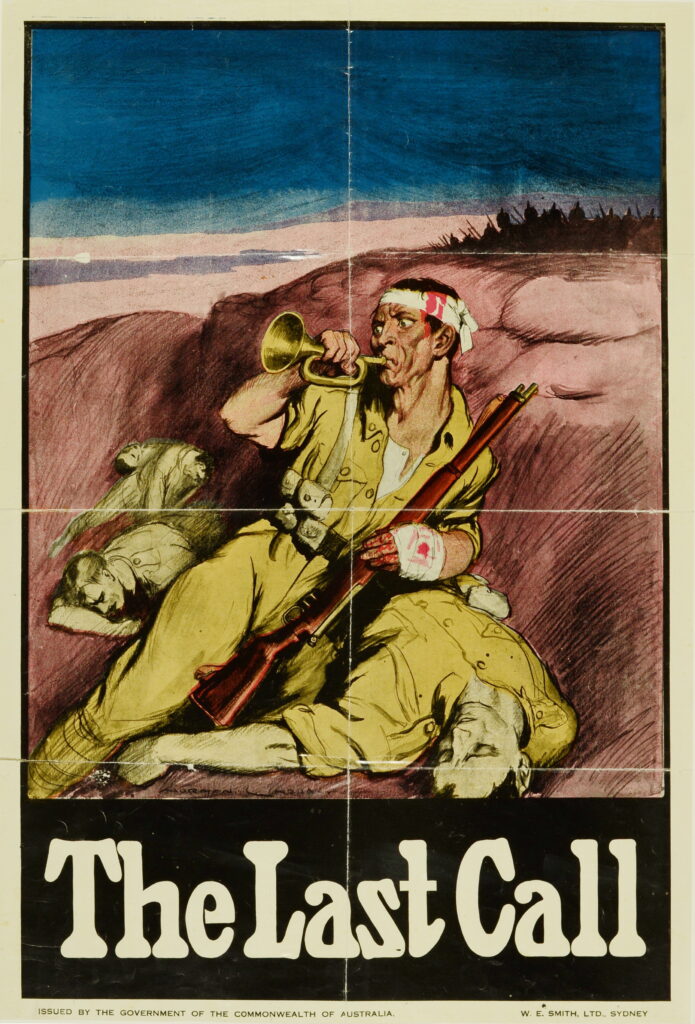
New Zealand Expeditionary Force [NZEF] – Recruiting posters – The Last Call, W E Smith Ltd, Sydney. Archives New Zealand from New Zealand, CC BY-SA 2.0 https://creativecommons.org/licenses/by-sa/2.0.
Statistically, this is visible in recruitment data. Monthly enlistment rates fell, and the gap between military needs and available volunteers increased. By the end of 1915, it was clear that voluntary recruitment alone could not sustain the required force levels.
Transition to Conscription
In January 1916, Britain introduced the Military Service Act. Initially applied to single men aged 18 to 41, it was later extended to married men. This marked a fundamental change in British military policy.
By this stage, the British Army had already expanded significantly. Total mobilization during the war would reach approximately 5.7 million men. Of these, a large proportion had initially joined as volunteers, particularly in the early years. However, conscription became essential to maintain and replace forces as the war continued.
From a technical perspective, this transition highlights the limits of persuasion-based systems. Voluntary recruitment can produce rapid expansion under favorable conditions, but it is sensitive to morale, perception, and casualty rates. Once those factors shift, the system becomes unstable.
A System That Was Both Effective and Limited
Looking at the British experience as a whole, it is clear that the recruitment system achieved something significant. It transformed a relatively small professional army into a mass force in a short period, without immediate reliance on conscription. The combination of organized recruitment, coordinated messaging, and social pressure created a powerful mobilization environment.
At the same time, the system had clear limits. It depended on timing, public mood, and the perceived nature of the war. As those conditions changed, its effectiveness declined. The introduction of conscription was not a failure of propaganda, but it was an acknowledgment that persuasion alone could not meet the demands of prolonged industrial warfare.
What remains relevant is the structure behind the system. Recruitment was not driven by a single tool or message. It was built on integration: institutions, communication channels, social expectations, and national strategy working together. That integration is what allowed Britain to scale its forces so rapidly at the start of the war, even without legal compulsion.
Sources
- UK National Archives, “British Army Recruitment and Conscription in the First World War”
- UK Parliament, “Conscription: The First World War”
- Imperial War Museums, “Recruitment to the British Army in the First World War”
- National Army Museum, “The British Army in 1914”