
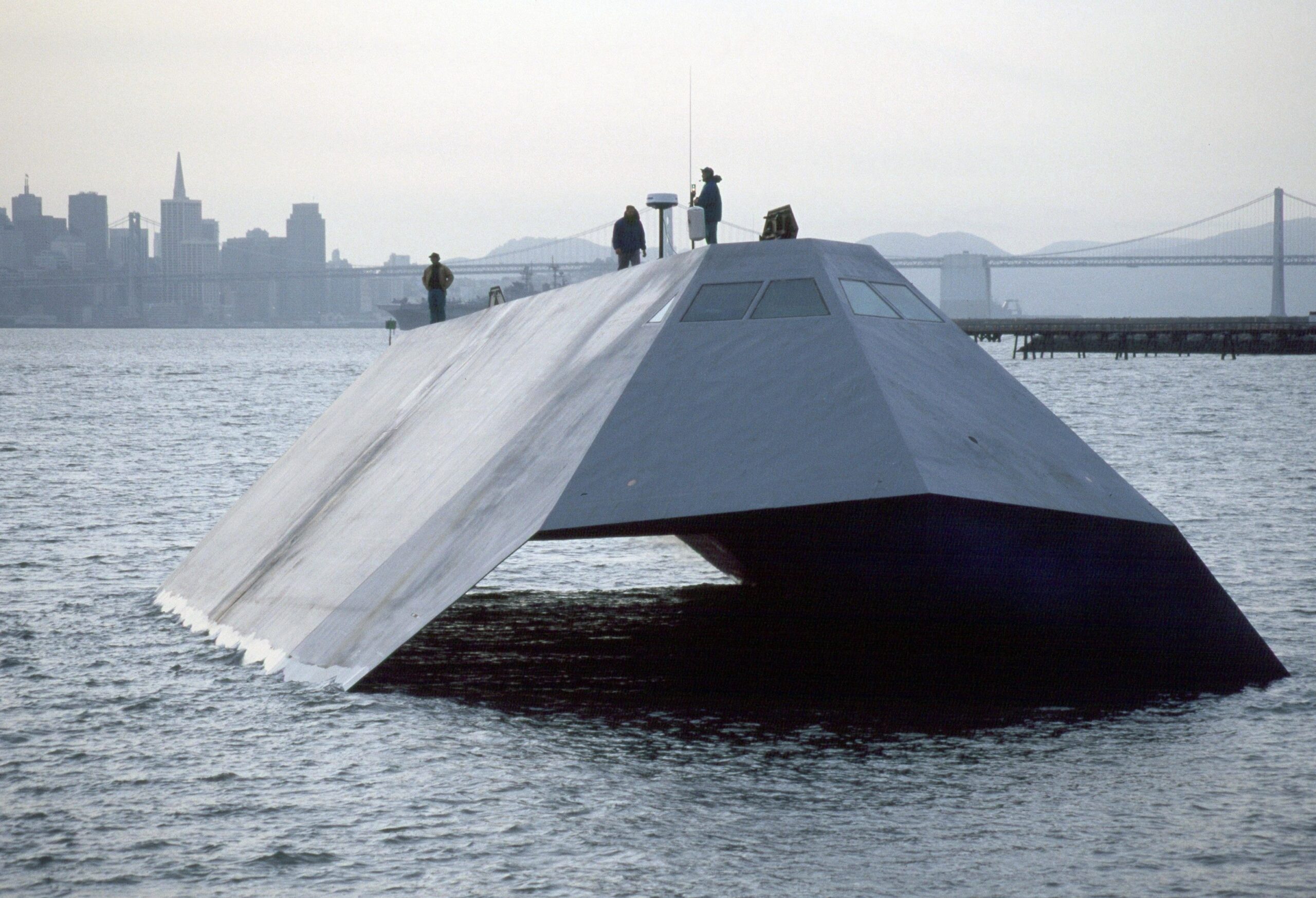
Some platforms are remembered because they were widely used. Others leave a mark for a different reason entirely. The Sea Shadow (IX-529) belongs to that second category, where influence matters more than deployment. Its presence in naval history is subtle, but once you start looking closer, it becomes difficult to ignore.

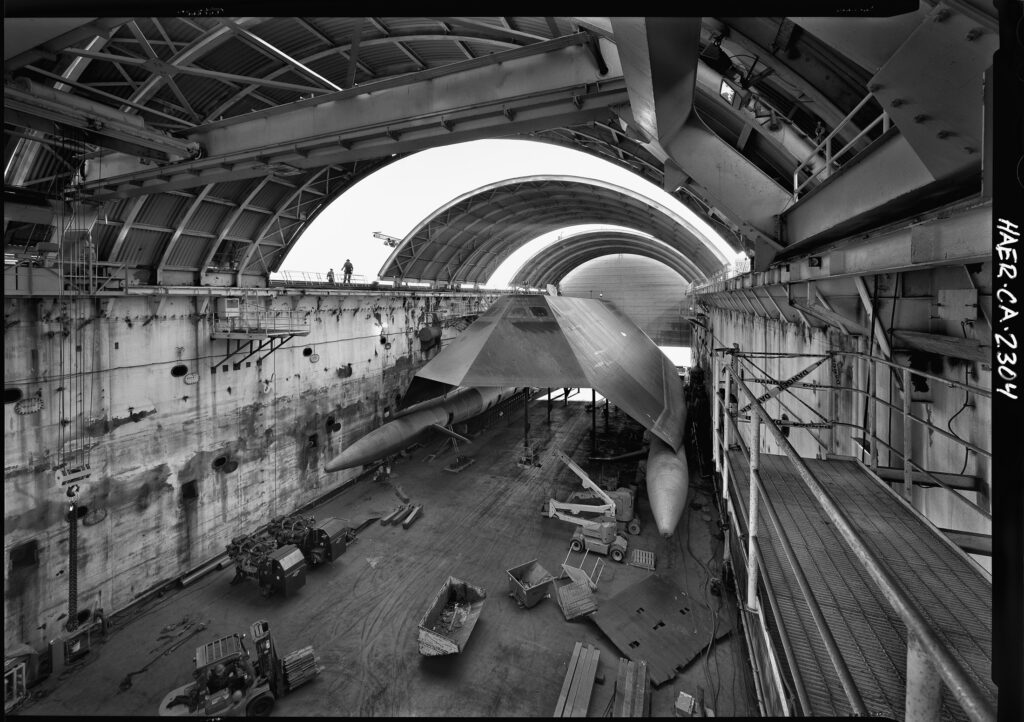
Developed in the early 1980s through a collaboration between the U.S. Navy, DARPA, and Lockheed, the vessel remained hidden from public view for years. It was constructed inside a floating barge and tested under conditions designed to minimize exposure. This was not just about secrecy for its own sake. It reflected the experimental nature of the project. At the time, stealth was already shaping the future of airpower, but applying similar ideas to naval platforms required a different kind of thinking, one that had not yet been fully tested in open waters.
What Was Actually Being Tested
The Sea Shadow was never intended to carry weapons or operate as part of a fleet. That alone separates it from most naval projects. It existed to answer specific questions rather than fulfill an operational role.
Those questions were not simple. Could a ship meaningfully reduce its radar signature in a maritime environment where reflections behave differently than in the air? Could stability be improved without increasing size or compromising performance? And perhaps more quietly, could the number of people required to operate a vessel be reduced without affecting reliability? Each of these challenges pointed toward a broader shift in naval design, one where visibility, efficiency, and control were becoming just as important as firepower.
Design That Challenges Conventional Ships
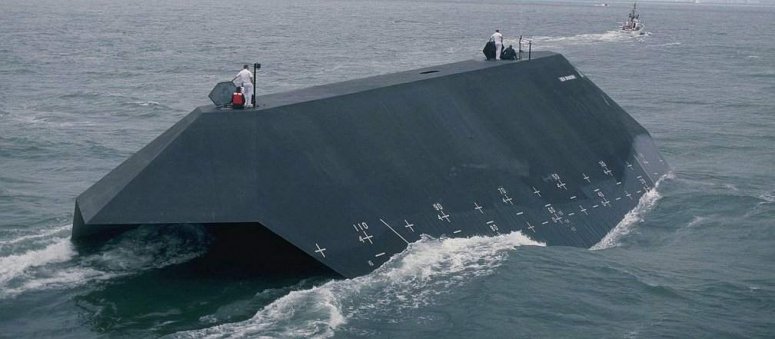
At first glance, the Sea Shadow appears almost unfamiliar, even to those used to unconventional military platforms. Its surfaces are sharply angled, its structure compact, and its overall form lacks the curves typically associated with shipbuilding. This was not an aesthetic decision. Every angle had a purpose, specifically to reduce how radar waves would reflect back to their source.
What makes this more complex is the environment in which it operates. Unlike aircraft, ships must deal with constant exposure to water, corrosion, and the unpredictable behavior of waves. Designing for stealth under these conditions requires compromises. The Sea Shadow did not eliminate detection, but it demonstrated that reducing a vessel’s visibility could be approached in a controlled and measurable way. That alone was enough to validate further exploration in naval stealth design.
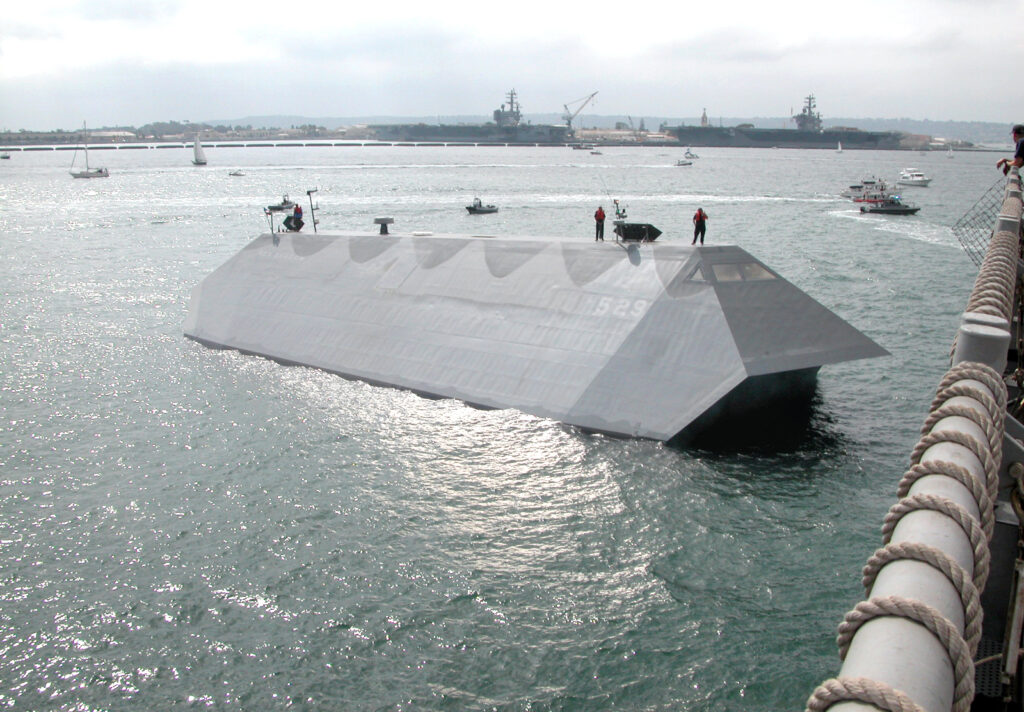
Beneath the surface, its structure becomes even more interesting. The vessel used a SWATH configuration, with twin submerged hulls connected by narrow supports. This reduced the area interacting with surface waves and allowed the ship to maintain stability even when conditions became less predictable. In practical terms, this meant smoother operation for onboard systems, particularly sensors that rely on consistent positioning. It is a detail that might seem secondary, but in surveillance and tracking scenarios, stability can be as valuable as speed.
Rethinking Crew and Automation
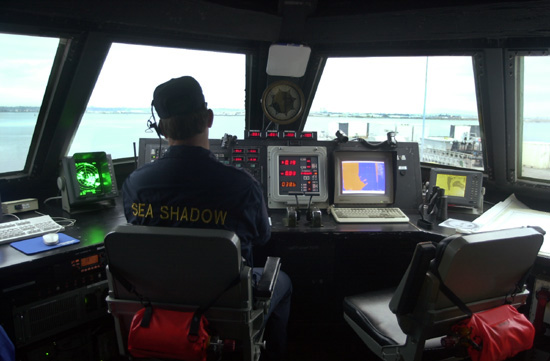
One of the more understated aspects of the Sea Shadow is how few people were required to operate it. In some cases, only a handful of personnel were onboard. That detail, while easy to overlook, hints at something larger.
Reducing crew size is not just about efficiency. It changes how a vessel is designed, how systems are integrated, and how decisions are made during operation. Automation played a central role here, supporting navigation, monitoring, and routine tasks that would normally require dedicated personnel. At the time, this was still an emerging concept. Today, it feels far more familiar, especially as discussions around autonomous vessels and remote operations continue to expand. The Sea Shadow did not solve these challenges completely, but it demonstrated that the direction itself was viable.
Why It Didn’t Become a Fleet Standard
It is tempting to assume that a project with this level of innovation would naturally evolve into something larger. In reality, the transition from experimental platform to operational system is rarely straightforward.
The Sea Shadow fulfilled its purpose as a demonstrator. It provided data, tested assumptions, and confirmed that certain ideas could work outside of theory. However, turning those ideas into a deployable warship would require additional layers of development. Weapons systems would need to be integrated, costs would need to be justified, and the entire concept would have to align with existing naval doctrine. During the period in which the vessel was tested, strategic priorities were shifting, and not every successful experiment fit into the broader picture. In that context, the Sea Shadow remained what it was always intended to be, a testbed rather than a final product.
Influence That Continued Quietly
Even without entering service, the impact of the Sea Shadow can still be traced in later developments. Certain design principles, particularly those related to stability and reduced observability, began to appear in other naval platforms. Not always in the same form, and not always directly, but the underlying ideas persisted.
Modern warships, especially those designed with low observability in mind, reflect a similar approach. Angled surfaces, careful material choices, and attention to radar signature have become part of the design conversation. The Sea Shadow did not define this shift on its own, but it contributed to it in a way that is easy to miss if you only focus on operational history. Its influence is quieter, embedded in the evolution of design rather than in a specific class of ships.
A Quiet End, A Lasting Impact
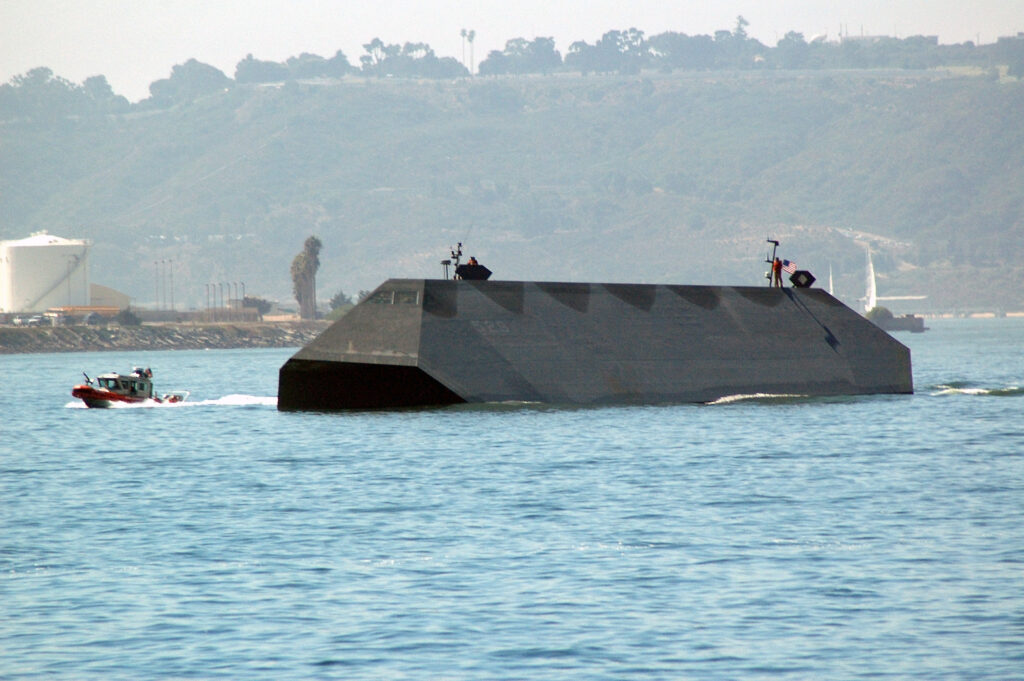
The vessel itself did not remain in use indefinitely. After years of limited testing and evaluation, it was eventually retired. There were discussions about preserving it, but none led to a permanent solution. In the end, it was dismantled under controlled conditions.
That outcome might seem underwhelming, especially for a platform that once represented such a forward-looking concept. But in many ways, it is consistent with how experimental systems are treated. The physical structure is temporary. The ideas it helps validate are not.
Looking back, the Sea Shadow represents a moment where naval design began to shift its priorities. It shows how innovation often happens outside the spotlight, through projects that are never intended to be widely seen. And it serves as a reminder that not every important development results in a visible product. Some of them remain in the background, shaping what comes next without ever fully stepping into view.
Sources
- U.S. Navy / DARPA program documentation and historical records
- Maritime Administration Vessel History Database (MARAD)
- Lockheed Martin historical archives and Skunk Works development background