
Drill & Defense
Advertisement
  • Defense
    • Industry News
    • Weapon & Gear Reviews
    • Defense Technologies
    • Military Market Reports
  • Energy
    • Oil & Gas News
    • Energy Technologies
    • Market Trends & Analysis
  • Cross-Sector Insights
    • Defense & Energy Strategy
    • Global Security & Trade Analysis
    • Tech & Innovation Crossover
  • History & Legacy
    • Turning Points in Conflict
    • Legacy Systems & Structures
    • Resource Wars & Strategy
  • Knowledge Base
    • Defense Know-How
    • Energy Insight
  • About
  • Contact
  • Login
  • Register
No Result
View All Result
  • Defense
    • Industry News
    • Weapon & Gear Reviews
    • Defense Technologies
    • Military Market Reports
  • Energy
    • Oil & Gas News
    • Energy Technologies
    • Market Trends & Analysis
  • Cross-Sector Insights
    • Defense & Energy Strategy
    • Global Security & Trade Analysis
    • Tech & Innovation Crossover
  • History & Legacy
    • Turning Points in Conflict
    • Legacy Systems & Structures
    • Resource Wars & Strategy
  • Knowledge Base
    • Defense Know-How
    • Energy Insight
  • About
  • Contact
  • Login
  • Register
No Result
View All Result
Drill & Defense
No Result
View All Result
Home Defense

The Swarm Era: How Drones Are Quietly Rewriting the Logic of War

September 7, 2025
in Defense, Defense Technologies
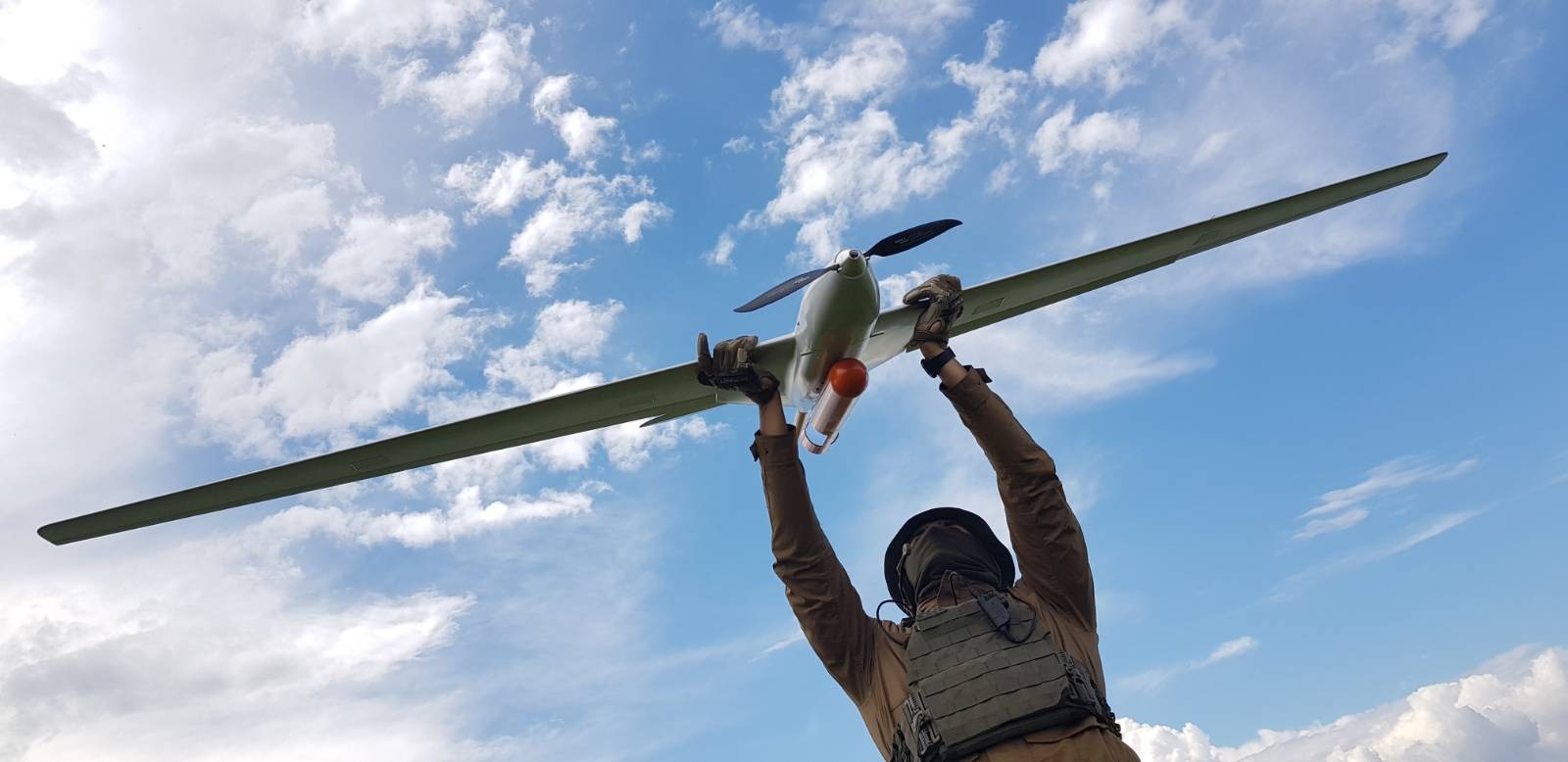
PUNISHER_DRONE_held_by_Ukrainian_soldier_droneswarms
Share on LinkedInShare on Twitter

If last year was about fearing a single quadcopter, this year is about surviving a flock that thinks together. What changes on the ground is not only speed and volume; it is the logic of defense. When dozens of expendable aircraft, drone swarms and boats coordinate in real time, they stop behaving like individual “targets” and start behaving like a system. That shift forces militaries, energy operators, and policymakers to rethink how they sense, decide, and defend, often under extreme time pressure.

What a “Swarm” Actually Means

In practice, you will see two flavors. First, surrogate swarms: multiple drones launched together, coordinated by human operators with scripted roles. Second, true swarms: systems that share data, self-assign tasks, and adapt mid-mission with minimal human input. The building blocks are familiar: cheap airframes, resilient comms, onboard compute, and algorithms that let units deconflict, re-route, and mass effects at the right moment. The result is a playbook that values many, small, and smart over a few exquisite platforms. This is not science fiction; defense labs have field-tested swarm behaviors for years, and the technology has matured faster than many acquisition systems anticipated.
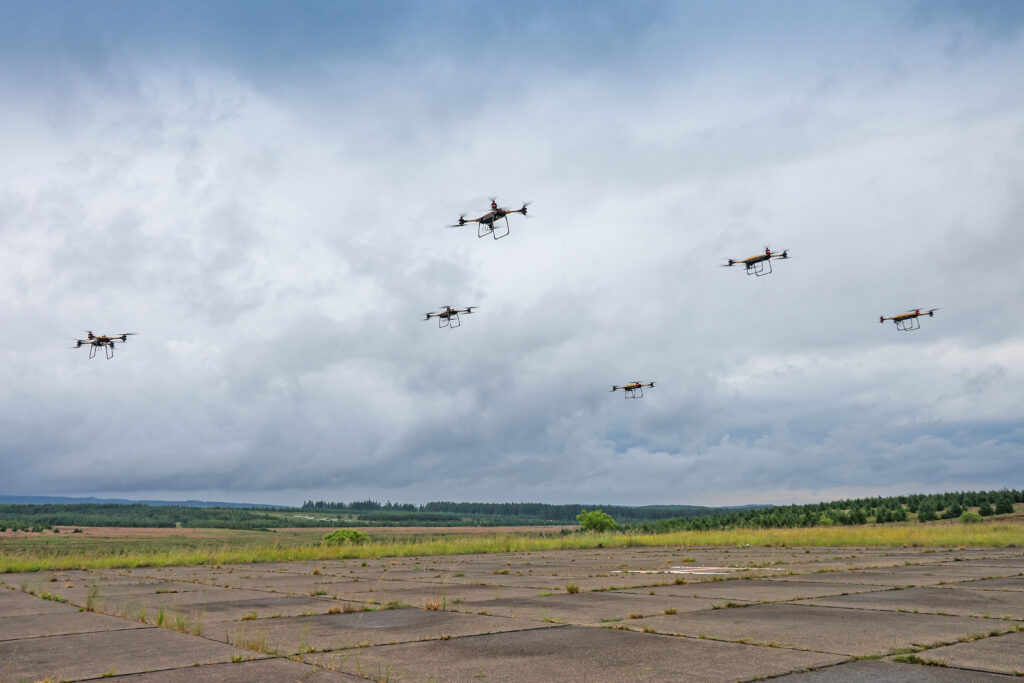
Drone swarms support Commando Forces trials in a first for the UK’s armed forces

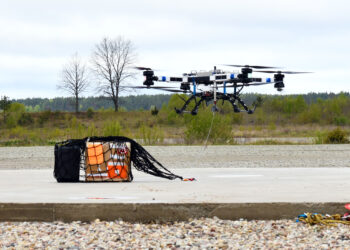
Pictured: Royal Marines strike teams from Alpha Company, of Taunton-based 40 Commando, were on the ground and able to call on swarms of Malloy TRV150 drones – which can lift up to 68kg in all weathers – for deliveries of ammunition, blood and other supplies.

The commandos carried a small, rugged tablet on their chest giving the ability to tap a map location and time for the delivery of their supplies, leaving the Malloys to do the rest and drop in what they need when they need it.
https://www.defenceimagery.mod.uk/, OGL v1.0OGL v1.0, via Wikimedia Commons

Battlefield Lessons You Can Use

The Russo-Ukrainian war turned theory into muscle memory. On the air side, small uncrewed aircraft, both commercial and custom, scaled dramatically, changing artillery spotting, logistics interdiction, and strike economics. On the maritime side, uncrewed surface vessels forced the Black Sea Fleet to disperse, harden, or stay in port. Production numbers and operational tempo signaled a new threshold: when quantity compounds, attrition becomes a strategy, not a risk to be minimized at all costs.

A similar dynamic is playing out at sea beyond Europe. In the Red Sea, a mix of aerial drones and USVs has pressured naval defenses and shipping lanes, prompting frequent intercepts and multinational responses. Whether a platform flies or sails, the core lesson is the same: distributed, networked, and cheap systems can generate outsized effects when they arrive faster than defenders can classify and engage.
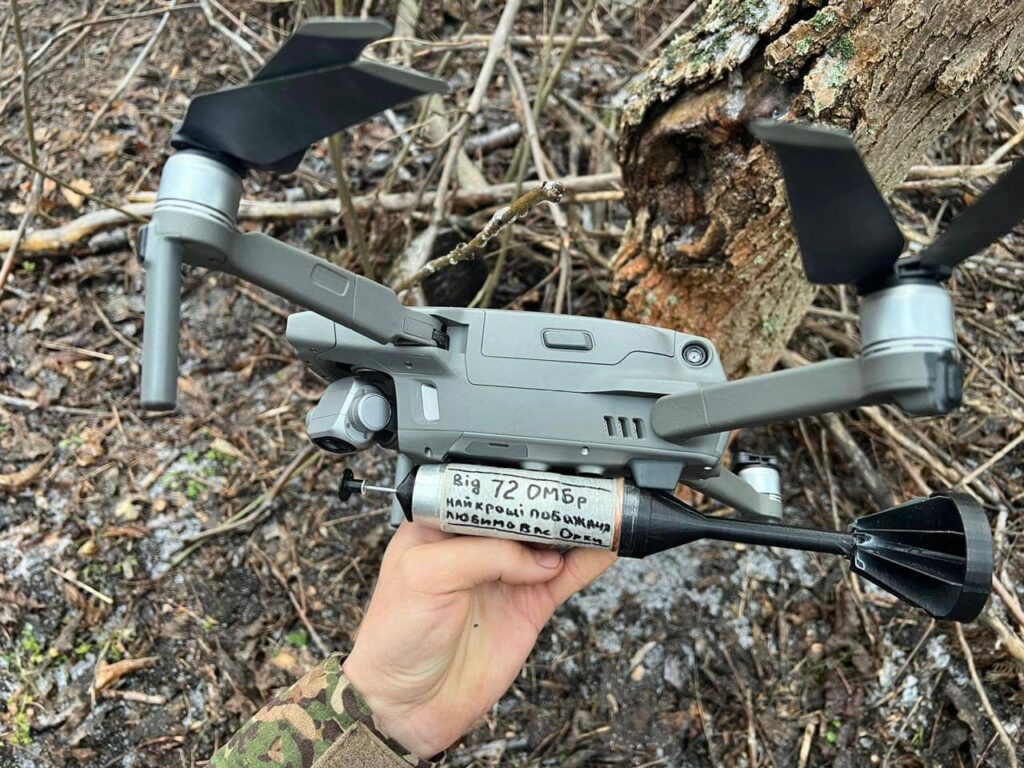
Mil.gov.ua, CC BY 4.0 https://creativecommons.org/licenses/by/4.0, via Wikimedia Commons

A New Scale Problem

Swarms are not just more drones. They are more decisions for defenders per minute. This is why modern air and maritime defense must think in kill-chains, not single kills. You need faster detection, automated triage, and layered effects including electronic warfare, deception, directed energy, and point-defense working in concert. Governments are treating this as a scale problem as much as a technology one. In the United States, the Department of Defense’s Replicator initiative prioritizes attritable, autonomous systems “in multiple thousands” and is now dedicating a new push specifically to counter-drone defense. NATO strategists, meanwhile, warn that deterrence requires creating a “hellscape” for hostile drones, dense, multi-layered defenses that are affordable to sustain.

Autonomy Will Not Wait for Our Comfort

Another change: who or what decides. Reports of AI-enabled swarms operating in combat have moved the autonomy debate from conference halls to the field. Even when a human remains “on the loop,” autonomy is creeping forward in navigation, target assignment, and deconfliction because the tempo demands it. That raises predictable but necessary questions about human control, accountability, and compliance with international humanitarian law. The policy community’s ask is clear: preserve meaningful human control over the use of force and codify prohibitions or restrictions where needed. Militaries and industry need to design for that control at the architecture level, not as an afterthought.
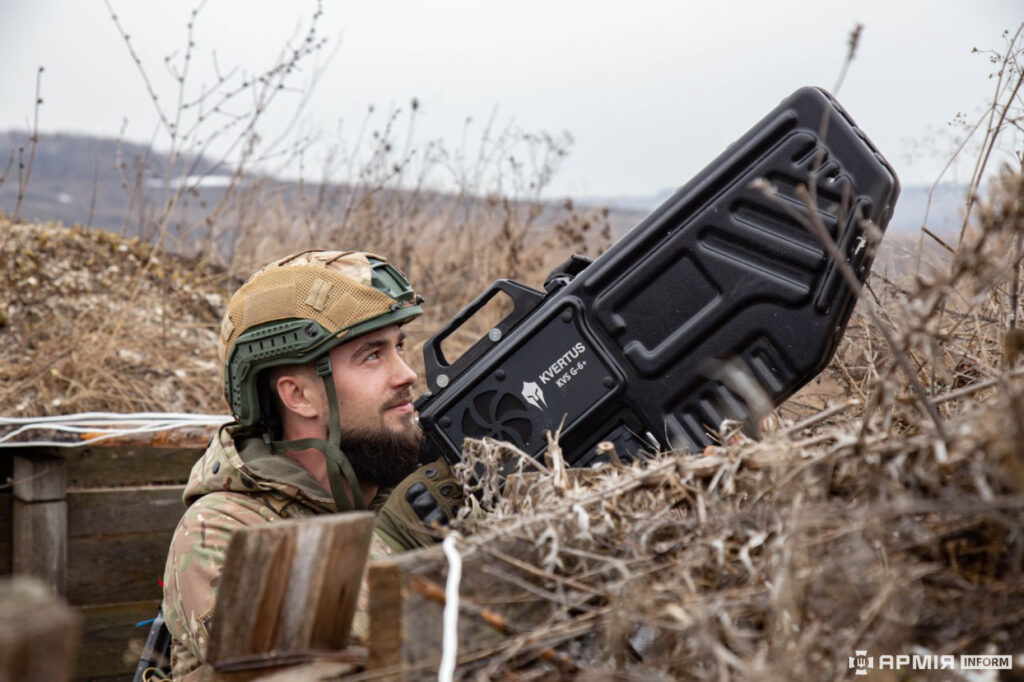
ArmyInform, CC BY 4.0 https://creativecommons.org/licenses/by/4.0, via Wikimedia Commons

Counter-Swarm: What Actually Works

No single silver bullet exists. What works today is layering:
Electronic warfare to suppress links and navigation, forcing swarms to fragment or revert to fail-safes.
Kinetic interceptors and directed energy to handle the leakers at close range.
Deception and decoys to soak up munitions and misdirect sensors.
Hardening critical nodes, from warships to refineries and substations, because perfect interception is unrealistic under saturation.

Field exercises and tabletop studies converge on the same point: effectiveness comes from the system, not any single widget. The challenge is cost: defenders must spend less per interception than attackers spend per drone, or they lose the attrition game over time. That is why procurement is shifting toward cheap, numerous, and integrated defensive kits rather than bespoke, standalone systems.

Energy and Maritime Operators Are Now in the First Ring

Energy infrastructure, from offshore platforms to refineries and pipelines, has moved higher on threat lists as swarms lower the cost of coordinated strikes. Maritime operators face the same math: more contacts, less time. The operational response blends surveillance density, response menus such as EW, interceptors, and hard-kill, and cross-sector coordination with military forces. If you run critical infrastructure, the checklist today includes C-UAS plans, exercises with local authorities, and procurement paths for rapidly deployable defenses. Waiting for a national solution is not a viable risk posture.

Don’t Over-Correct: Swarms Don’t Replace Firepower

A caution is in order. Some analysts warn against swinging from “drones are a niche” to “drones do everything.” Swarms multiply options, but they do not replace artillery, aviation, or naval firepower. The best battlefield results have come from combined-arms integration, where drones cue fires, blind radars, or finish damaged targets, and conventional systems exploit the openings. Thinking in effects chains keeps investments balanced and reduces the risk of brittle, single-concept forces.

Where This Goes Next

Three near-term shifts look decisive.
Automated command and control: expect more AI in the loop for defenders, prioritizing tracks, recommending effects, and closing the sensor-to-shooter gap under tight timelines.
Commoditized production: as open architectures and commercial supply chains spread, both attackers and defenders will iterate faster. Policy will chase that curve.
Norms under pressure: the legal debate over autonomous weapons is moving toward concrete instruments. “Meaningful human control” will evolve from a slogan into design and training requirements backed by law.

For defense planners and critical-infrastructure leaders, the most rational posture is pragmatic and forward-leaning: test early, layer defenses, quantify costs, and build governance into the tech stack. The swarm era is already here; the question is whether our organizations can operate and decide at swarm speed.

Sources

CSIS, The Russia-Ukraine Drone War: Innovation on the Frontlines and Beyond (event transcript) and Closing the Loop analysis, 2024–2025.

RAND Corporation, Unmanned Aerial Systems Intelligent Swarm Technology, Feb. 15, 2024.

DARPA, OFFensive Swarm-Enabled Tactics (OFFSET) program pages and final field experiment note, 2017–2021.

U.S. Department of Defense / DIU, Replicator Initiative (ADA2) overview, Aug. 2023–present.

Atlantic Council, NATO needs a “hellscape” defense at Replicator speed, Nov. 4, 2024.

Congressional Research Service, Department of Defense Counter-UAS, Mar. 31, 2025; DOD Replicator: Background and Issues, Aug. 25, 2025.

RUSI, Uncrewed platforms have been critical to Ukraine’s success in the Black Sea, Aug. 20, 2024; NATO should not replace traditional firepower with drones, Aug. 4, 2025.

Previous Post

What Exactly Is a Private Military Company (PMC)?

Next Post

Africa’s Critical Minerals, Energy Security, and the Defense Equation

Related Posts

USSPACECOM_Joint_Operations_Center_(7804714)
Defense

Deepfake Deception: The Phantom Siege Reshaping Espionage

December 3, 2025
ITAR Spotlight: Why USML Categories I, III and VIII Sit At The Heart Of Defense Export Controls
Military Market Reports

ITAR Spotlight: Why USML Categories I, III and VIII Sit At The Heart Of Defense Export Controls

November 26, 2025
Africa Partnership Station AK 47
Defense

The AK-47 Legacy in Africa

October 20, 2025
K2_(7445555272)_(cropped)
Defense

Hanwha Aerospace and South Korea’s Quiet Surge in Global Defense

October 8, 2025
F-35 Demo Team performs at the Defenders of Liberty Air & Space Show
Defense

Turkey and the F-35 Question: Is a Return to the Program Realistic?

October 1, 2025
DynCorp International: What It Does, Where It Operates, and Why It Matters
Defense

DynCorp International: What It Does, Where It Operates, and Why It Matters

September 29, 2025
Next Post
U.S._Army_Africa_ACOTA_team_trains_Sierra_Leone_troops_-_Flickr_-_US_Army_Africa_(6)_Africa critical minerals

Africa’s Critical Minerals, Energy Security, and the Defense Equation

  • Trending
  • Comments
  • Latest
Blackwater PMC

After Blackwater: How PMCs Evolved, Professionalized, and Fragmented

September 13, 2025
Blackwater PMC

Inside Iraq’s Security Market: How Private Power Shapes a Fragile State

October 6, 2025
Operation Enduring Freedom

What Exactly Is a Private Military Company (PMC)?

September 6, 2025
Repkon Nammo in Denmark: What This Nordic Ammunition Play Really Signals

Repkon Nammo in Denmark: What This Nordic Ammunition Play Really Signals

August 21, 2025
A Historic $142 Billion Arms Deal: Unpacking the U.S.-Saudi Agreement

A Historic $142 Billion Arms Deal: Unpacking the U.S.-Saudi Agreement

A Silent Revolution on the Battlefield: AI-Enabled Tactical Communication Systems

A Silent Revolution on the Battlefield: AI-Enabled Tactical Communication Systems

Cominf.org, CC BY-SA 3.0 , via Wikimedia Commons

Is Europe Really Reducing Its Dependence on Russian Gas?

What is ITAR? The Invisible Line in Global Defense Trade

What is ITAR? The Invisible Line in Global Defense Trade

Israel’s F-15 News: What Actually Happened, and Why It Matters

Israel’s F-15 News: What Actually Happened, and Why It Matters

January 1, 2026
SDF and HTS: Managing Tension Without Open Conflict in Northern Syria

SDF and HTS: Managing Tension Without Open Conflict in Northern Syria

December 26, 2025
What 2025 Taught Us About Defense and Energy: Five Lessons for 2026

What 2025 Taught Us About Defense and Energy: Five Lessons for 2026

December 24, 2025
The New Taiwan Arms Package and China’s “Stop” Message: What Actually Changed

The New Taiwan Arms Package and China’s “Stop” Message: What Actually Changed

December 19, 2025

Recent News

Israel’s F-15 News: What Actually Happened, and Why It Matters

Israel’s F-15 News: What Actually Happened, and Why It Matters

January 1, 2026
SDF and HTS: Managing Tension Without Open Conflict in Northern Syria

SDF and HTS: Managing Tension Without Open Conflict in Northern Syria

December 26, 2025
What 2025 Taught Us About Defense and Energy: Five Lessons for 2026

What 2025 Taught Us About Defense and Energy: Five Lessons for 2026

December 24, 2025
The New Taiwan Arms Package and China’s “Stop” Message: What Actually Changed

The New Taiwan Arms Package and China’s “Stop” Message: What Actually Changed

December 19, 2025
Drill & Defense

Drill & Defense is an independent platform providing insights into firearms, defense technologies, and energy sectors. We deliver clear, practical content for professionals, enthusiasts, and industry followers worldwide.

Follow Us

Browse by Category

  • Cross-Sector Insights
  • Defense
  • Defense & Energy Strategy
  • Defense Know-How
  • Defense Technologies
  • Energy
  • Energy Insight
  • Energy Technologies
  • Global Security & Trade Analysis
  • History & Legacy
  • Industry News
  • Knowledge Base
  • Legacy Systems & Structures
  • Market Trends & Analysis
  • Military Market Reports
  • Oil & Gas News
  • Resource Wars & Strategy
  • Tech & Innovation Crossover
  • Turning Points in Conflict
  • Weapon & Gear Reviews

Recent News

Israel’s F-15 News: What Actually Happened, and Why It Matters

Israel’s F-15 News: What Actually Happened, and Why It Matters

January 1, 2026
SDF and HTS: Managing Tension Without Open Conflict in Northern Syria

SDF and HTS: Managing Tension Without Open Conflict in Northern Syria

December 26, 2025

© 2025 Drill & Defense. All rights reserved. Independent insights on firearms, defense, and energy. For business inquiries: info@drillanddefense.com | PRIVACY POLICY | COOKIE POLICY | TERMS AND CONDITIONS

Manage Consent

We use cookies to improve your experience. You can accept or refuse cookies; however, some features may not function properly without your consent.

Functional Always active
The technical storage or access is strictly necessary for the legitimate purpose of enabling the use of a specific service explicitly requested by the subscriber or user, or for the sole purpose of carrying out the transmission of a communication over an electronic communications network.
Preferences
The technical storage or access is necessary for the legitimate purpose of storing preferences that are not requested by the subscriber or user.
Statistics
The technical storage or access that is used exclusively for statistical purposes. The technical storage or access that is used exclusively for anonymous statistical purposes. Without a subpoena, voluntary compliance on the part of your Internet Service Provider, or additional records from a third party, information stored or retrieved for this purpose alone cannot usually be used to identify you.
Marketing
The technical storage or access is required to create user profiles to send advertising, or to track the user on a website or across several websites for similar marketing purposes.
  • Manage options
  • Manage services
  • Manage {vendor_count} vendors
  • Read more about these purposes
View preferences
  • {title}
  • {title}
  • {title}
No Result
View All Result
  • Defense
    • Industry News
    • Weapon & Gear Reviews
    • Defense Technologies
    • Military Market Reports
  • Energy
    • Oil & Gas News
    • Energy Technologies
    • Market Trends & Analysis
  • Cross-Sector Insights
    • Defense & Energy Strategy
    • Global Security & Trade Analysis
    • Tech & Innovation Crossover
  • History & Legacy
    • Turning Points in Conflict
    • Legacy Systems & Structures
    • Resource Wars & Strategy
  • Knowledge Base
    • Defense Know-How
    • Energy Insight
  • About
  • Contact
  • Login
  • Register

© 2025 Drill & Defense. All rights reserved. Independent insights on firearms, defense, and energy. For business inquiries: info@drillanddefense.com | PRIVACY POLICY | COOKIE POLICY | TERMS AND CONDITIONS