
Drill & Defense
Advertisement
  • Defense Industry
    • Industry News
    • Defense Companies
    • Defense Technologies
    • Market Analysis
  • Military Systems
    • Land Systems
    • Air Systems
    • Naval Systems
    • Electronic & Cyber Systems
  • Firearms
    • Pistols
    • Rifles
    • SMGs & Machine Guns
    • Ammunition
    • Optics & Accessories
  • Geopolitics
    • Global Security
    • Defense & Energy Strategy
    • Tech & Innovation Crossover
    • Trade & Export Controls
  • Energy & Security
    • Oil & Gas News
    • Energy Technologies
    • Market Trends & Analysis
  • History
    • Military History
    • Doctrines & Concepts
    • Strategic Turning Points
    • Legacy Systems & Structures
  • Knowledge Base
    • Firearms Basics
    • Defense Know-How
    • Energy Fundamentals
    • Regulations & Frameworks
  • About
  • Contact
  • Login
  • Register
No Result
View All Result
  • Defense Industry
    • Industry News
    • Defense Companies
    • Defense Technologies
    • Market Analysis
  • Military Systems
    • Land Systems
    • Air Systems
    • Naval Systems
    • Electronic & Cyber Systems
  • Firearms
    • Pistols
    • Rifles
    • SMGs & Machine Guns
    • Ammunition
    • Optics & Accessories
  • Geopolitics
    • Global Security
    • Defense & Energy Strategy
    • Tech & Innovation Crossover
    • Trade & Export Controls
  • Energy & Security
    • Oil & Gas News
    • Energy Technologies
    • Market Trends & Analysis
  • History
    • Military History
    • Doctrines & Concepts
    • Strategic Turning Points
    • Legacy Systems & Structures
  • Knowledge Base
    • Firearms Basics
    • Defense Know-How
    • Energy Fundamentals
    • Regulations & Frameworks
  • About
  • Contact
  • Login
  • Register
No Result
View All Result
Drill & Defense
No Result
View All Result
Home Defense Industry

Turkey and the F-35 Question: Is a Return to the Program Realistic?

October 1, 2025
in Defense Industry, Industry News
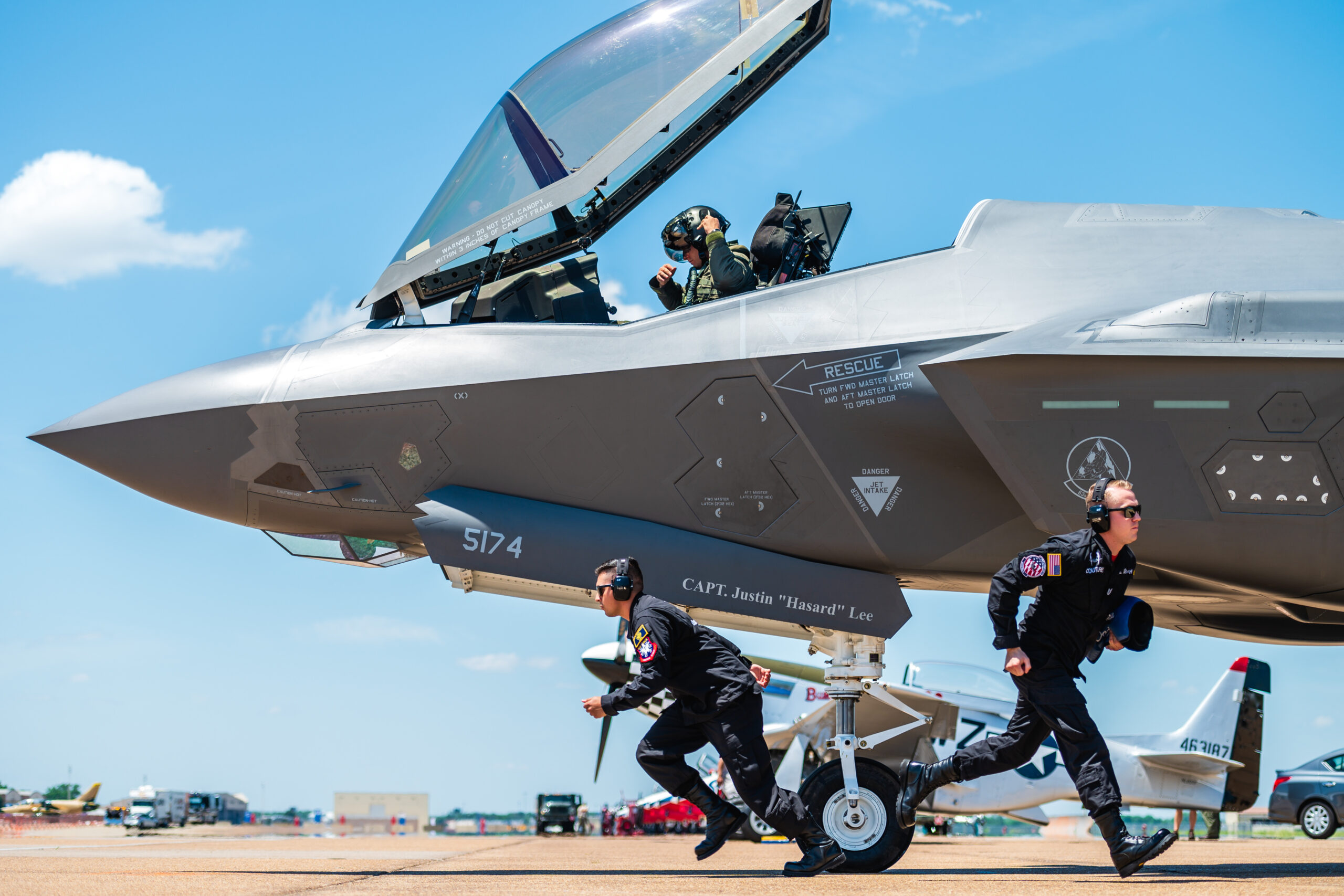
F-35 Demo Team performs at the Defenders of Liberty Air & Space Show

F-35 Lightning II demonstration team members sprint to their positions during the ground show at the Defenders of Liberty Air & Space Show at Barksdale Air Force Base, La., May 17, 2019. The team’s ground show consists of pre-flight inspections with sharp, quick-paced movements that showcase the pride and professionalism of the U.S. Air Force. (U.S. Air Force photo by Senior Airman Alexander Cook)

Share on LinkedInShare on Twitter

If you follow Drill & Defense, you already know: the F-35 debate is not only about hardware. It is about law, alliance politics, sanctions, industrial participation, and trust. Whether Turkey will receive F-35s is therefore less a binary “yes/no” than a moving equation with several interlocking variables. Below, I’ll walk you through those variables with a calm, neutral lens, speaking directly to you as a reader who wants clarity rather than noise.

Where We Are Today

The baseline is simple: Turkey was removed from the F-35 program in 2019 after taking delivery of the Russian S-400 air defense system. Since then, the U.S. position has been anchored in law. Congressional language originating in FY2020 defense legislation limits any transfer of F-35 aircraft, technology, or training to Turkey so long as the S-400 issue remains unresolved. That statutory reality matters more than any single leader’s comments or diplomatic mood. It is why periodic waves of optimistic headlines haven’t converted into deliveries.

You’ll also see reports that political discussions have reopened. Those are meaningful, but they don’t erase the legal preconditions. Even when leaders say the door could open if the S-400 is “rendered inoperable” or otherwise addressed, the step from dialogue to delivery is a long one, and it runs through Congress, not just the White House.
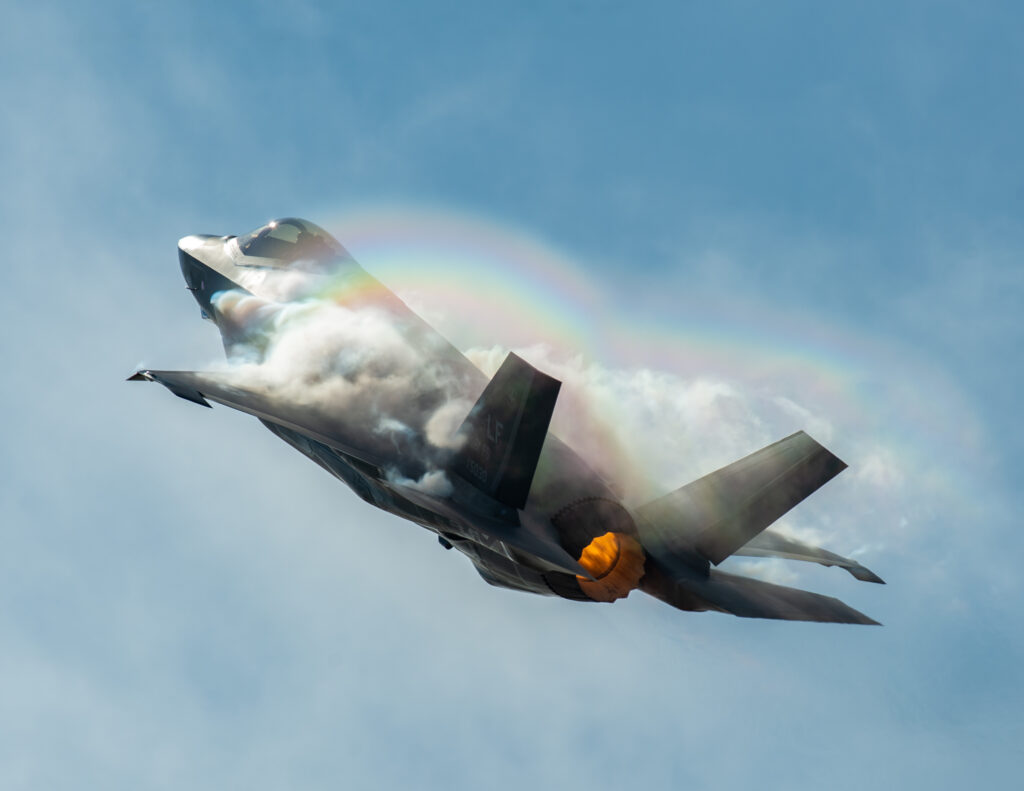
Capt. Andrew “Dojo” Olson, F-35 Heritage Flight Team pilot and commander performs a vertical climb in an F-35A Lightning II during the Bell Fort Worth Alliance Air Show Oct. 14, 2018, in Fort Worth, Texas. The F-35A Lightning II’s F-135 single-engine contains 43,000 pounds of thrust. (U.S. Air Force photo by Senior Airman Alexander Cook)

The Legal Hinge: S-400 First, Then Everything Else

Let’s be pragmatic. U.S. concerns were about protecting F-35 secrets from potential exposure to a Russian-origin system operating in the same environment. That is the core rationale behind Turkey’s removal and the legal guardrails that followed. Any future path will therefore start with a “technical-political” fix on the S-400, something concrete enough to convince skeptics in Congress and credible enough to be verifiable over time. Concepts occasionally floated in Washington such as mothballing, partial dismantlement, or relocating the system under U.S. control live in this space. None has been implemented to date.

If you are evaluating seriousness, look for tangible steps that demonstrate irreversible change in the S-400 posture. Anything short of that will keep the legal lock in place. This is not an anti-Turkey point, it’s an institutional one about how U.S. law interacts with alliance management.
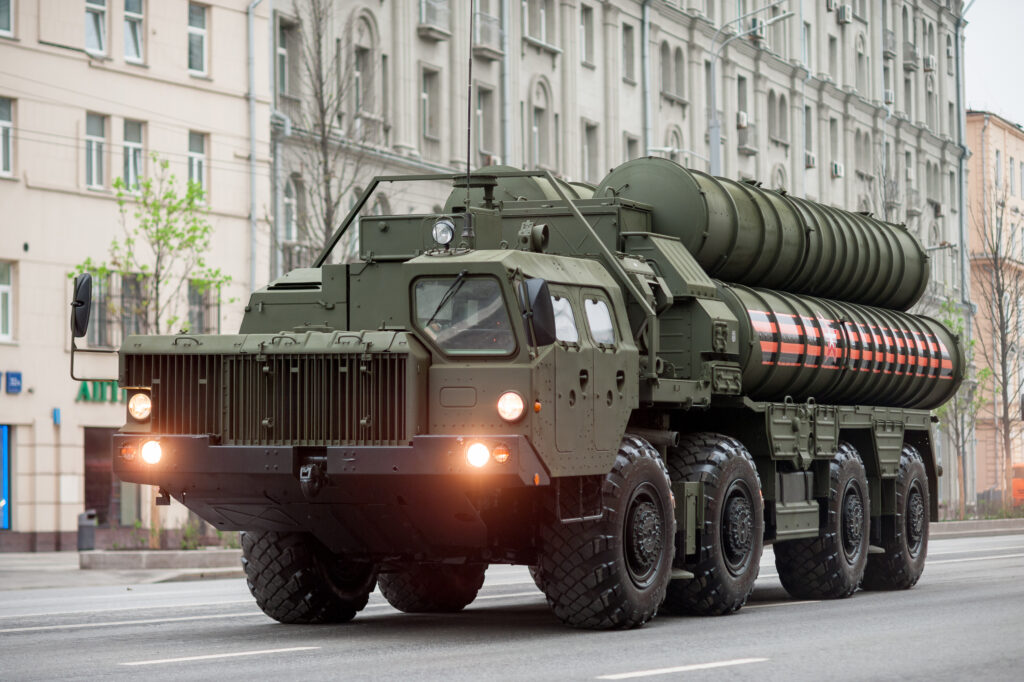
Dmitriy Fomin from Moscow, Russia, CC BY 2.0 https://creativecommons.org/licenses/by/2.0, via Wikimedia Commons

Politics vs. Programs: What Leaders Say vs. What Programs Require

High-level meetings matter because they reset atmospherics and can instruct bureaucracies to explore options. Recently, top-level engagements produced comments about revisiting the F-35 issue, “technical talks,” and hopeful signals. Important? Yes. Determinative? Not by themselves. The program reality is that the F-35 enterprise is large, multi-year, and tightly governed by agreements and security rules. Partners and buyers plan decades ahead. The re-entry of any former participant would require adjustments in training, sustainment, software releases, and secure data environments that take time and political cover.
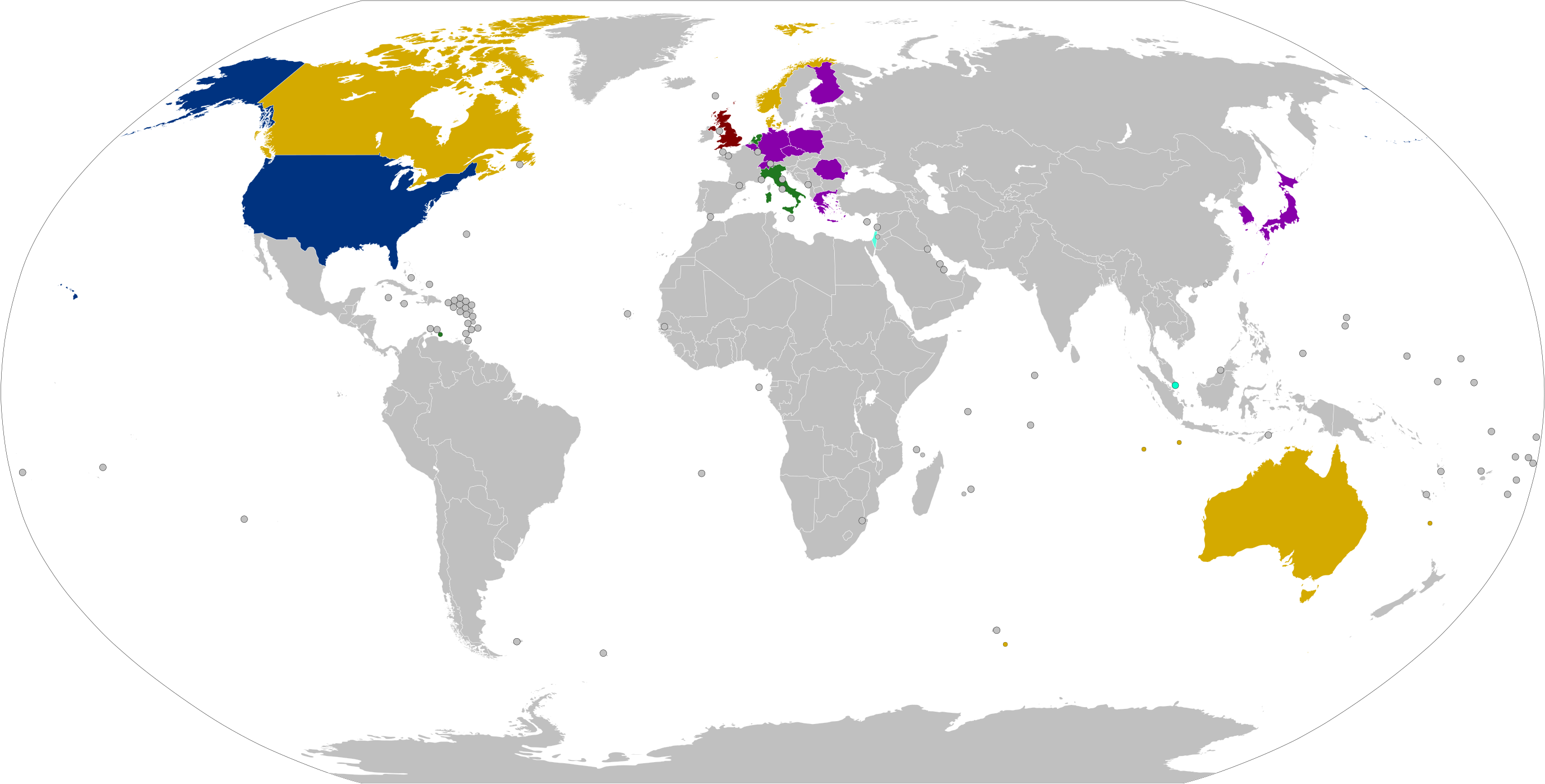
Wallcop100, CC BY-SA 4.0 https://creativecommons.org/licenses/by-sa/4.0, via Wikimedia Commons

Industrial Footprint: Turkey’s Past Role and Today’s Gap

Before removal, Turkish industry produced over a thousand F-35 parts and expected significant long-term workshare. That industrial bridge was rebuilt elsewhere at considerable cost and effort. Reversing or re-allocating production is not impossible, but it is not trivial either. Supply chains prize predictability, and the F-35 office moved to stabilize production after 2019. If you’re scanning signals, a serious discussion about any future Turkish role would surface in industrial notices and program updates well before jets change hands. Watch that space, not just podium statements.

Capability Fit: Why the F-35 Still Matters to Ankara

From an operational standpoint, the F-35 would expand Turkey’s options in several mission sets: suppression of enemy air defenses, deep strike with networked targeting, ISR fusion, and maritime strike. It would also provide future interoperability dividends as more NATO air forces field the type. That said, capability is not the only currency. Access, sustainment costs, sovereign upgrade levers, and technology protection rules all shape the net value proposition. GAO reporting shows the sustainment bill for the global fleet is high and under constant reform. Any buyer, new or returning must weigh lifetime costs and performance targets against alternatives such as the F-16V, Eurofighter Typhoon, or indigenous pathways and their political friction.

NATO Optics: The Alliance Layer

Within NATO, the F-35 is moving toward becoming the common fifth-generation baseline. More European members are joining the user community, which increases shared training, spare pools, and mission standardization. For alliance planners, a Turkey that flies F-35s and is fully plugged into allied data networks would be a net operational gain in several theaters, from the Black Sea to the Eastern Mediterranean. But alliance harmony also depends on minimizing intra-system risks. That returns us to the S-400: integrating a fifth-gen fleet while a Russian-origin battery remains in national service would keep raising red flags. This friction is structural rather than emotional.

The Negotiating Set: What Would a Deal Look Like?

If you’re asking what’s the shape of a possible deal, picture a layered package rather than a single handshake. Elements could include:

A verifiable S-400 disposition plan. Not just paperwork, physical, inspectable steps.
Sequenced legal relief. Congress would likely condition any transfer on verified compliance over time.
Industrial and training timelines. Real lead times for simulators, security accreditation, ALIS/ODIN access, weapons integration, and squadron stand-up.
Parallel tracks. Expect other aviation pieces such as F-16 sustainment and upgrades to act as political stabilizers while the F-35 question is tested.

None of this is speculative wish-casting, it is how complex defense transactions typically move from politics to programs when statutory barriers exist.

Signals to Watch

You will see many “we talked about F-35s” stories. Filter them with these practical indicators:

  1. Legislative movement. Any amendment, waiver path, or formal report language that modifies the current prohibition.
  2. Program office notices. Shifts in partner lists, training slots, or long-lead procurement signals.
  3. Industrial contracts. Re-opening Turkish workshare or tooling modifications would be a loud early bell.
  4. Verification mechanisms. Third-party or U.S.-managed oversight arrangements for the S-400, if any, will be a tell.

If none of those move, the conversation remains political theater rather than a programmatic change.

A Realistic Read for 2025

So, will Turkey get F-35s? Here is the most defensible, even-handed read for now:

Policy space exists for renewed talks, and leaders on both sides periodically test that space.
Law still dominates the outcome. Without a concrete S-400 solution that convinces Congress, actual transfers remain blocked.
Time horizons are long. Even a positive decision would entail years of technical, legal, and industrial steps before Turkish squadrons fly operational F-35s.
Alternatives continue in parallel. Upgrades to existing fleets and other procurement conversations will roll on, partly as hedges.

If you’re a reader who wants a binary answer, that can be unsatisfying. But accuracy beats simplicity: the center of gravity is statutory, not rhetorical. The moment you see verifiable S-400 steps paired with legislative action, the probability shifts materially. Until then, treat any “green light” talk as provisional.


Sources

  • U.S. Department of Defense press briefing on removing Turkey from the F-35 program (July 17, 2019).
  • White House (archived) statement on Turkey and the S-400/F-35 incompatibility (July 17, 2019).
  • U.S. Congress, FY2020 National Defense Authorization Act texts detailing limitations on F-35 transfer to Turkey.
  • Congressional Research Service brief noting that U.S. law prohibits F-35 transfer while Turkey retains the S-400, discussion of possible “rendered inoperable” scenarios (Aug.–Sep. 2025).


 

Previous Post

DynCorp International: What It Does, Where It Operates, and Why It Matters

Next Post

Inside Iraq’s Security Market: How Private Power Shapes a Fragile State

Related Posts

HEL_MD_Beam_Director
Defense Industry

Laser Weapons: The New Layer in Modern Air Defense

May 14, 2026
JGSDF_Railgun_02
Defense Industry

Railgun: Between Engineering Ambition and Operational Reality

April 22, 2026
C-RAM System in Support of Coalition Defense
Defense Industry

C-RAM: The Last Seconds of Defense

April 1, 2026
2048px-U_S_Forces_Launch_Operation_Epic_Fury_(9542616)
Defense Industry

Carrier Strike Power: Super Hornet, Hawkeye, JDAM and the Mechanics of Modern Air Operations

March 4, 2026
“Iron Swords” – The Continuing War Born from the Tunnels
Defense Industry

“Iron Swords” – The Continuing War Born from the Tunnels

February 18, 2026
Stealth Technology’s Mathematics: How Low Observability Is Actually Engineered
Defense Industry

Stealth Technology’s Mathematics: How Low Observability Is Actually Engineered

February 11, 2026
Next Post
Blackwater PMC

Inside Iraq’s Security Market: How Private Power Shapes a Fragile State

  • Trending
  • Latest
Operation Enduring Freedom

What Exactly Is a Private Military Company (PMC)?

September 6, 2025
Blackwater PMC

After Blackwater: How PMCs Evolved, Professionalized, and Fragmented

September 13, 2025
MG42-1

MG42 Machine Gun: WWII History, Specifications and Battlefield Impact

April 21, 2026
Blackwater PMC

Inside Iraq’s Security Market: How Private Power Shapes a Fragile State

October 6, 2025
General Orde Wingate_Chindit_leaders_Burma_1944_IWM_MH_7873

Orde Wingate: The Difficult Legacy of an Irregular Commander

May 18, 2026
1280px-5-4_ADAR_Supports_Formidable_Shield_25_

SGT Stout: M-SHORAD and Mobile Air Defense

May 16, 2026
HEL_MD_Beam_Director

Laser Weapons: The New Layer in Modern Air Defense

May 14, 2026
EU Dual Use

EU Dual-Use Regulation: How Civilian Technology Becomes a Matter of Export Control

May 13, 2026

Recent Articles

General Orde Wingate_Chindit_leaders_Burma_1944_IWM_MH_7873

Orde Wingate: The Difficult Legacy of an Irregular Commander

May 18, 2026
1280px-5-4_ADAR_Supports_Formidable_Shield_25_

SGT Stout: M-SHORAD and Mobile Air Defense

May 16, 2026
HEL_MD_Beam_Director

Laser Weapons: The New Layer in Modern Air Defense

May 14, 2026
EU Dual Use

EU Dual-Use Regulation: How Civilian Technology Becomes a Matter of Export Control

May 13, 2026
Drill & Defense

Drill & Defense is an independent defense and security platform covering firearms, military technology, geopolitics, energy security, and industry developments. We provide clear, structured, and practical insight for professionals, companies, and readers following the evolving defense landscape worldwide.

Follow Us

Browse by Category

  • Air Systems
  • Defense & Energy Strategy
  • Defense Industry
  • Defense Know-How
  • Defense Technologies
  • Doctrines & Concepts
  • Energy & Security
  • Energy Fundamentals
  • Energy Technologies
  • Firearms
  • Geopolitics
  • Global Security
  • History
  • Industry News
  • Knowledge Base
  • Land Systems
  • Legacy Systems & Structures
  • Market Analysis
  • Market Trends & Analysis
  • Military History
  • Military Systems
  • Naval Systems
  • Oil & Gas News
  • Pistols
  • Regulations & Frameworks
  • Rifles
  • SMGs & Machine Guns
  • Strategic Turning Points
  • Tech & Innovation Crossover

Recent Articles

General Orde Wingate_Chindit_leaders_Burma_1944_IWM_MH_7873

Orde Wingate: The Difficult Legacy of an Irregular Commander

May 18, 2026
1280px-5-4_ADAR_Supports_Formidable_Shield_25_

SGT Stout: M-SHORAD and Mobile Air Defense

May 16, 2026

© 2026 Drill & Defense. All rights reserved. Independent insights on firearms, defense, and energy. For business inquiries: info@drillanddefense.com | PRIVACY POLICY | COOKIE POLICY | TERMS AND CONDITIONS

Manage Consent

We use cookies to improve your experience. You can accept or refuse cookies; however, some features may not function properly without your consent.

Functional Always active
The technical storage or access is strictly necessary for the legitimate purpose of enabling the use of a specific service explicitly requested by the subscriber or user, or for the sole purpose of carrying out the transmission of a communication over an electronic communications network.
Preferences
The technical storage or access is necessary for the legitimate purpose of storing preferences that are not requested by the subscriber or user.
Statistics
The technical storage or access that is used exclusively for statistical purposes. The technical storage or access that is used exclusively for anonymous statistical purposes. Without a subpoena, voluntary compliance on the part of your Internet Service Provider, or additional records from a third party, information stored or retrieved for this purpose alone cannot usually be used to identify you.
Marketing
The technical storage or access is required to create user profiles to send advertising, or to track the user on a website or across several websites for similar marketing purposes.
  • Manage options
  • Manage services
  • Manage {vendor_count} vendors
  • Read more about these purposes
View preferences
  • {title}
  • {title}
  • {title}
No Result
View All Result
  • Defense Industry
    • Industry News
    • Defense Companies
    • Defense Technologies
    • Market Analysis
  • Military Systems
    • Land Systems
    • Air Systems
    • Naval Systems
    • Electronic & Cyber Systems
  • Firearms
    • Pistols
    • Rifles
    • SMGs & Machine Guns
    • Ammunition
    • Optics & Accessories
  • Geopolitics
    • Global Security
    • Defense & Energy Strategy
    • Tech & Innovation Crossover
    • Trade & Export Controls
  • Energy & Security
    • Oil & Gas News
    • Energy Technologies
    • Market Trends & Analysis
  • History
    • Military History
    • Doctrines & Concepts
    • Strategic Turning Points
    • Legacy Systems & Structures
  • Knowledge Base
    • Firearms Basics
    • Defense Know-How
    • Energy Fundamentals
    • Regulations & Frameworks
  • About
  • Contact
  • Login
  • Register

© 2026 Drill & Defense. All rights reserved. Independent insights on firearms, defense, and energy. For business inquiries: info@drillanddefense.com | PRIVACY POLICY | COOKIE POLICY | TERMS AND CONDITIONS