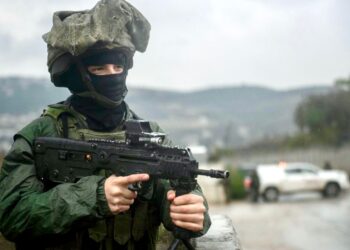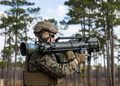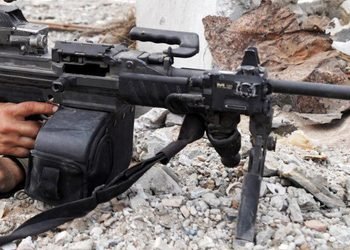

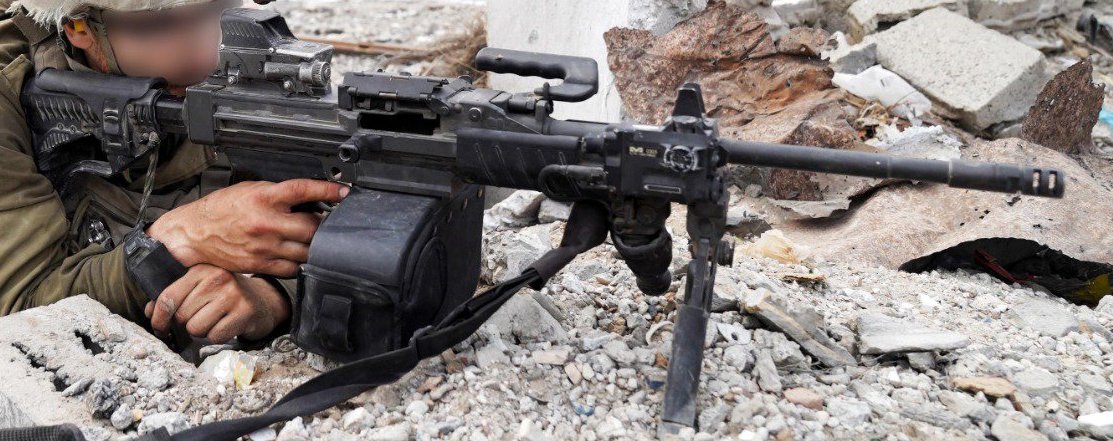
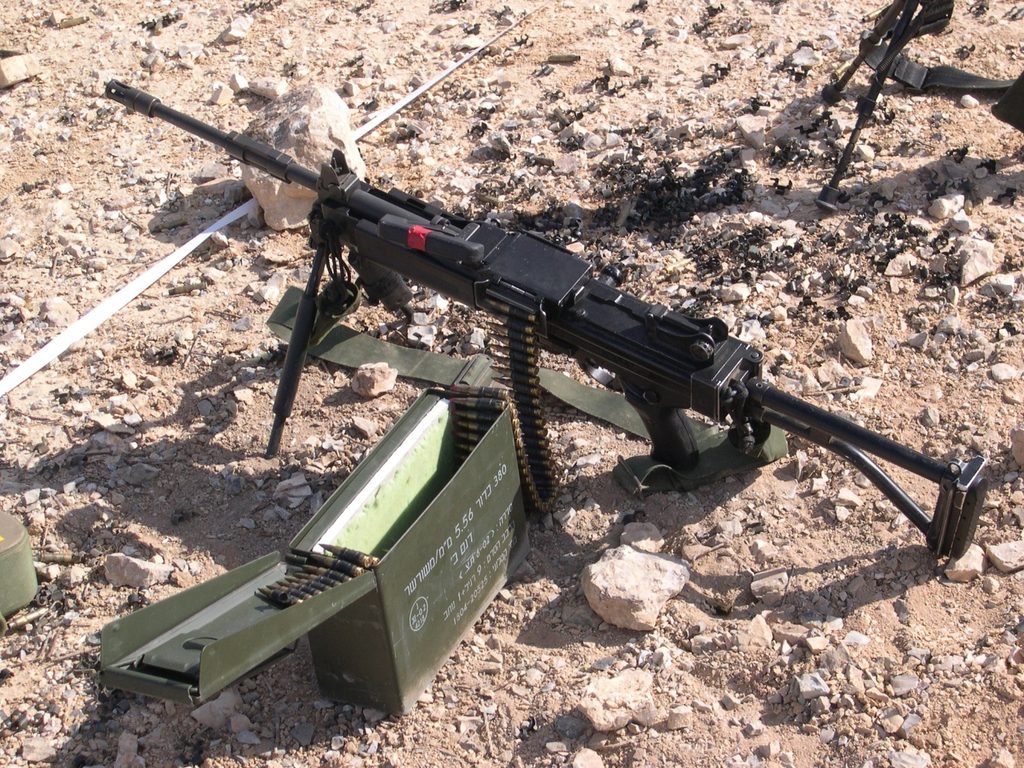
A machine gun can look compact on a specification sheet and feel considerably less compact once ammunition, optics, and spare equipment enter the picture. That is part of the challenge surrounding the IWI NEGEV NG7, a 7.62×51 mm NATO machine gun developed by Israel Weapon Industries (IWI). Designed as an extension of the original 5.56 mm NEGEV family, the NG7 brings a more powerful cartridge into a relatively lightweight, belt-fed platform without abandoning the handling characteristics that made the earlier design distinctive.

At first glance, its specifications appear fairly conventional for a modern military machine gun. A gas-operated mechanism, interchangeable barrels, adjustable sights, and compatibility with different mounting systems are hardly unusual features. What makes the NG7 worth examining is how these elements are combined with selectable semi-automatic fire and an emphasis on reducing overall weight. The result is a weapon intended to operate across different infantry and support roles, although its actual advantages depend heavily on the circumstances in which it is used.
From the Original NEGEV to the NG7
The original NEGEV was developed around the 5.56×45 mm NATO cartridge, placing it among light machine guns intended primarily for infantry units. The NG7 takes the same general concept into 7.62×51 mm territory, where ammunition weight, recoil, and sustained-fire requirements become more demanding. The larger cartridge offers different ballistic characteristics, particularly in retained energy and performance over distance, but these benefits come with practical costs. A soldier carrying several hundred rounds of 7.62 mm ammunition faces a noticeably heavier load than someone equipped with the same number of 5.56 mm rounds.
IWI attempted to balance these competing requirements by keeping the NG7 relatively compact. The original standard model, equipped with a 508 mm barrel, was listed at approximately 7.95 kg without ammunition or accessories. More recent specifications for the NEGEV 7 20 give a weight of 8.2 kg, reflecting the importance of distinguishing between different versions and configurations. Its shorter-barreled variants offer additional flexibility, particularly where overall weapon length matters. However, reducing dimensions does not necessarily improve every aspect of performance, and a shorter machine gun may still present considerable logistical demands when supplied with full-power ammunition.

This raises an interesting question: how much weight can realistically be removed from a machine gun before the compromises begin to outweigh the benefits? There is no fixed answer. Barrel construction, operating components, accessories, and the amount of ammunition carried all influence the overall burden, making the weapon’s advertised weight only one part of the comparison.
Inside the NG7: Operating System and Mechanical Design
Mechanically, the NEGEV NG7 follows a familiar approach. It uses a gas-operated system and fires from an open bolt, an arrangement commonly found in belt-fed machine guns because of its advantages during sustained automatic fire. With the bolt held to the rear between firing sequences, the chamber is not continuously occupied by a live cartridge, helping reduce the risk associated with excessive heat buildup. This does not make the weapon immune to overheating, but it addresses an important concern in machine guns expected to fire repeated bursts.
An adjustable gas regulator provides another level of flexibility. Gas-operated firearms can experience changes in functioning as fouling accumulates or operating conditions deteriorate, and an adjustable system allows the mechanism to accommodate different circumstances within its intended operating range. IWI also incorporates a hydraulic recoil mechanism and a muzzle device intended to reduce recoil effects and muzzle rise. These features are particularly relevant when handling 7.62×51 mm ammunition, although they cannot entirely eliminate the movement associated with automatic fire.
Barrel construction is equally important. The standard NG7 uses a 508 mm barrel with four right-hand grooves and a 1:12-inch rifling twist, while the shorter NG7 SF configuration features a 420 mm barrel. Both belong to a family designed around interchangeable barrels, allowing barrel replacement when required by operating conditions. During prolonged firing, heat can accumulate rapidly, and the ability to change barrels is an important feature for a weapon intended to provide sustained support.
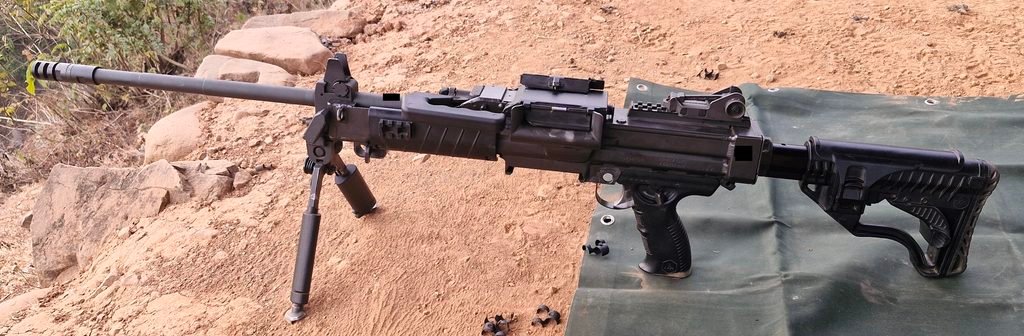
The shorter barrel makes the weapon easier to accommodate in restricted spaces, but it may also influence muzzle velocity and ballistic performance. Neither configuration should automatically be considered superior. A longer barrel can offer advantages in certain circumstances, while a shorter weapon may be more convenient for personnel operating around vehicles or in confined environments. The more useful comparison concerns the intended role rather than barrel length alone.
Why Give a Belt-Fed Machine Gun Semi-Automatic Fire?
One of the NG7’s more distinctive characteristics is its selectable firing system. Unlike many traditional general-purpose machine guns, which are designed primarily around automatic fire, the NG7 allows its operator to select semi-automatic or fully automatic operation. It is an unusual capability for a weapon whose main purpose remains providing supporting fire, and it naturally raises the question of how much value individual shots bring to a belt-fed platform.
In semi-automatic mode, the NG7 can fire a single round for each trigger pull, offering an additional option when continuous automatic fire is unnecessary. Fully automatic operation remains available, with IWI’s current specifications listing a cyclic rate of approximately 600–800 rounds per minute. That number represents the mechanical rate of fire rather than the volume of ammunition that can realistically be expended over an extended period. Heat, ammunition availability, barrel condition, and operational circumstances all place limits on sustained use.
The distinction matters because a high cyclic rate is not necessarily an indicator of greater practical effectiveness. Controllability, reliability, and ammunition management are also significant considerations. Semi-automatic capability gives the NG7 a degree of flexibility, but it does not transform the platform into a designated marksman rifle or remove the disadvantages associated with its size and ammunition supply. It remains a machine gun, even when firing individual rounds.
Ammunition Feeding, Handling, and Accessories
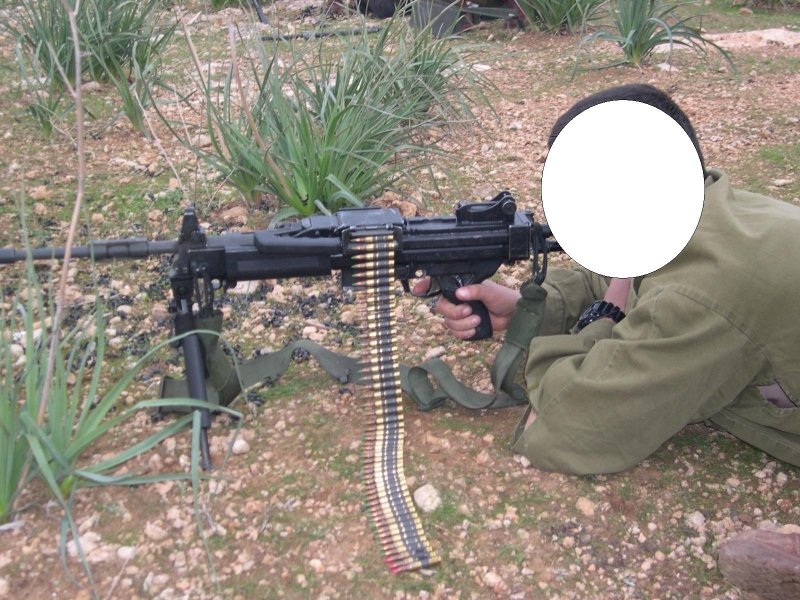
The NG7 operates with a belt-fed ammunition system using linked 7.62×51 mm NATO cartridges. This separates it from certain 5.56 mm NEGEV configurations capable of accepting both ammunition belts and magazines. Although the two weapons belong to the same family, their ammunition arrangements are not identical, and the distinction becomes relevant when considering how they are supplied and maintained.
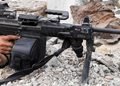
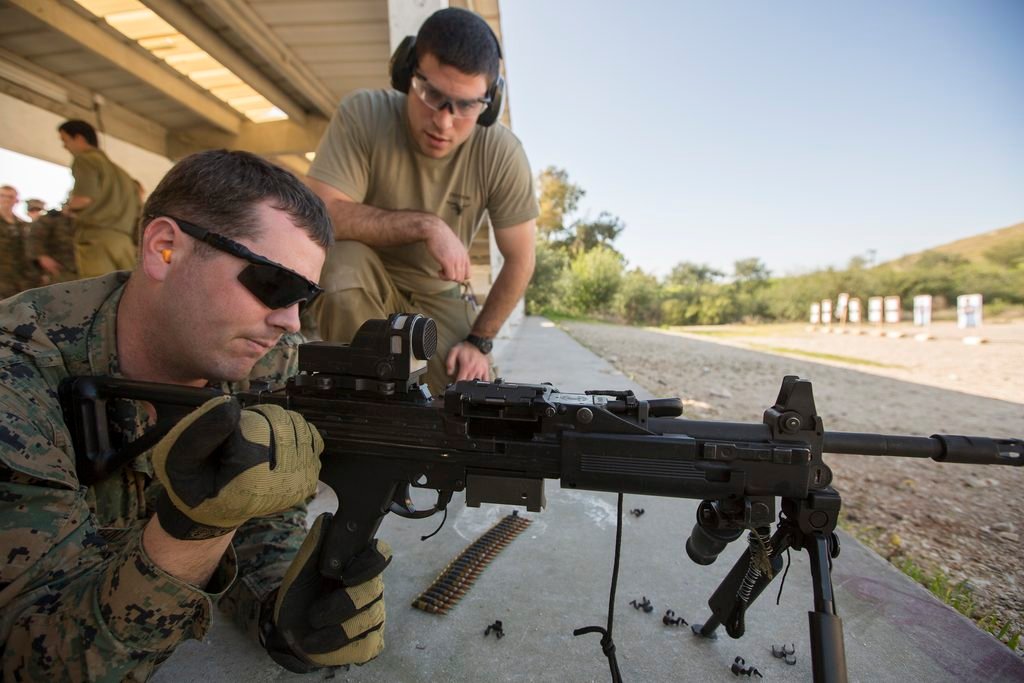
Handling has clearly received attention in the NG7’s development. Depending on configuration, the weapon incorporates an adjustable or telescoping stock, cheek-rest adjustments, a folding bipod, and mounting provisions for optical sights and other equipment. A Picatinny rail allows compatible sighting systems to be installed, reflecting the growing importance of optics on modern infantry weapons. The ability to fit accessories is useful, but additional equipment also contributes to overall weight and introduces further maintenance considerations.
The NG7 can also be integrated into vehicle, helicopter, and naval mounting arrangements, expanding its potential applications beyond conventional dismounted infantry operations. Such versatility may appeal to armed forces seeking a common machine-gun platform across different units, although the suitability of a weapon for each role depends on the specific installation and associated equipment.
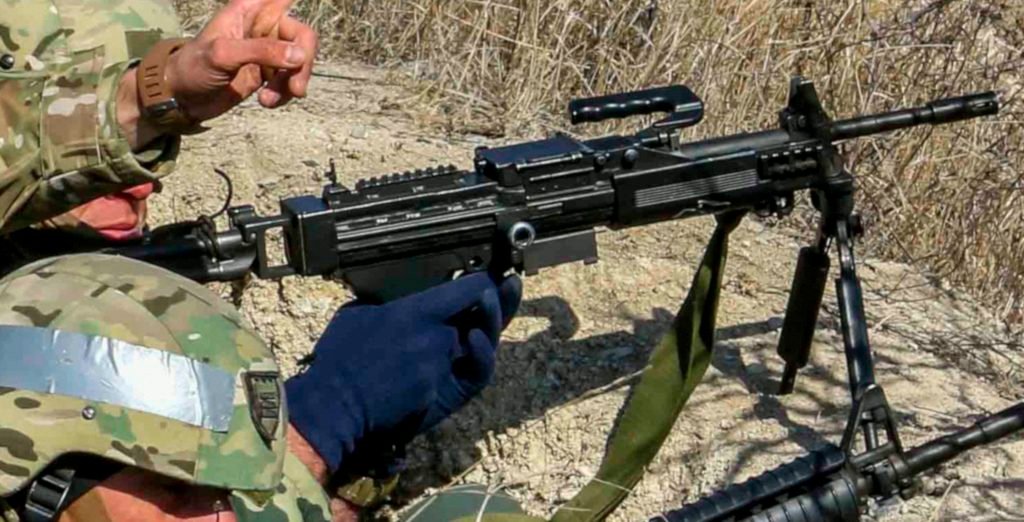
Could one machine gun realistically meet all these requirements equally well? Probably not without compromises. A weapon carried by an infantryman faces different demands from one installed on a vehicle, where weight and space may be less restrictive. The NG7’s adaptability is therefore better understood as an opportunity to support several roles rather than a guarantee of identical performance in every configuration.
Range, Muzzle Velocity, and the Weight Question
Effective range is among the most frequently quoted figures in machine-gun specifications, yet it is also one of the easiest to misunderstand. Ammunition type, barrel length, firing position, visibility, and target characteristics all influence practical performance, making a single published figure insufficient to describe every situation.
The Estonian Defence Forces, which operate a 420 mm NG7 configuration, publish a muzzle velocity of approximately 810 meters per second and an effective firing range of 600 meters when fired from the bipod. These figures provide a useful reference from an actual military operator, although they should not be applied automatically to every NG7 variant.
Estonia also lists the weapon’s weight at 8.6 kg without its ammunition belt. By comparison, published Estonian figures place the older MG3 at approximately 11.5 kg and the KSP-58 at 11.6 kg. While equipment differences mean these are not perfectly standardized measurements, they illustrate the potential reduction in weapon weight when replacing older machine guns with more compact designs.
For infantry personnel, a difference of several kilograms can be meaningful, particularly over long distances or difficult terrain. Still, weapon weight is only part of the equation. Ammunition, optics, spare components, and protective equipment can quickly increase the load. A lighter machine gun may improve mobility, but it does not make the logistical burden of 7.62 mm ammunition disappear.
Estonia’s Adoption Offers a Practical Example
Military procurement provides a different perspective from manufacturer specifications, and Estonia’s acquisition of the NG7 is particularly useful in this regard. In March 2023, the Estonian Centre for Defence Investments signed a contract with IWI for approximately 1,000 NEGEV NG7 machine guns intended for the Estonian Defence Forces and Defence League. Nearly 200 weapons arrived in the first shipment in September of that year, supporting the planned replacement of older MG3 and KSP-58 machine guns.
The interesting aspect of this agreement was not simply the number of weapons purchased. Estonian officials described several modifications introduced to meet their requirements, including changes to the stock, additional heat protection around the barrel, and an expanded adjustment range for the bipod. None of these alterations fundamentally changed the operating principle of the NG7, but they addressed practical aspects of handling and use that can become important during military service.
Estonia also arranged manufacturer training for instructors and weapons technicians before introducing the machine guns more widely. This is an often overlooked part of adopting new equipment. A weapon may demonstrate attractive performance characteristics during evaluation, but its long-term usefulness depends on whether personnel can operate, inspect, maintain, and repair it consistently.
The Estonian experience demonstrates why procurement cannot be reduced to comparing weight, firing rate, and caliber. Military organizations must also account for spare parts, training requirements, maintenance procedures, and compatibility with existing logistical arrangements. Even relatively small changes to the design can influence how successfully new equipment is integrated into service.
The NEGEV Family Is Still Developing
The original NG7 is no longer the only 7.62 mm configuration within IWI’s NEGEV lineup. Current manufacturer specifications describe NEGEV 7 models with barrel lengths of 330 mm, 420 mm, and 508 mm, alongside newer lightweight variants intended to further reduce the burden on operators. The NEGEV 7 UX family represents a particularly noticeable development, with IWI listing the 420 mm version at approximately 7 kg and the shorter 330 mm configuration at 6.8 kg.
These reductions reflect a continuing trend in machine-gun development, where manufacturers attempt to preserve the capabilities of full-power ammunition while improving portability. Another development involves compatibility with IWI’s ARBEL computerized weapon system, which the manufacturer presents as a means of improving firing performance through electronic assistance. Such technology introduces a different dimension to the platform, although its capabilities should be assessed independently from the mechanical characteristics of the machine gun.
In July 2025, Israel’s Ministry of Defense announced an agreement worth approximately $20 million for NEGEV 7 and UX machine guns, with deliveries scheduled for 2026 and 2027. Maintenance support was also included, reinforcing the importance of long-term service arrangements alongside the initial procurement.
The continuing evolution of the NEGEV family does not necessarily make the original NG7 obsolete. Different versions can remain relevant according to the requirements and budgets of individual armed forces. Reducing weight may provide benefits, but procurement decisions rarely depend on a single improvement, particularly when military organizations already possess established training programs and logistical infrastructure.
More Than a Comparison of Specifications
The NEGEV NG7 occupies an interesting position among modern 7.62 mm machine guns. It combines a relatively compact design with a gas-operated, belt-fed mechanism, interchangeable barrels, adjustable ergonomics, and the less common ability to fire in semi-automatic mode. These characteristics distinguish it from several older general-purpose machine guns, although they do not eliminate the familiar limitations surrounding ammunition weight, heat management, and sustained fire.
Its development also illustrates how machine-gun design continues to change without necessarily abandoning established mechanical principles. The open-bolt operating system and belt-fed ammunition arrangement remain familiar, while improvements in materials, ergonomics, recoil management, and accessory compatibility allow manufacturers to refine the platform.
Estonia’s experience provides a reminder that the value of such changes is ultimately determined by the armed forces using the equipment. A lighter weapon may be easier to carry, but soldiers also need reliable ammunition supplies, appropriate training, and dependable maintenance support. Similarly, an advanced firing system offers little benefit if its added complexity cannot be supported throughout the weapon’s service life.
As IWI expands the NEGEV family with lighter configurations and additional technology, the differences between the original NG7 and newer models will become increasingly relevant. Each version represents a particular balance of weight, handling, and technical capability.
For military organizations evaluating a 7.62 mm belt-fed weapon, the central question remains relatively simple: which configuration provides the capabilities their personnel actually need without creating unnecessary logistical or operational burdens? The NG7 offers one answer to that question, but its suitability ultimately depends on requirements that extend well beyond the manufacturer’s technical specifications.
Sources:
- Israel Weapon Industries (IWI). NEGEV Series: Models and Technical Data.
- Israel Weapon Industries (IWI). NEGEV 7 20: Overview, Main Features and Technical Data.
- Israel Weapon Industries (IWI). NEGEV NG-7: Technical Data and Specifications.
- Estonian Defence Forces. NEGEV NG7 Light Machine Gun.
- Estonian Defence Forces. KSP-58 Machine Gun.
- Estonian Centre for Defence Investments. (September 27, 2023). Nearly Two Hundred New Machine Guns Arrive in Estonia.
- Israel Ministry of Defense. (July 16, 2025). Israel MOD to Procure Advanced Negev Machine Guns for Ground Forces in Approximately $20M Deal.