
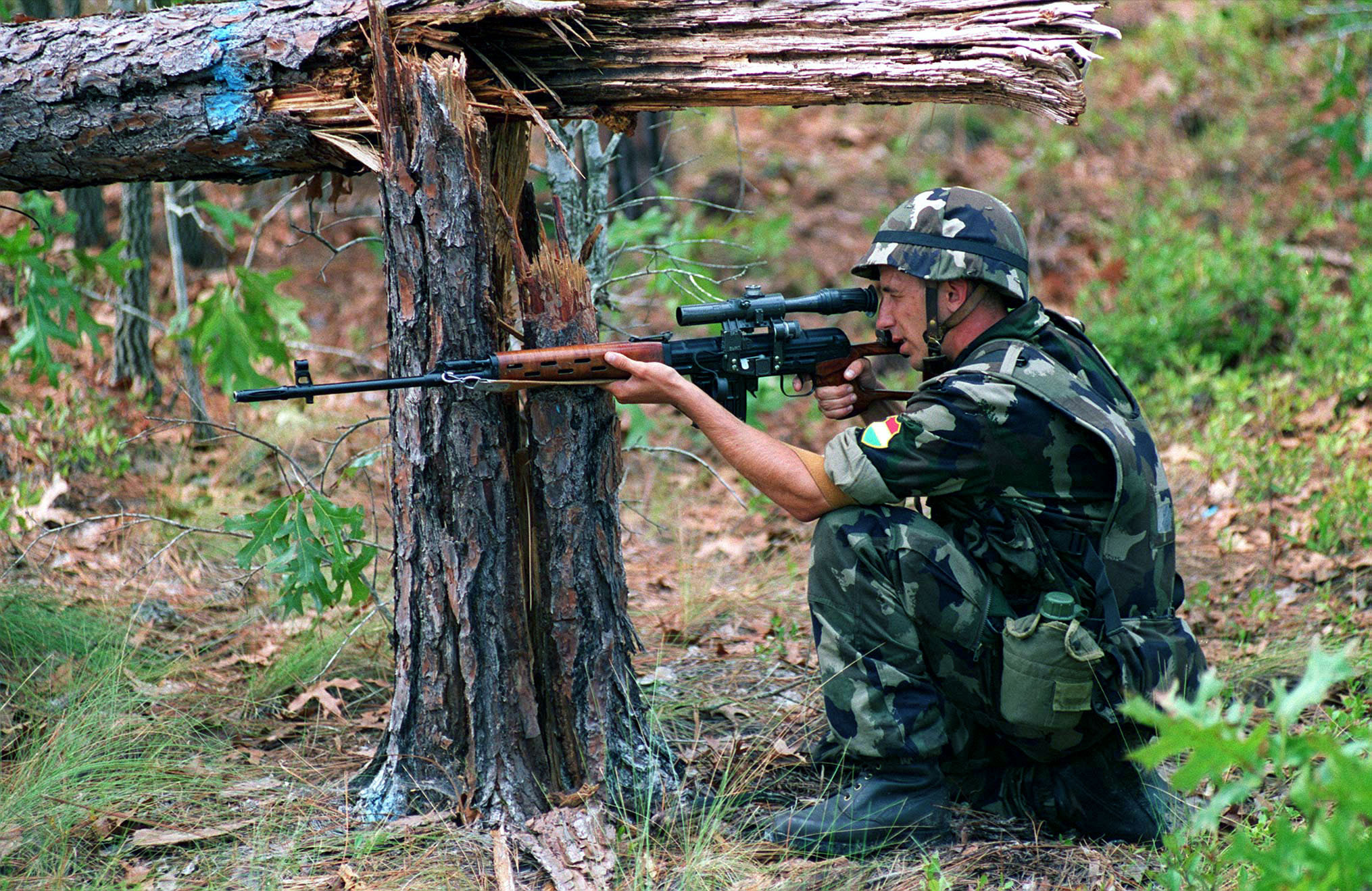
The Dragunov SVD became important because it answered a very specific military problem. How can an infantry unit reach beyond the practical limits of the standard rifle without turning that soldier into a separate sniper element?

That question is the real starting point. The SVD was not created to chase the same role as a heavy precision rifle. It was not designed around a slow, isolated sniper team working far away from the squad. Its place was closer to the infantry line, where range, speed, weight, and reliability all had to meet in the same weapon.
This is why the rifle still deserves attention. Not because every part of it is superior by modern standards, but because its concept remains relevant. The battlefield keeps changing, yet small units still need a shooter who can identify and engage targets farther than the average rifleman can handle.
The Role Matters More Than the Label
The SVD is commonly called a sniper rifle, and technically that term appears in many official and museum descriptions. Still, the more useful way to understand it is as an early designated marksman rifle. The Soviet Army adopted it in 1963, and its purpose was to extend the reach of infantry formations rather than create a Western style precision sniper system.
That difference matters. A sniper rifle is generally judged by extreme accuracy, specialized ammunition, high magnification optics, concealment, and highly selective training. The SVD belongs to a different category of thinking. It was meant to move with the squad, stay practical in the field, and give a trained marksman faster follow-up capability than a bolt-action rifle.
So the better question is not “Was the SVD the most accurate sniper rifle of its era?” It was not built around that target. The better question is “Did it give infantry units a useful precision layer beyond the assault rifle?” In that role, the SVD made sense.
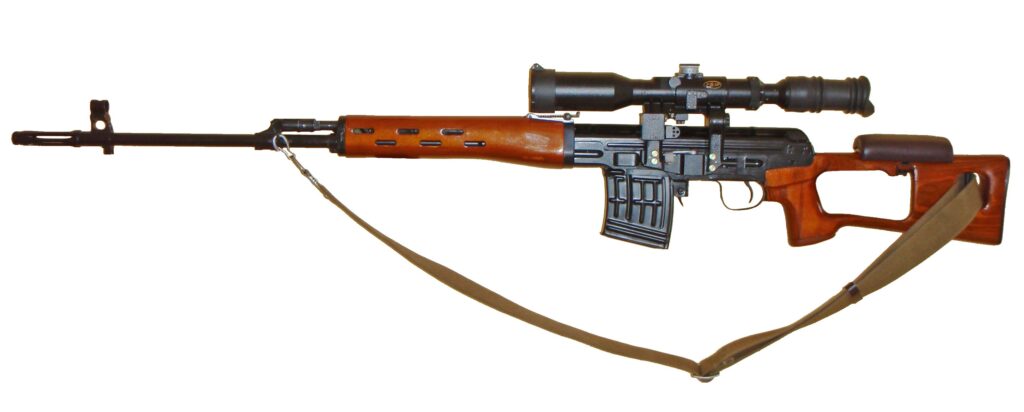
The rifle filled the space between volume fire and precision fire. That middle zone is not glamorous, but it is important. Many targets on the battlefield are not worth a missile, not suitable for machine gun fire, and not close enough for standard rifle engagement. A marksman rifle exists for that kind of gap.
Why 7.62x54R Made Sense
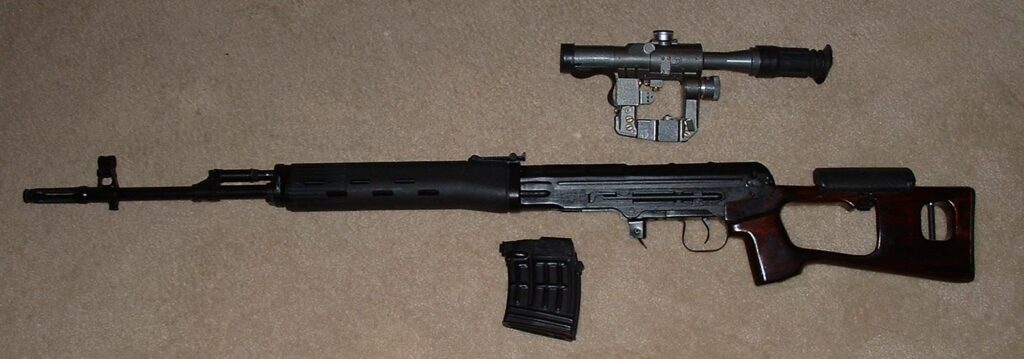
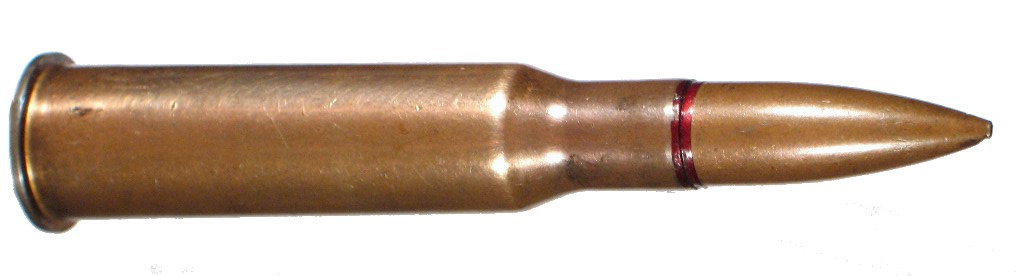
The SVD uses 7.62x54R, a cartridge with a long military history. At first glance, that may seem conservative for a rifle introduced in the 1960s. But military design is not only about ballistic fashion. Logistics, existing production, ammunition stocks, and shared supply chains matter.
For the Soviet system, 7.62x54R was already deeply established. It gave the SVD enough energy and range for its intended role while keeping the rifle inside an existing ammunition ecosystem. That is a practical decision. A weapon issued across a large military structure cannot be judged only by range-table performance. It must also make sense for factories, depots, transport, training, and maintenance.
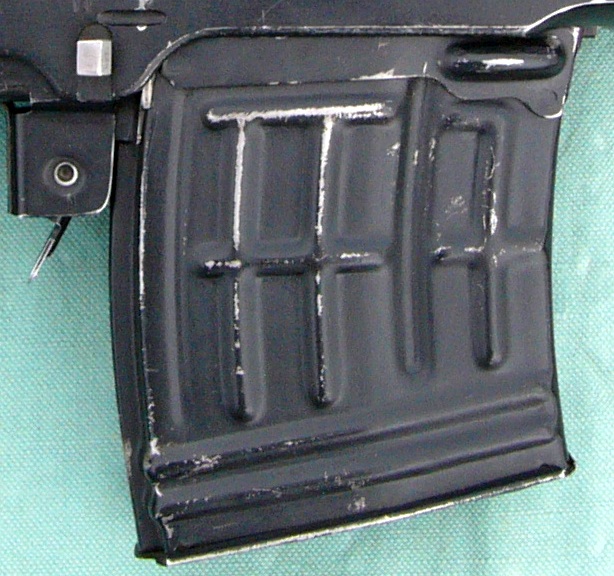
The 10-round magazine also shows the rifle’s intended use. This was not a weapon for automatic suppression. It was built for controlled fire. Ten rounds gave the marksman enough capacity to remain active in a firefight without turning the rifle into something heavier or less disciplined.
There is a lesson here that still applies. A weapon system can be more valuable when it fits the organization than when it wins a narrow technical comparison. The SVD did not need to be perfect. It needed to be practical at scale.
Semi-Automatic Precision in a Moving Unit
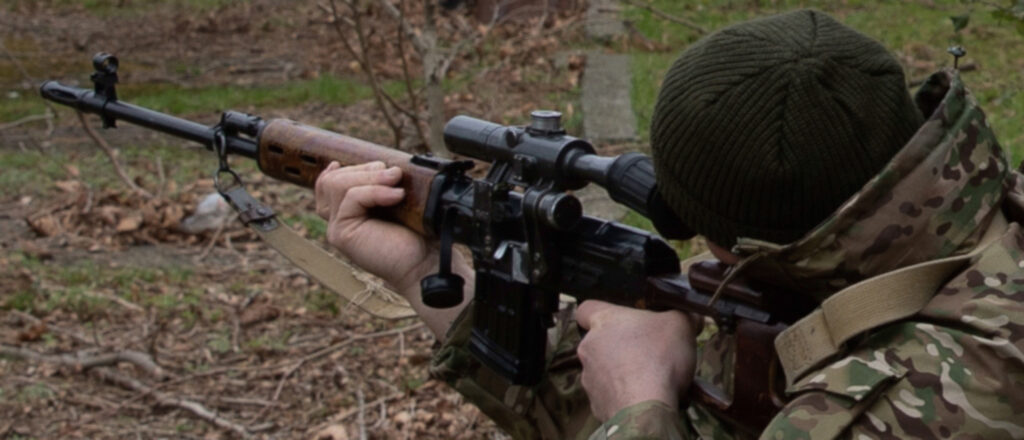
In a squad fight, precision is rarely clean or static. A target may appear for only a few seconds. Distance can be misjudged. Wind, movement, stress, and changing angles can all affect the first shot. This is where the SVD’s semi-automatic action becomes more than a technical detail.
A bolt-action rifle can deliver excellent accuracy, but every follow-up shot requires the shooter to cycle the bolt and rebuild part of the rhythm. With the SVD, the marksman can stay behind the optic, correct quickly, and keep pressure on the target without breaking position in the same way.
That does not make it more accurate than a dedicated bolt-action sniper rifle. It gives the weapon a different kind of value. Speed, continuity, and controlled follow-up fire become part of the system.
Dragunov’s design was built around compromise, not obsession with a single measurement. Barrel length had to support the 7.62x54R cartridge. Weight had to stay manageable for infantry movement. Accuracy had to be good enough for battlefield precision, while the rifle still needed to tolerate dirt, weather, rough handling, and uneven field conditions. That balance defines the SVD. It was not a delicate rifle for ideal conditions. It was a military rifle built to deliver practical precision where conditions were rarely ideal.
The PSO-1 and the Practical Optic
A rifle like the SVD cannot be separated from its optic. The PSO-1 was part of the weapon’s identity because it matched the role the rifle was expected to fill. Its 4x magnification may look limited next to modern variable optics, thermal sights, laser rangefinders, and digital fire-control systems, but the comparison can be misleading.
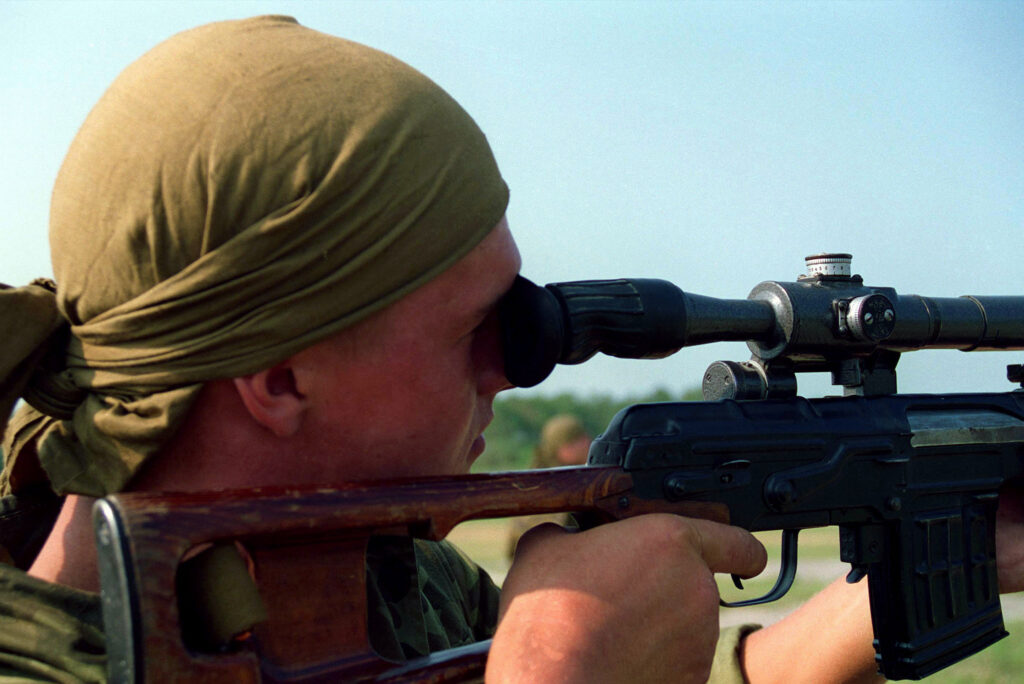
For a squad marksman, the priority was not extreme magnification. The optic had to help the shooter identify targets, estimate range, and engage at distances beyond standard iron-sight use without making the system too heavy or complicated. The PSO-1 gave the marksman a practical field advantage. It supported observation, range estimation, and controlled fire at extended infantry distances. That is very different from building a rifle around long-range competition accuracy or highly specialized sniper work.
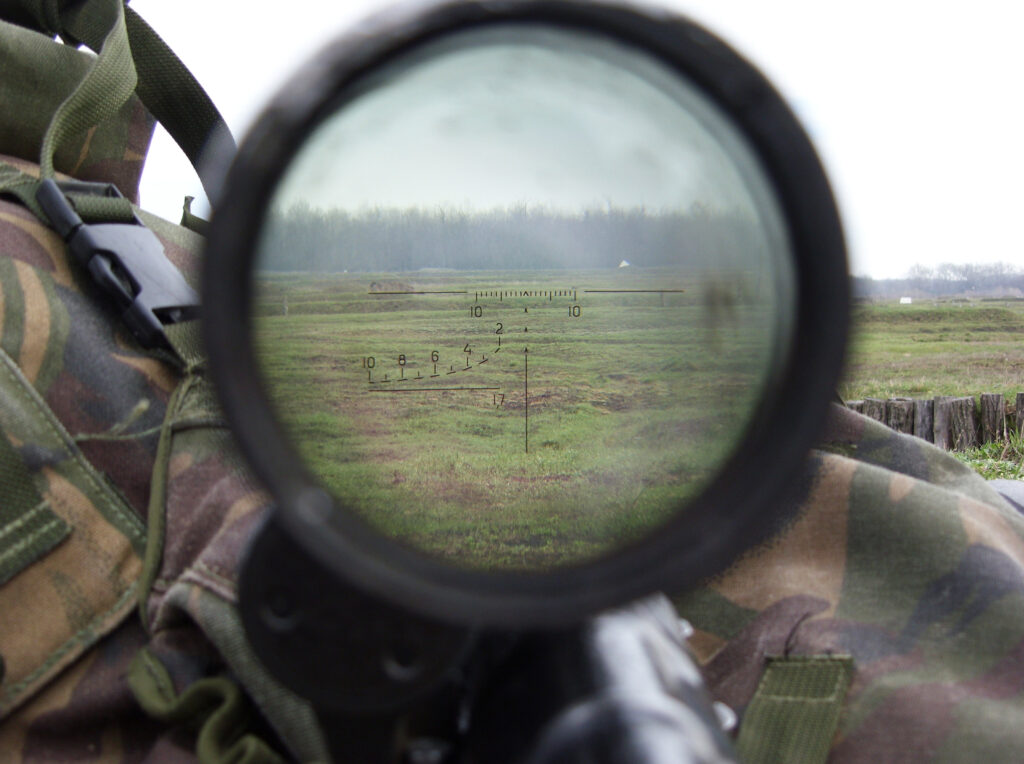
The central chevron serves as the main aiming mark, while the horizontal hash marks assist with windage, lead correction, and range estimation. The lower-left stadiametric rangefinder helps estimate distance to a 1.7-meter target from 200 to 1,000 meters.
Below the main aiming point, additional chevrons provide holdover references beyond the optic’s 1,000-meter BDC setting. The reticle could also be illuminated by a small battery-powered lamp, making the PSO-1 a practical and recognizable part of the SVD system. Chabster, CC BY 3.0 https://creativecommons.org/licenses/by/3.0.
There is also a broader point here. Better equipment does not always mean adding more. More magnification, more accessories, and more electronic aids only matter when they support the soldier’s role, training, and physical load.
On the SVD, the rifle and optic worked as a coherent package. It was not luxurious, and it was not modular in the modern sense. But it was understandable, teachable, and suitable for wide military issue.
Why the SVD Became Recognizable Worldwide
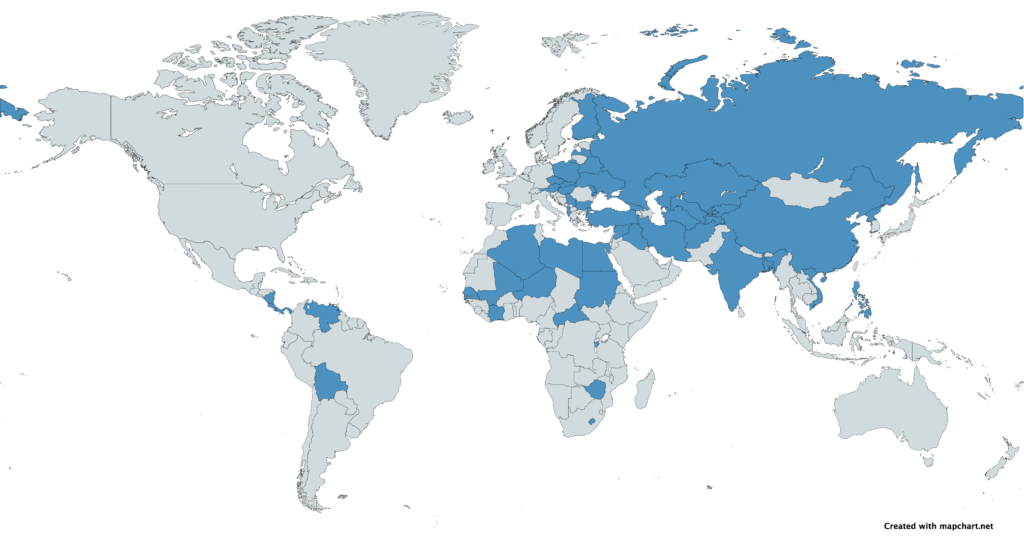
The SVD spread through Soviet influence, Warsaw Pact networks, aligned states, licensed production, local copies, and post-Cold War circulation. That global movement turned the rifle into a familiar battlefield silhouette. From state militaries to irregular forces, the SVD and its variants appeared across many regions and conflicts.
This visibility helped build the legend. A weapon becomes historically significant when it is not only designed well, but also distributed widely, used for decades, photographed repeatedly, and absorbed into military culture.
Still, reputation should not hide limitations. The SVD is not a modern precision platform. Its original optic interface, ergonomics, trigger, ammunition sensitivity, and lack of modern modularity place it behind newer rifles in many roles. Current designated marksman rifles can offer better optics, improved mounting systems, suppressor compatibility, refined ammunition, free-floated barrels, and improved human engineering.
But that does not erase the SVD’s relevance. It shows how early the Soviet system institutionalized the squad marksman concept. Many armies later moved toward similar ideas with accurized battle rifles, 7.62 NATO semi-automatic platforms, and dedicated designated marksman programs.
The terminology changed. The requirement did not.
What the SVD Still Teaches
Nostalgia is not the reason the SVD still matters. Its importance comes from the clarity of the role it filled: giving an infantry squad more reach without turning the marksman into a separate sniper element.
Controlled fire, practical accuracy, and mobility were all part of the same idea. A heavier sniper system could offer more precision, but it would not move with the squad in the same way. A standard rifle could move easily, but it could not offer the same distance and target discrimination. The Dragunov sat between those needs.
That middle ground has not disappeared. Modern battlefields contain drones, exposed sensors, radio operators, vehicle crews, machine gun positions, and brief target opportunities at ranges where standard rifles can struggle. Small units still need a way to place accurate fire beyond the normal rifle envelope.
Modern rifles can outperform the SVD in many technical categories. Better optics, improved mounting systems, suppressor compatibility, refined ammunition, and stronger ergonomics have changed the designated marksman role. Even so, the logic behind the Dragunov remains strong. Every infantry force still has to answer the same questions: how much precision is enough, how much weight the shooter can carry, how much training the role requires, and how easily the weapon can be sustained in the field.
This is where the rifle stays relevant. Historical importance does not always come from maximum accuracy or advanced technology. Sometimes it comes from fitting doctrine, logistics, and battlefield reality at the same time.
The SVD did that well enough to earn its place in small arms history. Its legacy is not perfection. Its legacy is balance.
Sources:
- Imperial War Museums. “SVD rifle with PSO-1 telescopic sight.”
- Imperial War Museums. “SVD.”
- Small Arms Survey. “Dragunov SVD and variants.”
- Australian War Memorial. “Dragunov Sniper Rifle PSO-1 Telescopic Sight.”