
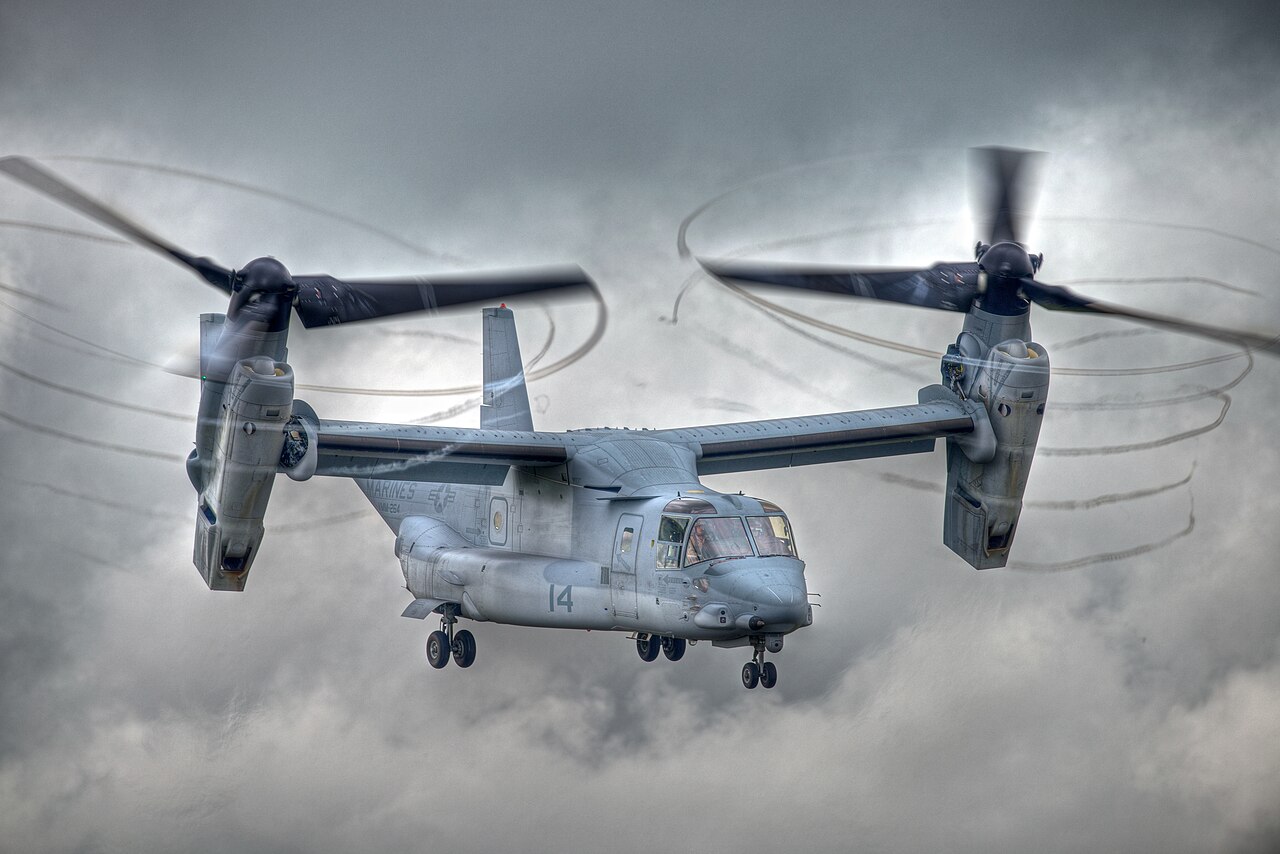
If there is one aircraft that forces a rethink of what vertical lift platforms are supposed to do, it is the Bell Boeing V-22 Osprey. Not simply because it looks different, but because it challenges a long-standing limitation in aviation: the trade-off between vertical takeoff and efficient forward flight. For decades, helicopters accepted shorter range and lower speed as the price of flexibility. Fixed-wing aircraft accepted the opposite. The Osprey was built to remove that compromise.

As you read this, it is worth considering a broader point. Modern military systems are no longer just tools; they are strategic enablers. When a platform like the V-22 enters service, it doesn’t just replace older equipment. It changes how operations are planned, how distances are calculated, and how risk is distributed across a mission.
A Long Development Path
The V-22 program emerged from lessons learned during operations such as the failed 1980 Iran hostage rescue mission, where the limitations of helicopters in long-range insertion became evident. The need was clear: an aircraft that could launch from ships or remote bases, travel long distances quickly, and still land vertically.
The first flight took place in 1989, but that milestone did not mark readiness. The program faced repeated delays, cost overruns, and technical setbacks. Fatal crashes during the 1990s testing phase led to major redesigns, particularly in flight control software and hydraulic systems. These were not minor adjustments but structural changes that redefined how the aircraft handled critical flight transitions.
By the time the V-22 entered operational service in 2007, it had already become one of the most scrutinized aviation programs in modern military history. Yet it also became one of the few to survive that level of scrutiny and still move forward.
The Engineering Behind the Tiltrotor
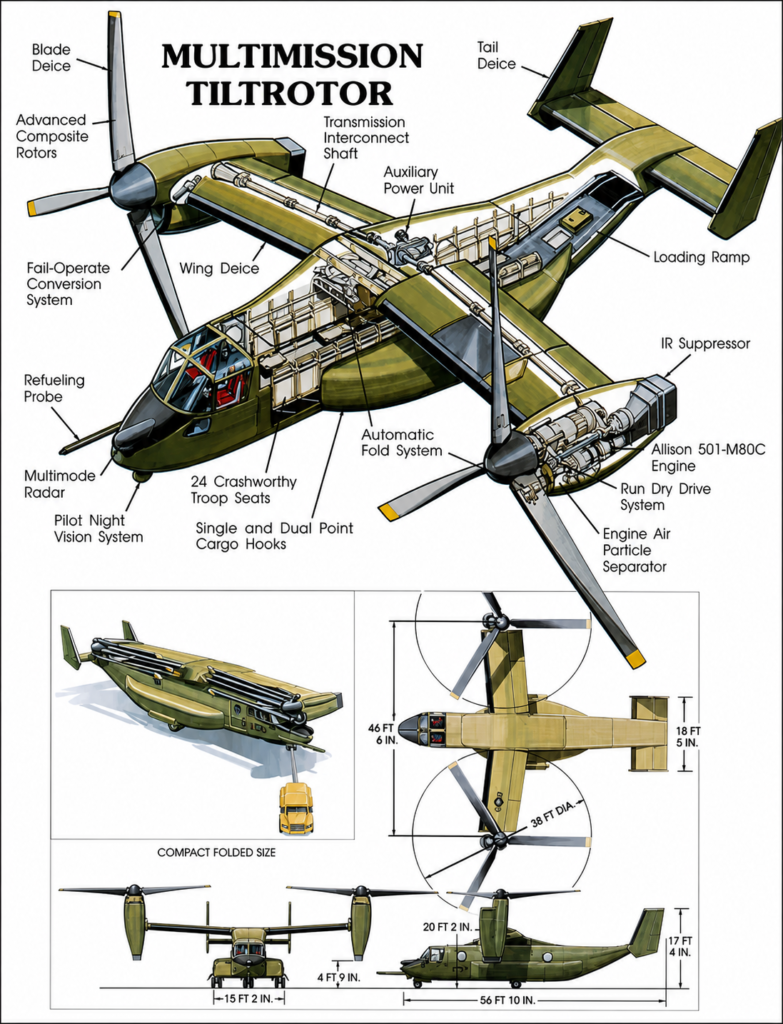
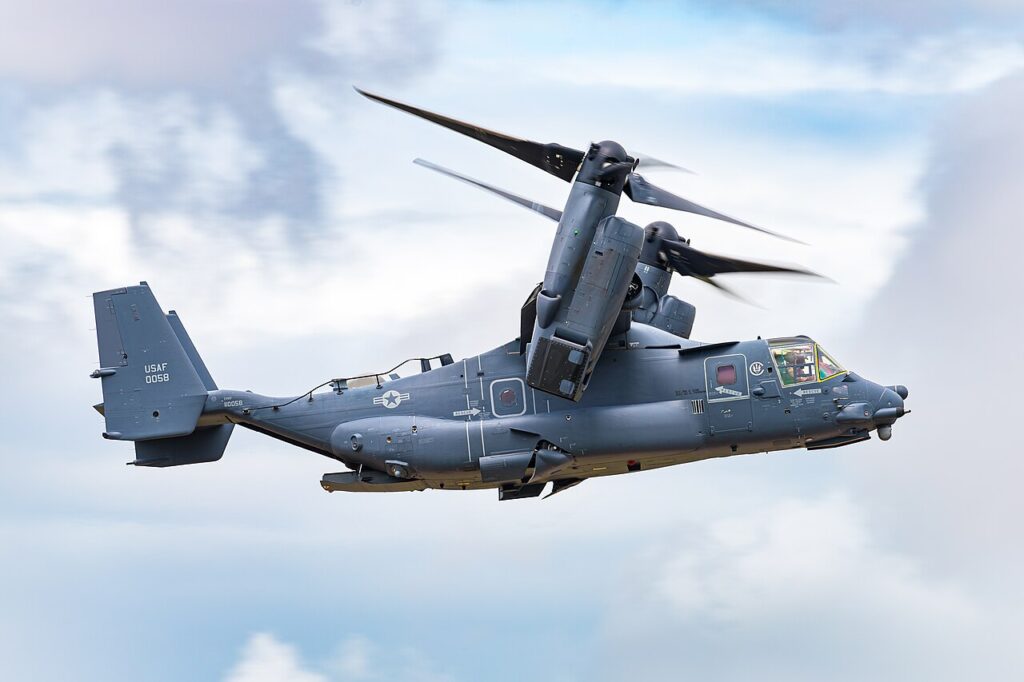
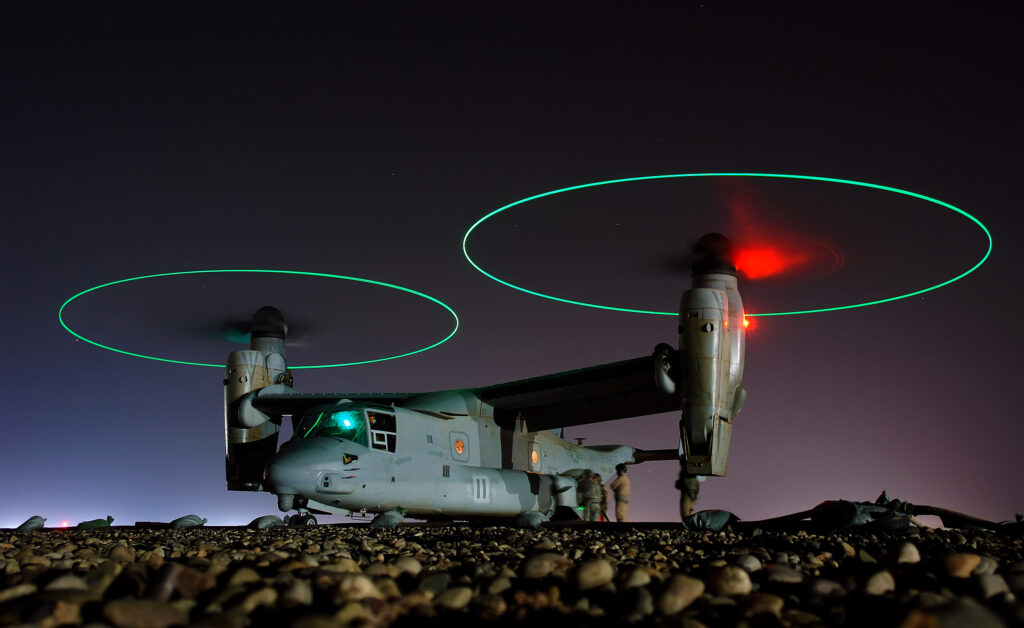
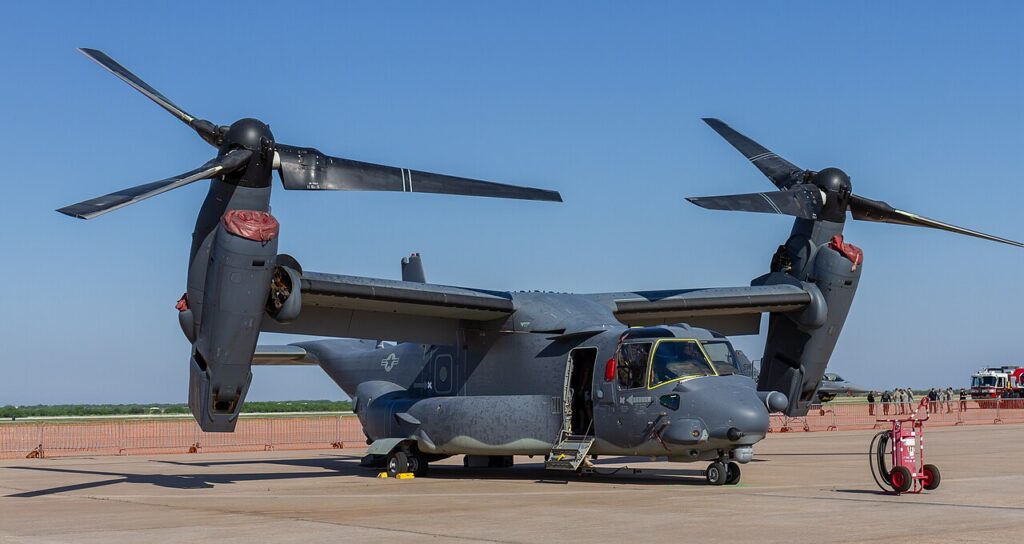
At the center of the Osprey’s design is its tiltrotor mechanism. Each wingtip houses a nacelle containing a Rolls-Royce AE 1107C turboshaft engine connected to a proprotor. These nacelles rotate, allowing the aircraft to shift between helicopter mode and airplane mode.
In vertical configuration, the rotors provide lift like a helicopter. As the nacelles rotate forward, lift transitions to the wing, and the rotors begin functioning as propellers. This transition phase is one of the most complex aspects of the aircraft’s operation. It requires precise coordination between engine output, rotor pitch, and aerodynamic control surfaces.
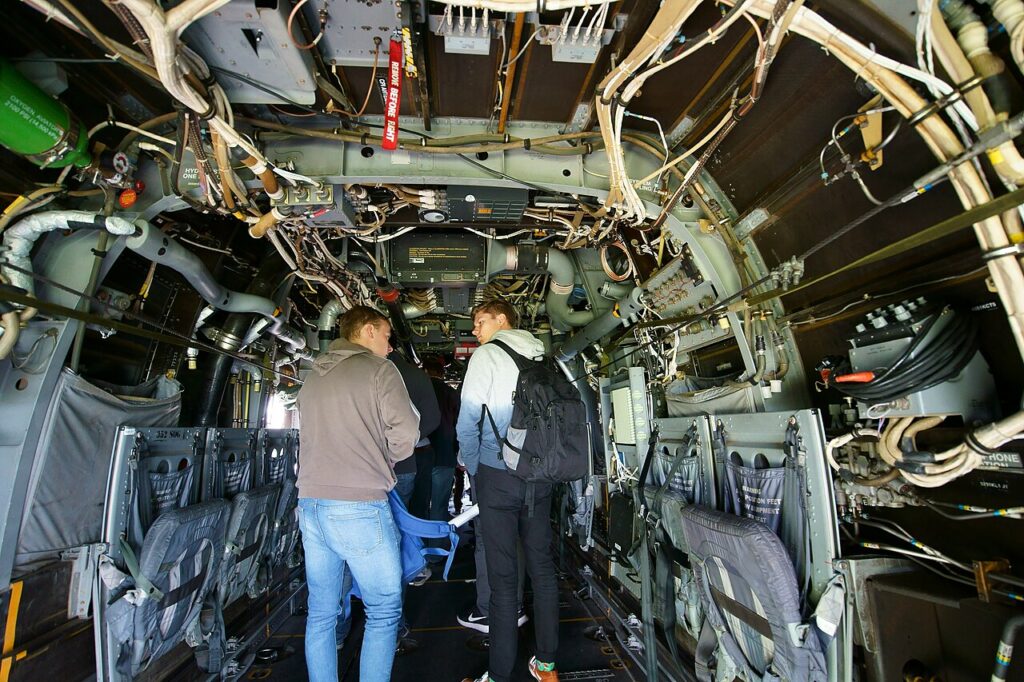
To maintain redundancy, the two engines are linked by an interconnect driveshaft. This allows a single engine to power both rotors in case of failure, a critical feature for survivability during flight. However, this also adds mechanical complexity, increasing the number of components that must operate flawlessly under stress.
The aircraft’s flight control system is fully fly-by-wire, designed to manage the dynamic changes between flight modes. Without this level of automation, controlling the aircraft during transition phases would be significantly more difficult.
Performance Profile
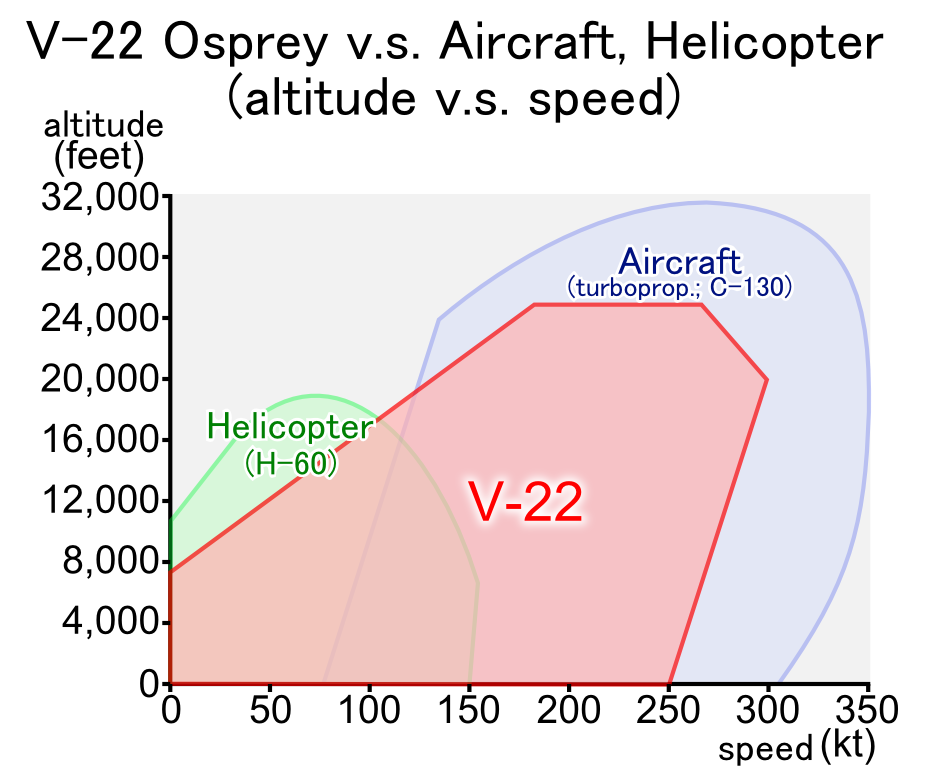
From a performance standpoint, the V-22 occupies a unique position. It can reach speeds of around 270 knots, significantly faster than most helicopters, and has a combat radius that extends well beyond traditional rotorcraft limits. Its operational range, depending on configuration, can exceed 1,000 nautical miles with refueling.
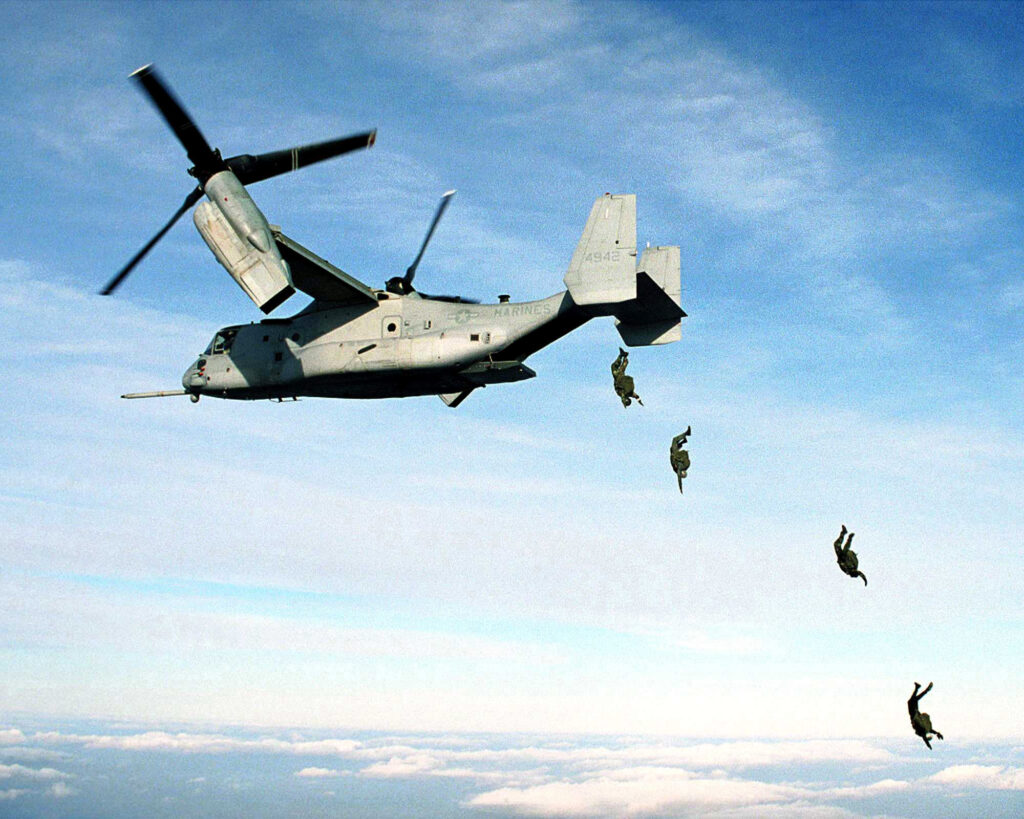
Payload capacity is another important factor. The aircraft can carry up to 24 troops or approximately 9,000 kilograms of internal cargo. It is also capable of external lift operations, though not to the same extent as heavy-lift helicopters like the CH-53.
Where the Osprey becomes particularly valuable is in its ability to maintain these performance characteristics while operating from amphibious assault ships or austere environments. It does not require runways, yet it can operate at distances typically associated with fixed-wing transport aircraft.
Operational Experience
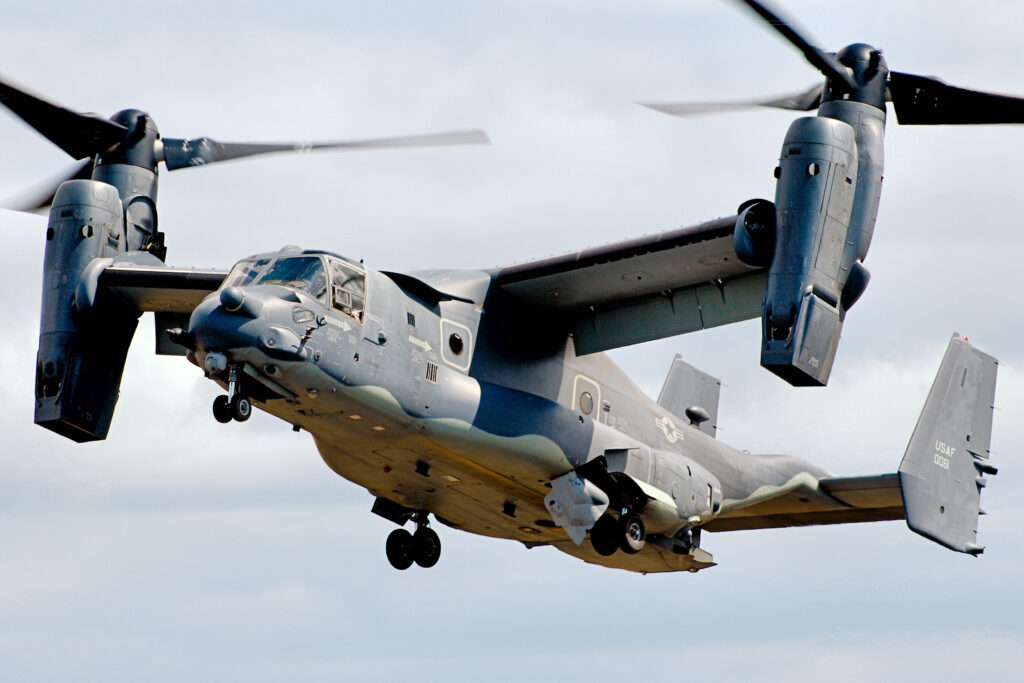
In real-world operations, the V-22 has been deployed extensively in Iraq, Afghanistan, and across various maritime environments. The U.S. Marine Corps has used it for troop transport, logistics, and rapid response missions. The Air Force variant, CV-22, has been adapted for special operations, including long-range infiltration and exfiltration. These missions highlight a key advantage: reduced time in transit. Faster speeds mean less exposure to ground threats and more flexibility in mission timing. For special operations forces, this can be the difference between success and failure.
At the same time, operational use has revealed practical limitations. Maintenance demands are high, and the aircraft requires a robust logistical support system. Units operating the V-22 have had to adapt their maintenance structures to handle its complexity.
Safety and Mechanical Challenges
The safety record of the V-22 remains one of its most debated aspects. Early development accidents raised concerns about issues such as vortex ring state, a condition where a helicopter loses lift due to turbulent airflow. While software updates and pilot training have mitigated some of these risks, other challenges have persisted.
More recent incidents have focused on mechanical failures, particularly involving gearboxes and clutch systems. These components operate under high stress, especially during transition phases, where forces on the drivetrain can vary significantly.
Reports from oversight bodies have pointed to material fatigue and component wear as recurring factors in serious incidents. This suggests that long-term durability, rather than initial design flaws alone, is a key concern. Addressing these issues often requires both engineering solutions and changes in maintenance protocols.
It is also important to consider that the aircraft operates in demanding environments, including high temperatures, maritime conditions, and combat zones. These factors contribute to wear and increase the likelihood of mechanical issues over time.
Strategic Relevance
Despite its challenges, the V-22 continues to play a significant role in modern military strategy. Its ability to operate across long distances without reliance on fixed infrastructure aligns with current operational concepts, particularly in regions like the Indo-Pacific.
In scenarios where forces must be distributed across islands or remote areas, the Osprey provides a level of mobility that traditional helicopters cannot match. It enables rapid repositioning of personnel and equipment, supporting both offensive and defensive operations. This capability becomes even more relevant as military strategies shift toward flexibility and dispersion rather than concentration of forces. The Osprey fits into that framework as a platform that extends reach without sacrificing access.
A Platform Defined by Trade-Offs
The V-22 is not easily categorized as either a success or a failure. Instead, it represents a set of trade-offs that are becoming increasingly common in advanced military systems. Higher performance often requires greater complexity. Greater complexity introduces new types of risk. What makes the Osprey notable is how visible these trade-offs are. Its advantages are clear and measurable. Its challenges are equally difficult to ignore.
For decision-makers, the question is not whether the aircraft is perfect, but whether its capabilities justify its operational and maintenance demands. So far, the answer appears to be yes, given its continued deployment and the lack of a direct replacement.
Looking Forward
The legacy of the V-22 extends beyond its current role. It has established the tiltrotor concept as a viable approach to vertical lift. Future programs, including next-generation vertical lift initiatives, are building on the lessons learned from the Osprey. These lessons are not limited to engineering. They include how to manage complex systems, how to balance innovation with reliability, and how to integrate new capabilities into existing operational frameworks.
The aircraft itself continues to evolve through upgrades and modifications aimed at improving safety and performance. Whether it will eventually be replaced or further refined, its impact on military aviation is already established.
Sources
- Boeing – V-22 Osprey Program Overview
- U.S. Government Accountability Office (GAO) Reports on V-22
- Congressional Research Service (CRS) Reports
- Associated Press – V-22 Incident Reporting