
Drill & Defense
Advertisement
  • Defense
    • Industry News
    • Weapon & Gear Reviews
    • Defense Technologies
    • Military Market Reports
  • Energy
    • Oil & Gas News
    • Energy Technologies
    • Market Trends & Analysis
  • Cross-Sector Insights
    • Defense & Energy Strategy
    • Global Security & Trade Analysis
    • Tech & Innovation Crossover
  • History & Legacy
    • Turning Points in Conflict
    • Legacy Systems & Structures
    • Resource Wars & Strategy
  • Knowledge Base
    • Defense Know-How
    • Energy Insight
  • About
  • Contact
  • Login
  • Register
No Result
View All Result
  • Defense
    • Industry News
    • Weapon & Gear Reviews
    • Defense Technologies
    • Military Market Reports
  • Energy
    • Oil & Gas News
    • Energy Technologies
    • Market Trends & Analysis
  • Cross-Sector Insights
    • Defense & Energy Strategy
    • Global Security & Trade Analysis
    • Tech & Innovation Crossover
  • History & Legacy
    • Turning Points in Conflict
    • Legacy Systems & Structures
    • Resource Wars & Strategy
  • Knowledge Base
    • Defense Know-How
    • Energy Insight
  • About
  • Contact
  • Login
  • Register
No Result
View All Result
Drill & Defense
No Result
View All Result
Home Cross-Sector Insights

Turkey’s “Steel Dome” Just Took a Big Step, Here’s What That Actually Means

August 28, 2025
in Cross-Sector Insights, Tech & Innovation Crossover
Fennek_reconnaissance_vehicle_of_340th_ASELSAN_MFR_C0415,_pic1

Alf van Beem, CC0, via Wikimedia Commons

Share on LinkedInShare on Twitter

If you follow layered air and missile defense even casually, you saw the headlines today: Türkiye pushed a tranche of Steel Dome components into service and broke ground on a massive new production campus. Let’s unpack what happened without hype and why it matters for operators, planners, and anyone watching defense industrial capacity in the region.

What Was Delivered Today and Why It Matters

At ASELSAN’s facilities outside Ankara, Turkish authorities marked two milestones at once. First, they delivered 47 elements of the Steel Dome architecture including air-defense, radar, and electronic-warfare assets valued around $460 million. Second, they kicked off a $1.5 billion technology base intended to more than double ASELSAN’s production capacity, with first capabilities coming online in mid-2026. Independent outlets covering the event note that the delivered set spans SİPER (long-range), HİSAR (medium-range), KORKUT (short-range), plus strategic radars from the ALP series and EW suites such as PUHU.

Today was about mature layers showing up in numbers and industrial scale to keep them flowing. Both are prerequisites for a credible, resilient, multi-layered shield.
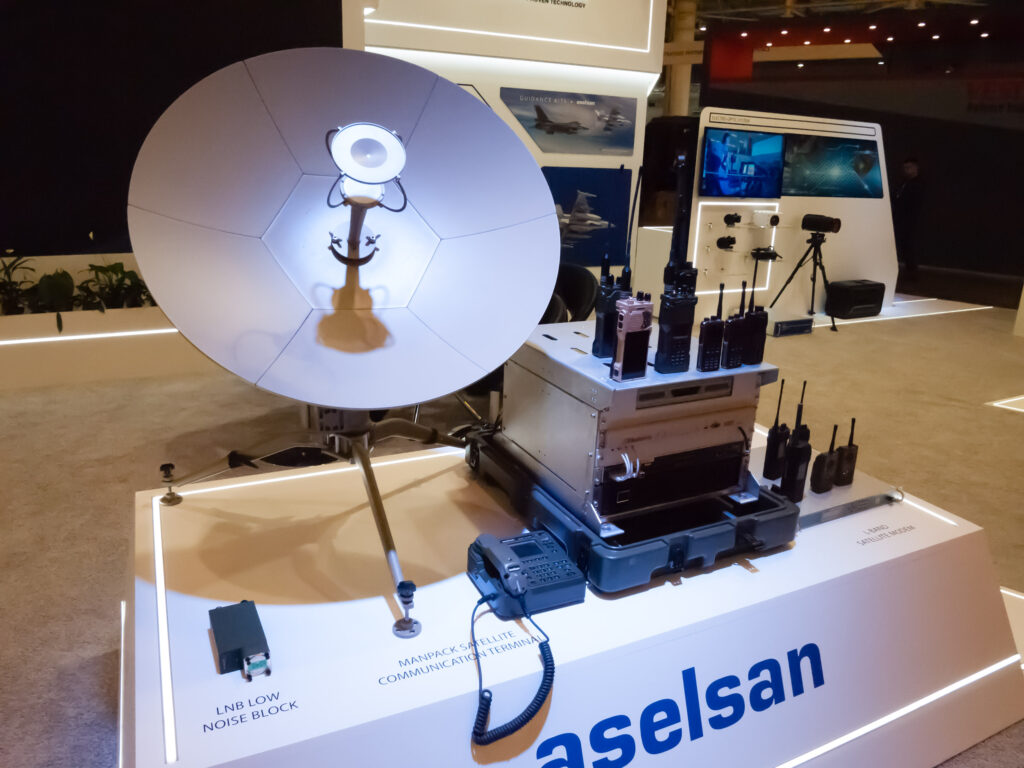
VoidWanderer, CC BY-SA 4.0 https://creativecommons.org/licenses/by-sa/4.0, via Wikimedia Commons

The Long-Range Layer: SİPER Moves From Program to Posture

SİPER has been tracked by international trade media this summer for clearing serial-production acceptance tests, an indicator that the system is ready to move beyond prototypes and low-rate builds. That sets the stage for its role as the long-range anchor in the Turkish layered concept, with the kind of envelope and guidance sophistication expected from modern area-defense SAM families.

From a force-design perspective, a long-range tier matters for two reasons: it stretches the defended footprint and reduces engagement load on the medium layer, which can then focus on complex raid dynamics, low flyers, and leakers. Provided the command and control architecture fuses tracks cleanly across sensors, SİPER’s entrance should raise the entire system’s shot doctrine flexibility.

The Medium and Short Layers: HİSAR-O and KORKUT Do the Work

The HİSAR-O medium-range system has progressed through qualification with a configuration built around a fire-control center, radar, multiple launchers, and EO support. Public, non-Turkish sources describe intercept geometry against a wide target set including fixed-wing aircraft, rotary, cruise missiles, and drones out to dozens of kilometers and at meaningful altitudes for point- and area-defense of critical sites. That versatility is what you want in a middle tier: high volume, high reliability, and quick reaction across cluttered airspace.

On the very-short-range end, KORKUT fills the gun-based, mobile counter-air niche with twin 35 mm cannons, a separate C2 vehicle, and a design tuned for drone, munition, and pop-up threat environments. In any layered defense, the gun tier is not glamourous, but it is where costs are contained and saturation threats are managed, especially when ammunition and fire control are optimized for small RCS and slow or loitering targets.

The Invisible Layer: EW and the Sensor Web

A credible shield today is as much electromagnetic warfare and sensor fusion as it is interceptors. Foreign coverage of Steel Dome repeatedly highlights the inclusion of EW systems such as PUHU and the better-known KORAL family, alongside the radar estate like ALP-300/310 and associated fire-control radars. That matters because detection, classification, and track quality are the currency of layered defense. Degrade an adversary’s seekers and data links while refining your own tracks, and every downstream engagement gets easier and cheaper.

Equally important is integration. International outlets describe Steel Dome not as a single system but as a system of systems, a layered land-and-sea-capable architecture linked by national C2. That framing is the right one: survivability and combat value scale with the coherence of the network, how quickly it can correlate tracks, re-task shooters, and preserve operations under electronic attack.

Industrial Capacity Is Now Part of the Story

Today’s hardware deliveries will get attention, but the industrial investment may be the longer-tail headline. A 50-year technology base program that expands cleanrooms, labs, and integration lines and concentrates air defense and EW production signals intent to institutionalize this capability rather than surge it. For allies and buyers, that offers confidence in spares, upgrades, and export support. For adversaries, it signals depth.

You can field a layered defense once, but you sustain it only with manufacturing rhythm, test capacity, and a learning curve that knocks down unit costs and improves reliability.

How to Read Today’s Step in Strategic Context

A few practical takeaways for defense watchers and operators:

Coverage versus concentration: With long-range assets entering the force, expect a shift from point defense of specific bases to wider bubbles over critical corridors, balanced by mobile medium and short layers guarding high-value nodes and maneuver forces. This reduces single-point failure risk but increases the premium on C2 orchestration.

Raid handling and cost exchange: As more affordable interceptors and guns populate the lower tiers, the cost per shot against drones and attritable threats improves. That is essential against saturation profiles where economics decide outcomes as much as kinematics.

EW first, kinetic second: The inclusion of dedicated electronic-support and electronic-attack systems is not garnish, it is central to degrading incoming seekers and comms. Expect growing emphasis on pre-emptive electromagnetic shaping of the fight, blinding, confusing, and delaying, before missiles ever leave their canisters.

Maritime tie-in: Coverage today referenced sea- and land-based components. For a country with extensive littorals and straits, the naval plug-ins to the same architecture including sensors, C2, and potentially interceptors where feasible are a logical force-multiplier.

What to Watch Next

Three things will signal how fast Steel Dome matures from a programmatic milestone to a deterrent reality.

Acceptance to employment: Serial-acceptance headlines are necessary but not sufficient. Watch for the training tempo, tactics development, and joint exercises that prove the layers can fight as one, under EM stress and mixed raid scenarios.

C2 and sensor fusion upgrades: The quiet story is often in software drops and data-link standards. Expect iterative C2 releases that tighten track fusion across ALP radars, EO, and EW sensors, and reduce human-in-the-loop friction during fast raids.

Sustained output: The new technology base is designed to lift throughput. If, a year from now, we see steady deliveries and a predictable upgrade pipeline, the architecture’s credibility rises and export interest follows.

References

  • Reuters. “Turkish defence company Aselsan to build $1.5 billion technology base to double capacity.” 27–28 Aug 2025.
  • Associated Press. “Turkey’s Erdogan unveils ‘Steel Dome’ integrated air defense system.” 27–28 Aug 2025.
  • Army Recognition. “HİSAR-O Air Defense System completes final tests before mass production.” 20 Jan 2025; and “KORKUT self-propelled air defense 35mm gun system, technical overview.” 3 May 2025.
  • PBS NewsHour. “Erdogan unveils Turkey’s new ‘Steel Dome’ integrated air defense system.” 27–28 Aug 2025.

Previous Post

Messerschmitt Me 262: A Jet-Age Breakthrough That Arrived Too Late

Next Post

Beijing’s Victory Day Parade: Power, Optics, and the Politics of a Stage-Managed Spectacle

Related Posts

Israel’s F-15 News: What Actually Happened, and Why It Matters
Cross-Sector Insights

Israel’s F-15 News: What Actually Happened, and Why It Matters

January 1, 2026
SDF and HTS: Managing Tension Without Open Conflict in Northern Syria
Cross-Sector Insights

SDF and HTS: Managing Tension Without Open Conflict in Northern Syria

December 26, 2025
What 2025 Taught Us About Defense and Energy: Five Lessons for 2026
Cross-Sector Insights

What 2025 Taught Us About Defense and Energy: Five Lessons for 2026

December 24, 2025
The New Taiwan Arms Package and China’s “Stop” Message: What Actually Changed
Cross-Sector Insights

The New Taiwan Arms Package and China’s “Stop” Message: What Actually Changed

December 19, 2025
The Black Sea’s Evolving Battlespace: Ukraine’s Maritime Operations and Shifting Security Dynamics
Cross-Sector Insights

The Black Sea’s Evolving Battlespace: Ukraine’s Maritime Operations and Shifting Security Dynamics

December 12, 2025
The Rise of Commercial Drones in Conflict Zones: A New Layer in Modern Warfare
Cross-Sector Insights

The Rise of Commercial Drones in Conflict Zones: A New Layer in Modern Warfare

December 6, 2025
Next Post
东单西北角花坛

Beijing’s Victory Day Parade: Power, Optics, and the Politics of a Stage-Managed Spectacle

  • Trending
  • Comments
  • Latest
Blackwater PMC

After Blackwater: How PMCs Evolved, Professionalized, and Fragmented

September 13, 2025
Blackwater PMC

Inside Iraq’s Security Market: How Private Power Shapes a Fragile State

October 6, 2025
Operation Enduring Freedom

What Exactly Is a Private Military Company (PMC)?

September 6, 2025
Repkon Nammo in Denmark: What This Nordic Ammunition Play Really Signals

Repkon Nammo in Denmark: What This Nordic Ammunition Play Really Signals

August 21, 2025
A Historic $142 Billion Arms Deal: Unpacking the U.S.-Saudi Agreement

A Historic $142 Billion Arms Deal: Unpacking the U.S.-Saudi Agreement

A Silent Revolution on the Battlefield: AI-Enabled Tactical Communication Systems

A Silent Revolution on the Battlefield: AI-Enabled Tactical Communication Systems

Cominf.org, CC BY-SA 3.0 , via Wikimedia Commons

Is Europe Really Reducing Its Dependence on Russian Gas?

What is ITAR? The Invisible Line in Global Defense Trade

What is ITAR? The Invisible Line in Global Defense Trade

Israel’s F-15 News: What Actually Happened, and Why It Matters

Israel’s F-15 News: What Actually Happened, and Why It Matters

January 1, 2026
SDF and HTS: Managing Tension Without Open Conflict in Northern Syria

SDF and HTS: Managing Tension Without Open Conflict in Northern Syria

December 26, 2025
What 2025 Taught Us About Defense and Energy: Five Lessons for 2026

What 2025 Taught Us About Defense and Energy: Five Lessons for 2026

December 24, 2025
The New Taiwan Arms Package and China’s “Stop” Message: What Actually Changed

The New Taiwan Arms Package and China’s “Stop” Message: What Actually Changed

December 19, 2025

Recent News

Israel’s F-15 News: What Actually Happened, and Why It Matters

Israel’s F-15 News: What Actually Happened, and Why It Matters

January 1, 2026
SDF and HTS: Managing Tension Without Open Conflict in Northern Syria

SDF and HTS: Managing Tension Without Open Conflict in Northern Syria

December 26, 2025
What 2025 Taught Us About Defense and Energy: Five Lessons for 2026

What 2025 Taught Us About Defense and Energy: Five Lessons for 2026

December 24, 2025
The New Taiwan Arms Package and China’s “Stop” Message: What Actually Changed

The New Taiwan Arms Package and China’s “Stop” Message: What Actually Changed

December 19, 2025
Drill & Defense

Drill & Defense is an independent platform providing insights into firearms, defense technologies, and energy sectors. We deliver clear, practical content for professionals, enthusiasts, and industry followers worldwide.

Follow Us

Browse by Category

  • Cross-Sector Insights
  • Defense
  • Defense & Energy Strategy
  • Defense Know-How
  • Defense Technologies
  • Energy
  • Energy Insight
  • Energy Technologies
  • Global Security & Trade Analysis
  • History & Legacy
  • Industry News
  • Knowledge Base
  • Legacy Systems & Structures
  • Market Trends & Analysis
  • Military Market Reports
  • Oil & Gas News
  • Resource Wars & Strategy
  • Tech & Innovation Crossover
  • Turning Points in Conflict
  • Weapon & Gear Reviews

Recent News

Israel’s F-15 News: What Actually Happened, and Why It Matters

Israel’s F-15 News: What Actually Happened, and Why It Matters

January 1, 2026
SDF and HTS: Managing Tension Without Open Conflict in Northern Syria

SDF and HTS: Managing Tension Without Open Conflict in Northern Syria

December 26, 2025

© 2025 Drill & Defense. All rights reserved. Independent insights on firearms, defense, and energy. For business inquiries: info@drillanddefense.com | PRIVACY POLICY | COOKIE POLICY | TERMS AND CONDITIONS

Manage Consent

We use cookies to improve your experience. You can accept or refuse cookies; however, some features may not function properly without your consent.

Functional Always active
The technical storage or access is strictly necessary for the legitimate purpose of enabling the use of a specific service explicitly requested by the subscriber or user, or for the sole purpose of carrying out the transmission of a communication over an electronic communications network.
Preferences
The technical storage or access is necessary for the legitimate purpose of storing preferences that are not requested by the subscriber or user.
Statistics
The technical storage or access that is used exclusively for statistical purposes. The technical storage or access that is used exclusively for anonymous statistical purposes. Without a subpoena, voluntary compliance on the part of your Internet Service Provider, or additional records from a third party, information stored or retrieved for this purpose alone cannot usually be used to identify you.
Marketing
The technical storage or access is required to create user profiles to send advertising, or to track the user on a website or across several websites for similar marketing purposes.
  • Manage options
  • Manage services
  • Manage {vendor_count} vendors
  • Read more about these purposes
View preferences
  • {title}
  • {title}
  • {title}
No Result
View All Result
  • Defense
    • Industry News
    • Weapon & Gear Reviews
    • Defense Technologies
    • Military Market Reports
  • Energy
    • Oil & Gas News
    • Energy Technologies
    • Market Trends & Analysis
  • Cross-Sector Insights
    • Defense & Energy Strategy
    • Global Security & Trade Analysis
    • Tech & Innovation Crossover
  • History & Legacy
    • Turning Points in Conflict
    • Legacy Systems & Structures
    • Resource Wars & Strategy
  • Knowledge Base
    • Defense Know-How
    • Energy Insight
  • About
  • Contact
  • Login
  • Register

© 2025 Drill & Defense. All rights reserved. Independent insights on firearms, defense, and energy. For business inquiries: info@drillanddefense.com | PRIVACY POLICY | COOKIE POLICY | TERMS AND CONDITIONS