
Drill & Defense
Advertisement
  • Defense Industry
    • Industry News
    • Defense Companies
    • Defense Technologies
    • Market Analysis
  • Military Systems
    • Land Systems
    • Air Systems
    • Naval Systems
    • Electronic & Cyber Systems
  • Firearms
    • Pistols
    • Rifles
    • SMGs & Machine Guns
    • Ammunition
    • Optics & Accessories
  • Geopolitics
    • Global Security
    • Defense & Energy Strategy
    • Tech & Innovation Crossover
    • Trade & Export Controls
  • Energy & Security
    • Oil & Gas News
    • Energy Technologies
    • Market Trends & Analysis
  • History
    • Military History
    • Doctrines & Concepts
    • Strategic Turning Points
    • Legacy Systems & Structures
  • Knowledge Base
    • Firearms Basics
    • Defense Know-How
    • Energy Fundamentals
    • Regulations & Frameworks
  • About
  • Contact
  • Login
  • Register
No Result
View All Result
  • Defense Industry
    • Industry News
    • Defense Companies
    • Defense Technologies
    • Market Analysis
  • Military Systems
    • Land Systems
    • Air Systems
    • Naval Systems
    • Electronic & Cyber Systems
  • Firearms
    • Pistols
    • Rifles
    • SMGs & Machine Guns
    • Ammunition
    • Optics & Accessories
  • Geopolitics
    • Global Security
    • Defense & Energy Strategy
    • Tech & Innovation Crossover
    • Trade & Export Controls
  • Energy & Security
    • Oil & Gas News
    • Energy Technologies
    • Market Trends & Analysis
  • History
    • Military History
    • Doctrines & Concepts
    • Strategic Turning Points
    • Legacy Systems & Structures
  • Knowledge Base
    • Firearms Basics
    • Defense Know-How
    • Energy Fundamentals
    • Regulations & Frameworks
  • About
  • Contact
  • Login
  • Register
No Result
View All Result
Drill & Defense
No Result
View All Result
Home Geopolitics

Iraq–Turkey Oil Flows: What a Restart Would Mean for Energy Markets and Regional Security

August 9, 2025
in Geopolitics, Defense & Energy Strategy
Through a trainer’s eyes

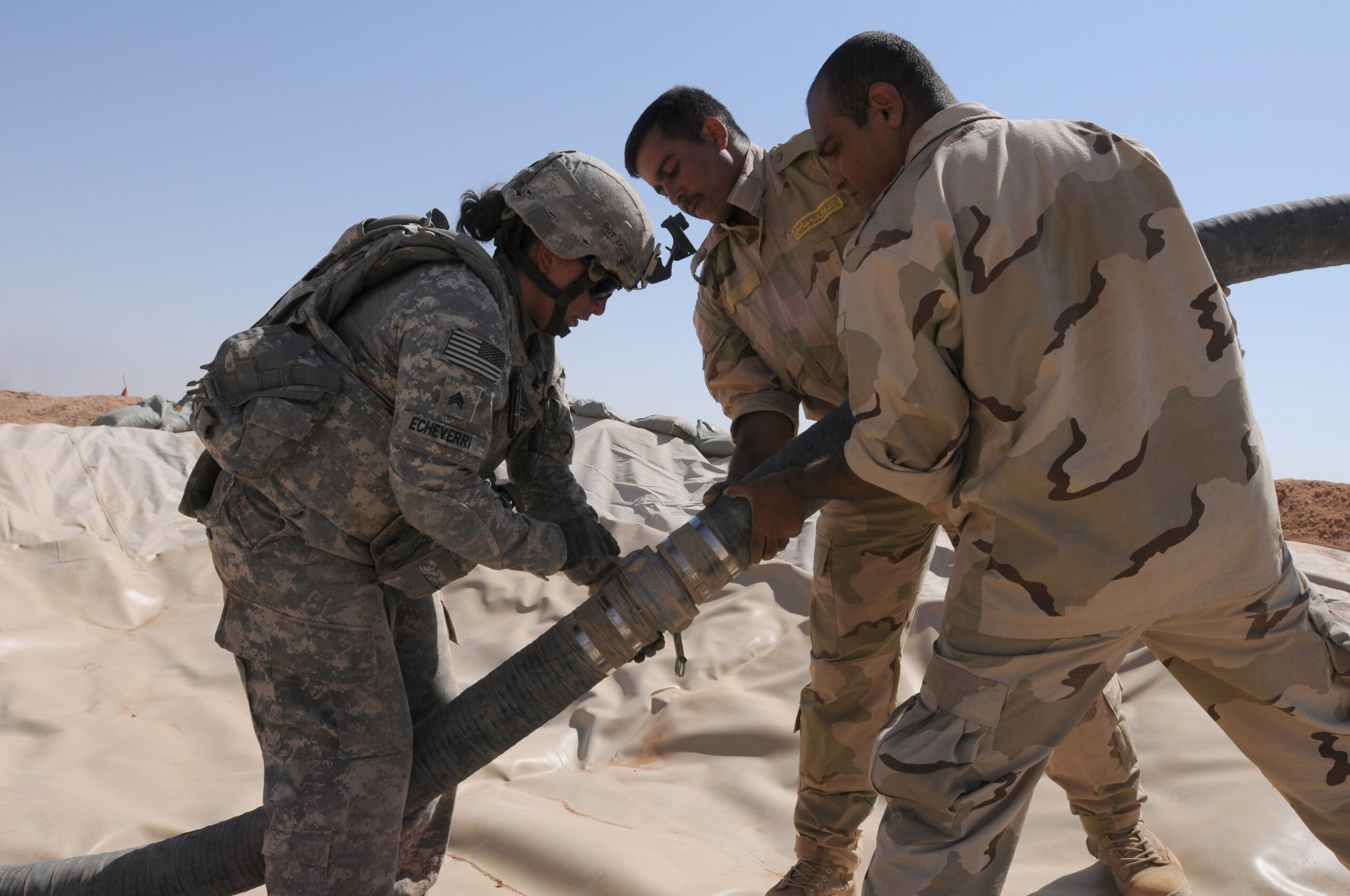
Sgt. Karoll Echeverri, a petroleum fuel specialist with the 2nd Brigade, 82nd Airborne Division’s E Company, 407th Brigade Support Battalion, works with Iraqi soldiers to build a Forward Area Refueling Point on a remote outpost in Al-Anbar, Iraq, Oct. 10. Paratroopers with the 2/82 have trained Iraqi soldiers how to build, run and maintain a FARP to allow them to refuel aircraft and expand their ability to patrol the desert between Anbar province and the Syrian border. Echeverri is a native of Miami.

Share on LinkedInShare on Twitter

Why this matters now

Iraq’s oil minister says crude shipments through Türkiye’s Ceyhan terminal could restart after more than two years offline. If barrels begin to flow, the move would reconnect a key artery that once carried roughly 450,000 barrels per day from northern Iraq to the Mediterranean. For energy markets, that is more than a headline. For regional politics and defense, it is a pressure valve. For you as a market watcher, it is a test of what “imminent” means in a complex web of law, infrastructure, and diplomacy.

A quick reset: what shut the taps

The Kirkuk–Ceyhan route went dark in March 2023 after an arbitration tribunal found that Türkiye had allowed independent exports from the Kurdistan Regional Government (KRG) without Baghdad’s consent, contrary to a 1973 intergovernmental pipeline treaty. The ruling included about $1.5 billion in damages and triggered a stop to KRG loadings at Ceyhan. Since then, Baghdad has insisted that only the national marketer (SOMO) can sell Iraqi crude. The result: northern Iraq’s crude was diverted to local refineries, while global buyers adjusted to one less medium-sour stream on the water.

Emilfaro, Public domain, via Wikimedia Commons

What is actually changing

Baghdad now says the legal and procedural pieces are in place to restart under federal rules, with an initial tranche around 80,000 barrels per day before any buildup. The operational picture, however, has been uneven. Industry sources have alternated between signaling readiness and caution about the exact timing. That gap between policy statements and on-the-ground activity is the core uncertainty you should keep in mind. A credible restart requires three things at once: commercial alignment among producers, a scheduling signal from the terminal, and quiet but crucial paperwork between Turkey’s operator and Iraq’s marketer.

Oléoduc_Kirkouk-Ceyhan_FR
GregRoquette, CC BY-SA 4.0 <https://creativecommons.org/licenses/by-sa/4.0>, via Wikimedia Commons

Market stakes if flows resume

A restart, even at 80,000 barrels per day, adds flexible Mediterranean supply at a time when refiners are juggling maintenance, shifting Russian flows, and OPEC+ policy signals. Medium-sour barrels like Kirkuk tend to price into European and Mediterranean complexes where fuel oil cracks, middle distillate yields, and sulfur handling capacity drive margins. Reintroducing northern Iraqi grades could:

  • Ease differentials for similar grades in the Med, modestly narrowing the spread to dated Brent.
  • Give refiners more blending options, especially for middle distillates going into late-summer demand.
  • Dampen volatility around prompt cargo availability at Ceyhan, where Azeri BTC and other streams already cycle.

If volumes scale toward pre-2023 levels over time, expect more visible effects on grade spreads and freight patterns. If the restart stutters, the market will quickly price “headline risk” discounts back out.

The politics behind the barrel

Energy and security are fused in this corridor. Three political dynamics shape the outlook:

  1. Baghdad–Erbil revenue management. The restart path assumes KRG crude is marketed federally and revenues are shared per Iraq’s budget rules. Durable compliance here reduces the risk of another stop-start cycle.
  2. Türkiye’s treaty calculus. Ankara has signaled it intends to terminate the 1973 pipeline agreement in July 2026 and negotiate a broader, modernized framework. That is leverage and timeline in one sentence. Any near-term flows will run in the shadow of those talks.
  3. Legal aftershocks. The 2023 award resolved one case, but related claims and appeals continue to shape expectations. The more clarity the parties reach on outstanding liabilities and future governance, the more bankable the flow outlook becomes.

For defense observers, these political levers matter because energy transit shapes bilateral ties, bargaining power over border security, and the wider infrastructure agenda (including the Türkiye–Iraq “Development Road” concept). When energy cooperation moves forward, other files often become easier to manage.

Infrastructure reality check

Pipelines do not restart on press releases alone. Key practical checkpoints include: line integrity (after long idling, corrosion and pigging plans matter), pump and metering readiness, terminal scheduling at Ceyhan, and the alignment of off-take contracts and insurance coverage. In 2023, Türkiye also cited earthquake-related damage in sections of the system. Even if those repairs are complete, operators typically phase flows up to validate instrumentation and quality specifications. If you see a gradual ramp rather than a full return, that will likely be why.

How much is “enough” to move prices?

At 80,000 barrels per day, the effect is mostly local to Mediterranean differentials and specific refinery runs. At 300,000–450,000 barrels per day, you are looking at sustained pressure on comparable grades, incremental seaborne availability into Europe, and marginal adjustments to OPEC+ country compliance optics (because Baghdad’s national quota accounting must match the marketing reality). Keep an eye on loading programs and bill-of-lading data; those concrete signals will tell you far more than any single statement.

What buyers and traders should watch

  • SOMO tenders and allocations. Federal marketing of northern grades will surface in tender calendars and term adjustments.
  • Quality sheets. Kirkuk-blend quality can drift with field mix; refiners will scrutinize sulfur and metals to set run plans.
  • Freight and storage. Any backlog of parcels at Ceyhan would tighten local tankage and influence laycans.
  • Insurance and compliance. After the arbitration ruling, counterparties will be conservative about documentation aligning with Iraqi federal law.

Knock-on implications for security and diplomacy

Energy revenue sharing inside Iraq is directly linked to stability in the north. Reliable export channels reduce the incentive for unilateral moves that in the past created flashpoints. On the Türkiye side, smoother energy trade supports a wider diplomatic agenda with Baghdad, including cross-border trade routes and border security coordination. None of this removes risk. It simply lowers the temperature while difficult files—arbitration liabilities, future treaty terms, and KRG producer contracts—are managed.

What a realistic near-term path looks like

The most plausible scenario is a measured restart under SOMO control, with initial volumes proving documentation, metering, and quality assurance, followed by incremental increases if political and commercial actors stay aligned. Markets will discount promises until the first loadings clear the berth and AIS confirms liftings. If that happens and volumes scale, the story shifts from “if” to “how fast”—and then to the 2026 treaty horizon.

If flows do not resume promptly

No news is news. Extended delay would signal that one of three bottlenecks persists: unresolved commercial terms with KRG-area producers, line/terminal readiness, or treaty-linked bargaining between Ankara and Baghdad. In that case, expect differentials to revert, refiners to continue with current slates, and the diplomatic track to absorb more of the friction. The arbitration backdrop will remain a drag until both sides codify a forward framework.

Bottom line

Treat a restart as credible only when confirmed by loadings, not just statements. If barrels return, the initial market impact is surgical—Mediterranean differentials, specific refinery runs, and marginal shifts in seaborne balances. The strategic impact could be larger: a working corridor raises the ceiling for broader Türkiye–Iraq cooperation and takes some heat out of a long-running dispute. In a region where energy and security move together, that is worth your attention.

References

  • Reuters. “Iraqi minister expects oil exports via Turkey pipeline to resume shortly, state news agency says.” August 6, 2025. Reuters
  • Reuters. “Iraqi exports via Turkey’s Ceyhan pipeline to resume on Wednesday or Thursday.” August 6, 2025.
  • Reuters. “Iraqi oil exports via Turkey pipeline yet to resume, sources say.” August 6, 2025
  • Bloomberg. “Turkey to Seek New Deal With Iraq on Idled Oil Pipeline.” July 21, 2025.

Previous Post

Big News from Baykar: Kızılelma Drones Are Rolling Off the Line

Next Post

What Mattered in Defense Today: JLTVs to Canada and an ISREW Boost for Australia

Related Posts

T-80U_ROKA_제3기갑여단
Geopolitics

Brown Bear Project : How Republic of Korea added Russian weapons into its inventory?

April 14, 2026
DESERT STORM
Geopolitics

Iraq: A Preview of the Region’s Future

April 6, 2026
The Architecture of Global Power: Chokepoints, Energy Corridors, and Global Trade
Geopolitics

The Architecture of Global Power: Chokepoints, Energy Corridors, and Global Trade

March 12, 2026
Strategic Deception and Covert Warfare: The Logic Behind the Hezbollah Pager Operation
Geopolitics

Strategic Deception and Covert Warfare: The Logic Behind the Hezbollah Pager Operation

March 10, 2026
The Warfare Doctrine of Eliminations inthe Opening Strikes of Military Conflicts
Geopolitics

The Warfare Doctrine of Eliminations inthe Opening Strikes of Military Conflicts

March 3, 2026
Mexican cartels and the shifting landscape of Mexico’s energy supply chain
Geopolitics

Mexican cartels and the shifting landscape of Mexico’s energy supply chain

February 24, 2026
Next Post
M1278_JLTV_Heavy_Guns_Carrier_(JLTV-HGC)

What Mattered in Defense Today: JLTVs to Canada and an ISREW Boost for Australia

  • Trending
  • Latest
Operation Enduring Freedom

What Exactly Is a Private Military Company (PMC)?

September 6, 2025
Blackwater PMC

After Blackwater: How PMCs Evolved, Professionalized, and Fragmented

September 13, 2025
MG42-1

MG42 Machine Gun: WWII History, Specifications and Battlefield Impact

April 21, 2026
Blackwater PMC

Inside Iraq’s Security Market: How Private Power Shapes a Fragile State

October 6, 2025
General Orde Wingate_Chindit_leaders_Burma_1944_IWM_MH_7873

Orde Wingate: The Difficult Legacy of an Irregular Commander

May 18, 2026
1280px-5-4_ADAR_Supports_Formidable_Shield_25_

SGT Stout: M-SHORAD and Mobile Air Defense

May 16, 2026
HEL_MD_Beam_Director

Laser Weapons: The New Layer in Modern Air Defense

May 14, 2026
EU Dual Use

EU Dual-Use Regulation: How Civilian Technology Becomes a Matter of Export Control

May 13, 2026

Recent Articles

General Orde Wingate_Chindit_leaders_Burma_1944_IWM_MH_7873

Orde Wingate: The Difficult Legacy of an Irregular Commander

May 18, 2026
1280px-5-4_ADAR_Supports_Formidable_Shield_25_

SGT Stout: M-SHORAD and Mobile Air Defense

May 16, 2026
HEL_MD_Beam_Director

Laser Weapons: The New Layer in Modern Air Defense

May 14, 2026
EU Dual Use

EU Dual-Use Regulation: How Civilian Technology Becomes a Matter of Export Control

May 13, 2026
Drill & Defense

Drill & Defense is an independent defense and security platform covering firearms, military technology, geopolitics, energy security, and industry developments. We provide clear, structured, and practical insight for professionals, companies, and readers following the evolving defense landscape worldwide.

Follow Us

Browse by Category

  • Air Systems
  • Defense & Energy Strategy
  • Defense Industry
  • Defense Know-How
  • Defense Technologies
  • Doctrines & Concepts
  • Energy & Security
  • Energy Fundamentals
  • Energy Technologies
  • Firearms
  • Geopolitics
  • Global Security
  • History
  • Industry News
  • Knowledge Base
  • Land Systems
  • Legacy Systems & Structures
  • Market Analysis
  • Market Trends & Analysis
  • Military History
  • Military Systems
  • Naval Systems
  • Oil & Gas News
  • Pistols
  • Regulations & Frameworks
  • Rifles
  • SMGs & Machine Guns
  • Strategic Turning Points
  • Tech & Innovation Crossover

Recent Articles

General Orde Wingate_Chindit_leaders_Burma_1944_IWM_MH_7873

Orde Wingate: The Difficult Legacy of an Irregular Commander

May 18, 2026
1280px-5-4_ADAR_Supports_Formidable_Shield_25_

SGT Stout: M-SHORAD and Mobile Air Defense

May 16, 2026

© 2026 Drill & Defense. All rights reserved. Independent insights on firearms, defense, and energy. For business inquiries: info@drillanddefense.com | PRIVACY POLICY | COOKIE POLICY | TERMS AND CONDITIONS

Manage Consent

We use cookies to improve your experience. You can accept or refuse cookies; however, some features may not function properly without your consent.

Functional Always active
The technical storage or access is strictly necessary for the legitimate purpose of enabling the use of a specific service explicitly requested by the subscriber or user, or for the sole purpose of carrying out the transmission of a communication over an electronic communications network.
Preferences
The technical storage or access is necessary for the legitimate purpose of storing preferences that are not requested by the subscriber or user.
Statistics
The technical storage or access that is used exclusively for statistical purposes. The technical storage or access that is used exclusively for anonymous statistical purposes. Without a subpoena, voluntary compliance on the part of your Internet Service Provider, or additional records from a third party, information stored or retrieved for this purpose alone cannot usually be used to identify you.
Marketing
The technical storage or access is required to create user profiles to send advertising, or to track the user on a website or across several websites for similar marketing purposes.
  • Manage options
  • Manage services
  • Manage {vendor_count} vendors
  • Read more about these purposes
View preferences
  • {title}
  • {title}
  • {title}
No Result
View All Result
  • Defense Industry
    • Industry News
    • Defense Companies
    • Defense Technologies
    • Market Analysis
  • Military Systems
    • Land Systems
    • Air Systems
    • Naval Systems
    • Electronic & Cyber Systems
  • Firearms
    • Pistols
    • Rifles
    • SMGs & Machine Guns
    • Ammunition
    • Optics & Accessories
  • Geopolitics
    • Global Security
    • Defense & Energy Strategy
    • Tech & Innovation Crossover
    • Trade & Export Controls
  • Energy & Security
    • Oil & Gas News
    • Energy Technologies
    • Market Trends & Analysis
  • History
    • Military History
    • Doctrines & Concepts
    • Strategic Turning Points
    • Legacy Systems & Structures
  • Knowledge Base
    • Firearms Basics
    • Defense Know-How
    • Energy Fundamentals
    • Regulations & Frameworks
  • About
  • Contact
  • Login
  • Register

© 2026 Drill & Defense. All rights reserved. Independent insights on firearms, defense, and energy. For business inquiries: info@drillanddefense.com | PRIVACY POLICY | COOKIE POLICY | TERMS AND CONDITIONS