
Drill & Defense
Advertisement
  • Defense
    • Industry News
    • Weapon & Gear Reviews
    • Defense Technologies
    • Military Market Reports
  • Energy
    • Oil & Gas News
    • Energy Technologies
    • Market Trends & Analysis
  • Cross-Sector Insights
    • Defense & Energy Strategy
    • Global Security & Trade Analysis
    • Tech & Innovation Crossover
  • History & Legacy
    • Turning Points in Conflict
    • Legacy Systems & Structures
    • Resource Wars & Strategy
  • Knowledge Base
    • Defense Know-How
    • Energy Insight
  • About
  • Contact
  • Login
  • Register
No Result
View All Result
  • Defense
    • Industry News
    • Weapon & Gear Reviews
    • Defense Technologies
    • Military Market Reports
  • Energy
    • Oil & Gas News
    • Energy Technologies
    • Market Trends & Analysis
  • Cross-Sector Insights
    • Defense & Energy Strategy
    • Global Security & Trade Analysis
    • Tech & Innovation Crossover
  • History & Legacy
    • Turning Points in Conflict
    • Legacy Systems & Structures
    • Resource Wars & Strategy
  • Knowledge Base
    • Defense Know-How
    • Energy Insight
  • About
  • Contact
  • Login
  • Register
No Result
View All Result
Drill & Defense
No Result
View All Result
Home Cross-Sector Insights

Navigating the Ripple Effects of U.S. Sanctions on Iran’s Shadow Fleet and Global Defense Dynamics

August 1, 2025
in Cross-Sector Insights, Global Security & Trade Analysis
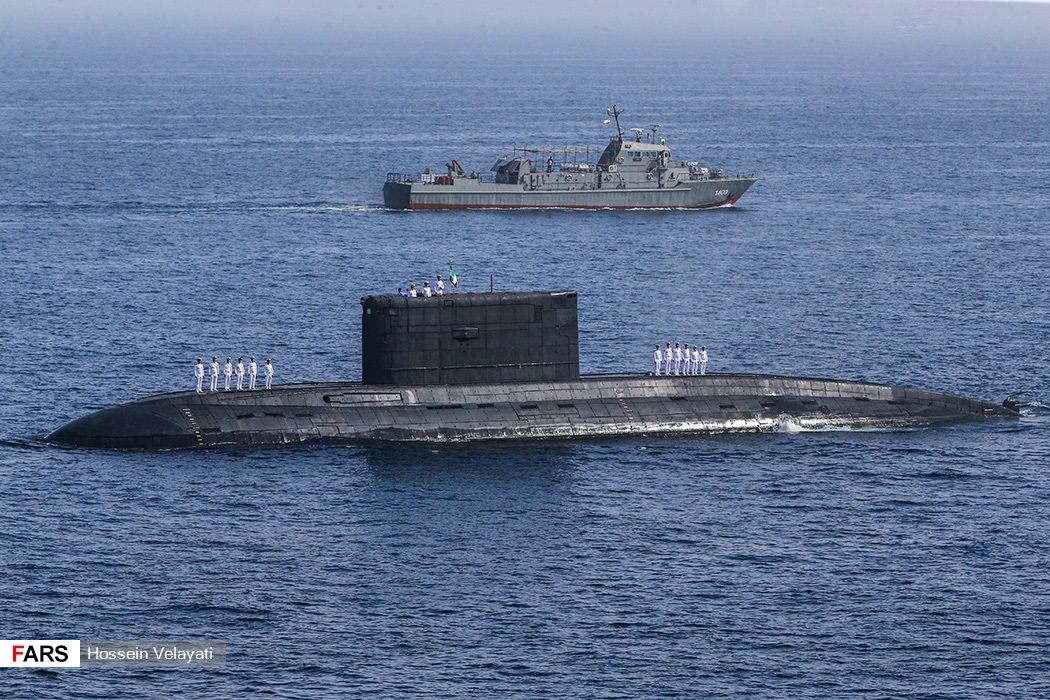
Selected_Iranian_Military_Photographs_by_Fars_News_(28)

Fars Media Corporation, CC BY 4.0 , via Wikimedia Commons

Share on LinkedInShare on Twitter

In recent months, Washington has launched what officials describe as the most sweeping sanctions package against Iran since 2018. At the center of this effort is the drive to dismantle Iran’s so-called “shadow fleet,” a clandestine network of vessels, front companies, and covert oil routes that together have become a financial lifeline for Tehran’s security apparatus. While the sanctions themselves signal a more aggressive posture by the U.S., the broader implications extend into global defense economics, maritime security, and emerging market strategy. This post assesses what these developments mean for stakeholders across industries and borders.

The Shadow Fleet: Anatomy of a Sanctions-Evasion Network

The term “shadow fleet” refers to maritime operations that obscure ownership, enable ship-to-ship oil transfers, disable tracking transponders, and falsify documentation to evade sanctions. Iran’s network operates a “ghost fleet” of tankers registered under flags of convenience, sometimes hopping between jurisdictions like Panama or Liberia, and funnels crude to major buyers such as China, Syria, and Venezuela.

A significant portion of this network is estimated to fall under the control of the Islamic Revolutionary Guard Corps, whose dual role in security and economic activity allows it to generate illicit revenues through discounted or covert oil exports. This revenue has ostensibly been channeled toward proxy groups and regional operations.
The Sanctions Escalation: A Strategic Inflection Point

On July 30, 2025, the U.S. Treasury unveiled its largest sanctions effort in years, targeting over a hundred vessels, entities, and individuals associated with the shadow fleet, particularly focusing on Mohammad Hossein Shamkhani and his network spanning some 20 countries. This action is accompanied by expanded efforts to crack down on oil smugglers disguised through intermediaries blending Iranian crude with Iraqi labels.

At the same time, agencies like OFAC and FinCEN have issued parallel advisories spotlighting financial red flags tied to oil smuggling, supply chain vulnerabilities, and shadow banking networks operating through Hong Kong, the UAE, and other jurisdictions.

This calibrated escalation reflects a shift in approach, from sanctions that primarily target state budgets to multidimensional pressure aimed at illicit logistics and finance channels supporting military activity.

Consequences Beyond Oil Revenues

Although official reports suggest that these measures are unlikely to disrupt global oil markets dramatically, the ripple effects are already discernible. The decimation of illicit revenue streams poses a direct threat to Iran’s external military support infrastructure. The Revolutionary Guard, having reportedly earned up to half of Iran’s oil export profits through covert means, now faces erosion of a critical funding source.

Moreover, the broader maritime shadow fleet is a growing concern globally. Its scale presents risks ranging from crew safety and environmental threats to the erosion of maritime norms. Enforcement against individual vessels has had limited impact. Experts advocate for more systemic responses such as engagement with flag-state regulators, advanced monitoring systems, and multilateral cooperation.

In effect, the sanctions regime is no longer a narrow tool of diplomacy. It is evolving into a foundational instrument reshaping the economics of defense and security.

Defense Industry and Strategic Budget Realignments

An unintended consequence of these sanctions may be a rebalancing of defense procurement, particularly in emerging markets. As Tehran pivots toward more asymmetric warfare—drone swarms, loitering munitions, cyber systems—their adversaries are responding in kind. Industry analysts suggest that investment in counter-drone systems, cybersecurity, and AI-enabled defense technologies could accelerate in regions vulnerable to Iranian influence.

Simultaneously, nations seeking greater strategic autonomy may shift investment from traditional suppliers toward domestic or regional solutions. Though not explored in detail in non-Turkish media, the framework of emerging markets adapting to the sanctions pressure is implicit in broader analysis of defense system modernization trends.

Compliance as a Growth Engine

Another development worth monitoring lies in the expanding market for compliance and risk-monitoring tools. With shipping networks growing increasingly opaque, firms specializing in sanctions screening, blockchain tracing of financial flows, or AI-powered vessel tracking are seeing heightened demand. These offerings are becoming indispensable for financial institutions, port authorities, and defense contractors aiming to manage exposure to illicit networks.

Navigational Challenges Ahead

Despite growing enforcement, shadow fleets are adaptable. Vessels change names, move between flags, disable tracking, or employ front companies and financial intermediaries to slip through sanctions cracks. This presents a dual challenge: enforcement agencies must become as agile and technologically savvy as those they seek to target.

Furthermore, Iran’s alliances with countries such as China and Russia complicate the enforcement environment. Oil continues to flow to buyers prepared to accept risk or exploit loopholes. Shaming or isolating Tehran only works if enforcement partners coordinate effectively.

The Wider Geopolitical Envelope

These developments must be situated within a broader geopolitical context. Iran remains deeply entangled with Russian drone production and proxy deployments across the Middle East. While sanctions may constrict revenue channels, they do not immediately eliminate Iran’s regional influence. Vigilance remains necessary, particularly regarding the potential for retaliation, including through maritime disruption or escalation of proxy campaigns.

Observations for Industry Leaders

From a strategic and corporate standpoint, several themes emerge:

  • Sanctions are evolving. Enforcement is now multi-domain—targeting finance, logistics, and cyber-enabled control networks, not just commodity trade.
  • Defense sector implications are significant. Emerging asymmetric threats prompt investment in reconnaissance, counter-drone, and cybersecurity platforms.
  • Maritime risk is rising. Shadow fleets pose direct threats to supply chain integrity and rule-based maritime governance.
  • Compliance infrastructure becomes a market of its own. Firms offering risk analytics, real-time vessel tracking, and sanctions screening are gaining traction.
  • Adaptation is imperative. As adversarial networks grow more sophisticated, response models must constantly evolve—technologically and institutionally.
  • This is a pivotal moment, not just for policy-makers, but for private and public entities engaged in finance, logistics, defense, and maritime governance. The shadows cast by Iran’s evasive networks are prompting a broader illumination of how global systems can adapt—and where opportunity and risk intersect in the shifting contours of international security.

References:

  • AInvest, “Iran’s Shadow Fleet and the New Geopolitical Gold Rush”
  • U.S. Department of the Treasury, Press Briefing, July 30, 2025
  • Reuters, “U.S. Imposes New Sanctions Targeting Iran Oil Trade”
  • DLA Piper, “US Treasury Doubles Down on Fighting Illicit Finance”

 

Previous Post

The New Era of Turkish Firepower

Next Post

Turkey’s Defense Industries Shatter July Export Records: What It Means for the Global Market

Related Posts

Israel’s F-15 News: What Actually Happened, and Why It Matters
Cross-Sector Insights

Israel’s F-15 News: What Actually Happened, and Why It Matters

January 1, 2026
SDF and HTS: Managing Tension Without Open Conflict in Northern Syria
Cross-Sector Insights

SDF and HTS: Managing Tension Without Open Conflict in Northern Syria

December 26, 2025
What 2025 Taught Us About Defense and Energy: Five Lessons for 2026
Cross-Sector Insights

What 2025 Taught Us About Defense and Energy: Five Lessons for 2026

December 24, 2025
The New Taiwan Arms Package and China’s “Stop” Message: What Actually Changed
Cross-Sector Insights

The New Taiwan Arms Package and China’s “Stop” Message: What Actually Changed

December 19, 2025
The Black Sea’s Evolving Battlespace: Ukraine’s Maritime Operations and Shifting Security Dynamics
Cross-Sector Insights

The Black Sea’s Evolving Battlespace: Ukraine’s Maritime Operations and Shifting Security Dynamics

December 12, 2025
The Rise of Commercial Drones in Conflict Zones: A New Layer in Modern Warfare
Cross-Sector Insights

The Rise of Commercial Drones in Conflict Zones: A New Layer in Modern Warfare

December 6, 2025
Next Post
Teknofest_İstanbul

Turkey’s Defense Industries Shatter July Export Records: What It Means for the Global Market

  • Trending
  • Comments
  • Latest
Blackwater PMC

After Blackwater: How PMCs Evolved, Professionalized, and Fragmented

September 13, 2025
Blackwater PMC

Inside Iraq’s Security Market: How Private Power Shapes a Fragile State

October 6, 2025
Operation Enduring Freedom

What Exactly Is a Private Military Company (PMC)?

September 6, 2025
Repkon Nammo in Denmark: What This Nordic Ammunition Play Really Signals

Repkon Nammo in Denmark: What This Nordic Ammunition Play Really Signals

August 21, 2025
A Historic $142 Billion Arms Deal: Unpacking the U.S.-Saudi Agreement

A Historic $142 Billion Arms Deal: Unpacking the U.S.-Saudi Agreement

A Silent Revolution on the Battlefield: AI-Enabled Tactical Communication Systems

A Silent Revolution on the Battlefield: AI-Enabled Tactical Communication Systems

Cominf.org, CC BY-SA 3.0 , via Wikimedia Commons

Is Europe Really Reducing Its Dependence on Russian Gas?

What is ITAR? The Invisible Line in Global Defense Trade

What is ITAR? The Invisible Line in Global Defense Trade

Israel’s F-15 News: What Actually Happened, and Why It Matters

Israel’s F-15 News: What Actually Happened, and Why It Matters

January 1, 2026
SDF and HTS: Managing Tension Without Open Conflict in Northern Syria

SDF and HTS: Managing Tension Without Open Conflict in Northern Syria

December 26, 2025
What 2025 Taught Us About Defense and Energy: Five Lessons for 2026

What 2025 Taught Us About Defense and Energy: Five Lessons for 2026

December 24, 2025
The New Taiwan Arms Package and China’s “Stop” Message: What Actually Changed

The New Taiwan Arms Package and China’s “Stop” Message: What Actually Changed

December 19, 2025

Recent News

Israel’s F-15 News: What Actually Happened, and Why It Matters

Israel’s F-15 News: What Actually Happened, and Why It Matters

January 1, 2026
SDF and HTS: Managing Tension Without Open Conflict in Northern Syria

SDF and HTS: Managing Tension Without Open Conflict in Northern Syria

December 26, 2025
What 2025 Taught Us About Defense and Energy: Five Lessons for 2026

What 2025 Taught Us About Defense and Energy: Five Lessons for 2026

December 24, 2025
The New Taiwan Arms Package and China’s “Stop” Message: What Actually Changed

The New Taiwan Arms Package and China’s “Stop” Message: What Actually Changed

December 19, 2025
Drill & Defense

Drill & Defense is an independent platform providing insights into firearms, defense technologies, and energy sectors. We deliver clear, practical content for professionals, enthusiasts, and industry followers worldwide.

Follow Us

Browse by Category

  • Cross-Sector Insights
  • Defense
  • Defense & Energy Strategy
  • Defense Know-How
  • Defense Technologies
  • Energy
  • Energy Insight
  • Energy Technologies
  • Global Security & Trade Analysis
  • History & Legacy
  • Industry News
  • Knowledge Base
  • Legacy Systems & Structures
  • Market Trends & Analysis
  • Military Market Reports
  • Oil & Gas News
  • Resource Wars & Strategy
  • Tech & Innovation Crossover
  • Turning Points in Conflict
  • Weapon & Gear Reviews

Recent News

Israel’s F-15 News: What Actually Happened, and Why It Matters

Israel’s F-15 News: What Actually Happened, and Why It Matters

January 1, 2026
SDF and HTS: Managing Tension Without Open Conflict in Northern Syria

SDF and HTS: Managing Tension Without Open Conflict in Northern Syria

December 26, 2025

© 2025 Drill & Defense. All rights reserved. Independent insights on firearms, defense, and energy. For business inquiries: info@drillanddefense.com | PRIVACY POLICY | COOKIE POLICY | TERMS AND CONDITIONS

Manage Consent

We use cookies to improve your experience. You can accept or refuse cookies; however, some features may not function properly without your consent.

Functional Always active
The technical storage or access is strictly necessary for the legitimate purpose of enabling the use of a specific service explicitly requested by the subscriber or user, or for the sole purpose of carrying out the transmission of a communication over an electronic communications network.
Preferences
The technical storage or access is necessary for the legitimate purpose of storing preferences that are not requested by the subscriber or user.
Statistics
The technical storage or access that is used exclusively for statistical purposes. The technical storage or access that is used exclusively for anonymous statistical purposes. Without a subpoena, voluntary compliance on the part of your Internet Service Provider, or additional records from a third party, information stored or retrieved for this purpose alone cannot usually be used to identify you.
Marketing
The technical storage or access is required to create user profiles to send advertising, or to track the user on a website or across several websites for similar marketing purposes.
  • Manage options
  • Manage services
  • Manage {vendor_count} vendors
  • Read more about these purposes
View preferences
  • {title}
  • {title}
  • {title}
No Result
View All Result
  • Defense
    • Industry News
    • Weapon & Gear Reviews
    • Defense Technologies
    • Military Market Reports
  • Energy
    • Oil & Gas News
    • Energy Technologies
    • Market Trends & Analysis
  • Cross-Sector Insights
    • Defense & Energy Strategy
    • Global Security & Trade Analysis
    • Tech & Innovation Crossover
  • History & Legacy
    • Turning Points in Conflict
    • Legacy Systems & Structures
    • Resource Wars & Strategy
  • Knowledge Base
    • Defense Know-How
    • Energy Insight
  • About
  • Contact
  • Login
  • Register

© 2025 Drill & Defense. All rights reserved. Independent insights on firearms, defense, and energy. For business inquiries: info@drillanddefense.com | PRIVACY POLICY | COOKIE POLICY | TERMS AND CONDITIONS