
Drill & Defense
Advertisement
  • Defense Industry
    • Industry News
    • Defense Companies
    • Defense Technologies
    • Market Analysis
  • Military Systems
    • Land Systems
    • Air Systems
    • Naval Systems
    • Electronic & Cyber Systems
  • Firearms
    • Pistols
    • Rifles
    • SMGs & Machine Guns
    • Ammunition
    • Optics & Accessories
  • Geopolitics
    • Global Security
    • Defense & Energy Strategy
    • Tech & Innovation Crossover
    • Trade & Export Controls
  • Energy & Security
    • Oil & Gas News
    • Energy Technologies
    • Market Trends & Analysis
  • History
    • Military History
    • Doctrines & Concepts
    • Strategic Turning Points
    • Legacy Systems & Structures
  • Knowledge Base
    • Firearms Basics
    • Defense Know-How
    • Energy Fundamentals
    • Regulations & Frameworks
  • About
  • Contact
  • Login
  • Register
No Result
View All Result
  • Defense Industry
    • Industry News
    • Defense Companies
    • Defense Technologies
    • Market Analysis
  • Military Systems
    • Land Systems
    • Air Systems
    • Naval Systems
    • Electronic & Cyber Systems
  • Firearms
    • Pistols
    • Rifles
    • SMGs & Machine Guns
    • Ammunition
    • Optics & Accessories
  • Geopolitics
    • Global Security
    • Defense & Energy Strategy
    • Tech & Innovation Crossover
    • Trade & Export Controls
  • Energy & Security
    • Oil & Gas News
    • Energy Technologies
    • Market Trends & Analysis
  • History
    • Military History
    • Doctrines & Concepts
    • Strategic Turning Points
    • Legacy Systems & Structures
  • Knowledge Base
    • Firearms Basics
    • Defense Know-How
    • Energy Fundamentals
    • Regulations & Frameworks
  • About
  • Contact
  • Login
  • Register
No Result
View All Result
Drill & Defense
No Result
View All Result
Home Geopolitics

When Oil Pays for Arms: How Energy Revenues Shape Defense Procurement

September 23, 2025
in Geopolitics, Defense & Energy Strategy
When Oil Pays for Arms: How Energy Revenues Shape Defense Procurement

A Kuwaiti oil field set afire by retreating Iraqi troops burns in the distance beyond an abandoned Iraqi tank following Operation Desert Storm.

Share on LinkedInShare on Twitter

Energy money is never just energy money. In producer states from the Gulf to North and West Africa, parts of Latin America, and the Caspian, hydrocarbon revenues flow into the same fiscal bloodstream that pays salaries, subsidizes bread, and buys air-defense systems. When prices are high, procurement cycles accelerate and multi-year modernization plans suddenly look affordable. When prices sag, budgets tighten, deliveries slip, and some governments quietly renegotiate or defer contracts. For a platform like Drill & Defense, the question is not whether oil and gas receipts matter to defense spending; it’s how they translate into specific procurement behavior, risk, and policy trade-offs.

Energy Revenues and Procurement Dynamics

In most producer economies, oil and gas royalties, taxes, and dividends arrive in the treasury as general revenue, or where national oil companies are dominant as quasi-fiscal inflows that can be directed through budget transfers. Defense ministries then draw from this pool, sometimes via multi-year authorizations that are politically easier to pass during boom times. A second channel is off-budget: national oil companies or sovereign wealth funds underwrite “strategic” projects, occasionally including defense-industrial investments. In both cases, volatility is the hidden variable. Break-even assumptions baked into five-year plans can be undone by a 10–20% price swing, and that creates procurement timing risk: governments front-load high-visibility items early in the boom and postpone lifecycle costs, training, and munitions stockpiles to later years.
When energy prices climb, headline budgets rise, often outpacing inflation, and services can green-light long-delayed acquisitions such as advanced air defense, coastal surveillance radars, helicopter fleets, or C4ISR upgrades. Governments also pursue defense-industrial offset deals, seeking technology transfer and local assembly lines to convert temporary revenue strength into longer-lived capability. Regional signaling intensifies: if a neighbor announces a new frigate program or integrated air and missile defense, the political cost of standing still increases. Conversely, when prices slump and fiscal space narrows, ministries of finance demand visible restraint. Core personnel costs are sticky, so procurement and operations absorb the brunt. Governments stretch delivery schedules, switch from new production to upgrades, and favor financing that pushes cash outlays into the future. In fragile states, the risk is sharper: lower oil receipts can weaken currency, complicate foreign-currency payments to suppliers, and create arrears, exposing procurement pipelines to sanctions- and compliance-related delays.

Infrastructure, Compliance, and Risks

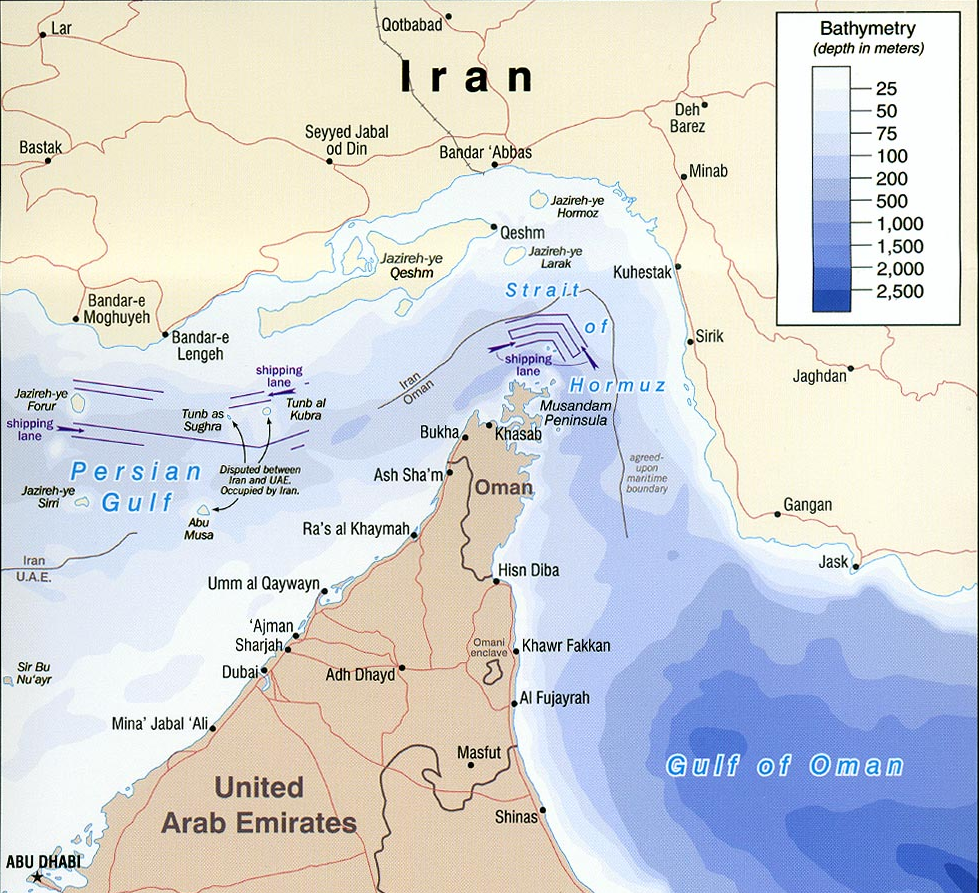
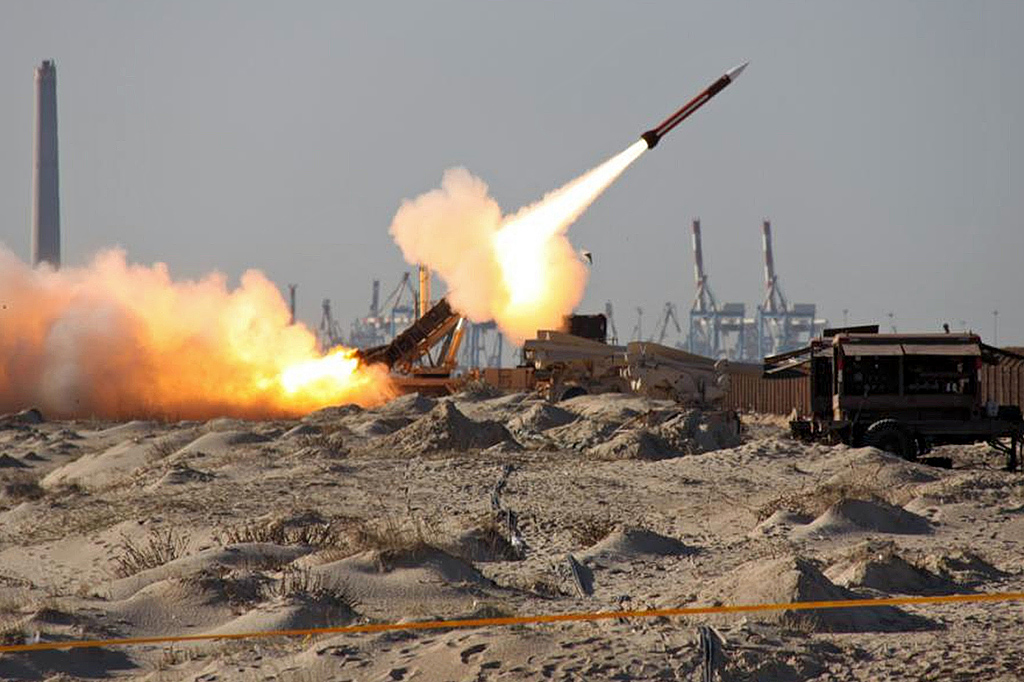
Energy systems themselves are defense drivers. Tanker routes and chokepoints, upstream fields, pipelines, LNG terminals, refineries, and power plants are high-value, high-visibility targets. As producer states expand exports or invest in new capacity, they tend to purchase enablers that protect those cash-flow assets: maritime patrol aircraft and UAVs, coastal radars, fast interceptors, layered short-to-medium-range air defense, counter-UAS suites, and hardened C2 nodes. The logic is simple: securing export infrastructure protects the very revenues that finance the security apparatus, creating a feedback loop between energy economics and defense procurement.
 / IDF Spokesperson’s Unit

At the same time, arms deals funded by hydrocarbon income do not exist in a vacuum. Financial sanctions, export controls, and compliance screens shape which systems are available, how they are financed, and how quickly they can be delivered. When sanctioned producers see prices rise, they may earn more revenue but remain constrained in how they convert those funds into capabilities, which can push them toward suppliers less exposed to Western compliance regimes or toward domestically produced stand-ins. Even in non-sanctioned contexts, anti-corruption and transparency requirements can slow execution, especially where procurement agencies and national oil companies use different accounting standards.

Components of the Dwight D. Eisenhower Carrier Strike Group (IKECSG), guided-missile cruiser USS Philippine Sea (CG 58) and USNS Supply (T-AOE-6) transit the Strait of Hormuz, Dec. 14, 2023. The IKECSG is deployed to the U.S. 5th Fleet area of operations to support maritime stability and security in the Middle East region. (U.S. Navy photo by Mass Communication Specialist 3rd Class Janae Chambers)

There are three recurring risks. The first is the “boom illusion”: assuming that today’s oil price will underwrite tomorrow’s sustainment. A new airframe or air-defense battery is a 30-year promise, not a one-year purchase order. The second is opportunity cost: defense outlays can crowd out human capital investments precisely when diversification is most needed to cushion the next downcycle. The third is governance: opaque procurement channels erode public trust and raise the lifetime cost of capability through poorly structured contracts. Producer states that institutionalize fiscal rules and medium-term defense plans usually weather cycles better and get more capability per barrel.

Industry and Future Outlook

For manufacturers and integrators, energy-linked procurement is both an opportunity and a forecasting challenge. Order books swell in booms, but production lines, supply chains, and vendor financing must be resilient to abrupt budget stress. Successful suppliers do three things well in producer markets: they structure payment terms that accommodate revenue volatility, they bundle sustainment, training, and local industry participation to create political resilience, and they help customers quantify lifecycle costs in conservative price scenarios. For partners and allies, a sober conversation about resilience—munitions stockpiles, repair capacity, interoperability—can be more valuable than the ribbon-cutting of a single marquee platform.

GULF OF OMAN (May 8, 2023) Master-at-Arms 1st Class Julius Earl stands watch with an M240B machine gun on the foc’scle of the guided-missile destroyer USS Paul Hamilton (DDG 60), May 8, 2023, during a Strait of Hormuz transit. Paul Hamilton is deployed to the U.S. 5th Fleet area of operations to help ensure maritime security and stability in the Middle East region. (U.S. Navy photo by Mass Communication Specialist 2nd Class Elliot Schaudt)

Looking ahead, energy transitions will reshape, but not erase, the relationship between resource revenue and procurement. In many producer states, hydrocarbons will remain the main fiscal engine for the next decade. At the same time, the surface area to defend is expanding: offshore gas platforms, new LNG export capacity, longer product pipelines, and more electrified grids connected to desalination and data centers. That means higher demand for layered air defenses, maritime surveillance, cyber-physical security, and counter-UAS—capabilities that protect revenue infrastructure as much as they project power. If there is one durable principle for producer states, it is to convert cyclical income into structural capability: fund what you can sustain, harden what you must defend, and keep procurement plans robust to bad oil years as well as good ones.


References

  • SIPRI, “Trends in World Military Expenditure, 2024” (factsheet, Apr. 2025).
  • U.S. EIA, “OPEC Crude Oil Export Revenues” (2024 estimates; fact sheet and PDF, Jul. 2025).
  • SIPRI Yearbook section, “Oil price shocks and military expenditure.”
  • IMF research notes on oil exporters’ fiscal constraints and military outlays.
  • IEA regional and data resources on Middle East energy system and recent electricity-mix indicators.

Previous Post

Loitering Munitions: Kamikaze Drones in Modern Warfare

Next Post

The Montreux Document: Why It Still Matters for Security Work

Related Posts

REFORGER '91
Geopolitics

REFORGER and the Technical Problem Behind Military Mobility

June 24, 2026
U.S. Army Soldiers Conduct Operations in the Middle East - Patriot-Missile-Systems
Geopolitics

Patriot Systems: The Geopolitics of Air Defense in an Era of Missile Threats

June 19, 2026
The War Before the War: How Geopolitical Pressure Reaches Daily Life
Geopolitics

The War Before the War: How Geopolitical Pressure Reaches Daily Life

June 10, 2026
Iraqi-U.S. Joint Patrol Works to Deter Oil Looting
Geopolitics

The Quiet Military Layer Behind Energy Production

May 27, 2026
U.S. Navy SEALs, Chilean Navy SF, SOF Conduct VBSS Training
Geopolitics

VBSS: Visit, Board, Search and Seizure in Maritime Security

May 26, 2026
Kosova War
Geopolitics

The Kosovo War: A Conflict That Never Fully Left Europe

May 23, 2026
Next Post
The Montreux Document: Why It Still Matters for Security Work

The Montreux Document: Why It Still Matters for Security Work

  • Trending
  • Latest
Operation Enduring Freedom

What Exactly Is a Private Military Company (PMC)?

September 6, 2025
MG42-1

MG42 Machine Gun: WWII History, Specifications and Battlefield Impact

April 21, 2026
FN FAL: The Right Arm of the Free World

FN FAL: The Right Arm of the Free World

March 31, 2026
Blackwater PMC

After Blackwater: How PMCs Evolved, Professionalized, and Fragmented

September 13, 2025
A photo of an F-35 flying during the Wings Over Houston 2023 Airshow

From Titanium to Tungsten: Critical Minerals in Modern Defense

June 30, 2026
YAL-1A_Airborne_Laser_unstowed

YAL-1A Airborne Laser: The 747 That Tried to Kill Missiles With Light

June 26, 2026
REFORGER '91

REFORGER and the Technical Problem Behind Military Mobility

June 24, 2026
Oshkosh M1070 HET

Oshkosh M1070 HET: Heavy Mobility Behind Armored Operations

June 22, 2026

Recent Articles

A photo of an F-35 flying during the Wings Over Houston 2023 Airshow

From Titanium to Tungsten: Critical Minerals in Modern Defense

June 30, 2026
YAL-1A_Airborne_Laser_unstowed

YAL-1A Airborne Laser: The 747 That Tried to Kill Missiles With Light

June 26, 2026
REFORGER '91

REFORGER and the Technical Problem Behind Military Mobility

June 24, 2026
Oshkosh M1070 HET

Oshkosh M1070 HET: Heavy Mobility Behind Armored Operations

June 22, 2026
Drill & Defense

Drill & Defense is an independent defense and security platform covering firearms, military technology, geopolitics, energy security, and industry developments. We provide clear, structured, and practical insight for professionals, companies, and readers following the evolving defense landscape worldwide.

Follow Us

Browse by Category

  • Air Systems
  • Defense & Energy Strategy
  • Defense Industry
  • Defense Know-How
  • Defense Technologies
  • Doctrines & Concepts
  • Energy & Security
  • Energy Fundamentals
  • Energy Technologies
  • Firearms
  • Geopolitics
  • Global Security
  • History
  • Industry News
  • Knowledge Base
  • Land Systems
  • Legacy Systems & Structures
  • Market Analysis
  • Market Trends & Analysis
  • Military History
  • Military Systems
  • Naval Systems
  • Oil & Gas News
  • Pistols
  • Regulations & Frameworks
  • Rifles
  • SMGs & Machine Guns
  • Strategic Turning Points
  • Tech & Innovation Crossover

Recent Articles

A photo of an F-35 flying during the Wings Over Houston 2023 Airshow

From Titanium to Tungsten: Critical Minerals in Modern Defense

June 30, 2026
YAL-1A_Airborne_Laser_unstowed

YAL-1A Airborne Laser: The 747 That Tried to Kill Missiles With Light

June 26, 2026

© 2026 Drill & Defense. All rights reserved. Independent insights on firearms, defense, and energy. For business inquiries: info@drillanddefense.com | PRIVACY POLICY | COOKIE POLICY | TERMS AND CONDITIONS

Manage Consent

We use cookies to improve your experience. You can accept or refuse cookies; however, some features may not function properly without your consent.

Functional Always active
The technical storage or access is strictly necessary for the legitimate purpose of enabling the use of a specific service explicitly requested by the subscriber or user, or for the sole purpose of carrying out the transmission of a communication over an electronic communications network.
Preferences
The technical storage or access is necessary for the legitimate purpose of storing preferences that are not requested by the subscriber or user.
Statistics
The technical storage or access that is used exclusively for statistical purposes. The technical storage or access that is used exclusively for anonymous statistical purposes. Without a subpoena, voluntary compliance on the part of your Internet Service Provider, or additional records from a third party, information stored or retrieved for this purpose alone cannot usually be used to identify you.
Marketing
The technical storage or access is required to create user profiles to send advertising, or to track the user on a website or across several websites for similar marketing purposes.
  • Manage options
  • Manage services
  • Manage {vendor_count} vendors
  • Read more about these purposes
View preferences
  • {title}
  • {title}
  • {title}
No Result
View All Result
  • Defense Industry
    • Industry News
    • Defense Companies
    • Defense Technologies
    • Market Analysis
  • Military Systems
    • Land Systems
    • Air Systems
    • Naval Systems
    • Electronic & Cyber Systems
  • Firearms
    • Pistols
    • Rifles
    • SMGs & Machine Guns
    • Ammunition
    • Optics & Accessories
  • Geopolitics
    • Global Security
    • Defense & Energy Strategy
    • Tech & Innovation Crossover
    • Trade & Export Controls
  • Energy & Security
    • Oil & Gas News
    • Energy Technologies
    • Market Trends & Analysis
  • History
    • Military History
    • Doctrines & Concepts
    • Strategic Turning Points
    • Legacy Systems & Structures
  • Knowledge Base
    • Firearms Basics
    • Defense Know-How
    • Energy Fundamentals
    • Regulations & Frameworks
  • About
  • Contact
  • Login
  • Register

© 2026 Drill & Defense. All rights reserved. Independent insights on firearms, defense, and energy. For business inquiries: info@drillanddefense.com | PRIVACY POLICY | COOKIE POLICY | TERMS AND CONDITIONS