
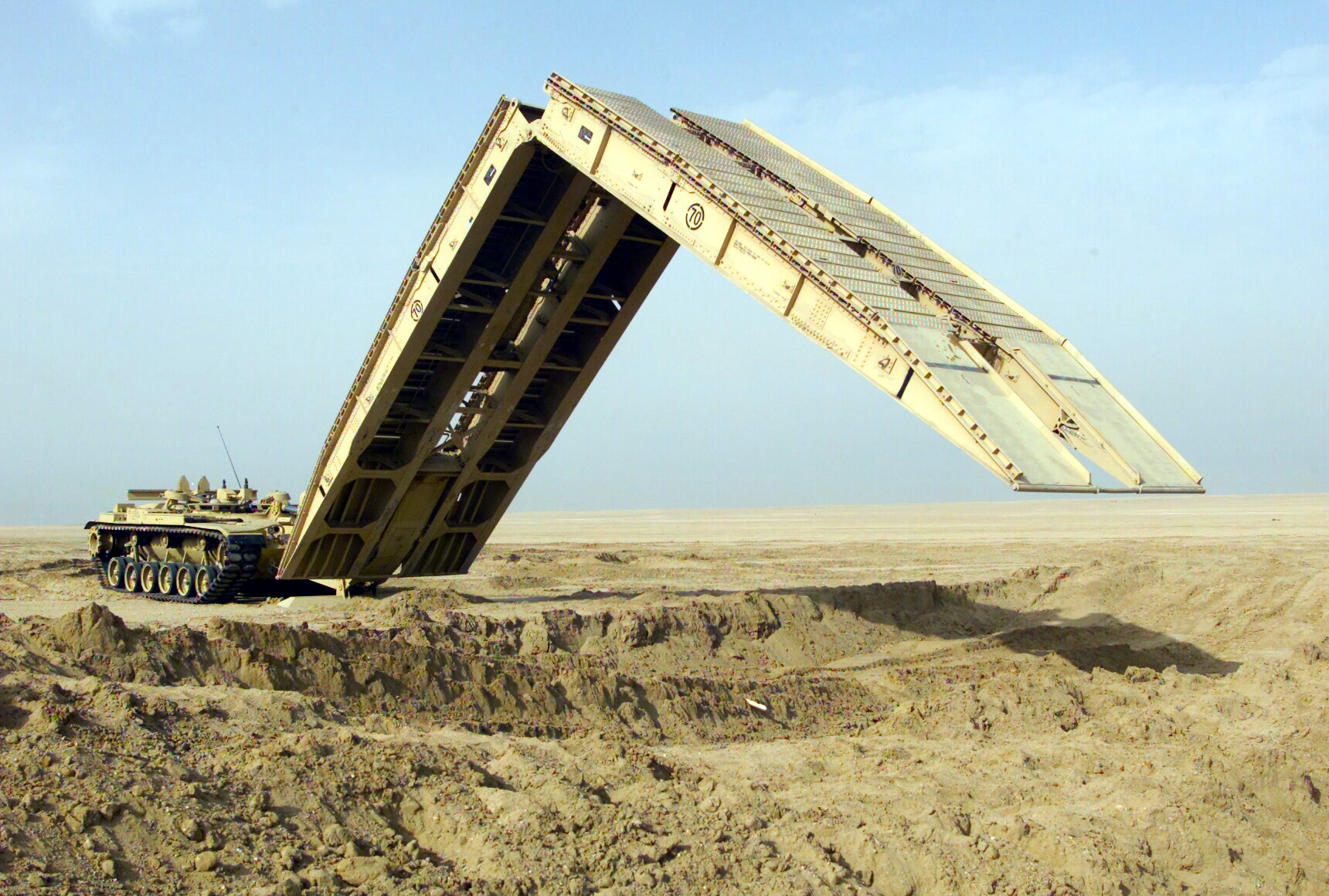
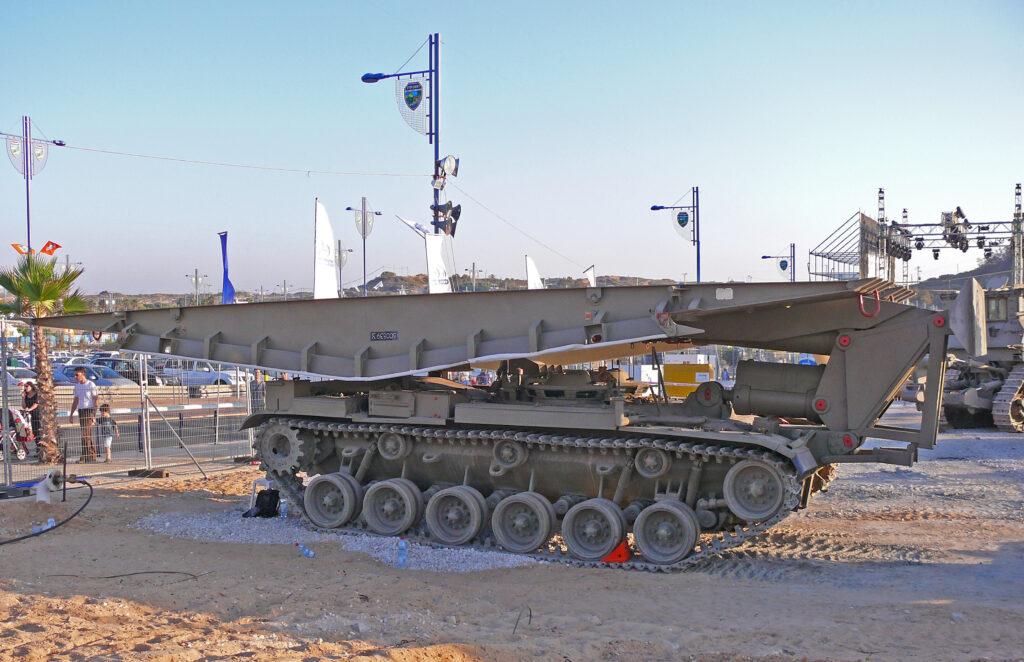
At first glance, the M60 AVLB can be mistaken for a modified tank with an unusual structure mounted on top. In reality, it represents a very specific layer of military capability that is often overlooked in broader discussions about armored warfare. Built on the M60 Patton chassis, the system replaces firepower with function, transforming a main battle tank into a platform designed to solve one problem: how to keep armored formations moving when terrain or destruction interrupts their path.

This shift from combat to enablement is more significant than it initially appears. Armored warfare is not only about engaging the enemy but also about reaching the point where engagement is possible. A force that cannot cross a river, bypass a cratered road, or overcome an anti-tank ditch is effectively neutralized without a single shot being fired. The M60 AVLB exists precisely to prevent that scenario from becoming operational reality.
The design reflects a period where planners expected infrastructure to be targeted early in any conflict. Bridges would be destroyed, routes denied, and natural obstacles reinforced. Instead of treating these as exceptional cases, systems like the AVLB were developed under the assumption that such disruptions would be constant. That assumption still holds today, even as the technological landscape of warfare has changed significantly.
Technical Specifications and Structural Capabilities
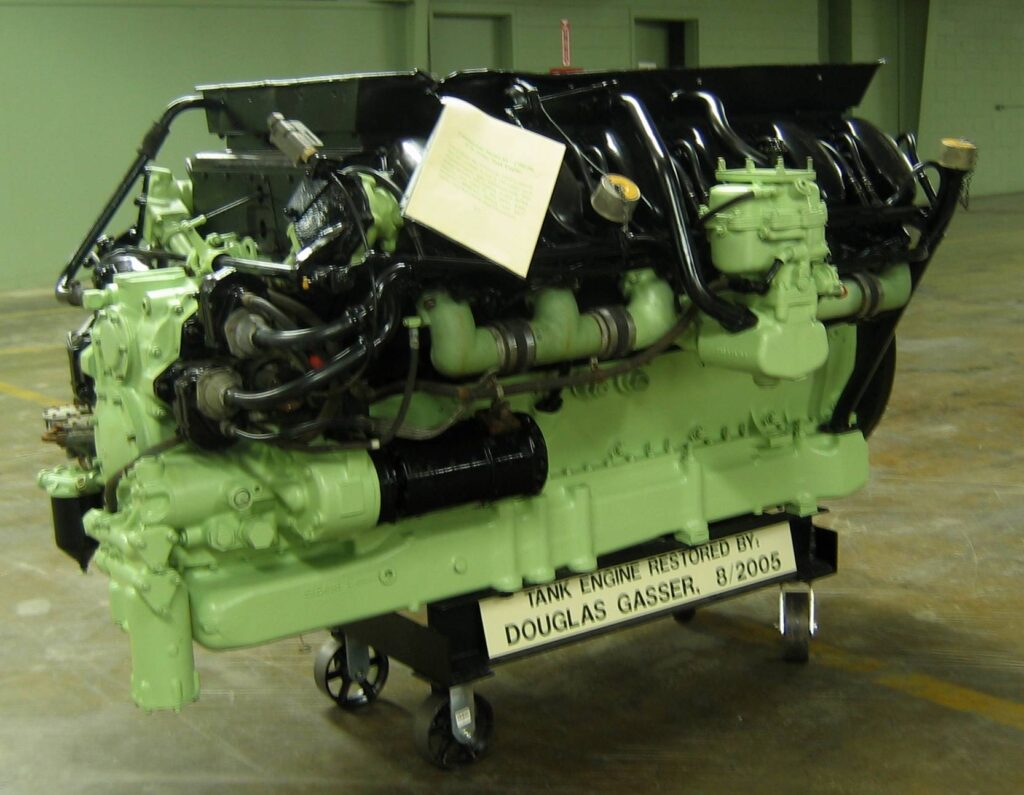
From a technical standpoint, the M60 AVLB retains most of the core characteristics of the original M60 tank platform. It is powered by the Continental AVDS-1790 diesel engine, producing approximately 750 horsepower. This allows the vehicle to reach road speeds in the range of 45 to 48 kilometers per hour, with cross-country mobility that aligns with other tracked armored vehicles of its generation. While not fast by modern standards, it is capable of operating within the same maneuver envelope as many heavy units it is designed to support.
The vehicle typically weighs around 55 tons, depending on configuration and variant. This weight class is critical because it ensures structural compatibility with the bridge it deploys and the vehicles that will cross it. The suspension system, tracks, and overall mobility package are inherited directly from the M60, providing a level of reliability that comes from decades of operational use and maintenance familiarity.
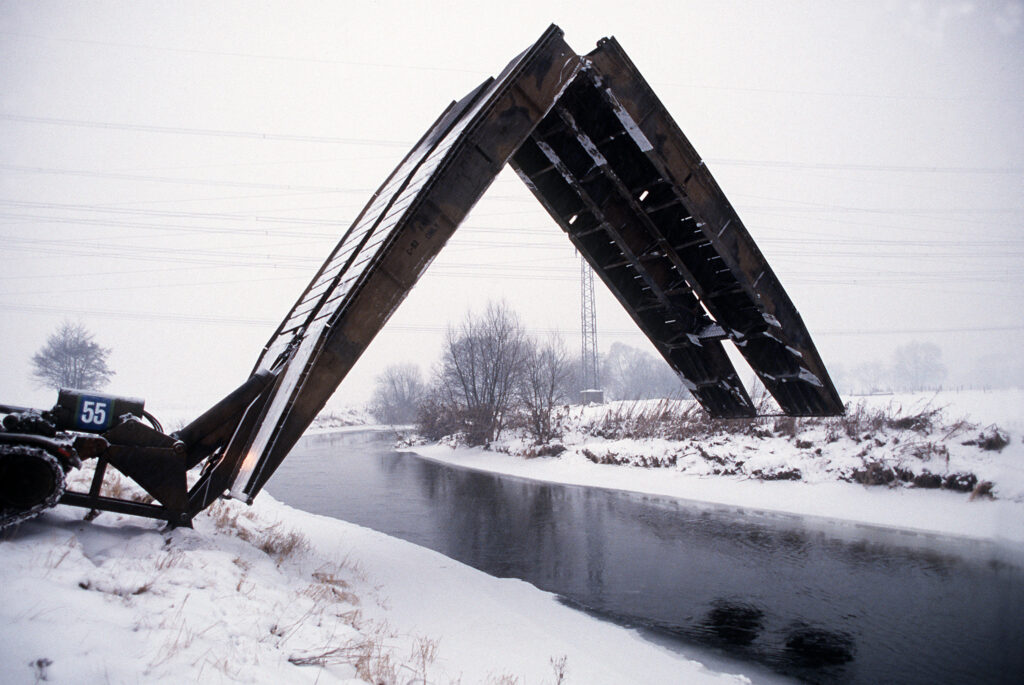
The bridge itself is one of the defining components of the system. It is a scissor-type bridge with a deployed length of approximately 18.25 meters. When folded, it sits compactly on top of the vehicle, allowing for transport without excessive increase in profile. Once deployed, it is capable of supporting Military Load Class 60, which includes main battle tanks and other heavy armored vehicles. This is not a light bridging solution intended for reconnaissance units or logistics convoys; it is built for the heaviest elements of a mechanized force.
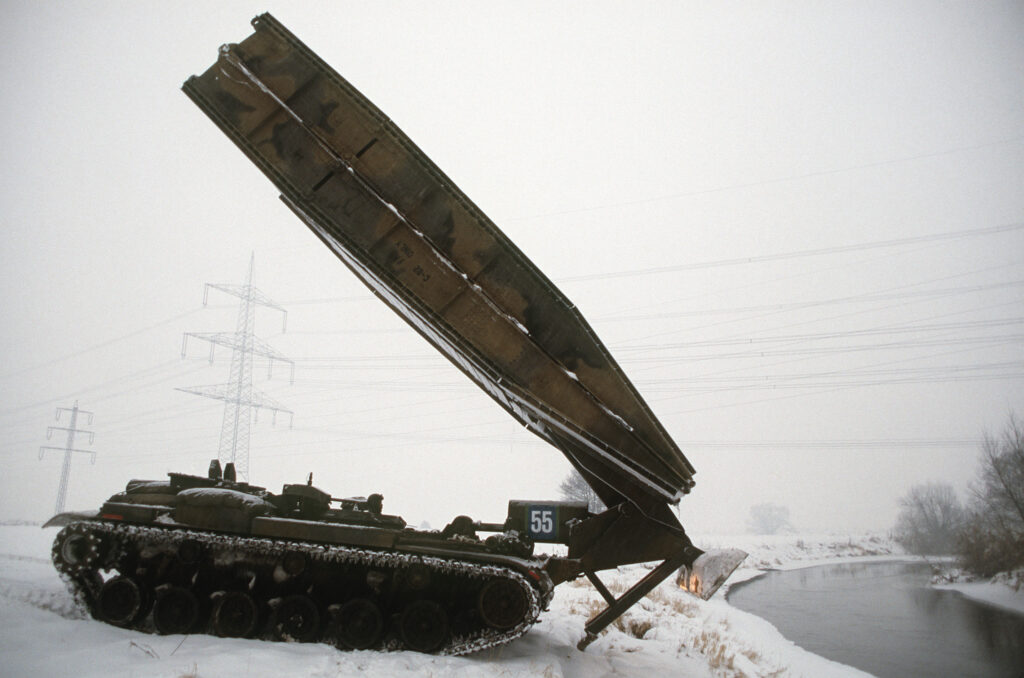
Deployment time is a key performance factor. Under trained conditions, the bridge can be launched in roughly 2 to 5 minutes. This relatively short timeframe is essential in maintaining momentum, especially in forward areas where delays can cascade into larger operational problems. Retrieval of the bridge is more time-consuming but is still designed to be executed without extended delays in exposed positions.
Structurally, the system is divided into three main components: the hull, the launcher mechanism, and the bridge. Each of these elements is designed with durability in mind rather than technological sophistication. Hydraulics handle the deployment, and the mechanical nature of the system reduces dependence on complex electronics, which can be both a limitation and an advantage depending on the environment.
Deployment Process and Operational Reality
The process of deploying the bridge appears straightforward when described in technical terms, but its execution in real conditions is far more complex. The vehicle must approach the obstacle with precision, aligning itself in a position where the bridge can be deployed effectively across the gap. This requires accurate judgment of distance, terrain stability, and the condition of the crossing point.
Once in position, the hydraulic launcher pushes the folded bridge forward. As it extends, the scissor mechanism unfolds, gradually forming a rigid span across the obstacle. The final stage involves locking the bridge into place, ensuring it can support the weight of incoming vehicles without structural failure.
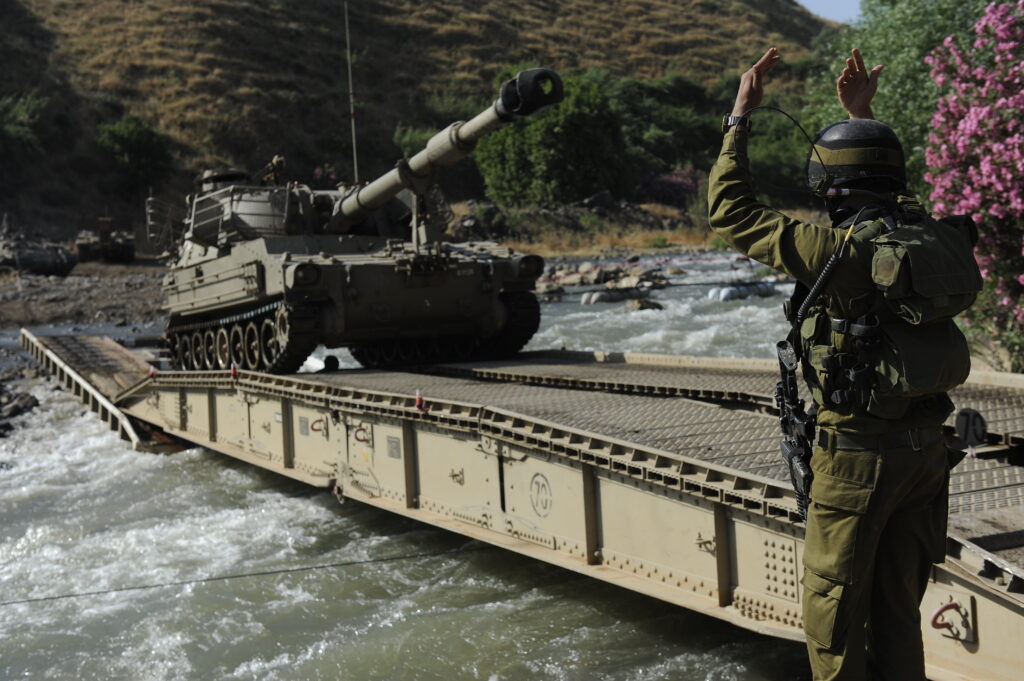
This sequence takes place in a compressed timeframe, often under pressure. The crew must operate efficiently, with little margin for error. A miscalculation in alignment or deployment can render the bridge unusable, forcing repositioning and increasing exposure. After deployment, the AVLB does not immediately move forward. Instead, other vehicles begin crossing first. This means the AVLB remains stationary at the edge of the obstacle during a critical phase of the operation. It becomes both a facilitator and a temporary fixed point, which has implications for its survivability.
In training environments, this process is controlled and repeatable. In operational scenarios, variables such as visibility, terrain degradation, and potential enemy observation complicate execution. The difference between a smooth deployment and a disrupted one often comes down to coordination rather than equipment capability alone.
Operational Role and Tactical Significance
The role of the M60 AVLB extends beyond simple obstacle crossing. It directly influences how armored units plan and execute their movements. Routes are selected not only based on distance and terrain but also on the availability of bridging assets. In this sense, the AVLB becomes part of the planning process long before it is physically deployed.
In offensive operations, the system allows forces to maintain pressure by reducing delays at critical points. In defensive scenarios, it can be used to restore mobility after infrastructure has been damaged or destroyed. Its presence changes the way terrain is perceived, turning obstacles from potential stopping points into manageable challenges.
One of the key aspects of its tactical significance is its impact on tempo. Modern operations rely heavily on maintaining synchronization between different elements of a force. Even a short delay at a crossing point can disrupt that synchronization, leading to fragmentation and vulnerability. The AVLB helps prevent that breakdown by providing a rapid solution to physical barriers. At the same time, its importance makes it a target. Disrupting a bridging operation can have a disproportionate effect on an advancing force. This creates a situation where the AVLB must operate under protection, supported by other units that can mitigate the risks associated with its deployment.
Limitations and Continued Relevance in Modern Context
Despite its functional importance, the M60 AVLB shows clear signs of its age when evaluated against modern standards. Its mobility is tied to an older platform, which may not match the speed and agility of newer armored vehicles. This can create challenges in keeping pace with rapidly moving units, particularly in highly dynamic environments.
Protection is another area where limitations are evident. The vehicle relies on conventional armor without the benefit of active protection systems or advanced defensive technologies. During deployment, when it is stationary and exposed, this lack of enhanced protection becomes more significant.
The system also lacks integration with modern digital command and control networks. Contemporary operations often rely on real-time data sharing, sensor integration, and coordinated communication across multiple platforms. The M60 AVLB was not designed with these capabilities in mind, which can limit its effectiveness in highly networked environments.
However, these limitations do not eliminate its relevance. The core problem it addresses remains unchanged. Terrain still interrupts movement, and infrastructure is still a target in conflict. As long as these conditions exist, bridging systems will continue to be necessary.
This is why newer platforms, such as the Joint Assault Bridge, have been developed. They aim to address the limitations of older systems while preserving the same fundamental role. The evolution of the platform reflects changes in the operational environment, but the underlying requirement remains constant.
The continued use of the M60 AVLB in various regions demonstrates that functionality can outweigh modernization in certain contexts. When the objective is to restore mobility quickly and reliably, a system that performs its core function effectively retains value, even if it lacks advanced features.
Sources
- Federation of American Scientists (FAS) – M60A1 Armored Vehicle Launched Bridge (AVLB) specifications and system overview
- GlobalSecurity.org – M60A1 AVLB technical data and operational parameters
- U.S. Army Reserve – AVLB operational role and engineering integration in maneuver units