
Drill & Defense
Advertisement
  • Defense
    • Industry News
    • Weapon & Gear Reviews
    • Defense Technologies
    • Military Market Reports
  • Energy
    • Oil & Gas News
    • Energy Technologies
    • Market Trends & Analysis
  • Cross-Sector Insights
    • Defense & Energy Strategy
    • Global Security & Trade Analysis
    • Tech & Innovation Crossover
  • History & Legacy
    • Turning Points in Conflict
    • Legacy Systems & Structures
    • Resource Wars & Strategy
  • Knowledge Base
    • Defense Know-How
    • Energy Insight
  • About
  • Contact
  • Login
  • Register
No Result
View All Result
  • Defense
    • Industry News
    • Weapon & Gear Reviews
    • Defense Technologies
    • Military Market Reports
  • Energy
    • Oil & Gas News
    • Energy Technologies
    • Market Trends & Analysis
  • Cross-Sector Insights
    • Defense & Energy Strategy
    • Global Security & Trade Analysis
    • Tech & Innovation Crossover
  • History & Legacy
    • Turning Points in Conflict
    • Legacy Systems & Structures
    • Resource Wars & Strategy
  • Knowledge Base
    • Defense Know-How
    • Energy Insight
  • About
  • Contact
  • Login
  • Register
No Result
View All Result
Drill & Defense
No Result
View All Result
Home Knowledge Base

The French Foreign Legion After the Sahel: Where It Fits Now

October 29, 2025
in Knowledge Base, Defense Know-How
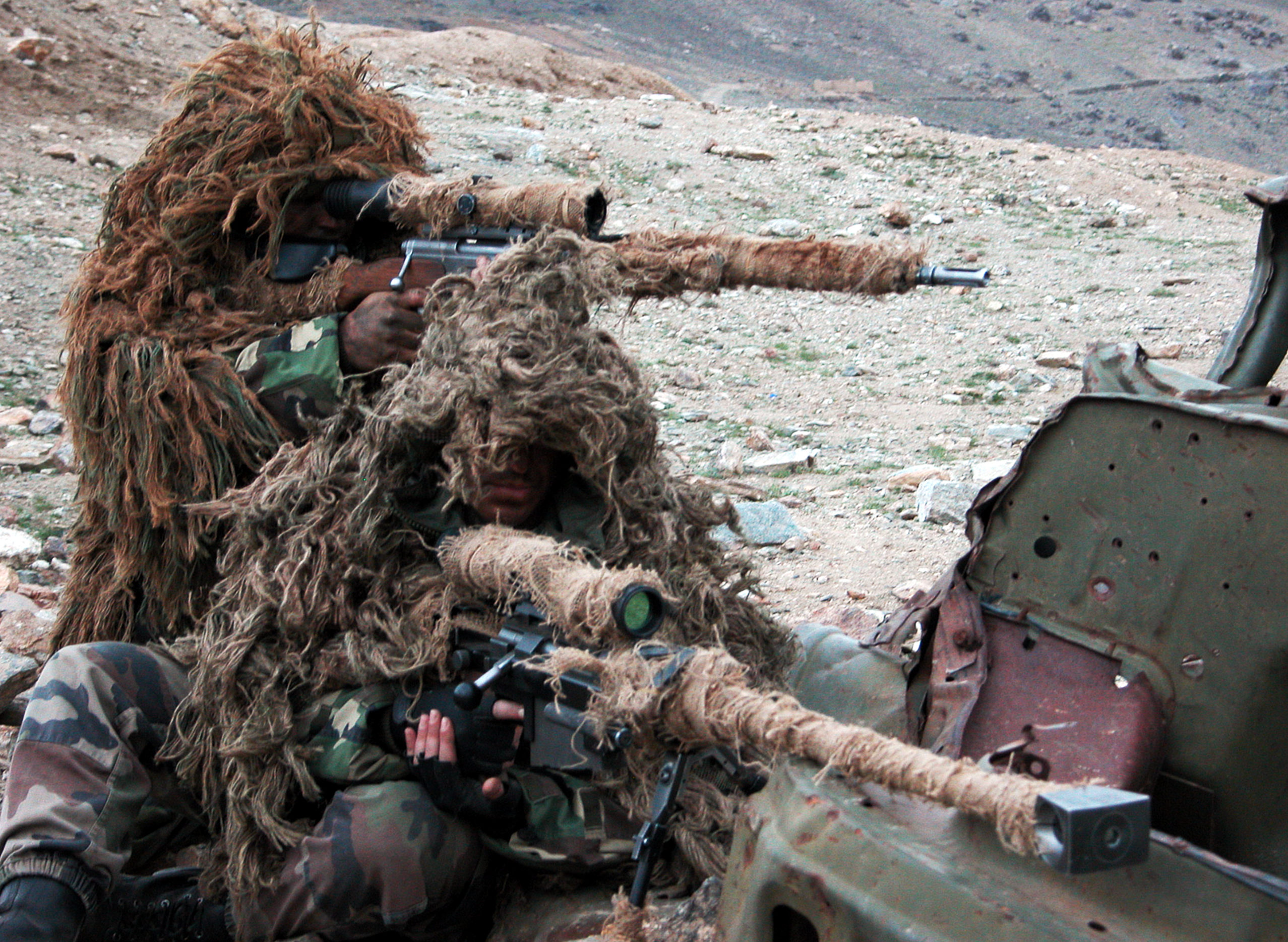
TE_2REI_Afghanistan French Foregin Legion

Snipers of the 2nd Foreign Infantry Regiment (France) using a PGM Hécate and a FR-F2 in Afghanistan in 2005 davric, CC BY-SA 3.0 , via Wikimedia Commons

Share on LinkedInShare on Twitter

In recent years, the French Foreign Legion has re-emerged not simply as a relic of colonial warfare, but as a versatile strategic asset aligned with France’s evolving defence and security objectives. With the draw-down of large-scale operations in the Sahel, the Legion has shifted toward shorter, highly mobile deployments, mission-specific tasks and support for France’s overseas interests particularly in regions where energy, maritime trade and geopolitical competition converge. Rather than signalling withdrawal, this transformation points to a re-definition of purpose: the Legion now operates where political will, rapid reaction and sovereign interests meet.

Why the Legion still matters today

France has drawn down across the central Sahel, closed its mission in Niger, and reframed its Africa posture. That shift did not make the French Foreign Legion less relevant. It repositioned the Legion’s value proposition. Today the unit’s edge lies in expeditionary readiness, small-team lethality, and the ability to plug into France’s wider ambitions from the Atlantic to the Indo-Pacific. This post surveys that repositioning with a practical lens for readers tracking energy security, private security competition, and Europe’s evolving defense calculus.

As you read, ask a simple question that guides our editorial line at Drill & Defense: where does capability meet political utility right now
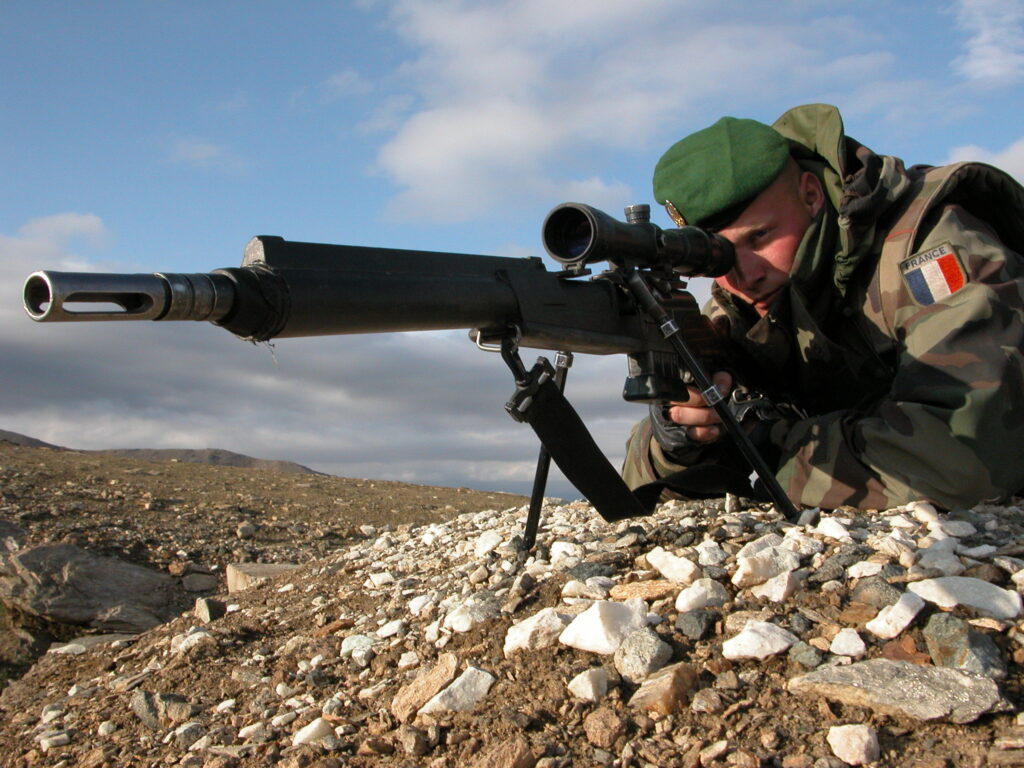
davric, CC BY-SA 3.0 https://creativecommons.org/licenses/by-sa/3.0, via Wikimedia Commons

After Barkhane: a different map, not a retreat

Paris formally ended Operation Barkhane in November 2022 and completed its withdrawal from Niger in December 2023. Those decisions reflected deteriorated host-nation relations as much as strategy. The operational lesson is clear. Persistent, theater-wide counterinsurgency under a French flag is politically brittle. The Legion’s comparative advantage now sits in shorter, sharper deployments with clearer mandates, anchored to French interests and coalition frameworks. Think training, pre-positioned forces, crisis response, and protection of critical French equities. That is not a euphemism for disengagement. It is a tighter definition of where force can still buy strategic options.
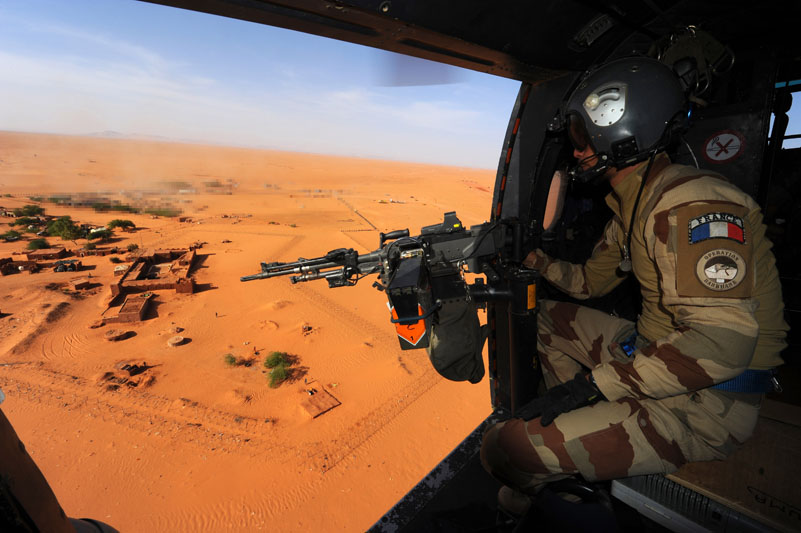
Thomas GOISQUE, CC BY-SA 3.0 https://creativecommons.org/licenses/by-sa/3.0, via Wikimedia Commons

Indo-Pacific and the return of maritime thinking

France’s Indo-Pacific strategy links deployments, basing, and defense industrial diplomacy from the Indian Ocean to the Pacific. For a Legion that historically excelled in desert and jungle warfare, this geographic reweighting means more amphibious integration, more maritime interdiction scenarios, and more joint activity with likeminded states across the region. The Legion’s rotational footprint through overseas departments and territories, and exercises in the Indian Ocean basin, give Paris scalable presence without open-ended land campaigns. For readers in energy and shipping, the signal is straightforward. Expect more French attention on sea lines of communication, offshore assets, and chokepoint resilience.

Africa is not gone, it is contested

The Sahel did not become quiet when French units left. It became more crowded. Russia’s Africa Corps stepped forward to fill parts of the security vacuum after Wagner’s rebranding, courting juntas and offering compact packages of training, kinetic support, and information operations. For France, the Legion’s role inside Africa shifts toward selective engagement where access, legitimacy, and outcomes align. That includes work with coastal and island states, capacity building with trusted partners, and contributions to multilateral missions where political cover and shared risk are stronger. The practical takeaway for security planners is that Africa is moving from a France-led architecture to a competitive marketplace of providers.
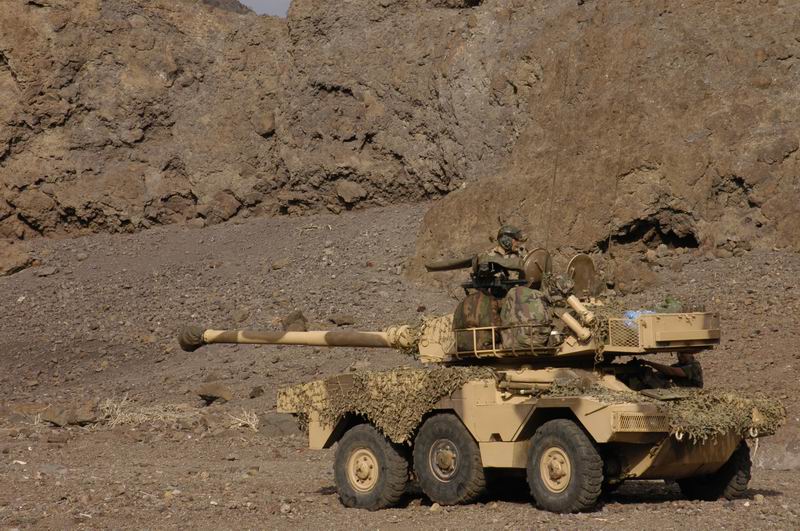
French ERC 90 Sagaie of the reconnaissance squadron of the 13th Foreign Legion Demi-Brigade near Djibouti in 2005

Energy security is now a defense mission set

French energy equities abroad are strategic. TotalEnergies’ LNG project in Mozambique illustrates the intersection of commercial viability, host-nation stabilization, and investor risk. While the Legion is not a corporate guard force, France’s ability to surge trained, interoperable units remains a deterrent and a contingency lever. As project restarts advance, risk managers will benchmark security assumptions against the real pace of force generation, host-nation capability, and coalition burden sharing. For the Legion, this means refining site defense playbooks, littoral patrol integration, and rapid reinforcement logistics in environments where non-state actors rebound quickly.

Smaller teams, smarter sensors

Legion sub-units increasingly train and equip as small, fast, and multi-sensor teams. The trend is not unique to France, though the Legion’s culture accelerates adaptation. Expect more counter-UAS tools at platoon level, broader use of thermal and low-light optics, and tighter coupling to national and partner ISR frameworks. The capability aim is straightforward. Replace wide-area patrolling with targeted find-fix-finish cycles, compressing time between cue and action. Readers in defense tech will recognize the commercial uptick behind modular optics, man-portable loitering munitions, digital training aids, and exportable mesh communications. The strategic value is not gadgetry. It is tempo under political constraint.
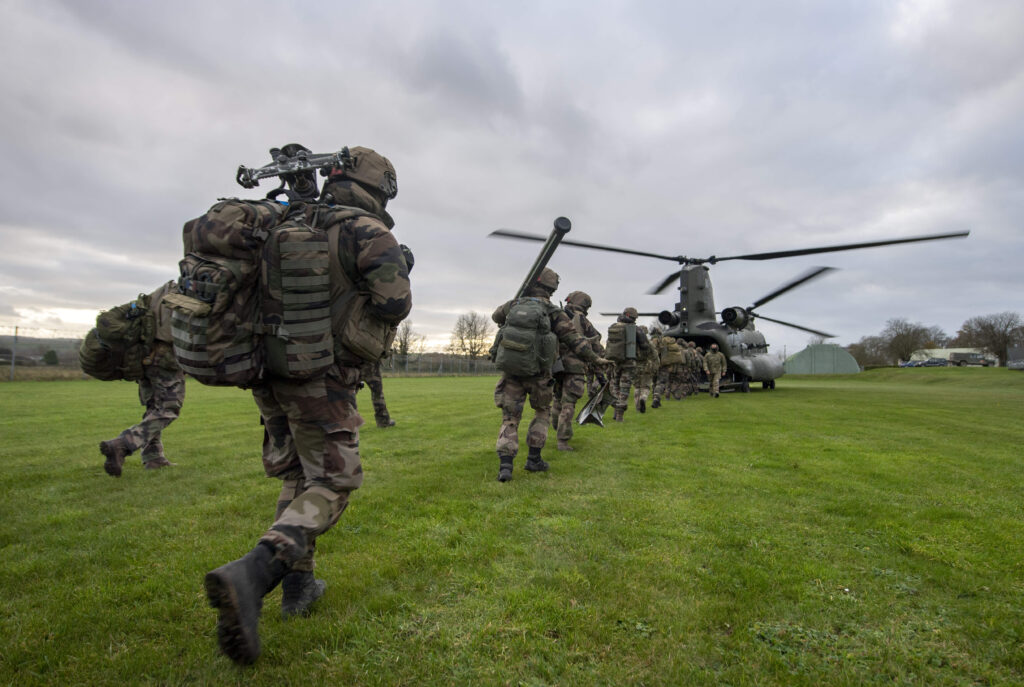
French Paratroopers from 2e Régiment Etranger de Parachutistes board an RAF Chinook Helicopter at Knook Camp, Salisbury Plain. Photo: Sergeant Tom Evans RLC/MOD, OGL v1.0OGL v1.0, via Wikimedia Commons

Where the Legion shows up

The Legion’s utility comes from being where France needs credible soldiers on short notice. Rotations through Djibouti remain a case in point. The Horn of Africa sits on the seam between Red Sea trade, Gulf energy, and East African instability. Training cycles there sustain desert proficiency, acclimatization, and joint practice with air and naval enablers. Elsewhere, periodic deployments across the Indian Ocean, the Caribbean, and South America provide presence without overexposure. For analysts, this looks like a hedging portfolio rather than a single big bet.

People as a strategic differentiator

The Legion draws volunteers from roughly 150 nationalities and fields a force of just under ten thousand professionals inside the French Army. That diversity is not a branding exercise. It is operational ballast. Multilingual teams move more easily across liaison, HUMINT, and training missions. The contract pathway and the discipline culture reduce churn when conditions are austere. For companies hiring security advisors or governments building partner-force programs, the Legion’s talent model remains a benchmark for fusing selection pressure with long-term cohesion.

What this means for private security competition

If you work in the private military and security space, the Legion is not your competitor, it is your calibration point. Its doctrine, kit, and rotations set expectations among host governments and corporates about what competent looks like. In parts of Africa, the market now includes state-linked Russian providers, local auxiliaries, and a shrinking footprint of Western trainers. In that mix, a disciplined French unit offers a visible alternative with stronger legal scaffolding and alliance pathways. The question for the next 12 months is whether that alternative is present often enough, soon enough, and with mandates that let it matter.

A note to readers following the Sahel closely

You will hear two simplistic verdicts. One says France lost the war and left. The other says France wisely ended a forever mission. Both flatten reality. The operational truth is that force without political traction is attrition. The political truth is that influence without credible force is messaging. The Legion’s post-Sahel role sits in the narrow band where those two truths can still meet. If you are building plans around energy assets, shipping lanes, or hybrid threat environments, factor in a France that will deploy less visibly, partner more selectively, and seek higher strategic yield per day deployed. That is the doctrine you can actually model against.

Further Reading:

  • Government of France, Ministry for Europe and Foreign Affairs: “France’s Indo-Pacific Strategy.” 2025 update
  • Center for Strategic and International Studies: “The End of Operation Barkhane and the Future of Counterterrorism in Mali.” March 2, 2022
  • Le Monde: “After ten years, France to end military operation Barkhane in Sahel.” November 9, 2022
  • Foreign Legion Official Portal: “La Légion étrangère aujourd’hui.” Accessed October 2025
  • Foreign Legion Info: “French Foreign Legion in 2025.” January 15, 2025

Previous Post

Drone Warfare: Sky Domination in the Age of Unmanned Systems

Next Post

The Fragile Alliance: How Culture and Conflict Shaped Cooperation in Afghanistan

Related Posts

Live firing of the Light Forces Anti-Tank Guided Weapon (LFATGW) Javelin.
Knowledge Base

Common Misconceptions About ITAR: What Organizations Should Actually Know

December 9, 2025
The Invisible Arsenal: How OSINT Is Re-engineering the Global Arms Trade
Knowledge Base

The Invisible Arsenal: How OSINT Is Re-engineering the Global Arms Trade

November 19, 2025
Iraqi Freedom
Knowledge Base

The Iraq War’s Hidden Battle: How Logistics Shaped the Conflict’s Reality

November 17, 2025
Why Blackwater existed: The logic behind outsourcing war and security
Knowledge Base

Why Blackwater existed: The logic behind outsourcing war and security

November 6, 2025
The Montreux Document: Why It Still Matters for Security Work
Knowledge Base

The Montreux Document: Why It Still Matters for Security Work

September 26, 2025
Operation Enduring Freedom
Knowledge Base

What Exactly Is a Private Military Company (PMC)?

September 6, 2025
Next Post
U.S.–Afghan cooperation

The Fragile Alliance: How Culture and Conflict Shaped Cooperation in Afghanistan

  • Trending
  • Comments
  • Latest
Blackwater PMC

After Blackwater: How PMCs Evolved, Professionalized, and Fragmented

September 13, 2025
Blackwater PMC

Inside Iraq’s Security Market: How Private Power Shapes a Fragile State

October 6, 2025
Operation Enduring Freedom

What Exactly Is a Private Military Company (PMC)?

September 6, 2025
Repkon Nammo in Denmark: What This Nordic Ammunition Play Really Signals

Repkon Nammo in Denmark: What This Nordic Ammunition Play Really Signals

August 21, 2025
A Historic $142 Billion Arms Deal: Unpacking the U.S.-Saudi Agreement

A Historic $142 Billion Arms Deal: Unpacking the U.S.-Saudi Agreement

A Silent Revolution on the Battlefield: AI-Enabled Tactical Communication Systems

A Silent Revolution on the Battlefield: AI-Enabled Tactical Communication Systems

Cominf.org, CC BY-SA 3.0 , via Wikimedia Commons

Is Europe Really Reducing Its Dependence on Russian Gas?

What is ITAR? The Invisible Line in Global Defense Trade

What is ITAR? The Invisible Line in Global Defense Trade

Israel’s F-15 News: What Actually Happened, and Why It Matters

Israel’s F-15 News: What Actually Happened, and Why It Matters

January 1, 2026
SDF and HTS: Managing Tension Without Open Conflict in Northern Syria

SDF and HTS: Managing Tension Without Open Conflict in Northern Syria

December 26, 2025
What 2025 Taught Us About Defense and Energy: Five Lessons for 2026

What 2025 Taught Us About Defense and Energy: Five Lessons for 2026

December 24, 2025
The New Taiwan Arms Package and China’s “Stop” Message: What Actually Changed

The New Taiwan Arms Package and China’s “Stop” Message: What Actually Changed

December 19, 2025

Recent News

Israel’s F-15 News: What Actually Happened, and Why It Matters

Israel’s F-15 News: What Actually Happened, and Why It Matters

January 1, 2026
SDF and HTS: Managing Tension Without Open Conflict in Northern Syria

SDF and HTS: Managing Tension Without Open Conflict in Northern Syria

December 26, 2025
What 2025 Taught Us About Defense and Energy: Five Lessons for 2026

What 2025 Taught Us About Defense and Energy: Five Lessons for 2026

December 24, 2025
The New Taiwan Arms Package and China’s “Stop” Message: What Actually Changed

The New Taiwan Arms Package and China’s “Stop” Message: What Actually Changed

December 19, 2025
Drill & Defense

Drill & Defense is an independent platform providing insights into firearms, defense technologies, and energy sectors. We deliver clear, practical content for professionals, enthusiasts, and industry followers worldwide.

Follow Us

Browse by Category

  • Cross-Sector Insights
  • Defense
  • Defense & Energy Strategy
  • Defense Know-How
  • Defense Technologies
  • Energy
  • Energy Insight
  • Energy Technologies
  • Global Security & Trade Analysis
  • History & Legacy
  • Industry News
  • Knowledge Base
  • Legacy Systems & Structures
  • Market Trends & Analysis
  • Military Market Reports
  • Oil & Gas News
  • Resource Wars & Strategy
  • Tech & Innovation Crossover
  • Turning Points in Conflict
  • Weapon & Gear Reviews

Recent News

Israel’s F-15 News: What Actually Happened, and Why It Matters

Israel’s F-15 News: What Actually Happened, and Why It Matters

January 1, 2026
SDF and HTS: Managing Tension Without Open Conflict in Northern Syria

SDF and HTS: Managing Tension Without Open Conflict in Northern Syria

December 26, 2025

© 2025 Drill & Defense. All rights reserved. Independent insights on firearms, defense, and energy. For business inquiries: info@drillanddefense.com | PRIVACY POLICY | COOKIE POLICY | TERMS AND CONDITIONS

Manage Consent

We use cookies to improve your experience. You can accept or refuse cookies; however, some features may not function properly without your consent.

Functional Always active
The technical storage or access is strictly necessary for the legitimate purpose of enabling the use of a specific service explicitly requested by the subscriber or user, or for the sole purpose of carrying out the transmission of a communication over an electronic communications network.
Preferences
The technical storage or access is necessary for the legitimate purpose of storing preferences that are not requested by the subscriber or user.
Statistics
The technical storage or access that is used exclusively for statistical purposes. The technical storage or access that is used exclusively for anonymous statistical purposes. Without a subpoena, voluntary compliance on the part of your Internet Service Provider, or additional records from a third party, information stored or retrieved for this purpose alone cannot usually be used to identify you.
Marketing
The technical storage or access is required to create user profiles to send advertising, or to track the user on a website or across several websites for similar marketing purposes.
  • Manage options
  • Manage services
  • Manage {vendor_count} vendors
  • Read more about these purposes
View preferences
  • {title}
  • {title}
  • {title}
No Result
View All Result
  • Defense
    • Industry News
    • Weapon & Gear Reviews
    • Defense Technologies
    • Military Market Reports
  • Energy
    • Oil & Gas News
    • Energy Technologies
    • Market Trends & Analysis
  • Cross-Sector Insights
    • Defense & Energy Strategy
    • Global Security & Trade Analysis
    • Tech & Innovation Crossover
  • History & Legacy
    • Turning Points in Conflict
    • Legacy Systems & Structures
    • Resource Wars & Strategy
  • Knowledge Base
    • Defense Know-How
    • Energy Insight
  • About
  • Contact
  • Login
  • Register

© 2025 Drill & Defense. All rights reserved. Independent insights on firearms, defense, and energy. For business inquiries: info@drillanddefense.com | PRIVACY POLICY | COOKIE POLICY | TERMS AND CONDITIONS