
Drill & Defense
Advertisement
  • Defense Industry
    • Industry News
    • Defense Companies
    • Defense Technologies
    • Market Analysis
  • Military Systems
    • Land Systems
    • Air Systems
    • Naval Systems
    • Electronic & Cyber Systems
  • Firearms
    • Pistols
    • Rifles
    • SMGs & Machine Guns
    • Ammunition
    • Optics & Accessories
  • Geopolitics
    • Global Security
    • Defense & Energy Strategy
    • Tech & Innovation Crossover
    • Trade & Export Controls
  • Energy & Security
    • Oil & Gas News
    • Energy Technologies
    • Market Trends & Analysis
  • History
    • Military History
    • Doctrines & Concepts
    • Strategic Turning Points
    • Legacy Systems & Structures
  • Knowledge Base
    • Firearms Basics
    • Defense Know-How
    • Energy Fundamentals
    • Regulations & Frameworks
  • About
  • Contact
  • Login
  • Register
No Result
View All Result
  • Defense Industry
    • Industry News
    • Defense Companies
    • Defense Technologies
    • Market Analysis
  • Military Systems
    • Land Systems
    • Air Systems
    • Naval Systems
    • Electronic & Cyber Systems
  • Firearms
    • Pistols
    • Rifles
    • SMGs & Machine Guns
    • Ammunition
    • Optics & Accessories
  • Geopolitics
    • Global Security
    • Defense & Energy Strategy
    • Tech & Innovation Crossover
    • Trade & Export Controls
  • Energy & Security
    • Oil & Gas News
    • Energy Technologies
    • Market Trends & Analysis
  • History
    • Military History
    • Doctrines & Concepts
    • Strategic Turning Points
    • Legacy Systems & Structures
  • Knowledge Base
    • Firearms Basics
    • Defense Know-How
    • Energy Fundamentals
    • Regulations & Frameworks
  • About
  • Contact
  • Login
  • Register
No Result
View All Result
Drill & Defense
No Result
View All Result
Home History

Inside Iraq’s Security Market: How Private Power Shapes a Fragile State

October 6, 2025
in History, Legacy Systems & Structures
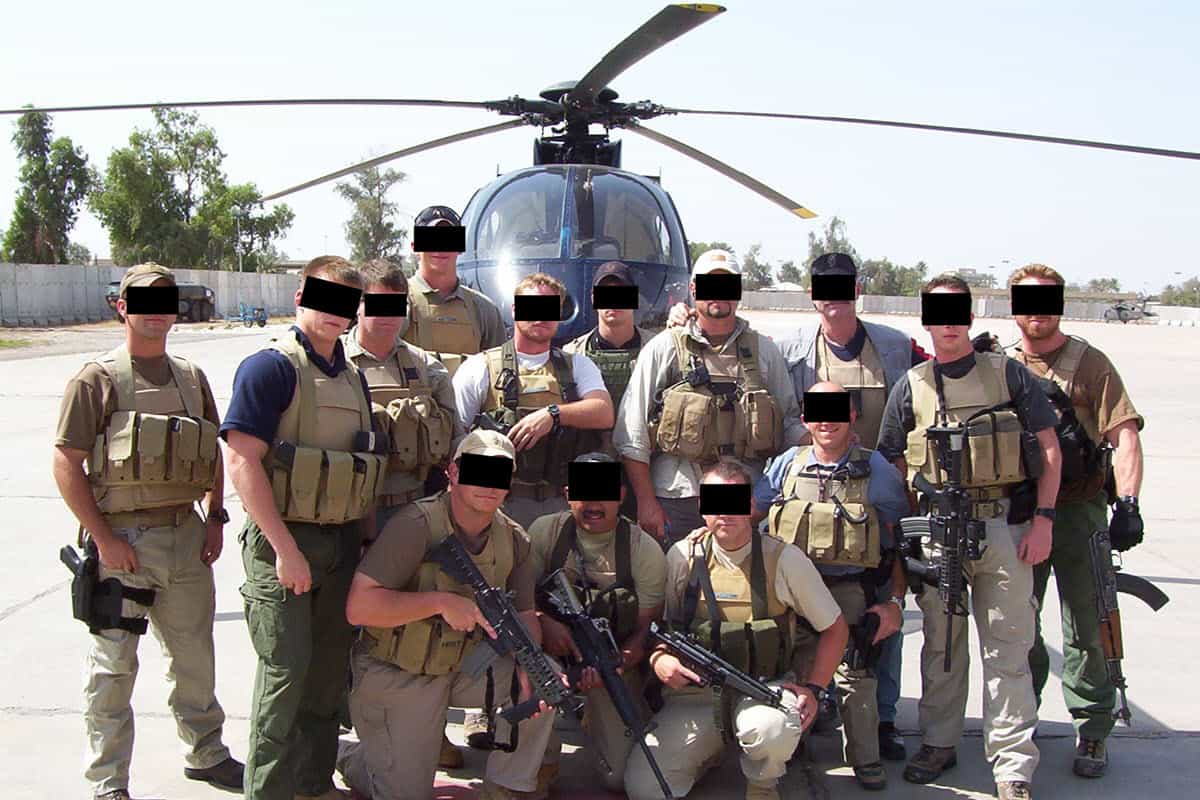
Blackwater PMC

silentprofessionals.org

Share on LinkedInShare on Twitter

In the global security discourse, Iraq often appears primarily as an energy story, oil fields, gas pipelines, electricity deficits. But beneath that surface lies a less visible, equally consequential arena of contest: who secures what, under what mandate, and with what accountability. This article examines that shadowed domain, where the lines between state authority, corporate interest, and private force have long blurred. Iraq is not merely a fossil resource zone; it is a live experiment in the economics of security capitalism.


From Public Armies to Private Guards

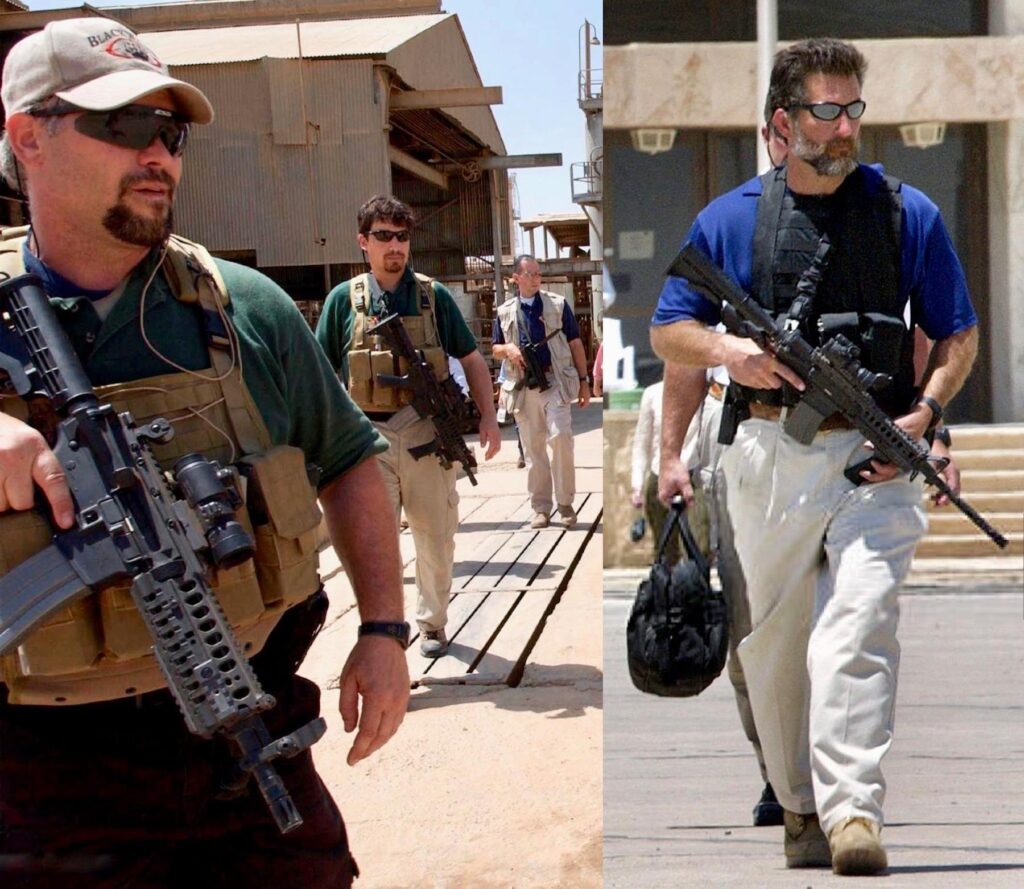
After 2003, Iraq became a laboratory for large-scale outsourcing of security. The U.S. and coalition forces, needing to secure convoys, reconstruction sites, embassies, and energy infrastructure, turned heavily to private military and security companies. These firms initially provided logistical and protection services, but over time their role expanded into quasi-military operations. Even today, companies like Erinys Iraq operate static and mobile security contracts for international commercial clients, blending international standards with local realities. Iraqi-owned firms such as TA’AZ have also become key actors, offering protective services, risk assessments, and site security for major oil projects. The transition from public to private in Iraq’s security landscape is no longer a foreign imposition but an entrenched domestic reality, shaped by local actors navigating both economic necessity and political volatility.

Legal Ambiguity and Accountability Gaps

The operations of private security companies in conflict zones inevitably raise questions of legality and oversight. In Iraq, contractors have often operated within gray zones of jurisdiction, protected from local prosecution by immunities, shielded by diplomatic agreements, or left to ambiguous contractual interpretation. Incidents such as the 2007 Nisour Square massacre, where Blackwater contractors opened fire on civilians, killing seventeen people, remain defining moments that shaped global debate on accountability. Such events eroded trust among Iraqis, strained U.S.–Iraq relations, and provoked deeper scrutiny into whether privatized warfare can ever be meaningfully regulated. The long-term result has been a mixture of legislative patchwork, partial oversight mechanisms, and continuing moral uncertainty over the legitimacy of commercialized force.
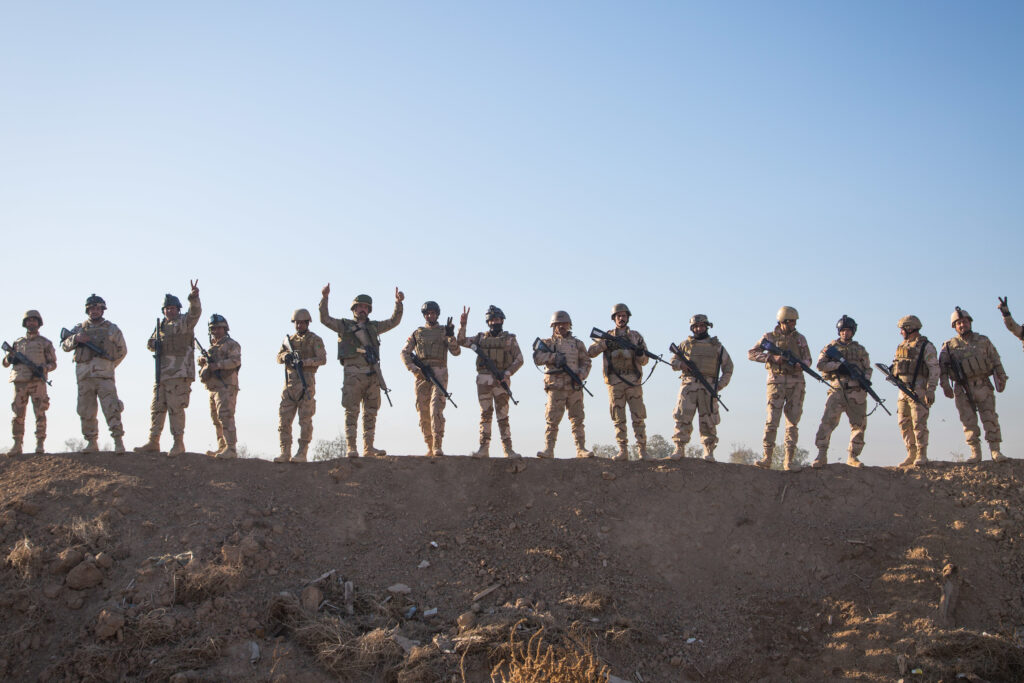
Iraqi security forces soldiers pause for a photo during react to enemy contact training at Camp Taji, Iraq, Feb. 25, 2017.

The soldiers attended a Junior Leaders Course led by Coalition forces designed to enhance basic combat skills in support of Combined Joint Task Force – Operation Inherent Resolve, the global Coalition to defeat ISIS in Iraq and Syria. (U.S. Army photo by Spc. Christopher Brecht). Original public domain image from Flickr

Security as a Commercial Product

In Iraq, security itself has become a commodity. It is bought, sold, negotiated, and insured, a service whose market value depends on volatility and threat levels. This economic dynamic creates its own distortions. Companies may prioritize profit margins, favor low-risk, high-revenue contracts, or compete for access to politically influential clients rather than focusing on equitable protection. High-value assets such as oil fields, pipelines, and embassies attract professional security layers, while rural or impoverished zones remain under-protected. At the same time, the entry of external powers has further complicated the landscape. Chinese private security companies, though rarely active in combat zones, have begun protecting Chinese energy projects in Iraq, illustrating how resource investment and private force now travel together. Western and regional firms specializing in infrastructure protection, such as those focused on the oil and gas sector, bring advanced methodologies but also reinforce dependency on foreign expertise. Security, in this sense, mirrors globalization itself, outsourced, segmented, and profit-driven.


The U.S. Drawdown and the Recalibration of Responsibility

The ongoing reduction of the U.S. military presence in Iraq has triggered a quiet but decisive recalibration. As coalition troops withdraw, the burden of maintaining stability increasingly falls on Iraqi forces and the network of licensed private security companies that support them. Yet this shift is not only about political will; it also tests the structural capacity of Iraq’s institutions. Private security firms now find themselves operating in a transitional phase where the demand for their services grows even as questions about sovereignty and legitimacy persist. Whether these companies can coordinate effectively with Iraqi military units, maintain transparency in contracting, and avoid overlapping jurisdictions will determine whether Iraq’s security environment becomes more stable or more fragmented. The line between national defense and privatized protection continues to blur with each incremental reduction of foreign troops.


New Threat Vectors in a Fragmented Environment

Security in Iraq no longer revolves solely around roadside bombs or insurgent ambushes. The modern threat spectrum includes drones, cyber interference, and precision strikes on energy and logistics hubs. In 2025, multiple drone attacks on bases and oil facilities — particularly in the Kurdistan region, demonstrated how aerial threats can bypass traditional static defenses. These incidents, often attributed to Iranian-aligned militias, highlight a tactical evolution: the ability to inflict strategic disruption with minimal resources. For private security firms, the implication is clear. The old model of guarding gates and fences is no longer enough. Modern protection requires integrated counter-UAV systems, electronic surveillance, and intelligence-sharing mechanisms that traditionally belonged to national militaries. The privatization of such technologies raises new questions about escalation control, information ownership, and the limits of private intervention in active conflict zones.


The Web of Subcontracting and Local Power Dynamics

Another defining feature of Iraq’s private security landscape is its layered subcontracting structure. A large international firm may win a multimillion-dollar contract only to delegate operations to smaller local entities, which in turn subcontract guard recruitment and logistics. Each additional layer introduces potential weaknesses, diluted training standards, inconsistent accountability, and fragmented communication. In some regions, local companies must negotiate with tribal leaders, militias, or municipal councils to maintain access. This necessity can blur neutrality and even pull firms into local power struggles. The intersection of security, politics, and commerce thus produces a fragile balance: companies must secure both their clients and their own right to operate.


Iraq’s Future Risk Landscape

As Iraq moves toward a new equilibrium, several trends are becoming evident. Private firms are adapting to fill the vacuum left by state and coalition drawdowns, but their effectiveness depends on legitimacy as much as logistics. The sustainability of Iraq’s security sector will hinge on whether the government can enforce transparent contract systems, define legal boundaries for private force, and foster cooperation rather than competition between official and commercial actors. The marketization of security in Iraq is now irreversible, but whether it produces stability or entrenches fragmentation remains an open question.

Ultimately, Iraq’s story is no longer only about oil reserves or reconstruction aid. It is about how a state redefines authority in the aftermath of occupation, how it manages violence through contracts instead of coalitions, and how private security firms become both instruments of order and symbols of dependence. The real battlefield is not always visible, it lies in the agreements, insurance clauses, and security corridors that quietly determine who holds power when the guns fall silent.

Sources:

  • Erinys Iraq official site (https://erinysiraq.com)
  • ICOCA – TA’AZ Security Company Profile (2023)
  • The American Society of International Law – “Accountability of Private Security Contractors under International Law”

Previous Post

Turkey and the F-35 Question: Is a Return to the Program Realistic?

Next Post

Hanwha Aerospace and South Korea’s Quiet Surge in Global Defense

Related Posts

General Orde Wingate_Chindit_leaders_Burma_1944_IWM_MH_7873
History

Orde Wingate: The Difficult Legacy of an Irregular Commander

May 18, 2026
Vietnam War
History

Vietnam War and the Limits of Conventional Power

May 11, 2026
Delta-Force
History

Delta Force: Beyond the Myth and Into Modern Special Operations

May 8, 2026
British, French and Italian wounded soldiers in a group
History

Britain’s Recruitment System in the First World War: Numbers, Pressure, and the Architecture of Persuasion

May 1, 2026
Tory-IIC_at_Jackass_flats
History

Project Pluto: Engineering Without Limits, Strategy Without Boundaries

April 27, 2026
Yalta_summit_1945_with_Churchill,_Roosevelt,_Stalin
History

Yalta: The Conference That Divided the Post-War World

March 25, 2026
Next Post
K2_(7445555272)_(cropped)

Hanwha Aerospace and South Korea’s Quiet Surge in Global Defense

  • Trending
  • Latest
Operation Enduring Freedom

What Exactly Is a Private Military Company (PMC)?

September 6, 2025
Blackwater PMC

After Blackwater: How PMCs Evolved, Professionalized, and Fragmented

September 13, 2025
MG42-1

MG42 Machine Gun: WWII History, Specifications and Battlefield Impact

April 21, 2026
Blackwater PMC

Inside Iraq’s Security Market: How Private Power Shapes a Fragile State

October 6, 2025
General Orde Wingate_Chindit_leaders_Burma_1944_IWM_MH_7873

Orde Wingate: The Difficult Legacy of an Irregular Commander

May 18, 2026
1280px-5-4_ADAR_Supports_Formidable_Shield_25_

SGT Stout: M-SHORAD and Mobile Air Defense

May 16, 2026
HEL_MD_Beam_Director

Laser Weapons: The New Layer in Modern Air Defense

May 14, 2026
EU Dual Use

EU Dual-Use Regulation: How Civilian Technology Becomes a Matter of Export Control

May 13, 2026

Recent Articles

General Orde Wingate_Chindit_leaders_Burma_1944_IWM_MH_7873

Orde Wingate: The Difficult Legacy of an Irregular Commander

May 18, 2026
1280px-5-4_ADAR_Supports_Formidable_Shield_25_

SGT Stout: M-SHORAD and Mobile Air Defense

May 16, 2026
HEL_MD_Beam_Director

Laser Weapons: The New Layer in Modern Air Defense

May 14, 2026
EU Dual Use

EU Dual-Use Regulation: How Civilian Technology Becomes a Matter of Export Control

May 13, 2026
Drill & Defense

Drill & Defense is an independent defense and security platform covering firearms, military technology, geopolitics, energy security, and industry developments. We provide clear, structured, and practical insight for professionals, companies, and readers following the evolving defense landscape worldwide.

Follow Us

Browse by Category

  • Air Systems
  • Defense & Energy Strategy
  • Defense Industry
  • Defense Know-How
  • Defense Technologies
  • Doctrines & Concepts
  • Energy & Security
  • Energy Fundamentals
  • Energy Technologies
  • Firearms
  • Geopolitics
  • Global Security
  • History
  • Industry News
  • Knowledge Base
  • Land Systems
  • Legacy Systems & Structures
  • Market Analysis
  • Market Trends & Analysis
  • Military History
  • Military Systems
  • Naval Systems
  • Oil & Gas News
  • Pistols
  • Regulations & Frameworks
  • Rifles
  • SMGs & Machine Guns
  • Strategic Turning Points
  • Tech & Innovation Crossover

Recent Articles

General Orde Wingate_Chindit_leaders_Burma_1944_IWM_MH_7873

Orde Wingate: The Difficult Legacy of an Irregular Commander

May 18, 2026
1280px-5-4_ADAR_Supports_Formidable_Shield_25_

SGT Stout: M-SHORAD and Mobile Air Defense

May 16, 2026

© 2026 Drill & Defense. All rights reserved. Independent insights on firearms, defense, and energy. For business inquiries: info@drillanddefense.com | PRIVACY POLICY | COOKIE POLICY | TERMS AND CONDITIONS

Manage Consent

We use cookies to improve your experience. You can accept or refuse cookies; however, some features may not function properly without your consent.

Functional Always active
The technical storage or access is strictly necessary for the legitimate purpose of enabling the use of a specific service explicitly requested by the subscriber or user, or for the sole purpose of carrying out the transmission of a communication over an electronic communications network.
Preferences
The technical storage or access is necessary for the legitimate purpose of storing preferences that are not requested by the subscriber or user.
Statistics
The technical storage or access that is used exclusively for statistical purposes. The technical storage or access that is used exclusively for anonymous statistical purposes. Without a subpoena, voluntary compliance on the part of your Internet Service Provider, or additional records from a third party, information stored or retrieved for this purpose alone cannot usually be used to identify you.
Marketing
The technical storage or access is required to create user profiles to send advertising, or to track the user on a website or across several websites for similar marketing purposes.
  • Manage options
  • Manage services
  • Manage {vendor_count} vendors
  • Read more about these purposes
View preferences
  • {title}
  • {title}
  • {title}
No Result
View All Result
  • Defense Industry
    • Industry News
    • Defense Companies
    • Defense Technologies
    • Market Analysis
  • Military Systems
    • Land Systems
    • Air Systems
    • Naval Systems
    • Electronic & Cyber Systems
  • Firearms
    • Pistols
    • Rifles
    • SMGs & Machine Guns
    • Ammunition
    • Optics & Accessories
  • Geopolitics
    • Global Security
    • Defense & Energy Strategy
    • Tech & Innovation Crossover
    • Trade & Export Controls
  • Energy & Security
    • Oil & Gas News
    • Energy Technologies
    • Market Trends & Analysis
  • History
    • Military History
    • Doctrines & Concepts
    • Strategic Turning Points
    • Legacy Systems & Structures
  • Knowledge Base
    • Firearms Basics
    • Defense Know-How
    • Energy Fundamentals
    • Regulations & Frameworks
  • About
  • Contact
  • Login
  • Register

© 2026 Drill & Defense. All rights reserved. Independent insights on firearms, defense, and energy. For business inquiries: info@drillanddefense.com | PRIVACY POLICY | COOKIE POLICY | TERMS AND CONDITIONS