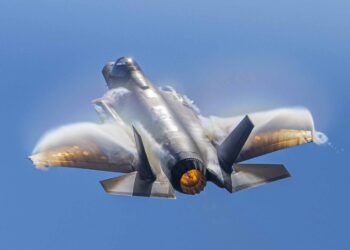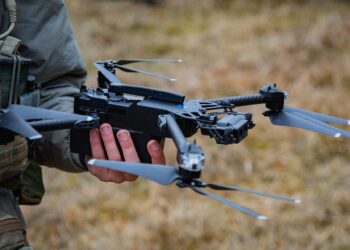


Discussions about Ukraine often move quickly toward drones, electronic warfare, long-range strikes, and air defense. That is understandable. These systems have changed the battlefield in visible and dramatic ways. They produce video, create headlines, and show how technology can compress the distance between detection and destruction.

Yet focusing only on technology leaves an important part of the war outside the frame.
Ukraine is also a war of infantry positions, trenches, machine guns, rifles, mortars, ammunition supply, rotation, exhaustion, and discipline under pressure. Ground combat has not disappeared behind screens and sensors. It remains physical, close, and demanding.
Modern warfare has not removed the infantryman from the battlefield. It has placed him inside a more dangerous and more transparent environment.
The Trench Is Not a Relic
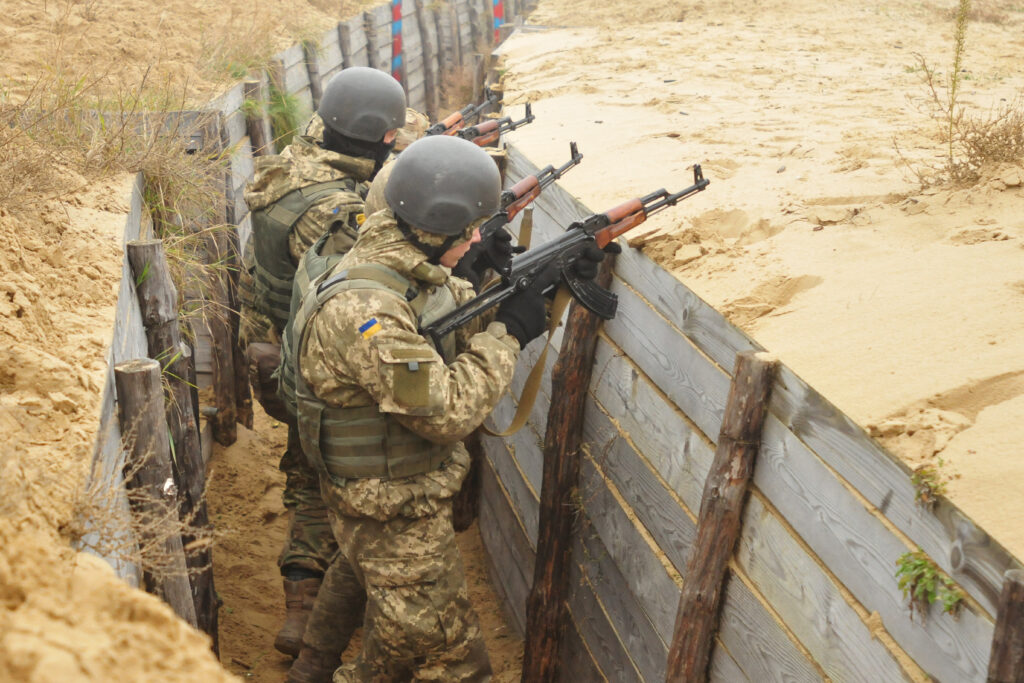
Trench warfare in Ukraine should not be understood as a simple return to the First World War. The comparison is useful only up to a point. Today’s trenches exist under satellite imagery, thermal optics, drones, precision artillery, electronic surveillance, and constant fire correction. A position is not truly hidden just because it is dug into the earth.
That reality changes how defensive ground combat works.
A trench is not only a place to shoot from. It is a shelter, an observation point, a supply problem, a medical problem, and a psychological burden. Soldiers may spend long periods in narrow, muddy, cold, and exposed positions where movement itself can attract fire. Bringing ammunition, evacuating a wounded man, or rotating a unit can become a tactical challenge.
Old and new forms of warfare meet at this level. The trench belongs to an older visual language of war, but the pressure around it is modern. A soldier may still carry a rifle, while drones, jammers, artillery observers, thermal sights, and wider surveillance networks search for every movement above him.
Small Arms Still Decide Immediate Survival
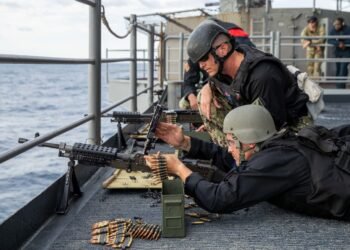
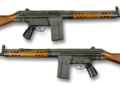
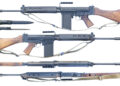
Small arms rarely dominate strategic discussions, yet they shape the daily reality of many soldiers. Assault rifles, light and medium machine guns, designated marksman rifles, sniper rifles, grenade launchers, anti-tank weapons, and mortars remain central to the basic question of whether a position can be held.
A rifle does not win a war by itself. A machine gun does not solve logistics, air defense, or industrial production. At trench level, however, these weapons are not symbolic. They create suppressive fire, protect movement, deny approaches, and allow small units to survive contact.
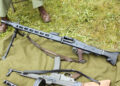
Machine guns are especially important because they represent continuity in ground warfare. In a highly technological war, the logic of sustained fire still matters. Covering a trench line, stopping an assault group, protecting a withdrawal, or fixing an enemy unit in place still depends on reliable firepower at the infantry level.
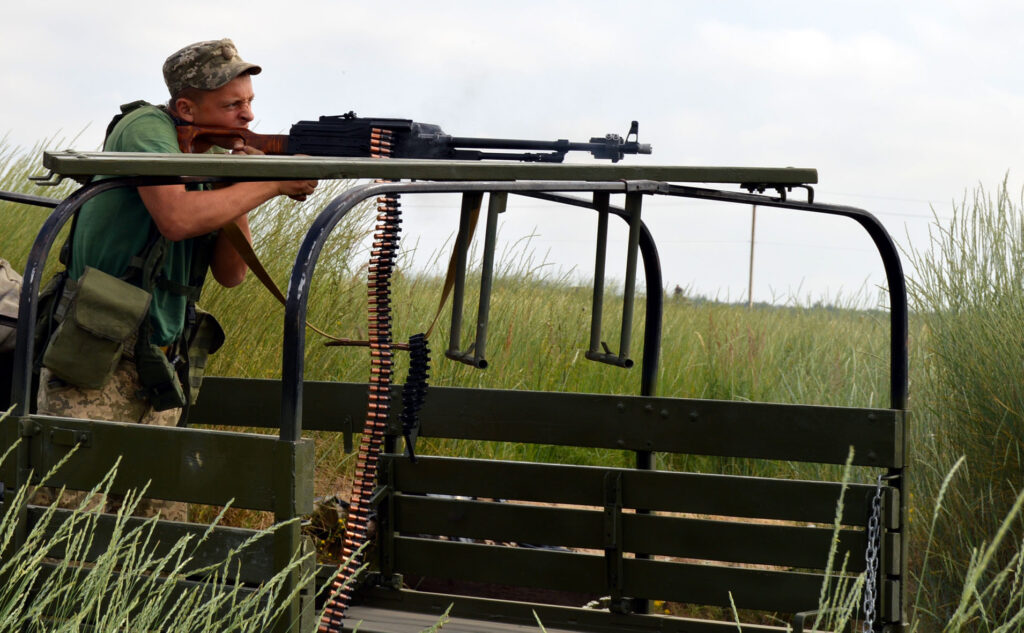
For that reason, the phrase “future war” should be used carefully. Future war does not mean clean, distant, fully automated conflict. In Ukraine, it can also mean a soldier behind a machine gun, trying to control a narrow field of fire while artillery, mines, drones, and poor weather shape every decision around him.
Infantry Is More Exposed Than Before
Today’s infantryman is not disappearing. He is becoming easier to detect and harder to protect.
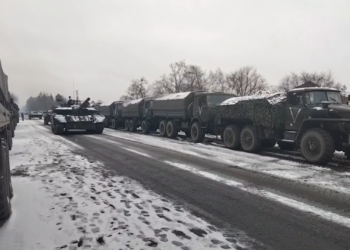
In earlier wars, terrain, darkness, smoke, forests, and distance could offer more concealment. Those protections still matter, but they are weaker. Many parts of the front line are watched by human and electronic eyes. A group of soldiers moving between positions may be seen before they reach the next trench. A vehicle bringing supplies may be targeted before it completes the route. Heat, radio use, and movement patterns can become signatures.
Infantry work therefore becomes slower, more cautious, and more stressful.
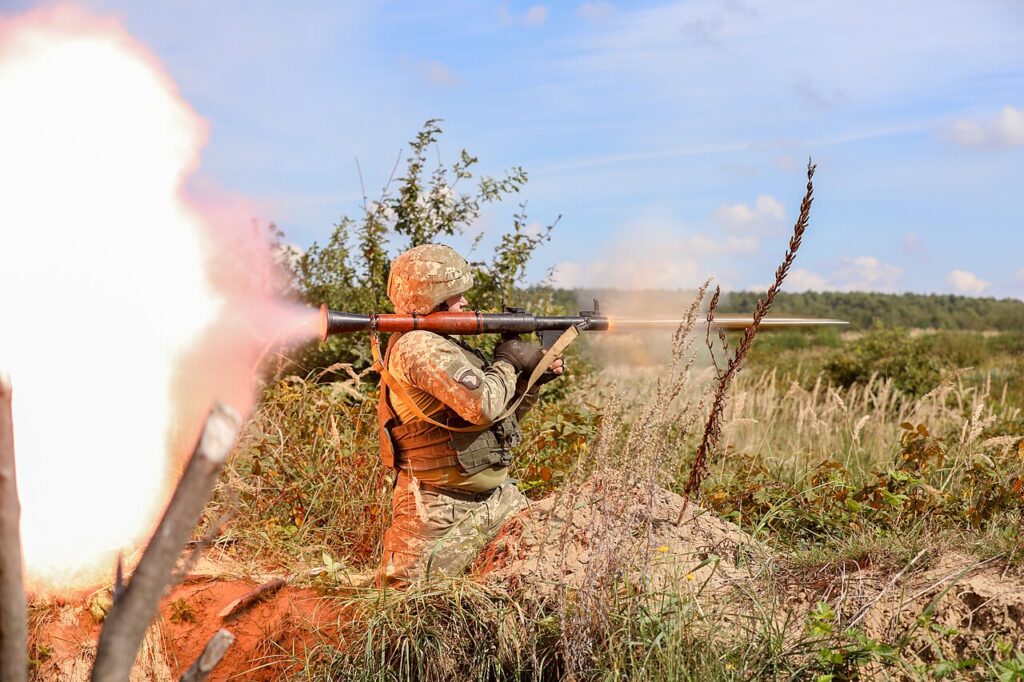
A soldier must think not only about the enemy soldier in front of him, but also about the systems supporting that enemy. A rifleman in Ukraine may be facing another rifleman, but he is also indirectly facing drones, artillery batteries, minefields, electronic warfare systems, and logistical networks.
Modern infantry is not simply “men with rifles.” It is infantry operating inside a dense technical environment.
Holding Ground Is Still Human Work
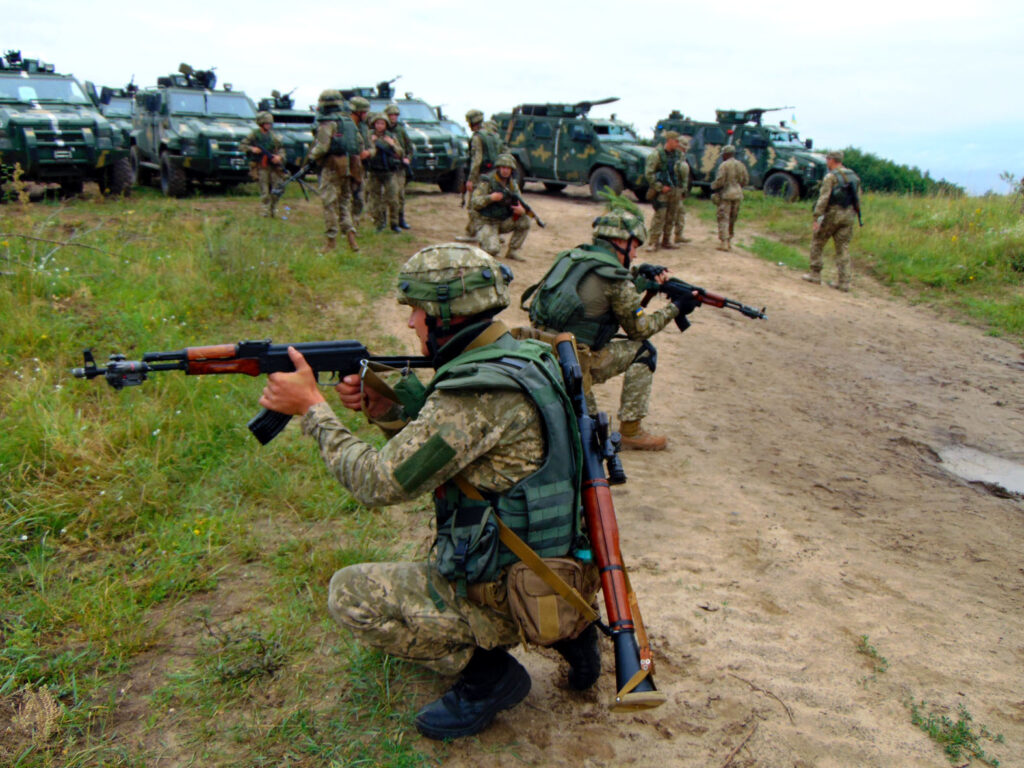
Technology can find targets, strike vehicles, disrupt communications, and extend the battlefield. But holding ground remains human work. A drone can watch a trench. Artillery can hit it. A minefield can slow movement. Yet if a position must be occupied, defended, cleared, repaired, or retaken, soldiers are still required.
Infantry endurance matters as much as equipment. Weapons are necessary, but so are training, unit cohesion, rest cycles, morale, medical support, and command discipline. A position can fail not only because it lacks firepower, but because the men inside it are exhausted, undersupplied, or isolated.
Ukraine shows that infantry combat is not only about bravery or weapons. It depends on the systems that keep soldiers alive long enough to remain effective. Ammunition supply, spare parts, winter clothing, communications, casualty evacuation, and rotation are not secondary details. They are part of combat power.
A machine gun without ammunition becomes weight. A trench without drainage becomes a health hazard. A rifle without maintenance becomes unreliable. A soldier without sleep becomes a risk to himself and his unit.
Why This Matters for Defense Industry Thinking
For the defense industry, Ukraine offers a strong reminder that not every important lesson is futuristic.
Advanced systems naturally attract attention because they look innovative and produce visible effects. But the war also points to the continuing importance of infantry weapons, ammunition stocks, optics, night vision, body armor, suppressors, thermal devices, communication equipment, field shelters, portable power, medical kits, and maintenance systems.
The basic soldier loadout is becoming more complex, not less. A rifle is still present, but now it belongs to a wider ecosystem. The infantryman needs to shoot, move, communicate, observe, survive, and remain connected to other units. Future small arms and infantry equipment will therefore be judged not only by the weapon itself, but by how well they fit into the wider battlefield system.
A modern rifle or machine gun should be considered alongside optics, ammunition compatibility, barrel life, suppressor use, maintenance under field conditions, weight, training burden, and the logistics required to keep it running at scale.
Ukraine reminds us that “simple” equipment is not simple when it is used every day in mud, cold, stress, and high-casualty environments.
Balance Matters More Than Fashionable Lessons
Ukraine does not prove that drones are everything. It also does not prove that older infantry methods are enough. A more realistic reading points toward balance.
A military force needs technology, but it also needs infantry that can survive when technology fails, communications break, vehicles cannot move, and the fight becomes close, dirty, and physical. It needs industry, but it also needs training. It needs advanced systems, but it also needs rifles, machine guns, ammunition, boots, batteries, field medicine, and disciplined small units.
For outside observers, this may be one of the most uncomfortable lessons of the war. Modern conflict is not becoming clean. It is becoming layered. The battlefield is digital, but also muddy. It is monitored by drones, but still held by soldiers. It is shaped by long-range fires, but often decided locally by small units under pressure.
Ukraine should make us ask not only what new technology is changing, but also what remains stubbornly familiar.
Beneath the sensors, long-range strikes, and electronic systems, there is still a soldier in a trench, a rifle in his hands, a machine gun covering an approach, and the same central question that has shaped land warfare for generations:
Can this ground be held?
Sources:
- Royal United Services Institute, “Tactical Developments During the Third Year of the Russo-Ukrainian War,” 2025.
Center for Strategic and International Studies, “Russia’s Grinding War in Ukraine,” 2026. - Small Arms Survey, “Weapons Compass Report: Ukraine Small Arms Proliferation,” 2025.