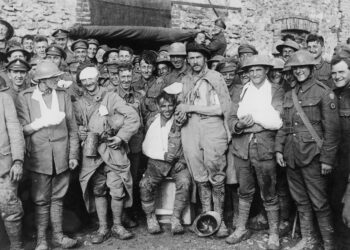


The Battle of Hürtgen Forest is one of those World War II battles that does not easily fit into the clean narrative of Allied momentum after Normandy. By late 1944, Germany was clearly under pressure. Allied forces had crossed into German territory, Aachen had become a major objective, and the road toward the Rhine seemed open in strategic terms. Yet Hürtgen reminds us that a war can be moving in one direction on the map while still becoming brutally uncertain at ground level.

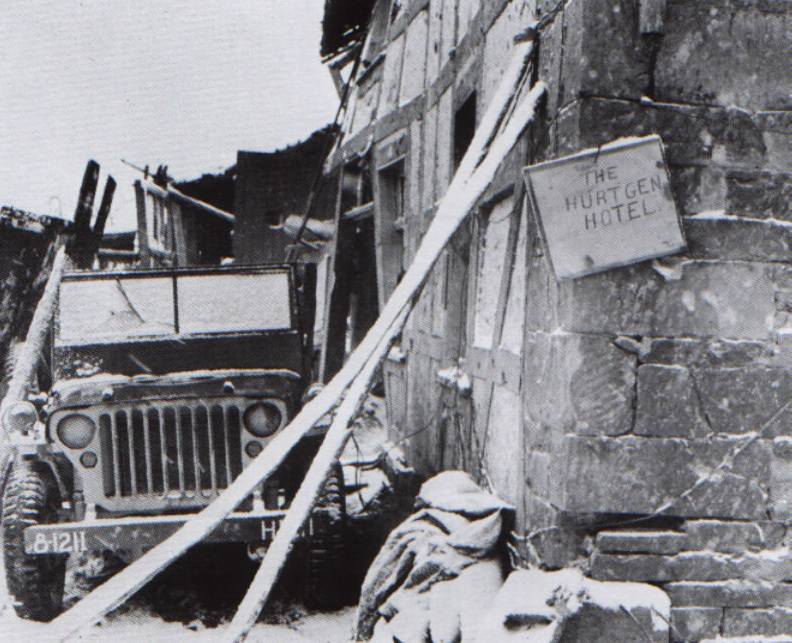
Fought mainly from September to December 1944, the battle took place in dense forest terrain near the Belgian German border. On paper, this was a limited geographic area. In reality, it became a grinding fight of mines, artillery, mud, cold, hidden positions, poor visibility, and repeated infantry attacks against prepared German defenses.
That is the first lesson of Hürtgen: small terrain can create large consequences.
The Forest Was Not Just a Location
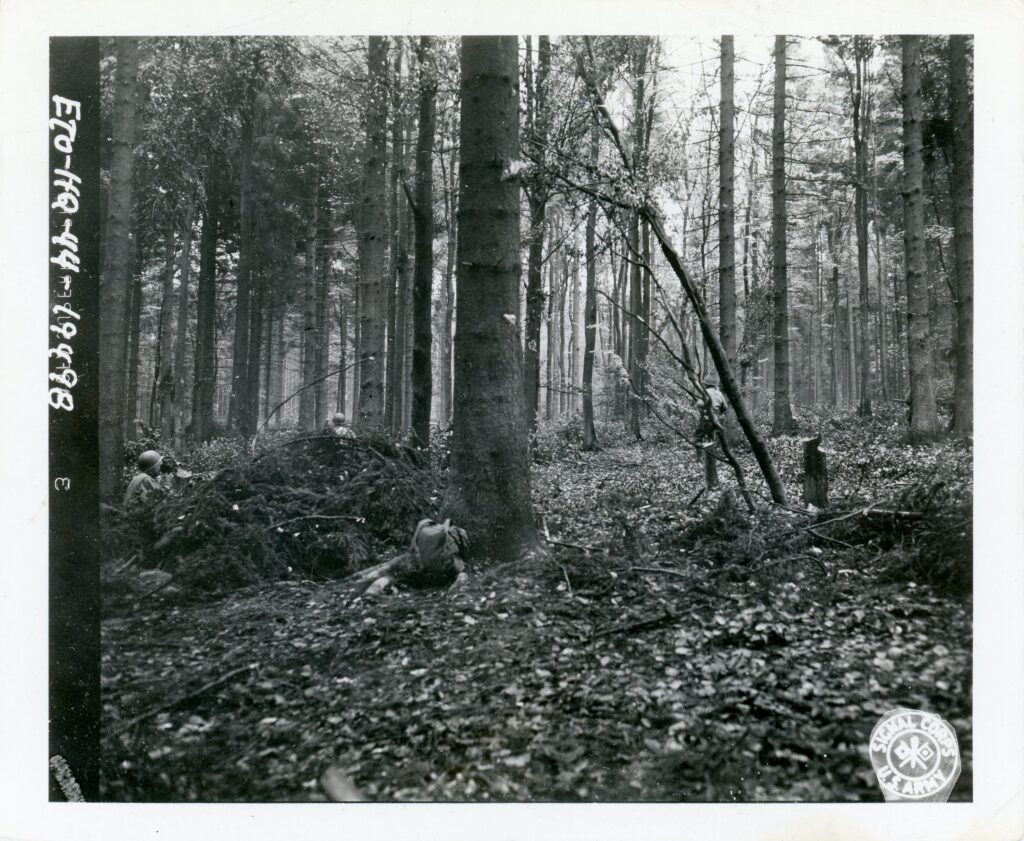
It is easy to describe Hürtgen Forest as “difficult terrain,” but that phrase almost hides the real problem. This was not simply a forest with trees. It was a defensive environment that reduced many of the advantages the U.S. Army normally possessed.
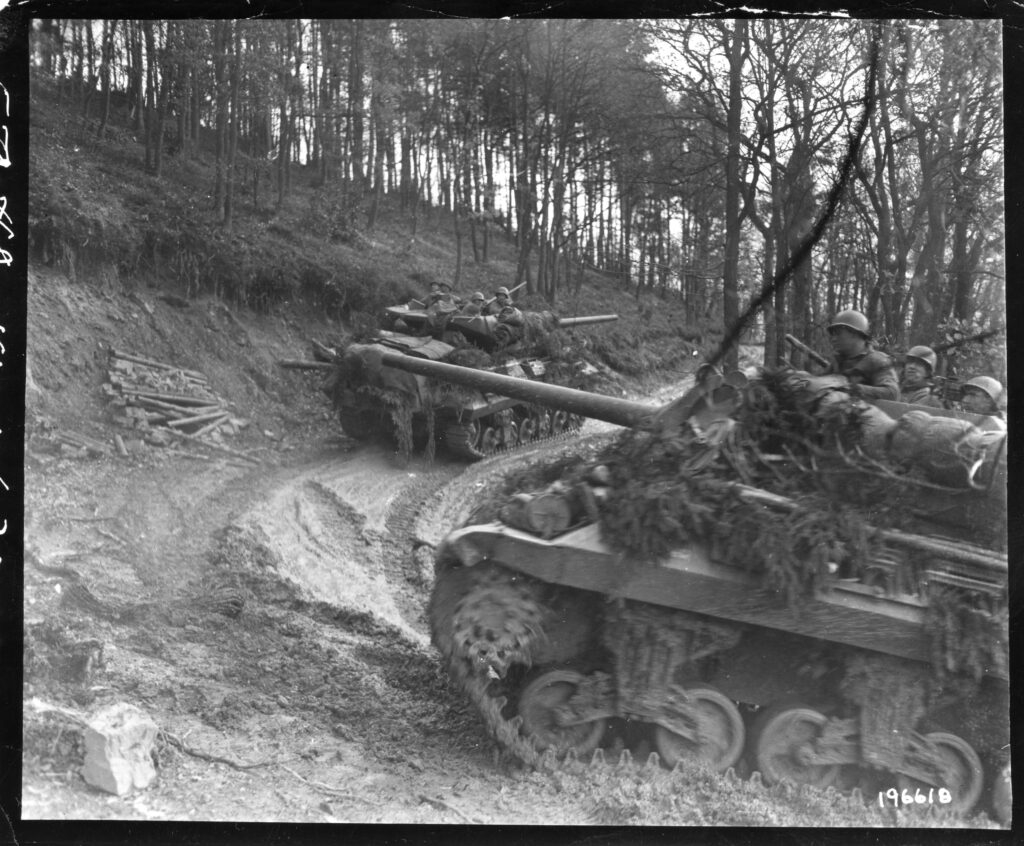
American forces had artillery, armor, air support, mobility, and growing operational confidence after the breakout from Normandy. But the forest weakened each of those strengths. Tanks were restricted by narrow tracks, mud, mines, and anti tank threats. Air support was limited by weather, visibility, and the difficulty of identifying targets below the trees. Artillery was still devastating, but the forest produced a special kind of danger: tree bursts. Shells exploded in the branches above troops, sending metal and wood fragments downward into men who might otherwise have survived ground bursts.
For the infantryman, this meant there was no clean battlefield. The enemy could be invisible. The front line could be unclear. A village, a trail, or a ridgeline could be taken, then lost, then taken again at extreme cost.
As readers, we should pause here. Modern military discussions often focus on platforms, sensors, aircraft, armored vehicles, missiles, and advanced systems. Hürtgen is a reminder that terrain can still dictate the value of technology. A powerful army can enter the wrong environment and find its strongest tools narrowed by geography.
Why Fight There?
The operational logic behind the battle remains debated. American commanders wanted to secure the area, protect the flank around Aachen, push toward the Rur River, and eventually deal with the Rur dams. The dams mattered because German forces could potentially flood downstream areas and delay Allied crossings. From that perspective, Hürtgen was not meaningless.
But the difficult question is whether the forest itself had to be attacked in the way it was. Some later analysis has argued that the battle consumed manpower for limited gain and that other routes or approaches might have made more sense. This is where Hürtgen becomes more than a military history topic. It becomes a study in command judgment.
A plan can have a rational objective and still become flawed in execution. That may be the most balanced way to view Hürtgen. The Allied goal of reaching the Rhine and neutralizing German defensive advantages was real. The danger posed by the Rur dams was real. German resistance in the region was real. Yet the repeated commitment of infantry divisions into forest fighting produced losses that seem disproportionate to the tactical results.
This does not mean commanders were foolish in a simple sense. War rarely gives leaders perfect choices. But it does mean that Hürtgen should be studied as a warning against forcing a strategic idea through unsuitable tactical conditions.
German Defense and the Value of Prepared Positions
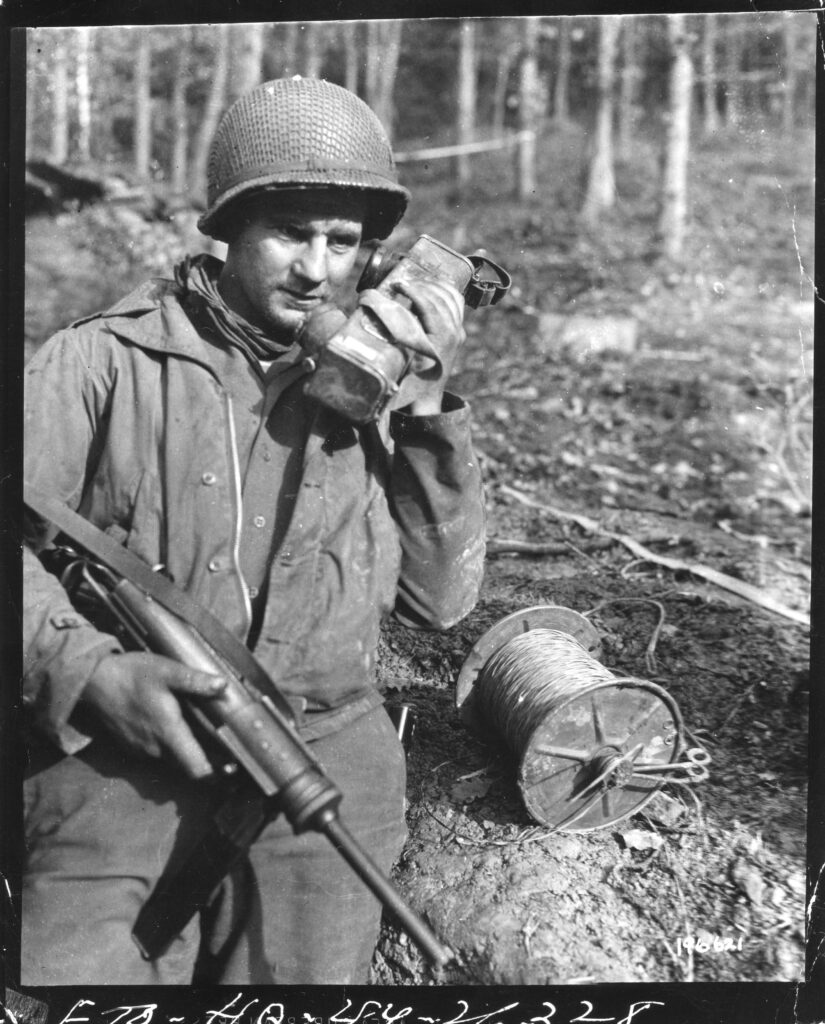
German forces in Hürtgen were under pressure, often weakened, and operating within a deteriorating strategic situation. But weakness does not mean harmlessness. In defensive terrain, even depleted formations can become dangerous if they are well positioned.
The German defenders used mines, pillboxes, machine gun nests, artillery, counterattacks, and the natural cover of the forest. They did not need to maneuver brilliantly across open ground. They needed to delay, channel, punish, and exhaust. The forest helped them do exactly that.
This is one reason the battle feels so modern in its lessons. A force does not always need superiority across every category to impose heavy costs. If it understands the terrain, prepares defensive positions, and forces the attacker into predictable movement corridors, it can turn tactical defense into operational disruption.
Hürtgen also shows how attrition can serve strategy. German forces were not going to reverse the overall direction of the war in the forest. But they could slow the Allied advance, inflict casualties, and help preserve space and time before the Ardennes Offensive, known more widely as the Battle of the Bulge.
The Human Cost Behind the Operational Map
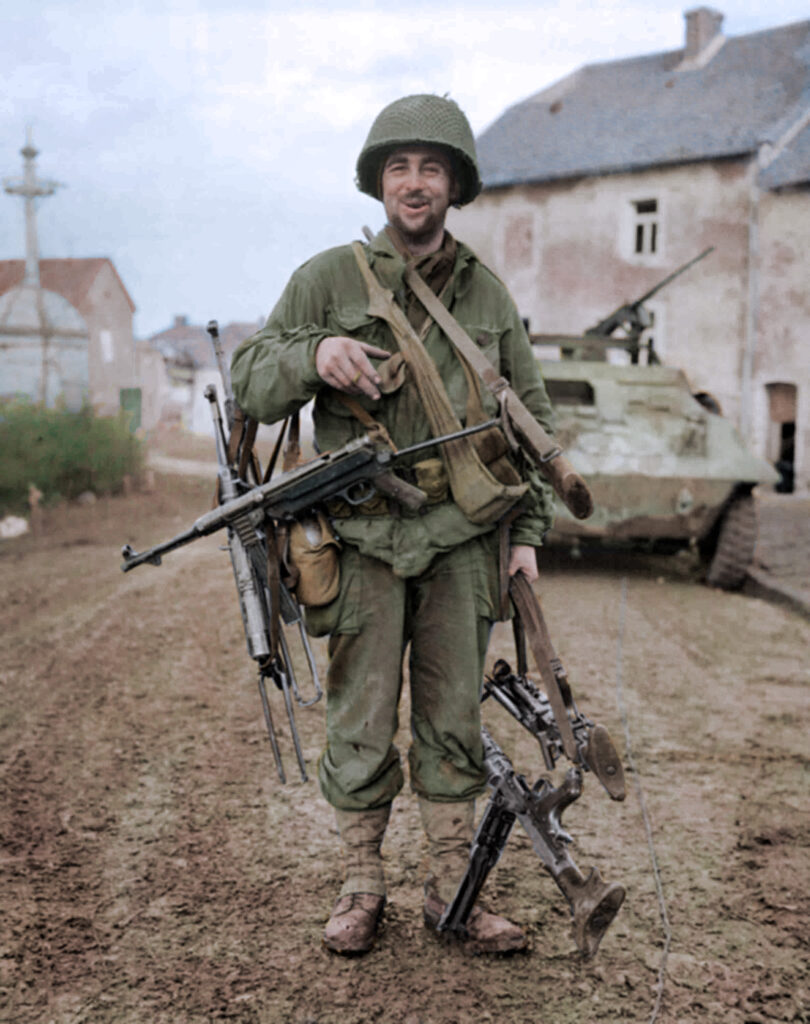
Numbers vary depending on the source and the period included, but American casualties in the Hürtgen fighting are generally placed above 30,000, with some estimates going higher when non battle losses are included. German losses were also severe. What matters here is not only the total figure, but the type of experience these soldiers endured.
Cold, wet conditions led to trench foot, exposure, illness, exhaustion, and psychological strain. Units were worn down and replacements often arrived into a battlefield they barely understood. In dense forest combat, a new soldier did not have much time to adjust. Survival depended on small unit cohesion, local knowledge, and instinct. Those are hard to replace once veteran infantrymen are gone.
This is where Hürtgen becomes uncomfortable to read about. It was not only a battle of heroic attacks and defensive stands. It was also a battle of confusion, fatigue, and repeated human loss in terrain that offered very little visibility and very little mercy.
Overshadowed by the Battle of the Bulge
One reason Hürtgen is less remembered by the wider public is timing. On 16 December 1944, Germany launched the Ardennes Offensive. The Battle of the Bulge became one of the most famous engagements of the Western Front, drawing attention away from the grinding forest battle that had already drained American units.
This creates a strange historical effect. Hürtgen was costly, prolonged, and deeply significant for the forces involved, but it is often treated as a prelude to something larger. That is understandable, but also misleading. Hürtgen deserves to be studied on its own terms because it reveals problems that are sometimes hidden in broader campaign narratives: poor terrain appreciation, the limits of air and armor, the cost of attritional infantry combat, and the danger of continuing an operation after its cost benefit balance has shifted.
Why Hürtgen Still Matters
The Battle of Hürtgen Forest should not be reduced to one simple verdict. Calling it only a mistake ignores the operational pressure of late 1944, while calling it necessary ignores the scale of the losses and the questionable tactical approach.
From a defense and military planning perspective, Hürtgen still offers a hard lesson: terrain is never just background. In the right conditions, it can limit firepower, slow movement, weaken coordination, and turn even a powerful army into a force fighting yard by yard.
That is what makes the battle important beyond its place in World War II history.
Hürtgen shows how military momentum can be deceptive. An army may be advancing across Europe and still become trapped in a local fight where progress is measured in ridgelines, villages, muddy trails, and casualty reports.
The forest did not care about Allied confidence or Germany’s approaching defeat. It rewarded preparation, concealment, endurance, and defensive patience.
That is why Hürtgen still matters.
Sources:
- U.S. Army Center of Military History. The Siegfried Line Campaign by Charles B. MacDonald.
- AMEDD Center of History & Heritage. “Huertgen Forest.”
- Defense POW/MIA Accounting Agency. “Huertgen Forest.”
- The Army Historical Foundation. “Hell in the Forest: The 22d Infantry Regiment in the Battle of Hürtgen Forest.”