

Some firearms are remembered because they were dominant on the battlefield. Others survive because they changed a design category. The Skorpion vz. 61 is different. It became famous because it sits in an unusual space between pistol, machine pistol, compact submachine gun, and early personal defense weapon logic.

Small arms history is full of weapons that fit neatly into one category. The vz. 61 does not. It is small, mechanically interesting, historically recognizable, and difficult to classify with one simple label. For a reader looking at it today, the most important question is not only “what is it?” but also “what problem was it trying to solve?”
The answer begins in Cold War Czechoslovakia.
A Czechoslovak Solution to a Practical Problem
Developed in the late 1950s and entering production in the early 1960s, the Skorpion vz. 61 was designed by Miroslav Rybář and produced by Česká zbrojovka. It was not meant to replace the infantry rifle, and it was not designed as a conventional full-size submachine gun. Its purpose was more specific, shaped by the needs of users who required a compact weapon that could offer more capability than a pistol without becoming as cumbersome as a standard shoulder-fired weapon.
That requirement was not theoretical. Vehicle crews, officers, security personnel, intelligence services, and special-purpose users often faced a practical gap between sidearms and larger weapons. A rifle was too large for many of these roles. A pistol was convenient, but limited. A full-size SMG offered more firepower, yet it was not always realistic to carry, conceal, or store in confined spaces.
This is where the vz. 61 begins to make sense. It was not simply a reduced-size submachine gun or an oversized pistol. It was a compact automatic weapon built around a very particular middle ground.
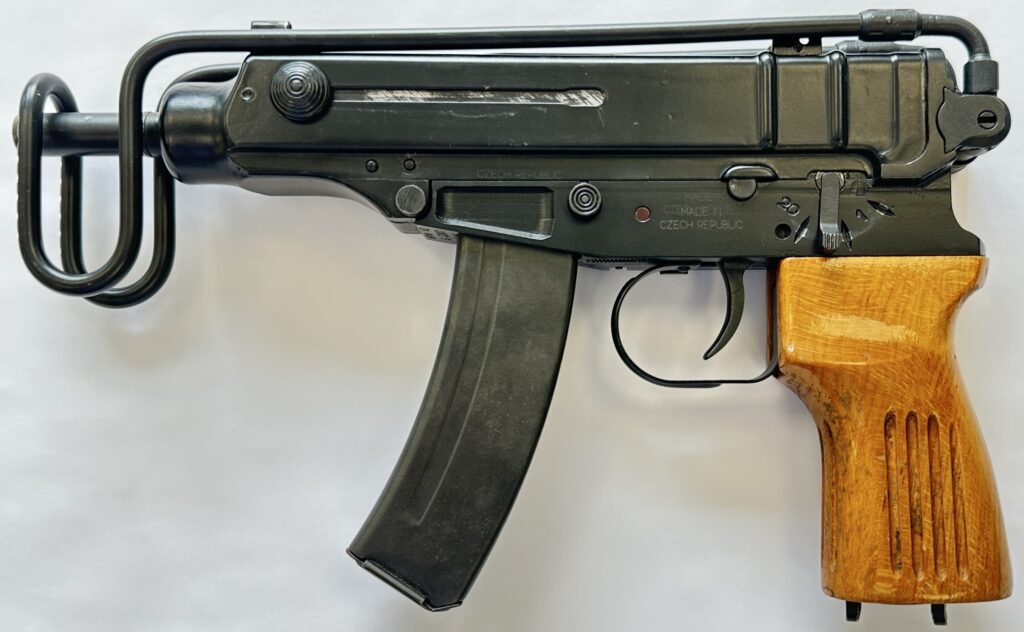
What makes the weapon interesting even today is that its design logic still feels familiar. The Skorpion was not merely a “small gun.” It was built around role, portability, and close-range controllability. In modern terms, that sounds close to the logic behind personal defense weapons, even if the vz. 61 does not fully match the later PDW category as we understand it today.
Machine Pistol or Submachine Gun?
Classification is one of the reasons the Skorpion remains so widely discussed. Depending on the source, the same weapon may be described as a machine pistol, a compact submachine gun, or a precursor to the personal defense weapon idea. Such variety is not simply confusion; it reflects the weapon’s unusual position.
Describing the vz. 61 as a machine pistol makes sense because of its size, layout, and handling characteristics. Far smaller than most traditional submachine guns, its compact form brings it closer to an automatic pistol with a folding stock than to a shoulder-fired SMG like the MP5 or Sterling.
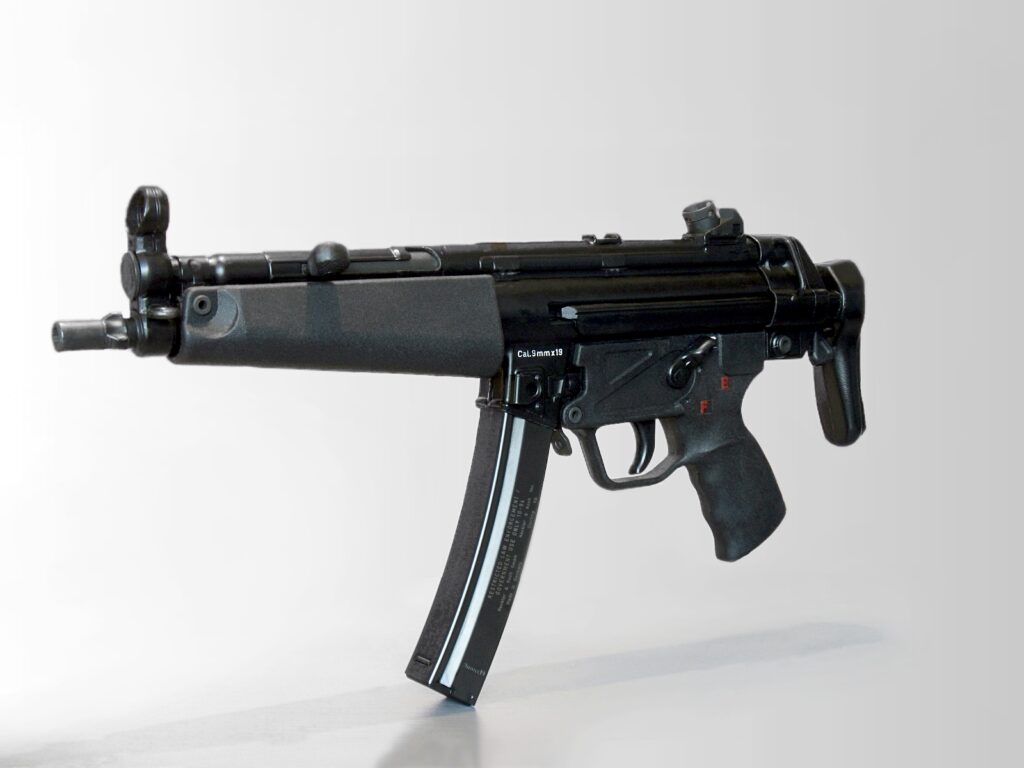
Hecler & Koch MP5-1. Samuli Silvennoinenderivative work: Hic et nunc, CC BY-SA 3.0 https://creativecommons.org/licenses/by-sa/3.0.
Calling it a compact submachine gun, however, is not wrong either. In its original military form, the weapon fires pistol ammunition, has automatic-fire capability, and was intended to provide more volume of fire than a standard sidearm. From that angle, it clearly belongs in the wider SMG conversation.
A balanced description would be:
The Skorpion vz. 61 is best understood as a machine pistol that is often grouped within the compact submachine gun family.
Such wording matters because a narrow label can distort the comparison. Labeling it only as an SMG risks placing it unfairly beside larger systems, while calling it only a pistol ignores its automatic-fire role and its place in Cold War compact weapon design.
In reality, the vz. 61 sits between categories, which is exactly why it became memorable.
The .32 ACP Choice
One detail often surprises modern readers: the original Skorpion vz. 61 was chambered in 7.65 Browning, also known as .32 ACP. At first, that may sound like an odd choice for an automatic weapon, especially when viewed from today’s perspective.
Modern readers often compare .32 ACP with 9×19 mm platforms and assume the cartridge was simply too weak. That reaction is understandable, but it needs context. The Skorpion was not designed around maximum power. It was designed around compactness and controllability.
A light cartridge helped keep recoil manageable in a very small automatic platform. It also made sense for certain security and special-purpose roles, particularly where concealability and suppressed use were relevant.
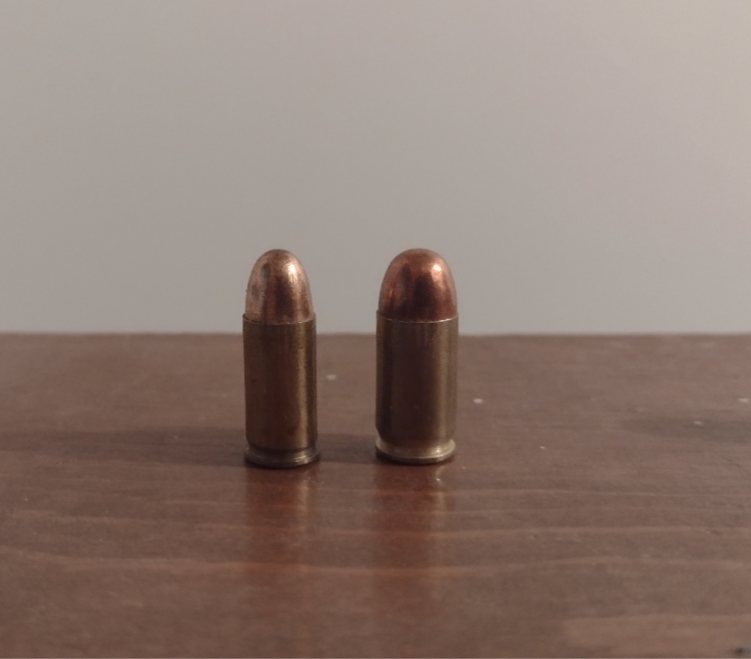
None of this means .32 ACP was ideal in every sense. It limited power, range, and terminal effect compared with stronger pistol cartridges. On an open battlefield, that would be a serious limitation. But the Skorpion was not designed to dominate open battlefield distances. It was built for close-range use by personnel who needed a compact automatic weapon.
In that role, the cartridge choice becomes more understandable. The weapon was not trying to be the most powerful option available. It was trying to be useful in situations where larger weapons were impractical.
Why the Skorpion Became So Recognizable
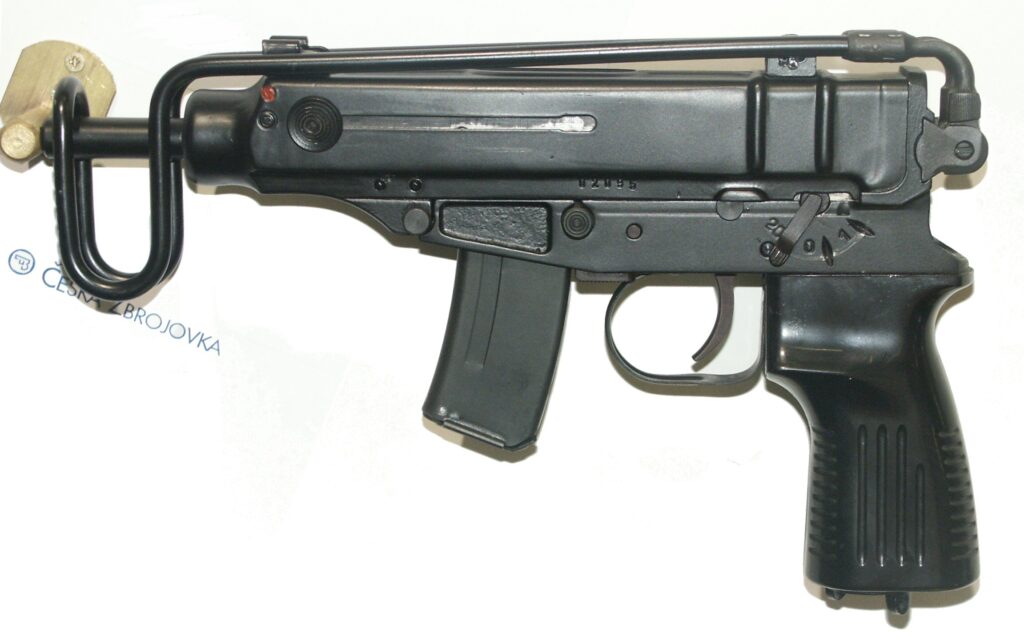
The vz. 61 has one of the most distinctive silhouettes of the Cold War period. Its folding wire stock, compact receiver, curved magazine, and small overall profile make it instantly recognizable. Even among people who are not deeply familiar with Czechoslovak small arms, the shape is often enough to identify it.
Appearance alone, however, does not explain the whole reputation. The Skorpion also became associated with intelligence services, security forces, special units, and unconventional users. Its compactness created a certain image: discreet, close-range, specialized, and slightly unusual.
Popular culture then amplified that image. Films, games, and media appearances made the Skorpion familiar even to people who do not study firearms closely. That matters because firearms history is not shaped only by technical performance. Recognition, symbolism, and visual identity also play a role.
In that sense, the Skorpion is a good example of a weapon whose reputation became larger than its physical size.
The U.S. Regulatory View
In the United States, the classification question changes completely because legal terminology does not always follow technical or popular terminology. A weapon may be called a machine pistol or compact SMG in historical writing, while U.S. law may place it into a different category depending on function and configuration.
ATF and U.S. federal firearms law focus less on whether the public calls a weapon a machine pistol or submachine gun, and more on what the firearm does and how it is configured. Function, barrel length, shoulder-stock configuration, and certain accessories can all matter.
A select-fire or fully automatic vz. 61 would fall under the federal machinegun category because U.S. law defines a machinegun by automatic fire through a single function of the trigger. In other words, if it fires more than one round automatically with one trigger function, the legal classification is not based on the popular term “SMG.” It is treated under the machinegun framework.
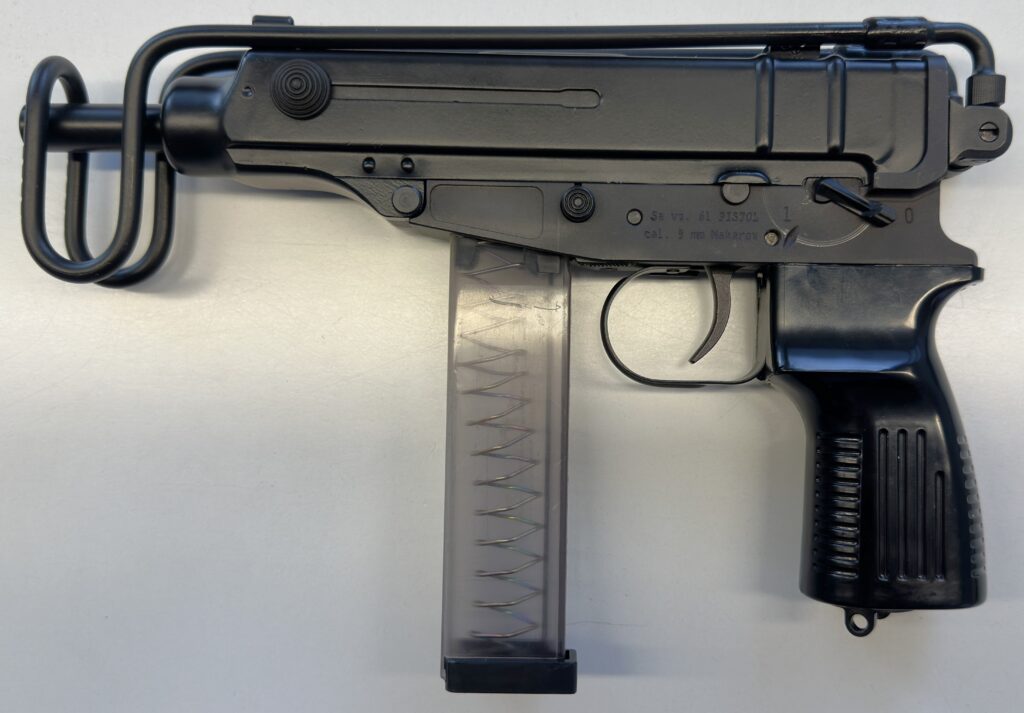
A semi-automatic, stockless civilian Skorpion-type firearm may generally be treated as a pistol, depending on its exact design and configuration. The important point is that this is not because it merely “looks like a pistol” in a casual sense. U.S. definitions focus on how the firearm is designed to be held and fired.
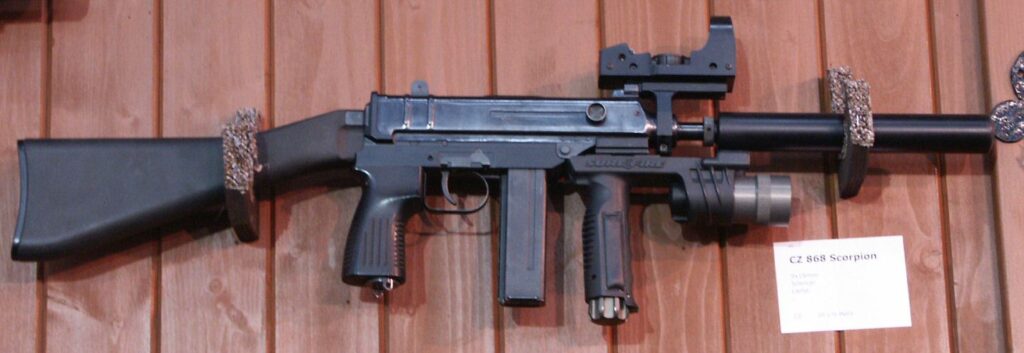
If a shoulder stock is added to a short-barreled semi-automatic version, the firearm may enter short-barreled rifle territory under the National Firearms Act. Barrel length, overall configuration, and whether the firearm is intended to be fired from the shoulder become important factors.
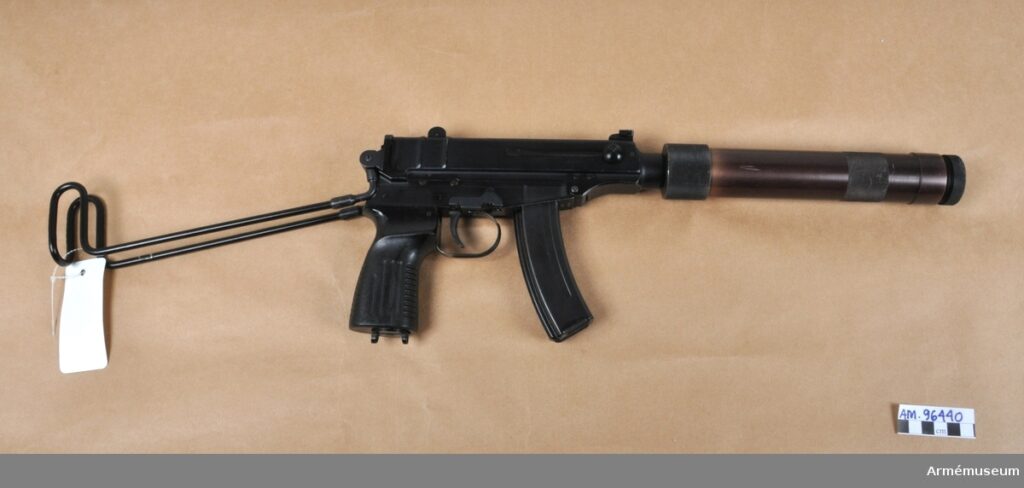
Another detail is the vertical foregrip. On a handgun-type configuration, adding one can create a separate NFA issue. ATF has historically taken the position that adding a vertical foregrip to a handgun can mean the firearm is no longer designed to be fired with one hand, potentially moving it into the Any Other Weapon category.
For that reason, the regulatory answer is not simply “the Skorpion is a pistol” or “the Skorpion is a machine gun.” The answer depends on the exact configuration.
For a general industry article, the safest wording is:
In the United States, a full-auto/select-fire vz. 61 is treated as a machinegun. A semi-automatic, stockless civilian version may generally fall into pistol territory. If a shoulder stock or certain accessories are added, NFA categories such as short-barreled rifle or Any Other Weapon may become relevant depending on the configuration.
That is the key point: same visual family, different legal outcomes.
The Wider Global View
Outside the United States, the vocabulary is usually less legalistic and more technical or historical. Internationally, the vz. 61 is commonly described as a machine pistol, compact submachine gun, or early PDW-like weapon. These different labels are not necessarily contradictions. They reflect the way the weapon crosses boundaries between size, role, and function.
Museum and historical sources often emphasize the “machine pistol” identity because of the weapon’s compactness and role. Manufacturer-linked historical discussion often places it in the submachine gun and PDW lineage because it helped define a compact automatic weapon concept.
Both interpretations are reasonable. The only misleading approach would be to force the vz. 61 into a single rigid category without explaining why the debate exists.
For readers, the better approach is simple: understand the role first, then the label.
Legacy and the Scorpion Name
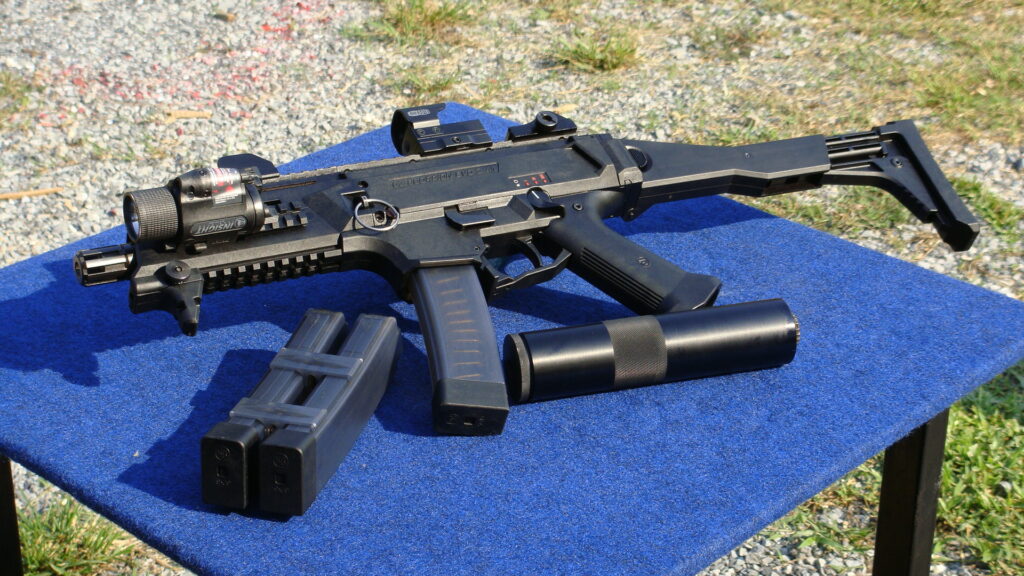
Although the CZ Scorpion Evo 3 carries the same family name, it should not be treated as the same weapon. It is a modern platform shaped by a different market, different materials, and a different tactical environment. Still, the continuation of the Scorpion name shows how strong the original identity became.
With the vz. 61, that name gained historical weight. It came to represent a compact Czech automatic weapon that was distinctive, specialized, and widely recognized. The Evo 3 belongs to another generation, but it still benefits from the reputation built by the original Skorpion.
Some weapons disappear after their service life ends. Others remain relevant because they represent a design idea. The Skorpion vz. 61 clearly belongs to the second group.
Why It Still Matters
The Skorpion vz. 61 was not important because it was perfect. Its caliber was limited, its role was narrow, and its compactness came with trade-offs. Those limitations, however, are part of the story rather than reasons to dismiss the weapon.
Behind the design was a practical operational question:
What should a user carry when a pistol is not enough, but a rifle or full-size SMG is too much?
That problem has never really disappeared. Modern PDWs, compact carbines, security weapons, and specialized close-protection firearms still revolve around a similar need.
The vz. 61 did not solve it for every user, but it addressed the issue clearly and memorably. That is why it still deserves attention. It is a small weapon with a large historical footprint, and its classification debate is not a weakness. It is part of what makes the Skorpion one of the most recognizable compact automatic weapons of the Cold War era.
Sources:
- Česká zbrojovka, “Vz. 61 Škorpion: The PDW Founding Father.”
- Imperial War Museums, “Vz61 Skorpion.”
- Smithsonian National Museum of American History, “Skorpion vz61 Machine Pistol.”
- 26 U.S. Code § 5845, National Firearms Act definitions.
- ATF / 27 CFR § 478.11, Meaning of Terms.
- ATF, “Add a Vertical Fore Grip to a Handgun.”